Environment

First a passenger drought. Now a water drought. Can California airports cope?

(This is a slightly different version of a story we wrote for NBC News online)

First airports had to deal with a drought of passengers due to the pandemic.

Now airports in many parts of the U.S. West join their communities in facing a summer plagued by water shortages.

But in California, at least, where the U.S. Drought Monitor reports that almost 95% of the state is experiencing severe to exceptional drought conditions, airports say years of conservation efforts make them well-prepared.

In response to past droughts, Charles M. Schulz – Sonoma County Airport (STS) removed grass from many locations, added drought tolerant plantings, and upgraded the car wash facility so that it captures and recycles 85% of the wash water.

“We also installed a system that uses solar panels to run condensing units that extract moisture from the air, stores, and filters the water, and then distributes it through a wall-mounted water bottle fill station in the office,” said airport manager Jon Stout.

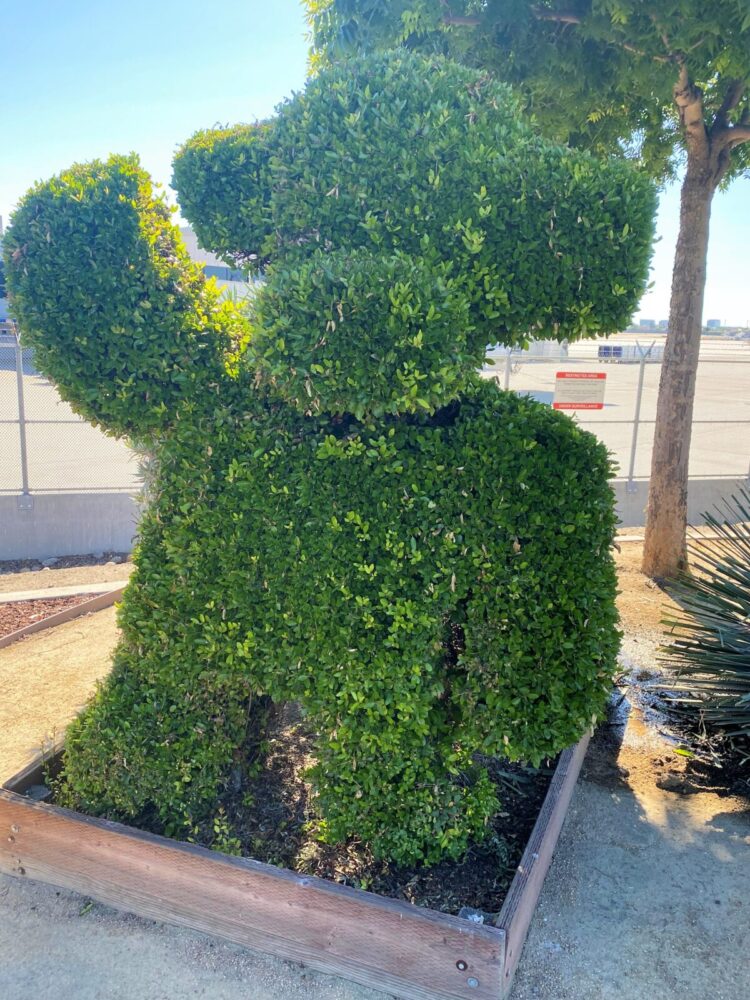
SJC’s Topiary Bear Should be Fine

Like many airports, Mineta San José International Airport (SJC) has automatic faucets and low-flow toilets in terminal restrooms. Recycled water is used in restrooms, to handwash the terminal windows twice a year, and to water drought-tolerant landscaping on airport grounds, including SJC’s much-loved topiary bear. Airport spokeswoman Demetria Machado says the cheerful bear is an “SJC staple” that has been greeting travelers at SJC for many years and has survived droughts before.

In addition to low-flow fixtures and water recapture systems for car wash operations, Fresno Yosemite International Airport (FAT) has landscaping that requires minimal maintenance and little or no water usage yet remains visually appealing. And instead of traditional landscaping, the parking lots “have a hardscape design that uses an assortment of rocks to depict a waterway scheme,” says airport spokeswoman Vikkie Calderon.  

Nixed water cannon salutes, waterless urinals, and air-conditioning drippings

At Sacramento International Airport (SMF), landscaped areas are watered “at the lowest level possible to maintain viability while minimizing the risk of fire hazards,” says spokesman Scott Johnston, and “concessions only serve water on request.”  Water cannon salutes, which can use up to 4,000 gallons of water and are often used to celebrate inaugural flights or retiring captains, have been discontinued at SMF, as they have for years at San Francisco International Airport (SFO) and many other airports in drought prone areas.

“Now firefighters do a hand salute instead,” says SFO spokesman Doug Yakel.

Like every airport NBC contacted, Palm Springs International (PSP), which saves water with waterless urinals and ongoing efforts to make its landscaping desert friendly, stands ready to comply with any new water conservation or water emergency guidelines issued by city, county, or state officials this summer. At PSP, that could means turning off the airport’s iconic water fountain, which it did during a severe drought in 2015.

Aggressive water conservation efforts at Los Angeles International Airport (LAX) are part of the ambitious sustainability action plan adopted by Los Angeles World Airports in 2019. The plan calls for significantly increasing the amount of reclaimed water used for activities such as irrigation and dust mitigation during construction and already seems to be working: In 2020, over 27 million gallons of reclaimed water was used at LAX, a 39% increase from 2019.

San Diego International Airport (SAN) captures, stores, and reuses all the rain that falls on the top deck of its 7.6-acre parking plaza and has a 3-million-gallon underground cistern to capture stormwater from airport property north of the runway.

SAN also currently captures 100,000 gallons of condensate annually from the air conditioning units that cool passenger boarding bridges and the aircraft parked at just 16 of SAN’s 51 gates. That water is used to power-wash the sidewalks in front of the terminals and for other airport washing needs. But in 2019, some of the condensate was purified and used by a local brewery, Ballast Point, to brew a limited-edition beer called SAN Test Pilot. COVID-19 put a damper on new brews made with the airport’s condensate, but the airport plans to get that program back on track post-pandemic.

Droughts don’t drive all airport water conservation efforts

While parts of Oregon and eastern Washington are experiencing record low rainfall this year, in the Seattle area there is little talk of drought. But as part of its environmental sustainability program, Seattle-Tacoma International Airport (SEA) has two sets of restrooms that use captured rainwater to flush toilets.

Water from the roof is stored in two 15,000-gallon tanks installed during the recent expansion of the North Satellite and will save 2.8 million gallons of potable water annually. “That’s equal to 4.5 Olympic swimming pools,” notes airports spokesman Perry Cooper, “Or enough to supply 300 households with water for an entire year.”

Airports go green for Earth Day

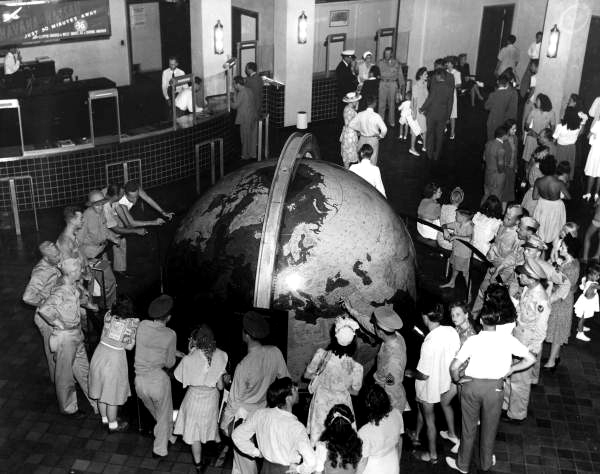
Courtesy State Library and Archives of Florida

Airports around the country, and the world, took time to turn on green lights for Earth Day and share notes about their planet-saving efforts.

Here’s a sampling.

Which airport turns used cooking oil into renewable fuel? Which airport is the first to sign the climate pledge? And which airport is a haven for butterflies?

Let us know if we missed yours and we’ll add it to the list.

Travel Tidbits from JetBlue, BWI and Dane County airports

JetBlue goes all-in on carbon offsets

Feeling guilty about flying?

Here’s something that may help.

JetBlue will start offsetting carbon dioxide emissions (CO2) from jet fuel for all of its domestic flights beginning in July 2020.

The airline has been covering carbon offsets for flyers during specific promotions.

But with this new announcement JetBlue says it will become the first major U.S. airline to move towards covering carbon offsets fulltime.

JetBlue currently works with Carbonfund.org, a U.S. based nonprofit carbon reduction and climate solutions organization, on offsets. And with this expansion, JetBlue expects to offset an additional 15-17 billion pounds (7 to 8 million metric tons) of emissions per year.

That, says JetBlue, is the annual equivalent of removing more than 1.5 million passenger vehicles from the road.

There’s more.

JetBlue also announced plans to start flying with sustainable aviation fuel in mid-2020 on flights from San Francisco International Airport.

BWI shows its support for the Baltimore Ravens playoff run

Great airport amenity: loaner books!

And check out this great amenity from Dane County Regional Airport (MSN) in Madison, WI.

The airport not only has short story dispensers in the terminal, it has loaner books for kids.

Have you seen a great amenity at an airport? If you do, snap a photo and send it along to StuckatTheAirport.com.

Airports & airlines sacking single-use plastic

Our story about airports and airlines getting rid of single-use plastics first appeared on CNBC.

Business and leisure travelers concerned about climate change and “flight shame” may do their part by purchasing carbon offsets and adjusting the number of trips they take on airplanes.

Airports and airlines are trying to save the planet too with a wide range of sustainable initiatives that include cutting down the use of single-use plastics and making reusable water bottles essential travel amenities.

BYOB at SFO Airport

In 2019, San Francisco International Airport (SFO), launched an ambitious Zero Waste Concessions Program designed to significantly reduce the amount of single-use disposable plastics used at the airport.

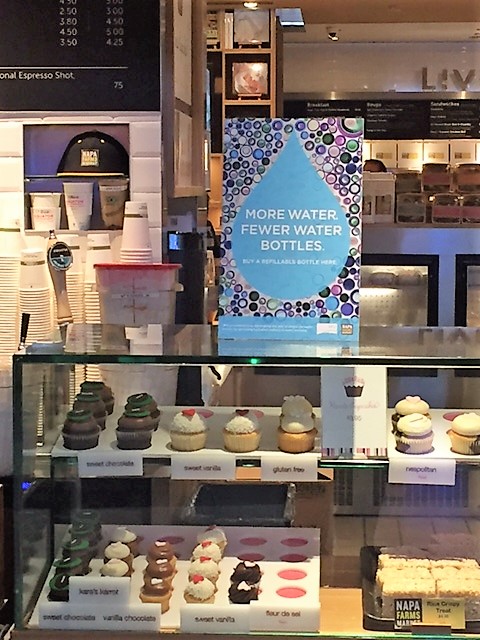
Noting that in 2018 nearly four million slow-to-biodegrade plastic water bottles were sold at the airport, in August 2019 SFO became the first airport in the nation to ban the sale of single-use plastic water bottles.

SFO now actively encourages each passenger to bring their own reusable water bottle with them to the airport and get free water from one of the hydration stations in the terminals.

Bottled sodas, teas and juices are currently exempt from the policy. And bottled water is still being sold, but only in approved packaging made from recyclable aluminum or glass, or in compostable packaging.

Single-use plastics banned at other airports too

Airports in a growing number of other cities in the United States, and around the world, are getting serious about sustainability projects that are good for the environment and, in some cases, the bottom line.

“Whether through their participation in the Airport Carbon Accreditation program, implementation of more sustainable business practices, or even by the elimination of drinking straws and other single-use plastics, airports are taking a variety of approaches to be good neighbors in their communities,” said Scott Elmore, Vice President, Communications & Marketing for Airports Council International – North America

In February 2019, Glasgow Airport offered all 5,300 people working in an around the airport free, reusable bottles.

In September 2019, Dallas Fort Worth International Airport (DFW) announced a campaign to phase out all single-use plastic straws at the airport.

In October 2019, the Airports Authority of India (AAI) announced that at least 55 airports in the country had banned single-use plastic items such as straws, plastic cutlery and plastic plates.

And January 1, 2020, is the deadline for Dubai’s two airports, Dubai International Airport (DBX) – the world’s busiest airport for international travelers – and Dubai World Central Airport (DWC) to be entirely free of single-use plastics such as plastic cutlery, drinking straws, meal packaging and bags.

“Along with our partners, including global brands such as McDonalds, Costa Coffee and Starbucks, we are committed to not only removing single-use plastics but in their place providing appropriate and importantly sustainable alternatives,” said Eugene Barry, Dubai Airport’s Executive Vice President – Commercial, in a statement.

Barry says finding replacements for plastic bottles remains a challenge for the airports, so for now bottle recycling efforts are being beefed up.

Going forward, a bill passed by the Atlanta City Council and waiting for the mayor’s approval is set to ban single-use plastics in the city and at Hartsfield Jackson Atlanta International Airport (ATL) by the end of 2020. Following the new law shouldn’t be too much of a reach: ATL’s guidelines for increased sustainability already seek to divert 90% of the airport’s total waste from landfills.

Not all airports are nixing the plastic water bottles, though.

In its food court, Portland International Airport (PDX) eliminates a great deal of plastic with its Green Plate Program that gives travelers the option of having meals served on reusable plates with reusable utensils.

But the airport’s environmental team hasn’t pressed to impose a ban on plastic bottles because “not every traveler chooses to tote around what can sometimes be a very expensive refillable bottle,” said PDX spokesperson Kama Simonds, “Further, what if travelers to our airport were unaware of the ban? This could have unintended consequences of either leaving folks with less hydration and/or potentially having a sugary drink as the option, which isn’t healthy.”

Airport vendors and airlines doing their part

HMSHost, which operates dining venues in more than 120 airports around the world, says it is on track to honor its commitment to eliminate plastic straws in its North American operations by the end of 2020.

The company has already eliminated plastic cocktail stirrers and currently only provides straws on request in its casual dining restaurants.

In September, Alaska Airlines kicked off a “FillBeforeYouFly” initiative, asking passengers to help reduce the use of single-use plastic bottles inflight by bringing their reusable water bottles to the airport and filling them at airport hydrations stations before their flight.

In November, Scandinavian Airlines (SAS) introduced sustainable meal packaging that includes paper with a coating made of organic plant-based plastic instead of oil-based plastic as well as cutlery made of plant-based plastic.

And earlier this year, Air New Zealand removed individual plastic water bottles from its Business Premier and Premium Economy cabins and switched to compostable plant-based coffee cups made from paper and corn instead of plastic.

The airline is encouraging passengers to bring their own reusable cups on board aircraft and into lounges. And, in a truly tasty move, ANZ is running a test program to serve coffee and ice-cream in edible, vanilla-flavored cups made by New Zealand-based twiice.

The Honolulu airport is getting super sustainable


The Daniel K. Inouye International Airport (HNL) in Honolulu is taking major steps forward in sustainability just in time for Earth Day, which is coming up on April 22.

As part of a major energy-savings project for the airport, 2,980 photovoltaic panels are now installed on the 5th floor of the Terminal 2 (formerly the Overseas Terminal) garage.

Last year, 4,260 solar panels were installed on the 7th floor of the airport’s Terminal 1 parking garage.

“The completion of this phase of photovoltaic panel installation, along with the previous improvements, will reduce the airport’s electric bill by nearly half.” said Hawaii Department of Transportation Director Jade Butay.

HDOT is working with Johnson Controls Inc. on a major energy savings project that includes replacing nearly 98,000 light fixtures with high-efficiency light-emitting diode (LED) technology and energy efficient lighting, upgrading ventilation and air-conditioning systems and installing more than 24,000 solar photovoltaic panels.

Given all the sunshine in Hawaii, harnessing solar power at HNL airport makes perfect sense!

Meanwhile, Hawaiian Airlines and Carbon Lighthouse, a clean energy services company, are working together on a pilot energy-saving project at the Hawaiian Airlines Airport Center, located near the Daniel K. Inouye International Airport.

Hawaiian Airlines bought the 14-story office building — famous for its iconic whale murals — in 2016 and leases some of the space to tenants and occupying about 20,000 square feet for office space.

To make the building more energy efficient, Carbon Lighthouse is deploying sensors throughout Airport Center to collect data on everything from air and water temperature and flow rates in HVAC equipment to lighting and occupancy.  

Using that information, plus weather, utility and other data, Carbon Lighthouse will identify way to reduce waste and optimize the energy use of the building.  

Donate to CA wildfires relief, get bonus United Airlines miles

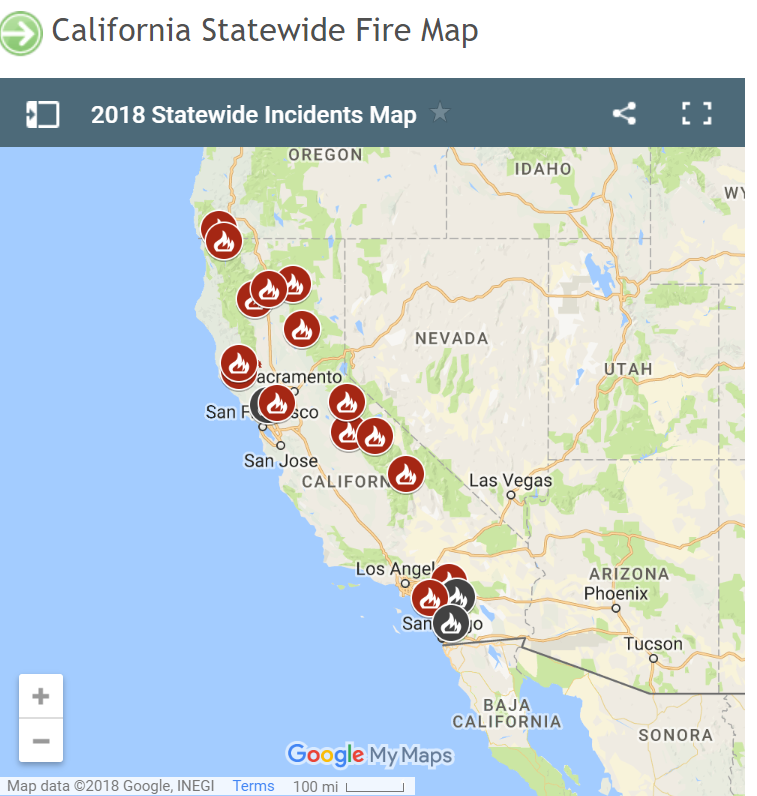
Get bonus United Airlines miles for donating cash to fight California wildfires

United Airlines has launched a fundraising campaign to support the people and organizations responding to the wildfires in California.

If you contribute at least $50 you’ll not only help raise funds for the campaign; you’ll get some bonus airline miles.

Here’s the deal:

United is offering MileagePlus members bonus award miles for making cash contributions of $50 or more to the three disaster relief charities listed below. The airline has set aside 5 million miles for the offer and will match contributions made to the campaign up to a total of $50,000.

Donate $50 to $99 and earn 250 bonus miles
Donate $100 to $249 and earn 500 bonus miles
Donate $250 or more and earn $1000 bonus miles

The charities that will benefit from your donation to this campaign are:

American Red Cross

Americares

Airlink

North Coast Opportunities (for the Mendocino Complex Fire)

Shasta Regional Community Foundation (for the Carr Fire).

All these organizations are doing incredible work. Here’s some information from Airlink about just soe of what they’ve been doing to help with the effort:

“The Northern California wildfires are now the largest in the state’s history and United Airlines is launching a fundraising campaign to help Californians affected by the historic blaze.

Airlink is currently responding to the fires in partnership with Operation BBQ Relief. We’ve supported flights for volunteers serving 20,000+ warm meals to displaced residents and first responders.

As the fires burn through the region, Airlink continues to work with its nonprofit partners, ready to send responders or relief cargo when and where they are needed.”

The deadline for making your contribution and getting these bonus miles is August 30, 2018

Here’s the link to donate to the United Airlines fundraising campaign in support of California Wildfires relief efforts.

I’m donating. Are you?

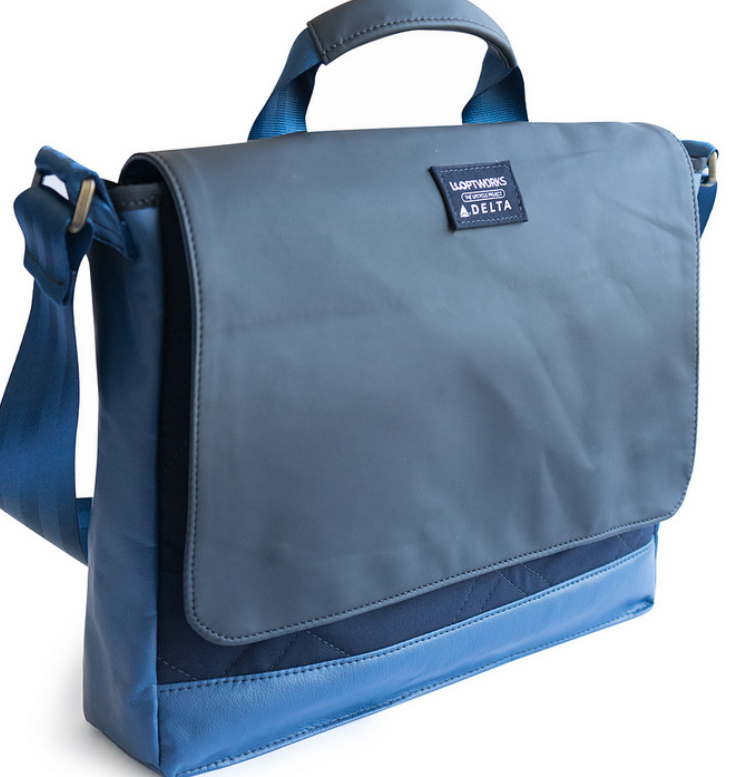
Delta Air Lines is upcycling its old uniforms. Need a tote?


Need a new tote or messenger bag?

Soon you’ll be able to buy one made out of old Delta Air Lines uniforms.

64,000 Delta employees got new uniforms on May 29 and instead of sending all the old clothing to landfills the airline donated more than 350,000 pounds of clothing to Looptworks to be upcycled and repurposed.


New Zac Posen uniforms for Delta Air Lines

Delta and Looptworks plan to make backpacks, passport covers, messenger and tote bags and other accessories out of those old uniforms and begin selling them in the fall.

Will you buy one?

So long, Sydney: take-aways from IATA’s meeting of world’s airline execs

The Vivid Sydney festival – which lights up iconic buildings and structures around the city – was a great backdrop for this week’s meeting of the world’s airline executives at the World Air Transport Summit (WATS) and the annual general meeting of IATA – the International Air Transport Association.

All sorts of briefings, reports, discussions, debates and newsy announcements take place at this event each year and will generate stories that will spool out over the course of the next few weeks.

In the meantime, here are just some of the highlights from the past few days:

Courtesy IATA

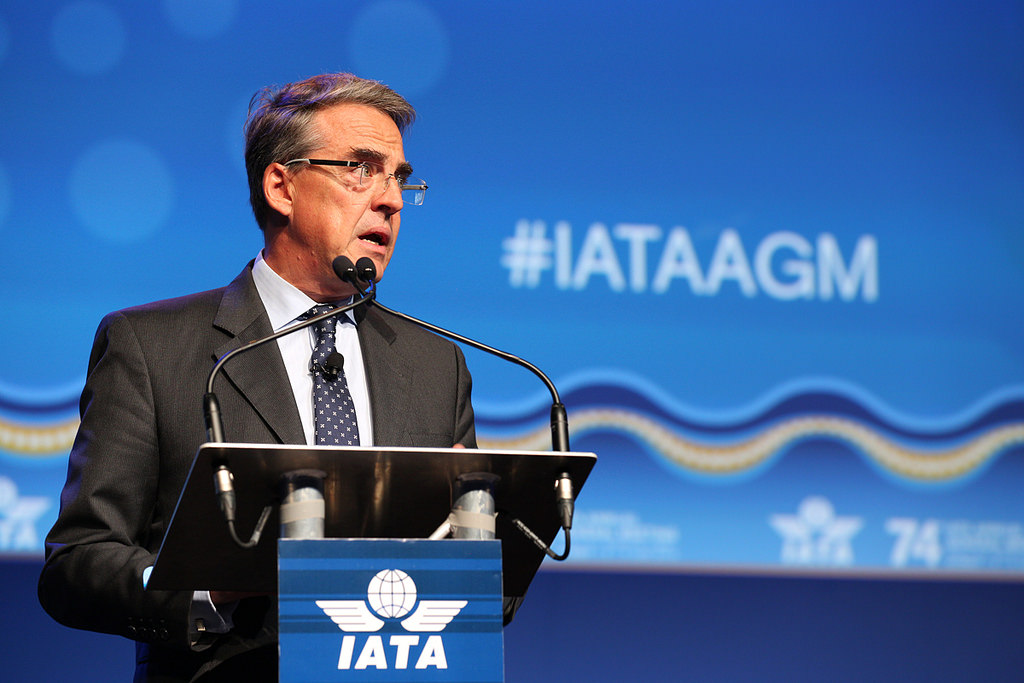
In his annual report, Alexandre de Juniac, IATA’s Director General and CEO, said that airlines are expected to achieve a collective net profit of $33.8 billion. That’s an average profit per passenger of $7.76 for the airlines, he explained, “A thin 4.1% net margin” in 2018.

Read his full report that also touched on safety, security, environmental issues and other topics here.


A bundle of 20-minute on-stage interviews were offered, on topics ranging from alternative fuels, gender equality in aviation, airport privatization and the benefits and risks of travel and tourism. Follow the links for more details from those sessions and videos of the interviews.


CNN’s gregarious Richard Quest was on stage with a panel of airline CEOs, including Calin Rovinsecu of Air Canada, Tim Clark of Emirates Airlines, Rupert Hogg of Cathay Pacific Airways, Pieter Elbers of KLM and Christoper Luxon of Air New Zealand.


Among the notable moments was when the all-male panel was asked to address gender equality (or the lack of it) at the top echelons of aviation:

Other sessions addressed everything from some creative ways getting passengers to and from airports more efficiently to the role airlines play in human trafficking.

For media attendees, the meeting wrapped up with a final debriefing session with IATA CEO and Director General Alexandre de Juniac, Qatar Airways Group Chief Executive Akbar Al Baker, who will serve as chairman of the IATA Board of Governors for the next year, and Alan Joyce, CEO of the Qantas Group, which hosted the IATA AGM in Sydney.

The Qatar Airways CEO is well-known for his bravado and controversial comments, but at an event in which other CEOs expressed a committment to increasing the role of women in the upper ranks of their companies, Akbar Al Baker’s comment that of course his airline had to be run by a man, “Because it is a very challenging position” was met with disbelief.

His comment may have been a ‘joke,’ – and he did go on to mention that Qatar has women serving as pilots, as senior vice presidents and in other top-level positions – but the comment did not sit well with the group assembled (I literally jumped out of my seat!) and just underscores the fact that this sector of industry has some real homework to do.

The last (plastic) straw for Alaska Airlines

Courtesy Alaska Airlines 

Earth Day  – which this year highlighted Lonely Whale’s “For a Strawless Ocean” campaign to get people and companies to stop using plastic straws – has come and gone. But the earth still needs our help.

So it’s good to know that Alaska Airlines has jumped on the No Straws bandwagon. Starting July 16 the carrier will stop serving single-use, non-recyclable, plastic stir straws and citrus picks with drinks and will replace them with sustainable alternatives in its airport lounges and on all domestic and international commercial flights.

What’s wrong with plastic straws?  They non-recyclalbe and if they end up on the oceans, they can kill  birds and other marine life.

In 2017, Alaska Airlines handed out 22 million plastic stir straws and citrus picks. This summer, they’ll instead start using Forest Stewardship Council (FSC) certified white birch stir sticks and a bamboo alternative for the citrus pick. People with special needs will be able to request non-plastic, marine-friendly straws.

Alaska Airlines has a good history of being eco-conscious.

Since it started tracking its recycling efforts in 2010, the airline says it has reduced passenger waste going to landfills by 54 percent.

The Seattle-based carrier has also replaced bottled beer with aluminum cans -which are lighter and easier to recycle and introducted a policy to refill plastic cups rather than offering a new cup for every round of beverage service.

“Building on our grassroots, employee-led recycling program, we’re thrilled to take the next step to protecting our land and oceans by removing single-use non-recyclable plastic straws from our planes,” said Jacqueline Drumheller, sustainability manager for Alaska Airlines, in a statement.

Let’s see if other airines join the no-straw party.

Airline amenity of the week: free sunscreen on Hawaiian Airlines

Here’s a nomination for airline amenity of the week:

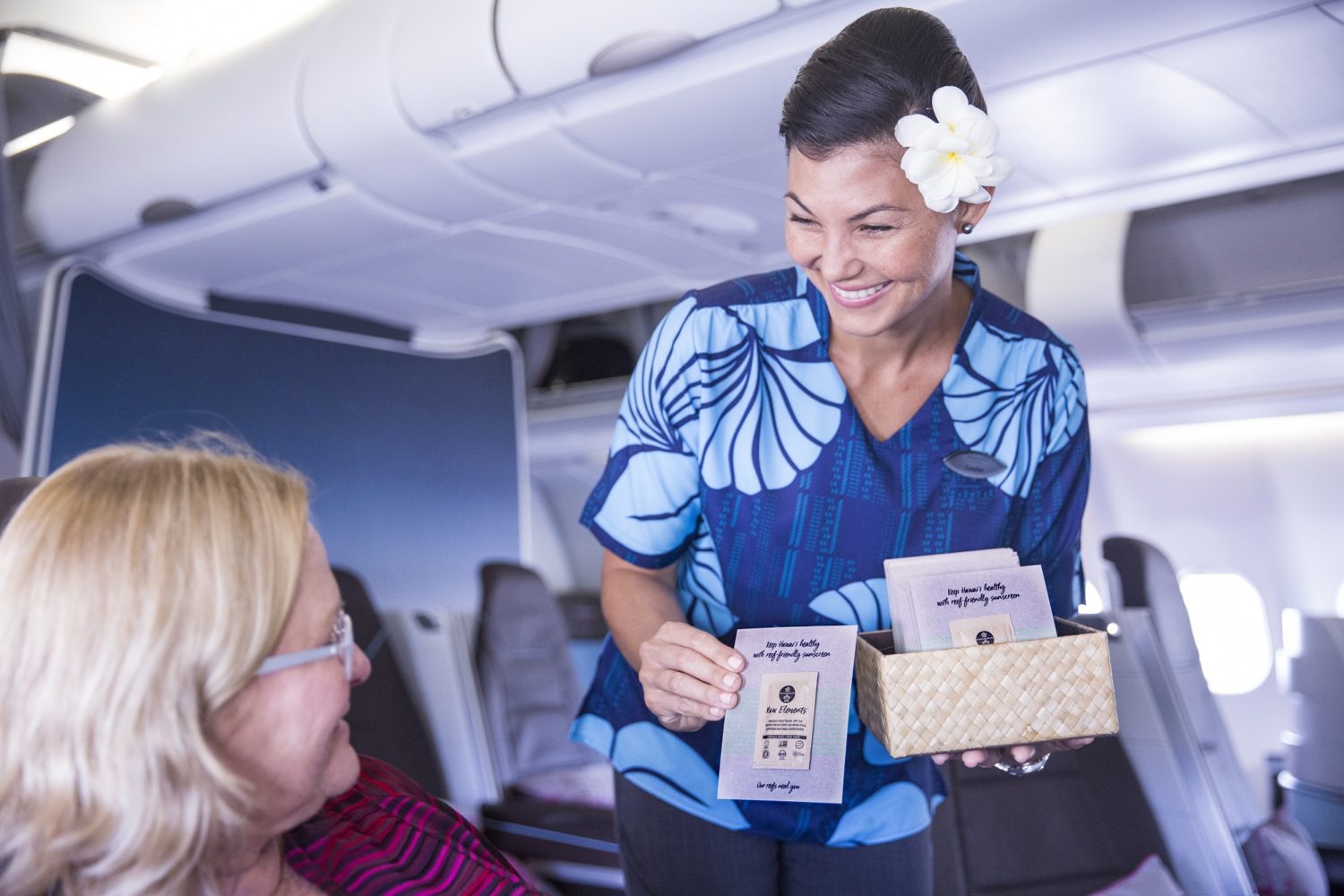
Hawaiian Airlines has partnered with reef-safe sun care company Raw Elements USA, to offer complimentary packets of sunscreen to passengers on all flights from North America to Hawaii throughout the month of April.

Discounted full-size bottles of the eco-friendly sunscreen will also be sold on flights to Hawaii through June.

Complimentary sunscreen is a nice gesture, but it’s also an educational one.

Preserving Hawaii’s natural resources is important and the ingredients in many traditional sunscreen products can harm Hawaii’s coral reefs.  To explain how, the airline has also debuted a new educational in-flight video, Reefs at Risk.

“Hawaii is a very special place, and we believe it is our kuleana, or responsibility, to care for our home,” Avi Mannis, senior vice president of marketing at Hawaiian Airlines said in a statement,

In addition to offering Hawaiian Airlines passengers complimentary sunscreen samples, Raw Elements USA is also hosting a social media sweepstakes for US residents.

The prize: two roundtrip tickets (140,000 HawaiianMiles) to Hawaii courtesy of Hawaiian Airlines, a five-night stay at The Surfjack Hotel and Swim Club (an Aqua-Aston Hospitality Hotel), the choice of three complimentary island activities, and a year’s supply of Raw Elements reef-safe sunscreen.

Entries in the Protect the Reef sweepstakes are being accepted through 4/30/18. Good luck and see you on the beach!