Aviation history

Happy 75th Birthday, Reagan Washington National Airport

DCA image

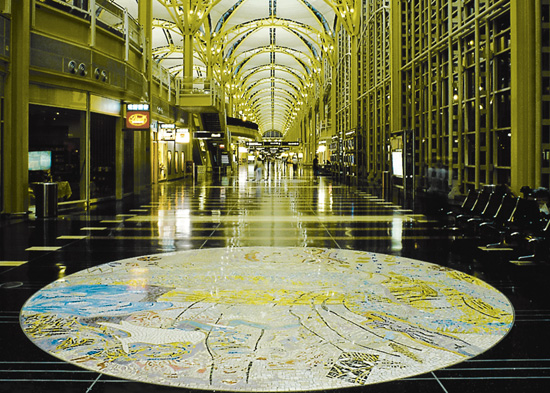
Ronald Reagan Washington National Airport turns 75 on June 16, and the party is already underway – with promotions, giveaways, pre-security performances and a special historic aircraft arrival.

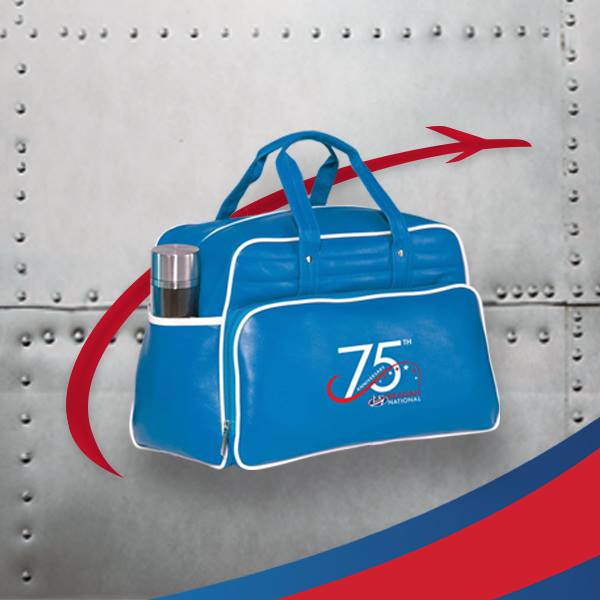
In honor of the airport’s founding in 1941, restaurants across the airport are offering “First Class Meal Deal” specials for $19.41 and, as part of a ‘gift with purchase’ promotion, anyone who spends $100 in combined food and retail purchases at the airport can get a free, vintage-style travel bag.

DCA VINTAGE BAG

On Reagan National’s actual anniversary, June 16, passengers on the 75th arriving flight will be treated to music and dance performances and a giveaway at the gate.

The airport will also host the Aero Club of Washington for a lunch on June 16 in the Historic Lobby—the original ticketing area of the airport when it opened—with remarks from Doug Parker, President and CEO of American Airlines.

But wait – there’s more!

dca FLAGSHIP DETROIT

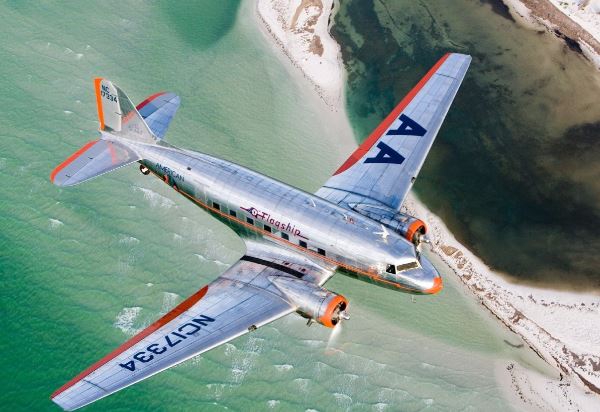
Flagship Detroit, a restored, American Airlines DC-3 aircraft and the same model that opened National Airport 75 years ago will arrive on Wednesday evening, June 15, for display at the Aero Club Lunch.

A full listing of events and promotions is on the DCA website and more details (and giveaways) are already flying on the airport’s Twitter feed.

But for now, here are the restaurants offering $19.41 specials this week:

Sam and Harry’s – Terminal C, pre-security
Legal Sea Foods – Terminal B/C, pre-security
Reservoir – Terminal A, post-security
Page – Terminal A, post-security
U Street Pub – Terminal B/C, post-security
Washington Pour Bar – Terminal C, post-security
Lebanese Taverna – Terminal B/C, post-security
Grill District – Terminal B, post-security
Cibo – Terminal B, pre-security

Shops Offering Promotions this week:

As Kindred Spirits – Terminal B/C, pre-security
America! – Terminal B/C, pre-security
InMotion Entertainment – Terminal B/C, pre-security
Capital Image – Terminal B, pre-security
Landau – Terminal C, pre-security
iTravel 2 – Terminal B, pre-security
Dunkin Donuts – Terminal A, pre-security

DCA 75th logo

Alaska Airline’s eclipse trip

Alakas Airlines ecllipse

Photo courtesy Alaska Airlines


Here’s a great eclipse photo and (below) a video taken from an Alaska Airlines plane during the total solar eclipse on March 8.

To get those photos – and make a planeload of eclipse chasers happy – Alaska Airlines actually changed the path and the timing of Flight 870 from Anchorage to Honolulu so that it would intersect the “path of totality” – the darkest shadow of the moon as it passes over the Earth – at the exact right time.

I think it was definitely worth the trouble!

Video courtesy Mike Kentrianakis / American Astronomical Society.

Want to see a total solar eclipse? There’s one coming up in August 2017 that will sweep across the United States. Start planning now with tips offered on the eclipse2017.org website.

From here to there: airport jet bridges

Courtesy Smithsonian Air & Space Museum

Courtesy Smithsonian Air & Space Museum

Here’s a short history of jet bridges I put together for my At the Airport column on USA TODAY.

In the glamorous “good old days” of air travel, entering or exiting an airplane involved a walk across the tarmac and a climb up or down a flight of movable stairs.

That was fine when the weather was good and all passengers were agile and is still how it’s done at many small airports and for flights at larger airports that arrive and depart on smaller jets.

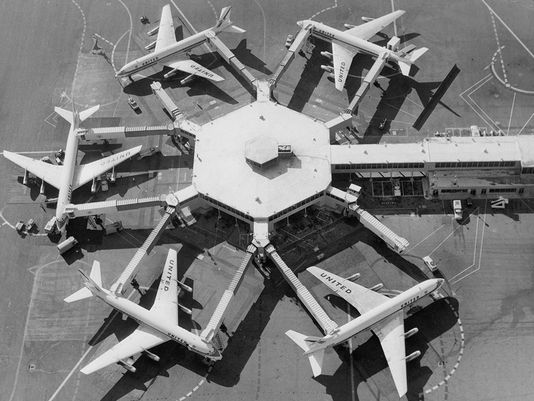
But sometime in the late 1950s, movable, enclosed metal walkways offering a sheltered pathway between terminals and airplanes began sprouting up at U.S. airports.

Courtesy SFO Museum

Courtesy SFO Museum


“The idea was to protect the passenger and get things moving more quickly,” said Bob van der Linden, curator in the Aeronautics Department at the Smithsonian National Air & Space Museum, but the new passenger boarding bridge also meant air travelers began being isolated “from the romance and the excitement of air travel” in part because “they stopped seeing the airplanes they were boarding.”

Still, van der Linden says a jet bridge or Jetway (the trademarked brand name now often used to describe all passenger boarding bridges, in the same way Kleenex is used for tissues) was a “brilliant idea.”

And although wording on an exhibit panel about early air travel at the Air & Space Museum credits Chicago O’Hare International Airport with introducing the first ‘air bridges,” van der Linden admits that this detail of aviation history is “hard to pin down.”

Various accounts give that credit not only to O’Hare, but to LAX, New York’s LaGuardia Airport, what is now Hartsfield-Jackson Atlanta International and to San Francisco International Airport.

“Although it has appeared in print, SFO is not able to definitively claim having the first ‘Jetway’,” said John Hill, Assistant Director, Aviation at the SFO Museum, but “we are confident to say that the experimental, second story, fully enclosed and retractable passenger loading bridge installed here in 1959 for American Airlines was certainly one of the very earliest.”

According to United Airlines archivists, in 1954 the carrier began testing something called an Air Dock – an enclosed bridge that enabled passengers to walk directly in and out of aircraft without scrambling up and down stairs – and “from those early experiments emerged the telescoping passenger loading bridges now commonly known as jetways.”

Around 1959 the Pacific Iron and Steel Corporation of Los Angeles was contacted by United Airlines to build a “passenger gangway like what they had on cruise ships, but to service aircraft,” said Garrett Macfarlane, Regional Sales Manager for Ogden, Utah-based JBT AeroTech, which now builds the trademarked Jetway passenger boarding bridges.

That turned into an order from United for 19 passenger bridges to be used at what is now New York’s JFK airport, at Los Angeles International Airport and a San Francisco International Airport, said Macfarlane.

A 1959 Airlift article referenced by Aviation Pros tells the story of Delta Air Lines giving Pacific Iron and Steel a first order for 17 “Jetways,” with two prototypes delivered to the Atlanta Airport in July of that year.

“Those first ones were very similar to what you see today – a series of telescoping tunnel sections with wheels,” said Macfarlane. And while the 1961 price of about $100,000 per unit was likely an early deterrent for airlines not used to budgeting for the handy invention, “by the 1970s and 80s most every major airport had them,” he said.

Today, several companies make and market to both airports and airlines a variety of passenger jet bridge styles to service both large and small jets and an A380-capable Jetway unit costs about $600,000.

The now-common airport amenity is now also taken for granted and, in some cases, despised.

A jet bridge is “not quite in the airport, not quite in the airplane,” said Christopher Schaberg, an associate professor at Loyola University New Orleans and the author of The End of Airports, and he’s noticed that for some travelers being inside one can seem like a strange kind of torture.

“Just search Twitter for ‘jet bridge’ and you’ll see people complaining about their brief moments in their tunnels: too hot, too cold, snow seeping in, bad smells, waiting for lazy workers…all the foils of modern life are on display here in the jet bridge,” he said.

Like the security checkpoint, the walk down the jet bridge is a part of the airport experience you want to get through as fast as possible, said Raymond Kollau, founder of airlinetrends.com.

“When boarding the aircraft, it is the final obstacle to overcome before you can finally get into your seat inside the aircraft. The initial relief one has when boarding is announced and you pass the final boarding gate often quickly vanishes because of the traffic jam that usually occurs inside the enclosed jetbridge.”

SAN Operations

Courtesy United Airlines

Not your grandma’s jet bridge

Some airlines and airports have tried transforming the jet bridge experience.

As part of the art program created for the new Terminal B at San Jose International Airport in 2010, speakers were installed in each of 8 jet bridges to accommodate what was a planned series of sound works.
The first was Bill Fontana’s “Sonic Gateway” audio compositions heard by boarding and deplaning passengers from 2011 to 2014.

“The first and last experience a passenger has at an airport is going through a jet way,” said Fontana, “So I spent some time examining the schedules and tried to create sound mixes for these transitional spaces that related to some of the locations airplanes were coming from or going to.’

For example, the sounds of wild Hawaiian chickens was part of the soundscape heard by travelers on their way to Hawaii, while arriving passengers might hear a sound mix that included the bells of Trinity Cathedral in downtown San Jose.

United Airlines is also toying with the jet bridge space with a project designed to inject sensory experiences into jet ways in the form of music, visual branding and scents.

“We are looking at creating an end-to-end branded experience,” said Mark Krolick, the carrier’s Managing Director of Marketing and Product Development, “That includes every aspect of the airport and aboard the aircraft, and the jet bridge is a key piece of that.”

The music part of the project isn’t up and running just yet, but for the past few months United has been experimenting with different ways to diffuse its signature scent – described as a “gender-neutral fragrance with key notes of orange peel, balsam, sandalwood, cedar and leather” – into jet ways at several gates at O’Hare International Airport.

At some airports United owns its own jet bridges, in others it leases them or shares them with other airlines, but for this project Krolick says during 2016 the airline will roll out scenting (and other aspects of the project) at hub airports where it has the most control over the jet bridge environment.

So keep your nose and ears open heading down boarding gates to and from United flights in Newark, Washington- Dulles, Chicago O’Hare, Houston, Denver, Los Angeles and San Francisco.

In the future there may be even more jet bridge innovation.

Fire codes restricting the use of glass walled jet bridges at US airports have recently been lifted, said JBT AeroTech’s MacFarlane, and LEDs allow the mood and lighting inside jet bridges to be easily altered.

“Change comes slowly in the boarding bridge world,” said Macfarlane, “But now that airlines are making money, maybe they’ll start doing some new things.”
The tech connected flight attendant

MuseumofFlightfashions

Don’t be alarmed if the cabin attendants on your next flight seem to be spending a lot of time looking at their personal electronic devices.

They’re not checking Facebook, watching the latest cute cat video on YouTube or posting to Instagram or Twitter about the antics of the jerk in Row 12.

More likely they’re using their airline-issued digital devices to determine which passengers will have tight – or impossible – connections, who’s having a birthday and who is entitled to a complimentary drink.

In the same way mobile technology has lightened the loads of pilots by replacing pounds of paper charts and manuals with programmed iPads, apps on mobile devices that can conduct sales and access passenger information are changing the way flight attendants work in and out of the cabin – and helping airlines improve their bottom line.

Read more about how new tech devices for flight attendants are helping to upgrade passenger services in a story I wrote for Fortune.

Souvenir Sunday: Airport Tower gifts

It’s Souvenir Sunday – a day we look at some of the fun, inexpensive things you can get at airports or, today, aviation museums.

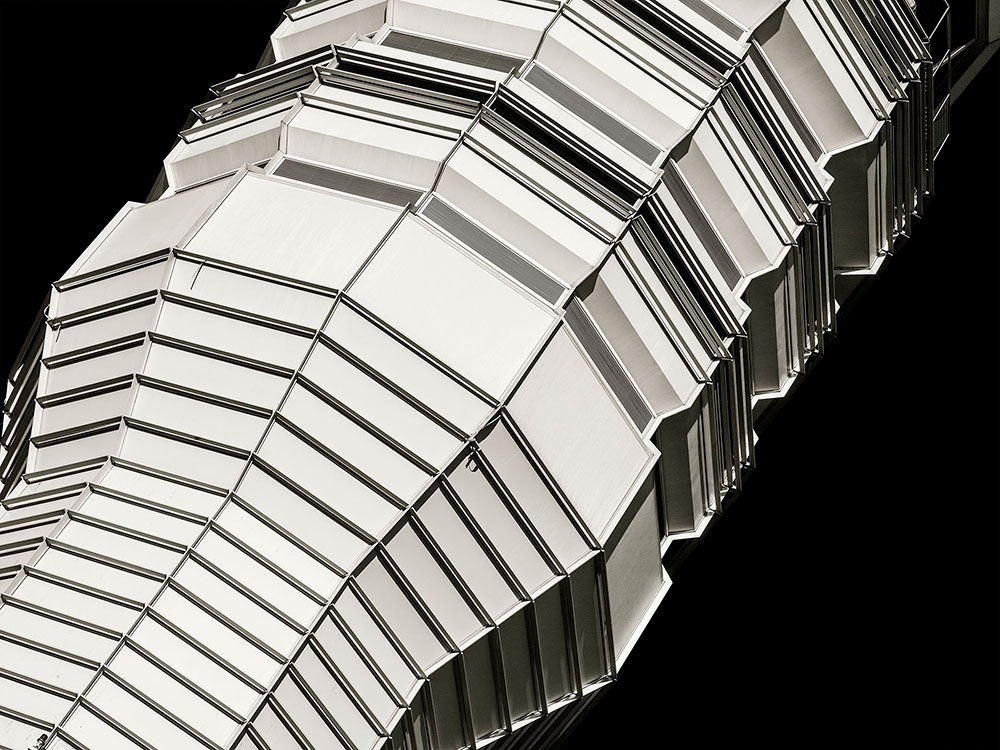
Through November, 2016, the Smithsonian Air & Space Museum is hosting an impressive exhibition of photographs by Carolyn Russo exploring the Art of the Airport Tower.

Reagan National Airport , photo by Carolyn Russo

Reagan National Airport tower, photo by Carolyn Russo

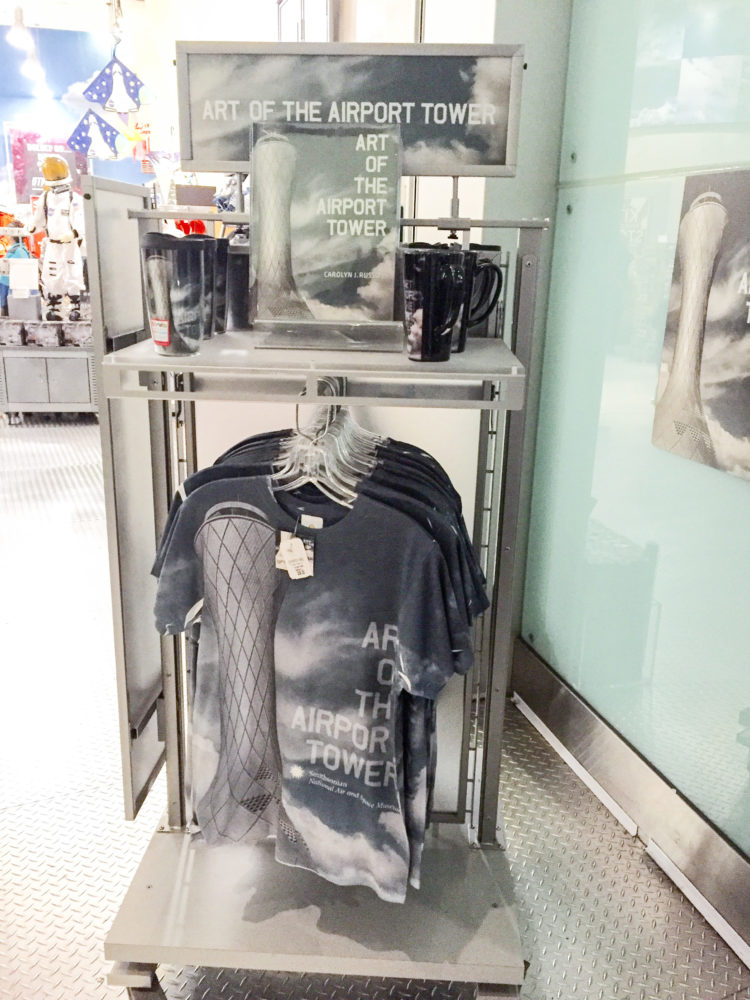
StuckatTheAirport.com reader Robert Little went to see the exhibition and enjoyed it so much he went home with some Art of the Airport Tower souvenirs – and sent along these photos for Souvenir Sunday.

(As a thank-you for participating in Souvenir Sunday, I’m sending Robert a collectible airplane model. Don’t tell him.)

Art of the airport tower souvenirs 2

Airport Tower souvenirs

There’s a nice sampling of Russo’s photos accompanying this interview I did with her for NBC online, but I’m sure seeing the images in person are far better. And, if you’re a fan of great photography and/or aviation (or know someone who is), I’d encourage you to buy the Art of the Airport Tower book.

Airport control towers as art

LaGuardia Airport

I had the great pleasure of speaking with photographer Carolyn Russo about her book Art of the Airport Tower and the companion exhibition at the Smithsonian Air & Space Museum for this story on NBC News.

The book is now on my holiday wish list and I’m planning a trip to Washington, D.C. so I can see the images on display. See you there.. .

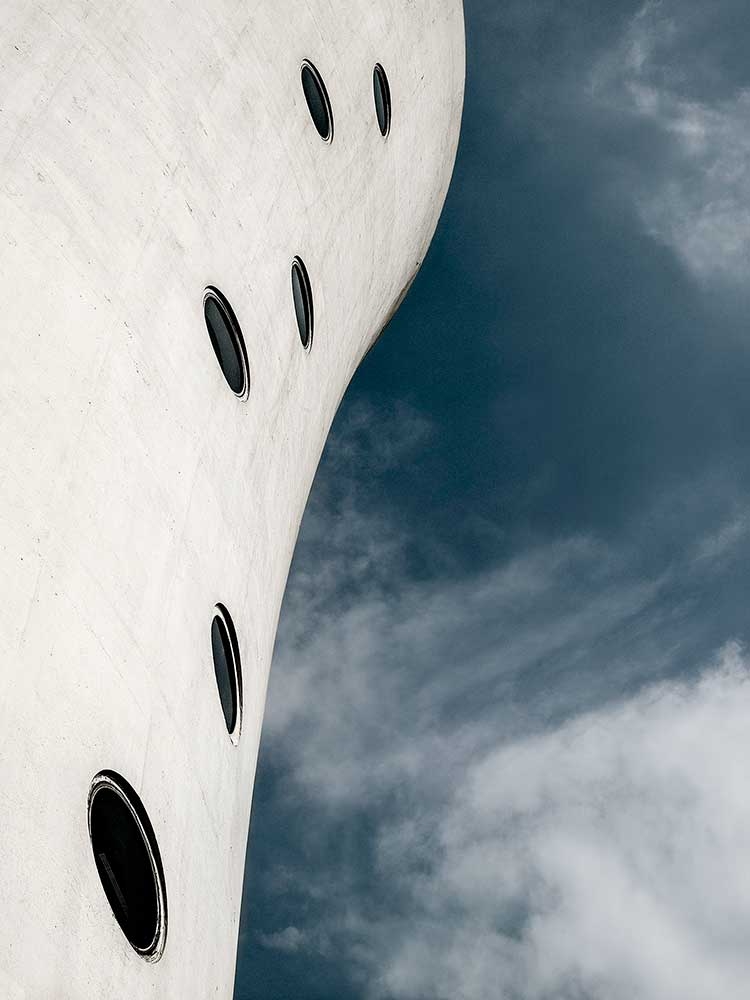
A chance glance out the window as her flight landed at New York’s LaGuardia airport in 2006 led photographer Carolyn Russo to discover beauty in an unusual place – the port-holed façade of the control tower. And it ultimately led to a new exhibit at the Smithsonian’s Air & Space Museum in Washington, D.C., and a companion book celebrating airport control towers worldwide.

“(I) saw that tower and thought, ‘Oh my god, this thing is gorgeous!” It really did look like Swiss Cheese,” said Carolyn Russo, a staff photographer and museum specialist at the Air & Space Museum.

Russo went on to photograph the LaGuardia tower, along with 84 other historical and contemporary towers in 23 countries. And she came to see the structures as “unsung heroes … non-judgmental cultural greeters” and important city landmarks.

“I want people to have a greater appreciation for an artifact in the airport landscape that is too big to put in a museum collection,” said Russo.

Reagan National Airport

Reagan National Airport

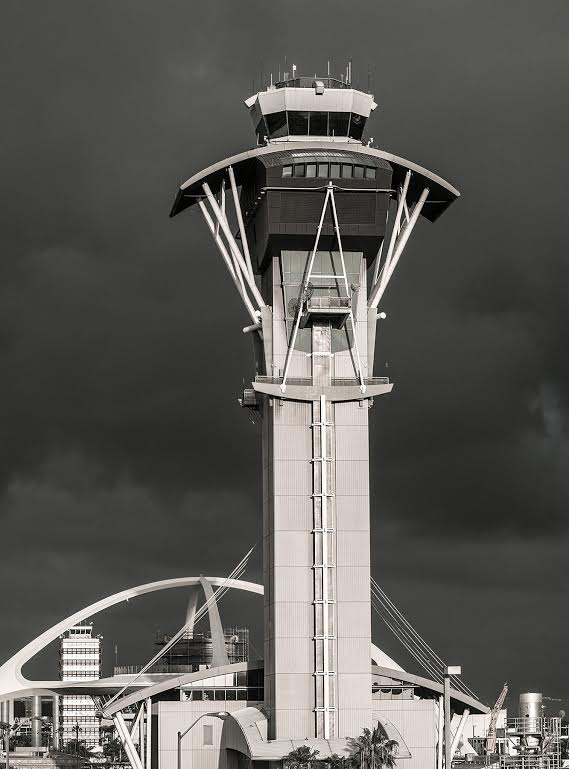
The tower at Los Angeles International Airport is one of Russo’s favorites, “because it was built specifically to be an iconic landmark that people notice.” She also delights in a tower in Abu Dhabi created to look like a crescent and, to her, a flowing robe, and the tower at Kuala Lumpur airport intended to look like a tree to blend in with the “airport in a forest” design.

LAX control tower

LAX control tower

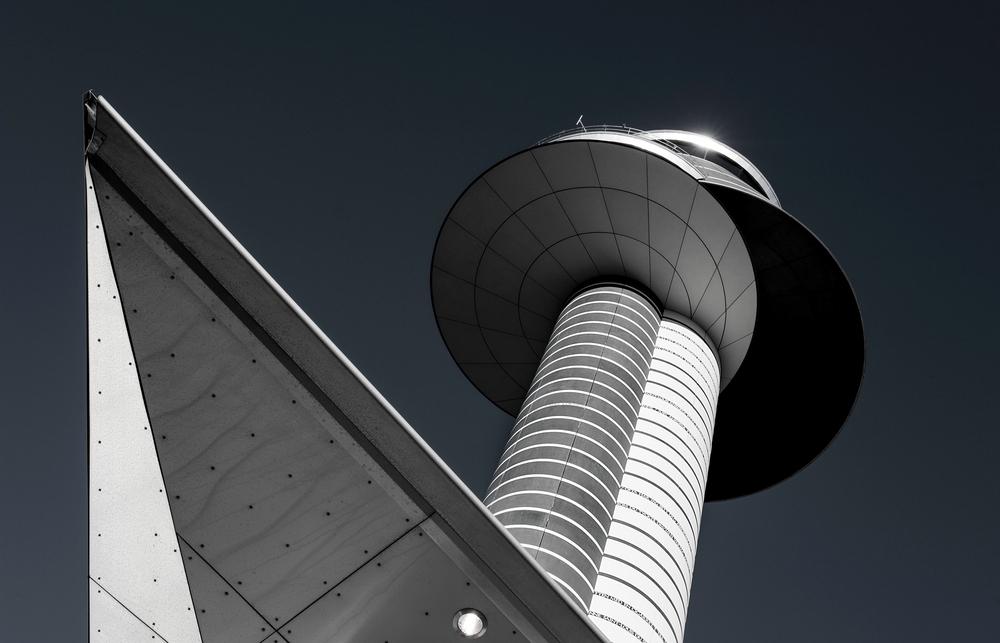
Stockholm Arlanda Airport

Stockholm Arlanda Airport

At the Stockholm-Arlanda Airport, the control tower designer put two cab-like pieces at the top meant to symbolize two ravens from Norse mythology.

“That’s also the only tower I know of where you can pay a fee and get married at the top,” says Russo. “That doesn’t happen where the controllers sit, but you get champagne, chocolate-covered strawberries and this amazing view.”

To find the perfect spot to take a control tower’s portrait, Russo worked with the Federal Aviation Administration, with airport authorities, governments and air traffic control agencies around the world.

Photos of some contemporary towers don’t look like towers at all, due to the unusual angle Russo chose, but for many historical towers, “I photographed them objectively and tried to make them timepieces left behind from another aviation era,” said Russo.

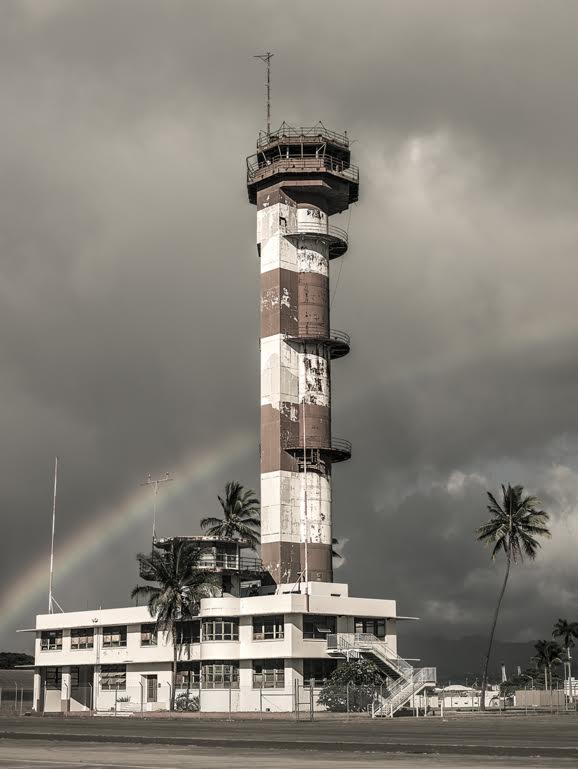
Most images are in black and white. But when photographing the Ford Island Field Control Tower, a National Historic Landmark at Pearl Harbor in Hawaii, a rainbow came out during the photo shoot, so Russo left the color in.

Russo_ Hawaii

And while Russo made sure to photograph some of the oldest airport control towers, including some now demolished or about to be, she also includes two brand new ones in Sweden that are managed by remote control.

“These are metal structures that have cameras, sound sensors and other equipment that allow the controllers to be 100s of miles away in an office with 360-degrees of LCD screens,” said Russo. “The towers aren’t beautiful, but I include them to tell the story of possibly one of the directions we will be moving with some airport traffic control.”

The exhibition “Art of the Airport Tower” opens Wednesday at the Smithsonian National Air and Space Museum in Washington, D.C., and runs through November 2016. It includes more than 50 of the 100 airport control tower images in Russo’s book of the same name.

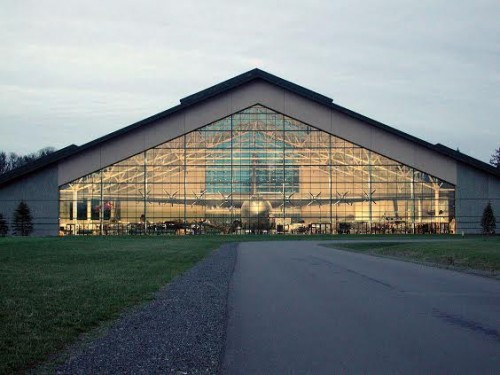
Bye-Bye Spruce Goose?

Spruce Goose from outside

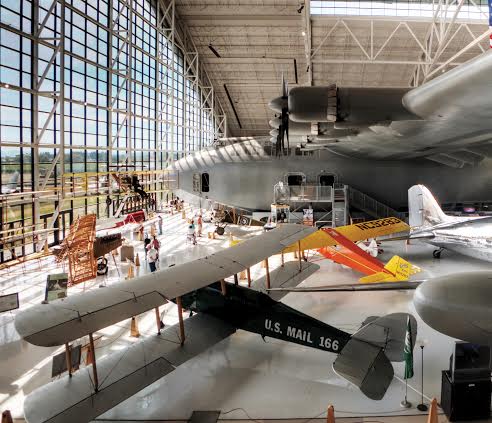
If you want to get an up close look at the Howard Hughes’ Spruce Goose – or play for a day in a water park built with a Boeing 747 on the roof – now might be a good time to make those plans.

The Evergreen Aviation & Space Museum – and Wings and Wave Water Park – may be sold on November 30 in a foreclosure auction in Oregon.

Spruce Goose and others inside the museum

The museum is hoping to delay the sale and has posted this notice on its website:

“We have been notified that our landlord, the Michael King Smith Education Foundation, has received a writ of execution on the sale of both the Space Museum and Wings & Waves Waterpark. The Foundation is a separate entity that owns buildings on the Museum Campus including the Space building, chapel and the Evergreen Wings & Waves Waterpark.

The Evergreen Aviation & Space Museum is an independent non-profit organization. Museum Management is actively working on solutions to address this situation with the landlord. Visitor count at both the Museum and Waterpark is strong, and the Museum is profitable. We will continue to operate as usual and look forward to welcoming our guests.”

(Photos courtesy of the museum)

Hawaiian Airlines: why all the gum?

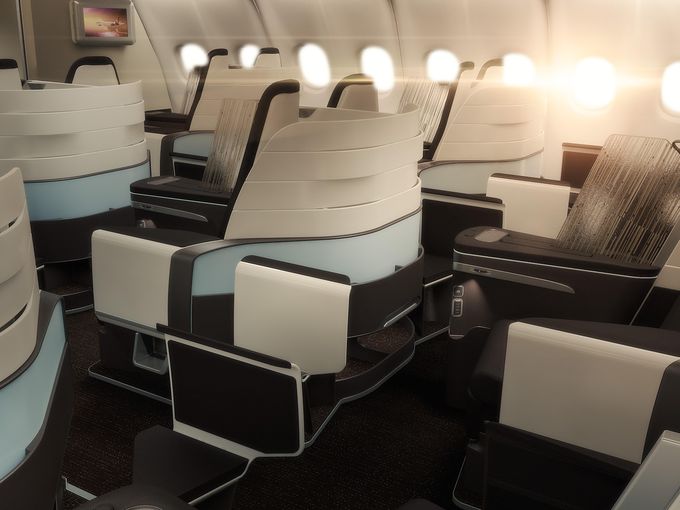
On Monday, journalists gathered at Hawaiian Airlines’ Honolulu headquarters for the carrier’s first global media day and the announcement that the airline is adding lie-flat seats to the premium cabins on its fleet of A330 aircraft.

hawaiian airline seats

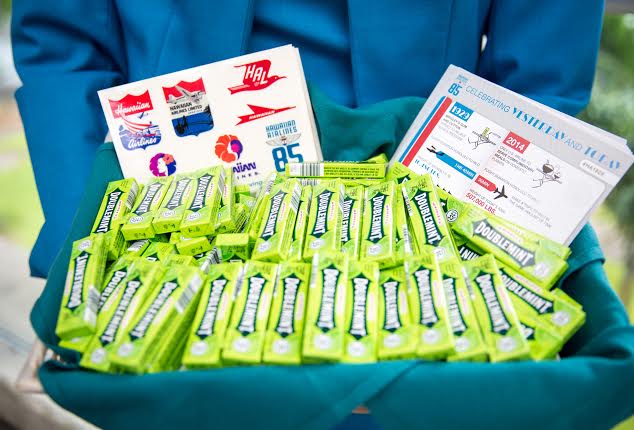
During the event, refreshments were laid out for the attendees. And in with the coffee, water, fruit and trail mix were boxes filled with packs of Doublemint gum.

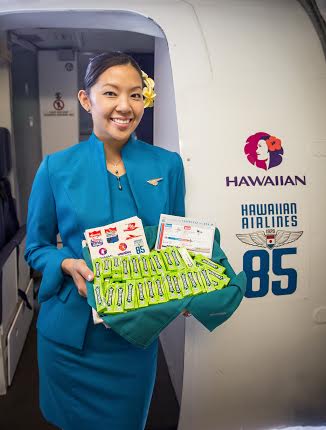
The gum seemed like an odd offering until it was explained that last November, when Hawaiian Airlines was celebrating the 85th anniversary of interisland passenger service, Doublemint gum was part of the festivities.

The reason: back in 1929, the first inflight amenity offered to passengers was a stick of Wrigley’s gum to help relieve ear pressure.

Hawaiian Airlines revived that tradition during its anniversary day celebration on November 11, 2015 by once again handing out Wrigley’s Doublemint gum to passengers (along with some other goodies) to the more than 12,000 passengers taking neighbor island flights that day.

Hawaiian gum offer

Hawaiian Airlines gum box

But not all the gum Wrigley’s sent to Hawaiian Airlines for the celebration was used.

Not by a longshot. Which is why Doublemint gum is now there on the refreshment table at a lot of Hawaiian Airlines events.

hawaiian airlines gumbox (3)

Exhibit celebrates history of Phoenix Sky Harbor Airport

Copperclad Airways – 1935, North Terminal hangar and tower with Copperclad Airways planes.

Copperclad Airways – 1935, North Terminal hangar and tower with Copperclad Airways planes.

An new exhibition celebrating the history and growth of Phoenix Sky Harbor International Airport includes photographs and vintage airline amenities, including playing cards, china place settings, gourmet menus, grooming kits and other amenities.

PHX exhibit

Look for the exhibit in Terminal 4 (level 3) on the south side just west of the food court.

North Hangar – 1930s, North Terminal hangar and tower

North Hangar – 1930s, North Terminal hangar and tower