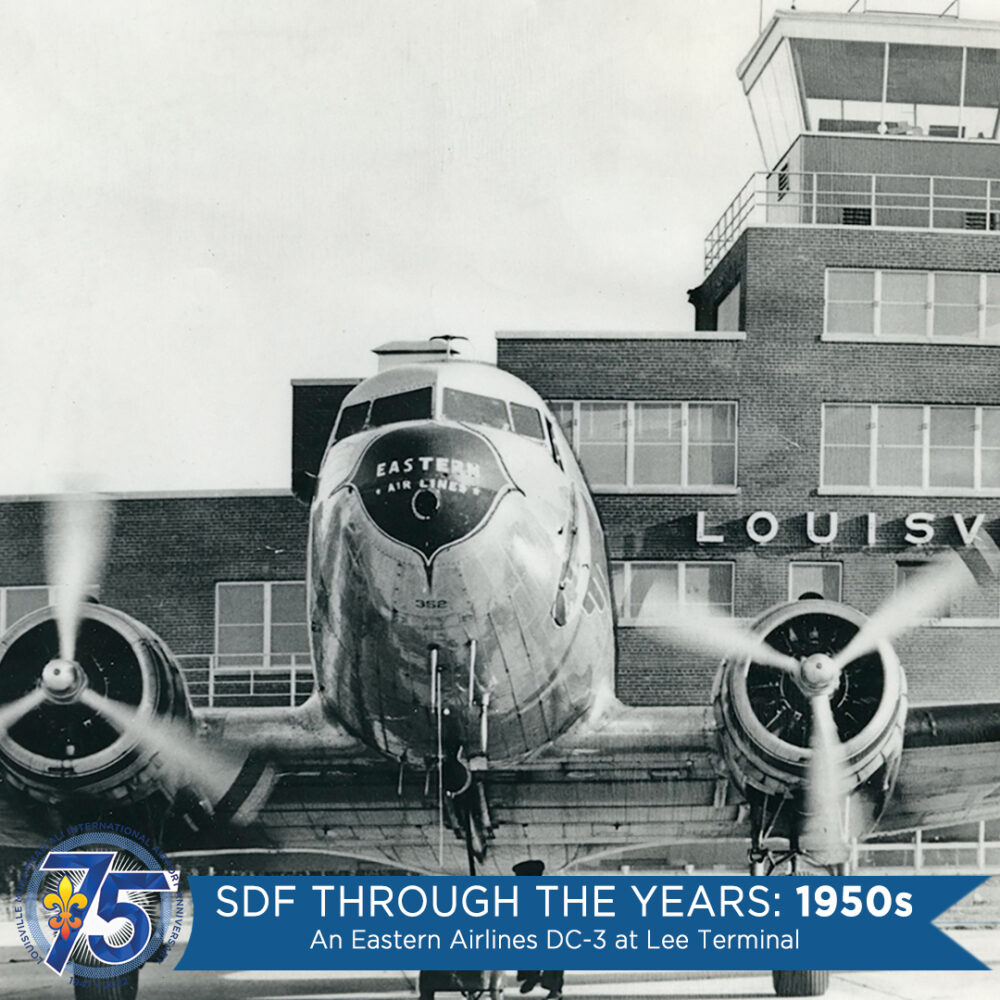
On this day in 1947, the then-Standiford Field began its first passenger flights. To celebrate today’s 75th Anniversary, the Louisville Muhammad Ali International Airport unveiled its “SDF Through the Years” exhibit. The exhibit will be on display through the end of the year. pic.twitter.com/Vrs1T6IGTv
The 13-banner exhibit features historical photos from the 1940s to the present and includes images of visits by United States Presidents, celebrities, as well as key airport partners such as UPS and the Kentucky Air National Guard 123rd Airlift Wing.
November is Aviation History Month. And that means it’s a good time to look at aviation history displays at airports around the country.
First stop: Phoenix Sky Harbor International Airport (PHX). There, the Phoenix Airport Museum presents numerous history displays. And exhibits are pre-security. Even better, the airport museum has a new Aviation History Guide chock full of information about the exhibits.
The guide is accessible via QR codes by the displays or online.
Gary Martelli, the manager/curator of the Phoenix Airport Museum was kind enough to send these images, along with descriptions.
American Airlines & PHX
The World’s Largest Airline exhibition is at Terminal 4, level and looks at American Airlines’ long association with PHX. Look for fun facts, historic images, and rare objects like a ‘Flagship’ pennant that traveled millions of miles across America in the 1930s and 1940s.
You can also take a selfie with a life-size image of 1960s flight attendants dressed in their modern red, white and blue American Beauty uniforms.
Fly-In Weddings Were Once a Thing at PHX
The Fly-In Weddings exhibition at Terminal 3, level 1 tells the story of the time when couples could fly into Sky Harbor to get married at an adobe mission-style chapel located right off the runway. The chapel was available for “aerial elopers” for a short time in the 1930s and 1940s. And on display are historic images and the original 200-year-old chapel bell.
World War 1 Fighter Plane
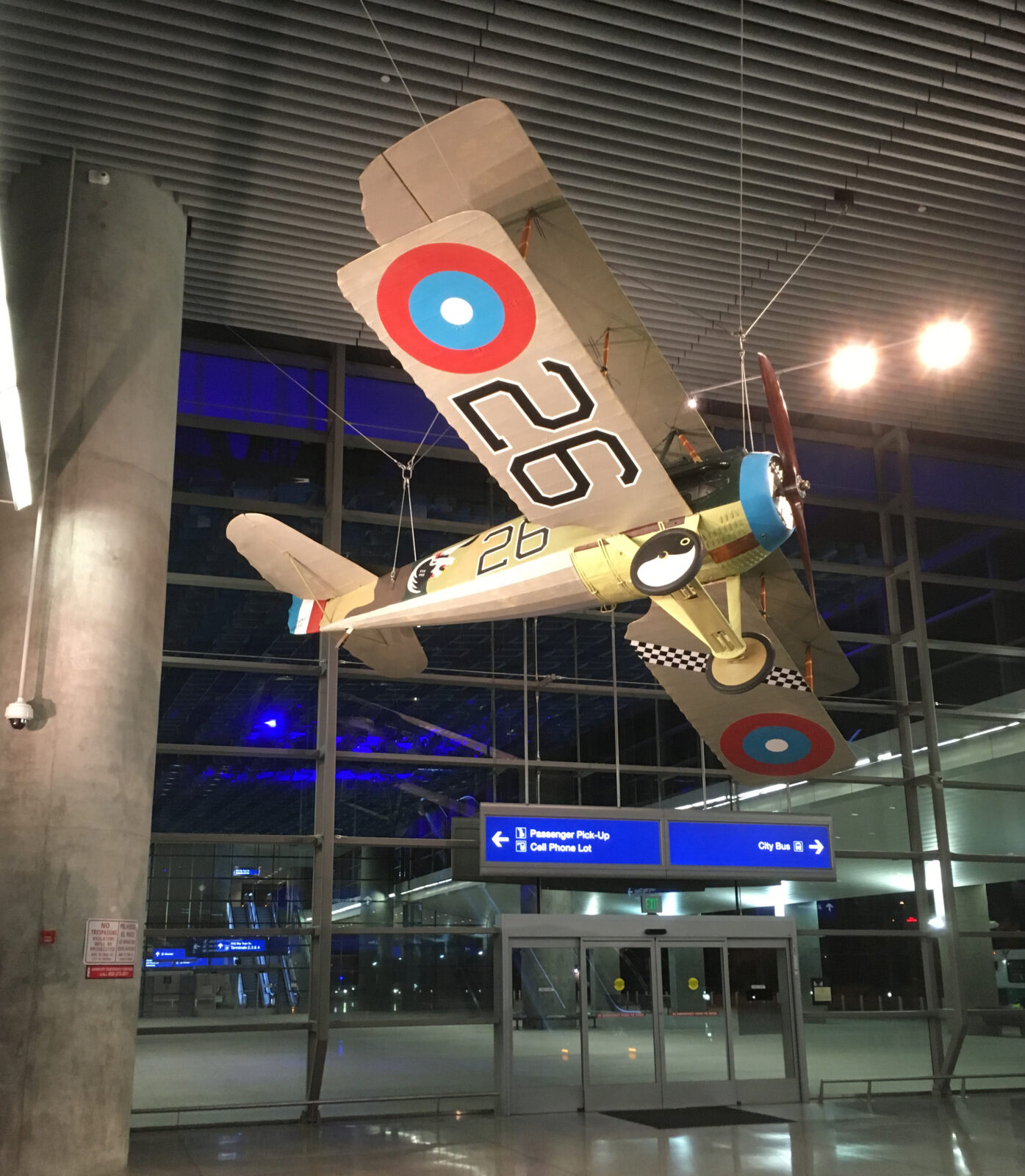
At the airport’s PHX Sky Train 44th Street Station you can look up and see one of the world’s few remaining original World War I fighter planes – the SPAD XIII. The biplane is suspended from the ceiling inside the station and is painted in the colors of the aircraft flown by Arizona’s own flying ace, Lt. Frank Luke, Jr.
August 19 was National Aviation Day. The holiday first established in 1939 honors the development of aviation and pioneers of flight. And it also marks Orville Wright’s birthday.
Here’s a fun, history-filled, and (don’t tell anyone) educational round-up of some tweets celebrating the day.
We start and end the list with Mineta San Jose International Airport (SJC), which is hosting an Aviation Week scavenger hunt in the airport, with prizes. And which welcomed 7 passengers and more than 2500 baby chickens on the first commercial flight to land at the airport back in 1949.
— San José Mineta International Airport (SJC) (@FlySJC) August 19, 2022
In observation of #NationalAviationDay, we feature a 1929 photo of a Ryan B-1 Brougham airplane flown by Reginald L. Robbins and James H. Kelly, who set an endurance record of 172 hours, 32 minutes, 1 second. They took off from Meacham Field, Fort Worth's municipal airport. pic.twitter.com/G8YwmJtFHa
— Fort Worth Public Library (@FtWorthLibrary) August 19, 2022
What a better way to wrap up #NationalAviationDay than by sharing your favorite pics of our historic tower? Fun fact: the airport system at TUS supports nearly 46,000 jobs and contributes to more than $8.3 billion in economic activity #NonstopForTucsonpic.twitter.com/iC7KPbJOXK
— Phoenix Sky Harbor International Airport (@PHXSkyHarbor) August 19, 2022
It’s #NationalAviationDay! To celebrate, we’re highlighting the two airports the City of San Diego owns and operates: Montgomery-Gibbs Executive Airport in Serra Mesa and Brown Field Municipal Airport in Otay Mesa! pic.twitter.com/mp1i3VzJDZ
From our early beginnings to becoming the first 5-star airport in North America, thank you for making us part of your journey ✈️ Today and everyday let's celebrate #NationalAviationDay! pic.twitter.com/krLXckIVKi
The Smithsonian’s National Air & Space Museum has been closed for a while to reboot with two dozen new exhibits. At least 8 of the galleries are set to open this fall.
As a preview, the museum shared pictures of some of the artifacts we’ll see when the exhibit reopens and pointed us to aviation-themed treasures in the vaults.
12 seconds. That is how long Orville Wright’s first powered flight in the 1903 Wright Flyer lasted. The Wright Brothers used this stopwatch to time the December 1903 flight. The watch will be on display in the reimagined Wright Brothers exhibition.
On
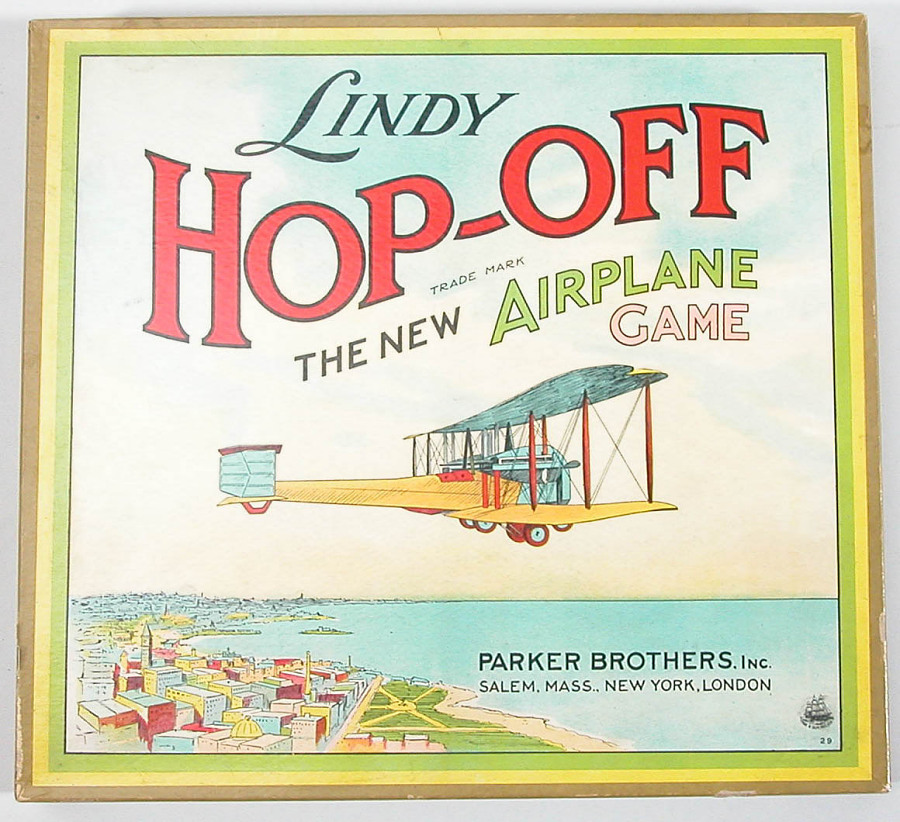
Once the Wright Brothers showed how ‘easy’ it was to fly, it didn’t take long for the public to become fascinated with airplanes and airplane-themed things. And for flight themes to appear on jewelry, in games, and in art.
Here are a few great objects from the National Air & Space Museum’s collection that we hope we’ll see when the galleries reopen. See you there!
(All images courtesy of the Smithsonian National Air & Space Museum)
Board Game, Lindbergh, King Collection (A20040289048).Pillbox with an airplane on the lidGold-colored small jewelry charm in the shape of an early monoplane with a visible fuselage frame and propeller that spins.
The Smithsonian’s National Air and Space Museum on the National Mall in Washington, D.C. is getting a massive makeover that includes the construction and renovation of 23 galleries.
As part of that process, which is set to be completed sometime in 2025, the whole museum has been closed since March.
But the west wing is scheduled to open in the fall of 2022 with new exhibitions that explore a wide variety of aviation themes, including the Wright Brothers’ story, planets and moons, early aviation, high-speed technology, and other topics.
In advance of the opening, the Smithsonian is adopting a new brand identity and logomark for the National Air and Space Museum that “uses positive and negative space to create a stylized craft that simultaneously suggests both aviation and space flight.”
Look for it at the end of this inspiring “Space for Everyone” video that gives a nod to “airheads, space cases, flight fanatics, armchair astronauts, and the casually curious.” And to those who are “captivated by the miracle of flight and those who are just happy to make their flight.”
The two-parter delves into the unique history of the airport and highlights some of the wonderful art that can be spotted in and around the terminal.
The episodes will be live-streamed on Tuesday, April 12, and on May 10 at 12:30 p.m. (Central) on Love Field’s Facebook and YouTube and will include images of many of the historical events and artwork we discuss.
To produce the podcast, DAL teamed me up with Bruce Bleakley, who is an aviation historian and co-author of The Love Evolution: A Centennial Celebration of Love Field Airport and Its Art.
We called it a conversation. But really, it’s me getting to pick the brain of the airport’s historian. I asked Bleakley about how, in 1958, Dallas Love Field’s new terminal building came to have the first moving walkway at any airport in the world. And why there was an ice-skating rink in the terminal. And about the role that Dallas Love Filed played on that day in 1963 when President John F. Kennedy was assassinated in Dallas and Lyndon B. Johnson was sworn in as president on the DAL tarmac.
In this two-part podcast, we also learn the stories behind some of the great art that passengers walk over and walk by at DAL.
And I get Bleakley to tell us which city’s name is spelled wrong in the airport’s first commissioned piece of art. A detail he didn’t even share in his book.
I hope you’ll tune in!
Courtesy Frontiers of Flight Museum, Dallas
Ep. 16 of #LoveFieldStories premieres Tuesday on our Facebook/YouTube pages at 12:30 p.m. featuring author and blogger of Stuck At The Airport, @hbaskas, and aviation consultant/the man who literally wrote the book on Love Field history, Bruce Bleakley. https://t.co/E4cG08vNyhpic.twitter.com/EoOyk4AOqd
— Dallas Love Field Airport (@DallasLoveField) April 10, 2022
An old, stale sandwich locked away in a Washington state museum is drawing fresh attention to an aviation daredevil and the 90th anniversary of a record-setting flight.
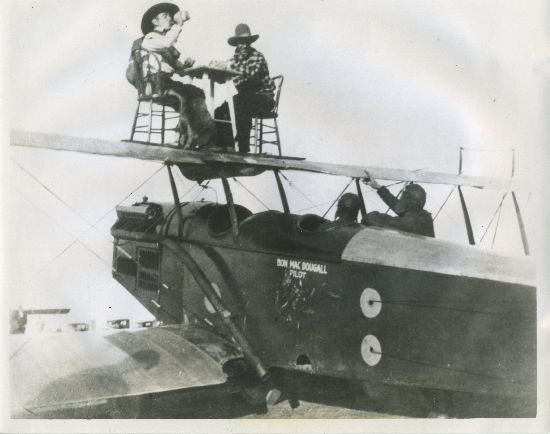
The sandwich is said to have traveled with Clyde “Upside-Down” Pangborn. But when? It could have been in 1926, when he was wowing spectators as a stuntman in a flying circus, doing aerial stunts such as loops, flying upside down, changing planes in midair, and completing auto-to-airplane transfers. Or it could have been in October 1931, when Pangborn and co-pilot Hugh Herndon, Jr. set a transpacific record by flying nonstop from Misawa, Japan, to East Wenatchee, Washington, in 41 hours and 13 minutes (some say 15 minutes).
(Photos courtesy of the Wenatchee Valley Museum & Cultural Center).
Alaska Airlines unleashes the Kraken plane
In Seattle, the home base of Stuck at The Airport, we have a new hockey professional ice hockey team, called the Kraken.
The city is pretty darn excited. And so is Seattle-based Alaska Airlines, which is the Kraken’s official airline.
To celebrate, the airline is flying a custom Kraken-themed plane on routes to the team’s away games in cities Alaska Airline serves.
And here’s a nice perk: now through the end of the hockey season, Kraken fans who wear the teams’ jersey can board early on all Alaska flights departing from Seattle-Tacoma International Airport (SEA) and Paine Field (PAE).
Phoenix Sky Harbor Int’l Airport Moves a Mural
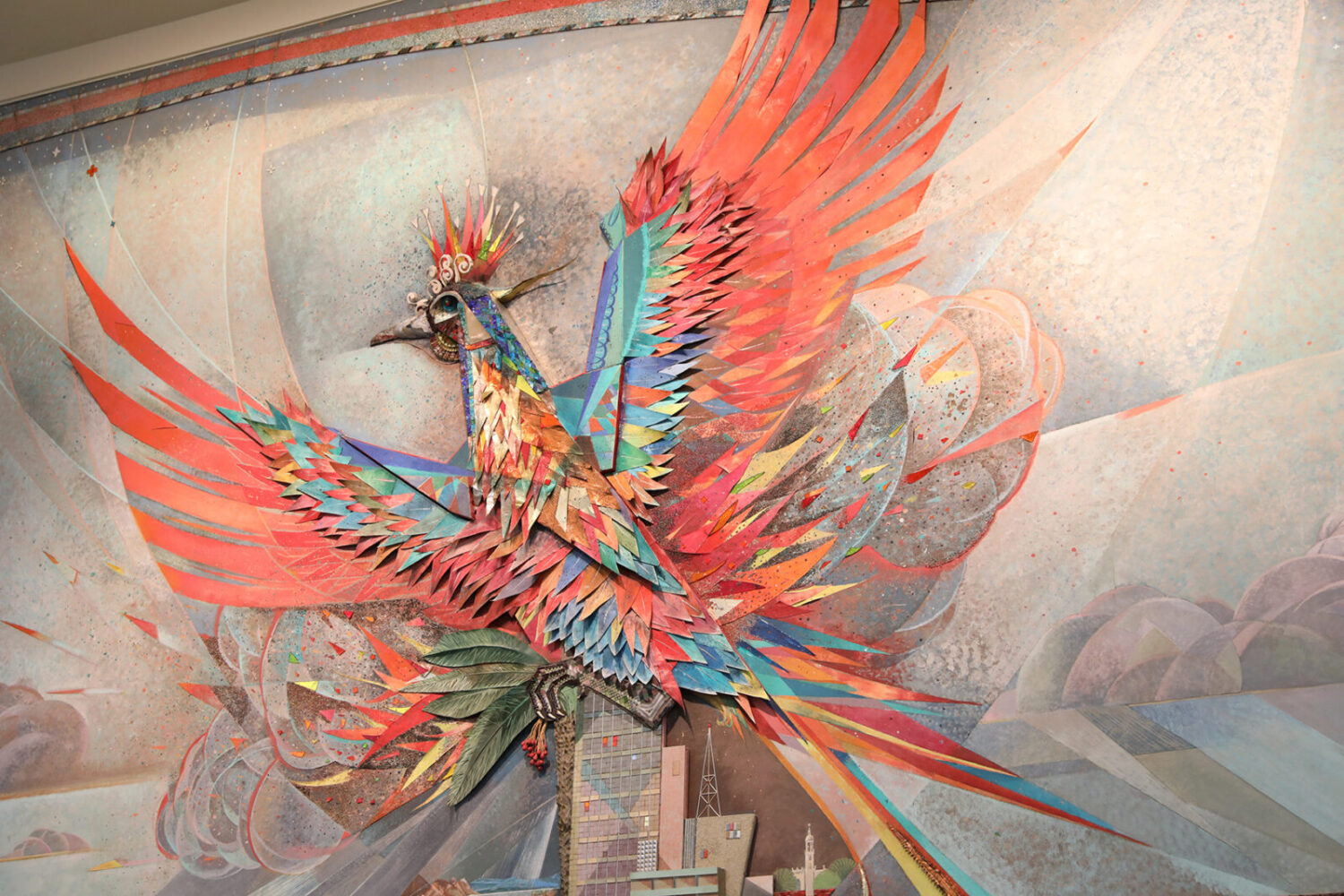
A large 3-part mural by Paul Coze that has been greeting travelers inside Phoenix Sky Harbor International Airport for decades has a new home in the airport’s Rental Car Center.
Here’s a time-lapse video of the move.
“The Phoenix,” is a triptych 75 feet wide and 16 feet high and is believed to be the first piece of public art commissioned by the city that was chosen through a public process. The mural debuted when Terminal 2 opened in 1962.
The imagery in the mural includes depictions and symbols that relate to the area’s first inhabitants, the Hohokam, as well as modern tribes and Latino heritage. Also represented are wagon trains, railroads, cattle ranching, mining, and technology. Besides paint media, 52 different materials, including glass and ceramic mosaic tiles, soil and sand from around the state, plastics, aluminum, and gemstones, are used in the mural construction.
So you can imagine that moving this mural was a delicate undertaking. But it looks like it worked out just fine.
July 24th was Amelia Earhart’s birthday and over the weekend many airports marked the day with some great images and historical tidbits. Here’s a sampling.
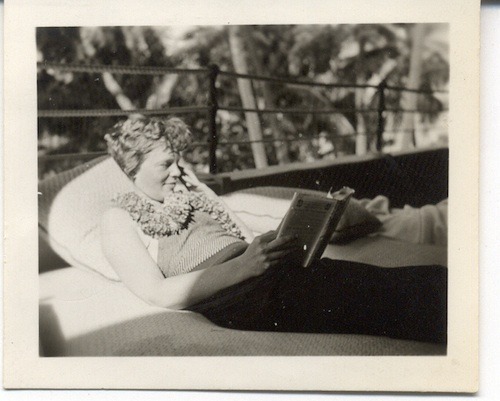
Courtesy International Women’s Air & Space Museum
Happy Birthday Amelia Earhart! Our favorite aviatrix was born on this day in 1897. When Amelia wasn’t busy flying and setting world records (12 total), she & her Lockheed Electra 10E aircraft spent their down time at BUR. Here she is in Hangar 2, which is still used at BUR today. pic.twitter.com/TGkKGXH7zI
— Van Nuys Airport VNY (@VanNuysAirport) July 24, 2021
It’s National Amelia Earhart Day! We remember her for the contributions she made to the aviation industry. But, did you know Amelia Earhart built her own roller coaster when she was a child? She later exclaimed the wooden coaster was “just like flying!” #InspiringWomenpic.twitter.com/tmWdzb39Hi
As a pioneer & first female aviator to fly solo across the Atlantic, Amelia Earhart holds a special place in CLE history having visited many times. To this day, her story of heroism inspires us! #AmeliaEarhartDay
In honor of Amelia Earhart, July 24 was named national Amelia Earhart day. Earhart was an author and American aviation pioneer who inspired women all over the world. She was the first female aviator to fly solo across the Atlantic Ocean.https://t.co/MTq8H6PZur via @natltoday
— United Airlines Pilots (@UnitedPilots) July 24, 2021
Today we celebrate the accomplishments of Amelia Earhart, who made history as the first female aviator to fly solo across the Atlantic Ocean in 1932. 📷: Smithsonian Institution. pic.twitter.com/x5IroWrW9R
— NASA's Launch Services Program (@NASA_LSP) July 24, 2021
July 22 was artist Alexander Calder’s birthday, giving us an excuse to share some photos of his work in airports and on airplanes.
The photo above is of Calder in 1957 inspecting the installation of his work originally titled .125, after the gauge of the aluminum elements in Terminal 4 at John F. Kennedy International Airport (then Idlewild Airport). The piece was later redubbed Flight.
Courtesy Library of Congress
Pittsburgh International Airport (PIT) also has a work by Alexander Calder in its collection. This piece is titled, appropriately enough, Pittsburgh.
Courtesy Pittsburgh International Airport
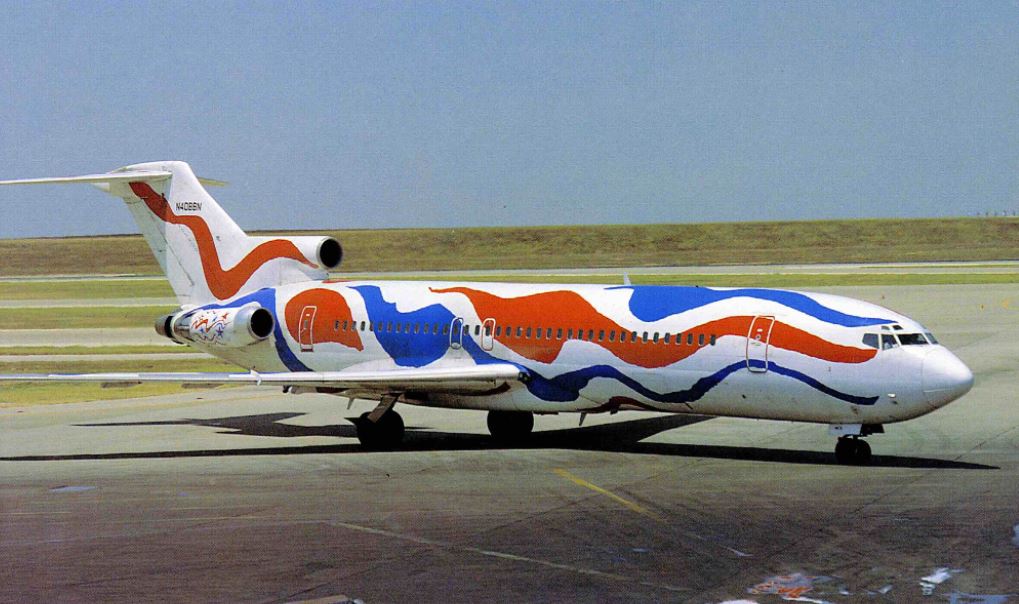
Calder’s work also appeared on Braniff International Airways airplanes in the mid-1970s.
The first was a Douglas DC-8 known as Flying Colors of South America. The second was a Boeing 727-200 named Flying Colors of the United States.
On Monday, the National Air and Space Museum, and many others, marked the 100th anniversary of the day Bessie Coleman earned her pilot’s license – and changed history.
Click through the links in the tweets below to learn more about this incredible woman and some of the men and women who were inspired by her accomplishments.
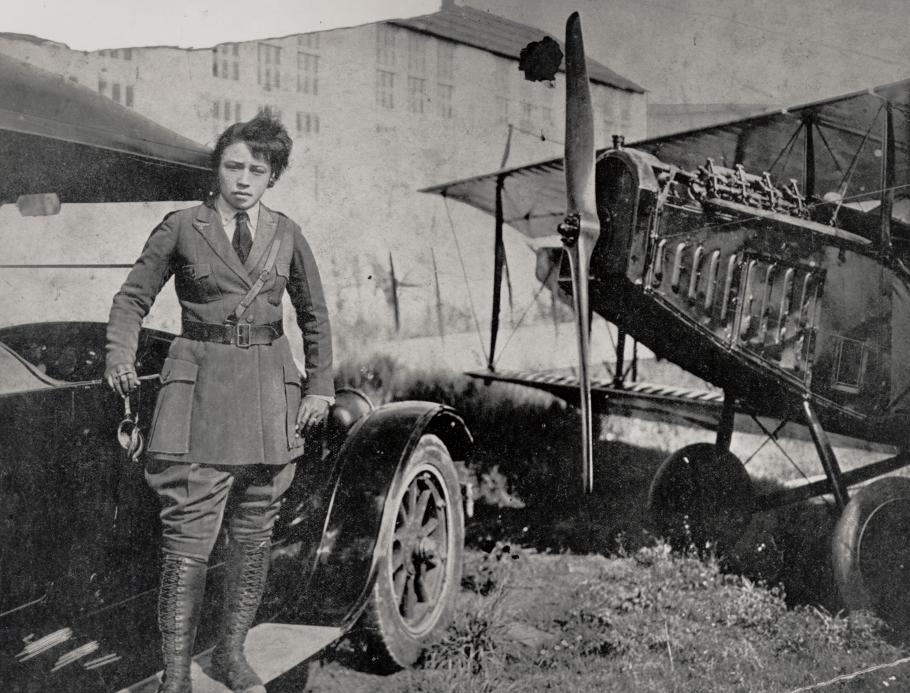
Bessie Coleman next to a Curtiss JN-4 Jenny aircraft -courtesy National Air and Space Museum
In the air and on the ground, Bessie Coleman made history, changed history, and witnessed history. As we celebrate the centennial of her earning her pilot’s license, discover five stories you may not know about her life and legacy. https://t.co/WBIO9gPHpQ
— National Air and Space Museum (@airandspace) June 15, 2021
100 years ago today, in 1921, Bessie Coleman made history when she became the first African American woman to earn a pilot’s license. As a Black woman, she wasn’t able to learn to fly in the U.S. so she had to move to France to do so. Learn more: https://t.co/nT7LLsybKZpic.twitter.com/Eu6lTnb29N
— National Air and Space Museum (@airandspace) June 15, 2021
After earning her pilot's license 100 years ago today, Bessie Coleman later returned to the United States, where she performed as a barnstorming pilot. More on Coleman’s aviation career and barnstorming: https://t.co/1wyUPNcgmk
— National Air and Space Museum (@airandspace) June 16, 2021
The Chicago Department of Aviation (CDA) recognizes the 100 year anniversary for Bessie Coleman’s monumental achievement of becoming the first African-American woman and the first Native American to earn an international aviation license. pic.twitter.com/dXY5T4q8SK
On June 15, 1921, Bessie Coleman became the first Black and Native American woman to earn a pilot's license. 100 years later, United First Officer Carole Hopson honors Bessie's legacy a goal of enrolling 100 Black women in flight school. pic.twitter.com/xi4G33TVpl