Airports

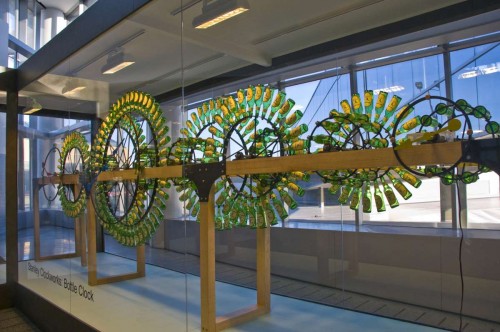
Beer bottle clock at Philadelphia Airport


Beer Bottle Clock

Need to know what time it is?

If you’re at Philadelphia International Airport’s Terminal A-West between now and August, you can consult this 20 foot long clock made of 300 recycled intermeshing beer bottles.The clock is made by Rick Stanley and his son, Vince, who create one-of-a-kind timepieces at Stanley Clockworks near Bloomsburg, Pennsylvania.

“There are three separate dials for hours, minutes, and seconds..The largest gear is five foot in diameter and is largest and only clock to incorporate bottles in its movement…The clock sports only Yuengling Lager bottles. The brewery is the oldest in America and has a strong local following making the bottles simple to obtain. The beer bottles came from three sources: the local recycling center, the local bar, and whatever the clockmaker could contribute.”

Here’s a video of the clock in action:

In addition to this beer-bottle clock, Stanley Clockworks has also built a 24-foot long “Walking Clock” made with a dozen shoes that keep time by marching back and forth over 2,700 miles each year.

Souvenir Sunday: Aerotropolis

On Souvenir Sunday we usually feature fun, inexpensive items you can buy in airport shops.

Our perennial favorites are kitschy things like Corny Cob, the tiny stuffed ear of corn they sell at Eastern Iowa Airport.

airport souvenir

And the Fly SUX stuff they sell at Sioux Gateway Airport in Sioux City.

Fly SUX - Joy of Sux mug

But books are good souvenirs too.  Especially when you’ve got a long flight ahead of you and when the topic is something you’re really interested in. Like say …. airports.

Which is why I’m saving the 480 page Aerotropolis: The Way We’ll Live Next, by John Karsada and Greg Lindsay, for my next flight.


In a Wall Street Journal article this week, Aerotropolis co-author Greg Lindsay defines an “aerotropolis” as:

“…[A] city planned around its airport or, more broadly, as a city less connected to its land-bound neighbors than to its peers thousands of miles away. The ideal aerotropolis is an amalgam of made-to-order office parks, convention hotels, cargo complexes and even factories, which in some cases line the runways. It is a pure node in a global network whose fast-moving packets are people and goods instead of data. And it is the future of the global city.”

Here are a couple of reviews:

This one, (by Rowan Moore a guardian.co.uk; note the different cover art) isn’t too complimentary:

“…[C]ities have always relied on transport, but not on transport alone. Airports are a powerful force among others, and it is the interaction of these forces that makes cities interesting. Aerotropolis is straining too hard to be a smartypants bestseller of the the type produced by Malcolm Gladwell to explore this complexity. It is hectoring, breathless, over-persuading, a boring book with an interesting one struggling to get out.”

In Business Week, Paul Barrett notes that “The authors are vague about whether the airport city of the future is an upgrade or a fresh circle of hell,” but the tome is summed up as An important book that will help business travelers understand why they’re living the way they are.”

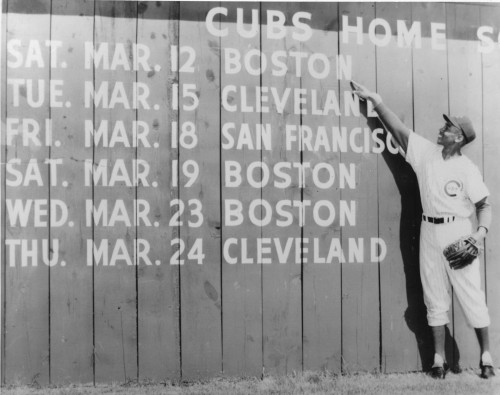
Cactus League at PHX airport

PHX Ernie Banks

Chicago Cubs’ player Ernie Banks checking out the spring training exhibition game schedule at Rendezvous Park, Mesa, 1950s Courtesy of Tim Sheriden, Mesa Historical Museum

A new exhibition at Phoenix Sky Harbor International Airport celebrates the fifteen major league baseball teams that head to Arizona each year for spring training as part of the Cactus League.

Play Ball: The Cactus League Experience includes original Mickey Mantle and Ernie Banks baseball cards, photographs, signed baseballs, paintings and other cool baseball memorabilia. Look for the display in the Terminal 4, Level 3 gallery through September 11, 2011.

Here’s a preview:

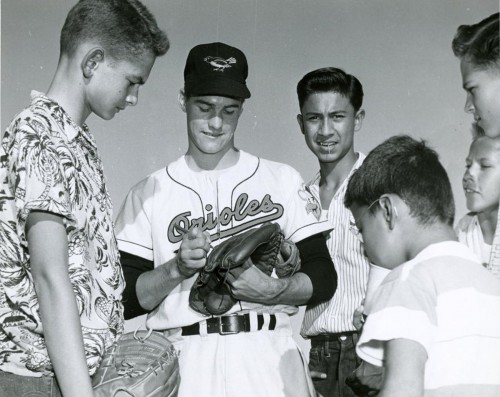
PHX Cactus Legue Exhibit

Young baseball fans getting their gloves autographed by a Baltimore Orioles’ player, 1950s.
The Orioles trained in Arizona at Panther Field in Yuma in1954 and Scottsdale Stadium I from1956 through 1958.
Courtesy of Mesa Historical Museum

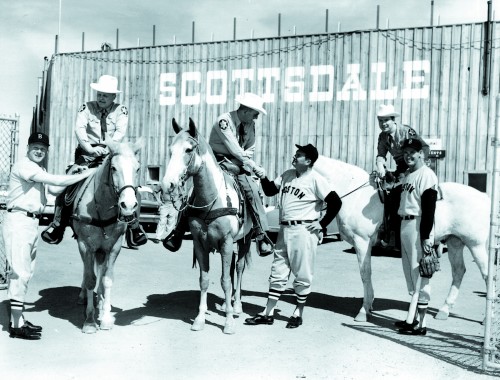
PHX Cactus League Exhibit


The Boston Red Sox were welcomed in Arizona at Scottsdale Stadium I by the Sheriff’s Posse.  Ted Williams is on the far right. Courtesy of Mesa Historical Museum

PHX Yankees at Spring Training

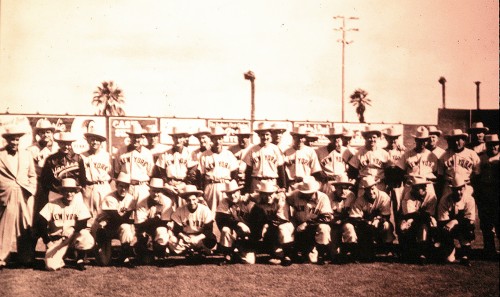
The New York Yankees team wearing cowboy hats at the “old” Phoenix Municipal Stadium, 1951. Courtesy of Mesa Historical Museum.

Batter up!

Tour the International Terminal at Tokyo’s Haneda Airport

My USATODAY.com At the Airport column this month – Tokyo’s Haneda Airport make life easy for international travelers – is all about the amenities offered at the new terminal that opened at the end of October, 2010 and includes a slide show with close to 20 photos of the new terminal.

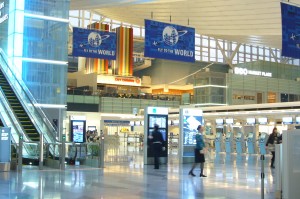
Haneda Airport Tokyo

After Narita International Airport opened in 1978, Tokyo’s Haneda Airport (officially Tokyo International Airport) was used predominantly for domestic flights within Japan and for some charter flights within Asia.

But this past October, Haneda Airport christened a new runway and cut the ribbon on a swanky new International Terminal filled with shiny arrival and departures halls, gleaming gate areas and dozens of intriguing restaurants and shops.

A robust schedule of international flights to North America, Europe and Asia began rolling out in late October as well. Now travelers can fly to Haneda from Detroit, Honolulu, New York, Los Angeles, San Francisco, London, Paris, Seoul, Singapore and a steadily increasing number of cities on a variety of major airlines. This week American Airlines, which already has regular service to and from Narita, is adding a daily flight to Haneda from New York’s JFK airport.

Flying to Tokyo is one thing. Getting from the airport to the city is another. A frustration of arriving at Narita has always been the hour (or more) it can take to get into town. Haneda Airport is much closer to Tokyo’s center and, with a sleek new monorail and train connections, passengers can now arrive downtown within 30 minutes.

But if there’s no need to rush, stick around. Haneda’s new International Terminal offers posh lounges and a wide variety of other amenities that make it a destination all its own.

Here are some highlights:

Shops and restaurants: honoring the old and the new

Beyond the ticket lobby, but still pre-security, travelers will find two distinct dining and shopping areas.

A shopping street lined with Japanese lanterns and antique-looking facades is designed to evoke a traditional Japanese Edo village. There are restaurants here serving traditional Japanese foods, conveyor belt-delivered sushi, pizza and French bistro dishes. A garden-like setting overlooks the entry hall and offers a quiet spot to enjoy green-tea soft swirl ice-cream from the newest branch of Kyo Hayashiya, a sweets vendor that has its roots in a teahouse established in 1753.

Haneda Airport Tokyo

The Edo Marketplace shops stock everything from made-in-Japan clothing and elaborate floral arrangements to elegantly boxed gourmet and regional foods and organic cosmetics.

One level above the Edo Marketplace, in the brightly-lit Tokyo Pop Zone, it’s definitely the 21st century. Dining options here include a café with a built-in planetarium, and a branch of R Burger, a fast-food restaurant dishing up Japanese-sauce-topped burgers (pork, chicken, tofu, veggie, salmon, etc.) served on white steamed buns that boast wrinkle-reducing marine collagen among the ingredients.

Tokyo Pop Town also offers some entertaining and unusual shopping. There’s a toy store here with a giant slot car racetrack, a shop filled entirely with JAL Airlines-branded character souvenirs, a huge Hello Kitty marketplace and Design Japan Culture, a showcase for artist-made clothing and accessories that has a vending machine to dispense arty tote-bags and other treats.

Hello Kitty Haneda

“Convenient and agreeable services”

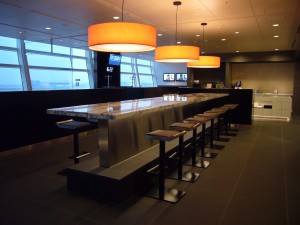
In addition to upscale airline lounges operated by JAL and ANA (All Nippon Airways), Haneda’s new International Terminal offers common-use airline lounges with shower rooms, massage chairs, Internet access, business facilities and places to nap.

ANA Lounge

An outdoor observation desk, free and open to the public, offers great views of airfield activity, including the arrival and departure of the occasional Pokémon character-adorned plane. Back inside the terminal, the amenities include smoking cubicles, a medical clinic and a brightly colored children’s play area where everyone is required to remove their shoes.

Haneda Airport

And in a country well-known for its high-tech toilets, the airport restrooms are a delight. “Ordinary toilets” have wider-than-normal doorways to accommodate both manual wheelchair users and travelers with suitcases. Folding doors on the cubicles include a sign indicating whether or not there’s a baby seat and a fold-down changing table inside. And inside each women’s restroom area there’s a urinal for use by small boys.

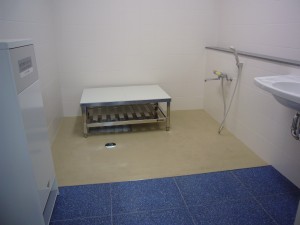
“Multipurpose toilets” are exactly that. To accommodate wheelchair users, passengers traveling with babies or toddlers, elderly people and anyone with a special need, there are restrooms equipped with just about every facility imaginable. In addition to diaper changing tables, beds and changing platforms, these restrooms have ostomate showers and sinks, layouts that allow for right or left hand transfers to the toilet seat from a wheelchair and an emergency button linked directly to the airport’s Disaster Control Center.

Haneda Airport Int'l Terminal Restrooms

And, in what is certainly an airport first, there’s even a restroom designed specifically for use by service dogs.

Inside Utah’s new St. George Municipal Airport

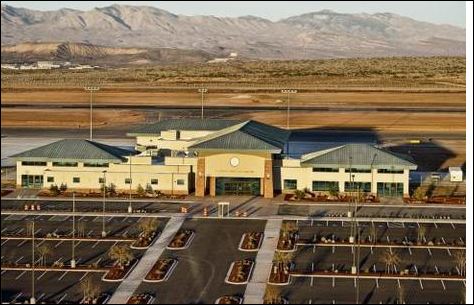
Southern Utah recently celebrated the opening of the $159 million St. George Municipal Airport, which replaces an airport one fifth the size.

From the outside, the airport looks lovely.

(Photo by Dave Becker)

But what’s inside?

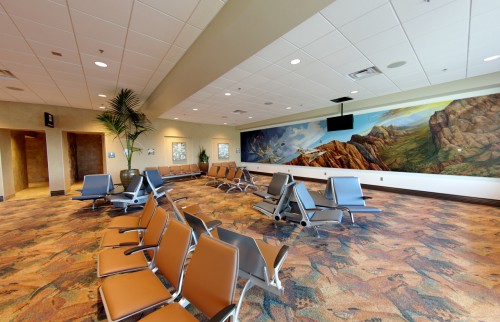
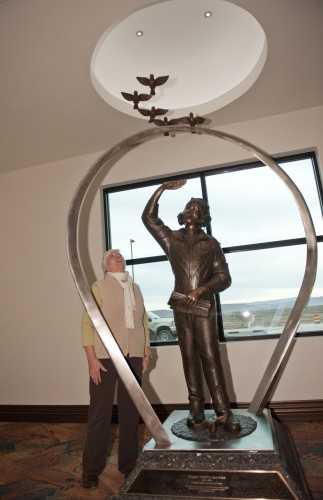
Complimentary Wi-Fi, two empty space awaiting restaurants, painted tiles of scenes in St. George history and a mural by Greg Abbott, a bronze sculpture by L’Deane Trueblood and a painting of Zion on loan from Zion Nation Park.

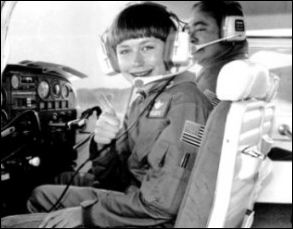
L’Deane Trueblood during installation of “Vicki Van Meter” sculpture. Van Meter, who committed suicide in 2008, became famous in the early 1990s for being the youngest pilot to fly across the United States. Photo by Dave Becker


Fresh art at Philadelphia and Miami airports

Next time you’re going to or through Philadelphia International Airport, take a moment to look around at some of the new art on display in the terminals.

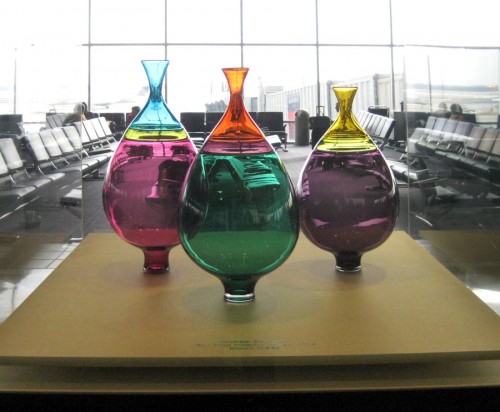
Noted American glassblower Michael Schunke has some of his work in Terminal D:

PHL Michael Schunke

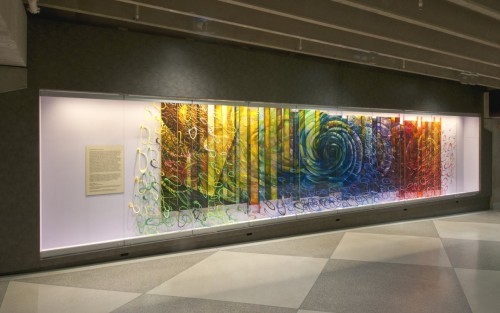
James Dupree’s Evolving Elements is in Terminal E:

PHL James Dupree

And Shannon Donovan’s Rest Awhile, a life-size diorama of an old-fashioned sitting room, is in Terminal C.

PHL Shannon Donovan

There is the appearance that little has changed over the generations,” notes Leah Douglas, PHL’s Director of Exhibitions, “However, Donovan has purposefully infused her interior with odd curiosities such as three-dimensional branches and blossoms that emerge from the floral patterned wallpaper, ceramic cakes and flowering clay hubcap forms that adorn the wall and floor.”

When you’re in Miami International Airport’s North Terminal, take a moment to look at the faces in 100 Latinos Miami.

MIA art exhibit 100 Latinos Miam

The exhibit, by Gate D26, features portraits of Hispanic immigrants living in Miami-Dade County. There are artists, activists, entrepreneurs, athletes, journalists, doctors and professors; all people Verónica Durán chose to include here because “by virtue of their talent and success [they] contribute to the economic, social and cultural development of the region.”

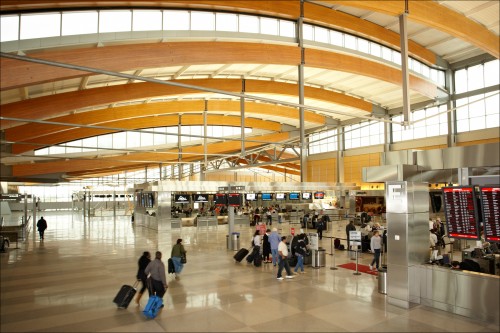
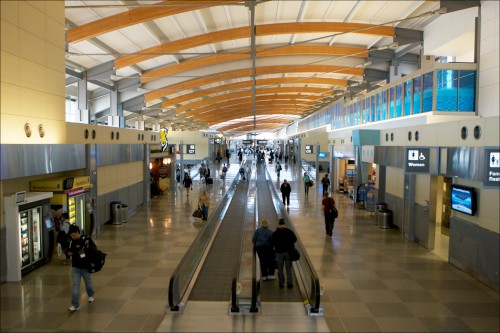
Terminal 2 at RDU

Terminal 2 Raleigh Durham Airport

When Continental Airlines and US Airways begin operating from Concourse D on Sunday, January 23rd, Raleigh-Durham International Airport will have completed the construction of Terminal 2.

Concourse C opened in October, 2008 and now everyone gets to move freely through a lovely new one million square foot building that has 40 shops and restaurants, 36 gates and eight works of art and architecture.

New venues include Carolina Vintages, a wine bar offering North Carolina wines and produce,  Jason’s Deli, Five Guys Burgers & Fries and Flavours, a gourmet market.

New shops include Brighton Collectibles, PGA Tour Shop, Hudson News and 2nd Ed. Booksellers, a locally-based used bookstore.

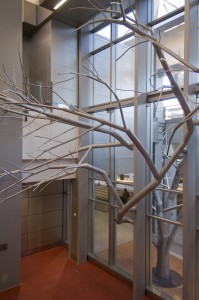
The eight works of art include Robert Kushner’s Welcome, installed along the arrivals corridor;

Lydia Rubio’s Gate of Air, the companion pieces to Gate of Earth, which was installed in 2008;

RDU_Lydia Rubio's Gate of Earth

Gate of Earth, by Lydia Rubio

Mei-ling Hom’s Cloudscape and Ed Carpenter’s Triplet.

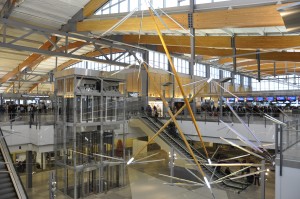
Carpenters Triplet is the large sculpture with wood masts and dichroic glass and LED lighting suspended from stainless steel cables in the atrium.

At the airport: snow happens.

In February 2010, snowstorms so inundated Baltimore-Washington International Thurgood Marshall Airport that outside help was needed to cart all the snow away.

Luckily the snow-moving experts at Liberty Mountain Resort and Conference Center were willing to come over and help out with their Bully 600 ski slope and trail grooming vehicle.

BWI AIRPORT snow removal

A creative solution to an icy problem and, as I found out for this column in USATODAY.com – Winter survival strategies from [some of ] the USA’s snowiest airports – not unlike the snow-situations airports around the country must face each winter.

Pittsburgh Airport clearing snow


Clearing snow at Pittsburgh International Airport

Like the plowed snow at many airports, registrations for the 45th annual International Aviation Snow Symposium are beginning to pile up.

Held each April, most often in snowstorm-prone Buffalo, the symposium bestows awards on airports that excel in battling the white stuff and offers airport staff a chance to chill out and swap war stories about what went right or wrong, weather-wise, during the previous winter.

So far this season, storms have triggered the cancellation of thousands of flights and forced the temporary closing of many airports. That means there’ll be plenty to talk about at this year’s conference, as attendees try to take in tactics to make you less likely to get stuck at an airport next winter.

But when it comes to operations in unforgiving winter weather, not all airports are created equal.

Art. Not science.

“It’s not a science. There’s no book out there called Airport Snow Removal for Dummies,” says Paul Hoback, maintenance director for the Pittsburgh International and Allegheny County airports. “It’s more of an art.”

“Experience helps,” adds Hoback. “Our people have to know how to treat different types of precipitation and how to react to wind speed and wind direction so they don’t push the snow off the runway and have it blow right back on. They also have to understand what different types of ice and snow might do when they hit the ground.”

That knowledge, good planning and communication and the right equipment were all in place at Pittsburgh International Airport (PIT) last February 5th when a storm dumped more than 20 inches of snow at the airport.

“The storm was too much for many airports in the Northeast,” says Hoback, “And even we ended up closing for 17 hours. Our crews took that as a defeat but fought to get the airfield back open so that one or two airplanes with transplant organs aboard could land.”

For its efforts during that storm, Pittsburgh airport won one of a coveted Balchen/Post Awards at last year’s International Aviation Snow Symposium. Dulles International Airport, Chicago O’Hare and the Greater Rochester International Airport took home first-place awards as well.

Equipment helps

Boston Logan Vammas snow machines

Boston Logan International Airports Vammas machines in action

At Boston Logan International Airport, which won a Balchen/Post Award in 2009, airport spokesperson Richard Walsh says, “We consider snow a four letter word. We go out there and battle storms to the end.”

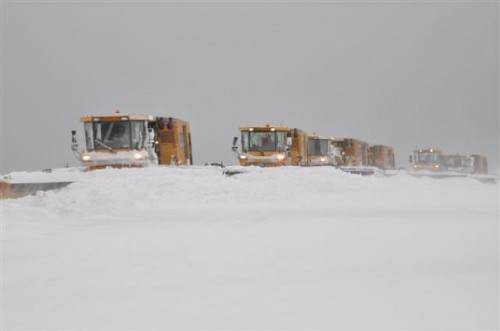
Logan was closed for a just a few hours last Wednesday during a storm that dumped heavy snow on parts of New England. In Logan’s corner during that storm: a snow plan, determination and eleven, 68-foot long Vammas snow machines, each a giant plow, sweeper and blower rolled-into-one. When working in unison, airport officials boast that the Vammas fleet can clear a 10,000 foot runway in less than 15 minutes.

Buffalo Niagara International Airport snow plow

Snow plow shoot plumes of snow at Buffalo Niagara International Airport

Buffalo-Niagara International Airport, which hosts the annual aviation snow symposium, has won the Balchen/Post award multiple times. And although it gets an average of more than 8 feet of snow a year, it’s been more than three years since BUF has had to close due to snow.

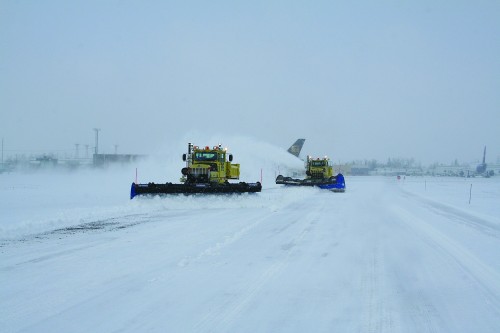
“At the first snowflake we’ll send out a whole fleet of broom trucks to immediately begin brushing the pavement,” says airfield superintendent Tom Dames. “When snow piles up, we also have monster truck snow blowers that churn up snow and spit it out into the fields away from the runway. It looks a lot like fireboats shooting out plumes of water; except these are huge plumes of snow.”

Do-over in Denver

A few years back, Denver International Airport learned some important snow lessons the hard way.

Denver Airport clearing snow

Denver Airport has a new approach to snow removal

In 2006, just days before Christmas, Denver got hit with a blizzard that dumped 22 inches of snow in a 24-hour period. “The airport was closed for 22 hours,” says Mark Nagel, Denver Airport’s Acting Deputy Manager of Aviation. “It took us that long to clean up and get a couple of runways and our ramps clear.”

3,000 passengers spent their Christmas stranded at Denver airport that year. Nagel says “No one was too thrilled. We did kind of receive a black eye for that because it took us so long to recover.”

The problem was too big to sweep under a pile of snow. Instead, a consultant was hired; a study was conducted and DIA learned that, when it came to snow, the airport was inefficient, unorganized, understaffed and armed with not enough equipment.

The fixes included retraining, reorganizing and reassessing snow removal priorities. And now, like other airports, DIA has a snow committee that meets year-round with airlines, the FAA and other airport stakeholders to make sure the snow control plan is realistic and up-to-date.

Denver International Airport has also invested millions of dollars in new equipment and switched from single-function to more modern multi-function machinery that can plow and sweep at the same time. “So instead of taking 45-minutes to an hour to clear a runway, we can now do it in less than 15 minutes” says Ron Morin, Denver Airport’s Director of Aviation Field Maintenance.

And instead of having a single snow team, the Denver airport now has eight; each with a dedicated function. Team members were offered the chance to name their machines, but they asked instead to name their teams. Now, whenever it snows, you’ll see the Snow Cats, the Marauders, the Taxi Way Tuxedoes, the Blizzard Busters, the Deice Men Cometh, the Ramp Rats and the Snow Dawgs taking care of business.

Advice from Anchorage Airport and Mother Nature

Anchorage Airport

Anchorage Airport has never closed due to snow


Anchorage International Airport has won the Balchen/Post award four times and is always ready for snow. “Our snow season lasts from October through mid-April,” says Airfield Maintenance manager Dan Frisby. “At other airports it will snow and then melt. Here, the snow can stick around all year long.”

Frisby and assistant manager Zaramie Lindseth know the airport has been closed due to volcanic ash, a windstorm, the 1964 earthquake and, like other U.S. airports, for a few days after 9/11. But they can find no records that show the airport has ever been closed due to ice or snow.

In addition to having the right equipment, Frisby says it’s important that airports maintain their equipment and not skimp on the cost of crews and supplies. “Some airports try and hold back on the chemicals. And it just bites you. You’ve got to go into attack mode when a storm starts and use the chemicals as they were designed.”

No matter how well an airport prepares, though, sometimes snow happens and there’s really nothing anyone can do.

“When Denver International Airport opened, it was touted as the all-weather airport,” says DIA’s Mark Nagel. “They said ‘We’ll never close.’ But we’ve learned the hard way that you have to respect Mother Nature and balance safety with the goal of staying open.”

All photos courtesy of the featured airports. Thank-you.

Do you know an airport that does really well in the snow?  Let us know!