Air Travel

An overnight ‘ride-along’ with United Airlines

My overnight ‘ride-along’ last week with United Airlines at Denver International Airport was exhausting – but exhilarating and extremely educational.

I’m working on a full-length slide show (so far, I’ve got 60 photo keepers) and report for my next At the Airport column on USA TODAY,  but sharing a few snaps today here on StuckatTheAirport.com to get the ball rolling.

At around 10 pm, my tour started at United’s Station Operations Center – a darkened room where about 50 people were seated in clusters at desks with multiple computer screens doing everything from making sure passengers made their connections to monitoring weather and  gate assignments.

Then it was off to the maintenance hangar, where 8 airplanes were undergoing service checks and repairs, included an engine swap for an Airbus 319.


While in the hangar, another airplane was visited by a fast-moving cleaning crew, who were doing everything from cleaning the lavs and galley (with different rags and cleaning solutions) to making sure seat back literature was refreshed and the tray tables were washed.


At 3 am it was back to the Station Operations Center, which was pretty much empty, except for Zone Controller Mike Lowrey, who I’d met earlier in the evening. He was checking with maintenance to see if all the planes they’d been working on overnight were ready for morning flights and doing what he could to make sure the first flights of the day would leave on time.


3:47 a.m. : A quick look in the concourse to see if anything was happening. Nothing. Yet.

The Flight Operations Center opens at 6 a.m.  That where captains and first officers such as Michael Daigneault can pick up supplies and plan for their flights.

My flight back to Seattle left, on time, at 8:08 a.m. I even got a set of plastic wings from the crew.

My full report on my overnight ride-along with United Airlines at Denver International Airport will show up during the week on USA TODAY.


Winning names for Qantas’s fleet of Dreamliners


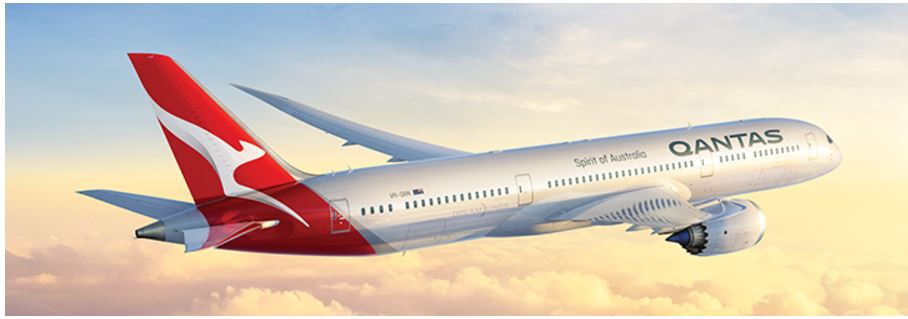
Qantas’s inaugural Dreamliner flight will travel from Melbourne to Los Angeles – but not until December 2017.

But the carrier already has names for all eight 787-9 Dreamliners to be added to its fleet.

Customers sent in more than 60,000 suggestions and the public was asked to vote for the ‘keepers,’ which are:

Great Barrier Reef, Boomerang, Skippy, Waltzing Matilda, Uluru, Great Southern Land, Quokka and Dreamtime.

Some of those names are easy to connect with Australia; others need a little context, which Qantas has been kind enough to provide:

  • Great Barrier Reef:  an ecosystem comprising of reefs and hundreds of islands off coast of Queensland.
  • Boomerang: a traditional hunting tool of First Australians, with a bent or curved shape; also used in music and sport.
  • Skippy: an Australian television series featuring a young boy and his intelligent pet kangaroo ‘Skippy’.
  • Waltzing Matilda: Bush-ballad narrating the story of a swagman.
  • Uluru: A sacred monolith in the heart in Australia’s Northern Territory’s
  • Great Southern Land: A term used to describe Australia.
  • Quokka: A type of marsupial from the island of Rottnest near Perth, Australia.
  • Dreamtime: The English word used to describe First Australians’ understanding of the creation period.


“Zilch” and other compensation airlines may owe you 

Whether or not the power outage that caused British Airways to cancel all flights from London’s Heathrow and Gatwick airport last weekend was caused by a worker pulling the wrong plug, the airline is looking at perhaps $100 million in compensation payouts to thousands of passengers whose travelers were disrupted by the snafu.

While acknowledging that it may take “a little longer than normal to process all of the payments,” due to the volume of customers affected, on its website British Airlines is assuring passengers whose plans were put into disarray by the outage that it will comply with European Union Regulation 261/2004.

The rule outlines the compensation airlines must pay passengers for flights that are delayed or canceled and covers scheduled flights to or from airports in EU countries (as well as Iceland, Norway, Switzerland and some other non-EU regions) as well as flights to and from the EU  purchased on U.S. carriers but operated by a EU carrier.

“It’s who you’re flying not where you’re buying,” notes George Hobica of Airfarewatchdog.com.

“If it’s within the airlines’ reasonable control, then compensation kicks in, which can max out at 600 euros,” said Hobica, “Getting paid is another thing, and can involve paperwork and waiting or negotiating, which is why there are a half dozen firms that will do the work for you, for a cut of the money owed.”

But at least those passengers have the law on their side.

On US, Canadian, Middle Eastern, or other non-Euro airline flights that are delayed or canceled due to IT outages, mechanical issues, crew delays or other issues within an airline’s control, passengers are legally due “zilch, nada, nothing. Nothing mandated by law” said Hobica,

That doesn’t mean passengers always get nothing, though.

Policies outlining what services are provided to a customer waiting in the airport vary by airline and are contained in their contracts of carriage, advises consumer organization Flyersrights, noting that the contracts of carriage generally leave it to the airline’s discretion to distribute meal vouchers and hotel accommodations.

Delta Air Lines outlines its policies on situations such as delays, cancellations, diversions and bumped passengers in its Customer Commitment document.

For example, the airline promises to “provide hotel accommodations at Delta contracted facilities, based on availability, if you are inconvenienced overnight while away from your home or destination due to a delay, misconnect or cancellation within Delta’s control.”

In August 2016, the carrier went the extra step of offering $200 in travel vouchers to customers whose flights were cancelled or who were delayed by more than three hours due to a system wide IT incident.

United Airlines spokeswoman Maddie King said the company strives to provide customers with flexible travel options when there are unanticipated interruptions to operations.

“We actively assist in rebooking customers and often provide compensation for customers who experience extensive delays that are within our control,” said King, “During severe interruptions we will provide customers with a travel waiver to change their flights at no cost. (United’s policies on flight delays and cancellations are posted here.)

And JetBlue’s Customer Bill of Rights outlines, in perhaps the industry’s most straightforward language, what customers can expect from the airline “when things do not go as planned,” including specific credit amounts to be issued for cancellations and delays.

On its website, the U.S. Department of Transportation confirms that “for domestic itineraries, airlines are not required to compensate passengers whose flights are delayed or canceled,” but does note a few situations that are covered by laws, including situations involving involuntary bumping of passengers, in which case required compensation can reach 400 percent of a one-way fare, but not more than $1,350.

As result of the recent United Airlines ‘incident’ involving a man being dragged of a flight in an involuntary bumping situation, United Airlines has issued policy changes which include the promise to offer passengers up to $10,000 to voluntary give up their seats in an effort to avoid having future overbooked flight situations.

Likewise, Delta has stated that it will offer up to $9,950 to passengers who volunteer to give up their seats on overbooked flights, said Zach Honig, editor at ThePointsGuy.com, “Though I wouldn’t be surprised if we never hear of the airline paying out compensation approaching that amount. Chances are enough travelers will volunteer long before the compensation offer gets well into the thousands.”

(My story about airline compensation for ‘inconvenienced’ passengers first appeared on NBC News.


Robotic check-in kiosks & other new tech for airports

My May “At the Airport” column for USA TODAY is all about some of the cool new technology – and creative uses of emerging technologies – that may soon make your trip through the airport less painful and, possibly, more rewarding.

The ideas were featured at the Air Transport IT Summit I attended in Brussels recently, which was convened by SITA, a global air transport IT provider owned by airlines and other air transport companies.

Here are some of the ideas that caught my eye:

No more check-in lines? KATE may help

Last year, SITA Lab, SITA’s technology research arm, introduced a self-propelling baggage robot, named Leo, who may someday greet you at the airport curb, check you in for your flight, issue your bag tags and then take your bags away for processing.

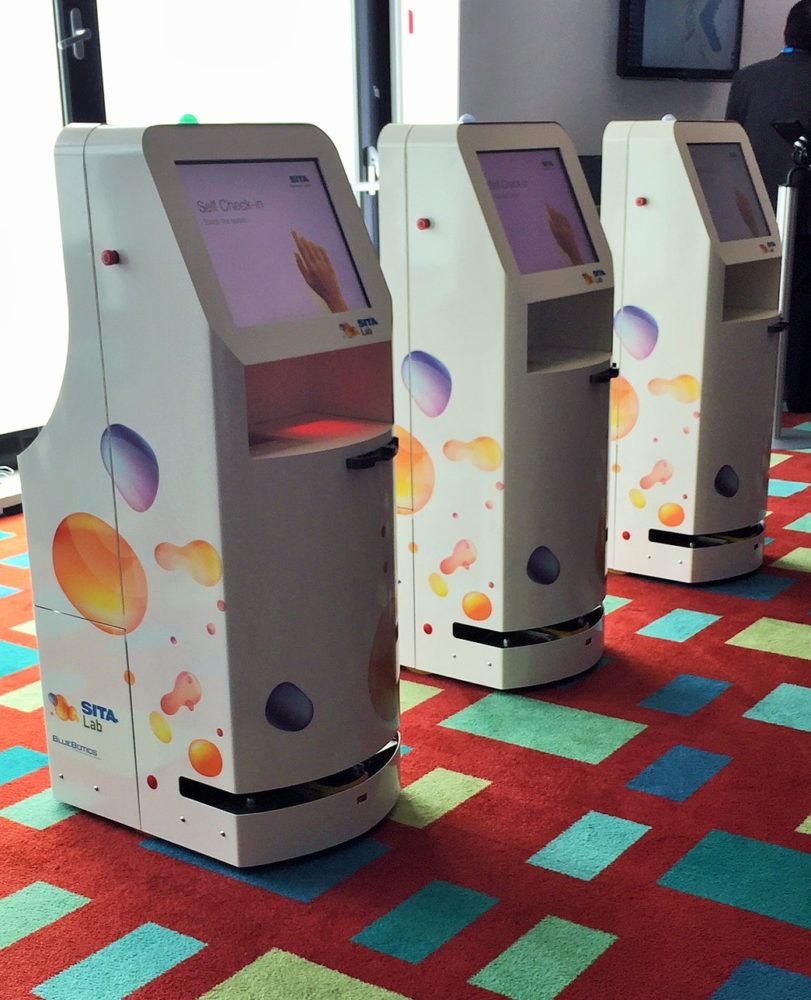
This year, SITA Lab unveiled Leo’s cousin KATE, an intelligent check-in kiosk that can move autonomously, and in teams to busy or congested areas in airports.

KATE the kiosk can monitor a variety of data sources, including flight and passenger flow information, sense where and where additional check-in kiosks are needed and, using geo-location and obstacle avoidance technology, move through the airport without bumping into things or people.

The robotic kiosks are also designed to automatically return to their docking stations when they are low on power or if they need to be a fresh supply of boarding passes or bag tags.

Kate is cute (although she did run over my toes) and these roving kiosks could not only help airports and airlines better serve passengers when rebooking is necessary due to flight cancellations or weather delays, but they might also be useful on duty in offsite locations, such as train stations and convention halls and, possibly, cruise ports.

New ways to pay airlines – and get paid by airlines          

Airlines that use the common-use SITA check-in kiosks and bag-drop stations now standard at many airports currently don’t currently have a secure way to accept passenger payments at those terminals for extras such as baggage fees upgrades and other ancillary items.

At the Air Transport IT Summit, SITA announced that is has solved the ‘multi-merchant’ problem with a new payment system that uses point-to-point encryption (P2PE) technology that can accept various forms of payment, including MasterCard, Visa and Payment Card Industry (PCI)-compliant chip cards.

Look for a roll-out of this in SITA’s common-use kiosks and bag drops stations at airports in the next few months.

On the flipside, for those occasions when airlines must (or want to) compensate passengers for flight delays, cancellation or overbookings, a company called TravaCoin has partnered with SITA to test a voucher system that airlines can use to quickly issue credit to passengers that can (or can only) be spent on new flights, upgrades, hotel stays, services inside the airport or perhaps donated to local charities and non-profits.

TravaCoin CEO and founder, Brian Whelan told USA TODAY he envisions the digital currency being of special interest to airlines based in or flying through European Union countries that are currently required by EU Regulation 261 to pay passengers up to 600 euros (currently about $668) per inconvenience.

“At the moment airlines are holding out and making it awkward,” said Whelan. “They’re losing the money eventually, but also losing customer loyalty. This is a way for airlines, even airlines not covered by the regulations, to be proactive by issuing currency that can be spent in the TravaCoin community. The goodwill and the money go hand in hand.”

So do the benefits that airlines, especially, might gain from adopting TravaCoin currency for compensating passengers.

“There is a ‘breakages’ notion,” said Whelan, “If you give people vouchers, one way the merchant benefits is if the customer never spends the voucher.”

TravaCoin’s surveys have found that while many passengers who say they’d accept the vouchers would ‘top up’ and spend some of their own cash on top of the voucher value, about 20 percent would likely not spend their vouchers at all.

The goodwill aspect of TravaCoin appeals to Brian Cobb, vice-president, Customer Experience at Cincinnati/Northern Kentucky International Airport, which has successfully used new technology to improve customer service with reduced checkpoint wait times and cleaner restrooms in public areas of the airport.

“Love the idea. Especially with the consumer choice in how to spend, including donating back to the community,” said Cobb. “While it is likely sometime in coming, airports may need to leverage customer service recovery tools much in the way airlines do today. It’s a solid method to support recovering the brand perception and exceeding customer expectations.”


An arty take on the airline tray table

(By Pedro Campiche (NEW YORK CITY) – New York Skyline)

Delta Air Lines teamed up with Coca-Cola to use the tray tables on one of the airline’s airplanes as a gallery to show off 12 artist-made images of popular destinations around the world, including Amsterdam, Atlanta, London, Los Angeles, Mexico City, New York City, Paris, Sao Paulo, Seattle, Seoul, Shanghai and Tokyo.

In addition to showing the art on the tray tables of one 767 airplane, the original trays will be shown in Concourse A, between gates A15 and A11 at Atlanta’s Hartsfield-Jackson International Airport.

Here are a few more of the images:

This one is by Ping Zhu, from Shanghai.

The tray table art above – with Dutch waffles and bicyclists floating through flower-lined streets – is by Sac Magique of Amsterdam. The one below is Skip Hursch’s take on Mexico City, using a modern lens on traditional Central American textile design.

Here’s Stevie Gee’s take on Los Angeles.

And here’s how James Eads shares Paris.


Now: fly commercial to Havana

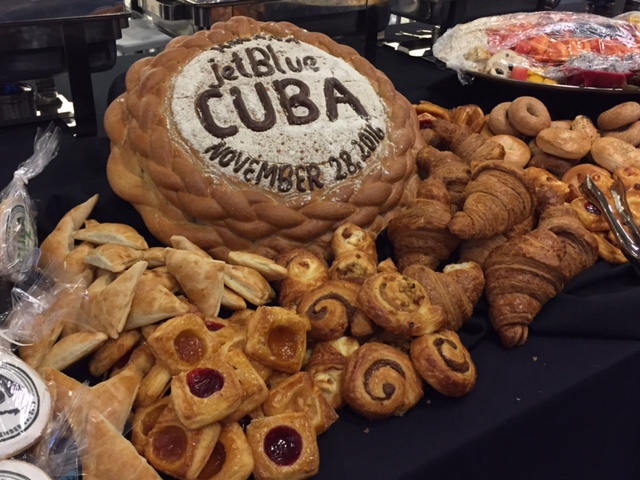
havana-cookies

The first commercial flights between the United States and Havana started flying on Monday, by coincidence just a few days after the death of longtime Cuban leader Fidel Castro.

A 45-minute American Airlines flight from Miami to Havana was the first flight US – Havana flight of the day, followed by JetBlue’s flight from New York’s JFK Airport to Havana.

I joined the JetBlue flight. Here are some snaps from the send-off festivities, the flight and the Havana airport.

Screen

img_4040

img_4039

img_4057

img_4069

JetBlue crew members had to apply to be part of the team on this inaugural flight, writing letters to try to compete for a spot. This flight attendant was glad to be on the flight so she could bring her doll “Lulu” back to Havana for the first time since 1962.

img_4066

There are just a few shops in the post-security area of Havana Airport – but several places to buy cigars.

img_4077

View out the window of Havana Jose Marti International Airport

img_4080

American and JetBlue were the first airlines to begin flying between the US and Havana, but by January Alaska Airlines, Delta, Frontier, Spirit, Southwest and United should be flying there too from a variety of cities throughout the U.S.

JetBlue boosting Boston service. Now: Atlanta

JetBlue_and_Boston

JetBlue, already the largest airline at Boston Logan International Airport, is ramping up service there a bit more with the announcement of new service to Hartsfield–Jackson Atlanta International Airport beginning on March 30, 2017.

This will be JetBlue’s 63rd nonstop destination from Boston –(the most destinations of any airline at Boston Logan, the carrier notes) – and with it comes an introductory one-way fare of $47 – starting today.

In addition to Boston-Atlanta flights, JetBlue will be adding service between Atlanta and Fort Lauderdale-Hollywood, New York JFK, and Orlando.

Wait – there’s more:

In addition to the flights between Boston and Atlanta, JetBlue also today announced some added flights out of Boston, including a fourth daily roundtrip Mint flight between Boston and San Francisco International Airport (SFO), starting July 15, 2017, and year-round service between Boston and Montego Bay’s Sangster International Airport (MBJ), which currently operates as seasonal service.

JetBlue is also expanding its seasonal service between Boston and St. Thomas’ Cyril E. King Airport (STT) to year-round service.

Worst days to fly this summer


Courtesy Chiago O'Hare Airport - busy day

My ‘At the Airport’ column this month for USA TODAY takes a look at the days airports traditionally see the highest traffic and the plans in place this year – given all the talk about longer-than-usual TSA lines – to smooth things out.

The good news is that airports and airlines, some of which have pitched in their own funds for extra staffing, are reporting improvements in passenger processing times. And for its part, TSA is working overtime to reassure travelers that its 10-point plan is having its intended impact.

Here’s what some airports have planned:

At Hartsfield-Jackson Atlanta International Airport, the Sunday after Thanksgiving is traditionally the busiest travel day of the year. But Independence Day and Labor Day weekends are also heavy.

ATL expects the same peak days this summer, said ATL spokesman Andy Gobeil, and to prepare, “we communicate on a daily, and sometimes hourly, basis with not only the TSA, but also with our airline partners.”

ATL is also where TSA partnered up with Delta Air Lines to install and test two “innovation lanes” at one security checkpoint to speed up the lines.

In 2015, the busiest travel day at Chicago’s O’Hare Airport was Aug. 3 (92,497 originating passengers), with July 6 (90, 276 passengers) not far behind.

This year, the Chicago Department of Aviation expects a variety of high-traffic days at ORD during June, July and August and is working with the TSA and its airline partners “to explore every possible option” to help reduce TSA wait times, said CDA spokesman Gregg Cunningham.

Denver Airport planes

Denver International Airport usually sees its peak travel days in July and August and this year os expects the busiest traffic days during the July 4th holiday week.  To help out at the checkpoints this summer, DEN has hired seven contract security workers to assist with passenger divesting, bin management and line management.

July and August (peak season for cruises to Alaska) are traditionally the busiest months at Seattle-Tacoma International Airport, and Thursday and Fridays are the busiest traffic days and this summer SEA hired 90 full-time equivalent private workers to free up TSA personnel.

Peak days at San Francisco International Airport occur during summer, and this year should be no different and to prepare for peak travel days airport officials meet weekly with the TSA to review security checkpoints and other security topics, and have planning meetings with airlines, service providers and other organizations to make sure staffing is appropriate for peak demand periods.

LAX Susan Goldman - pink lightband

Elsewhere, Los Angeles International expects a record 24.5 million passengers to travel through the airport this summer, an increase of 7.3 percent over last summer’s record 22.8 million travelers.

The busiest week of the summer is expected to be July 18-24.

“Lines at the TSA passenger screening checkpoints at LAX are being managed,” the airport said in a statement, “but they are expected to grow longer as the summer progresses with more travelers.”

JFK Airport rededication

Based on three years of data, the Port Authority of New York & New Jersey predicts the busiest day of summer at JFK International Airport will be August 11, July 28,  August 4, July 21 and July 14, in that order.

Each of JFK’s terminals are managed separately, but the company that manages Terminal 4 (JFKIAT) teamed up with its 32 airline partners to invest more than a quarter of a million dollars on increasing staff levels at the terminal’s TSA checkpoints through September 10, the weekend after Labor Day.

While March sees the busiest passenger traffic at Phoenix Sky Harbor International Airport, PHX officials expect the July 4th weekend to be the peak travel time this summer.

“We prepare for peak days by meeting with all of our partners – airlines, TSA, concessionaires, law enforcement and others – in advance,” said airport spokeswoman Julie Rodriquez, and during peak times “airport staff who usually work in the office wear special customer service vests and go out into the terminals to assist passengers and answer questions.”

Miami International Airport also sees its highest travel days during the winter travel season. But for the busy summer season, MIA officials went to Washington, D.C. to meet with TSA Administrator Peter Neffenger and other high-ranking federal officials, and came away with a commitment for 60 additional screening officers.

DFW ART in Terminal D

Dallas/Fort Worth International Airport is one of the beneficiaries of the $4 million American Airlines is spending this summer to help ease checkpoint backups at a variety of airports and, on peak days, the airport reallocates its volunteers, ambassadors and other staff as needed.

Going forward, DFW will have one more tool to help manage checkpoint traffic: in June, the airport’s board of directors recently approved a $600,000 contract to have AT&T anonymously track passenger cellphones in the airport to gather real-time information on wait times.


Heathrow’s photographer snapped them all

London’s Heathrow Airport is celebrating its 70th anniversary this year and digging into the archives for some treasures and special stories.

This is one about “the Godfather of Heathrow” – 84-year-old Dennis Stone – who has been a photographer at the airport for 70 years, starting work at age 14.

Heahtrow Dennis Stone then

Over the years, Stone has snapped it all, including the visits of a dozens of celebrities, including including Frank Sinatra, Goldie Hawn, Princess Diana and the Beatles. Here’s a video about Stone’s time at the airport and some of the great photos he took.

Liz Taylor at Heathrow Airport

Liz Taylor at Heathrow Airport

Clint Eastwood at Heathrow Airport

Clint Eastwood at Heathrow Airport

Heathrow MUHAMMAD ALI

Heathrow - BRAD PITT

Heathrow also has a website set up to gather stories about the airport, with a wide assortment of prizes for the best stories, including trips from London to Sydney, Australia with Qantas.

Flying on the new Bombardier CS100

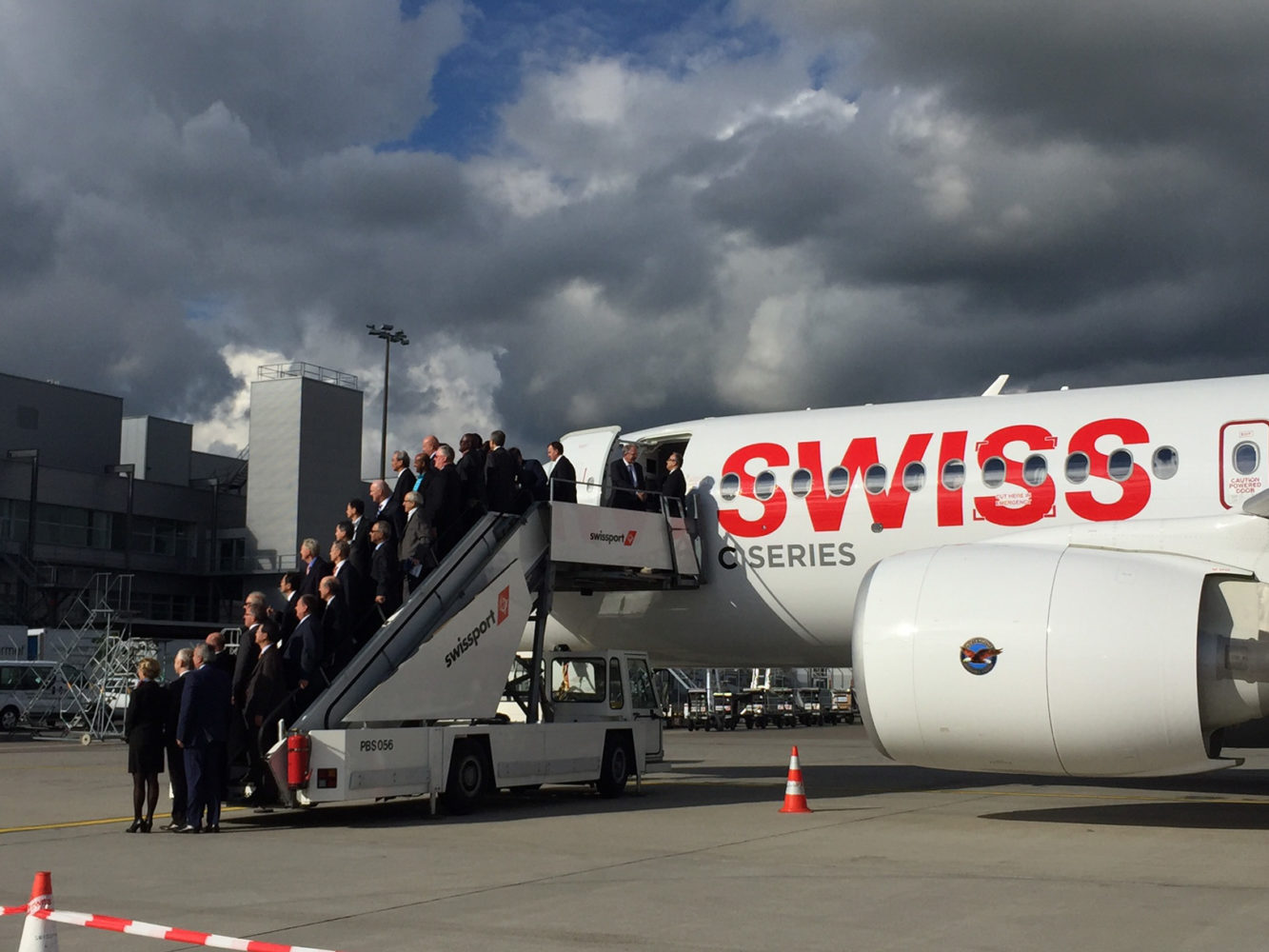
Star Alliance CEOs posing for celebratory photo on arrival in Zurich

Photo by Harriet Baskas

CEOs from a good number of Star Alliance airlines – and a rag tag group of journalists – attending the Annual General Meeting of IATA (the International Air Transport Association) in Dublin took part in a special flight to Zurich on a new aircraft: the Bombardier C Series – CS100.

Swiss International Airlines (SWISS) will be the first airline in the world to operate the new Bombardier C series. The carrier is putting its first CS100 into service on 15 July and will begin replacing its existing Avro RJ100 fleet of 20 aircraft with this new plane.

The flight from Dublin to Zurich was on a SWISS-branded test plane – #5 – but offered a preview of the new  short- and medium-haul twinjet that promises improvements in inflight comfort and operations.

“Official” snaps are being prepped, but here are some tweets and reports from a variety folks on the flight and on the ground.

Here’s a video from June 17th 2015, when SWISS welcomed one of the Bombardier C Series CS100 prototypes to Zurich Airport.

(Film produced by SkyProduction.ch for Swiss International Air Lines)