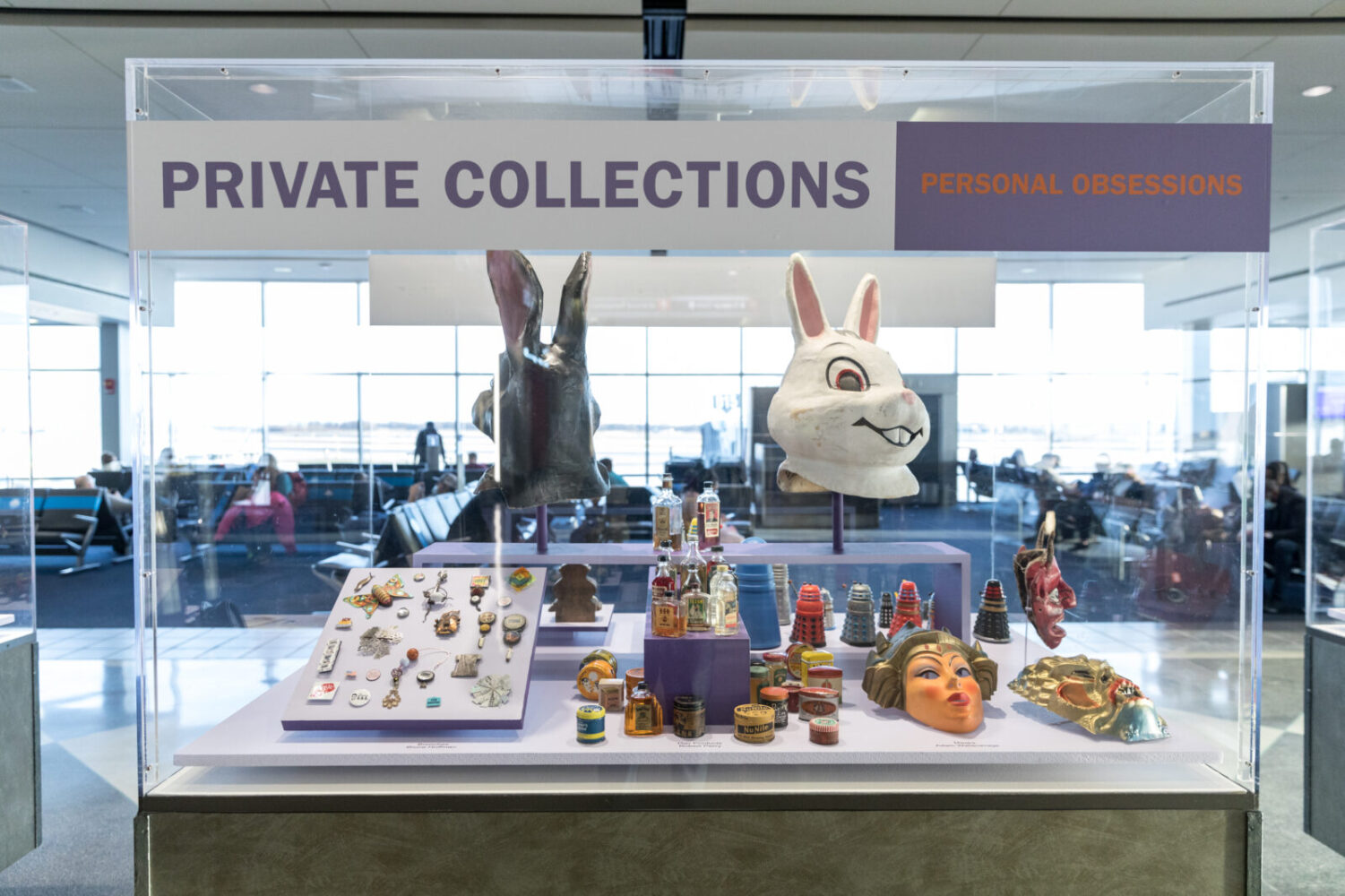
Here at the Seattle headquarters of Stuck at the Airport, we share space with Space Needle souvenirs, cowgirl memorabilia, and other collections. (Not counting that pile of unread New Yorker magazines).
So we’re delighted to see the Philadelphia International Airport’s (PHL) exhibition program kicking off the new year with a fun show titled “Private Collections: Personal Obsessions.”
On view in Terminal D, the exhibition is a festival of collections on loan from Philadelphia-area residents, including a few people who work at PHL.
The cases include a sampling of collections dedicated to architectural salvage, brooches, cable cars, beer bottles, hearts, masks, magnets, mail art, wind-up toys, and lots more.
“Most [of the collections] have been gathered primarily as a hobby for the collector’s own enjoyment or handed down from one family member to another,” says Leah Douglas, PHL Director of Guest Experience and Chief Curator.
“While the activity of collecting is a universal experience, each collection is personal and unique as each object often represents a specific remembrance or story,” she adds.
The beer bottles on display are courtesy of David Rosenblum, PHL’s photographer/videographer, whose late father collected more than 4000 bottles. “His most prized bottles were always the older bottles from Philadelphia-area brewers,” says Rosenblum.
The refrigerator magnets in the exhibit are on loan from the collection of PHL’s public affairs manager, Heather Redfern.
“[M]agnets are inexpensive trinkets that tell the story of where I have traveled, favorite trips, and great experiences I have had along the way,” says Redfern. “I am reminded of where I have been and where I would still like to go every time I walk past the refrigerator.”
Do you have a collection you have put together from your travels? We’d love to hear about it and see some snaps.
All photos courtesy of PHL Airport and David Rosenblum.
San Francisco International Airport (SFO) is home to the SFO Museum, which does a great job of bringing top drawer exhibits to the terminals.
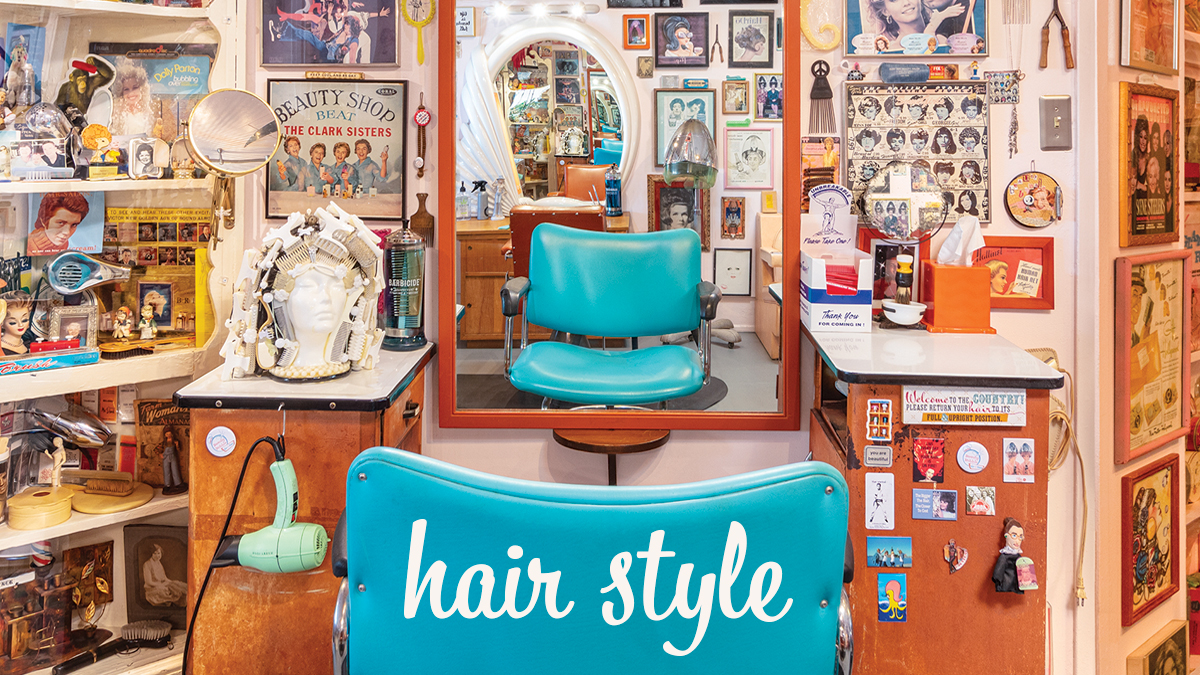
The SFO Museum’s newest offering runs through August 22, 2021, in Terminal 1, Departures Level 2, and is all about hairstyles and styling aids.
Objects in the exhibit include historical tools, hair products, and novelty items ranging from early curling irons and hair dryers to one-of-a-kind hair sculptures.
“The Flip” – Jeff Hafler, Beauty Bubble Salon and Museum
Here are more images from the exhibition, courtesy of the SFO Museum, as well as some exhibition notes about hairstyles in the 20th century:
Short bobs of the 1920s were made famous by entertainers such as Clara Bow and Josephine Baker.
Waves prevailed in the 1930s, and movie star Jean Harlow became Hollywood’s first “blonde bombshell” with her novel platinum tresses.
During the 1940s, large, voluminous curls, called Victory rolls, adorned the tops of women’s heads.
The late 1950s and ’60s gave way to voluminous hair, namely the bouffant—with hair puffed high at the crown and curled under at the sides.
Counterculture hippies preferred to wear long, free-flowing hair in the late 1960s. Around this time, a growing sense of ethnic pride inspired many African Americans to embrace their hair’s natural texture and wear afros.
During the late 1970s, actress and model Farrah Fawcett established one of the most iconic styles of all time with her feathered locks. Millions of women and girls went to salons requesting the “Farrah” cut.
Polar cub electric hair dryer c. 1923 – The A.C. Gilbert Company
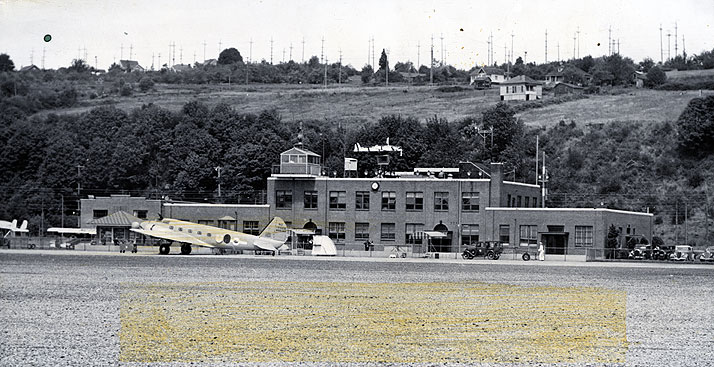
Then – Courtesy Washington State Historical Society
Boeing Field, officially King County International Airport (BFI), is located about 4 miles south of downtown Seattle and is one of the busiest general aviation airports in the country.
A lot of avgeeks head to this airport for planespotting and there’s a dedicated outdoor viewing area on the north side of the terminal.
But today we want to share some photos of the aviation-themed artwork that is both in and outside of the terminal building.
The images and the descriptions come to us courtesy of Seattle’s 4Culture, which funds a wide range of cultural projects in King County. When Boeing Field’s circa-1928 Air Terminal Building was being refurbished and renovated for a 2003 reopening, 4Culture commissioned a collection of site-specific art for the terminal that celebrates aviation.
30,000 Feet – by Brad Miller
Brad Miller. 30,000 Feet, 2003. Rulers, neon, and color photographs. King County International Airport, Seattle, WA. King County Public Art Collection. Photo: Joe Freeman
30,000 one-foot wooden rulers flank the entry to the airport’s terminal building. They are arranged into two enormous arrows that point toward the ceiling and a pair of illuminated photographs.
One is a picture of clouds in a royal blue sky and is the view passengers often see when they’re flying at 30.000 feet in a commercial airplane.
The other photo is smaller and suspended below the first photo. This photo depicts a lush, dark evergreen forest that a passenger flying in a small aircraft at 2,000 feet might see.
Luminaries by Norman Courtney
Norman Courtney (1947 – 2017). Luminaries, 2003. Aluminum, stainless steel, and glass. King County International Airport, Seattle, WA. King County Public Art Collection. Photo: Joe Freeman
Bejeweled like 1930s pendants, these functional artworks by Norman Courtney reference Art Deco design elements and the history of the terminal building. They also conjure that era’s space-age imagery.
Our Place in Space – by Paul Marioni and Ann Troutner
Paul Marioni and Ann Troutner. Our Place in Space, 2003. Glass terrazzo. King County International Airport, Seattle, WA. King County Public Art Collection. Photo: Joe Freeman
The terrazzo floor inside the terminal building depicts the connection between the earth, the moon, and the cosmos.
The building’s front doors open to a series of land and sea forms that represent North America. From there, a dark blue expanse sparkles with embedded glass, suggesting deep space—vast, fragile, and flecked with countless stars and other astronomical objects.
On the other side of the room, an image of the moon evokes cycles of waxing and waning, light and dark. When people walk from the entryway to the ticket counter they are walking to the moon.
Metropolis Fence – Peter Reiquam
Peter Reiquam. Metropolis Fence, 2004. Powder coated steel. King County International Airport, Seattle, WA. King County Public Art Collection. Photo: Joe Freeman
A fictional skyline with thunderclouds, searchlights, and a vintage Boeing 307 stretches across the steel fence by Peter Reiquam that links the main terminal building with the administrative building at King County International Airport.
We may be staying home but airports are still rolling out fun services, amenities, and cool attractions.
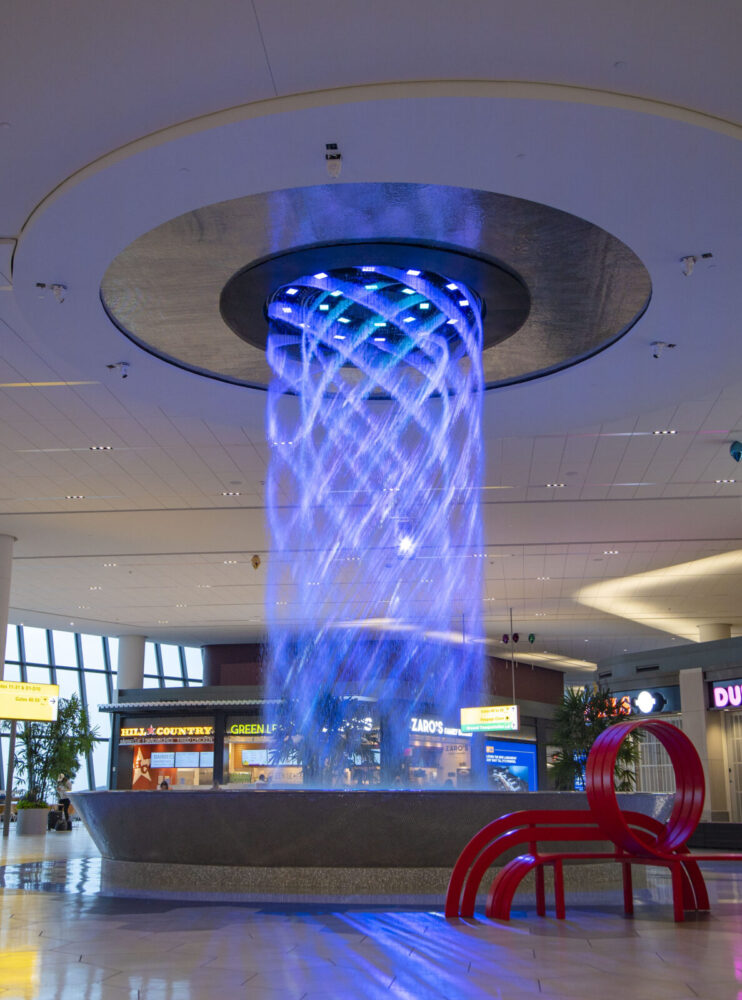
The latest is a state-of-the-art water feature in New York at LaGuardia Airport Terminal B.
It looks like an upside-down water fountain. But this fountain has a suitcase full of tricks.
The 25-foot-tall installation is designed by the French company Aquatique Show and features two large concentric rings and a 4,000-gallon circulating water system.
There are 450 programmable nozzles on the rings which allow water to fall in patterns or in a curtain onto which shapes, images, and themed shows can be projected with lasers.
LaGuardia Gateway Partners, which manages this new terminal at LGA, has shared these two videos of New York-themed water shows.
One features arts and entertainment in New York; the other celebrates iconic New York sites.
Travelers won’t have to see these same shows over and over; new shows are promised for holidays and to mark special events.
LaGuardia Airport’s new 25-foot-tall water feature is an impressive and welcome addition to the new terminal.
Denver International Airport (DEN) is well known for its public art collection. And one of the most notable pieces is the 32-foot fiberglass blue ‘Mustang’ sculpture by Luis Jiménez that’s on the Peña Boulevard approach to the airport.
Now there’s a new hard-to-miss sculpture welcoming people to the airport: Luminous Wind.
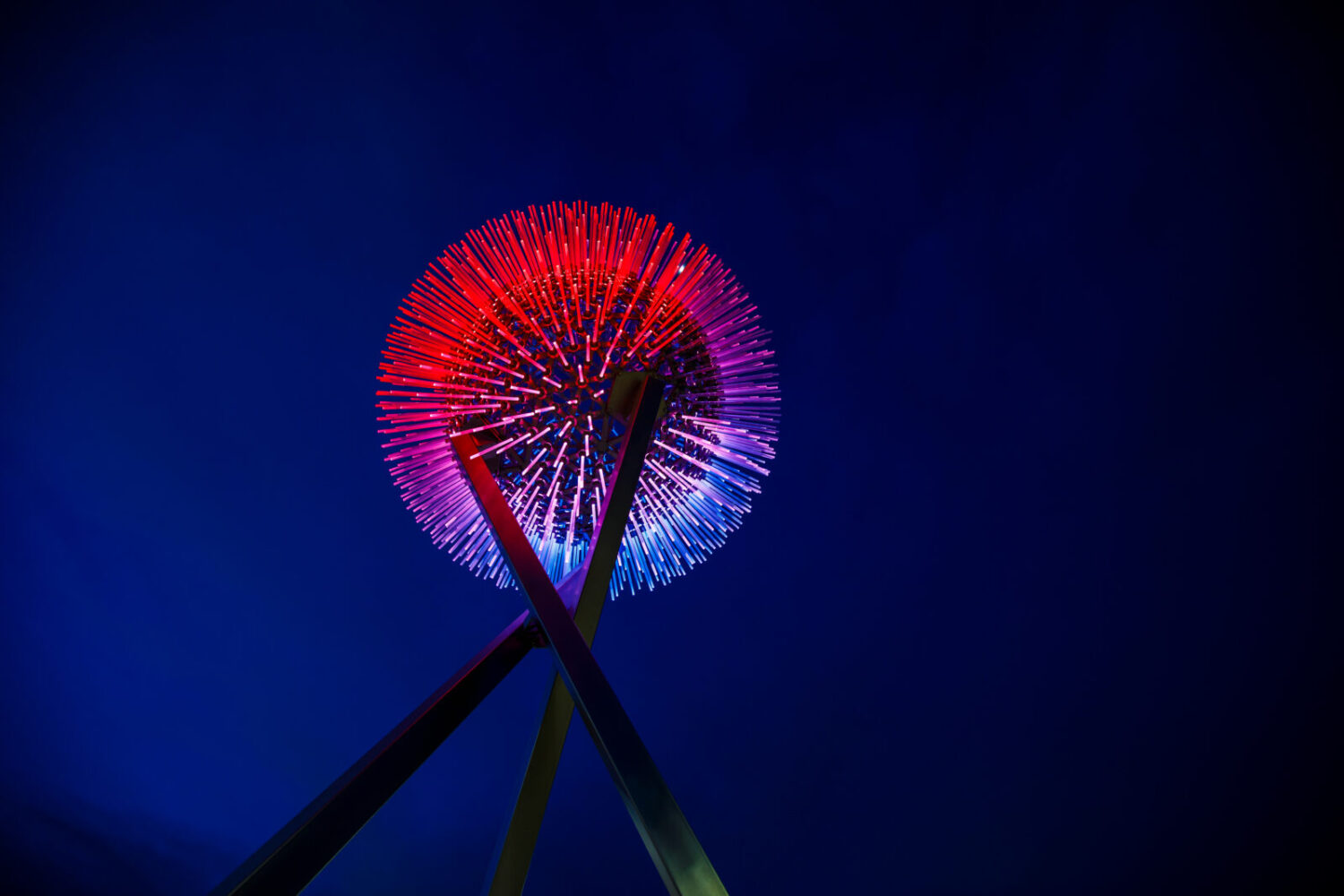
The 27-foot-tall ‘Luminous Wind’ sculpture is at the 61st and Peña Light Rail Station, which is the stop right before the airport station.
Created by artists Laura Haddad and Thomas Drugan, Luminous Wind includes 952 prismatic clear acrylic rods.
The rods are inspired by the grasses of the plains landscape and radiate out from a stainless steel sphere that sits on a giant tripod.
During the day sunlight reflects off the rods.
At night the dandelion-looking sculpture offers passersby a different light show each evening, thanks to programmable LED nodes that light up the rods.
As a bonus, the scupture’s light patterns are tied to a wind sensor. That turns the sculpture and its nightly shows into a barometer that visualizes wind patterns.
We know that due to health concerns, some amenities we love may not currently be available. We’re confident they’ll be back.
5 Things We Love About San Diego International Airport (SAN)
1. The art at San Diego International Airport
San Diego International Airport has a robust art program with great permanent public art pieces and temporary exhibitions.
Above are some snaps of The Journey by Jim Campbell. The light ribbon is both the Airport Authority’s largest commission and largest scale artwork and is made up of 38,000 suspended LED pendants spanning six feet wide by 700 feet long. Located in Terminal 2, the artwork has images of people swimming, dancing and walking, and birds in flight, fluttering throughout the sculpture.
2. SAN is home to the California Least Tern
The San Diego International Airport is home to the California Least Tern (Sterna antillarum browni, “CLT”), a federally listed endangered seabird species. The airport provides the tern with a nesting habitat and easy access to foraging opportunities in nearby San Diego Bay.
3. SAN has its own beer
San Diego International Airport (SAN) partnered with local brewery Ballast Point and industrial water purification company, Water Works, Inc., to brew a beer – called SAN Test Pilot.
The water for SAN Test Pilot comes from condensate that drips from the bottom of air conditioning units attached to jet bridges. The Airport’s Environmental Affairs team began collecting the dripping condensate in 2014 and currently captures about 100,000 gallons per year from 18 of the most heavily used jet bridges at terminals 1 and 2.
In addition to making beer, the water is used to wash sidewalks, equipment, vehicles and building exteriors and in the cooling towers that control the temperature in the terminals.
4. SAN’s artist in residence program
In addition to a performing arts program, San Diego International Airport has a performing arts residency program that gives area groups space to develop new work and the opportunity to perform.
The program kicked off in 2016 with the Fern Street Circus and since then has hosted a wide variety of performance groups, including an aerial dance theater.
5. SAN’s Innovation Lab
SAN’s Airport Innovation Lab is a 16-week accelerator program that helps entrepreneurs, start-ups, and other businesses get a healthy foothold in the airport industry.
The program provides testing for the ideas and a one-year technology-intensive collaborative program.
Past Innovation Lab start-ups you may recognize include Fuel Rod and At Your Gate.
Did we miss your favorite amenity at San Diego International Airport (SAN)? If so, drop a note in the comments section below.
And please take a look at the other airports featured in the ‘5 Things We Love About..” series. Let us know which airports you’d like to see added.
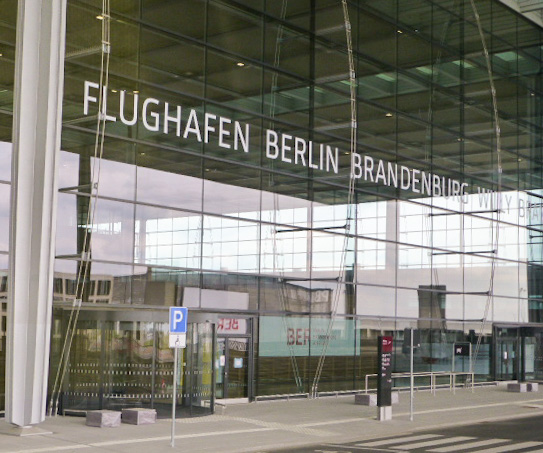
After 9 years of delays and false starts, Germany’s third-largest airport, Berlin Brandenburg “Willy Brandt” Airport (BER) is scheduled to open on October 31, 2020.
We won’t be able to be there for the opening, but we’re looking forward to a visit once this COVID-19 business is resolved.
In the meantime, here’s a recap of our 2014 visit to the airport site, when we joined a bus tour of the unopened airport.
Our report first appeared on USA TODAY.
Berlin Brandenburg Airport is late for an important date
The highlight of my late June visit to the unopened and much-delayed Berlin Brandenburg Willy Brandt Airport was racing down a runway as a passenger in a tour bus going more than 60 miles per hour.
It was also one of the saddest parts of the tour.
That’s because due to technical glitches, cost overruns, corruption and project mismanagement, tour buses – not airplanes – are likely the only vehicles that will be barreling down the BER runways for quite some time.
Under construction since 2006, Berlin’s much-needed new airport was designed to serve 27 million passengers, with an initial opening target date of November 2011.
That date was pushed back to June 3, 2012, and, despite trial runs during which the airport authority did tests of the baggage carousels, check-in desks, and security checkpoints, and simulated what it termed “all imaginable scenarios,” a problem with the airport’s fire safety and suppression system was discovered.
With just four weeks’ notice, opening day was called off.
Since then multiple target dates for a new opening day – six or seven, it’s hard to keep count – have come and gone. Now all the company managing the project will say is that “an opening date is expected to be announced at the end of the year.”
2016 has been bandied about as the next possible opening date, but additional problems and embarrassing operational revelations keep cropping up.
In May, there was an announcement of a suspected corruption case involving bribes for the awarding of contracts. In early June, there was out-of court settlement between the airport management company and airberlin, the major tenant at Berlin’s outdated Tegel Airport, over claims the airline felt it was due because of delays in the switchover.
And at the end of June, it was revealed that the engineer responsible for designing the new airport’s fire safety system was in fact just a draftsman, not a real engineer, and had been fired.
Besides showing off any progress, one reason the airport authority offers BER tours “is because it’s important that people don’t only read about the airport in the newspaper and see the reports on TV,” said an airport spokesman.
Tour buses stop first at a 105-foot-tall observation tower offering a bird’s eye view of the unopened airport terminal, the unused runways, empty parking lots, and assorted other facilities-in-waiting.
At the bottom of the tower is an airport information center, with a scale model of the airport and a glass cabinet of souvenirs emblazoned with the BER logo.
The staff on duty the day I visited said they don’t sell many of these souvenirs to tourists. And they seemed amused when I asked about purchasing some BER t-shirts, baseball caps, tote bags, inflatable plastic beach balls, and small, plastic lunch boxes.
Our tour bus then drove slowly past the very quiet office, cargo, and airport security facilities and by the railway station, where empty trains run each day to make sure systems remain working.
Photo ops of the front of the main terminal building were only offered from inside the bus, but the terminal’s glass façade offered a glimpse of “The Magic Carpet,” by Pae White. The large, red, work of art, one of several pieces specially-commissioned for the airport, hovers over the check-in lobby.
Out back, the bus pulled up at BER’s one A380-compatible gate, which has a jet bridge draped with Olaf Nicolai’s “Gadget,” a piece of art that looks like a string of giant pop beads and is designed to change colors to match those of the livery of the airplane at the gate.
Tour-goers were allowed off the bus here and invited up a set of not-quite-finished stairs for a look at a gate area where seats were installed, but still wrapped in plastic, and ceiling panels gaped open.
“It’s not unusual for big projects like this to be over budget,” said Johann Bammann, a retired architect whose tour ticket was a gift from a friend. But delays are dragging on too long, he said, “it’s time for the city to have a new front door.”
After a stop near the control tower, the bus made that dash down the runway, stopping to let passengers out to run around and pose for photos.
“It’s just unbelievable. I can’t understand why it’s taking such a long time to open this airport,” said Barbel Liedtke, a former Berlin-based Pan Am Airlines employee taking the tour with a friend. “But I’m sure there are a lot of people to blame.”
Fall travel doesn’t look like it is going to involve much flying. And we suspect that concerns about COVID-19 will mean that most winter adventures will have to be put on hold as well.
But that’s not stopping us from celebrating cool features and amenities at airports in our ongoing “5 Things We Love About…” series.
So far, we’ve profiled more than 30 airports. And we’re reminded of how proud each of these airports is to be serving and representing their cities.
While we work on putting together more airport profiles, take a moment to visit some that have been featured so far.
And please let us know if there’s an airport you’d like to see featured.
We may not be flying much, or at all, right now but airports are still doing their thing with music, art, and tasty food and drink.
We appreciate that. And we’re paying attention.
Denver International Airport (DEN) has launched the Taste of DEN series offering recipes from the chefs at popular restaurants at the airport.
In the first episode, Tom’s Urban Kitchen & Brewery Chef Robert Garton cookes up a Prime Rib Dip Sandwich. A video from DEN’s Root Down Kitchen is promised next.
To celebrate Hispanic Heritage Month, Hortencia and Rachel from the art and programming team at Dallas Love Field (DAL) Airport were kind enough to put together a video showing us how to make traditional paper flowers.
Throughout her Performing Arts Residency at SAN Margaret Noble is offering a series of downloadable audio-visual works as part of her [Sky][Muse] collection.
The first set is called ‘Compass’ and includes two ‘experiences:’
Part of the airport art program’s mural series, Plein Air Port is by local artist Aaron Glasso. The 144-foot-long piece combines images of the San Diego landscape and the airport’s architecture with abstract imagery.
Look for this hard-to-miss work along SAN’s interior roadway through 2021 on Admiral Boland Way, which runs between the terminal and the rental car center.
New terminal opens at Salt Lake City International Airport (SLC)
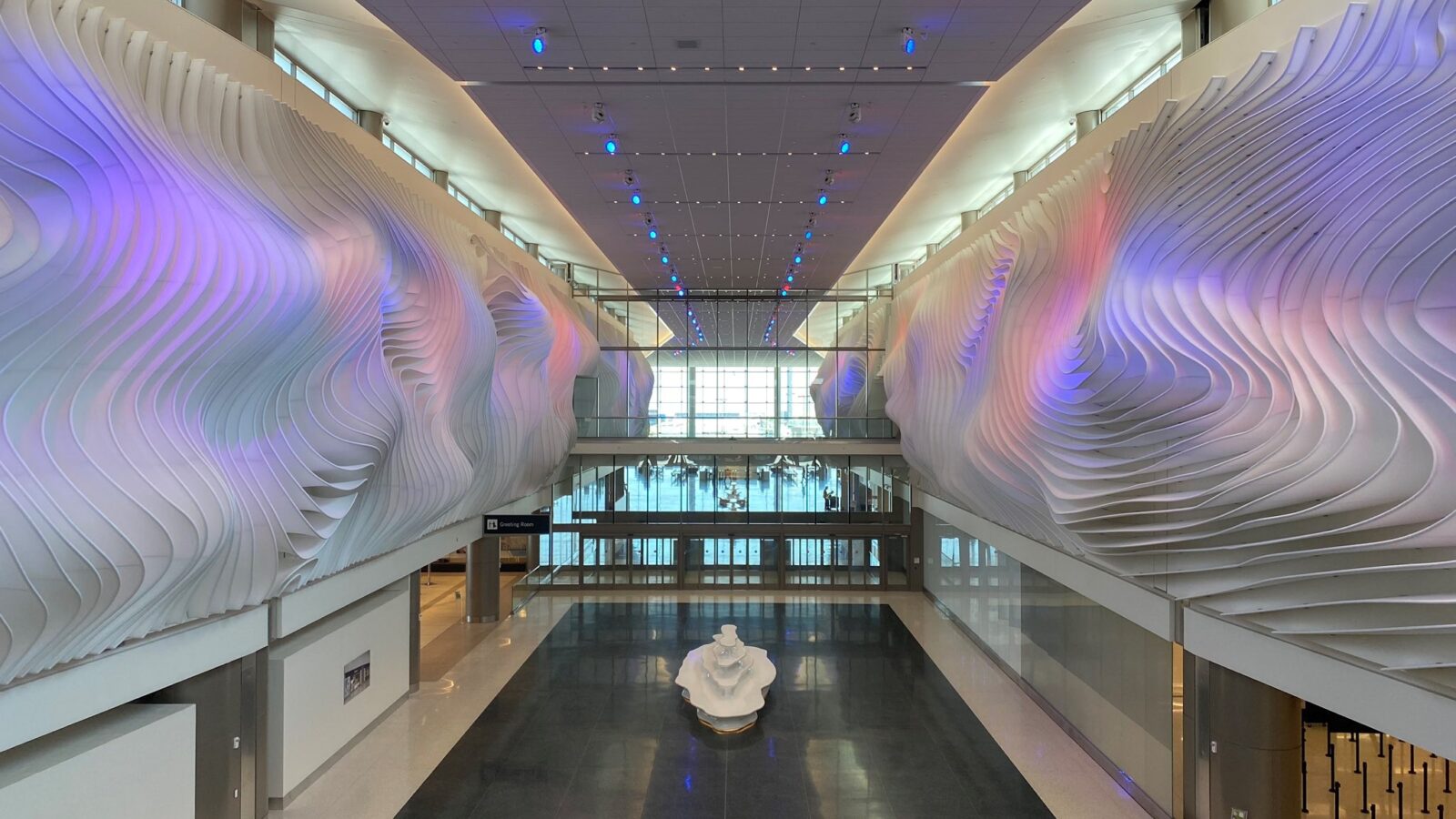
The opening marks the completion of the first phase of the 7-year, $4.1 billion project and includes the 900,000-sq.-ft. central terminal building and two linear concourses with 45 gates.
A time capsule was part of the opening day events. Items placed in the time capsule include a 1996 Airport Master Plan, a wooden bear carving, eagle feathers and sweet grass. Also in the time capsule: a hard drive with construction drawings and a letter to future airport employees written by current airport employees.
The second phase of the SLC new terminal project is scheduled to be completed in 2024. This phases will include a south concourse with 22 additional gates, allowing the airport to accommodate 34 million passengers a year.
StuckatTheAirport.com is planning an in-person visit to the new SLC terminal as soon as we feel safe to fly. But in the meantime, here are some snaps and a video shared by the airport and HOK, the architectural firm for the facility.
“The Canyon” by Gordon Heuther
The interior atrium is the length of a football field and features a 362-foot-long sculpture titled “The Canyon” by Gordon Huether. The work is designed to evoke Utah’s red rock canyons, alpine peaks, and moving water.
https://youtu.be/ODg05eXF8G0
Sign up for the Travel 2021 Summit
Will we ever be able to travel again? And, if so, what will that be like?
No one knows for sure, but an interesting group of travel experts is going to talk about it on October 7-8 during the online Travel 2021 Summit.
I am on the agenda talking about what airlines and airports are doing to make travelers feel safe now and what air travel may be like in the future.
Want to attend? Here is a link to the Travel 2021 Summit where you can get a discount on tickets. Early bird pricing ends September 17. Use code SEPT50 for $50 off the registration fee.