Pets

Update on Jack the Cat

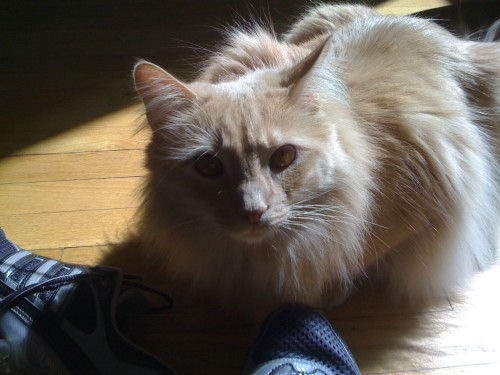
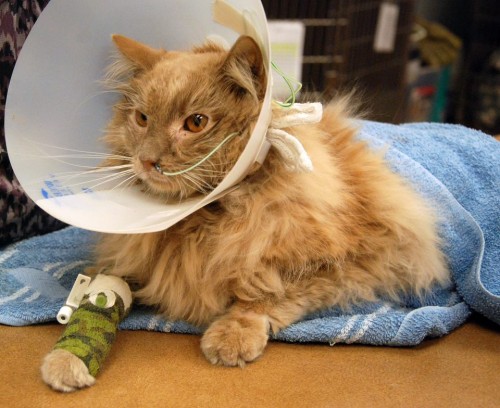
Jack the cat – the kitty that escaped from his carrier in the American Airlines baggage claim area at JFK airport and was missing for almost two months – is still is in critical condition.

American Airlines is covering Jack’s medical expenses and brought his owner, Karen Pascoe, in from California to visit with Jack this weekend. According to Pascoe’s sister, Mary Beth Melchior, this past weekend Jack’s vital signs were improving. “His red blood cell count has gone up since his transfusion. While his condition is still not optimal, we are happy to see this progress and are looking forward to the day he can return home with Karen,” said Melchior.

You can follow Jack’s progress on the Jack the Cat is lost in AA baggage at JFK Facebook page

Jack the cat: alive, but not out of the woods yet.

I have to admit, I didn’t think this story would have a happy ending. But, today on msnbc.com’s Overhead Bin, I was pleased to be able to report that Jack the cat, at large at John F. Kennedy International Airport since escaping from his cage in the American Airlines baggage claim area two months ago, has been found.

The cat got loose in the airline baggage center at JFK on Aug. 25, after Karen Pasco checked Jack and another cat in as cargo. A day later, parts of the airport were shut down in preparation for Tropical Storm Irene.

Since then, more than 18,000 Facebook fans of Jack the Cat is Lost in AA Baggage at JFK have been following search efforts that have included at least two Jack the Cat Awareness days, a pet Amber Alert and the hiring of a pet detective.

“He was found when he fell through a ceiling tile at Terminal 8 and was discovered by Customs employees who turned him over to American Airlines,” said Pasco. “He’s in critical condition after being who knows where in the terminal for the last 2 months. He’s being administered fluids, has low blood pressure and is dealing with the effects of prolonged malnutrition. While the prognosis is good overall, he’s not out of the woods yet.”

American Airlines announced the news that Jack had been found on Facebook:

“American Airlines is happy to announce that Jack the Cat has been found safe and well at JFK airport. American’s team of airport employees have been focused on the search effort since Jack escaped on August 25, 2011. Jack was found in the customs room and was immediately taken by team members to a local veterinarian. The vet has advised that Jack is doing well at present.”

Pascoe is in California, but Bonnie Folz, a New York-based search coordinator, saw Jack shortly after he was found. “It was great to know it’s him and to know he’s safe,” she said. “He looked fabulous to me. His eyes are big and beautiful and bright, although he’s lost some weight and he needs some grooming. He’s on IV and is having some tests to make sure he’s OK.”

American Airlines said once Jack is ready to travel, the airline will fly him to California to be reunited with his owner.

In a report of the incident filed with the Department of Transportation and included in the Air Travel Consumer Report issued this month, American Airlines reported that, “The clerk responsible for transporting the kennels to the FIS area loaded one kennel on top of another, and while the kennels were stationary and waiting to be loaded on the aircraft, the kennel positioned on the top fell to the ground. The impact of the fall caused the kennel to separate and the cat escaped.”

Jack the cat is stuck at JFK airport

Talk about being stuck at the airport.

[Update: August 31, 2011 2 p.m. west coast time: Jack still at large.]

For msnbc.com’s Overhead Bin I tracked down the story of Jack the cat today.

Jack has been on the loose in the American Airlines baggage center at New York’s John F. Kennedy airport for five days now and animal lovers on Facebook and Twitter are joining forces to urge the airline to get serious about finding this lost cat.

Here’s the story:

Karen Pascoe and her two adopted cats, Jack and Barry, were scheduled to fly American Airlines Flight 177 from JFK to San Francisco on Aug. 25, just ahead of Hurricane Irene. Pascoe was moving across the country with her two cats to start a new job in California.

The cats, too big to fit comfortably in one under-the-seat cat carrier, were flying in separate carriers as cargo. But shortly after the cats were checked in, Jack went missing.

“I said goodbye to cats and then went to get dinner,” said Pascoe. “And then I got a call from American letting me know Jack was out of the kennel.”

The cat didn’t appear when Pascoe went to the baggage area to call out to Jack. Pascoe had to leave without finding him because the other cat and the rest of her luggage were on the last flight to San Francisco. “That’s a giant baggage area, and he was nowhere to be found. At best I knew he was hiding somewhere,” said Pascoe.

Pascoe was assured the airline would keep looking for Jack and that she’d get a call with an update the next day. But no one called, and when Pascoe tried calling the baggage area on the weekend, no one answered the phone.

“I respect the fact that a hurricane was coming and things were a bit challenging,” said Pascoe, “but I didn’t hear from American until about 60 hours later.”

American’s silence prompted Pascoe’s sister to set up the “Jack the Cat is Lost in AA Baggage at JFK” Facebook page over the weekend, which quickly attracted mor than 2,000 fans. Many pet lovers also posted notes on American Airlines’ Facebook page urging them to find Jack, prompting the airline to post a response about its efforts to find the missing cat.

“Our JFK employees are using a variety of methods to try to find Jack, including setting cans of cat food by his kennel,” American Airlines spokesman Ed Martelle told msnbc.com. “Additionally, we are working with the Mayor’s Alliance for New York City to assist in providing humane animal traps … We offer our sincere regrets for this incident and are doing everything possible to locate him.”
advertisement

Pascoe credits Facebook and Twitter, and other animal lovers, with getting the airline to finally pay attention. She said she finally got a call from someone at American Airlines on Sunday and on Monday spoke with an assigned contact person in the airline’s central baggage claim department four times.

“I can’t help but feel a little frustrated that they didn’t have a better procedure in place,” said Pascoe, “but they’re finally stepping up and are on their game to help me.”

As of midday Tuesday, Jack the cat still hadn’t been found.

Cats & cat allergies on a plane

Each Friday on msnbc.com’s Overhead Bin I get to answer a reader’s question. This week Christopher Ambler wanted to know not how to take a cat on a plane, but how to avoid cats on a plane.

“If I have an allergy attack, it manifests as asthma that could not only cause a trip to the hospital, at best, but also typically means I will be recovering for days after receiving treatment,” wrote Ambler.

He tries to call ahead to see if there might be cats in the cabin, but “I’m often told that I have no recourse. They have said that I should ask for a seat change, but with re-circulated air, no seat is safe. Travel insurance also doesn’t cover this, as it’s a foreseeable circumstance.”

Rebooking on another flight sometimes solves the conflict, but then he’s often hit with an airline’s change fee, Ambler said.

Ambler is not alone. According to the American Academy of Allergy, Asthma & Immunology (AAAAI), about 10 percent of people with allergies are allergic to pets.

“It can be tough,” said Todd Rambasek, an AAAI fellow and a doctor with E.N.T. & Allergy Health Services in Cleveland, Ohio. “You can try avoidance measures and ask to be moved to another part of the plane. But even if there’s no pet in the cabin or near where you’re seated, remember that a lot of people carry pet dander on their clothes.”

Rambasek said asthma sufferers on airplanes might consider pre-medicating or wearing a face mask, such as those worn by some travelers during flu season.

Ambler has his own suggestion: During the booking process, he’d like airlines to alert a passenger if a pet is already booked on the flight. “If so, I would gladly say, ‘Hey, they booked first, I’ll take a different flight.’ But if someone with a pet allergy books first, pets should be disallowed on that flight. First to book should win,” said Ambler.

I ran that idea past a few airlines. American Airlines told me such a plan would be too complex, too time-consuming and too unreliable to administer.

“Just as with our policy for peanut allergies, we simply cannot assure customers that our aircraft are free of allergens, even if there is no pet onboard,” said American Airlines spokesperson Andrea Huguely. “We cannot guarantee our flights to be allergy-free, and customers should consult their physician as to the best way to medically deal with that issue.”  (American does not serve peanuts, but allows up to seven booked pets per flight.)

But here’s another strategy that may help. Many pet-friendly organizations list airline pet-policies on their websites. Studying those will tell you how much each airline charges for an in-cabin pet (some airline pet fares can top $100 each way) and how many pets each airline allows in the cabin. Frontier Airlines, for example, allows up to 10 pets aboard each flight.

Travelers seeking to avoid flying with other people’s pets might choose an airline that either limits the number of pets in the cabin or charges a high fee for passengers to bring their pets along.

Pets on planes

Each week on msnbc.com’s Overhead Bin, I have the opportunity to answer a reader’s question. This week the topic was pets on planes.. A reader wanted to know if she could take her small dog in the cabin.

The good news is that, yes, on most airlines small pets may travel in the cabin.

The bad news: There are plenty of restrictions. And, in some cases, the ticket for your tabby or toy poodle may end up costing more than your own.

“The cost runs anywhere from $50 all the way to $125. And that’s each way,” says Kim Saunders of Petfinder.com.

“Pets will also need a recent health certificate, while will require a veterinary office visit that can cost from $35 to $100. You’ll also need to be sure your pet is in an approved pet carrier that can fit underneath the seat.”

Passengers taking a pet on a plane should also keep these tips in mind:

Make your reservation well in advance. Frontier Airlines allows up to 10 ticketed pets in the cabin, but most airlines only allow one or two. “You and your pet may not be able to take the flight you want,” said Saunders. And all pets need to remain in their carrier under the seat for the duration of the flight.

Give your pet food and water far ahead of the flight so that your pet can visit the relief area before going through security. (A few airports have relief areas post-security; but every airport has a spot for Spot outside). “Even then, it’s a good idea to put something soft and absorbent in the carrier. Just in case,” said Saunders.

Make sure your pet is social. Your pet must stay inside the carrier at all times, but at the security checkpoint, you’ll be required to take the pet out and either walk it or carry it through the metal detector. “If there’s an alarm because of the leash or a metal collar, the pet will be checked physically, in a sort of pet pat-down, by an agent to resolve any kind of issue,” said TSA spokesperson Nico Melendez.

Some people have tried to put their pets − and sometime their babies − through X-ray machines. “That won’t harm a pet or a baby, but we prefer they don’t do that,” said Melendez.

For more information about taking your pet on a plane, check your airline’s website or the resource section of a website such as Petfinder.com, which recently issued its 2011 list of the most pet-friendly airlines in the United States and Canada.

Resources for traveling with your pet

Do you travel with your pooch?

If you take your dog to the airport, it’s good to know where the pet rest areas are located.

The folks at PetFriendlyTravel.com recently dropped me a note to let me know that they’ve updated their list of airline pet policies and the database listing the location of pet relief areas at airports.

And, just in time for summer, they’ve also updated the list of beaches that welcome dogs.


Photo via Flickr Commons

Souvenir Sunday: miniature books and travel-sized items

Each Sunday here at StuckatTheAirport.com is Souvenir Sunday: a day to take a look at some of the fun, inexpensive souvenirs you can find at airports.

AYP Novelty Shop from UW Libraries, digital collection

This week: fun, inexpensive and tiny things to bring to the airport and on your trip.

A friend heading to India (lucky duck!) was seeking suggestions for three weeks-worth of titles to load onto a borrowed Kindle.

E-books are certainly the modern way to lighten your load, but in the past avid readers might have chosen to pack miniature books instead. Perhaps some of the books described in a recent blog post by a special collections cataloger at the Smithsonian Institution.

Diane Shaw writes that the Smithsonian’s collection includes more than 50 miniature books, each three inches or less, and calls them “practical as well as whimsical,” and “easily tucked inside a wallet or pocket.”

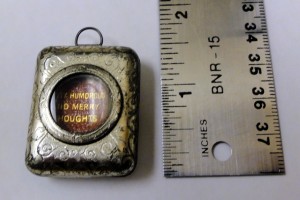
Miniature book at Smithsonian  Institution

That sounds perfect for traveling.  Especially the tiny treasure titled Witty, Humorous and Merry Thoughts, which is in a metal locket-like case with a magnifying glass in the cover.

Miniature book at Smithsonian

Book photos courtesy Smithsonian Institution

But  why stop with books? Perhaps you already travel with a collapsible umbrella, a tiny alarm clock and TSA-friendly toiletries and cosmetics.

Here are few other items to consider:

Orikaso makes foldable, incredibly light and thin mugs, bowls and plates that, when not in use, are flat pieces of Greenpeace-endorsed polypropylene.

folding tableware

Bamboo markets several sizes of these collapsible Silicone travel bowls for pets.  But since the bowls are made from FDA-compliant materials and are PVC and BPA-free, I suspect they’d also come in handy for use by people too.

collapsible pet dog bowls

All sorts of games, from Mahjong and Monopoly to Candyland and Cribbage, can be found in travel-size versions.  And then there are some of the items for sale at sites like minimus.biz.

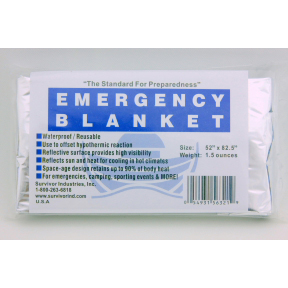
In addition to the classic travel-sized personal care, cosmetic and pharmacy items, the site carries single-serving food items and useful pocket-sized survival items such as mini-rolls of duct tape, light sticks and space-age emergency blankets.

emergency blannket

Have you found a great, must-have travel-sized item?  Please share your tips here.

Coming soon – if you’re lucky – to an airport near you

My At the Airport column for USAToday.com this month, Coming soon – if you’re lucky – to an airport near you, features some of the new amenities I saw on exhibit in Philadelphia at the recent conference of Airports Council International – North America, or ACI-NA.

Airport chairs

During the conference, workshops were offered on everything from saving energy to dealing with security threats and how to get more passengers to “follow” airports on Twitter.  But the real fun was on the exhibition hall floor. There, vendors displayed everything from the latest in airport seating (cup holders and USB plugs, thankfully, seem to be the next big thing) to new, high-tech machinery for shooing wildlife off runways.  But here are the amenities I found most intriguing.

Napping nooks

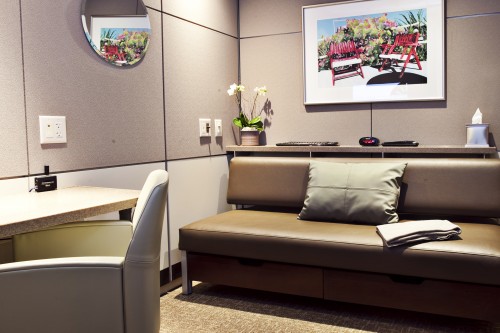
Last year, Minute Suites debuted “sleep rooms” at Hartsfield-Jackson Atlanta International Airport (Concourse B, next to Gate B15).  Each room has a day bed, work desk, complimentary Wi-Fi, a 32” HDTV, and sound masking system tools. The company is opening another branch at Philadelphia International Airport (PHL) in March 2011, and is in talks with at least three other airports for more.

Minute Suites

Minute Suites airport sleep room

Unique Retreat, another company making napping nooks, should be opening its first branch at San Francisco International Airport before the end of the year in the International Terminal, Boarding Area A.

Cigar lounges

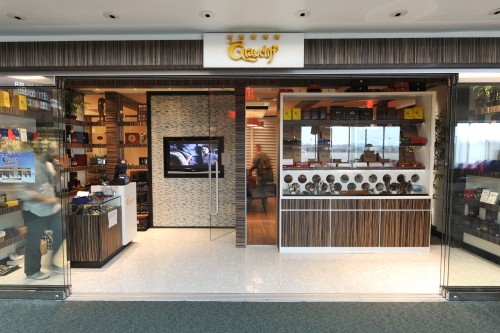
Bahamas-based Graycliff cigars opened boutiques with specially-ventilated cigar lounges attached at Nassau International Airport last November and at Nashville International Airport in March.

Graycliff cigar lounge at Nashville Airport

Each lounge has an admission fee ($10 in Nassau; $4 in Nashville) and Graycliff reps say they’re exploring setting up this type of smoking lounge at other airports as well.

Eat, buy, play

The Food Network is bidding on several airport locations for themed restaurants that will be called Food Network Kitchens.  And ZoomSystems, which makes those oversized airport vending machines (officially: “automated shops”) to sell products from Best Buy, The Body Shop, Sephora and other retailers will soon be installing airport ZoomShops to dispense apparel associated with a major sport.

Skip the cellphone lot; park at the plaza

“Cell phone lots on steroids” is how the folks at Airport Plazas are marketing the service centers they’re planning to build  on airport properties but separate from the terminals. Patterned after highway plazas offering fuel and food, these 24-hour service centers might have amenities ranging from a gas station, a food court, a car wash and a convenience store to free Wi-Fi, a pet hotel, a pharmacy and a bank.

The company opened its first airport plaza recently at Newark Liberty International Airport. There, amenities include an environmentally-friendly gas station, a dual-bay car wash, a service station bay and a 7-Eleven convenience store.

Future airport plazas are planned for New York’s John F. Kennedy International Airport, Cincinnati/Northern Kentucky International Airport, Southwest Florida International Airport (Fort Myers) and Utah’s, St. George Municipal Airport.

Sound promising?  What should they work on next?

Universal access at airports: it could happen

My “At the Airport” column for USATODAY.com this month is about what airports and airlines are doing – or not – to make it easier for people with disabilities to make their way through airports.

Researching the story was an educational and quite sobering experience.

And as the column title says: Travelers with disabilities face obstacles at airports.

Sadly, that’s the case far too often at far too many airports. But if you read through the column a bit, you’ll see that there have been some improvements.  And a lot of those fixes end up making it easier for everyone to travel.

Here’s most of that column:

With laws such as the Air Carrier Access Act and the Americans with Disabilities Act, you might assume that people with disabilities no longer encounter obstacles at U.S. airports.

Unfortunately, that’s not true. “Frankly, there isn’t enough policing going on to go look at all these airports to see if they’re 100% compliant,” notes Tim Joniec of the Houston Airport System. “So at some airports it may take a traveler complaining about a service that isn’t there before attention is paid to a problem.”

And even if a traveler does lodge a complaint, “you’d be surprised at how many airports, including some enormous ones, just don’t care,” says Eric Lipp, the executive director of the Open Doors Organization (ODO), a non-profit that works with businesses and the disability community.

For those that do care, next month the Open Doors Organization (ODO) and the International Air Transport Association (IATA) will host a conference about universal access in airports. On the agenda: tools, technology and training to help both airports and airlines do a better job of serving travelers with disabilities.

One topic sure to be discussed is money. About 55 million people in this country have some sort of disability. This community spends upwards of $14 billion a year on travel; more than $3 billion a year on airplane tickets alone.

With medical care and life expectancy improving, the number of travelers with disabilities is predicted to increase to more than 80 million in the next 20 years. Yet, when the Open Doors Organization surveyed adults with disabilities about travel, more than 80% reported encountering obstacles at airports and with airline personnel.

Universal access universally helpful

Lipp and others point out that removing obstacles at airports makes traveling easier for all passengers, not just those with disabilities. And there are plenty of examples of how making changes makes sense.

Curb cuts help those with strollers and wheeled luggage as much as they assist travelers using wheelchairs, walkers, canes or scooters. Family bathrooms are great for parents traveling with small children, but special lavatories at airports also offer grab bars and other amenities that a disabled traveler, or one traveling with an attendant, might find useful. Many general-use airport bathrooms are cleaner due to ADA-compliant self-flush toilets, automatic faucets and motion-sensing paper towel dispensers. And weave-through entryways reduce germs by eliminating the need for everyone to grab the door handle.

Visual-paging systems, like the high-tech ones now installed airport-wide at Minneapolis-St. Paul International Airport, were originally created to assist hearing-impaired passengers. But all passengers can benefit from having an additional way to receive emergency messages and courtesy pages.

And of course, air passengers must be able to get to the gate before they can fly.

At George Bush Intercontinental Airport, passengers must now either walk or negotiate elevators, escalators or a bus when trying to reach Terminal A from Terminal B. That barrier will disappear in October when the airport’s above-ground train finally links Terminal A to the other four terminals. “Those with mobility challenges will certainly benefit from this,” says the airport’s Tim Joniec, “But because 70% of our passengers make a connection at IAH, this will definitely be noticed by all travelers.”

Some airlines embrace universal access

Airlines, which are responsible for providing wheelchair services at airports, have also made some special accommodations that end up smoothing out the journey for all passengers.

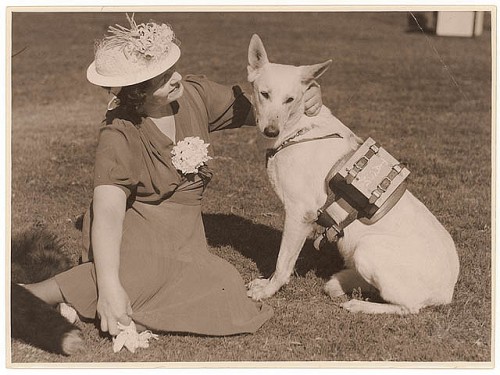
If you travel with a pet, you’ve probably noticed more fenced, landscaped animal relief areas at airports. Those pet parks are popping up because the Carrier Access Act now requires airlines to make relief areas available for service dogs accompanying travelers.

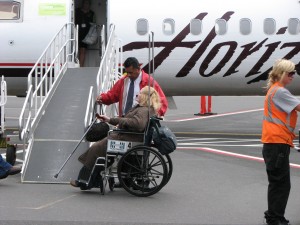
Alaska Airlines/Horizon Air often uses ramps instead of stairs to board all passengers, not just those using wheelchairs, onto smaller Horizon planes at gates where jet bridges are unavailable. “That way no one has to negotiate steep steps to and from the airplane and everyone can enter the airplane the same way,” says Ray Prentice, Alaska Airlines’ director of Customer Advocacy.

And for the past three years, Continental Airlines (which will legally merge with United Airlines on October 1st) has been getting feedback and advice from a thirteen member advisory board made up of passengers with disabilities.

Before the board was in place, the airline would wait for a passenger with a disability to complain about an access issue before a policy would get tweaked.  Continental’s disability programs manager Bill Burnell says “Now we can anticipate problem areas before they become complaints. And try to go beyond the minimum ADA requirements. We’ve learned there’s a big difference between something being ADA compliant and it being universally accessible.”

More cute airport pet parks

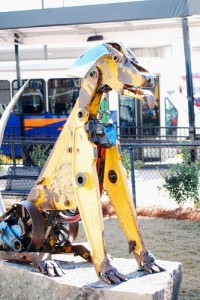
Earlier this week I posted a picture of the cute sculpture in one of the pet relief areas at Hartsfield-Jackson Atlanta International Airport (ATL)

Pet relief area ATL

ATL pet relief area

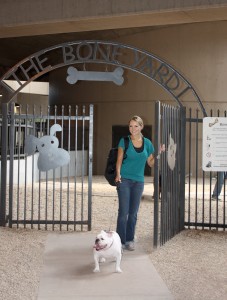
And the smart park at Phoenix Sky Harbor International Airport (PHX)

PHX pet relief area

PHX pet relief area

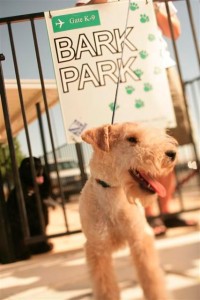
Both are pretty doggone cute. But the folks at Reno-Tahoe International Airport felt left out – so they sent me a note about the spot they’ve set aside for Spot.

Reno-Tahoe International Airport pet relief area

RNO airport pet relief area

It’s hard to tell how cute the park is -but I love the name: Bark Park.

And here’s the park for pets at Austin-Bergstrom International Airport.

Austin Airport pet relief area

Austin-Bergstrom Airport dog park

Have you and your pet found an airport pet relief area that’s fancy AND functional?  Let us know and we’ll try to sniff out a photo and post it here.