Baggage

Wine flies free on Alaska Airlines

tasteAndToteBoxes

In the past 10 years the wine industry in Oregon and Washington has ripened into big business, with Oregon’s 465 wineries now contributing close to $3 billion to the state’s economy each year and Washington’s 800 wineries pouring more than $8.6 billion into the state’s coffers.

But while visiting wineries for tastings is now a popular tourist activity in many parts of the Pacific Northwest, taking home a case of wine can be costly.

Shipping a case of wine as freight can cost up to $60 via UPS and checking it as baggage on an airplane can cost $25 or more, depending on the weight of the wine and the number of other bags being checked.

“Ironically, we’d see people willing to spend $300 to $500 on a case of wine, yet that extra $25 to put it on the plane was a negative,” said Duane Wollmuth, executive director of Washington’s Walla Walla Valley Wine Alliance. “It did stop people from buying the wine at the wineries.”

In an effort to stem the flow of lost wine sales, in 2011 Washington wine growers in the Walla Walla area persuaded Seattle-based Alaska Airlines to extend a program it offers to passengers traveling out of California wine country via Sonoma County Airport (STS).

The airline now waives the charge for checking a case of Washington wine for anyone flying out of three airports in the state’s winery-rich regions (Pasco/Tri-Cities, Walla Walla and Yakima).

Now, instead of just one or two cases of checked wine per week, Alaska Airlines is transporting upward of 30 cases of wine a week per participating airport during peak season, according to airline spokeswoman Bobbie Egan.

And the waived fees make a difference. For the 70 wineries in Walla Walla area alone, “the program represents at least a quarter to a half-million dollars of additional wine sales a month in the peak season,” said Wollmuth.

Washington’s “Taste and Tote” concept, which began as a pilot program,, is being extended. And through Nov. 20, visitors to Oregon’s wineries and tasting rooms can take advantage of the Oregon Wines Fly Free program if they’re flying on Alaska Airlines from any of four Oregon airports (Portland, Eugene, Medford and Redmond).

“Like any other business, we’re always trying to figure out a way to reach more people,” said Charles Humble of the Oregon Wine Board. “Tourism in many parts of our state is now incredibly linked to the wine industry and if people can come here, buy a few bottles of wine and take it home without having to pay for it to be checked, that’s a good incentive.”

But what is the incentive for the airline?

“It’s a good partnership for us,” said Egan,” “It’s a win-win for these areas that produce great wine and it’s a great way for us to promote these wonderful destinations that we serve.”

In addition to advertisements and mentions in social media the airlines gets from the participating wineries and tourism groups, Alaska Airlines asks the wineries in the participating regions to waive the tasting fees for its passengers who show their boarding pass.

That’s a benefit most wineries seem happy to offer. “Many of these folks have traveled to our region specifically to do wine tasting and they are motivated to buy,” said Ron Peck, executive director of Tourism Walla Walla, where wine tourism brings in about $100 million annually to the region.

“I think it’s clever for Alaska Airlines to appeal to the wine traveler,” said Chris Nishiwaki, a Seattle-based restaurant, food and wine writer. “It becomes an incentive for travelers to buy wine at their destinations since baggage fees have become such a nuisance. Furthermore, wine travelers spend over 10 percent more over other travelers. So it’s the ideal audience to cajole.”

(My story about the Alaska Airlines program to fly cases of wine for free first appeared on CNBC Road Warrior)
 

United offers baggage/upgraded seating subscriptions

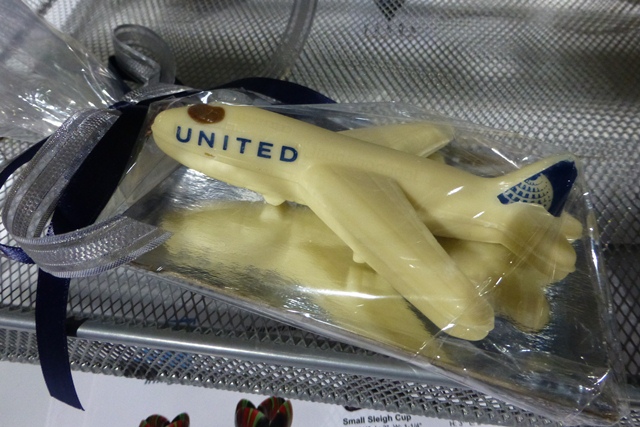
United Airlines white chocolate

On Monday United Airlines announced subscription programs offering customers either a year-long access to seats with extra legroom in the Economy Plus section of the cabin, or a year’s worth of pre-paid checked baggage fees.

United says it is the first domestic carrier offering these services in subscription form.

Prices start at $499 for the Economy Plus subscription and $349 for the checked-bag program and go up depending on which region of the world you choose (Continental US or beyond) and how many companions you bring along.

Are the plans a good deal?

Baggage subscription fee

United Airlines passengers flying on an economy ticket within the continental US – and to Hawaii or Alaska – currently pay $25 to check their first standard bag and $35 for the second bag.

With a baggage subscription, a traveler pays a yearly fee of $349 (plus a $50 initiation fee; currently waived). Travelers may add a second checked bag to the package for a $50 yearly fee, the bags of one companion for $100 and the bags of up to eight companions on the same reservation for $300.

The subscription only covers bag fees in the continental United States, so someone flying to Hawaii or Alaska would need to add on the North America/Central America option for an addition $100. Adding additional regions will rack up additional fees.

“With this program, a traveler would need to check a standard bag on 14 one-way, continental US flights before they broke even on their investment,” said Tim Winship, publisher of FrequentFlier.com. “That’s 7 round-trips. And if you are traveling that often it’s going to be true for most people that they’ll earn elite status in United’s frequent flier program, which already includes bag fee waivers as one of the perks.”

Economy Plus Subscription

Travelers purchasing an economy class seat on United can upgrade to Economy Plus at the time of purchase, if those seats are available. “The prices of those seats vary,” said May, “It can start at $9 and go up to $215.”

The Economy Plus subscription package starts at $499 (the $50 initiation fee is currently waived) and includes automatic upgrades to Economy Plus seats – when available – in the continental United States only. To add Alaska and Hawaii, a traveler would need the North America/Central America upgrade, for $100. Adding a companion to the package costs $200 and adding up to eight companions on the same reservation is $400.

Finding the value tipping point on this option “is a bit of a quandary,” said Winship. “I used a figure of $40 for a domestic flight upgrade. And using that figure it turns out that it would take 13 flights before that subscription price gets covered.”

“If you’re flying that much you may want to consider elite status on another airline that gives you these seats for free,” said Brian Kelly, founder of thepointsguy.com.

He can see some of United’s Premier Silver elite members buying this package because, due to a recent change in United’s frequent flier program, that group must now wait until check-in to claim their complimentary Economy Plus seat.

“Otherwise, casual travelers should probably just buy the one time passes,” said Kelly.

Overall, “I find the subscription plans puzzling,” said Winship. “Presumably the market for this is the traveler between the infrequent leisure traveler and the elite traveler. But the cynical way of looking at it would be that the targets for these subscriptions are gullible travelers who don’t really understand the value proposition here.”

(My story: United offers baggage/upgraded seating subscriptions first appeared on NBC News.com Travel in a slightly different version.)

Carry-on only? Board early on American Airlines

TRAVEL SUITCASES

After running a test of the program in several cities, American Airlines has decided to make is official:

Passengers traveling with just one small carry-on that will fit under the seat in front of them will now be allowed to board earlier than other customers – before Group 2.

The program was tested in Austin, Baltimore, Denver, Fort Lauderdale, Kansas City, Mo.,Minneapolis-St. Paul, and Washington-Dulles and the airline expects this new policy to speed up average boarding times.

No doubt it also expects to hear some whining from customers in Group 2 who will now  have to board a bit later in the process.

United Airlines will deliver your bags to your doorstep – for a fee

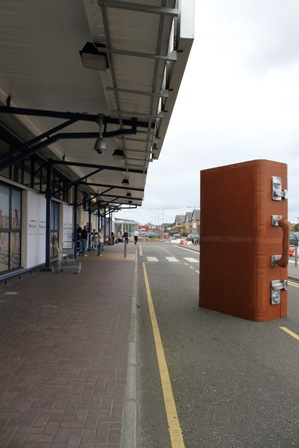
Blackpool SuitcaseArrives


United Airlines has joined American Airlines in offering harried travelers the option of having checked luggage delivered to a home, office or hotel.

For a fee, of course.

The service — operated by BagsVIP, a unit of Bags, Inc. –promises to deliver luggage to locations in a 40-mile radius of an airport within four hours of a flight’s arrival. Delivery may be booked online or via phone up to an hour before a flight’s departure.

In addition to regular checked bags fees, delivery costs $29.95 for one bag, $39.95 for two bags and $49.95 for three to eight bags on United — and up to ten bags on American. Fees and delivery times are adjusted for destinations beyond 40 miles and up to 100 miles from an airport. If bags arrive outside the delivery window, service fees are refunded.

American Airlines began bag delivery in August and now offers it in more than 200 cities around the U.S. Customer feedback “has been overwhelmingly positive” and the airline is “looking forward to expanding the service,” American Airlines spokesperson Matt Miller said, though he declined to specify how many passengers have used it.

United’s baggage delivery service rolled out earlier this month  and is available to passengers flying to six cities: Boston, Chicago, Honolulu, Houston, Los Angeles and Orlando. United spokesperson Mary Clark said the service will soon expand to 190 domestic destinations and “is a way to give customers another option to improve and add value to their travel experience.”

For travelers already forking over $25, $50 or more to check a bag, the price of this new option could be a barrier. But FareCompare co-founder Rick Seaney said the service could be useful if a traveler can maximize the benefit by booking delivery of multiple bags.

“I might recommend this type of service to golfers, trade show folks who check small booths and parents checking several bags to send their kids back to college for the year,” said Seaney.

Reliability concerns could be a roadblock as well. While Department of Transportation statistics show airlines banked more than $3.36 billion in checked bag fees in 2011 and more than $2.6 billion bag fees in the first nine months of 2012 alone, the industry has a reputation for losing and misplacing bags.

But lost luggage rates appear to be declining. In 2012, “airlines had the best November on record for baggage handling performance,” said Katie Connell, spokesperson for Airlines for America (A4A), an industry trade group. During that month, “99.7 percent of all U.S. airline passengers had their bags properly handled,” she said.

Bags, Inc., already operates remote baggage check-in at all Disney resorts, many cruise lines and some Las Vegas hotels.

“There are other airlines in the pipeline for BagsVIP delivery service,” said Bags, Inc. spokesperson D’Anne Mica, “but it will be up to our airline partners to announce when those services come online.”

For those who would rather not contract with an airline to deliver baggage, there are other options. Travelers may book the BagsVIP service directly (prices match those offered by the airlines), or choose a door-to-door delivery service, such as FedEx, UPS, Luggage Free or Luggage Forward. Those services may take longer and cost more, but eliminate the need to tote bags to the airport.

(My story: United offers airport-to-doorstep baggage delivery – for a fee first appeared on NBC News Travel.)


Spirit Airlines ups the ante: will charge $100 for carry-on bags

Spirit Airlines is being really mean-spirited now.

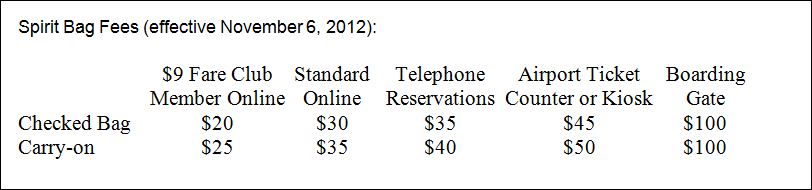
On Monday the airline announced that, beginning on November 6, passengers who wait until they get to the boarding gate to pay the airline’s fee for checking a piece of luggage or carrying it onto the airplane will pay $100 per bag.

Passengers can pay lower luggage fees by paying earlier in the process, such as online , on the phone or at an airline kiosk. but there’s no way around paying something to carry-on or check a piece of luggage.

Spirit is the airline that advertises really low fares but often surprises unsuspecting customers with hefty added fees for everything from seat assignments to onb0ard drinks.  Beginning October 31, 2012, the airline will also begin charging a $2 fee for printing a boarding pass at an airline kiosk. (Since January there’s been a $5 fee to have a boarding pass printed by an agent at the airport.)

Spirit claims that separating out these – and a plethora of other fees – “empowers customers to save money on air travel.” You decide.

Here’s the new chart of fees for baggage

For now passengers flying on a Spirit Airlines flight are not charged a fee for taking aboard one personal item that fits under the seat.

Free museums & expensive luggage delivery

Photo courtesy Harvard Museum of Natural History via Flickr

I’m a big fan of “free” and a big fan of the Museums on Us program that offers free admission on the first weekend of each month to more than 150 museums around the country to anyone who has Bank of America or Merrill Lynch credit or debit card.

The list includes museums, zoos and attractions such as Chicago’s Alder Planetarium, where general adult admission is usually at least $12, and the Harvard Museum of Natural History in Cambridge, Mass. where adult admission is usually $9.

With the money you save, you might want to fly down to New Orleans and hop on one of the new riverboats  now cruising up the and down the Mississippi or buy yourself a meal at the new full-service Wolfgang Puck Express restaurant in Terminal 7 at Los Angeles International Airport (LAX), where things like bacon-wrapped meatloaf and oven roasted salmon are now on the menu.

Or use your saving towards the new baggage delivery service being sold by American Airlines and BAGS VIP Luggage Delivery. Beginning Monday, Aug. 6, you can pay ($29.95 for one bag, $39.95 for two bags and $49.95 for three to 10 bags) to have the bags you check at more than 200 U.S. airports delivered to your home, office or hotel instead of having to go pick them up at baggage claim and tote them with you.

Passengers can purchase the service on-line up to two hours prior to departure and, for delivery locations within 40 miles of the airport, expect their bags to be delivered to their destination within one to four hours of arrival.

A good deal? For some, maybe. But keep in mind that the price for Baggage Delivery Service is in addition to the regular bag fees that need to be paid at check-in. And for bags that need to be delivered between 41 and 100 miles from the airport, there is an additional $1 per mile charge and an estimated delivery time between four and six hours instead of one to four hours.

No word yet on whether all fees are returned if your luggage goes missing or if delivery times are not met.

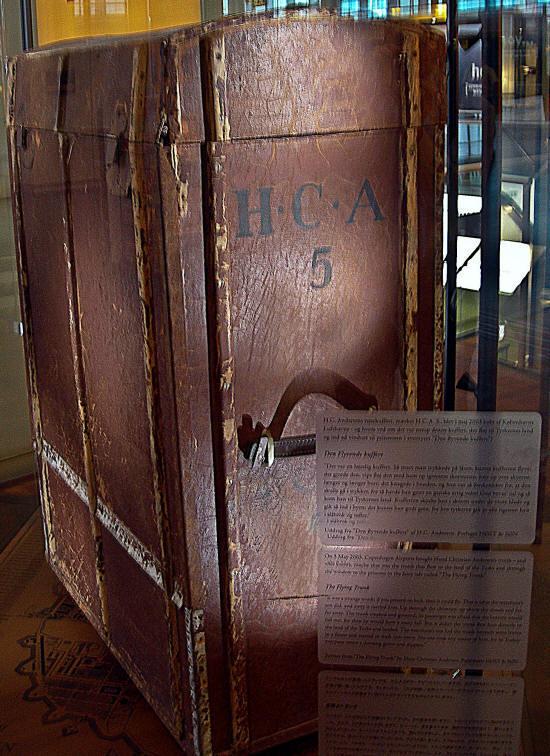
Hans Christian Andersen’s trunk at Copenhagen Airport

Hans Christian Andersen was not only the author of well-known fairy tales as Thumbelina, The Emperor’s New Clothes and the Flying Trunk, the Danish author and poet was a dedicated traveler.

All of Andersen’s journeys to other countries began in Copenhagen, so it’s appropriate that the big leather trunk Andersen used to bring along on his journeys is on display in the baggage claim at Copenhagen International Airport.

Photo courtesy Copenhagen International Airport

Euro crisis worries airlines, but progress marches on

Troubles in the Eurozone have caused the organization representing 240 of the world’s airlines and 84% of global air traffic to revise its overall outlook for the airline industry.

Based on current actions being taken to try to avert a credit crunch in the Eurozone and additional measures central banks are expected to take to avert financing problems facing Italy and Spain, on Wednesday the International Air Transport Association (IATA), downgraded its central forecast for airline profits from $4.9 billion to $3.5 billion for a net margin of 0.6%.

“The biggest risk facing airline profitability over the next year is the economic turmoil that would result from a failure of governments to resolve the Eurozone sovereign debt crisis. Such an outcome could lead to losses of over $8 billion—the largest since the 2008 financial crisis,” said Tony Tyler, IATA’s Director General and CEO.

Tyler was speaking at a meeting held at IATA’s headquarters in Geneva, Switzerland, where a wide variety of ‘state of the industry’ reports and forecasts for security, safety, the environment and other aspects of the airline industry were also presented.

Now that so much of the check-in process is done electronically via kiosks, the web and mobile boarding passes, Paul Behan, IATA’s Head of Passenger Experience predicted that the ‘boarding pass’ will soon replaced by a ‘boarding token’ and said that “baggage processing, is still one of the greatest challenges in terms of simplification.”

Behan described several trials currently underway that allow travelers to print their baggage tags at home and another in which Radio Frequency Identification (RFID) has been embedded right into a suitcase. “This trial simply showed that you can embed an RFID baggage tag, program it at a baggage drop and then use the tag for sortation,” said Behan, but he said the next step is to use the system to make “interaction-free and tag-free baggage drop a possibility.”

Behan also noted that while many airlines already offer the ability to register a lost bag claim online, IATA is working with airlines to move the baggage tracking systems from interactive to proactive.

For example, he said that instead of having a passenger wait to see if their bag shows up at the baggage claim, “The passenger might get a proactive text or phone message from the airline saying they already know there’s a problem with a bag and that the process of locating their bag has begun.”

In the area of security, Ken Dunlap, IATA’s Global Director Security and Travel Facilitation, outlined ways in which airlines are working with airports and governments on a “checkpoint of the future” designed to change the passenger experience and enhance security. He said that while far more high-tech than today’s checkpoints, as designed, the checkpoint of the future only uses personal data about passengers that has already been gathered by other organizations. “That data is now used at the end of the journey [i.e. at customs and immigration]. We want to use it at the beginning of the journey as well to increase security.”


Don’t check your bag, wear it

In an effort to avoid checked baggage fees, many passengers now try to pack everything they’ll need for a trip into one or two carry-on bags.

For now, most domestic airlines don’t charge for carry-on bag, or for coats, purses and other small personal items. But, as I wrote for msnbc.com’s Overhead Bin, few travelers would be surprised if more airlines began following the lead of Spirit, Ryanair and some other budget airlines, which do charge hand-luggage fees.

It may already be – unofficially – happening. In what George Hobica, founder of travel website Airfarewatchdog.com, terms a “relatively new trend,” some airlines are getting aggressive about weighing carry-on bags.

“Hawaiian has a 25 pound weight limit and actually weighs bags at the gate, snatching away bags that weigh more and charging a checked bag fee,” said Hobica. “EVA Airways has a 15 pound limit and several other airlines have limits as well. It’s touted as a safety precaution of course, but it’s also a sneaky way of extracting fees for carry-ons.”

For passengers not willing to take a chance at getting dinged with a last-minute charge, there’s another option: wearing your luggage.

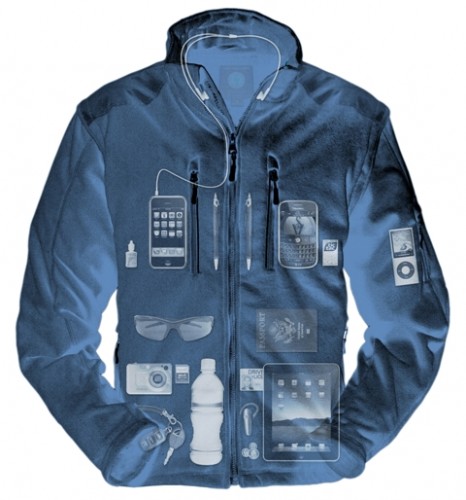
A line of iPad-compatible vests, hoodies, jackets and trench coats from SCOTTEVEST(http:, each with between 20 and 30 built-in pockets and compartments, is a big hit in the “luggage you can wear” category.

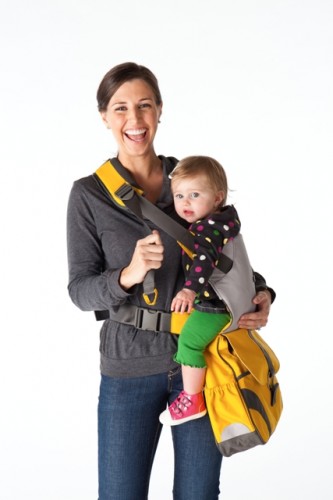
For parents trying to carry both a baby and a bulging diaper bag, the convertible Go-Go Babyz “Sidekick,” is a diaper bag that doubles as a wearable baby carrier.

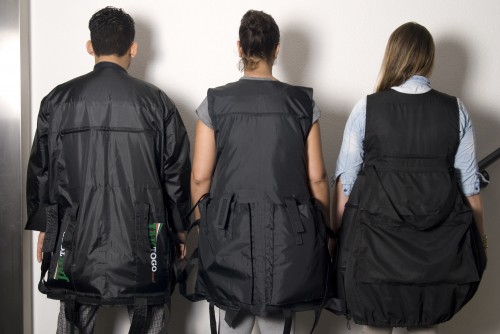
And then there’s the Jaktogo , a carry-on bag that can be worn as a coat. (Other versions include the Dresstogo and the Ponchotogo.)

Invented by John Power, an Irish-born engineer who was determined to find a way around carry-on limits imposed by the budget carriers he frequents in Europe, the Jaktogo has 14 various-sized pockets designed to hold more than 30 pounds of clothing, gadgets and gear.

“It’s certainly not a fashionable item you’d wear around town,” said Power, “And we won’t be showing it off in Paris or Milan. It’s ‘boarding-gate’ clothing that’s all about practicality and thriftiness.”

John Wayne Airport’s new Terminal C open, with baggage woes

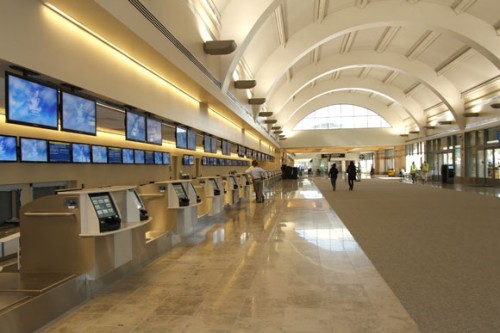
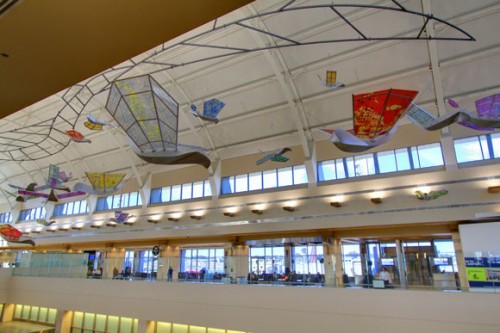
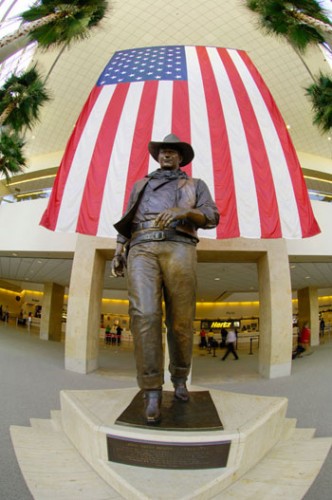
On Monday, November 14, 2011, John Wayne Airport in Orange County, California officially opened its new Terminal C, which offers travelers a new parking structure, new security screening lanes, new gates, new shops, new restaurants, free Wi-Fi, new artwork, workstations and plenty of places to plug in gadgets.

Flight of Ideas - by Beth Nybeck

You can see a map of the new terminal and a list of the new eateries and shops here but, unfortunately, if you’re heading to JWA’s new Terminal C you won’t be able to check your luggage.

Although the new terminal is open for business, the baggage handling system failed a certification test last week. So for now you’ll need to check your luggage in Terminal B.

All in all, the place does look pretty swanky and I’m hoping to visit in person soon. If you get there before I do, please share your thoughts on what you see and send along a few photos.