Baggage

Souvenir Sunday: a journey with “Luggage”

On my travels this week I’ve been toting a review copy of Susan Harlan’s book, Luggage, which is part of Bloomsbury’s charming Object Lessons series.

The slim book is travel-sized, but densely-packed and Harlan has stuffed it with stories and side-trips that touch not just on the actual history and development of suitcases, bags, trunks, carry-ons and valises, but on the role baggage plays in literature, art and films.

Remember Mary Poppins’ carpet bag?

“It contains all of her desires,” writes Harlan, and is a “powerfully enabling object” from which the nanny is somehow able to produce a lamp and a mirror (in the 1964 Disney movie) and, in the novel by P.L. Travers, everything from an apron to an armchair.

Poppins’ luggage was not only magical, notes Harlan, it gave her freedom. “She can come and go as the wind changes, which would hardly be possible with a steamer trunk,” Harlan writes.

In “Luggage,” Harlan tells us about her own collection of vintage luggage, a bit of how she and others approach packing and of her visit to to Alabama’s vast Unclaimed Baggage Center, which is not just a store but a tourist destination.

Along the way she unpacks the role and relationship baggage has to everything from home and gender to class, memory, loss and, of course, travel.

“The history of luggage is the history of travel: how we traveled, and why, and where, and what we have packed,” Harlan tells us at the beginning of this journey, “It is virtually impossible to think of traveling without luggage.”


Airlines roll out new “smart luggage” rules today

Starting today, January 15, airlines will no longer allow passengers to checkg or carry on “smart luggage” with non-removable lithium batteries.

Powered luggage began appearing on the market a few years ago and some new versions of these high-tech bags can weigh themselves, be locked remotely, report their locations, provide power for gadgets, offer rides to the gate and follow travelers around.

The extras are enticing, but industry-wide concern over lithium batteries igniting and starting fires led the International Air Transport Association to instruct its almost 300 airline members to restrict carriage of certain bags:

“Effective 15 January 2018, for IATA member airlines, baggage with removable installed Lithium batteries (“smart luggage”) must be carried as carry-on baggage or the battery must be removed. With the battery removed the bag can be checked-in. If the battery cannot be removed, the bag is forbidden for carriage.”

Citing “safety management and risk mitigation,” American Airlines was among the first to alert its customers to the impending rule change. The carrier also said the standard question it asks customers checking bags – “Have you packed any e-cigarettes or spare batteries for laptops, cellphones or cameras?” – would be altered to include smart bags.

Other airlines are changing their check-in and boarding procedures as well.

“Throughout our guests’ journey, we will remind them to remove all lithium batteries from checked luggage, or disconnect and turn off batteries being stored in the overhead bins,” said Alex Da silva, a Hawaiian Airlines spokesman, “We are also training employees on the various types of smart bags so they may assist customers.”

Some smart luggage manufacturers are scrambling to redesign their smart bag products to comply with the new airline rules. Others are making sure customers know how, and how easily, the lithium batteries can be removed from their bags. And companies who have smart bags without lithium batteries are touting that feature.

“We believed that there would come a time when lithium batteries could be seen as a safety issue. So we purposely powered our luggage with AAA batteries to avoid any of these potential future rulings,” said Emran Sheikh, President and CEO of luggage manufacturer and distributor Heys International.

Sheikh and others emphasize that it is the type of battery used in some “smart” luggage designs that is the problem, not the category of ‘smart luggage’ in general.

“The airline industry’s recent attention to safety surrounding lithium ion batteries should boost our confidence that the travel industry is monitoring current trends and updating their own best practices to reflect modern travelers’ habits and needs,” said Michele Marini Pittenger, president of the Travel Goods Association, Consumers can expect to see luggage manufacturers respond accordingly and release new iterations of smart luggage featuring even safer power sources.”

(My story on new smart luggage rules first appeared on CNBC in a slightly different form.)

Did Santa bring you “smart” luggage?

If Santa brought you some new-fangled “smart” luggage that can not only carry your clothes but charge your gadgets, weigh what you’ve packed and give you a motorized ride to the gate, be sure to check that the battery can removed.

Airlines don’t want the lithium batteries that power these smart bags in airplane cargo holds because (as we learned from hoverboards and the Samsung Galaxy Note 7 smartphone fiasco) there’s concern over lithium batteries igniting and starting fires.

Alaska, American, Delta, Hawaiian,  Southwest and United are among the airlines that have posted notice that, come January 15, 2018, customers will only be permitted to board with smart bags that have batteries that can be removed.

Smart bags traveling as carry-ons must be powered off and any smart bags  traveling as checked luggage must have their batteries removed and brought into the cabin as carry-on.


Fliers love Orlando Int’l Airport – and other new rankings

This year Orlando International Airport (MCO) gets top ranking for satisfaction among the “mega” airports in J.D. Power’s 2017 North America Airport Satisfaction Study.

Detroit Metropolitan Wayne County Airport (DTW) came in second and McCarran International Airport in Las Vegas ranked third, with scores of 778, 767 and 765,  respectively, out of a possible score of 1000.

Among large airports, John Wayne Airport in Orange County topped the list with a score of 796, followed by Tampa International Airport (795) and Dallas Love Field (790).

Sacramento International Airport got the highest marks among the medium airports (810), followed by Indianapolis International Airport (807), and Ted Stevens Anchorage International Airport (806).

The study, one of several ‘biggies’ that come out each year, ranks traveler satisfaction with mega, large, and medium North American airports by weighin six factors (in order of importance): terminal facilities; airport accessibility; security check; baggage claim; check-in/baggage check; food, beverage and retail.

J.D. Power notes that ratings are up 18 points overall compared to last year’s all-time high, due to a 25-point increase in satisfaction with security checks (thanks to a drop in TSA staffing issues) and more satisfaction with check-in/baggage check (+19 points) and food, beverage, and retail (+15 points).  Self-service bag-check kiosks and other bag-tagging technologies got credit for raising satisfaction with the baggage check process.

Here are the Top 10 airports in each category:

“Mega” airports:

  1. Orlando International Airport
  2. Detroit Metroplitan International Airport
  3. McCarran International Airport
  4. Phoenix Sky Harbor International Airport
  5. Denver International Airport
  6. Charlotte Douglas International Airport
  7. Minneapolis-St. Paul International Airport
  8. Dallas-Fort Worth International Airport
  9. San Francisco Internaitonal Airport
  10. Seattle-Tacoma International Airport

Large Airports

  1. John Wayne Airport
  2. Tampa International Airport
  3. Dallas Love Field
  4. Nashville International Airport
  5. Portland International Airport
  6. Willliam P. Hobby Airport (Houston)
  7. San Diego International Airport
  8. Reagan National Airport
  9. Salt Lake City International Airport
  10. Baltimore-Washington Thurgood Marshall Airport

Medium Airports

  1. Sacramento International Airport
  2. Indianpolis International Airport
  3. Ted Stevens Anchorage International Airport
  4. Jacksonville International Airport
  5. Palm Beach International Airport
  6. Southwest Florida International Airport
  7. Pittsburgh International Airport
  8. Raleigh-Durham International Airport
  9. Buffalo Niagara International Airport
  10. Ontario International Airport

You can see the full lists and the scoring here.

Reno-Tahoe airport says bye-bye to dusty Burners

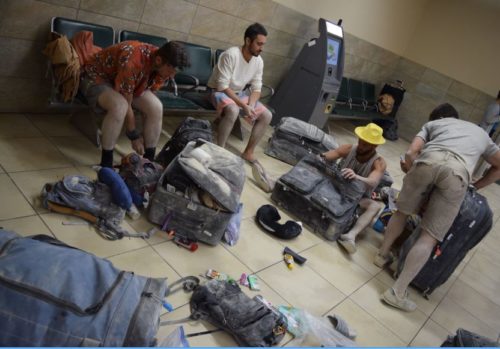
This year’s Burning Man festival is over and more than 18,000-20,000 Burners will be heading home via Reno-Tahoe International Airport over the course of about five days.

This is one of the busiest times of the year for this airport, which usually handles about 7,000 departing passengers a day, and it’s one of the dirtiest and dustiest as Burners leave the playa covered in a fine dust and packing out all their garbage.


To make sure all that playa dust doesn’t muck up the airport’s bagagge handling and security systems, the airport and the airlines require everyone to put everything in a plastic bags.


These photos come courtesy Reno-Tahoe International Airport.  I asked for photos of the piles of garbage burners may be leaving behind, but so far they say those trash bins are “too yucky.”

Go ahead, check that bag. Chances are good it will arrive.


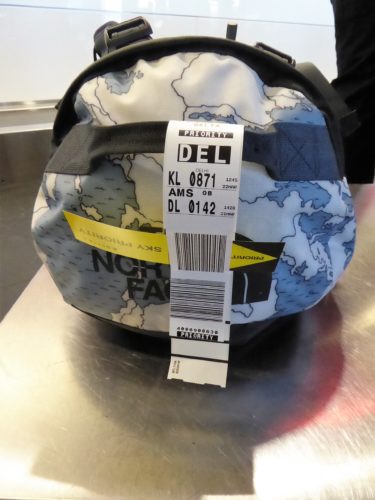
Go ahead, check that bag.

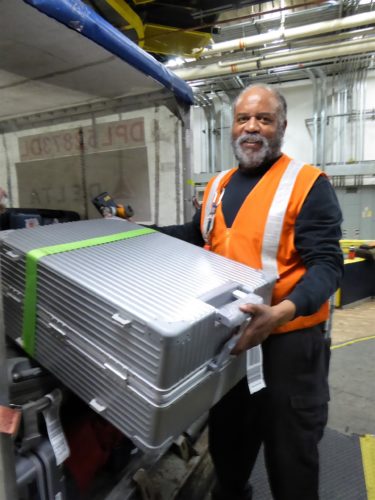
On many airlines it may cost you a fee, but the good news is that airlines and airports are getting better at getting your bag to its destination.

According to the SITA Baggage Report 2017, in 2016 the rate of mishandled bags was 5.73 bags per thousand passengers.  That’s down 12.25 percent from the previous year and is the lowest ever recorded.

This, despite a spike in the number of passengers, which last year hit an all-time high of 3.77 billion.

According to SITA, since 2007, the rate of mishandled baggage worldwide has fallen 70 percent, due to investment in technologies and processing improvements by both airlines and airports.

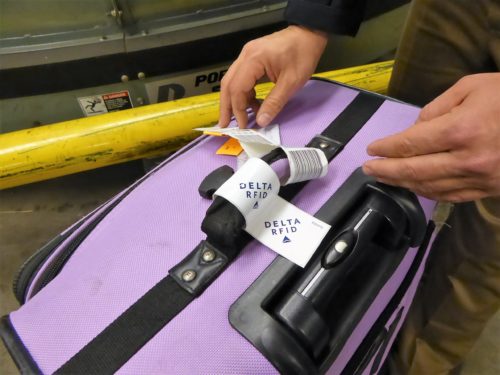
SITA promises more improvements over the next 18 months as the majority of the world’s airlines (those that belong to IATA, the International Air Transport Association) have adopted a resolution requiring every piece of checked baggage to be tracked along its journey by June 2018.

“We are on the brink of a new era in airline baggage management because the world’s airlines are committing to track baggage throughout its journey,” said Ilya Gutlin, SITA President, Air Travel Solutions in the report, “This requires data capture, management and sharing across airlines, airports and ground handlers giving a better view of where each piece of luggage is at every stage.”

Once IATA Resolution 753 becomes the accepted rule in June 2018, every bag must be tracked and recorded at four mandatory points: at check-in; aircraft loading; at transfer between carriers; and on arrival as the bag is delivered back to the passenger.

When that system is in place, says IATA, airlines will be able to share the information with their passengers and code share partners allowing them to track their bag, just like a parcel.

Mishandled baggage isn’t just a bummer for passengers. Wayward bags cost airlines money.

SITA’s report shows that in 2016 airlines spent $2.1 billion on recovering and reuniting passengers with their bags.


Hoverboards don’t fly

If you got a hoverboard for Christmas, getting your new “it” gift home on the plane is going to be a problem.

Most all domestic airlines have banned from both carry-on and checked baggage and an increasing number of international carriers have done the same.

Here are the highlights of a story on flying with hoverboards I wrote for CNBC.

hoverboard

courtesy Getty Images

Fears about the device stem primarily from their potentially combustible batteries, and the unreliability of poorly made knockoffs and counterfeit batteries have heightened concerns.

For those reasons, Alaska Air, United Airlines, Delta and American began banning hoverboards this month from carry-on and checked baggage.

“Most of the issue is [with] the lithium batteries that are used to power them,” said aviation security expert Jeff Price. “Some manufacturers aren’t accurately reporting the power of the batteries, and airlines generally dislike lithium batteries anyway as they have a tendency to overheat and catch fire.”

Ahead of the end-of-year travel rush — when some travelers may be attempting to make their way back home with newly gifted hoverboards, United spokesman Charles Hobart said the airline was actively “working with customers if they need additional time to find alternate shipping methods for their hoverboards.”

Likewise, Delta spokesman Morgan Durrant said the carrier was advising fliers to take care of shipping a hoverboard before they arrive at the airport.
“We offer our sympathies for those who might find themselves with an inconvenience after opening their holiday loot,'” he said.

Many international airlines, including British Airways, Qatar Airways, Singapore Airlines and Air New Zealand, have newly implemented hoverboard bans in place.

“We did a review independently of other airlines and came to the assessment that actually there is a risk with hoverboards and it not a risk we’re prepared to carry,” said ANZ CEO Christopher Luxon.

Federal regulations, meanwhile, make for a confusing playing field.

A TSA representative said the Federal Aviation Administration and the airlines – not the TSA – bear the responsibility for enforcing hoverboard bans because “this is a safety, not a security, issue.”

Hoverboard makers defend the safety of their products, but some are sympathetic to the airlines’ position.

“I wouldn’t feel safe having my kids on a plane without knowing the devices were safe either,” said John Soibatian, president of IO Hawk, one of the major hoverboard manufacturers.

Soibatian said his company’s personal mobility devices are reliable and rigorously tested, and that cheaper, off-brand products are causing the problems.

“If someone’s kid wants one of these, you see ours for $1,800, you see a knockoff for $300 and it’s the knockoffs being put together by people who have no business in this industry that are exploding or catching fire,” said Soibatian.

“We’re working with Customs and Border Control to make sure fake products don’t make it to the market and with a little bit of education I think some of these airlines will change their policies,” he said.

Travelers who try to ship hoverboards, balance wheels and other devices powered by lithium batteries via United Parcel Service or the U.S. Postal Service may encounter barriers as well.

Out of “an abundance of caution and in line with major retailers and the airline industry,” the Postal Service issued a statement limiting the shipment options for motorized balance boards. USPS alerted customers that it “will ship hoverboards using only Standard Post/Parcel Select. This product travels on ground transportation, due to the potential safety hazards of lithium batteries.”

Earlier this week, UPS issued a reminder notice to customers noting that “the boards are made with a medium-sized lithium battery that when shipped via an air service become federally regulated. Due to these regulations, only shippers with an active UPS Hazardous Materials Contract may send hoverboards using an air service.”

Airports are also barring travelers from using hoverboards.

Tampa International, Charleston International and Minneapolis-St. Paul International are among a growing number of airports reminding passengers to leave their hoverboards at home.

Miami International Airport bans the use of hoverboards inside the airport, under a rule that also prohibits people from riding or driving a unicycle, a go-cart, roller skates, Rollerblades, or a skateboard at the airport.

Perhaps that why a few days before Christmas, MIA already had a few hoverboards in the lost and found.

Packing for a trip? Do you fold or roll?

Blackpool Suitcase

When it’s time to hit the road, do you fold, roll, layer or squish? Do you make a packing list or just wing it?

Those are just a few of the questions Cheapflights.com recently asked travelers in a quick on-line survey.

Here’s what they found:

Just over 56 percent of Americans make packing lists and 77 percent plan or lay out outfits.

Forty-two percent of us start packing two to three days before leaving home and an another 30 percent start packing a week ahead of a trip.

26 percent admitted waiting until the night before a trip to start packing while just over 2 percent said they lived on the edge and and didn’t pack anything until a hour or less before leaving.

No doubt, those are people you see looking for a place to buy underwear at the airport.

Fold or roll?

70 percent of survey respondents said they folded clothes in their suitcases, while 30 percent said rolling was their method of choice.

And maybe it doesn’t really matter what you pack or how: only 45 percent of Americans reported that they ended up wearing everything they packed.

Upcycled carry-on bags from United banners

united recycled bags

The airline industry uses a lot of ‘stuff’ and some of that stuff gets recycled and re-used and made into new things that you may want to buy.

The newest “upcycled” aviation items are a set of 100 carry-on bags made from 20 United Airlines “Fly the Friendly Skies” banners.

The airline worked with the Columbia College Chicago Department of Fashion Studies and the Re:new Project and asked them to come up with a carry-on bag that would look good and be durable, be economical to make and fit under an airplane seat.

The results look appealing and are available for purchase at the United Shop .

Even better: the proceeds from sales of the upcycled banners will benefit Re:new and the Alto Mayo Forest Carbon Project in Northern Peru.