aviation

Play the game of flight

I fly, but I don’t know why.

More to the point: I don’t know how.

So, although it was designed for kids, I should probably take more time to play the game the folks at The Basement created for the Academy of Model Aeronautics, which promises to teach the four principles of flight.

The game teaches about drag, lift, weight and thrust and is narrated by Hoot Gibson. (Not the cowboy Hoot Gibson from those old westerns, but the Hoot Gibson who is a pilot and a former astronaut.) Players choose a pilot, a plane and a passenger and then try to fly a long distance.

My plane didn’t get very far, but maybe yours will.

“Tales of an Unknown Aviator” at Portland Int’l Airport

An exhibition of “Tales of an Unknown Aviator,” a photo series by Julian Hibbard and Demetrious Noble, is now at Portland International Airport.

The photos are of a series of model planes made to look both life-like and model-like, constructed by Chilean artist Luis Greenhill using recycled materials, including historic photographs and vintage encyclopedia sets, photographed by Hibbard and digitized by Noble.

The project documents a collection of palm-sized French, Italian, Polish, Japanese, German, Russian, English and American model planes from the World War I & II (1914 – 1945) originally made by an elderly man in Southern Chile.

“Like objects glimpsed in a dream, the model planes have been photographed and then digitally treated in away that further blurs the line between fact and fiction. Seen as a whole, the project speaks of time, nostalgia, memory, simulacra, repetition, intervention, layering, courage, loss, sacrifice and the nature of conflict,” is the way the project is described on Demetrious Noble’s website, which displays 20 of the images.


If you can, go see this special photo series at Portland International Airport in the Concourse Connector before the end of June 2013. In the meantime, see them online.

(Images by Demestrious Noble)

How scary are those “scary” airports?

What makes an airport scary?

For some, it’s those full-body scanners and long lines at security checkpoints. Others dread a flight cancellation that leaves them stranded and trying to get some shut-eye on an airport floor.

For its Scariest U.S. Airports list, travel website Airfarewatchdog.com defined scary as an airport where landings and take-offs may be quite tricky.

John Wayne Airport, in Santa Ana, Calif., made the list because “due to strict noise reduction requirements, pilots must ascend at full throttle and then abruptly cut back their engines.” Chicago’s Midway International Airport was added because it has runways that are “close to 2,000 feet shorter than the ones at new airports.” And Colorado’s Telluride Regional Airport, which Airfarewatchdog notes is higher than any other commercial airport in North America, is considered scary because pilots are not allowed to make touch-and-go landings, and so “only have one shot to land on the runway, which dips in the middle.”

The other “scary airports” on this list include:

  • Aspen/Pitkin County Airport, Aspen, Colo.
  • Sitka Rocky Gutierrez Airport, Sitka, Alaska
  • Yeager Airport, Charleston, W.Va.
  • San Diego International Airport, San Diego, Calif.
  • LaGuardia Airport, New York, N.Y.
  • Catalina Airport, Avalon, Calif.

Reagan National Airport in Washington, D.C. was added to the list because it is between overlapping no-fly zones that offer pilots a narrow path to steer clear of CIA headquarters, the Pentagon and the White House.

“If you stray too far to the left of the Potomac, you’ll risk a significant fine and potential violation,” said Kent Wien, a pilot who writes the Cockpit Chronicles feature for Gadling.com. “Too far to the right and you can’t successfully negotiate the last turn before the runway.”

It all does sound a bit scary. But should passengers with tickets into or out of any of these airports be very concerned?

“Lists like this seem to make me want to throw my coffee cup at the computer screen,” said Patrick Smith an airline pilot and author who blogs at AskThePilot.com. “They give people an idea that there really are unsafe or dangerous airports. But if any of these airports was really unsafe,” Smith said, “no airline would go anywhere near it.”

Smith said New York’s LaGuardia Airport is an example of an older airport with shorter runways and a “spaghetti snarl of runways and taxiways.” But he said “certain airports from a pilot’s perspective are just more challenging than others.”

And Smith said some of those challenging features can offer rewards for passengers. “Coming from Boston to LaGuardia Airport, you sometimes come right down the Hudson River and get a gorgeous view of Manhattan. There’s nothing harrowing about it,” he said.

“These places aren’t really ‘scary,'” said Wien, “They just offer pilots an opportunity to do something slightly out of the ordinary.”

Even Airfarewatchdog founder George Hobica admits that the airports on the “Scariest U.S. Airports” list may not really be so scary. “Let’s face it; flying is the safest way to travel other than on your own two feet. So some might prefer to call these airports ‘thrilling’ rather than scary.”

My story about “scary airports” first appeared on NBCNEWS.com.

Virgin America’s Portlandia-themed party kicks off PDX service

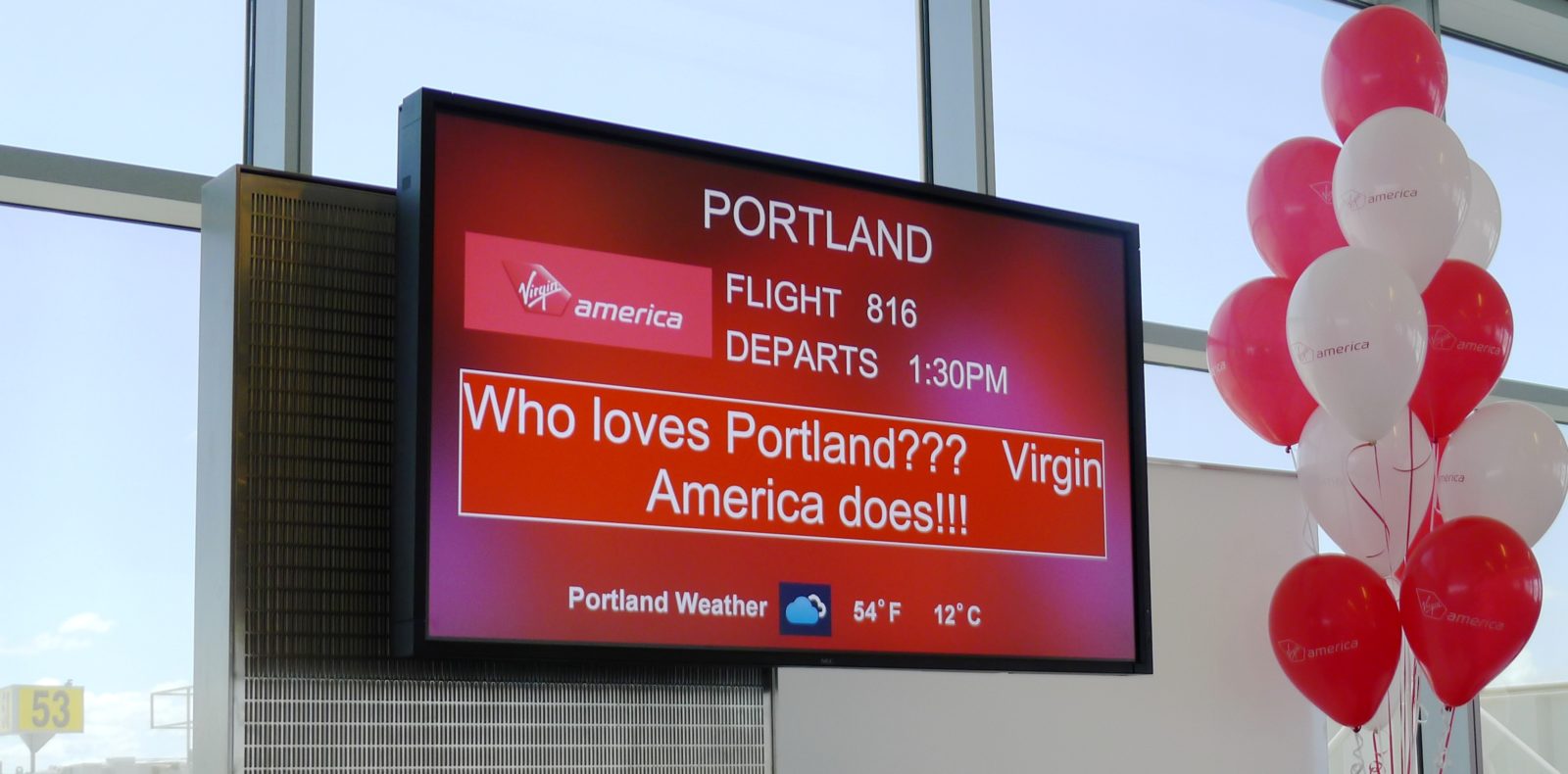
On Tuesday, Virgin America added an 18th city, Portland, to its service network adding two daily flights from Los Angeles and two from San Francisco. As is its tradition, the airline had a fun launch event. And, as a former Portland resident, I went along for the ride as a guest.

For the launch event, the airline teamed up with IFC and its hit show “Portlandia” and invited “Portlandia” Mayor, actor Kyle MacLachlan, along as well as the real-life Portland Mayor Sam Adams, who plays MacLachlan’s assistant on the show.

"Portlandia" Mayor Kyle Maclachlan (center), real Portland Mayor SamAdams (right), Virgin America Dave Cush (left). Photo courtesy Virgin America

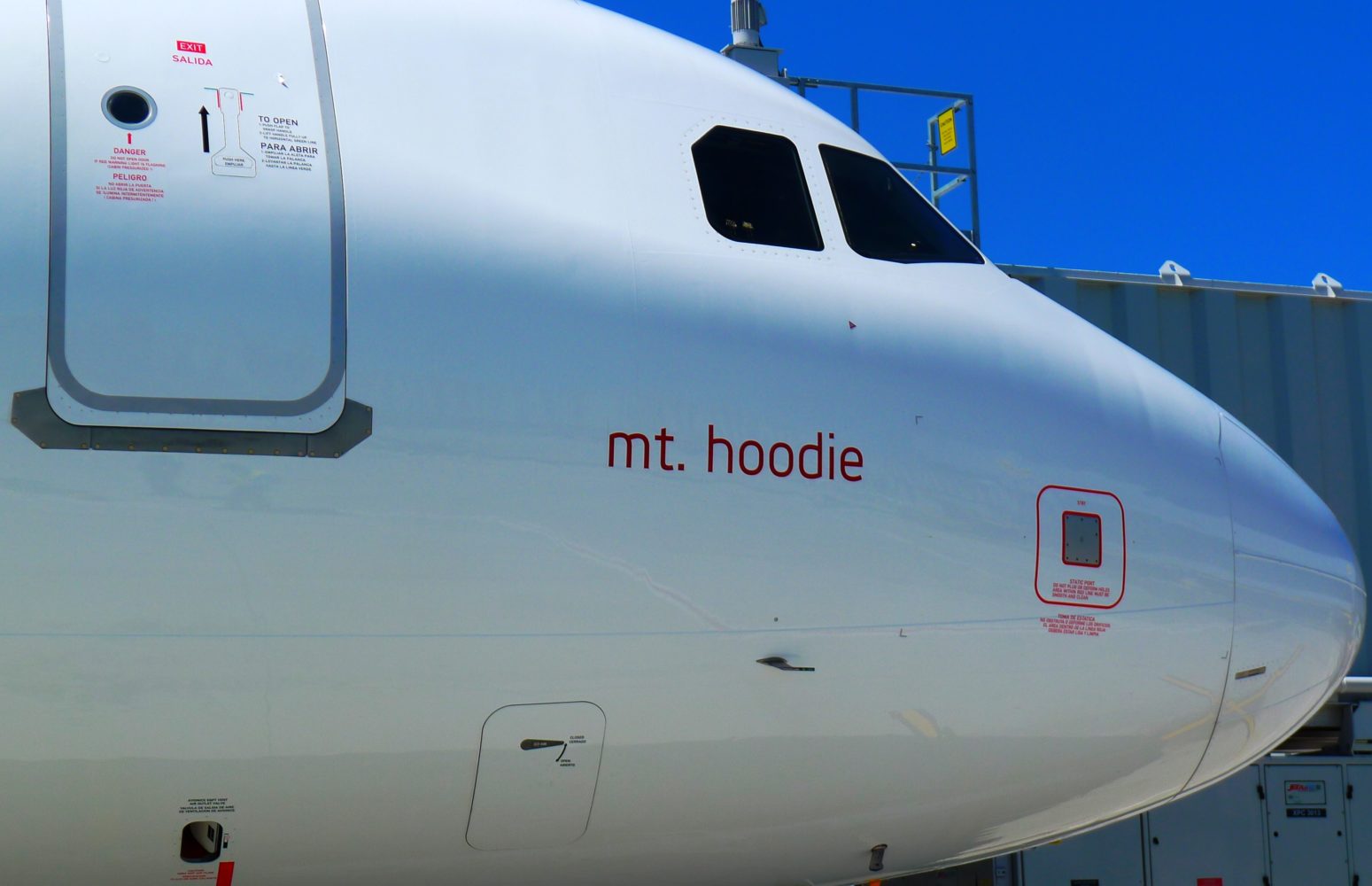
When it touched down at Portland International Airport the plane -named the mt. hoodie – was met by a delegation that included local dignitaries and a hangar full of people who had been invited to a Portland/Portlandia-themed party that included DJs, art projects and doughnuts, made by Portland’s infamous donut-makers, Voodoo Doughnuts.

The mt. hoodie is one of the airline’s newest airplanes. At San Francisco International Airport, it was parked next to Jefferson Airplane, the airline’s first aircraft.

(All photos, except where noted, by Harriet Baskas)

The airport runway: a thing of beauty?

Do you find beauty in airport runways?

Jerome Daksiewicz does.

ORD Runways

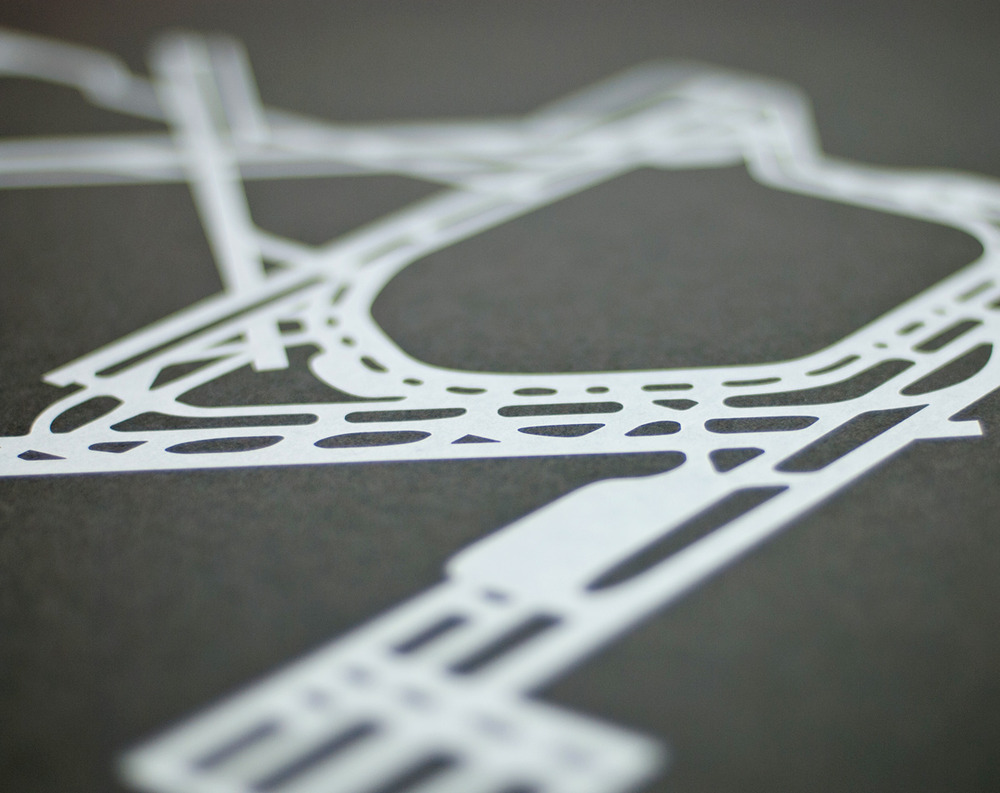
He got the idea for the Airport Runway Screenprint Series while working on an architectural project and stumbling across an aerial imagery of Phoenix Sky Harbor Airport on Google Earth.

“I simply redrew Sky Harbor, vectorizing the runways and taxiways, then redrew Los Angeles International Airport and Chicago O’Hare,” said Daksiewicz. He let those sit a while and then went back and made runway diagrams for MSP, SFO, LHR, ATL and others.

SFO Runways

Why runways?

“I like how the runways are so purely functional, disregarded by the beauty and attention of multimillion dollar terminals; many of them considered architectural masterpieces. I like how the runways themselves are interconnected and defined by the context of their cities, such as DEN’s weather and wind patterns. And I like how airports are our new gateways: runway concrete or asphalt connecting our cities as the airplane’s wheels first and last points of contact between our destinations.”

Daksiewicz has posted all his airport runway diagrams on the NOMO Design website, where he’s also offering them for sale.

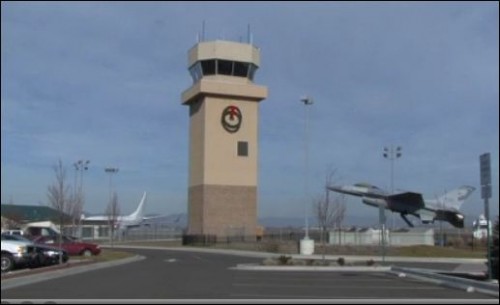
No ads for airport control tower in Medford, Oregon

The director of the Rogue Valley International-Medford Airport in Jackson County, Ore., has decided that the proposal to sell advertising space on the airport control tower is a bit too controversial right now, so he’s dropping the plan.

“There were some in the community that didn’t think it was a good idea,” airport director Bern Case told msnbc.com. “I could see the writing on the wall, so this morning we withdrew our application.”

The airport had been seeking a change in the city code so that a 675-square-foot sign could be placed on each side of the airport control tower. Negotiations were underway with an aviation company that would have paid $3,000 a month for tower ad space, or $360,000 over the course of a 10-year lease.

The Medford City Council had approved the idea on Nov. 17, citing the economic benefits of additional advertising income for the airport, but local and national controversy about the decision caused some councilmembers to reconsider.

“For crying out loud,” said Mike Boyd, an aviation consultant with Boyd Group International. “A control tower isn’t exactly a work of art not to be messed with. I think an ad for Pepsi or Levis, or even an air sickness potion, would be a great way of getting another revenue stream.”

If the project had gone through, the Medford airport would have been the first to have advertising on the control tower. “We were leading the way a little bit,” said Case. “But we all have political bodies to deal with, and it was their call. We’ll be fine.”

While tower ads are tabled for now in Medford, don’t be surprised if the idea pops up somewhere else.

“Non-aeronautical revenue generation is a never-ending effort for airports,” said Sean Broderick, spokesperson for the American Association of Airport Executives (AAAE). “If an airport can generate revenue from something that doesn’t cost it much to provide, that’s a win-win for everyone.”

This story first appeared on msnbc.com Travel’s Overhead Bin.

The Flying Winnebago

The Heli-home

Last June the RV industry celebrated its 100 anniversary and, for a story about the history of the RV industry that appeared on msnbc.com Travel, I visited the Recreational Vehicle/Manufactured Home Hall of Fame and Museum in Elkhart, Indiana.

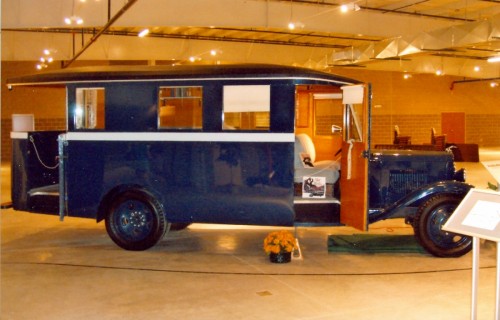
The museum displays the ‘house car’ Paramount Studios provided for movie star Mae West, a homemade motor home based on a 1976 Cadillac Eldorado, a variety of first production units and pristine versions of popular models such as the 1954 15-foot Shasta travel trailer described as a being typical of the “canned-ham” style trailers of the 1950s.

Mae West's 1931 'house car'

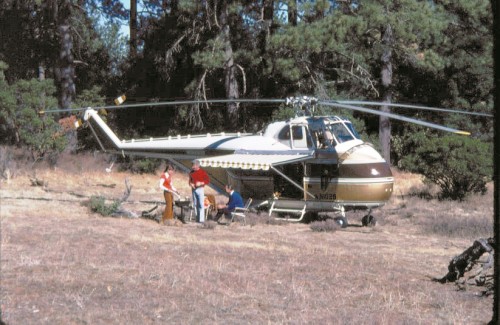
Not on display at the museum, but shown in a photograph there, was a flying camper called a ‘heli-home,’ which I described in a post here on StuckatTheAirport.com.

James R. Chiles contacted me to let me know he was working on a story about that Flying Winnebago for Air&Space/Smithsonian and, now that the story is published, he’s sent a link.

More a novelty than a mass-produced vehicle, Chiles reports that the Winnebago company built perhaps seven Heli-Homes or Heli-Campers. They “… could sleep six passengers, and had an electric range, sink, fridge, couches, eight-track tape deck, television, generator, twin water heaters, parquet-topped dinette tables, mini-bar, air conditioner, furnace, shower, and bathroom with holding tanks.”

And, of course, they could fly.

Don’t you want one? I do!

Here’s a link to the Flying Winnebago story by James R. Chiles.

Euro crisis worries airlines, but progress marches on

Troubles in the Eurozone have caused the organization representing 240 of the world’s airlines and 84% of global air traffic to revise its overall outlook for the airline industry.

Based on current actions being taken to try to avert a credit crunch in the Eurozone and additional measures central banks are expected to take to avert financing problems facing Italy and Spain, on Wednesday the International Air Transport Association (IATA), downgraded its central forecast for airline profits from $4.9 billion to $3.5 billion for a net margin of 0.6%.

“The biggest risk facing airline profitability over the next year is the economic turmoil that would result from a failure of governments to resolve the Eurozone sovereign debt crisis. Such an outcome could lead to losses of over $8 billion—the largest since the 2008 financial crisis,” said Tony Tyler, IATA’s Director General and CEO.

Tyler was speaking at a meeting held at IATA’s headquarters in Geneva, Switzerland, where a wide variety of ‘state of the industry’ reports and forecasts for security, safety, the environment and other aspects of the airline industry were also presented.

Now that so much of the check-in process is done electronically via kiosks, the web and mobile boarding passes, Paul Behan, IATA’s Head of Passenger Experience predicted that the ‘boarding pass’ will soon replaced by a ‘boarding token’ and said that “baggage processing, is still one of the greatest challenges in terms of simplification.”

Behan described several trials currently underway that allow travelers to print their baggage tags at home and another in which Radio Frequency Identification (RFID) has been embedded right into a suitcase. “This trial simply showed that you can embed an RFID baggage tag, program it at a baggage drop and then use the tag for sortation,” said Behan, but he said the next step is to use the system to make “interaction-free and tag-free baggage drop a possibility.”

Behan also noted that while many airlines already offer the ability to register a lost bag claim online, IATA is working with airlines to move the baggage tracking systems from interactive to proactive.

For example, he said that instead of having a passenger wait to see if their bag shows up at the baggage claim, “The passenger might get a proactive text or phone message from the airline saying they already know there’s a problem with a bag and that the process of locating their bag has begun.”

In the area of security, Ken Dunlap, IATA’s Global Director Security and Travel Facilitation, outlined ways in which airlines are working with airports and governments on a “checkpoint of the future” designed to change the passenger experience and enhance security. He said that while far more high-tech than today’s checkpoints, as designed, the checkpoint of the future only uses personal data about passengers that has already been gathered by other organizations. “That data is now used at the end of the journey [i.e. at customs and immigration]. We want to use it at the beginning of the journey as well to increase security.”