TSA

No Real ID? TSA will charge $45 per trip to verify you

A few weeks ago, the Transportation Security Admnistration announced in the Federal Register that it would be setting up a verification program for passengers who show up at the TSA checkpoint without a Real ID, passport or some other acceptable form of identification.

To cover the costs of the alt-ID program, which is set to roll out on February 1, 2026, the agency said it would charge passengers an $18 fee for the service. The fee will non-refundable, even if verification is unsuccessful.

Now, just a few weeks after announcing the program, TSA says it will be not be charging an $18 fee for the TSA Confirm.ID program, afterall.

Instead it will more than double the charge to $45, which will be good for a 10-day period.

According to a TSA statement there will be an option to pay the fee online before arriving at the airport, but the procedure for the alternative verification program may be different at each airport.

For passengers who arrive at the airport without paying the fee ahead of time, TSA says there will posted information at or near the checkpoints about how to pay the fee, but warns that however they pay, “travelers who undergo TSA Confirm.ID processing at an airport should expect delays.”

More airports add food pantries for federal employees and refuse to air DHS video

The Salt Lake City International Airport (SLC) is joining the list of airports organizing and paying for food and supply pantries to assist federal employees who are not being paid during the federal government shutdown.

These workers include Transportation Security Administration (TSA) and Customs and Border Protection (CBP) workers who are considered essentional workers and are required to work without pay.

The pantry is located in the SLC Dept of Airports office and includes everything from bread and pasta to diapers and toilet paper, toothpaste and laundry detergent.

SLC airport officials say they plan to restock and keep the pantry open as long as the federal shutdown is in place.

Some of the other airports that have already put together pantries and support programs for these workers include Hartsfield Jackson Atlanta International Airport (ATL), Reno-Tahoe International Airport (RNO) and El Paso International Airport (ELP).

Several airports will be rolling out similiar programs next week.

Meanwhile, there’s a long – and growing – list of airports that are refusing to run a video at security checkpoints in which Homeland Security Secretary Kristi Noem blames Democrats for the continuation of the federal government shutdown.

In Detroit, the Wayne County Airport Authority has posted statements and photos explainging that it has requested that TSA stop playing the video at Detroit Metropolitan Airport (DTW).

“WCAA does not operate the checkpoint monitors, which are located in TSA-leased space. The TSA did not seek approval to play the message.”

The airport has placed these signs near the checkpoint entrances explaining why the videos are running.

More airports refuse to run government’s ‘blame video.’


The list of airports that refuse to show a video featuring Homeland Security Secretary Kristi Noem blaming democrats for the current government shutdown keeps growing.

Yesterday, our list included Portland International Airport (PDX), Seattle-Tacoma International Airport (SEA), Spokane International Airport (GEG), Buffalo Niagara International Airport (BUF), Niagara Falls International Airport (IAG), Cleveland Hopkins International Airport (CLE) and Westchester County Airport (HPN), north of New York City, as among the airports refusing to run the video.

Today the list has expanded to include Harry Reid International Airport (LAS), Salt Lake City International Airport (SLC), Charlotte Douglas International Airport (CLT) and, no doubt, others. We’ll add to this list as we learn of more.

“Harry Reid International Airport has declined to display a recently provided TSA video, as its content included political messaging that did not align with the neutral, informational nature of the public service announcements typically shown at the security checkpoints,” the airport said in a statement.

TSA shelves “shoes off” policy

The Department of Homeland Security formally announced on Tuesday that all commercial airline passengers passing through Transportation Security Administration checkpoints at airports are now allowed to keep their shoes on.

TSA first instituted a “shoes off” policy in 2006, almost five years after “Shoe Bomber” Richard Reid tried to set off explosives hidden in his shoes during an American Airlines flight from Paris to Miami.

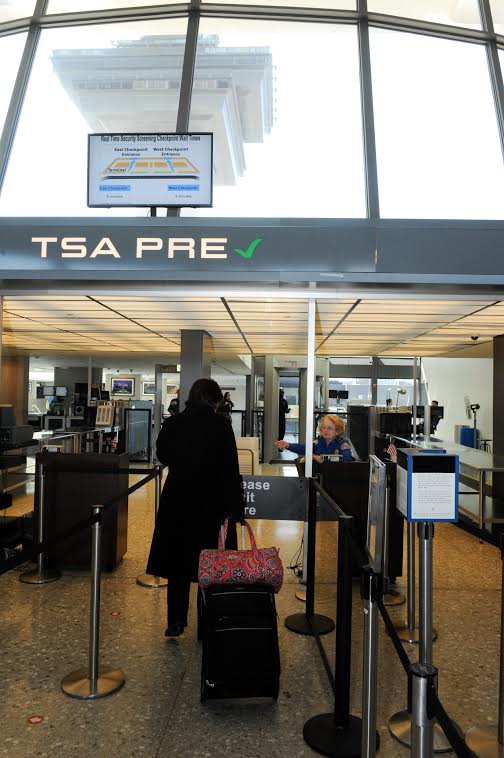
Travelers with TSA PreCheck status have been able to keep their shoes on at TSA checkpoints since 2013, courtesy of the expedited screening privileges the paid program offers.

But as of today, all passengers, including those with and those without TSA PreCheck status, may keep their shoes when going through screening at airport checkpoints.

Why the change?

DHS believes that its “cutting-edge technological advancements and multi-layered security approach” means the agency can now “implement this change while maintaining the highest security standards.”

Keep in mind, though, that the ‘shoe pass’ isn’t universal.

If you have shoes with metal in them, they’re likely to set off the alarm and you’ll be asked to take them off and send them through the X-ray machine.

If you’re selected for random extra screening (the dreaded “SSSS” on your boarding pass), you’ll also likely be asked to take your shoes off and send them through the machine.

And, as we were today, you also may be chosen at random to step aside at the checkpoint and have your shoes wiped with those little pads to check for explosives.

How many firearms did travelers bring to airport checkpoints in 2024?

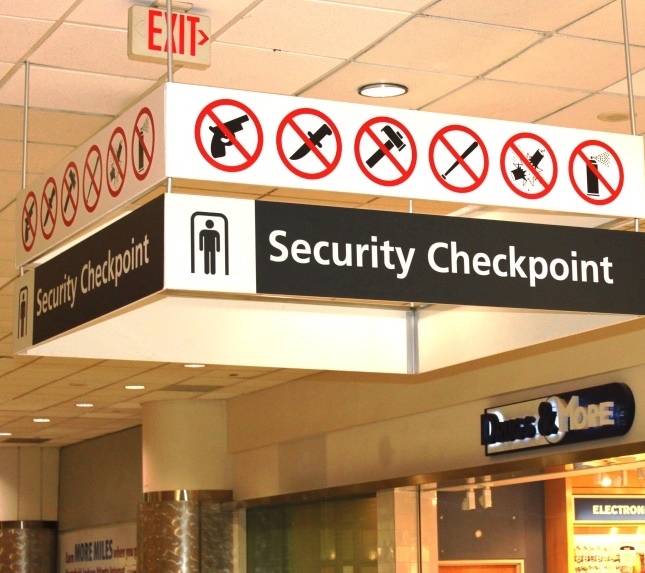
The Transportation Security Administration (TSA) released its 2024 tally for the number of firearms found at airport checkpoints.

And while this time around the number of “finds” isn’t a record breaker, it’s still quite shocking.

In 2024, (TSA) found a total of 6,678 firearms at airport security checkpoints, a slight decrease from the 6,737 firearms found in 2023.

More alarming: In 2024, approximately 94% of the firearms passengers brought to the checkpoints were loaded.

TSA screened more than 904 million passengers in 2024 and the total number of firearms found equates to 18.2 firearms found each day and 7.4 firearms per million people.

That’s a decrease from the 7.8 firearms per million people in 2023.

In 2024, firearms were discovered at 277 airports with the most firearms, 440, found at Hartsfield-Jackson Atlanta International Airport (ATL).

Other airports on the Top 10 list for firearm discoveries include:

Dallas Fort Worth (DFW): 390

George Bush Intercontinental (IAH): 272

Phoenix Sky Harbor (PHX): 247

Nashville (BNA): 188

Denver (DEN): 166

Orlando (MCO): 150

Dallas Love Field (DAL): 143

Tampa (TPA): 135

Austin (AUS): 126

What happens when TSA discovers a firearm at an airport checkpoint?

TSA will immediately contact local law enforcement and, depending on local laws, the person who brought the firearms to the airport will either be arrested or cited.

TSA does not confiscate firearms, but in addition to any action taken by local law enforcement, the agency has the authority to levy a maximum civil penalty of $14,950 and revoke TSA PreCheck eligibility revoked for at least five years.