Seatmates of Size

Southwest changing its ‘passengers of size’ policy

Southwest Airlines is changing its policy for those who may need an extra seat

Southwest Airlines’ new assigned seating policy goes into effect on January 27, 2026 and on that date, the carrier will also be changing its policy for travelers who don’t fit within the armrest of their seat.

Right now, plus-size passengers have the option to pay for an extra seat in advance of their flight, with the option of getting that money back later if the flight isn’t full. They can also request an extra seat at the airport.

Under the carrier’s new policy, passengers may still get a refund, but there is no longer a guarantee that they will.

Currently, Southwest Airlines considers the boundary between seats to be the armrest and encourages passengers who know they’ll need extra space to purchase an extra seat before they travel.

The carrier now refunds the cost of the extra seat after the flight, on request.

Passengers of size who don’t purchase that extra seat beforehand may also discuss their seating needs with a gate agent (or be advised of it…) and be given the extra seat on a complimentary basis if space is available on the flight.

If the flight is full, however, the airline will offer to rebook you on another flight.

Southwest’s ‘passenger of size’ policy on or after January 27, 2026

After January 26, 2026, passengers of size’ are required to purchase an additional seat before the flight.

If you don’t pre-purchase that extra seat and it’s determined at the gate that the extra room is needed, you’ll be charged for it – at the applicable fare on the day of travel – before boarding.

Complimentary extra seats will no longer be made available. And now a refund for the extra seat will only be offered if the flight departs with at least one open space, if both seats were purchased in the same fare class, and if you file that request within 90 days of travel.
See Southwest Airlines’ full Extra Seat Policy

Seats for seatmates of size

santo_seat_

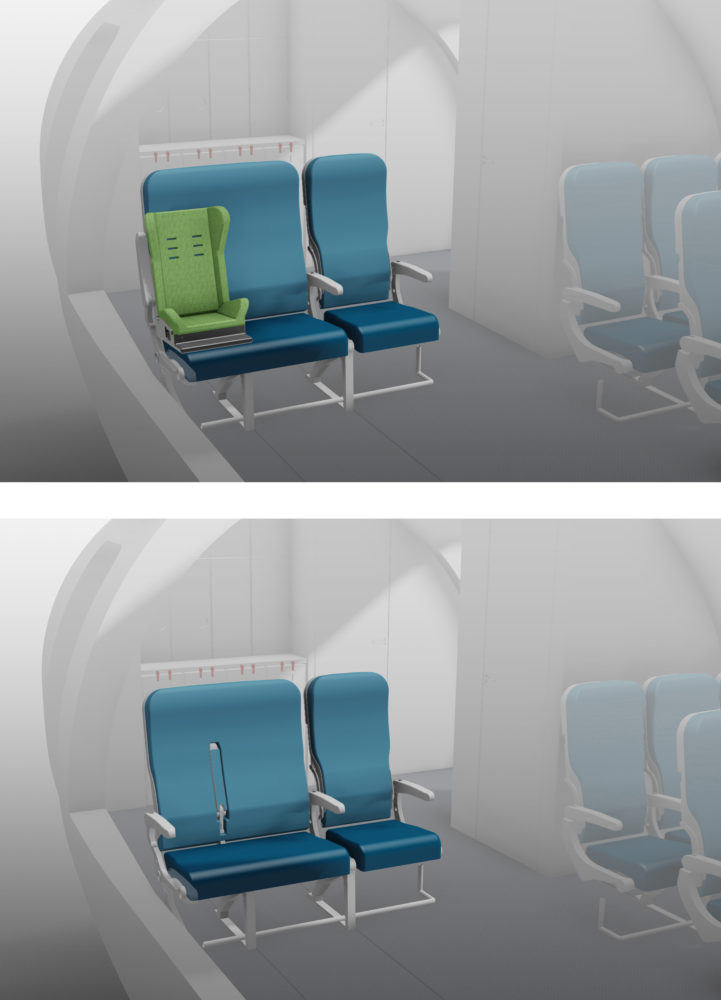
A seat-and-a-half could be the answer for travelers ‘of size’ and those travelings with babies. Courtesy SII Deutschland

The SANTO airline seat – it stands for ‘Special Accommodation Needs for Toddlers and Oversized Passengers’- has been getting quite a bit of attention.

The seat, by SII Deutschland, won an award at the recent Aircraft Interiors Expo in Hamburg and is designed to be placed in the back of the airline cabin, where there is often unused space.

Basically, it’s a a seat-and-a-half that, according to the company, “not only offers enough seating space for two grown-ups and a child seat, but also, provides enough width for those who, due to their size, have to accept that traveling in a standard economy seat is not an option.”

Even with an added fee, this seems like a good idea for families traveling with babies and would create an option for ‘seatmates of size,’ who now can either choose (or sometimes be forced) to purchase two seats or take their chances trying to fit into the ever-narrower seats provided.

Flying tips for plus-size passengers

Plus-size fliers have a slim new tool to help them get from here to there.


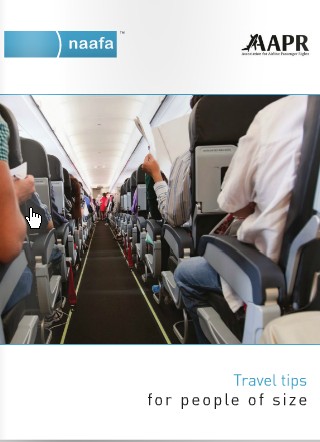
A downloadable, four-page brochure titled “Travel Tips for People of Size” offers tips for packing, booking flights, choosing seats, traveling to and through airports and getting on and off airplanes. A description of each airline’s passengers-of-size policy is included, along with recommendations for ways that travel agents can help a passenger of size have a comfortable flying experience.

“Airline travel, in particular, is such a hot topic for fat people,” said Peggy Howell, spokeswoman for the National Association to Advance Fat Acceptance (NAAFA). “Some have mobility issues and the trip from the curb to the gate is daunting. Some people are concerned that they may not be able to move quickly enough to make connecting flights. And we often get questions about which airlines have policies regarding the purchase of two seats.”

Howell said the brochure, which was created with input from the Association for Airline Passenger Rights (AAPR), will help passengers of size make informed travel decisions and avoid some uncomfortable situations, such as being publicly humiliated by being called out of line to buy a second seat.

“The reality is that purchasing a second coach seat, sharing a third seat with a fellow traveler of size, or considering an upgrade to business or first class may be the most appropriate choice,” said Tony Harrell, owner of Abundant Travel, based in Alexandria, Va.

The brochure recommends that passengers of size book a second seat when flying Southwest, American and Jet Blue. United may require passengers of size to purchase a second seat if they are unable to fit in a single seat with both armrests down. The brochure also suggests that travelers check their airline’s policy at the time of flying.

“Air travel these days is not a pleasant experience, but as passengers we’re all in this together,” said AAPR executive director Brandon Macsata. “So if traveling can be easier and more pleasant for people of size, it will be more pleasant for people of all sizes.”

In addition to urging travelers to choose airlines that are “people-of-size friendly,” the brochure also offers these tips:

  • A window seat will give you a little more shoulder room but hip room remains the same. The average seat is (approximately) 18 inches wide.
  • While you can discreetly ask your flight attendant for a seat belt extender as you board, you may find it more convenient to carry your own. (A list of sites that sell seatbelt extenders is included.)
  • Smile and say hello to your seat mates. It is harder to be annoyed with someone if they are being nice.
  • Washroom size may be an issue. Try to plan accordingly

“I’m going to print out the brochure and take it with me when I travel,” said Carole Cullum, a Minnesota resident who usually purchases a second airline seat.

“Society thinks people of size want special accommodations on airplanes, without respect for others,” said Janie Oyakawa, a 34-year-old person of size from McKinney, Texas. “But we just want to know exactly what the deal is, and this brochure removes a lot of the guesswork.

“My hips might be wider,” she said, “but my money is just as green as the next person’s and I want to travel and see the world.”

(My story: Flying? New brochure offers travel tips for passengers of size first appeared on msnbc.om’s Travel Kit)


AirTran adopting Southwest’s “passenger of size” policy

If you’re too round to fit between the armrests in an AirTran Airways coach seat, you’ll may soon have to purchase two seats in order to fly.

As I reported on msnbc.com’s Overhead Bin, AirTran is being integrated into Southwest Airlines and, beginning March 1, 2012, the airline will adopt Southwest’s current “customers of size” policy.

According to AirTran’s recently updated contract of carriage, air travelers will be required to purchase an additional seat if the passenger, “in the carrier’s sole discretion, encroaches on an adjacent seat and/or is unable to sit in a single seat with the armrest lowered.”

That matches the wording of Southwest Airline’s customers of size policy, which states: “Customers who encroach upon any part of the neighboring seat(s) should proactively book the needed number of seats prior to travel. The armrest is considered to be the definitive boundary between seats and measures 17 inches in width.”

The width of coach seats on AirTran’s current fleet of airplanes is 18 inches.

Previously, AirTran did not have a specific “customer of size” policy in its contract of carriage and, instead, gave gate staff and crew members authority and responsibility to work out seatmate-of-size solutions on a case-by-case basis.

“Did air travelers who are large pick AirTran over Southwest because AirTran didn’t have such a strict policy? I think they looked at the ticket price,” said Rick Seaney, CEO of FareCompare.com.

“AirTran is basically becoming Southwest,” Seaney said. “The two airlines are merging their boarding process, their fleets, their award program and their attitude. So this is just a normal course of business.”

George Hobica, president of AirFareWatchdog.com, said he’s not surprised to see AirTran adopting Southwest’s policies.

“It’s probably a good thing for the comfort of all,” he said. “But I wonder if [the policy] is observed more in the breach than the practice. I can’t tell you how many times I’ve seen passengers that are way too big to fit in one seat getting a free pass.”

(Image courtesy msnbc.com)

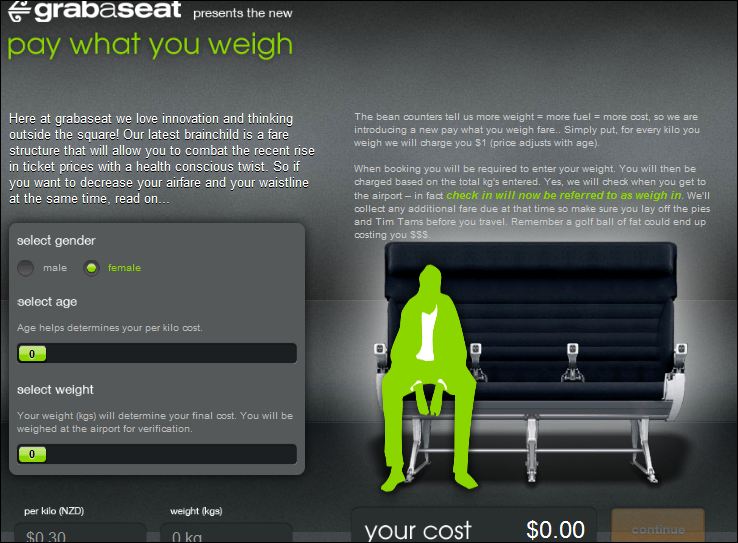
Air New Zealand: pay what you weigh

Whenever the conversation turns to people who are too large to fit into the seats on an airplane, (skinny) people always suggest that airlines charge passengers by weight.

Now Air New Zealand has done it.

pay what you weigh

Air New Zealand's Pay what you Weigh program

On Air New Zealand, check-in is now known as weigh in.

What do you think?

Will it spread to other airlines?
Will some passengers complain?
Will there be lawsuits?
Will you pay?
Will you pay more attention to that Richard Simmons “Fit to Fly” safety video?
Will you realize it’s April 1st in New Zealand?

Tidbits for travelers: Free Wi-Fi, Olympic travel tips, and in-flight body-mass tax

We want Wi-Fi

Slowly but surely airports large and small are getting with the program and making free wireless Internet access available in the terminals.

The latest major airport to join the party: Boston Logan International Airport (BOS).

Hooray!

Packing tips from Olympic athletes

Curious about what some Olympic athletes do when they’re traveling – or getting ready to travel? Them you may in interested in the video clips the folks at VISA (a 2010 Olympics sponsor) have posted of athletes talking about what they pack, how they prep for a trip, how skier Ryan St. Onge just had to have an airport burrito, and what Olympic Hockey player Angela Ruggiero packs in her carry-on.


Just as interesting, is the fact that the credit card company is giving away a trip to the Olympics – for life. To enter, you just need to charge something on a VISA card.

Seat tax on Air France for Seatmates of Size

And, just a day after announcing that it was introducing “the lightest and most comfortable short-haul seat in the world,” on some of its planes, Air France announced that passengers who cannot fit into a single seat (on any Air France flight) will have to pay for a second seat – at 75% of the cost of the first seat.

The new policy applies to tickets purchased beginning February 1st for flights April 1st and beyond.

Think the new rules may apply to you? Here’s the policy for Passengers with High Body Mass.

What do you think? Should seatmates of size be asked to pay for more than one seat?

Clip ‘n save guide to airline policies on seatmates of size

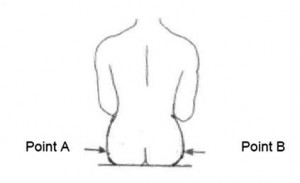
air-canada-tush

No matter your weight or your width, the next time you fly make sure you know your airline’s policy on “seatmates of size.”  Better yet, if you can find your airline’s customer of size policy, print it out and carry it with you.

It may help you avoid a pain in the butt and it may save you some bucks.

Last week, United Airlines laid out its new policy for “Passengers requiring extra space.”  It says that passengers who can’t fit into a single seat in their ticketed cabin; need more than one extender in order to buckle their seatbelt and; are unable to put the seat’s armrest down when they are seated may have to purchase a second seat if there are no extra empty seats on their scheduled flight.

What’s the policy on other airlines?  Find out in my Well-Mannered Traveler column posted today on MSNBC.com:  What a deal: one person, two fares.

You may surprised.  Some airlines don’t post their policies and just say they’ll “work something out” if a passenger can’t fit in one seat. Other airlines are very specific about their rules and make it easy to find them – but you may not like what you read.

Portly passengers may pay twice on United

This week United Airlines joined Southwest and several other airlines in formalizing and posting a  “seatmates of size” policy on its website.

seatmates-of-size

(From a 2007  Well-Mannered Traveler column on this topic, courtesy MSNBC.com)

Although the policy was quietly posted on the airline’s Web site some time ago, it went into effect just this past Wednesday, April 15th.

The policy will please passengers who find themselves squeezed in next to someone who doesn’t really fit in their own seat and will disappoint travelers who feel that, rather than charging large passengers for more space, airlines should just be putting larger seats on all airplanes.

You can read the current policy here but, in a nutshell, the policy states that if you don’t fit into your seat with the armrests down, if you need more than one seat belt extender to buckle your seat belt, or if you simply do not fit into a single seat in your ticketed cabin, then you may end up having to purchase a second seat and fly on a later flight.

The key word here is may.  Which is not what the policy first stated.

Last Wednesday, the policy United posted on its Website stated that passengers falling into certain categories MUST by an extra seat.  By the end of the day, however, the wording had been changed to better reflect the policy an airline spokesperson  said was the “real” policy: that before charging anyone for a second seat, United flight crews would try to find two adjacent seats for the large passenger at no extra charge

I think that’s a big  difference.  And I’m glad they changed the wording. Read about how the wording got changed in my Well-Mannered Traveler column, The Skinny on United’s seatmates of size”, on MSNBC.com.

And tell me what you think….

Ryanair asks: would you pay for toilet paper?

After alarming travelers with the ‘joke’ about on-board pay-toilets (don’t be surprised…), Ryanair officials asked travelers to send in their own ideas for other discretionary fees that could be charged.

They did.

As of today (April 14th) close to 45,000 votes have been cast.  And sadly, so far more than 20,000 people have voted in favor of charging excess fees for overweight passengers.

Other survey choices include charges for bringing your own food onboard, for using airplane toilet paper, and for smoking in a converted lavatory.  Click here to take the Ryanair survey.  The winning idea gets a cash prize. Voting closes Friday, April 17th.

vote

One person – two seats – in two rows?

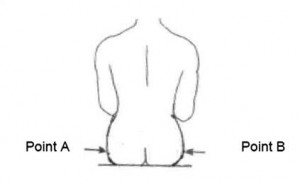
One of my recent Well Mannered Traveler columns on MSNBC.com discussed the “tush test” Canadian airlines are asking travelers to undergo in order to take advantage of that country’s One Person/One Fare  laws.

So Gregg at FlightsfromHell sent along a  link to a story about a woman forced to purchase two airplane seats “for other people’s comfort.”

Unfortunately, the two seats the airline assigned her were not next to each other.

air-canada-tush