Road Trip

Tumbleweed invasion

Here’s a crazy travel story for the New Year that’s not about flying, but about driving.

 Truck surrounded by tumbleweeds near Richland Washington. Photo: Washington State Patrol Trooper C. Thorson

On Tuesday night – New Year’s Eve – at least five cars and an eighteen-wheeler truck got trapped in a bizarre, giant pile-up of tumbleweeds on a rural, central Washington State highway.

According to the Washington State Patrol, the tumbleweed invasion was so serious that the highway had to be closed for 10 hours, trapping the drivers inside their cars until 4:30 a.m. New Year’s Day.

Washington State Trooper Chris Thorson told the YakkTriNews that strong winds blew tumbleweeds into an area with berms near the roadway and that caused the tumbleweeds to clog the highway.

There were so many tumbleweeds on the road that when cars stopped to avoid hitting the tumbleweeds they ended up getting buried by them.

How did they get rid of the tumbleweeds?

Snowplows were brought in to clear the tumbleweeds and free the trapped drivers and their vehicles.

According to the State Patrol, the tumbleweed heap reached 30 feet tall and was hundreds of yards long.

On the road: Boston

Souvenir at Boston Logan Airport

StuckatTheAirport.com is spending the holiday week in Boston.

While here, we’re exploring the up-and-coming downtown Seaport neighborhood, which sits between Boston’s waterfront and the historic Fort Point district.

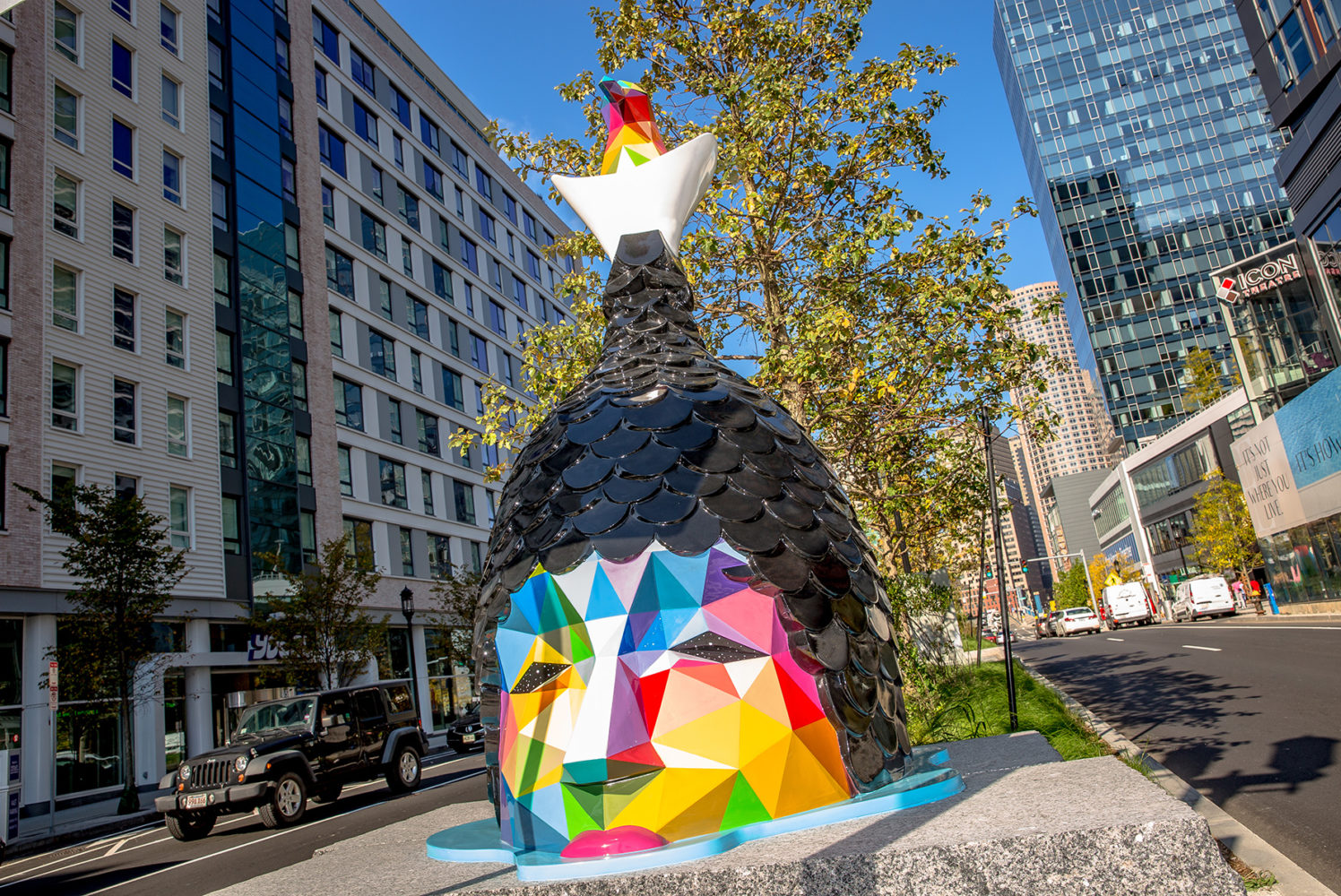
One of 7 sculptures by Okuda San Miguel in the Seaport neighborhood. This one is Mythology: Being 1

The neighborhood is a mix of historic buildings and brand new hotels, shops, inviting green spaces, public art and hangout spaces. There are also plenty of highrise office and apartment buildings – many still being built.

Opening day at Martin’s Park was just two weeks ago. The $7 million accessible playground and open space honors Martin W. Richard, the youngest victim of the Boston Marathon bombings. The park sits right next to the Boston Children’s Museum, which moved to the area in 1979.

Two of Boston’s best rooftop bars are in the Seaport neighborhood as well.

The charming Yotel Boston offers the Sky Bar, with a 270-degree panoramic view of the city and harbor from the hotel’s 12 floor.

Yotel Boston

Nearby, the Envoy Hotel offers a wider choice of views from the 8th floor Lookout bar. I had the great fortune to be invited up for a cocktail and a look around on a picture perfect day.

Have you been to this ‘new’ Boston neighborhood? Please share some of your favorite “don’t miss” places.

Considering Cuba?

The best restored vintage cars serve as taxis for tourists in Havana. Photo: Harriet Baskas

In early January I joined Alaska Airlines for the first scheduled flight to Havana from a west coast city – Los Angeles – in over 50 years. Here’s the CNBC story that came from that adventure.

Photo by Harriet Baskas

Last week, the newly inaugurated Trump administration warned it was in the middle of a “full review” of U.S. policy toward Cuba—prompting new questions about how committed President Donald Trump will be to the political and cultural thaw began under his predecessor.

However, uncertainty over Trump’s Cuba policy did not prevent American Airlines from opening a ticket office in Havana this week, a mere two months after the carrier flew the first scheduled commercial flight from the U.S. to Havana since 1961.

American’s new outpost in Cuba underscores how both U.S. fliers and air carriers are rushing to make the most of the first real opening between the two countries in decades—despite lingering questions about whether that thaw will continue in the Trump era.

 “We cannot speculate about what [Trump’s] next step will be, but I can assure you that we are moving our machine forward,” said Galo Beltran, Cuba manager for American Airlines told the Associated Press, “You are a witness to the investment and how important Cuba is to American as a U.S. entity doing business.”

American began flying to Havana from Miami and Charlotte in late November, and from Miami to five other Cuban cities in September. After a mid-February ‘schedule adjustment’ that drops one of two daily flights between Miami and three cities (Holguin, Santa Clara and Varadero), American will be operating 10 daily flights to six Cuban cities.

Other U.S. airlines competed for the go-ahead to offer service to Havana and other Cuban cities. These include Delta (which in November was the first U.S. airline to open a ticket office in Havana), Spirit, United, Alaska, JetBlue and Southwest, all of which are sticking with their original flight schedules.

“Myriad external forces govern the climate in which we operate – prices of energy, labor,” said Brad Hawkins, spokesman for Southwest Airlines, which currently operates a dozen daily roundtrips between Cuba and the U.S.. As of right now, “Our Cuba flights are performing in-line with our expectations.”

JetBlue reported the same.

“Cuba routes are performing as expected,” said JetBlue spokesman Philip Stewart, “As has been the case since we completed all of our route launches last fall, we continue to operate nearly 50 roundtrips between the U.S. and Cuba every week on six unique routes.”

Photo by Harriet Baskas


As one would expect from tourists prohibited from visiting a cultural Mecca for decades, many U.S. visitors who now fly to Havana join walking tours through the city’s old quarters, take rides in restored vintage cars and visit the Presidential Palace (home of the Revolutionary Museum), Hemingway’s House and the studios of local artists.

Members of a 50-person delegation of political, business and cultural leaders who joined Seattle-based Alaska Airlines in January, as part of the first regularly scheduled flight between Los Angeles and Havana, indulged in the same.

At the same time, they engaged with their Cuban counterparts, exchanging ideas and business links.

Stephanie Bowman and other commissioners from the Port of Seattle, which operates Seattle-Tacoma International Airport and an assortment of cruise and marine terminals, met with the Cuban Minister of Trade and Foreign Investment and the Cuban Port Authority.

“We learned that with the lessening of trade restrictions and the increase in tourism they have huge challenges in infrastructure development, everything from roads and hotels to being able to provide enough food for everyone,” said Bowman. She suggested the Port of Seattle host some Cuban executives in Seattle “so they can observe our cruise and airport business and take some best practices back.”

Photo courtesy Tom Norwalk

Kevin Mather, president & COO of the Seattle Mariners, didn’t meet with Cuban baseball officials or players while in Havana. However, he did bring a suitcase full of t-shirts, whiffle balls and other Mariners promotional items to hand out to baseball fans in a downtown Havana plaza.

Mather recognized that scouting for potential players in Cuba is a touchy subject right now, but he’s confident that eventually Cuban baseball leagues and the American Major League Baseball will have an understanding.

“And when the gate opens and the race starts, I want to have a horse to ride,” said Mather. He instructed his office to retain scouts and people well-versed in the Cuban economy “so that when the day comes we can react.”

That “hurry up and wait” lesson is being learned by members of cultural, business, tourism and trade missions heading to Cuba from a variety of U.S cities, said Janet Moore, president of Distant Horizons, which organizes the on-the-ground details for many delegations.

Once in Cuba, “They quickly realize that it’s not quite so straight-forward and that until the Trade Embargo is lifted, doing business with Cuba comes with an enormous set of regulations,” said Moore.

“So feelers are being put out there and relationships forged, but at this point concrete steps are more difficult,” she added.

Heading to the airport? Hold onto that rental car.

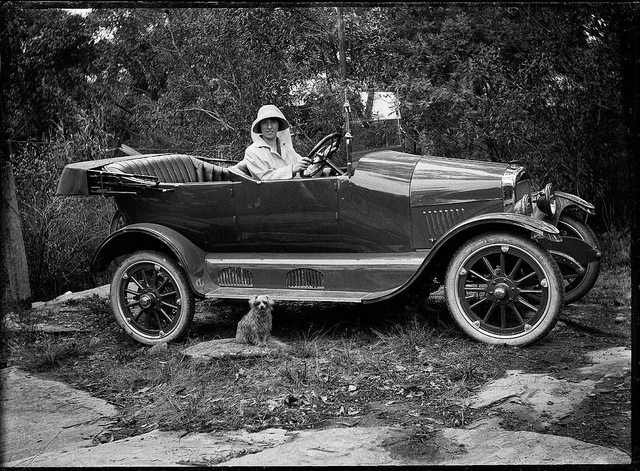
Courtesy State Library of New South Wales , via Flickr Commons.

Courtesy State Library of New South Wales , via Flickr Commons.


Disclosure: National Car Rental sponsored this project.

You finished your meetings, filed that report and now there’s not much else to do but take another pass at the breakfast buffet, check out of your hotel and head to the airport to hang out before your flight.

But don’t return that rental car just yet.

If you plan it right and do a little homework, you can squeeze in a leisure adventure on the way to the airport.

Here’s are some great attractions nearby 5 major airports:

San Francisco International Airport: Burlingame sits on San Francisco Bay, and is home to the Burlingame Museum of Pez Memorabilia. Nearby is the Coyote Point Recreation Area, which offers a beach promenade, marina and great viewing spots for watching planes take off and land.

Seattle-Tacoma International Airport is just seven miles from the sprawling Museum of Flight, with more than 160 air and spacecraft, flight simulators and a brand new, 3-acre Aviation Pavilion that features many of the large commercial aircraft in the collection.

New York’s LaGuardia Airport is less than 2 miles from the Louis Armstrong House and Museum in Corona. The world famous jazz musician and his wife, Lucille, lived in a modest house in Queens and guided tours of the home are offered every hour.

Los Angeles International Airport – The Flight Path Learning Center and Museum is on the south side of the airport in the LAX Imperial Terminal and features airplane models, uniforms, photographs and a wide variety of historic artifacts relating to the aviation industry and the history of Southern California. In-N-Out Burger, a favorite among plane spotters, has a branch in nearby Westchester, less than 2 miles away.

Dallas/Fort Worth International Airport: Founders’ Plaza, on airport property (but almost two miles from the terminal), has an observation area offering great views of airplanes landing and taking off, telescopes, picnic tables and a radio broadcasting air traffic control communications. Historic downtown Grapevine, with wine tasting rooms, public art, shops, restaurants and an entertaining glockenspiel clock tower, is just 7 miles away.

The easiest and most time-efficient way to reach most of these near-the-airport locations is by car. A good option: National Car Rental, where some of the time-saving benefits offered to Emerald Club members make it easy to squeeze in leisure time on a business trip.

At these busy airports and many others, Emerald Club members get to bypass the lines at the check-in counter, pick out any midsize (or above) car from the Emerald Aisle and, when they return to the airport, skip the paperwork and get an email receipt after dropping off the car.

I’ve got a work trip planned to Denver and I’m planning now to squeeze in a drive out to Golden to see the Buffalo Bill Memorial Museum and grave before heading back to Denver International Airport, returning my rental car and heading home.

National_Emerald Aisle_image

Don’t give that rental car back just yet. Take a fun side trip before heading back to the airport.

Canada lures travelers with low Loonie

Courtesy Travel Manitoba

Courtesy Travel Manitoba

If flying over Niagara Falls in a helicopter or coming face to face with a polar bear in Manitoba are experiences on your bucket list but not in your budget, now may be the time to recalculate.

The Canadian dollar – known as the Loonie – dropped 16 percent against the dollar last year and is now hovering at about 70 cents to the U.S. dollar.

That means that U.S. travelers heading north of the border for the Valentine’s Day/Presidents’ Day weekend or perhaps the NBA All Star Game (Feb 12-14) in Toronto will find everything from dining, shopping and lodging to attraction admissions on sale at 30 percent off.

Travel analysts say right now the exchange rate makes ski resort vacations in Canada especially appealing.

“At Blackcomb-Whistler, Revelstoke and Banff, 3-star hotel rooms for Presidents’ Weekend can be booked for under $50 U.S. per night, which frees up money for lift tickets and meals,” said Priceline.com’s Brian Ek.

“Multi-day Banff lift tickets cost less than Tahoe at par, and you’ll save even more with the exchange rate,” said Arabella Bowen, Editor-in-Chief at Fodor’s Travel.

Long before winter set in, savvy travelers were already taking advantage of the deals offered by the devalued Canadian dollar.

“In 2015 we saw an 8 percent increase over 2014 in inbound travel from the United States,” said Rob Taylor, Vice President, Public & Industry Affairs, for the Tourism Industry Association of Canada.

According to group’s Summer Travel Snapshot, during the 2015 summer season alone (May to September) Americans added $1.9 billion to the Canadian economy.

“2015 was the best year we’ve had since 2008, when Canada saw a big dip in U.S. tourism because the United States began requiring Americans to show a passport to reenter the country,” said Wayne Thomson, chair of Niagara Falls Tourism. “More Americans have passports now and I’ve talked to people staying at some of the hotels who are amazed at the bargains they’re getting.”

The story is much the same across Canada.

In 2015, Tourism Vancouver recorded 8.7 percent growth in US visitation to the city over the same period in 2014, said Amber Sessions, Communications Manager for Tourism Vancouver, and “many hotels and tourist attractions here are taking advantage of the low Canadian dollar to reach out to U.S. travelers with special offers and targeted advertising.”

As of November, 2015 visits from United States to Ontario were up 9 percent over 2014. In November alone there was a 14 percent increase in visitors over November 2014.

And because it’s now more costly for Canadians to travel outside of the country, “more Canadians are traveling domestically,” said Andrew Weir, Tourism Toronto’s Executive Vice President and Chief Marketing Officer, “so it’s a win-win for cities like ours.”

Even Churchill (population: 813), the tiny town in the far north of Manitoba famous for polar bear and beluga whale viewing experiences, is seeing increased visitors.

“I’m hearing 30 to 40 percent increases year over year for our Polar Bear Viewing Experience, said Colin Ferguson, President and CEO of Travel Manitoba.

The trips range between US $6,000 and US $7,500 for a 5-day excursion that includes airfare from Winnipeg to Churchill. “But in Canadian dollars that’s almost free,” said Ferguson.

Being able to go on a bucket-list adventure at a huge discount is a big draw for some visitors heading to Canada right now. For others, it’s the increased value they get for their vacation dollars.

“The dip in the Canadian dollar means a $500 room at a resort in Whistler is really just US $350. And compared to a $500 room in the U.S, it’s just a way better value. And it extends to shopping, restaurants, activities and so on,” said David Lowy, President of Renshaw Travel, a Virtuoso-accredited travel agency in Vancouver.

“We’ve had a 17.8 percent growth in Whistler as a destination this year,” said Jack Ezon, President of Virtuoso member Ovation Vacations in New York,” with some clients heading to Canada instead of Vail, Colorado or Deer Valley, Utah.

“In some cases the airfare to Vancouver is less expensive,” said Ezon, “and I can get them a two or three room residence at the Four Seasons Whistler for the same price as two connecting rooms in Vail.”

South of the Canadian/US border, some businesses and cities have seen a drop-off in Canadian visitors due to the loonie’s decline.

“Canadian visitors used to be our some of our best weekend customers,” said Sarah Young, owner of the SaySay Boutique in Portland, Oregon, “especially when we reminded them there is no sales tax in this state. But now, if they’re even in town, they’re carefully checking the exchange rate and buying fewer items.”

But Seattle, for one, isn’t giving up.

Last week it issued a round-up of hotel packages with special perks and promotions only available to Canadian visitors, including a NW Resident Rate at the four Kimpton properties in town and, at the Renaissance Seattle Hotel, a Weekend Rate Parity package that includes free self-parking breakfast for two and a rate that is the same whether paying in U.S. or Canadian dollars.

(My story about travelers heading to Canada lured by the dip on the Loonie first appeared on CNBC.com.)

Not an airplane, but a Pendleton-themed AirStream

Airstream Pendleton

It’s not an airplane – but this new, limited Airstream trailer is a pretty swanky way to travel – and a good way to support the country’s National Parks during their 100th anniversary year.

Airstream, the company that makes that iconic “silver bullet” travel trailer, has partnered up with Oregon-grown Pendleton Woolen Mills, creators of iconic blankets and western wear, to make a Limited Edition 2016 Pendleton National Park Foundation Airstream Travel Trailer.

It’s a good match. In 1916, Pendleton made its first National Park Blanket -in Glacier Stripe – and that was the same year the National Park Service was born. Pendleton now features ten parks in its blanket collection.

Airstream produced 100 special-edition trailers that include park-inspired Pendleton decor and accessories, including a queen size bed with Pendleton bedding.

Want one? The Pendleton Airstream lists for $114,600. Airstream will donate $1,000 to the National Park Foundation for each of the special edition Pendleton travel trailers sold. The National Park Foundation will use the donated funds to support priority preservation projects at Grand Canyon and Glacier National Parks.

All I can say is …. road trip!

pendleton airstram

On the road: Deadwood and Wall Drug

Wall Drug Jackalope

Two South Dakota spots I recently visited – Deadwood and Wall Drug – face with the classic tourism challenge: how to get people to come visit. And then visit again.

Here’s a slightly edited version of the story I put together for CNBC:

Since its Gold Rush-era founding in 1876, the South Dakota frontier town of Deadwood has been through several booms and busts.

Yet it retains a veneer of the Wild West and keeps fresh the stories of legendary residents such as Calamity Jane and Wild Bill Hickok.

But Deadwood is trying not to live up to its name: the town that helped spawn a popular cable series is looking for a shot of something new.

“All destinations need to evolve over time, even those that that wish to remain the same,” said Alan Fyall, a professor in the Rosen College of Hospitality Management at the University of Central Florida in Orlando.

Since November, 1989 — the year that Deadwood joined Las Vegas and Atlantic City as a cohort of then U.S. cities with legal non-reservation gaming — more than $18 billion has been wagered in the town. That activity has generated millions of dollars in tax proceeds to restore historic buildings in Deadwood, and to promote tourism statewide.

But despite the addition of keno, craps and roulette this past summer, Deadwood is no longer confident of its winning hand.

Recently, state data showed the city’s gaming revenues have plateaued, prompting some officials to suggest the town has to adapt to a more competitive landscape.

“Gaming is now ubiquitous nationwide, and Deadwood can’t just rely on gambling or its Western culture anymore,” said South Dakota Gov. Dennis Daugaard

On that score, Deadwood’s Revitalization Committee recently commissioned a 96-page action plan that contains recommendations on how the town can capitalize on its history and place in popular culture.

Deadwood’s popularity is at least partly attributed to HBO’s three-season-long “Deadwood” TV series (which was canceled in 2006 but is still popular online) and attractions such as Kevin Costner’s memorabilia-filled Midnight Star casino and restaurant on Main Street.

“The town has so many things going for it beyond gaming,” said Roger Brooks, whose tourism consulting firm put together the revitalization report. “Plus, with a name like Deadwood, it doesn’t get much better when it comes to being able to stand out.”

Brooks would like Deadwood’s Wild West-themed streets to be more authentic and pedestrian friendly. He’s also urged the town to create a central plaza where regular entertainment and activities can take place. Meanwhile, the town’s business community is grabbing the proverbial bull by the horns and rallying around those recommendations.

“We developed 55 action items from the report, and have been busily working on making them happen,” said Mike Rodman, executive director of the Deadwood Gaming Association and a member of the Revitalization Committee.

Currently, the town is building a new welcome center and in town more technology-friendly parking meters now accept credit cards and cell-phone payments.

“We also cleaned up our signage, put up baskets of flowers on the street lights and wrapped some electrical boxes to make them less visible,” said Rodman.

Next on the list: finishing plans for two downtown plazas and raising the $8.8 million needed to move that part of the plan forward, said Rodman.

Meanwhile, at Wall Drug

Deadwood may need to change, but Wall Drug credits its success to remaining pretty much the same.

Now a block-long oasis of kitsch visited annually by more than a million visitors traveling along a lonely stretch of Interstate 90, Wall Drug got its start in the 1930s when the owners of a struggling drug store put up highway signs advertising free ice water.

Thirsty Depression-era travelers pulled over for refreshments and purchased ice-cream and other small items while they were there.

Over the years, Wall Drug evolved into one of the country’s most famous pit stop, with a cafe, restaurant, art gallery and shops that sell everything from postcards and T-shirts to jackalope hunting permits, turquoise jewelry and high-end cowboy boots and western wear.

Dozens of free, photo-friendly attractions were built as well, including a giant jackalope, a replica of Mt. Rushmore, a shooting gallery arcade and a giant Tyrannosaurus rex that roars to life every 15 minutes.

The ice water is still free, the coffee is just 5 cents and many grandparents make a point of reliving their childhood Wall Drug experience with their grandchildren.

“My father and my grandparents wanted Wall Drug to be someplace where people could stop, have a nice meal and enjoy themselves without spending much money if they didn’t want to,” said Rick Hustead, current Wall Drug chairman and the oldest grandson of founders Dorothy and Ted Hustead.

“Our guests spend on average two and a half hours here and 50 percent of our business is repeat customers, so we must be doing something right,” Hustead added.

Wall Drug coffee

On the road: RV sales picking up

Heading out on a road trip this summer?

You might stay entertained on the highway playing Punch Buggy, a game in which passengers slug each other in the shoulder whenever a Volkswagen Beetle goes by.

But to learn something about trends in the economy while out on the highway, watch for a different type of vehicle.

“I’m starting to see a lot more RV products on the road. And it’s not just because it’s summer,” said Kathryn Thompson, CEO of Nashville, Tennessee-based Thompson Research Group.

“An RV is as discretionary a purchase as you can think of,” she said. “So if someone is buying an RV, something must be working.”

Eiswerth_trailer

Photo courtesy Rich Eiswerth

According to Thompson, sales of recreational vehicles in the United States hit a low point during the recession, bottoming out in the spring of 2009 with the bankruptcy of two large motor home manufacturers—Fleetwood Enterprises and Monaco Coach.

Yet these days, RV sales have improved along with the economy. Lower priced towables and trailers, with price tags that can start at around $10,000, led the recovery. Sales of the more expensive motorized RVs, including motor homes that can have price tags well over $500,000, caught up later.

“In North America sales were was running over 300,000 units a year until 2008,” said Tom Walworth, president of Statistical Surveys in Grand Rapids, Michigan. “In 2009, sales dropped to 206,000 units. By 2013, they went back to 303,000 units. So in four years it came back 47 percent from the bottom, which is very impressive as an economic indicator,” Walworth said.

During that time, sales of towable RVs (including folding trailers, truck campers and travel trailers) rose 46.4 percent, while sales of the more expensive motorized motorhomes (categorized as Class A, B or C) gained 51 percent from the 2009 low.

This year, shipments of new RVs to dealers will total 349,400 units, an 8.8 percent over 2013, said RV analyst Richard Curtin, director of the Consumer Research Center at the University of Michigan. In 2015, he expects shipments to rise another 3.1 percent.

Who’s buying all these RVs?

“Boomers are the largest demographic of RV owners,” said Mac Bryan, vice president of administration at the Recreational Vehicle Industry Association. “But those age 35-54, the younger consumers who want to be active and outdoors, are the fastest-growing demographic.”

And when friends and family members go along on RV trips, or just hear about them, “that introduces even more people to the RV lifestyle,” Bryan said.

“We have an increasing number of friends and acquaintances ‘of a certain age’ who have chosen the RV lifestyle full or part-time,” said Richard Eiswerth, president and general manager of a Cincinnati public radio station who is in his early 60s. “If and when I retire, who knows?”

Longtime tent campers, Eiswerth and his wife, Susan, last May dipped their toes in the RV ownership market with a small, retro-style, teardrop trailer they bought in Wisconsin before heading west for a trip to Devil’s Tower, Yellowstone and the Grand Tetons.

The couple has large dogs, so they also bought an attachable add-on tent to cover the crates the dogs sleep in at night.

“We didn’t want to simply have another, more expensive, version of home on wheels with all the frills and luxuries of our actual home. We wanted to be able to travel to and camp in a variety of locales, not just asphalt RV compounds,” Eiswerth said.

He lists the advantages of the small camper as better gas mileage than a larger RV, ease of maneuverability, speed and convenience of set-up and tear-down and heat and air conditioning, when necessary.

And best of all, he said, “Much like a tent, this has a connection to the outdoors.”

(My story on recreational vehicles sales increasing first appeared on CNBC Road Warrior).


Summer camp: not just for kids anymore

Happy Solstice! Summer is finally here and for a lot of kids that means summer camp is just around the corner.

But why should kids have all the s’mores and all fun?

Here’s a round-up of some of the adult camps I found for a feature on CNBC Road Warrior.

clowns

From fantasy sports camps with major league players to boot camps for aspiring astronauts, rockers, clowns, zombie slayers and world poker players, there are plenty of summertime options for adults seeking to cross big-ticket items off their bucket list or or just try something new.

Music fans can take lessons from rock stars who serve as counselors at the Rock ‘n’ Roll Fantasy Camp held in Las Vegas and, starting in October, at Foxwoods Resort Casino in Connecticut. Four-day packages begin at about $5,000 and include loaner instruments and lunches, but not lodging.

The hefty fee didn’t deter 51-year-old Ron Cianciaruso, a musician and a senior vice president at a major bank in Jacksonville, Florida, from signing up for what will be his second session at Rock ‘n’ Roll Fantasy Camp: the upcoming four-day camp that will feature The Who’s Roger Daltrey as one of the counselors.

Rock camper Ron Cianciaruso with Billy Hinshe and rock camp band members

Ron Cianciaruso (in red T-shirt on the left;) along with rock counselor Billy Hinsche (in the hat), a former member of Dino, Desi & Billy who also played with the Beach Boys; and co-campers Nick, Ted, John, Bill and Pat, who joined Ron in the camp band, Outside the Box.

Yes, it’s a lot of money,” Cianciaruso told CNBC. “But it’s a once-in-a-lifetime opportunity. And when you do anything like this as an adult you can appreciate the value in doing the things you love.”

Sports enthusiasts can hang out with their heroes at a wide variety of baseball and basketball fantasy camps, many with registration fees for adults hovering at around $5,000 as well.

Wish you could go into space?

The U.S. Space & Rocket Center in Huntsville, Alabama, offers a weekend-long Adult Space Academy for those who want to learn what it’s like to train to be an astronaut. Campers get to hang out in one of the world’s largest space aircraft collections, construct and launch rockets, and train on simulators, including the one-sixth gravity chair and Multi-Axis Trainer.

The three-day camp costs $549 per person while the four-day program runs $649. Meals and lodging are included.

For those worried about a zombie attack, weekend-long sessions at the Zombie Survival Course, held near Whiting, New Jersey, teach campers age 21 and older skills that might come in handy should there be a zombie apocalypse or some other disaster.

“It’s very much a camp-like experience, but with crossbows, pistols and training in advanced first-aid techniques and hand-to-hand combat,” said Zombie Survival Course founder Mark Scelza.

The $450 price includes lodging and meals.

“We’re ready for zombies, hurricanes, earthquakes, even martial law now,” said 34-year-old Ivory Mejia, an ultrasound technologist from Hull, Georgia, who took the course recently with her husband.

“Adult camps often take place in traditional camp settings and can be the adult version of a kid’s camp,” said Peg Smith, CEO of the American Camp Association. And adult campers are likely to be baby boomers interested in “taking their vacations while supporting their vocations,” she said.

According to the ACA, the 12,000 organized camps in the United States are part of a $15 billion industry, with 11 million children and youth and more than 1 million adults attending camp each year. The ACA’s Find a Camp tool lists 200 adult camps, while its business affiliate GrownUpCamps.com has more than 800 paid listings for camps, courses and experiences.

Here are a few more options:

In Ely, Nevada, two of the three Railroad Reality Week summer sessions offered by the Nevada Northern Railway Museum are for adults only. The hands-on experience promises time spent maintaining 19th century locomotives and rail cars “with all the dirt and grime, you’d expect” and working as part of a railroad crew out on the track.

(Next session: August; price: $995; extra fees for bunkhouse lodging and “Be the Engineer” experiences.)

World Poker Tournament Boot Camps in Las Vegas (of course) cover everything from basic poker instruction to tournaments and tells (betting patterns and physical behaviors). And the Culinary Institute of America offers two- to five-day-long boot camps ($895 to $2,195) on such topics as wine, pastry, grilling and barbecue at its three campuses in New York, California and Texas.

Many CIA campers are food and wine enthusiasts who want to learn in a professional kitchen with professional chefs, but the short sessions sometimes serve as gateways to something more serious. “We have had people attend Boot Camp, decide it was a life-changing event and then enter into the degree program,” said Amy Townsend, CIA senior project manager for consumer marketing.

Museum exhibits celebrate the classic road trip

Interstate highways and the demise of Main Street America have turned many modern-day road trips into boring long hauls from here to there.

Brooks Stevens Housecar_bw

A Streamlined House Car designed by the Brooks Stevens firm of Milwaukee, Wisconsin, circa 1936. From a Private Collection / Courtesy Harley-Davidson Museum

Those yearning for the good old days — ones that may have included station wagons and stops at roadside attractions — might want to motor on over to two new museum exhibits celebrating the rise of car culture and the transformation of the family vacation into an American ritual.

On Saturday, the Harley-Davidson Museum in Milwaukee, Wisconsin, rolled out “The American Road,” an exhibit that uses hundreds of artifacts and many personal stories to examine the evolution of the quintessential American road trip from its early beginnings in the 1930s to what it has come to represent in our culture today.

“The 1930s was the decade when you had a lot of infrastructure coming into place, including improved roads, full-service gas stations, early auto courts and other services, so we start there,” said Kristen Jones, manager of exhibits and curatorial at the Harley-Davidson Museum.

In the early 1930s, there were about 160,000 travel trailers on the road, Jones said, so on display in the exhibit’s first gallery is a 26-foot house car designed by American industrial designer (and Milwaukee native) Brooks Stevens. “It’s built on a truck chassis and has many of the comforts of home, including a galley kitchen, a bed, a dinette and a bathroom,” said Jones. A 4-foot salesman’s model of a mid-1930s trailer is also on display, complete with a hinged top that opens to display details such as an upholstered couch and a tiny fake plant.

The 1950s and ’60s were the “Golden Era” of the American road trip, Jones said, when many people had more vacation time, and more disposable income, to travel. “During this time you went west not in a covered wagon, but in your station wagon, and from this post-World War II era of travel we have everything from a 1962 Ford Country Squire station wagon with wood paneling to neon signs that became important beacons to entice travelers to pull off the highway and into the lots of motels, eateries and other attractions and businesses,” she said.

For years, a classic American road trip was along Route 66, the highway that originally ran from Chicago to Los Angeles and now ends in Santa Monica, California. The highway and its history is the focus of “Route 66: The Road and the Romance,” an exhibition that opened on June 8 at the Autry National Center of the American West in Los Angeles celebrating the decommissioned highway as both a road and a romantic notion.

“There are several Route 66 museums actually on the highway that look at the road’s history in that state or region, but we take a national view and look at factors that led to its creation and how it became a fixture in popular culture,” said Jeffrey Richardson, the Autry’s Gamble curator of western history, popular culture and firearms.

Among the 250 objects on display at the Autry are the oldest existing Route 66 shield, a handwritten page from John Steinbeck’s “The Grapes of Wrath” manuscript that introduces the term “Mother Road,” (one of the many nicknames for Route 66), a classic 1960 Corvette and the original 120-foot-long typewritten scroll of Jack Kerouac’s “On the Road.”

Autry_JackKerouac On the Road Scroll

Jack Kerouac’s original On the Road manuscript, written in scroll form.

If you go:

The American Road” at the Harley-Davidson Museum in Milwaukee, Wisconsin, runs through Sept. 1 and includes special meals in the restaurant and special road-trip themed events.

Route 66: The Road and the Romance” will be at the Autry National Center of the American West through Jan. 4, 2015, and also includes seminars, tours, family activities, films and more.

(My story about museum exhibits celebrating road trips first appeared on NBC News Travel)