Museums

Museum Monday:Game Over at National Pinball Museum

If you’re in Washington, D.C. today, go visit the National Pinball Museum.

Today – Labor Day – is the last day to visit the museum before it closes and packs up for a move to Baltimore, Md.

The National Pinball Museum has more than 200 machines on exhibit spanning 140 years of pinball history “from Bagatelle (the 18th Century precursor to pinball) through to modern day computerized marvels.”

There are films about the history of pinball, exhibits exploring the art and artwork that made the games so appealing to the eye and so much fun to play and, best of all, a Pay-to-Play exhibit where you can drop a few quarters and play 40 machines ranging from classic, vintage wood rail games to modern solid state machines.

The museum is open today for free and is located at The Shops at Georgetown Park (3222 M St. NW) in Washington, D.C.

After closing today the plan is to reopen in Baltimore in a few months.

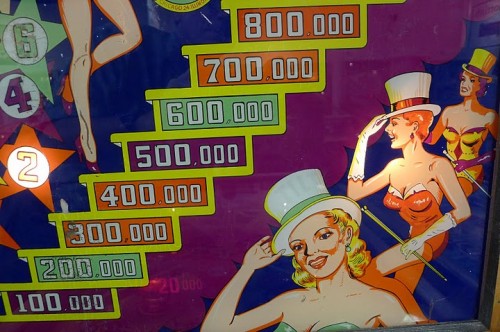
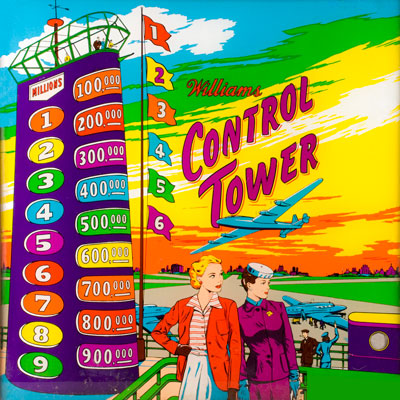
Here’s one of my favorite pinball games:

It was on display awhile back at San Francisco International Airport as part of an SFO Museum exhibit on the history of pinball that included many machines from the Pacific Pinball Museum – and the opportunity to play pinball at the airport for free.

Museum Monday: see the history of TV at SFO Airport

Travelers heading to or through San Francisco International Airport now have a chance to tune in and turn on before they take off, thanks to the latest offering from the SFO Museum.


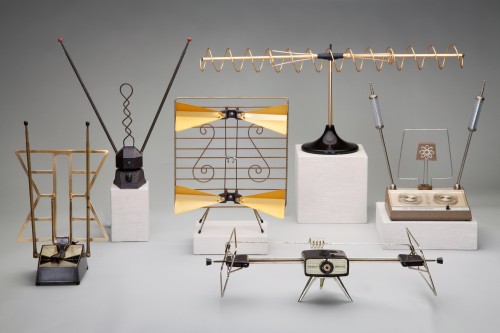
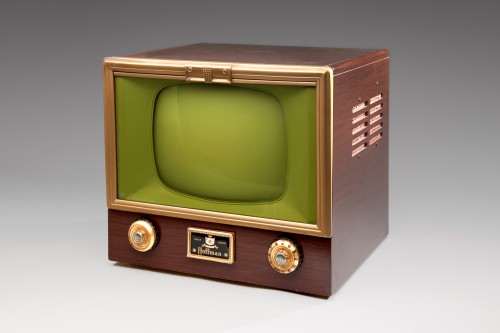
Television: TV in the Antenna Age is filled with television sets and related items from the first four decades of television


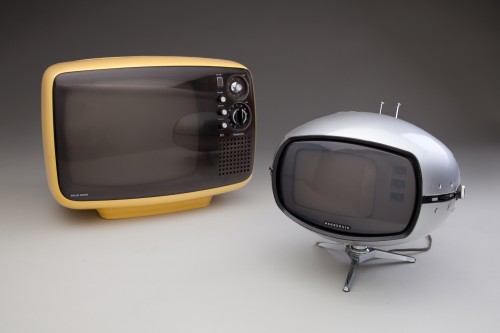
Models range from the earliest commercial sets with 7-inch screens in Art Deco wooden cabinets to colorful plastic versions from the 1970s designed to look like space helmets and flying saucers.


Here’s a preview:

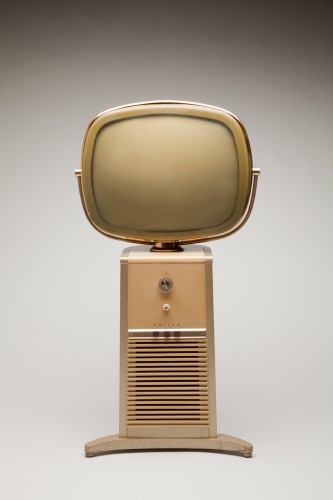
Philco Predicta 4654 Pedestal - 1959

Hoffman M143U Easy Vision 1954

TVs from the early 1970s

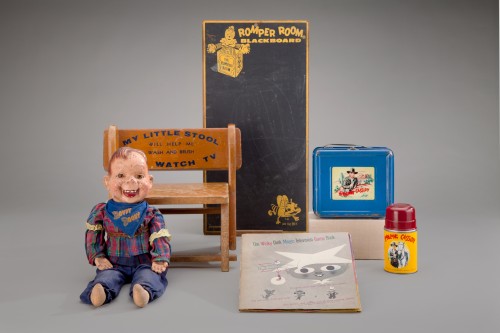
Memorabilia from Howdy Doody, Romper Room and other TV shows

Television: TV in the Antenna Age is on view in Terminal 3, post-security in Boarding Area F through February 6, 2012.

(All photos courtesy of SFO Museum)

Online museum of flight attendant uniforms

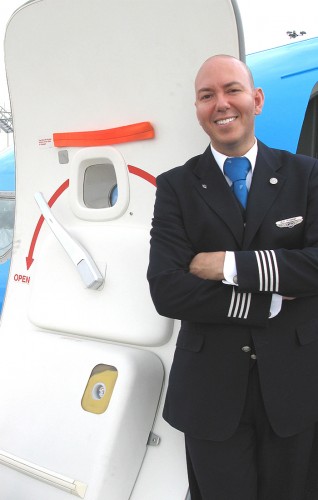
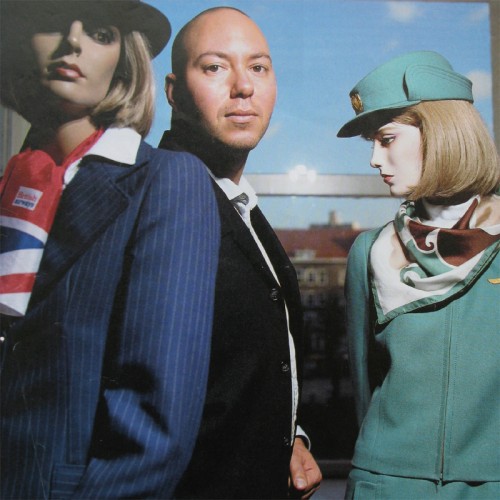
This was a treat: for msnbc.com’s Overhead Bin blog, I profiled Cliff Muskiet’s on-line museum of more than 1000 flight attendant uniforms.

The address for his website — uniformfreak.com — says it all.

Cliff Muskiet, an aviation-crazed kid who grew up to be a flight attendant for KLM Royal Dutch Airlines, has amassed a collection of more than 1,000 flight attendant uniforms.

“Only stewardess uniforms,” said Muskiet. “The female uniforms come in various colors, materials and with different accessories like hats, scarves and gloves. Male uniforms all look the same: jacket, pants, plain shirt and a tie, most men’s uniforms are dark blue and quite boring.”

Muskiet got his first few uniforms in the 1970s and 80s. After a 1993 stop in Ghana, where he picked up some old Ghana Airways uniforms, he began collecting in earnest.

“I love the 1970s psychedelic patterns and color combinations: yellow, red, orange, purple, green, white and blue; every color was used and everything was possible,” Muskiet said. “Also flower prints, dots or checked fabrics were used a lot. I love the big pointy collars from the 70s and synthetic fabrics.”

Muskiet keeps his collection of uniforms and accessories in closets, containers, garment bags and suitcases in two rooms of his home in Amsterdam. For display in his online museum, he photographs each uniform on his one mannequin, which is a size 2.

“I have uniforms in a size 2, but also in a size 10 or 14,” he said. “When she has to wear a size 14, I use pins to make the uniform look nice at the front.”

Among his favorites are two KLM uniforms that have sentimental value: a circa 1971 uniform that was the first one given to him and an example of the KLM uniforms worn from 1975 through 1982. “The uniforms remind me of my childhood and the many trips I made to the USA on KLM with my mother,” said Muskiet. Some of his other favorites are the uniforms worn by female flight attendants on Asiana Airlines in the 1990s, on Kuwait Airways and United Airlines from 1968-1971 and the current outfits worn by TAP Portugal and British Caledonian.

“In the late 1960s and 1970s, a lot of different colors were used and that is something I really miss,” he said. “Especially in the USA, flight attendant uniforms have become a bit boring and look like business outfits.”

A tour through Muskiet’s online museum is anything but boring. “From looking at so many uniforms, you can see trends that correlate with the events of the time and learn about the role of the flight attendant throughout history,” said Kathrine Browne, collections assistant at Seattle’s Museum of Flight. Browne helped put together two popular exhibitions featuring flight attendant uniforms — called “Style in the Aisle” — taken from the museum’s 1,500-piece collection. She is unaware of an online collection that can compare with Muskiet’s. “The collection is exceptional.”

Muskiet is always on the lookout for more uniforms and says he enjoys everything about his job as a purser for KLM. “Except the time differences. One week you are in Hong Kong and the next week you are in New York: time difference 13 hours! The older you get, the more difficult it is to deal with this, but it is all worth it.”

Especially if you’re wearing the right, stylish uniform.

Museum Monday: “Propliners” at SFO

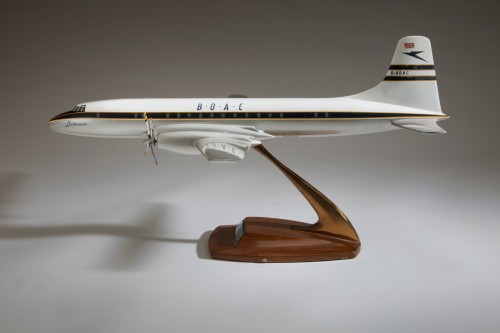
A new exhibition at the SFO Museum at San Francisco International Airport shows off scale models of propeller-driven transport aircraft used in the design, manufacturing and marketing process of the aviation industry in the late 1940s and 1950s.

According to the museum, these propliner models helped the airlines imagine the new airliner operating within their fleet and were used promote their services in airline offices and travel agencies.

This exhibition includes twenty-three models from the Collection of Anthony J. Lawler. “They represent the age of postwar propliners, which lasted until the 1960s when faster, more fuel-efficient and propeller-less turbojet airliners superseded them.”

Look for the propliners in the front cases of the Aviation Museum and Library in SFO’s International Terminal through December 2011.

You can also get a preview here.

Photos courtesy of SFO Museum

Museum Monday: hair, cockroaches, plumbing and more

Thousands of museums in the United States document important events and valuable objects.

But if it’s the funny and offbeat you’re after, hightail it to the Plumbing Museum, the Pencil Sharpener Museum and these other offbeat and somewhat off-kilter places I profiled in a recent slide-show story titled Bizarre Museums for Bing Travel.

Here’s a sampling:

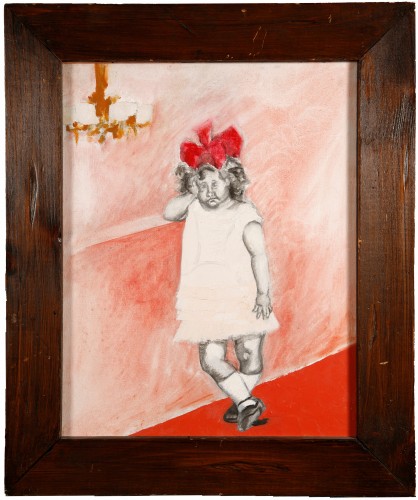
Established to celebrate “the labor of artists whose work would be displayed and appreciated in no other forum,” the three galleries operated by the Museum of Bad Art in the Boston area celebrate paintings that have “gone horribly awry in either concept or execution.” Rescued from trash heaps, yard sales, thrift stores and attics, the collection now includes more than 600 works of art, all of them bad — but in a good way.

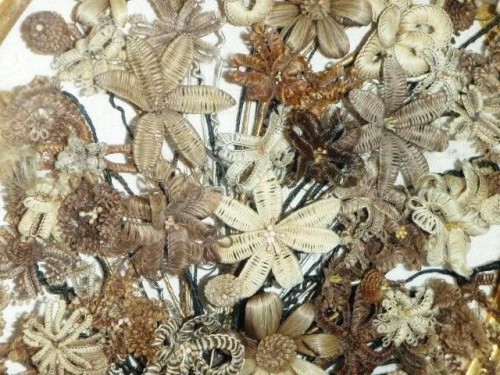
Whether it’s a good hair day or a bad one, Leila Cohoon is happy to weave stories about the history of hair and take visitors through Leila’s Hair Museum in Independence, Mo. The carefully coiffed collection includes locks snipped from the manes of celebrities, 400 framed Victorian hair wreaths and more than 2,000 pieces of antique brooches, bracelets, necklaces and other jewelry made entirely with, or containing, human hair.

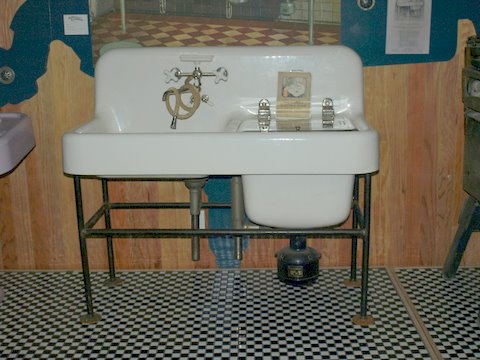
Located, appropriately enough, in Watertown, Mass., the Plumbing Museum’s collection snakes back to the 18th century and includes antique sinks, toilets, water closets and bathtubs as well as historic tools of the trade. If you’re curious about water mains, overflows and septic tanks, this museum devoted to piping technology through the ages will help flush out the answers.

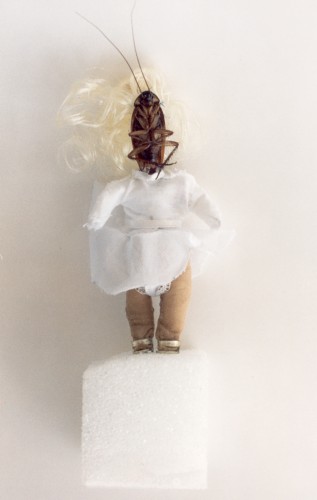
When he’s not out removing unwanted critters from private homes, pest-control expert Michael Bohdan is tending to his Cockroach Hall of Fame and Museum in Plano, Texas. The museum features live insects, such as Madagascar hissing cockroaches, and more than two dozen costumed and preserved cockroaches, including the bejeweled, piano-playing Liberoachi and the sexy Marilyn Monroach.

Get the picture? There are 14 offbeat museums featured in the Bing Travel story, Bizarre Museums.
I’ll let you contemplate these a while and post a few more tomorrow.

Have I missed your favorite offbeat museum? Drop a note in the comment section below and perhaps your recommendation will be featured on a future edition of StuckatTheAirport.com’s Museum Monday.

Museum Monday: the history of high-heeled shoes

When I leave the airport and have a day or two to spend in a city, I’m always armed with a list of special museum exhibitions and local offbeat collections open to the public.

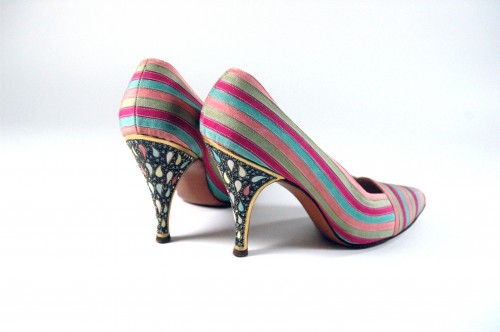
That’s how I knew to leave a few hours free in Yakima, Washington recently to visit the Yakima Valley Museum, which has a display of 600 pairs of exquisite high-heeled shoes from the collection of David Childs, who told me that the museum-quality footwear from the 1800s to the present (much of it my size; but alas, securely behind alarmed glass) was just half of his collection.

“I don’t do flats, boots, practical shoes, matching handbags or sets,” said Childs, “This is a cultural history of the 20th century as told through pristine, displayable, high-heeled shoes.”

By that he means Art Deco shoes from the 1920 and 1930s, platform, ankle-strap shoes of the 1940’s, pointed stiletto heels from the 50s and other eras (“Wait around and the styles come back,” says Childs) and some unusual, experimental and one-of-a kind models from the 1950s and 60s.

Here’s a short video about the exhibit put together by the Yakima Herald Republic.

Royal Wedding: alt activities

Not invited to the Royal Wedding?


Don’t worry –Heathrow Airport is rolling out the red carpet for everyone and there are a jolly lot of attractions, museums and special sights that are very inexpensive and many where admission doesn’t cost a penny.

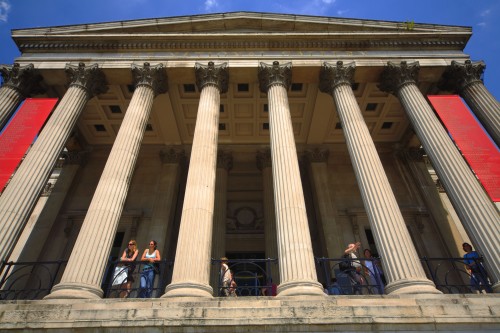
National Gallery

A must-see for most every London visitor, the National Gallery in Trafalgar Square has more than 2,300 Western European paintings from the Middle Ages to the early 20th century, including work by Leonardo da Vinci, Vincent Van Gogh, Georges Seurat and many others.  Admission is free, although there is a charge for some special exhibits.

Museum of London

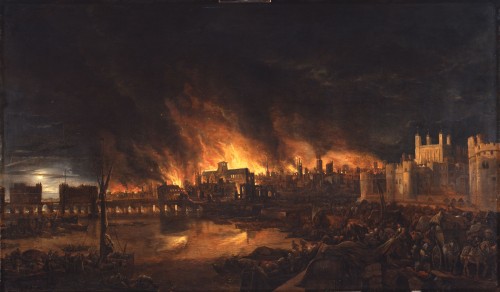
The Museum of London delivers a punch with galleries exploring the archeological history of London, Roman London, Medieval London and the ever-popular display of fire-fighting equipment, paintings, films and objects relating to the September 1666 fire, the Great Fire, that is London’s most famous disaster.  Admission is free.


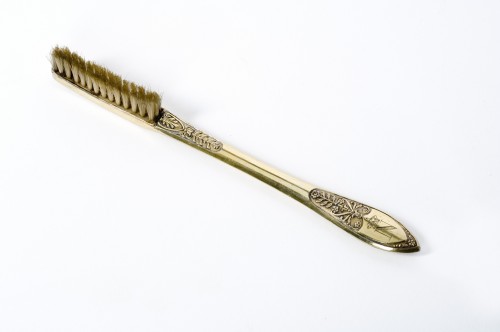
Wellcome Collection Napoleon Bonaparte's Toothbruch

Napoleon Bonaparte's Toothbrush

Courtesy: Wellcome Library, London

Sir Henry Wellcome, of the successful pharmaceutical company Burroughs Wellcome & Co, was a world-class philanthropist and a voracious collector who collected more than million items relating to health and medicine. The Wellcome Collection, opened in 2007, has intriguing changing exhibitions, unusual artwork inspired by modern-day health and medicine, and more than 1500 objects from Wellcome’s collection, including a shrunken head, a guillotine blade, a brass corset, Florence Nightingale’s moccasins, a lock of hair said to be from the head of King George III, and Napoleon Bonaparte’s toothbrush. Admission is free.

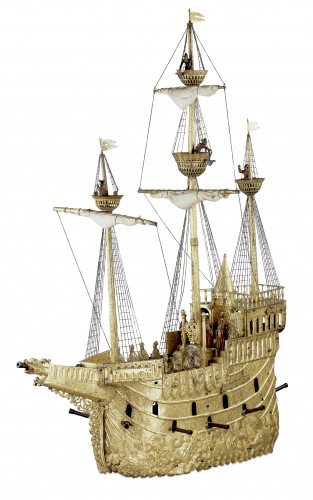
Brass automated clock in the form of a galleon. Trustees of the British Museum.

It’s possible to spend an entire week at the British Museum, which houses more than 7 million items from cultures around the world. So pick a few exhibits and rooms you want to see before you walk through the door.  The Egyptian mummies are among the most popular exhibits, so put them on your list, but consider visiting some of the smaller and less-visited rooms, such as the Clocks and Watches gallery, which holds hidden treasures such as this automated brass clock in the shape of a galleon. Admission free; there is a charge for some special exhibits.

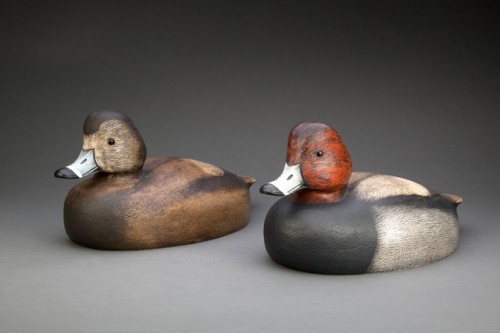
Museum Monday: Duck decoys at SFO Airport

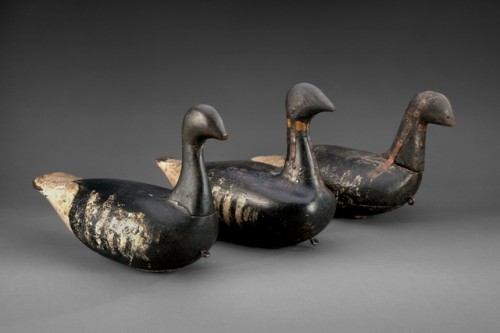
Duck decoys, a hunting tool designed to lure wild birds into the open, are the subject of the latest exhibition at San Francisco International Airport.

According to the SFO Museum:

From coast-to-coast, various regions of North America developed distinctive types of decoys. Bodies of water, hunting methods, and predominant species differed in each area. Materials, styles of carving, and painting techniques also varied locally. Salty, rough waters typically required sturdy, solid-bodied decoys that required frequent repainting. Freshwater decoys, on the other hand, allowed for hollow bodies and detailed paint patterns, which lasted through many seasons. Master craftsmen developed local styles that were emulated by and passed onto generations of carvers. Artisans also brought their own individual creativity to the birds they crafted, making each one unique.

Today, decoys are not only functional, many carved decoys are prized pieces of folk art.

More than 70 examples of work by the best decoy craftsmen are on display in The Allure of the Decoy,  located pre-security in the International Terminal Main Hall at San Francisco International Airport from April 29 through November 6, 2011.


Can’t make it to San Francisco International Airport before then? The SFO Museum has put a slide show featuring 24 of the decoys online.

(Photos courtesy SFO Museum)


Souvenir Sunday at San Francisco International Airport

Finishing touches on SFO T2

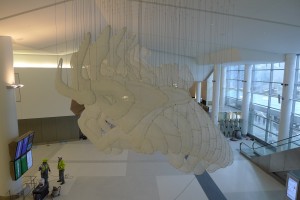
SFO T2

San Francisco International Airport’s Terminal 2, serving passengers on American Airlines and Virgin America, will host a community open house on Saturday, April 9, 2011, and begin hosting flights on Thursday, April 14, 2011.

In the meantime, workers are scrambling to get everything done. None of the stores were open when I visited last Thursday, but I’m looking forward to stopping by again to shop in Compass Books, Pacific Outfitters, the Mosaic Gallery (merchandise from local museums and work by Bay Area artists) and Greetings from SF, which promises “gifts, apparel, and souvenirs that reflect the unique culture of San Francisco.”

In the meantime, I made do with doing my Souvenir Sunday shopping in the SFO International Terminal.

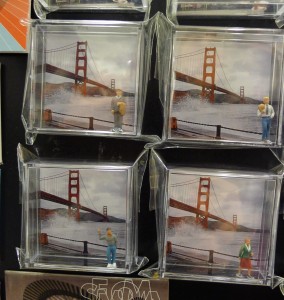
Pretty much everything was tempting at the SFMOMA Museum Store, but I especially liked these 3-D magnets.

SFO MOMA MUSEUM STORE


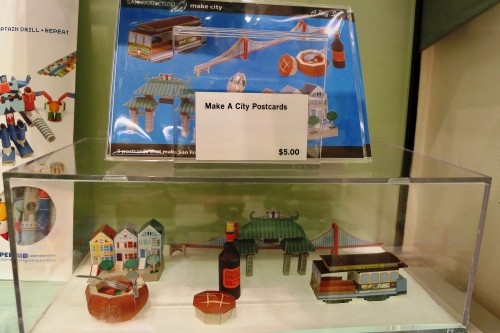
And this make-your-own San Francisco postcard.

SFO postcard


Souvenir Sunday needs you.

If you find a great souvenir next time you’re stuck at the airport, please snap a photo and send it along. If you’re souvenir is featured on Souvenir Sunday, you’ll receive a special travel-related souvenir.

Traveling by Invention – part 1

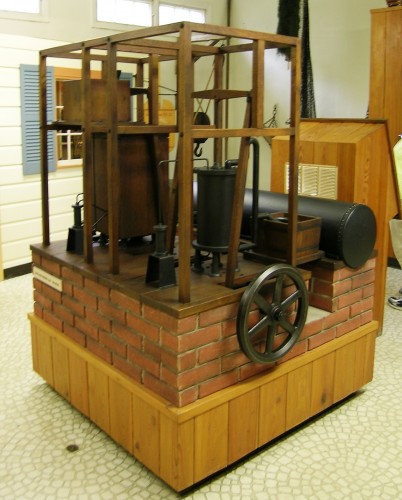
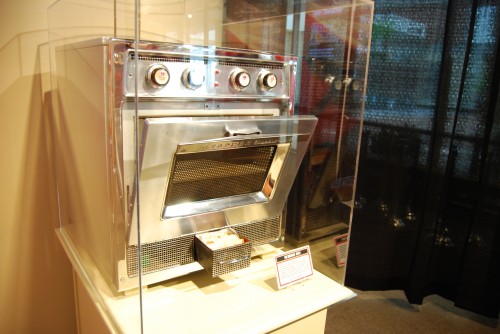
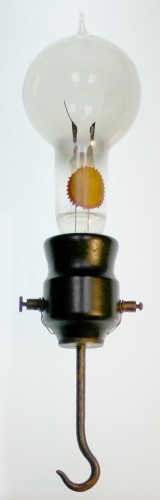
The first ice-making machine, a light bulb Thomas Edison used in demonstrations and the prototype Apple 1 computer.

Surprise finds on the “Antiques Roadshow” TV program? Nope. Just some innovative treasures you might discover if your travel itinerary includes some of the invention-focused museums I included in a story titled Spark your trip with invention-focused museums for msnbc.com.

John Gorrie's Ice-Making machine

Replica of John Gorrie's ice-making machine

“What’s cool about these places is that it makes you appreciate that these things didn’t just appear out of thin air,” says Doug Kirby, publisher of RoadsideAmerica.com. “For example, at the John Gorrie Museum in Florida, even kids immediately understand the difference the invention of air conditioning made in their lives.”

Of course, traveling by invention isn’t just for kids. Or just for tourists. “It is common for members of a community — even long-time residents — to be unfamiliar with the hidden history that surrounds them,” said Ford W. Bell, president of the American Association of Museums (AAM). So consider adding some of these museums to your next local or long-distance vacation.


National Inventors Hall of Fame and Museum


This $1200 microwave oven, made by the Tappan Stove Company in 1955, was an improvement over earlier models that stood over 5 feet tall.

Courtesy National Electronics Museum

The National Inventors Hall of Fame and Museum in Alexandria, VA, is an ideal spot to get an overview of American inventors and their creations. Located in the same building that houses the headquarters of the United States Patent and Trademarks Office, the museum has a gallery filled with interactive electronic portraits of Thomas Edison and other noted inventors as well as exhibits that change annually. The invention of Jell-O, Borden’s Condensed Milk and the commercial microwave oven are explored in the current exhibit, Inventive Eats: Incredible Food Innovations. While at the museum’s sister institution, the Invent Now Museum, in Akron, Ohio, there’s an exhibit titled The Art of Invention.  Admission to both museums is free.

Schenectady Museum & Suits-Bueche Planetarium


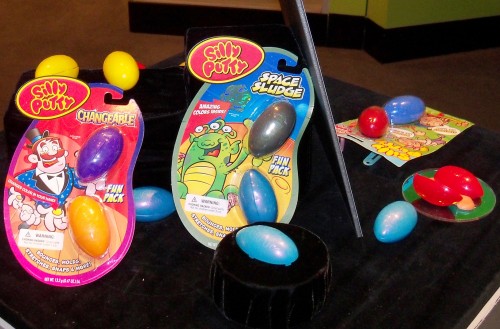
Schenectady claims it, not New Haven, CT, is the city where Silly Putty was invented. Courtesy Schenectady Museum

The Power House exhibit at New York’s Schenectady Museum & Suits-Bueche Planetarium explores inventions and innovations credited to General Electric and other companies based in New York’s Capital Region. According to curator Chris Hunter, the list includes cloud seeding (artificial snow), television, superconducting cable, artificial diamonds and lasers, as well as wind and solar technology. The exhibit also stakes Schenectady’s claim to being the accidental birthplace of Silly Putty – during experiments with silicone – during World War II. “The official Silly Putty site says that James Wright developed Silly Putty in New Haven, CT, but General Electric never had a lab in New Haven. Wright’s silicone patents list his residence as Schenectady or [nearby] Alplaus,” said Hunter.

John Gorrie Museum State Park

He’s technically the father of modern air-conditioning, but you may call him Mr. Cool. In the mid-1800’s, John Gorrie was a young physician in Florida fretting over how to cool the rooms of patients suffering from yellow fever. His solution: a machine that could make ice. In 1851, Gorrie received the first U.S. patent for mechanical refrigeration and today his contribution to cooling is celebrated in Apalachicola, FL at John Gorrie Museum State Park. The museum displays a full-size replica of Gorrie’s patented ice-maker and the facility is, as you’d expect in a town where summer temperatures can top 100 degrees, fully air-conditioned.

American Museum of Radio and Electricity


One of the original 60 incandescent lamps Thomas Edison used to demonstrate his invention t to the public in 1879.American Museum of Radio and Electricity

In addition to a collection of rare and remarkable radios, the American Museum of Radio and Electricity in Bellingham, WA documents what museum president John Jenkins describes as “the incredible number of electrical  inventions produced in the relatively short time since Benjamin Franklin first described his famous Kite experiment.” Displays follow the electrical arc from Franklin through to the invention of radio and television and include the world’s first batteries, electrical motors, electric lights, telephony, telegraphy and assorted medicinal devices. The Electricity Sparks Invention gallery, for example, displays perpetual motion machines, a telephone used in the first transatlantic call and experimental light bulbs used in Thomas Edison’s laboratory in Menlo Park, New Jersey.

Computer History Museum

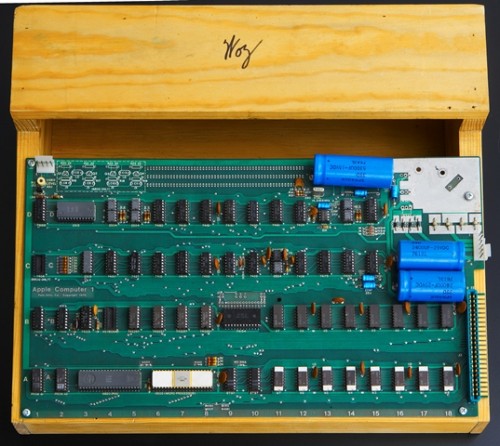
Apple I prototype

Apple co-founder Steve Wozniak introduced a prototype Apple 1 at the Homebrew Computer Club in 1976. Price: $666.66. Included: blank printed circuit board, parts kit and a 16-page manual. Not included: power supply, keyboard, storage system or display.© Mark Richards, courtesy of the Computer History Museum.

From its Mountain View, California home in Silicon Valley, the Computer History Museum uses artifacts that reach back to the abacus to tell the story of computing and its impact on society. Among the collection’s more than 1000 items are inventions that include the first disk drive, the first microprocessor, the first video games, the first computer mouse, the prototype for the original Apple iPod and one of the Google’s first servers. Not everything is run by micro-processors: also on display is the large punch card tabulator Herman Hollerith invented in 1890 that made it possible to shave seven years off the ten it took back then to tally the results of the U.S. census.

Corning Museum of Glass

Corning brought high tech into American kitchens with temperature-tolerant borosilicate glass – PYREX – in 1915 and Corning Ware in 1959.Corning Museum of Glass


The Corning Museum of Glass, in Corning, NY exhibits objects from glass history reaching back more than 3500 years. Also on display are a variety of Corning’s high tech, glass-based inventions such as the glass “envelope” that made Edison’s light bulbs possible in 1879, unbreakable Pyrex dishware introduced in 1915 and, from 1970, the optical fiber that essentially threw the “on” switch for the modern telecommunications revolution.


Heinz History Center


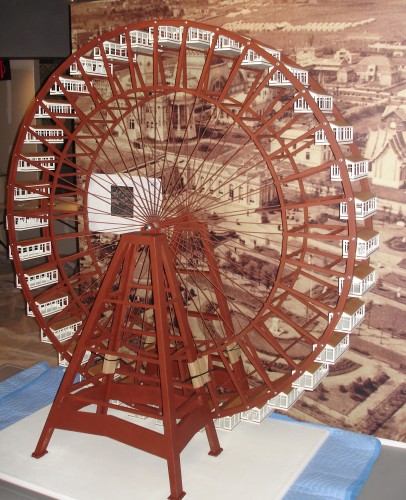
A moveable model of George Ferris’ wheel at the Heinz History Center

The Heinz History Center’s long-term exhibition, Pittsburgh: A Tradition of Innovation, celebrates home-grown inventions that include Jonas Salk’s invention of the Polio vaccine, the Big Mac, the world’s first Jeep (built in nearby Butler) and the first Ice Capades. Displays include an original transmitter from the world’s first commercial radio station, KDKA, and a model of the local iron foundry that built the world’s largest cannon. Also on display: a movable model of the giant wheel designed by Pittsburgh bridge engineer, George Ferris for the 1893 World’s Columbian Exposition in Chicago. The Ferris Wheel was almost 50 feet tall and rotated on a 71-ton, made-in-Pittsburgh axle.

Please check back for a look at even more museums that highlight inventions and innovations.
And please share your tips on museums with exhibits that highlight some great ideas.