Fashion

Fashion for flight attendants yet to fly

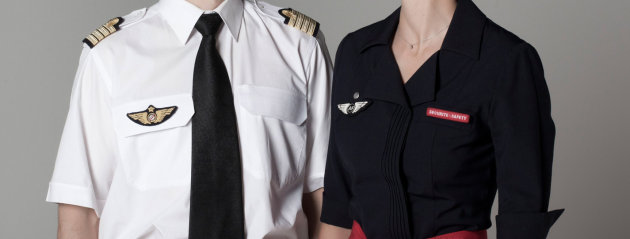
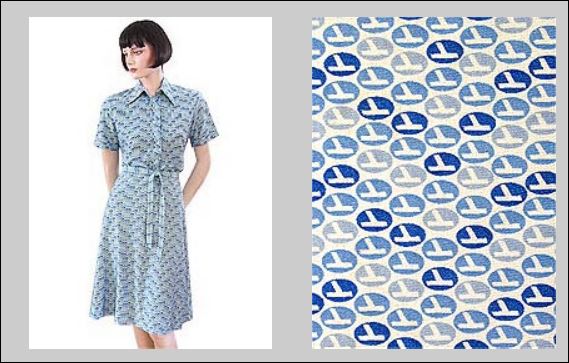
eastern uniform snippet

Detail of an Eastern Air Lines flight attendant uniform from the 1970s. Courtesy uniformfreak.com


The group trying to bring back Eastern Air Lines, the iconic Miami-based carrier that operated from the 1920s until 1991, has been filing paperwork, shopping for airplanes and dreaming about what crew members will wear in the aisles.

In January, the Eastern Air Lines Group filed its initial application with the U.S. Department of Transportation and starting putting together operating manuals for submission to the Federation Aviation Administration.

The company, which acquired the old Eastern name and logo in 2009, is now in discussions with major aircraft leasing companies for a fleet of new aircraft.

“We expect to conclude arrangements in the next few weeks,” said Eastern’s president and CEO Edward Wegel.

The airline plans to complete all regulatory requirements by the end of 2014, but the timeline for actually take-off, first as a charter operator and, later, with scheduled service, is up to the FAA and DOT.

While it waits for approvals, Eastern has asked Miami Fashion Week organizers to invite top fashion designers from South Florida to create uniforms for the airline’s modern-day flight attendants.

“The flight attendants will be recruited from the region and the company wants to capture, as much as possible, the look and feel of the Miami/Caribbean/Latin American landscape in the styling of the new uniforms,” read the official contest rules.

Designers have been asked to submit sketches and mood boards for four outfits, plus a design for uniforms that might be worn in 2050. Winning designs will be announced during Miami Fashion Week, which runs May 15-18.

“Previous Eastern Air Lines uniforms used a classic houndstooth print, which I love,” said designer Nikki Poulos , one of the invited contestants.

She created a new houndstooth print as part of her entry.
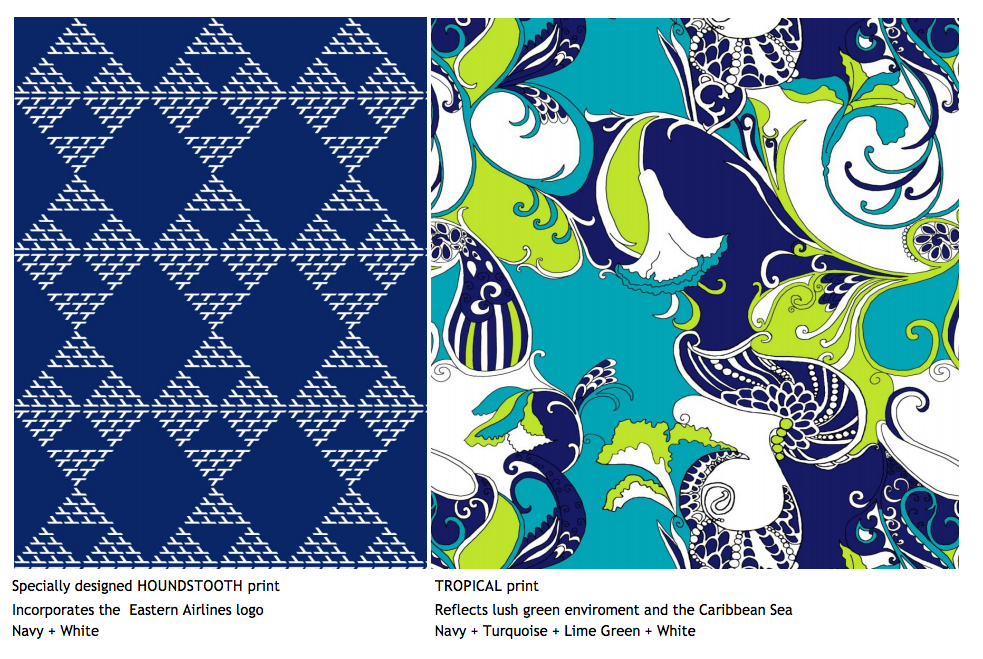
Houndstooth and Tropical print for Eastern Air Lines by Nikki Poulos

Houndstooth and Tropical print for Eastern Air Lines by Nikki Poulos. Courtesy of the designer and Miami Fashion Week


“Look closely at the print and you will see the Eastern Air Lines logo as the main graphic element,” said Poulos. She also created a tropical print using the airline’s signature colors of navy, turquoise and white – with an added splash of lime green – to capture the South Florida environment.

Unfortunately, given the turbulent nature of the U.S. airline industry, it may be quite a while before the winning Eastern Air Lines uniform gets to fly.

According to an unofficial compilation of airline bankruptcies put together by airline trade group Airlines for America, there have been 196 U.S. airline bankruptcies since 1979, with 49 of those bankruptcies taking place since January 1, 2001.

“You now have four very large airlines – American, Delta, United and Southwest – dominating the industry,” said Joshua Schank, president and CEO of the Eno Center for Transportation, “And the history of failure for start-ups in this industry has caused investors to be wary.”

This past March, for example, Florida Express Jet abruptly canceled planned service it had announced between several Sunshine State cities.

PEOPLExpress, which like Eastern, is trying to create a new airline with an old name, “doesn’t seem to be making a great deal of progress,” said George Hamlin, president of Hamlin Transportation Consulting, “But there are a few notable exceptions, including JetBlue and Virgin America, which took many years to achieve a profit,” he said.

Eastern still has name recognition and nostalgia for the ‘good old days’ of flying on its side.

“It was one of the largest airlines in the world and retains good brand equity as it was the largest airline to fly to Latin America and the Caribbean and also operated the famous Eastern Shuttle between New York, Boston and Washington,” notes Eastern’s Wegel.

But that may not be enough.

“The chance of any airline startup working out is now well under 50 percent,” said Schank, “The chances of reviving an old brand are even worse.”

(A different version of my story about Eastern Air Lines first appeared on NBC News Travel.)
Tied up at Phoenix Sky Harbor Airport

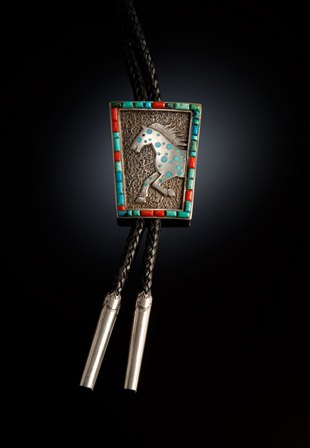
PHX_WatsonHonanie-Katskina

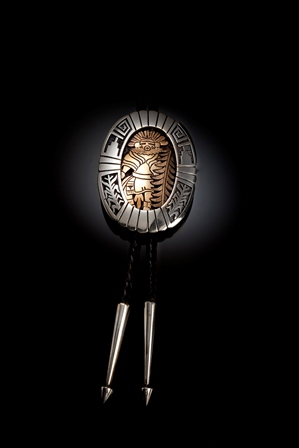
Watson Honanie (Hopi), Early Morning Katsina Bolo Tie, silver, 14-karat gold, 2009, Norman L. Sandfield Collection

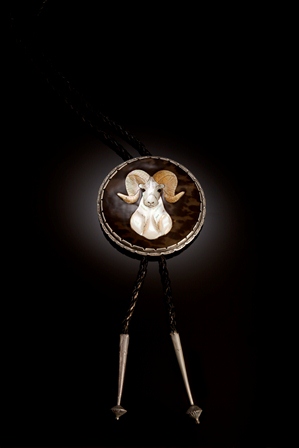
The bolo tie is the official state tie of Arizona, New Mexico and Texas (didn’t know states had official ties, did ya?) and from now through June there’s an exhibition of more than 250 vintage and contemporary bolo ties at Phoenix Sky Harbor International Airport.

PHX Bolo Tie 1

Bolo ties became popular in the 1940s and were a mainstay of cowboy culture. Today, the ties are not only stylish and hip, but works of art that are very collectible as well. The bolo ties on display at PHX are from the collections of both the Heard Museum and Norman L. Sandfield and are focused primarily on Zuni, Hopi and Navajo artists and silversmiths.

PHX Bolo Tie_ElliotQualo-BighornSheep

Look for the exhibition –  Bolo Ties – Vintage and Contemporary Artistry –  at Phoenix Sky Harbor International Airport in the Terminal 4, Level 3 Gallery through June.

Air France turning old uniforms into car insulation

At airports and on airlines, green is in and getting “inner.”

Airports are installing solar farms and wind turbines and getting serious about recycling food waste and other materials generated inside the terminals.

Airlines are rolling out in-flight recycling programs and having flight attendants separate the trash they collect as they go up and down the aisles.

Delta Air Lines gives its old seat covers to Tierra Ideas, which turns them into cool bags.

And now Air France is collecting old uniforms from ground staff and crew uniforms at Paris-Orly and Paris-Charles de Gaulle airports so that the clothing can be recycled as car insulation at a specialized recycling plant.

Air France recycling uniforms

Sewing at San Francisco International Airport

While it would be great if you could get a skirt or a pair of pants hemmed while you were stuck at the airport, that sort of service is quite rare.

But San Francisco International Airport (SFO) is offering perhaps the next best thing: an exhibition about the history of sewing machines.

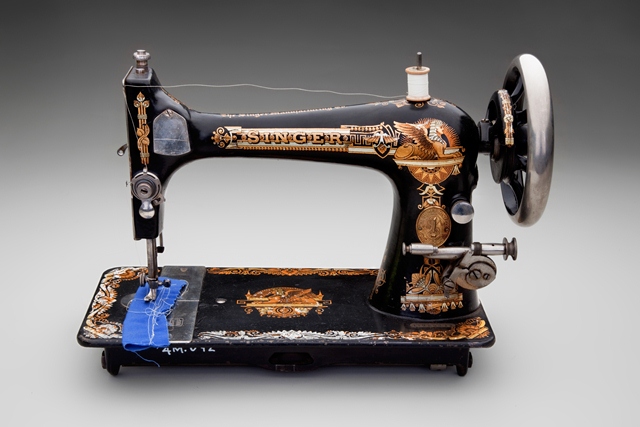
(Singer sewing machine c. 1895–99. From the Collection of the Museum of American Heritage, Palo Alto, CA)

Threading the Needle: Sewing in the Machine Age traces the development of the domestic sewing machine from the 1850s to the 1970s and celebrates more than one hundred years of sewing.

According to the SFO Museum:

When the sewing machine was first introduced to American homes in the 1850s, it was heralded as a laborsaving device that would transform the domestic lives of women everywhere. Sewing clothing and household linens, once a time consuming, never ending task, no longer had to be painstakingly completed by hand. The popular and influential Godey’s Lady’s Book soon coined the sewing machine “the queen of inventions” and declared that every family in the United States should own one.

In the exhibit, pattern illustrations highlight ladies homemade fashions throughout the decades and a variety of notions from sewing boxes and sewing birds are also on display.

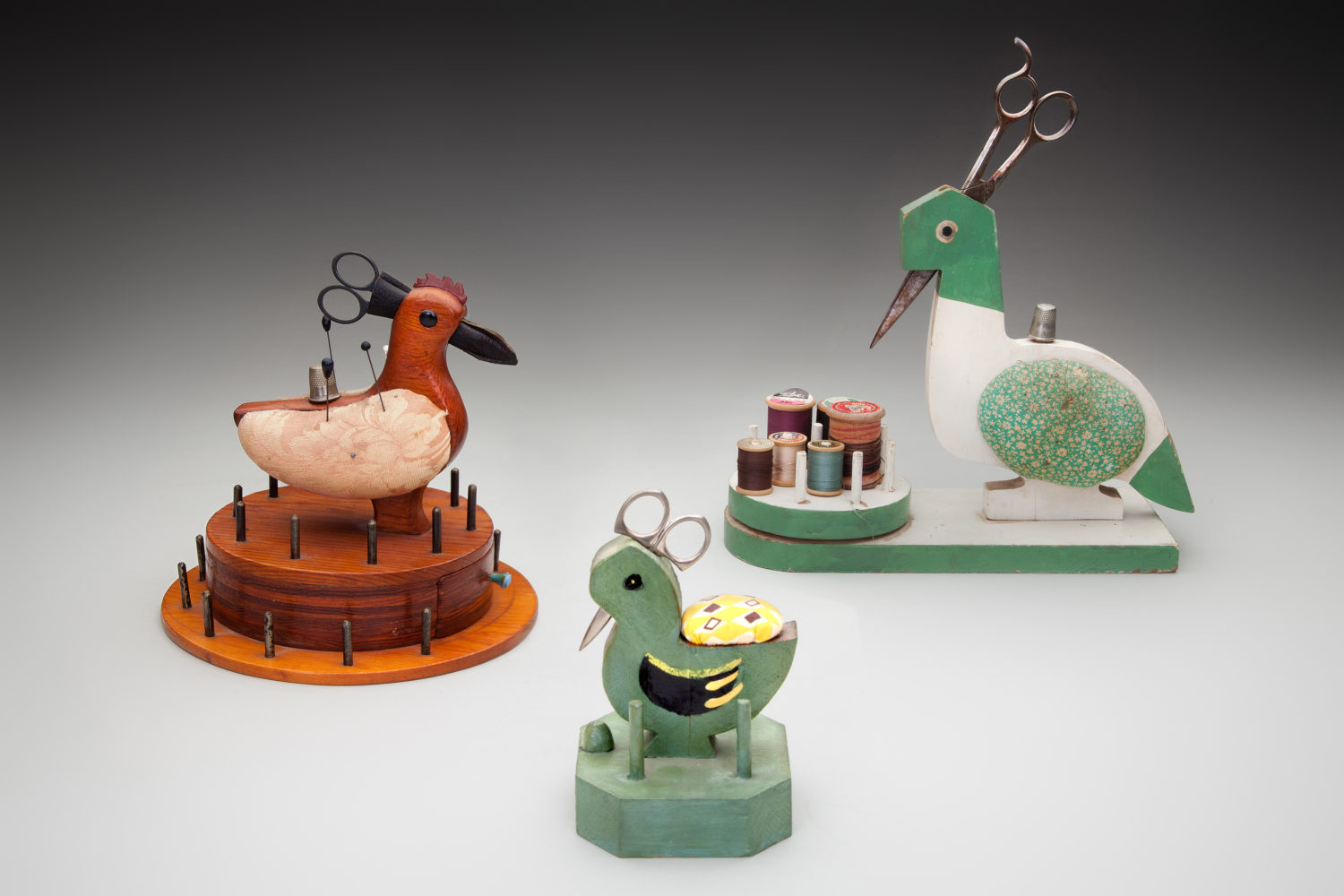
(Sewing accessory stands, c. 1930. From the collection of Lacis Museum of Lace and Textiles, Berkeley, CA).

Look for the exhibit in SFO Terminal 3, F2 North Connect Gallery, March 2012–August 2012

Online museum of flight attendant uniforms

This was a treat: for msnbc.com’s Overhead Bin blog, I profiled Cliff Muskiet’s on-line museum of more than 1000 flight attendant uniforms.

The address for his website — uniformfreak.com — says it all.

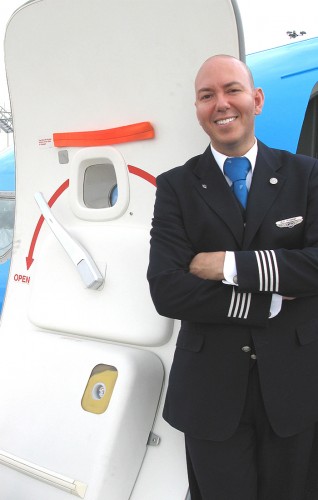
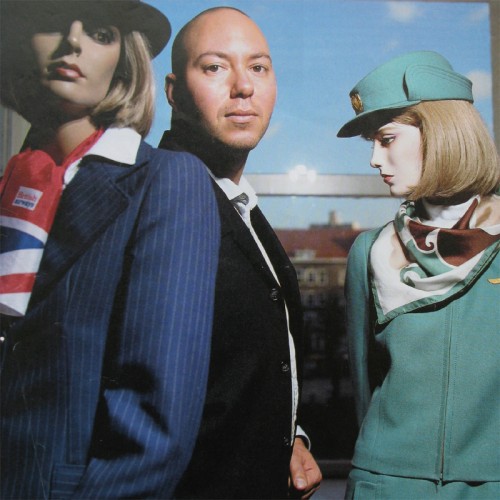
Cliff Muskiet, an aviation-crazed kid who grew up to be a flight attendant for KLM Royal Dutch Airlines, has amassed a collection of more than 1,000 flight attendant uniforms.

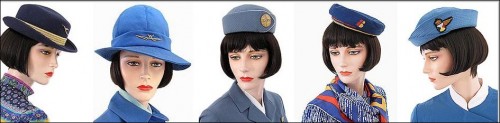
“Only stewardess uniforms,” said Muskiet. “The female uniforms come in various colors, materials and with different accessories like hats, scarves and gloves. Male uniforms all look the same: jacket, pants, plain shirt and a tie, most men’s uniforms are dark blue and quite boring.”

Muskiet got his first few uniforms in the 1970s and 80s. After a 1993 stop in Ghana, where he picked up some old Ghana Airways uniforms, he began collecting in earnest.

“I love the 1970s psychedelic patterns and color combinations: yellow, red, orange, purple, green, white and blue; every color was used and everything was possible,” Muskiet said. “Also flower prints, dots or checked fabrics were used a lot. I love the big pointy collars from the 70s and synthetic fabrics.”

Muskiet keeps his collection of uniforms and accessories in closets, containers, garment bags and suitcases in two rooms of his home in Amsterdam. For display in his online museum, he photographs each uniform on his one mannequin, which is a size 2.

“I have uniforms in a size 2, but also in a size 10 or 14,” he said. “When she has to wear a size 14, I use pins to make the uniform look nice at the front.”

Among his favorites are two KLM uniforms that have sentimental value: a circa 1971 uniform that was the first one given to him and an example of the KLM uniforms worn from 1975 through 1982. “The uniforms remind me of my childhood and the many trips I made to the USA on KLM with my mother,” said Muskiet. Some of his other favorites are the uniforms worn by female flight attendants on Asiana Airlines in the 1990s, on Kuwait Airways and United Airlines from 1968-1971 and the current outfits worn by TAP Portugal and British Caledonian.

“In the late 1960s and 1970s, a lot of different colors were used and that is something I really miss,” he said. “Especially in the USA, flight attendant uniforms have become a bit boring and look like business outfits.”

A tour through Muskiet’s online museum is anything but boring. “From looking at so many uniforms, you can see trends that correlate with the events of the time and learn about the role of the flight attendant throughout history,” said Kathrine Browne, collections assistant at Seattle’s Museum of Flight. Browne helped put together two popular exhibitions featuring flight attendant uniforms — called “Style in the Aisle” — taken from the museum’s 1,500-piece collection. She is unaware of an online collection that can compare with Muskiet’s. “The collection is exceptional.”

Muskiet is always on the lookout for more uniforms and says he enjoys everything about his job as a purser for KLM. “Except the time differences. One week you are in Hong Kong and the next week you are in New York: time difference 13 hours! The older you get, the more difficult it is to deal with this, but it is all worth it.”

Especially if you’re wearing the right, stylish uniform.

Museum Monday: the history of high-heeled shoes

When I leave the airport and have a day or two to spend in a city, I’m always armed with a list of special museum exhibitions and local offbeat collections open to the public.

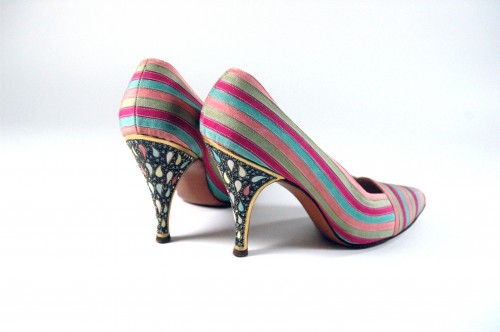
That’s how I knew to leave a few hours free in Yakima, Washington recently to visit the Yakima Valley Museum, which has a display of 600 pairs of exquisite high-heeled shoes from the collection of David Childs, who told me that the museum-quality footwear from the 1800s to the present (much of it my size; but alas, securely behind alarmed glass) was just half of his collection.

“I don’t do flats, boots, practical shoes, matching handbags or sets,” said Childs, “This is a cultural history of the 20th century as told through pristine, displayable, high-heeled shoes.”

By that he means Art Deco shoes from the 1920 and 1930s, platform, ankle-strap shoes of the 1940’s, pointed stiletto heels from the 50s and other eras (“Wait around and the styles come back,” says Childs) and some unusual, experimental and one-of-a kind models from the 1950s and 60s.

Here’s a short video about the exhibit put together by the Yakima Herald Republic.

Hats off – or on – for airline pilots


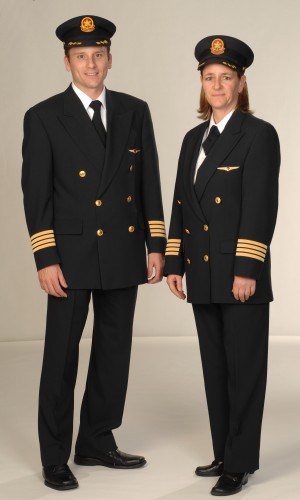
[Photo: Brian Losito/Courtesy Air Canada]


Next time you’re at the airport, keep a close eye on the pilots heading to work. Like the Air Canada pilots pictured above, they all look pretty snappy in their uniforms.

But are they wearing their caps?

It could depend on whether or not that pilot is worrying about hat hair. Or looking dorky.

Or whether or not their employer still makes that hat an optional uniform accessory.

Here’s the Capless Captains story I wrote about the topic for msbnc.com.


Airlines to airline pilots: You can leave your hat on. Or not.

Last month, American Airlines changed its operations manual to let pilots know it’s OK to go hatless. The carrier is just the latest among North American airlines that have made the hat an optional part of airline captains’ and first officers’ uniforms.

“The reason we made it optional is because it got to be too hard to police,” said George Tucker, American’s chief pilot at San Francisco International Airport. “Hats just seem to be slowly fading away.”

The rule about wearing a hat “is determined airline by airline,” said Doug Baj, spokesperson for the Air Line Pilots Association, International. “However, there are some uniform manual policies that still technically require it.”

For several years now, wearing hats has been optional for flights crews on Alaska, Southwest and several other airlines.

United Airlines changed its hat policy about four years ago. “Hats are part of our pilot uniforms, but are not required,” said spokesperson Megan McCarthy.

Hat hair and mistaken identity
Pilots have a range of opinions about hats, with some saying it makes them look more professional and others saying that they are frequently mistaken for skycaps.

Mike Cingari, a San Francisco-based pilot for American, is delighted that after 27 years, he’s now free to leave his hat at home.

“I’m against hats. They mess up your hair, promote baldness and it looks really stupid to be walking around with a hat on,” said Cingari. “Plus you have to remember it.”

Cingari has found that sometimes his hat causes confusion inside the airport or out on the curb. “Passengers ask you directions to the bathroom or think you’re a skycap and ask you to take their bags,” he said.

Karsten Stadler, an assistant chief pilot at Southwest Airlines, has also been mistaken for someone else when wearing his pilot’s hat. “I once had a man get very angry with me for not bringing the van around in time. But as many pilots say they’ve been confused for someone else, there are others who say the hat helps them get recognized,” said Stadler.

Although his employer now allows pilots to forgo their hats, Kent Wien says he’ll probably continue to wear his pilot cap to and through airports.

Wien, who writes the “Cockpit Chronicles” column for the Gadling.com travel blog, said: “It kind of finishes off the uniform and gives a more professional appearance. I think passengers want to see that. Otherwise, you don’t look much different than the ticket agent or a crew member.”

There’s also the issue of safety. American Airlines’ Tucker makes sure his hat is always with him. “Because if, God forbid, I have that day when I have to do an emergency evacuation on my airplane, part of my responsibility is to get passengers together and move them away from the plane. The hat is a visible symbol, and we know customers respond to authority,” said Tucker.

Hatted vs. hatless
“It’s like the white coat on the doctor,” said Janet Bednarek, a history professor specializing in aviation history at the University of Dayton in Ohio. “You want to be able to tell the captain from anyone else.”

While some airlines are just now ditching the pilot hats, others, such as JetBlue and Virgin America, never had hats as part of the official uniform. “Our pilots’ all black uniforms are functional yet hip,” said Virgin America spokesperson Abby Lunardini. “We do not require caps … but we have found that our pilots do prefer a uniform shirt that has epaulettes or markings that differentiate them from in-flight and guest service teammates.”

At least two North American airlines still require a pilot to wear a full uniform, including a hat, whenever they’re in the public’s view: Air Canada and Delta Air Lines.

“The hat helps identify the pilots and makes them stand out from other crew members, passengers and business people,” said Captain Jay Musselman, director of flight standards and quality for Air Canada.

Hats reflect “leadership and professionalism,” said Delta Air Lines spokesperson Gina Laughlin. “The hat and double-breasted blazer give Delta pilots a sharp, professional appearance.”

Frank Abagnale thinks the airline pilot hat can also be a test of authenticity.

He should know. In the 1960s, Abagnale gained notoriety for forging more than $2 million in bad checks and for adopting a variety of fake identities, including a doctor, a lawyer and, most famously, a Pan American World Airways pilot. Abagnale, whose exploits were depicted in the movie “Catch Me If You Can,” is now a fraud prevention consultant for corporations and the FBI and explained, via e-mail, why he thinks pilots should keep their hats:

“The emblems on their hats, as well as their wings, are actually two of the most difficult things for someone to obtain … removing the requirement of the hat makes it one step easier to assume the role of a pilot.”


Museum Monday: Style in the Aisle at Seattle Museum of Flight

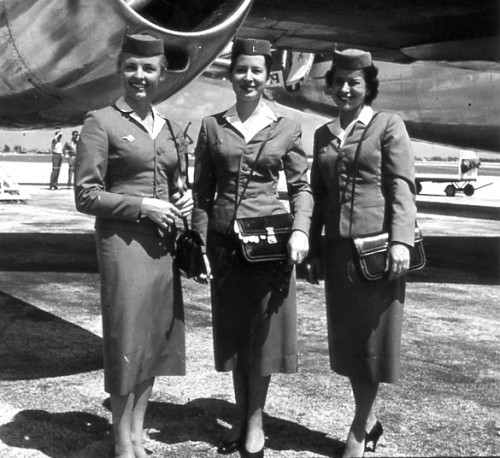
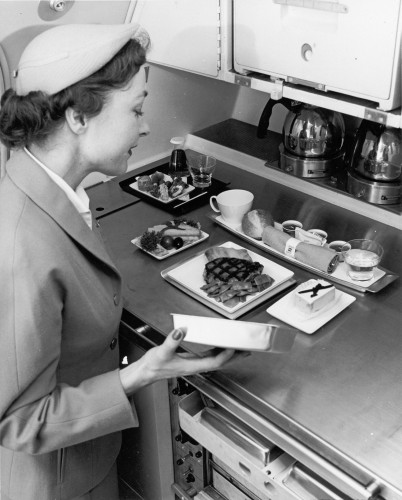
It’s Museum Monday here at StuckatTheAirport.com and this week we’re taking another look at some of the photos and outfits in the Style in the Aisle exhibit at Seattle’s Museum of Flight.

Airline Ephemera from the Archives of the Museum of Flight.

Three Stewardess near Jet Engine; possibly PanAm (from the Archives of the Museum of Flight; Copyright The Museum of Flight Collection.)

Style in the aisle galley

A United Airlines Stewardess with food service in the Galley, circa late 1940’s early 1950’s. Copyright The Museum of Flight Collection

Style in the Aisle

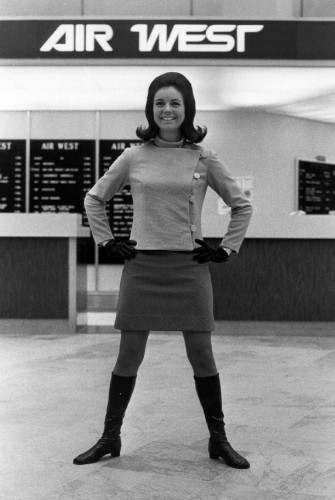
“Fashion designer, Oleg Cassini created a futuristic look for the flight attendants of Air West during the carrier’s brief existence prior to its purchase by Howard Hughes. The basic uniform consisted of a textured polyester dress and a jacket with an unconventional side-buttoning configuration. The pieces came in a selection of bright, solid colors inspired by the natural colors found at Air West’s destinations, including fern green, Pacific blue and canyon red.”  Copyright Delta Airlines.

Cigars and pashimas at the airport

I spent the day walking the aisles of the exhibition hall at the annual conference of  ACI-NA: Airports Council International – North America, being held this week in Pittsburgh.

I’ll be writing a column for USA TODAY on some of the intriguing services and amenities on the horizon for travelers, but wanted to share a few tidbits from the day.

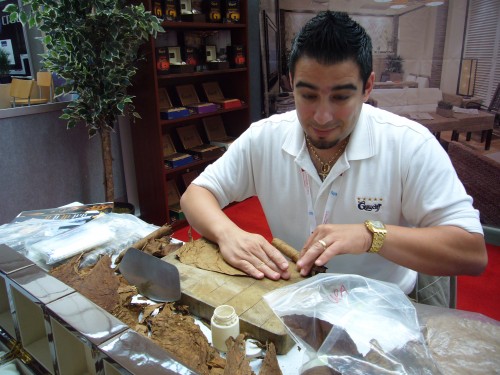
The folks from the upscale Graycliff Cigar Company have set up two cigar lounges at Nashville International Airport and are in talks to expand the idea to several other airports.  The company, which also markets gourmet coffee and fancy watches, has a cigar maker on duty here making cigars from several kinds of tobacco.

Graycliff cigar maker at ACI-NA

Graycliff cigar maker at ACI-NA

And here’s a factoid I learned today:

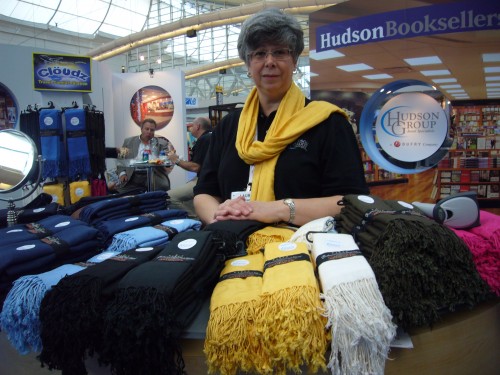
Airport shops run by the Hudson Group sell more than 100,000 rayon, Pashima-style scarves a year.

Pashima scarves at ACI

Laura Samuels of the Hudson Group with scarves

More tomorrow….

Souvenir Sunday at London Heathrow Airport

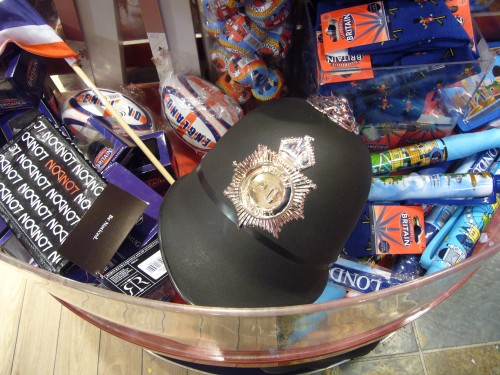
London Airport souvenirs

There’s never enough time to do everything I want to do in London, but on my most recent visit I managed to squeeze in quite a lot in just three days.

Activities were wedged in between a meal seasoned with performances by contortionists and flame-embellished dancers at a West End cabaret bar named Circus, Afternoon Tea at The Langham’s Palm Court and whiskey tasting (before and after dinner) with the whiskey sommelier at The Athenaeum Hotel.

Whiskey tasting at The Athenaeum in London

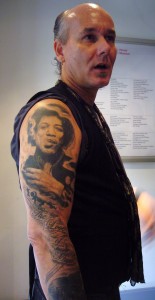
Forks-down highlights included a visit to the funky top floor apartment Jimi Hendrix lived in from 1968-1970 (more about honoring Hendrix here); a Fat Tire Bike Tour past iconic monuments, memorials and palaces (more about that here), and walking tours of upscale, low-key Primrose Hill and East London, which is brimming with hip art galleries and stores chock-full of clothing by up-and-coming designers.

Hendrix fan waiting for tour of Hendrix's flat

Hendrix fan waiting to tour Jimi Hendrix's London flat

I couldn’t afford to buy anything in any in-city shops, so that left souvenir shopping at Heathrow Airport.

London souvenirs

Souvenir Sunday was coming up – the day Stuck at the Airport looks at fun, inexpensive items for sale at airports – so I focused on items selling for under £10, which right now equals about $16.

Here are a few of my favorites:

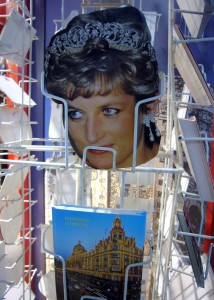
Souvenir at Heathrow - Princess Di Postcard

Giant Princess Diana postcard

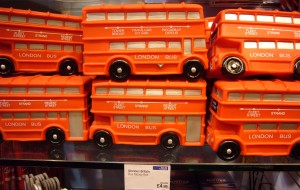
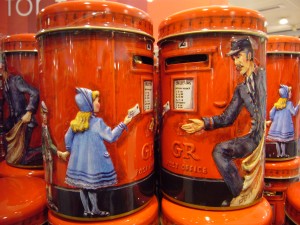
London Souvenir - post box banks

Heathrow Airport Souvenir - post box banks

And of course:

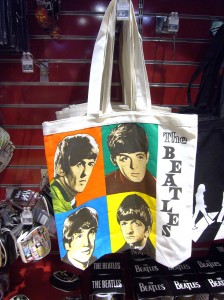
 Beatles tote bag

Meet the (scary-looking) Beatles. That's not really Ringo is it?

If you find a great souvenir while Stuck at the Airport, please take a photo and send it along. Your souvenir may be featured on a future edition of Souvenir Sunday.

[Note, my trip to London was part of a research trip for several articles in progress unrelated to whiskey, cabarets and shopping and was hosted by Air New Zealand, Visit London and The Athanaeum.  Thank-you.]