business travel

Travel for business? It may be getting complicated.

This is a slightly different version of a story about business travel that we prepared for NBC News

Business travel’s four-year crawl out the pandemic was on track to continue this year, but the U.S. trade war has scrambled that outlook.

“The big word is uncertainty,” said Suzanne Neufang, CEO of the Global Business Travel Association, which had forecast worldwide spending to surge to $1.64 trillion in 2025, up from an expected $1.48 trillion in 2024. Last year’s estimated total, if preliminary data bears out, would mark the first time the sector surpassed its pre-Covid levels.

But pessimism has risen sharply amid President Donald Trump’s deep cuts to the government workforce and a dizzying range of tariffs. Now, about 29% of U.S. corporate travel managers and an equal share abroad expect business travel to decline this year due to government actions, according to a recent GBTA survey. The expected pullbacks could dent business trips by as much as 22%, the group found.

Industry experts caution that souring expectations so far haven’t translated to a collapse in bookings, despite signs of cooler demand.

Not off the cliff just yet

Business travel “hasn’t fallen off a cliff,” said Jonathan Kletzel, a travel, transportation and logistics leader at the consulting firm PwC. “It is definitely constrained right now, but will people stop traveling? Probably not. If you’re a sales-heavy organization and you’re not out in the market meeting with your clients, your competitors are.”

Still, growing concerns around business travel coincide with corporate leaders’ warnings that U.S. trade policies have injected fresh uncertainty into an economy that just months ago looked on track to build on its strengths.

Delta Air Lines CEO Ed Bastian told CNBC last month that the carrier has had to check its expectations for what was shaping up to be the “best financial year in our history.” Travel demand was growing about 10% at the start of the year but has since slowed, he said, partly due to companies rethinking business trips and cuts to the federal workforce. Other airlines have flagged similar concerns, in some cases adjusting their growth plans or scaling back capacity.

Hotel operators and booking platforms are feeling it, too. Expedia said that U.S. travel demand is cooling. Marriott, Hyatt and Hilton have each reduced their financial forecasts in recent weeks.

Government-related travel closer to the cliff

Global Travel Associates, a Washington, D.C.-area agency that mainly serves government contractors, said travel sales slid 20% in the first quarter. Several had funding tied to the U.S. Agency for International Development, which the Trump administration gutted this spring, and those accounts are down by 75%-90%, Managing Director Tom Ollinger estimated.

Some of GTA’s clients switched to buying only refundable plane tickets; others canceled scheduled meetings or halted any new travel plans indefinitely, he said. In some cases, those with staffers on long-term assignments overseas were told to drop everything and head back to home base. “The organization provided them one-way tickets to return,” Ollinger said.

“Government groups are not happening,” said Jan Freitag, national director for hospitality market analytics at the real estate data firm CoStar. But many business meetings are still taking place, and while individual business travel is a bit softer, “that could just be people not booking as much ahead,” he said.

However, Freitag cautioned, “should [more] tariffs hit and corporations have less sense of where their costs are going, they’ll start looking to cut costs. And the easiest place to control costs is travel and training.”

What’s next?

Navan, a corporate travel management service based in Palo Alto, California, said bookings were up in the first four months of the year from the same period in 2024, despite a slight slowdown in April.

“There’s certainly this feeling of waiting for another shoe to drop,” said Rich Liu, Navan’s CEO of travel. While CEOs are telling him they’re “feeling the squeeze” from new import taxes and other policy moves, “they still have businesses to run,” Liu said.

Individual business travelers seem to be getting anxious. The online travel insurance comparison site Squaremouth saw a 223% annual surge in searches for “cancel for work reasons” travel coverage last month, with purchases of those policies jumping 53%.

“That tells us that travelers are feeling uneasy,” said Squaremouth CEO Rupa Mehta. “In uncertain economic times, they want to understand the cost and value of flexible coverage before committing.”

The current outlook is “a mixed bag,” said Lorraine Sileo, founder of Phocuswright Research. At the moment, “it looks like leisure travel will be impacted more than business travel,” she said, adding that “it will take longer for corporations to feel the pinch of an economic downturn” than it will for vacationers.

“We need to take a wait-and-see approach” to see how business trips fare, Sileo said, “but there are indications that it will be a slow year for all types of travel for the U.S. market in 2025.

The economic impact of disappearing Canadians

This is a slightly different version of a story we reported for NBC News.

How tariffs & smacktalk about Canada hurt Washington border towns

People have roamed across the 49th parallel on the west flank of North America for hundreds of years.

Lately, many are thinking twice.

Canadians frequently stop by Blaine, Washington, for gas, dairy and other staples that tend to be cheaper across the border. But the trade and diplomatic fight U.S. President Donald Trump has picked with America’s northern neighbor is causing more Canadians to stay home.

Their boycotts have put business owners in Blaine and surrounding Whatcom County on edge, wondering how long the area’s economy can survive with fewer visitors from British Columbia to fuel it.

“There’s just no one around,” said Mike Hill, who runs a Chevron station in Blaine, population 6,200. Gasoline sales have dropped by 40% to 50% in the past few months, he said, and even the garbage cans by the pumps now rarely need emptying.

“It’s crazy. Canadians are like our brothers and sisters with just that border between us,” Hill said.

Whatcom County has been a borderland for centuries.

The longtime home of Indigenous peoples, including the Northwest Coast Indians, the Lummi, Nooksack, Samish and Semiahmoo, the region was later claimed by Spain, Russia, England and the United States, according to the county’s official website.

Once part of the disputed Oregon Country territory, it was split in two by a treaty between the British and American governments in 1846, creating the northern boundary of the western United States. Whatcom County was established eight years later, 35 years before Washington gained statehood.

Coal, gold and lumber once lured thousands to the area, but the promise of savings draws shoppers there now. Canadians can skirt international shipping fees by having online purchases delivered to mailboxes and parcel stores in Blaine and nearby border towns. But crossings from Canada have plummeted amid the political standoff, and recent exchange rates haven’t helped.

Choosing not to cross the border

“I am angry at the Trump administration for their arrogant and heavy-handed treatment of us,” said Tom Mills. The retired college instructor from Vancouver said he visited the United States half a dozen times last year but opted against visiting an ill friend in Oregon a few weeks ago.

That trip would’ve involved refueling his car with American gas and his stomach with meals at a breakfast spot in Blaine and a Mexican restaurant in Bellingham, the seat of Whatcom County and its largest city.

“It saddens me that many workers and businesses might suffer from our actions,” Mills said, “but we will do whatever it takes to avoid supporting the U.S., and especially the Trump regime, until this hostile nonsense is stopped.”

Blaine, WA taking the brunt

Canadian vehicle traffic entering the United States at Whatcom County’s three crossings fell by 65,000 in the first three weeks of March, about 42% lower than the same period a year ago and steeper than the 30% drop in February, according to Western Washington University’s Border Policy Research Institute.

“There are typically two people per car, so that represents over 100,000 [lost] visits,” said institute director Laurie Trautman.

Sales at Bella Boutique & Consignment in downtown Blaine have more than halved, said owner Martha Bermudez, “far beyond the usual winter slowdown.” She knows many U.S. shoppers are spending more cautiously but said she didn’t realize how many of her customers were Canadian “until they started disappearing.”

If things don’t turn soon, Bermudez added, “we may not be able to keep our doors open.”

Next door, Sarbie Bains, owner of Blaine Bouquets and Gifts, said business is down by 30% to 40%. “I used to have a ton of Canadian walk-in traffic, but we have nothing right now,” she said.

Down the street, Gary Slavin said he’s seen comments on Canadian Facebook pages urging people not to support the Gateway 1890 Taphouse & Grill, which he co-owns with his wife, because it’s an American business. It isn’t exactly — Slavin is a Canadian green card holder who has lived in the United States for the past decade. Fortunately, he said, “we’re still seeing many of our regulars.”

A few Canadians are still stopping by the Blaine visitor center, said local Chamber of Commerce Secretary Carroll Solomon, but it’s often just to use the public bathroom.

A few yards away one recent Sunday, Trent Arce and Gary Farrow were chatting by the welcome sign at the town entrance that reads “Blaine, Washington, the Peace Arch City,” referring to its 67-foot monument to bilateral concord. The two co-workers at a nearby cold storage facility weren’t too worried about the dearth of Canadians.

Trump “is very wild with the things he says and does,” shrugged Arce, a transplant from Georgia.

“People will get over it,” said Farrow, a Blaine native. “I think it will go away.”

Blaine Mayor Mary Lou Steward has reason to hope they’re right. The town was already feeling pinched from inflation before Trump’s tariff threats ramped up, and she said she now worries “we may have to start dealing with furloughs” due to falling sales tax revenue.

The Canadian boycotters are forcing some Washington state business owners to answer for decision-makers in Washington, D.C.

“One woman wrote to say that while our inn is amazing, our president has offended and disrespected Canadians, so now she can’t bring herself to cross the border,” said Teri Treat, managing partner of The Inn at Lynden. The 35-room property — about 15 miles southeast of Blaine, in a town known for its Dutch-immigrant heritage and architecture — has seen a spike in cancellations by Canadians, she said.

“We responded by saying we are truly shocked and saddened by the policies of this administration and understand how she must feel,” Treat said.

Bellingham getting bruised

Another 30 minutes south, bookings at the Bellingham Airport Holiday Inn & Suites have crashed, too, with first-quarter revenue down 28% from the same period a year earlier, said general manager MegAnne Offredi.

“We started seeing the drop in visitors first with the exchange rate being so low. Then we saw another drop when the political climate started to change,” she said.

“We are starting to see similar negative trends that Covid brought to this industry five years ago,” Offredi said. “To think we could be headed back in that direction after finally recovering from the pandemic has us all on edge.”

County tourism officials are rattled but optimistic that major events later this year will retain their cross-border appeal.

“Our concern goes beyond lodging numbers,” said Bellingham Whatcom County Tourism President Dylan Deane-Boyle. The Northwest Raspberry Festival, the Northwest Washington Fair and the Ski to Sea Race are all popular annual gatherings that make use of the area’s outdoor attractions and boost its economy.

Deane-Boyle said he hopes the area’s “long and rich friendship with British Columbia, one built on shared geography, respect and trust,” will win out over international discord.

“We want our friends in Canada to know that our community will always receive them with a warm welcome,” he said. “We understand the situation and hope they will return whenever they feel ready.”

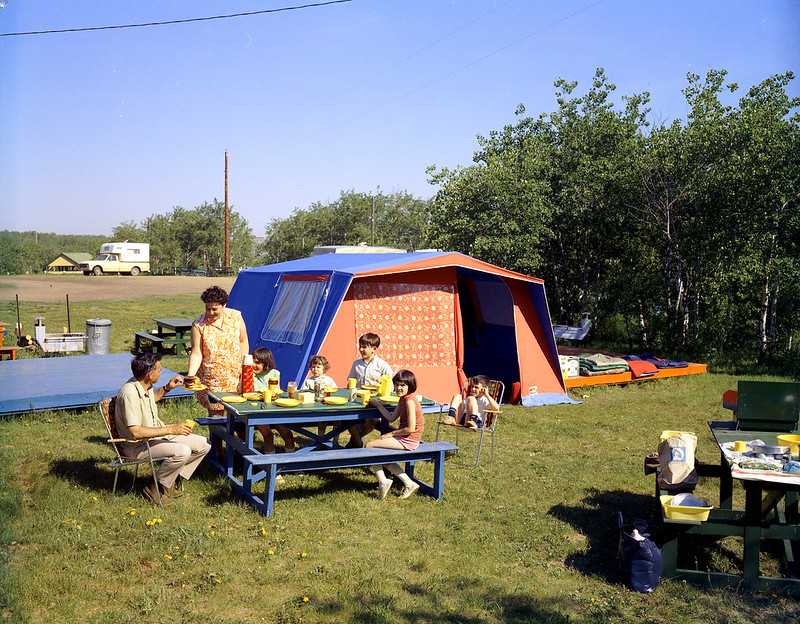
Camping this summer? It’s getting easier to stay connected.

You can stay in touch while camping. Or not.

(This is a slightly different version of a story we wrote for NBC News)

What makes a happy camper this summer? S’mores, sing-alongs and — lately — streaming.

The pandemic nudged millions of people toward outdoorsy trips and experiences, and many are now hooked. But they’re increasingly demanding a decent Wi-Fi connection wherever they pitch their tents or park their RVs, and campsites are providing it.

Wi-Fi at campgrounds has become “the fourth utility behind water, sewer and electric,” said Tim Rout, founder and chief solutions officer at AccessParks, a San Diego-based broadband provider for RV parks and campgrounds.

“Six or seven years ago it was a ‘nice to have’ service so people could load their email or check their bank account,” said Rout. “Now people expect the same quality of service in RV parks that they get at home.”

Who wants to be connected when camping?

About 40% of campers say Wi-Fi availability influences where they decide to camp, said David Basler, chief strategy officer for the Outdoor Hospitality Industry trade group. “Generationally, this increases to 65% in Gen Z and millennials and 45% in Gen X campers,” he said.

Searches for Wi-Fi-equipped U.S. properties on the campsite booking platform Hipcamp are up 110% year over year, according to founder and CEO Alyssa Ravasio, who said the number of such sites grew by 30% over the past year. Most Hipcamp hosts that provide Wi-Fi don’t charge guests extra for it, Ravasio added.

Wi-Fi is now offered at 82% of U.S. campsites, OHI estimates, slightly ahead of laundry and even shower facilities. It was the most commonly provided amenity last year among privately operated camping properties surveyed recently by The Dyrt. The camping information app found Wi-Fi being added at a faster rate (nearly 16% of campsites added it from 2022 to 2023) than pickleball courts (12%), dog parks or kayaks and canoes (each at 10%).

Working while camping

The Dyrt found 29% of campers worked while camping last year, up from less than 24% in 2022 and 2021, even as more employers mandated a return to in-person work. Some campers may have been “quiet vacationing” — working from a remote destination rather than taking off to fully unplug.

Rout said AccessParks’ business was already growing before the pandemic. “But since more people flocked to the outdoors and RV sales accelerated, there is a younger, more professional demographic in campgrounds — more families, more Zoom calls with work, distance learning, etc.,” he said. “Since then, our growth has dramatically increased due to the demand for fast broadband Wi-Fi.”

At least one Montana campground relies on Wi-Fi for a camera system that monitors the area for grizzly bears, Rout added.

Wiring up

Marley Behnke said Wi-Fi was already installed at the campground in Grayling, Michigan, that she bought in late 2022. In addition to letting guests stay connected and share details from their adventures with loved ones, “there are apps that provide real-time updates for activities, facilitate food delivery, organize scavenger hunts and enable interactive games,” she said.

Wiring a campsite for high-speed broadband comes with challenges like ensuring the signal can make its way through uneven terrain, trees and metal RV bodies and withstand extreme weather. Depending on property size and the type of service offered, installation might run anywhere from $50,000 to $500,000, Rout said, though campgrounds can typically recoup the expense by raising prices by little more than $1 a night.

While middle- and lower-income travelers are especially keen to camp this summer, Deloitte researchers say, camping demand is up 7% in a year when high-income travelers comprise a greater share of this season’s leisure travelers overall. The “glamping” (glamorous camping) sector is forecast to grow by more than 15% each year through 2029, according to Arizton market research.

“I’ve got kids who have not grown up camping consistently, so I definitely need a posher camping experience,” said Sommer Nyte, 46, a Bellingham, Washington, realtor who recently bought a new pop-up tent trailer. Wi-Fi is on her wish list alongside pools, boat rentals and programming for families with children.

Internet connectivity isn’t sweeping every campsite, though.

While the RV Industry Association found about 60% of private sites offered Wi-Fi as of 2022, only 3% of public ones did.

(Photos courtesy Flickr Commons)

Anti-abortion & anti-LBGTQ laws are complicating business travel

(This is an abbreviated version of a story we reported for NBC News)

First came COVID. Now abortion bans and anti-LGBTQ laws are complicating business travel.

Business travel is clawing its way back to 2019 levels as COVID-19 concerns largely recede. But as tighter abortion restrictions and anti-LGBTQ laws proliferate, some employers and event organizers are weighing a new set of threats to employees’ safety outside the office.

Dozens of states have slashed abortion access since the Supreme Court overturned Roe v. Wade, and more than 180 bills restricting LGBTQ rights are advancing in statehouses nationwide. Many such moves have drawn criticism on political and civil rights grounds, with companies and event organizers threatening state boycotts akin to the one that led North Carolina to scrap its 2016 anti-transgender bathroom law.

But lately, conservative “anti-woke” messaging has made many companies more hesitant to publicly ally themselves with progressive causes. Some are now taking a quieter approach to mitigating risks, business travel planners and human resources experts say.

“We think critically about who we are sending where and ask employees if they’re comfortable going to a state that has demonstrated they are not inclusive towards people with certain identities,” said Cierra Gross, CEO of Caged Bird HR, a consultancy firm. “We could be putting someone’s physical and psychological safety on the line in some of these states.”

While civil rights groups (and the Canadian government) have issued advisories warning of risks from the legislation, some travel industry groups and local advocates have pushed back against boycotts, arguing they hurt hospitality workers and minority business owners and rarely change policies.

In fact, last month, California lawmakers voted to repeal a ban on state workers using public funds to travel to 26 states with anti-LGBTQ policies, replacing it with a public awareness campaign.

In an April survey, the expense platform SAP Concur found that 82% of LGBTQ+ business travelers had changed accommodations at least once in the past 12 months because they felt unsafe, compared with 70% of U.S. business travelers overall and 53% of those globally.

For many workers, these concerns are nothing new — many have long had to be extra mindful of their safety with little to no employer support. For companies and travel managers, though, there’s now a growing “sense of importance and urgency” to revisit their policies, said Charlie Sultan, president of Concur Travel.

The last time that happened on a broad scale was when COVID-19 hit, pushing businesses to review the policies supporting what’s known as their “duty of care” to keep employees safe on the job.

While most businesses now have protocols to handle COVID-19 exposures, some are just starting to wrestle with other scenarios: What if a pregnant employee has a medical emergency while traveling in an anti-abortion state? Or if trans employee faces a confrontation someplace without public accommodation protections for gender identity?

Lauren Winans, CEO of Next Level Benefits, an HR consultancy firm, said some of her corporate clients have started maintaining lists of potentially problematic destinations for workers to visit. Others are adopting no-retaliation policies “that allow employees to express concerns, establish boundaries or refuse travel” to certain areas, she said.

The construction bidding platform PlanHub is “thoroughly assessing potential risks tied to the legal and political landscape in various regions,” said Kimberly Rogan, the company’s chief of staff and head of people operations. “We’ve refined our guidelines to inform employees about these factors better and to provide clear instructions on how to navigate them.”

These efforts coincide with a broader post-pandemic focus on mental and physical health and safety, said Daniel Beauchamp, head of global business consulting for Europe, the Middle East and Africa at American Express Global Business Travel.

As those concerns become the “front and center of corporate consciousness,” some U.S. and international employers are taking “a more nuanced” approach to their duty of care, he said.

But HR professionals say few of the businesses taking these steps are broadcasting them publicly, and the shift is far from universal.

Certain areas say they’re seeing pullback due to the new laws even as business travel rebounds.

Between May — the month Florida Republican Gov. Ron DeSantis expanded what critics termed a “Don’t Say Gay” law — and mid-September, more than 17 groups cited “current Florida politics” and safety as reasons for not booking conventions in Greater Fort Lauderdale and Broward County, despite a local reputation for inclusiveness, according to the Visit Lauderdale tourism group.

That list includes the National Sales Network, the American Specialty Toy Retailing Association, the University of Southern Mississippi and others, said Visit Lauderdale CEO Stacy Ritter. She estimated the community has lost out on more than $98 million in revenue.

“This is not an economic issue where you can offer a group more money to help underwrite their conference,” said Ritter. If people feel unwelcome in the state, she said, “there’s very little you can do.”

Travel on the rebound? Bookings say yes.

[This is a slightly different version of the story we prepared for NBC News]

As the pace of Covid-19 vaccinations is ramping up, so is consumer confidence — and with it, a surge in travel bookings.

“Many travelers are feeling optimistic that they will be able to vacation abroad this year. Many people are already actively planning their next big trip; even for trips more than four months out,” said Shibani Walia, senior research analyst at Tripadvisor.

2020 was the worst year in history for air travel demand, according to the International Air Transport Association, with global passenger traffic falling more than 65 percent, compared to 2019. The hotel industry also tanked, surpassing 1 billion unsold room nights, according to hotel industry research firm STR. The story was much the same for cruises, attractions, and tours, with the World Tourism Organization calling 2020 the worst year on record.

Pent up demand fuel bookings

With a comprehensive vaccine schedule and pent-up demand for leaving home, vacation planning and bookings are on the rise for late 2021, 2022, and beyond.

Spirit Airlines announced Thursday it would start training new pilots and flight attendants as of next month, in preparation for a spike in leisure travel.

“We just got our first shot. So maybe we could plan a trip this summer or later this year,” says Vicky Stein of New York. “I’d love to visit my son in Vancouver, B.C. But that depends on the regulations in Canada. At this point, I’d be happy to go to Vermont.”

A recent Tripadvisor survey found that 80 percent of U.S. consumers planned to take at least one overnight domestic leisure trip in 2021. Just over one-third of respondents planning at least three domestic trips this year. Popular destinations such as Orlando are already seeing a hopeful booking rebound.

“The region expects 2021 spring break travel to mirror the Christmas and New Year holidays, when occupancy reached 50 percent,” said Daryl Cronk, senior director of market research for Visit Orlando. “This would be a significant improvement over last year’s 12 percent, one of the lowest points of the year.”

Tripadvisor’s survey also found a strong interest in international travel planning. Nearly half (47%) of all respondents said they are planning to travel internationally in 2021.

Already, the majority of hotel clicks for trips taking place from May onwards are to international destinations, Tripadvisor noted. “This is an early signal that travelers are feeling increasingly confident they will be able to travel abroad in 2021, at least in the back half of the year.”

Italy, France, Japan, Australia, and Greece are at the top of most travelers’ lists, said Misty Belles, managing director at Virtuoso travel network, citing customer planning.

Cruises may make a comeback

Travelers are also eyeing cruises, a good sign for the many cruise lines that had to abandon entire sailing seasons.

“We’re seeing growing confidence from cruisers as vaccines begin to be distributed,” said Colleen McDaniel, editor-in-chief at Cruise Critic. “Both because they see it as a step in the right direction for the return of travel, and because they’ll feel most comfortable sailing knowing that they and their fellow passengers have been vaccinated.”

Many cruisers are making their bookings further out.

“Our 136-day 2021-2022 Viking World Cruise sold out more than a year in advance,” says Richard Marnell, Executive Vice President of Marketing for Viking. “And we have had such strong demand for our new Mississippi River cruises that we opened additional dates for sale in 2023 sooner than expected.” 

Rich and Suzi McClear of Sitka, Alaska, whose 2020 Holland America Line world cruise was cut short due to the pandemic, are anxious to go back to sea. “We’re rebooked for a 2022 world cruise. We’re also booked for the 2023 world cruise, which we view as an insurance policy in case the 2022 cruise does not go,” they said in an email.

Should you book a trip too?

Most travel companies now have flexible and more generous booking and cancellation policies, and prices are historically low. So, it can be a good time to book future trips.

Airfares, for example, are 20 percent lower compared to last year, said Adit Damodaran, economist for travel app Hopper. “Domestic airfare prices are expected to rise in mid-to-late March and gradually return to 2019 levels over the course of the year. And it is not too early to book for 2022, especially if you’re booking with trip protection or flexible booking options.

Cities strive to out-sanitize each other in a bid for tourist dollars

(This is an ever so slightly different version of my story that posted on NBC News).

Would a “clean city” pledge get you to plan a trip?

We’re into what by all rights should be a busy summer travel season. But many states are hitting the breaks on reopening plans due to record spikes in COVID-19 cases.

Yet in many parts of the country, beaches and bars are filling up, hotel occupancy rates are rising and attractions such as zoos, aquariums and museums are welcoming back visitors.

Disney World Resort’s phased opening plans in Florida are on track, even though Disneyland’s plans in California are delayed.  

The push to reopen is being fueled in part by businesses starving for customers and cash flow. But also by a cooped up public cautiously optimistic about making travel plans and hoping for a slowdown in the spread of COVID-19.

Communities that for months have been asking guests to stay away are now scrambling for ways to get business and leisure travelers to come back.

Campaigns to get tourists back

Now, branded campaigns declaring a destination clean, safe, and sanitized are trending.

“Tourism has taken a serious blow and destinations are doing whatever they can to restore consumer confidence,” says Misty Belles, a managing director with the Virtuoso travel agency network. “We know that concerns over contracting the virus are one of the key barriers to getting people comfortable with traveling again, so cities across the country are touting their enhanced cleaning protocols to quell those fears,” she adds.

In Ohio, window decals and website badges in Columbus are a sign that businesses have signed the “Live Forward” pledge to make the health and safety of patrons a priority.

“To meet this obligation, we’ve established additional protection measures and trained our team in enhanced best practices for safety and sanitation,” says David Miller, President and CEO of Cameron Mitchell Restaurants.

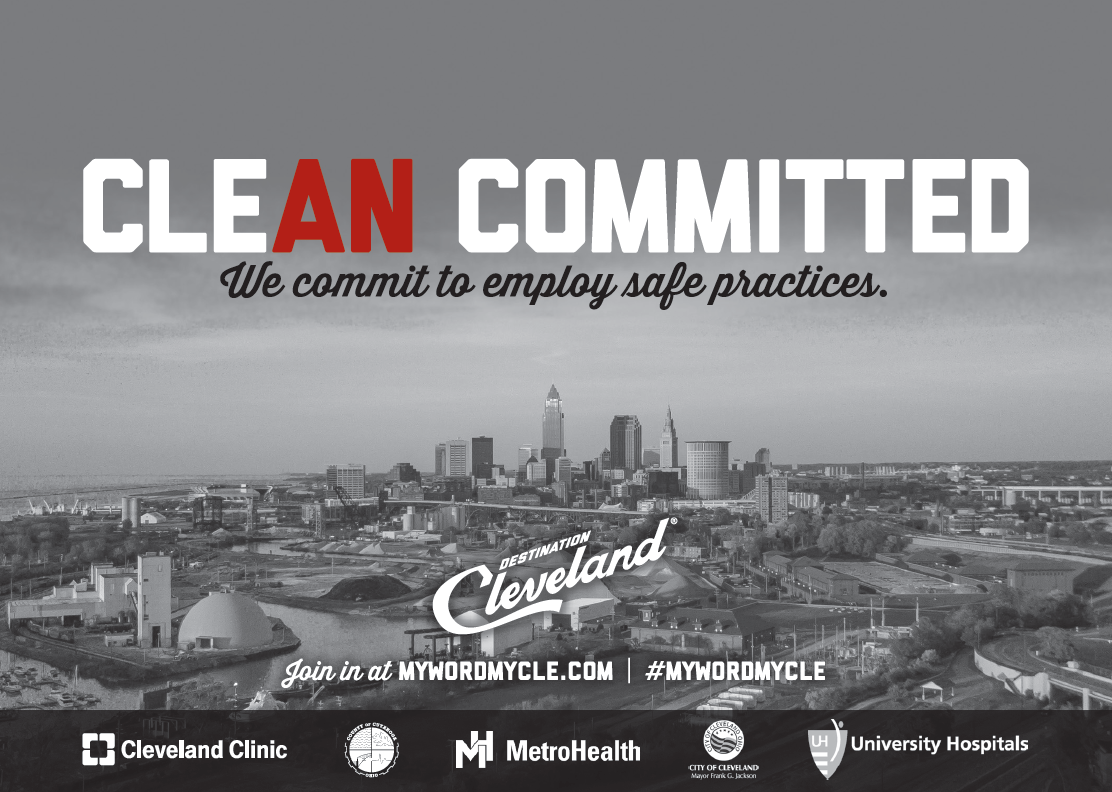
Cleveland’s Clean Committed campaign provides participating businesses with safety kits, guidelines, and materials to help make sure the city is ready for the return of visitors.

In Rochester, Minnesota (home of the Mayo Clinic), businesses in the Rochester Ready program are also implementing protocols in physical distancing, masking, cleaning, sanitizing and building ventilation.

Nashville’s Good to Go program is one of many with searchable databases of businesses that have vowed to adhere to coronavirus guidelines.

States are getting into the act as well. For example, Indiana has a Hoosier Hospitality Promise and the Count on Me NC public health initiative program stretches across North Carolina.

The list of vacation spots with clean campaigns is long and getting longer.

It is not only because cities are taking the health concerns of citizens and visitors seriously. Lodging industry consultant Bjorn Hanson says it also because “no destination manager or government entity wants to be viewed as doing less than others to attract and protect travelers.”

Will travelers trust a city’s seal of cleanliness?

Megan Tenney, whose family of six has been traveling full time since September 2018, now monitors COVID requirements and the health news in places the family is considering visiting.

“We’re focusing on places that seem to be doing better or were less affected to begin with,” said Tenney, “And I think a ‘clean campaign’ would give us the confidence to travel to a location.”

But while Brian DeRoy of Charleston, South Carolina feels that “whoever can market best in the game of being clean is going to have an advantage,” Seattle-based frequent traveler Rob Grabarek would not feel reassured by a city’s program alone.

“I’d have to examine the extent of a local government’s policies to see if I felt there were sufficient,” said Grabarek, “And while I applaud the idea of identifying businesses that are in compliance, I wouldn’t feel safe unless the entire community were adhering to the same stringent practices.”

Given that there is no single organization or government entity to oversee and assure that all these cleaning campaigns are effective, the emphasis on cleanliness as a destination marketing tool may not last long.

“Our travel advisors tell us there are really two traveler mindsets right now,” said Virtuoso’s Belles, “Those who want to pull back the curtain and know how everything they potentially come in contact with is being sterilized and those who just want to trust that it’s happening. Too much focus on cleanliness may actually backfire on those looking for the escapism in their vacation.”

What do you think? Would a city’s pledge of cleanliness be reassuring enough to get you to plan a trip?

Frivolous fountains as entertainment, attraction and investment

Those over the top fountains, waterfalls and other grand features found at hotels, malls and parks are quite snazzy – and expensive. But are they making natural attractions seem boring? Here’s our story that appeared first on CNBC.

If you visit Las Vegas and make your way to the Fountains of Bellagio, the Mirage volcano or any of the five curious and creative water features at City Center, you’ll see great examples of natural elements being used to create over-the-top entertainment.

Each experience is part of a portfolio of more than 200 unique installations around the world created by LA-based WET, a design firm that has been perfecting its techniques and pushing the boundaries of art, technology and attraction for more than 35 years.

Courtesy WET Design

“We do one-off features with new and unusual stuff that no one’s ever seen or done before,” said Jim Doyle, WET’s director of Design Technology. And like the cauldron it created for the 2002 Winter Olympic Games in Salt Lake City and the showpiece it created for the Winter Olympic Games in Sochi, Russia in 2014, many of WET’s project are big and boutique projects that people talk about, take pictures of and share on Instagram and Facebook, said Doyle.

Photo by Harriet Baskas

The 130-foot-tall Rain Vortex is the newest example of WET’s work. Now the world’s tallest indoor waterfall, the Rain Vortex serves as the centerpiece of the Jewel shopping, dining and entertainment complex designed by Moshe Safde’s architecture firm for Singapore’s Changi Airport.

For Jewel, WET figured out how to create and build a circular waterfall that drops seven stories from the roof of the building.  

“It’s the first time something like this has appeared in the middle of a building,” said Doyle, “There’s nothing in there that is standard.”

Impressive enough during the day, at night the rain vortex, plus some man-made fog, creates a canvas for a first-of-its kind, 360-degree projected light-and-sound-show.

WET’s water features aren’t just meant to be pretty, said Doyle, “They become works of art, but they are also serious investments put where they’ll capture attention. You’re not going to spend money on a water feature no one will see or that doesn’t have a reason for being there.”

Courtesy WET Design

In Dubai, where bigger is always better, WET created the Dubai Fountain, the world’s tallest choreographed fountain.

Located next to the Dubai Mall, one of the world’s largest malls, and Burj Khalifa, the world’s tallest building, the $240 million fountain project has jets that launch water a record-setting 50 stories high, with more than 1,000 individually programmable elements.

“They needed something to give people a reason to come back to the building and to the shops and the restaurants in the mall time and time again,” said Doyle, “That required a very large performance feature we could continually update so that people could walk out of the building, watch a show or two, sit down for dinner, watch another show and then go back into the mall and spend more money.”

Do high-tech attractions with natural elements make “real” attractions seem boring?

While millions of travelers may flock to high-tech attractions such as the dancing light and water fountains in Dubai and Las Vegas, travel experts don’t seem to be worried that much-loved low-tech and natural attractions will seem boring by comparison and become overlooked.

“There is manmade and then there is manmade magnificent,” said Jean Newman Glock, managing director of Signature Travel Network, “The pyramids of Giza are and will always be a destination that Las Vegas could replicate but not replace. It’s the in-situ aspect – the desert that fills all your senses with the heat and arid sands of the nearby Sahara – that the Luxor [hotel] just can’t get quite right.”

Lynn Minnaert, a clinical associate professor with the Tisch Center of Hospitality at New York University who visited both Las Vegas and the Grand Canyon last year, agrees.

“A lot of things we treasure as tourists, like Rome’s Trevi Fountain, are low-tech and man-made,  said Minnaert, “And while sometimes people travel purely for entertainment, those technologically-enhanced features that may be spectacular and nice to look can sometimes turn people off because they’re easily duplicated.”

High-tech attractions can add flair and a sense of place to casinos, malls, hotels and spaces that weren’t built to be authentic, said Minnaert. But natural attractions, such as the Grand Canyon or Yellowstone National Park, don’t need anything added. Those places will never be boring, said Minnaert “And are beautiful as is.”

Get work done at DFW

If you fly a lot you sit a lot. If you work at a desk, you likely sit a lot too.

And if you sit a lot you increase your risk of Type 2 diabetes, cardiovascular disease, back pain and other things that are bad for your health.

That’s why standing – and moving around – whenever you can during a travel day is a good thing.

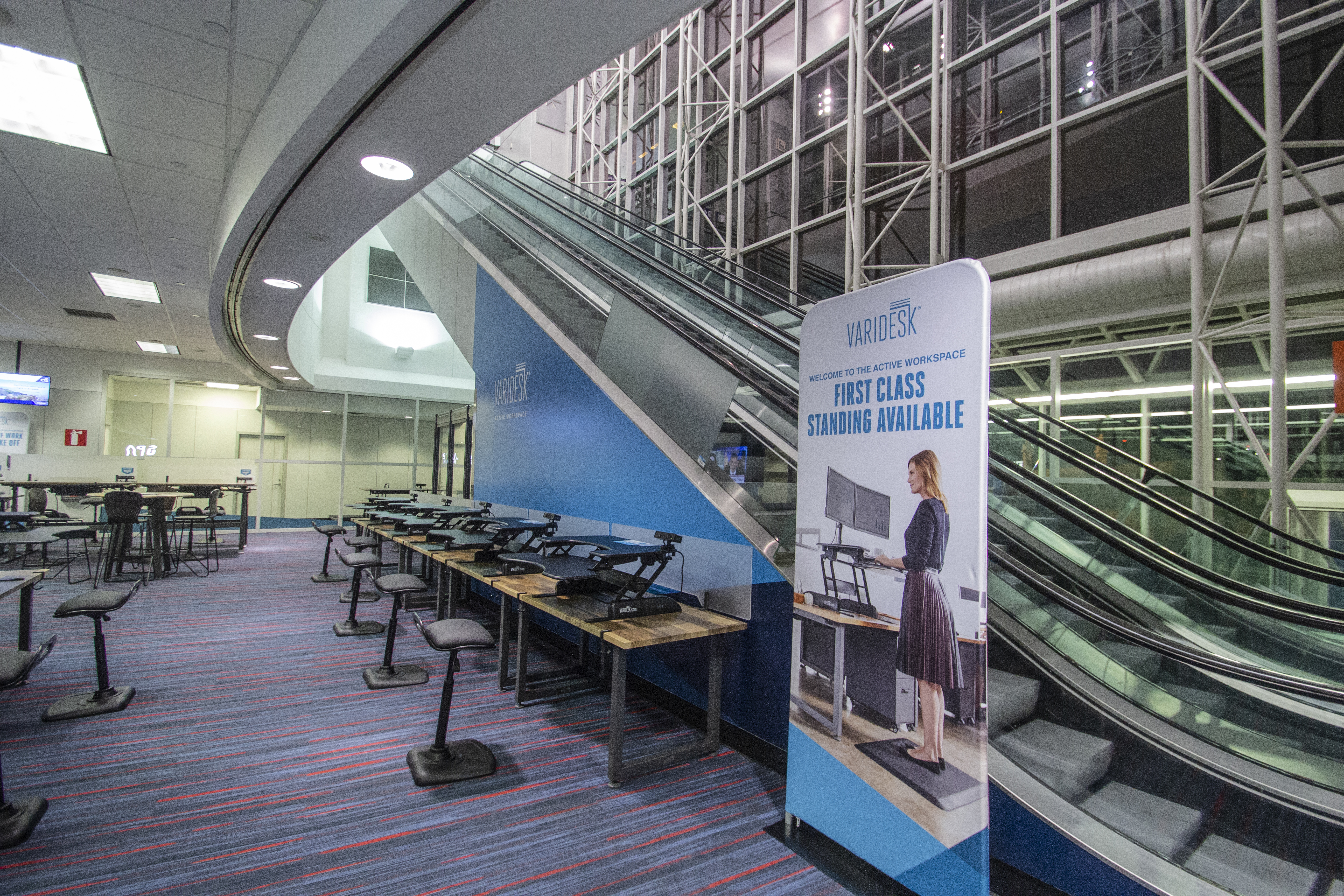
And that’s why the new business center in Terminal C at Dallas-Fort Worth International Airport is a such a welcome amenity.

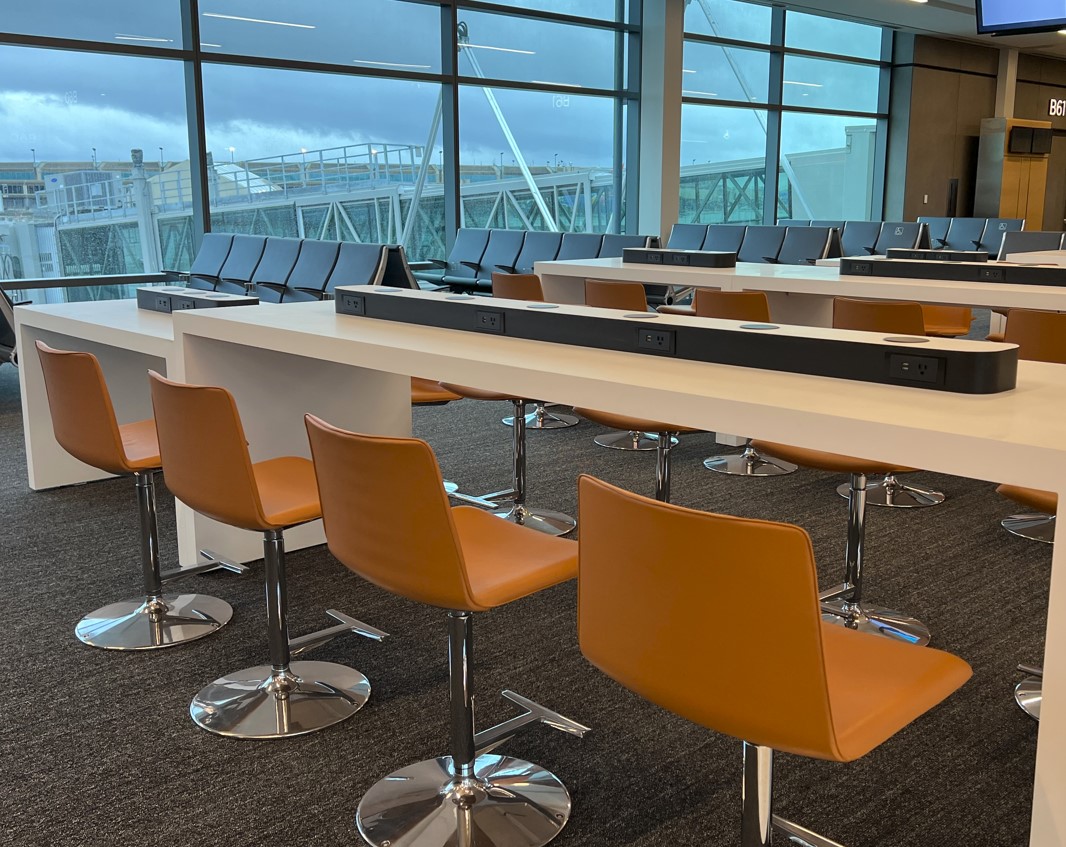
Sponsored by Varidesk, the stand-up desk company, the business center is a co-working space that has standing desks, meeting tables, power hubs, and a small conference space. 

Many airports now have tall tables with power ports in many gate areas. And there are areas in many airport cafes where you can set yourself up to work, or just catch up on email, while standing. But this Varidesk co-working space just makes it look very cool.

So long, Sydney: take-aways from IATA’s meeting of world’s airline execs

The Vivid Sydney festival – which lights up iconic buildings and structures around the city – was a great backdrop for this week’s meeting of the world’s airline executives at the World Air Transport Summit (WATS) and the annual general meeting of IATA – the International Air Transport Association.

All sorts of briefings, reports, discussions, debates and newsy announcements take place at this event each year and will generate stories that will spool out over the course of the next few weeks.

In the meantime, here are just some of the highlights from the past few days:

Courtesy IATA

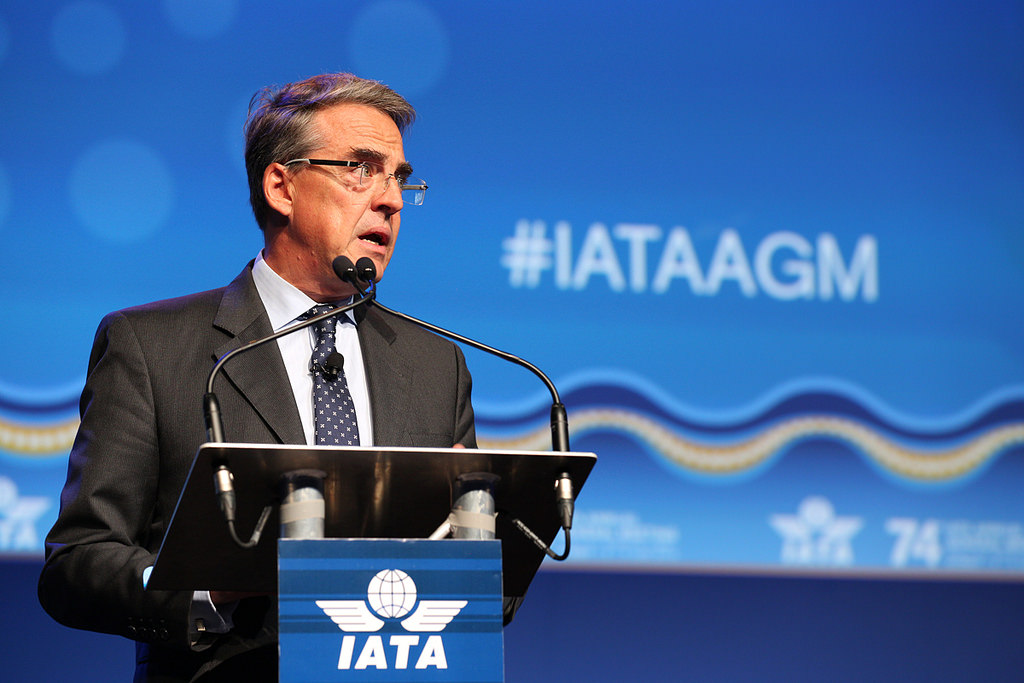
In his annual report, Alexandre de Juniac, IATA’s Director General and CEO, said that airlines are expected to achieve a collective net profit of $33.8 billion. That’s an average profit per passenger of $7.76 for the airlines, he explained, “A thin 4.1% net margin” in 2018.

Read his full report that also touched on safety, security, environmental issues and other topics here.


A bundle of 20-minute on-stage interviews were offered, on topics ranging from alternative fuels, gender equality in aviation, airport privatization and the benefits and risks of travel and tourism. Follow the links for more details from those sessions and videos of the interviews.


CNN’s gregarious Richard Quest was on stage with a panel of airline CEOs, including Calin Rovinsecu of Air Canada, Tim Clark of Emirates Airlines, Rupert Hogg of Cathay Pacific Airways, Pieter Elbers of KLM and Christoper Luxon of Air New Zealand.


Among the notable moments was when the all-male panel was asked to address gender equality (or the lack of it) at the top echelons of aviation:

Other sessions addressed everything from some creative ways getting passengers to and from airports more efficiently to the role airlines play in human trafficking.

For media attendees, the meeting wrapped up with a final debriefing session with IATA CEO and Director General Alexandre de Juniac, Qatar Airways Group Chief Executive Akbar Al Baker, who will serve as chairman of the IATA Board of Governors for the next year, and Alan Joyce, CEO of the Qantas Group, which hosted the IATA AGM in Sydney.

The Qatar Airways CEO is well-known for his bravado and controversial comments, but at an event in which other CEOs expressed a committment to increasing the role of women in the upper ranks of their companies, Akbar Al Baker’s comment that of course his airline had to be run by a man, “Because it is a very challenging position” was met with disbelief.

His comment may have been a ‘joke,’ – and he did go on to mention that Qatar has women serving as pilots, as senior vice presidents and in other top-level positions – but the comment did not sit well with the group assembled (I literally jumped out of my seat!) and just underscores the fact that this sector of industry has some real homework to do.

Happy with all that business travel? Most say they are.

There’s no shortage of surveys out there slicing and dicing the habits and experiences of business travelers.

I read them all in search of trends, ideas and occasional surprising statistics and found examples of each in the new National Car Rental State of Business Travel Survey.

Happy Travelers?

In general, most business travelers surveyed (92 percent) said they were satisfied with their quality of life when traveling for business. Eighty-nine percent said they were also comfortable with amount of business travel they do.

That’s a good thing, because 90 percent of business travelers reported that they planned to travel at least the same amount or more in 2018.

What gets done on the road? 

I could identify with some of the survey stats about how much productive work, sleep and quality “me” time takes place during business trips. Perhaps you will, too.

According to the survey, just a smidge over half of business travelers (51 percent) reported that they were calmer when traveling for business compared to their everyday lives, but they also reported exercising less, sleeping less and eating less healthy when away from home on a business trip.

Most business travelers surveyed (57 percent) also claimed to work more hours and to be able to focus better (48 percent) when on the road.

What about down time during business trips?

Your co-workers, and family members at home, might think your business trip is – or should be – all business. But everyone needs some down time, and here the results of the survey were somewhat surprising.

While most (80 percent) of business travelers said they take time for fun/personal activities while on a business trip, 38 percent said telling their bosses about that down time was a “no go”; 40 percent said they avoided telling co-workers about any fun they had on a business trip and 31 percent advised against telling spouses or significant others about any non-work fun during a business trip.

Mixing business and fun

I’m confident folks at home, co-workers and even bosses wouldn’t begrudge business travelers a bit of time exploring a new city and I’m surprised at the “no go” and “don’t tell” statistics in the survey.

It’s possible to squeeze in some fun on a business trip – and here are a few ways to make that happen:

Commit

Become a tourist while traveling on business by adding an extra day to the front or back of your trip to explore a new city. Make sure you use that time wisely by buying a ticket to a play, museum exhibition or city tour before your business trip starts.

Dip into a neighborhood

If you don’t have official extra time in a city, try to take at least one meeting at a coffee shop or restaurant recommended by a local. Walk or drive to that meeting by taking the long (but safe) route around.

Don’t return that rental car too early 

If, like some respondents to State of Business Travel Survey claim, you can focus well on a business trip and you get your work done early, don’t head straight for the airport.

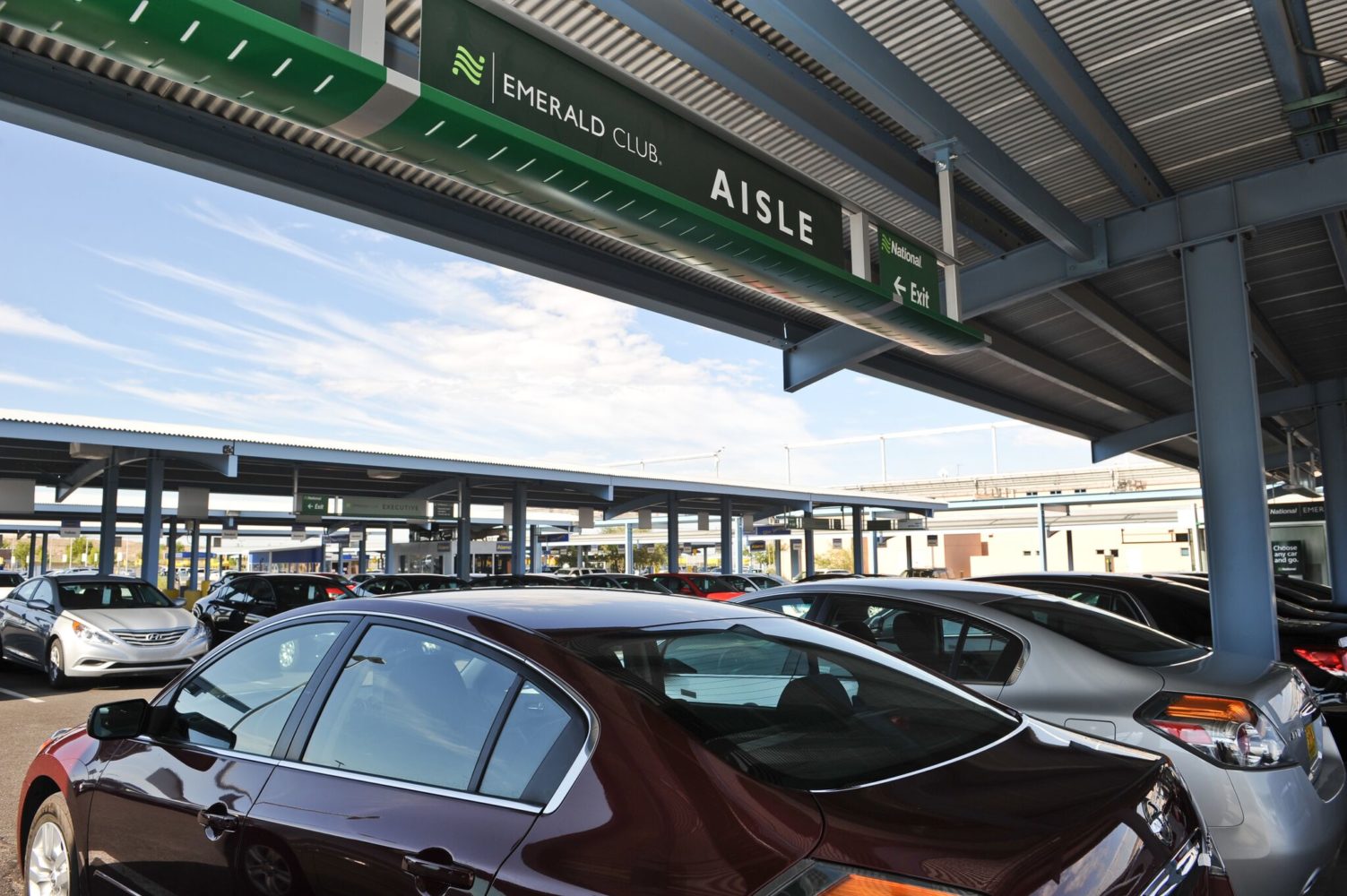
Use the extra hours on your car rental and the “Drop & Go” perk you get from being a member of loyalty programs such as National Car Rental’s Emerald Club to visit an attraction nearby the airport. For some ideas, see my previous post, “Heading to the airport? Hold onto that rental car.”

Have some tips balancing work and fun on a business trip? Please share those in the comments section below.

FYI:The National Car Rental State of Business Travel Survey was conducted from December 4-11, 2017, among 1,000 U.S. frequent business travelers in Research Now’s Business Travelers’ database.

While I was compensated by National Car Rental for this post, all thoughts and opinions shared here are totally my own.