Architecture

Visting the unopened Berlin Brandenburg Airport

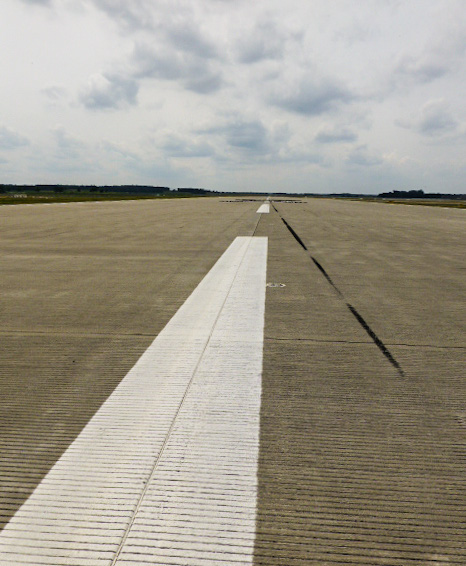
Visitors on the BER tour can stand on the unused runway.

The highlight of my late June visit to the unopened and much-delayed Berlin Brandenburg Willy Brandt Airport was racing down a runway as a passenger in a tour bus going more than 60 miles per hour.

It was also one of the saddest parts of the tour.

That’s because due to technical glitches, cost overruns, corruption and project mismanagement, tour buses – not airplanes – are likely the only vehicles that will be barreling down the BER runways for quite some time.
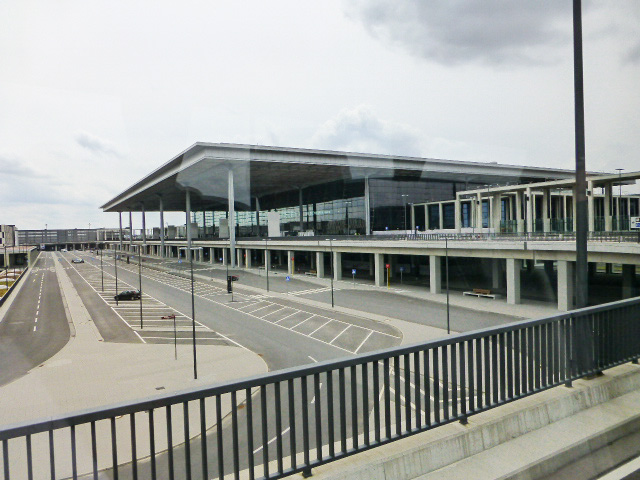
BER Main TERMINAL

Under construction since 2006, Berlin’s much-needed new airport was designed to serve 27 million passengers, with an initial opening target date of late 2011. That date was pushed back to June 3, 2012, and, despite trial runs during which the airport authority did tests of the baggage carousels, check-in desks and security checkpoints, and simulated what it termed “all imaginable scenarios,” a problem with the airport’s fire safety and suppression system was discovered.

With just four weeks’ notice, opening day was called off.

Since then multiple target dates for a new opening day – six or seven, it’s hard to keep count – have come and gone. Now all the company managing the project will say is that “an opening date is expected to be announced at the end of the year.”
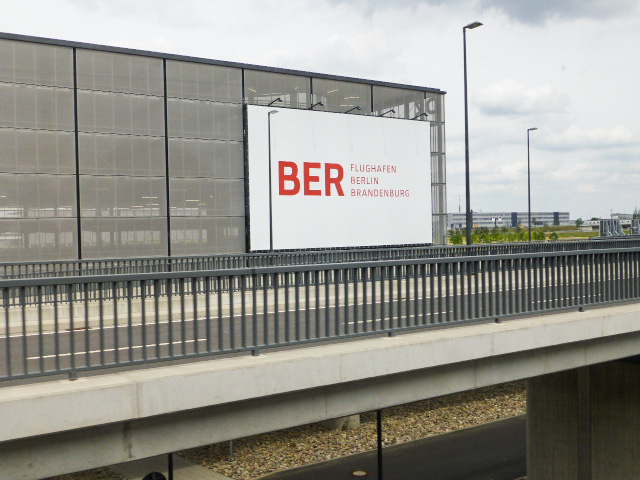
BER Airport is waiting to open

2016 has been bandied about as the next possible opening date, but additional problems and embarrassing operational revelations keep cropping up.

In May, there was an announcement of a suspected corruption case involving bribes for the awarding of contracts.

In early June, there was out-of court settlement between the airport management company and airberlin, the major tenant at Berlin’s outdated Tegel Airport, over claims the airline felt it was due because of delays in the switchover. And at the end of June it was revealed that the engineer responsible for designing the new airport’s fire safety system was in fact just a draftsman, not a real engineer, and had been fired.

Despite – perhaps because of – the delays and the unfolding issues, there is a steady stream of people eager to pay 10 euros – about $13.60 – to go on the “BER Experience” bus tour, which is offered four days a week, in German only. (A two-hour bike tour of the airport grounds – about $20, including a box lunch – is offered on weekends as well.)

Besides showing off any progress, one reason the airport authority offers BER tours “is because it’s important that people don’t only read about the airport in the newspaper and see the reports on TV,” said Lars Wagner, Berlin Brandenburg Airport spokesman.
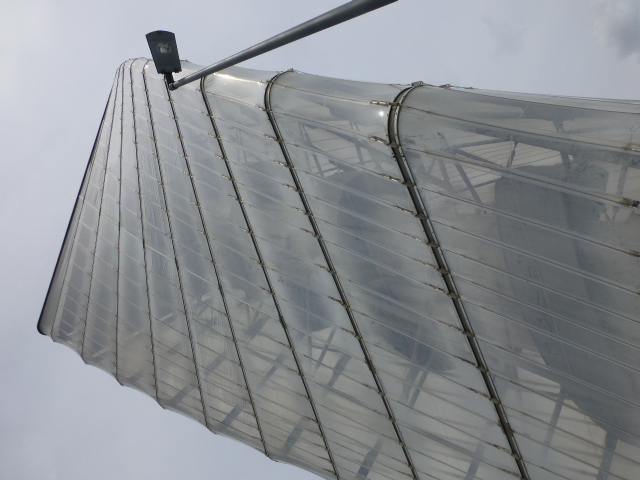
Viewing Tower for visitors at Berlin Brandburg Airport.

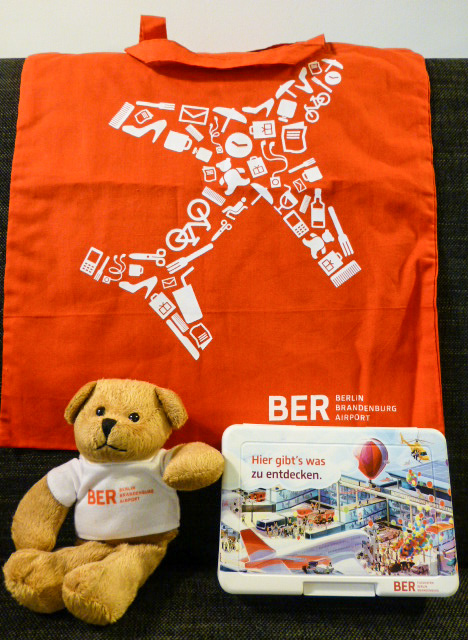
Tour buses stop first at a 105-foot-tall observation tower offering a bird’s-eye view of the unopened airport terminal, the unused runways, empty parking lots and assorted other facilities-in-waiting. At the bottom of the tower is an airport information center, with a scale model of the airport and a glass cabinet of souvenirs emblazoned with the BER logo.
BER SOUVENIRS

The staff on duty the day I visited said they don’t sell many of these souvenirs to tourists and they seemed amused when I wanted to purchasing some BER T-shirts, baseball caps, tote bags, inflatable beach balls and plastic lunch boxes.

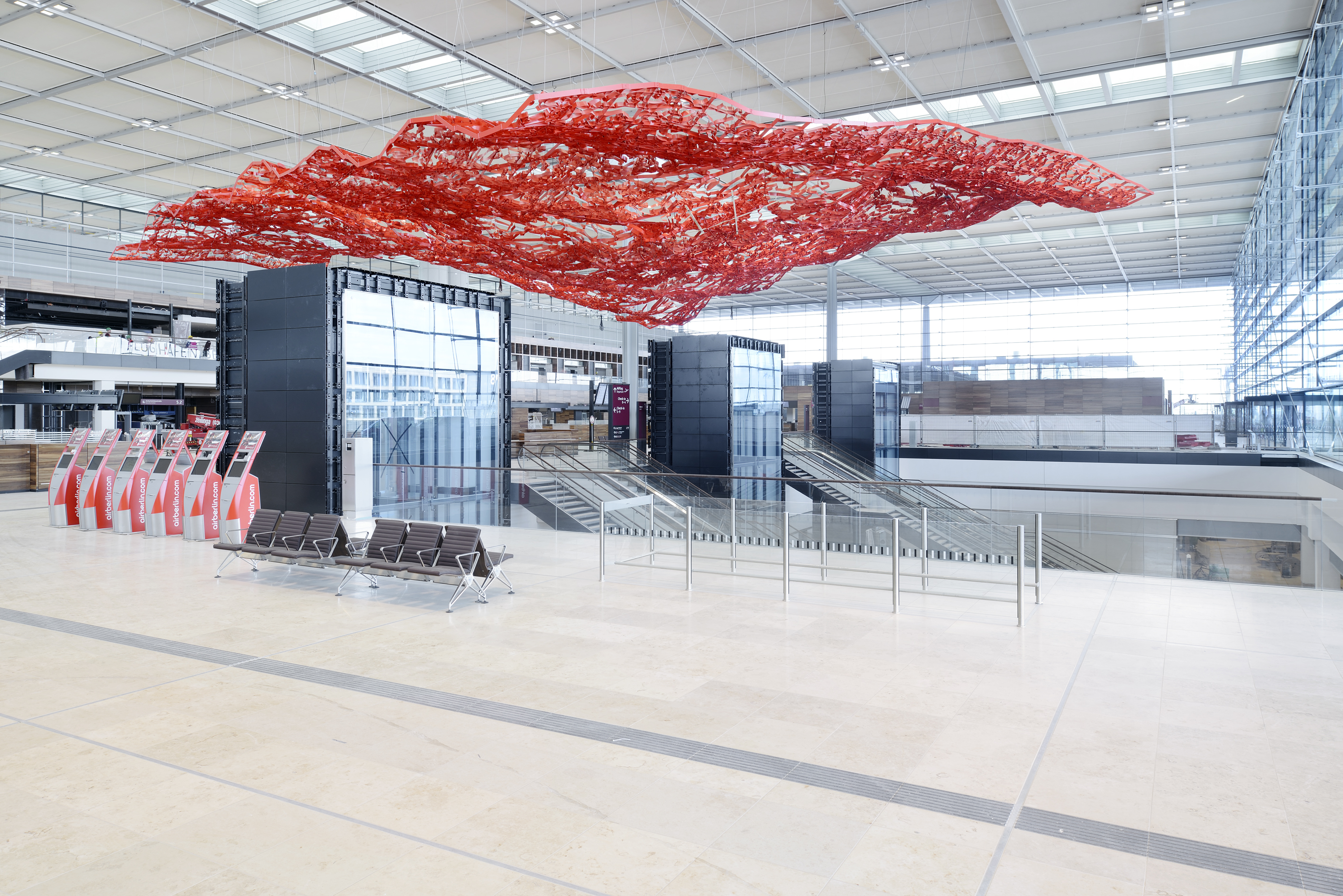
Our tour bus then drove slowly past quiet office, cargo and airport security facilities and by the railway station, where empty trains run each day to make sure systems remain working. Photo ops of the front of the main terminal building were only offered from inside the bus, but the terminal’s glass façade offered a glimpse of “The Magic Carpet,” by Pae White. The large, red work of art, one of several pieces specially-commissioned for the airport, hovers over the check-in lobby.
Datumsangabe unsicher. EXIF-Daten entfernt.

Out back, the bus pulled up at BER’s one A380-compatible gate, which has a jet bridge draped with Olaf Nicolai’s “Gadget,” a piece of art that looks like a string of giant pop beads and is designed to change colors to match those of the livery of the airplane at the gate.
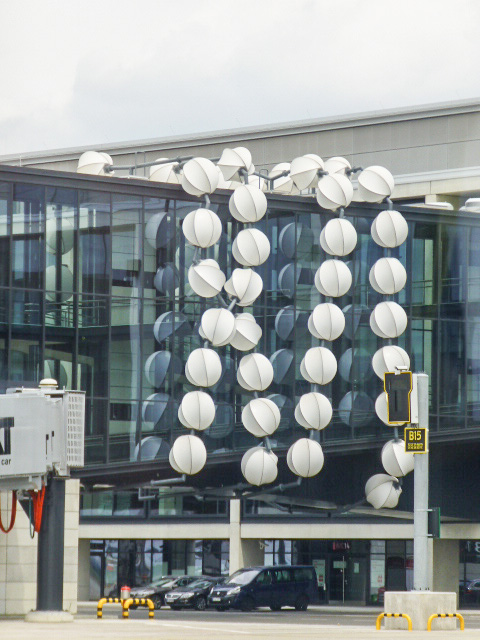
Gadget, by Olaf Nicolai, is one of the artpieces comissioned for the BER airport.  (1)

Tour goers were allowed off the bus here and invited up a set of not-quite-finished stairs for a look at a gate area where seats were installed, but still wrapped in plastic, and ceiling panels gaped open.

“It’s not unusual for big projects like this to be over budget,” said Johann Bammann, a retired architect whose tour ticket was a gift from a friend. But delays are dragging on too long, he said, and “it’s time for the city to have a new front door.”

After a stop near the control tower, the bus made that dash down the runway, stopping to let passengers out to run around and pose for photos.

“It’s just unbelievable. I can’t understand why it’s taking such a long time to open this airport,” said Barbel Liedtke, a former Berlin-based Pan Am Airlines employee taking the tour with a friend.

“But I’m sure there are a lot people to blame.”

(My story about visiting the unopened Berlin Brandenburg Airport first appeared on USA Today)
Countdown to opening of Heathrow T2

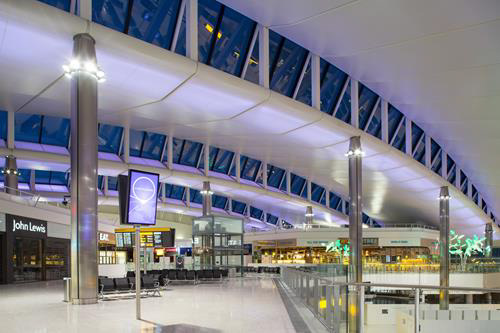
London’s Heathrow Airport is putting finishing touches on T2 – The Queen’s Terminal – which is set for a soft opening on June 4th with the arrival of the first United Airlines flight.

Her Majesty the Queen will be on hand to cut the ribbon and officially open the terminal on June 23rd and by November all 23 of the Star Alliance airlines, as well as Aer Lingus,Virgin Atlantic Little Red and Germanwings carriers, will be operating out of this building.

Heathrow Terminal

As you might imagine, Star Alliance officials are tickled about the project and on Wednesday they led a group of journalists through the terminal. And, as a treat, building architect Luis Vidal, who suggests the building be considered a “destination” rather than a “terminal,” was on hand to share some of his thinking behind the design focused on an improved passenger experience and point out some of his favorite features.

“The building and the roof guide you towards the plane and encompass three defined spaces, the last of which is the idea of the plaza,” said Vidal. There, “the roof seems to vanish as you look up and see what the weather is outside and you are free to rest, read, shop, dine, work – whatever you want to do.”

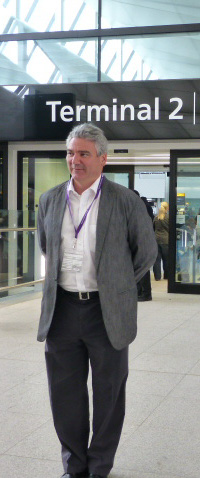
Luis vida

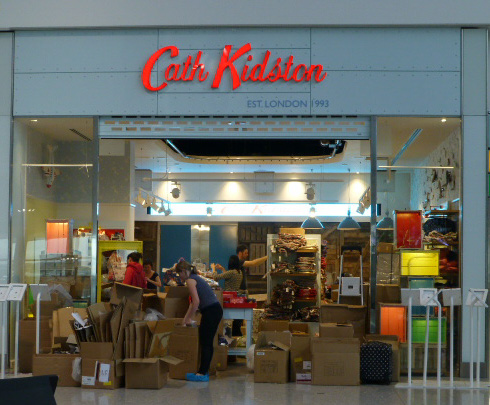
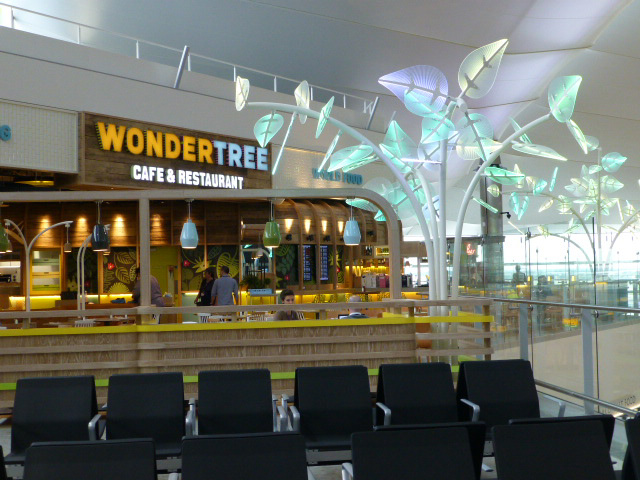
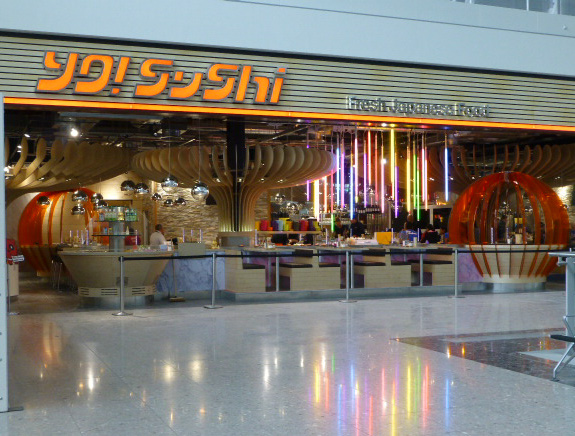
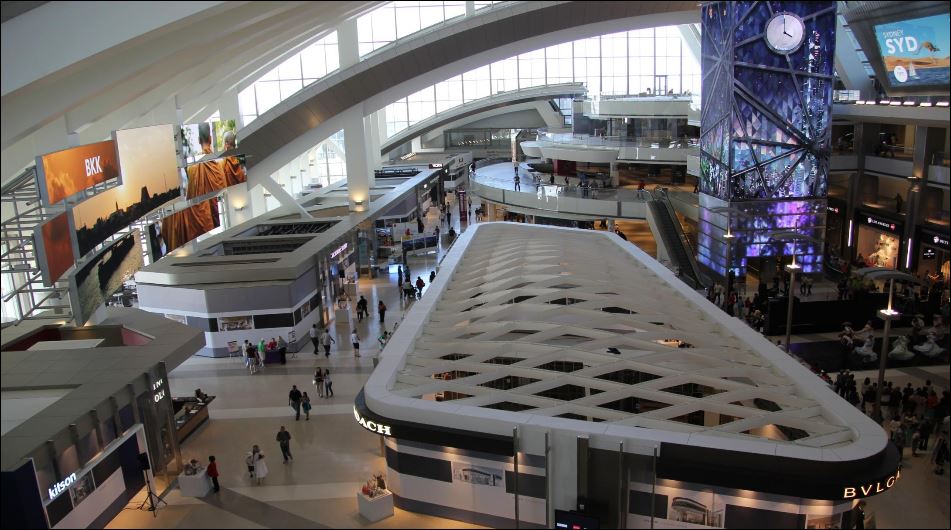
The last time I passed through the building, just about a month ago, the spaces for the shops, restaurants and amenities were empty. But now inventory is being put on store shelves, severs are being put through their paces in the restaurants and amenities, such as banks of terminals offering free internet, are being installed.

cath kitson

restaurant

yo sushi

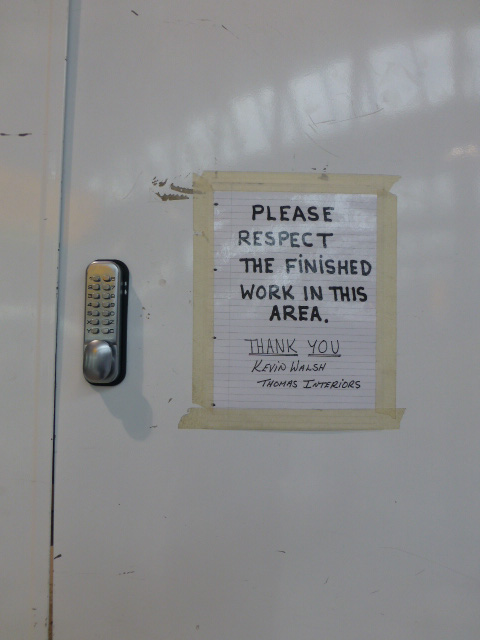
please respect

Opening day: San Diego Int’l Airport expanded Terminal 2

The expanded Terminal 2 at San Diego International Airport (SAN) becomes operational today – August 13, 2013 – offering travelers a faster, smoother and far more amenity-rich trip from the curb to their flights.

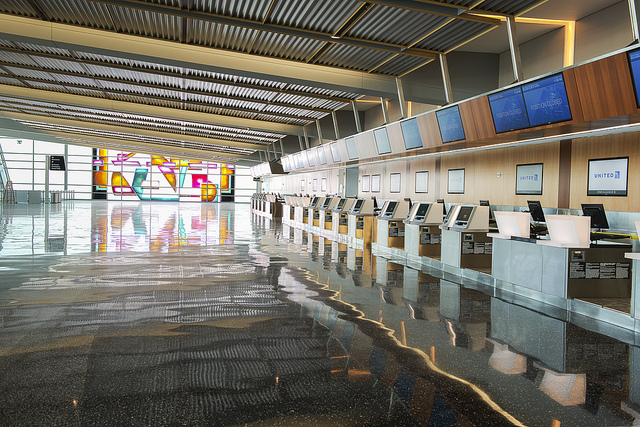
San Diego lobby photo T2

Dubbed “The Green Build” in reference to it’s focus on the environment, the transformed Terminal 2 is opening on schedule and, at $907 million, $45 million under budget with all the latest in sustainable features, including solar panels, reflective roofs and parking spaces with chargers for up to 40 electric vehicles.

“We’ve added a lot of new features that business travelers, especially, will appreciate” said airport spokeswoman Katie Jones, “including separate arrival and departure roadways and 27 curbside self-service check-in kiosks under a canopy out front.”

SAN does not yet participate in the TSA’s PreCheck program offering expedited passage through security, but with a possible 12 lanes (up from 6) at the checkpoint, “there will be shorter lines everywhere,” she said.

Inside the terminal, travelers will find 10 new gates, $6 million worth of fresh art and at least 800 new seats equipped with cup holders, power outlets and USB ports.

San Diego Airport new seats

Club lounges for United and Delta Air Lines, each with a view of the airfield, are a floor above Sunset Cove, the greatly expanded concessions area. For those traveling with their pets, there’s also an indoor pet-relief area with faux grass and a red hydrant by Gate 46.

Dining options include Saffron, Bubbles Seafood & Wine Bar, Seaside Stack Shack, Stone Brewing Co., Phil’s BBQ and the first Jack in the Box to open in an airport. New service and retail outlets include branches of the Be Relax Spa and Warwick’s of La Jolla, a locally-owned bookstore.

United Airlines, which was operating out of Terminal 1, has moved its operations over to Terminal 2, but unfortunately, passengers flying on airlines that currently use the Commuter Terminal or Terminal 1 (Alaska Airlines/Horizon Airlines and Southwest) won’t have access to the new Terminal 2 amenities.

“But those terminals will be getting some upgrades and new concessions as well,” said Jones.

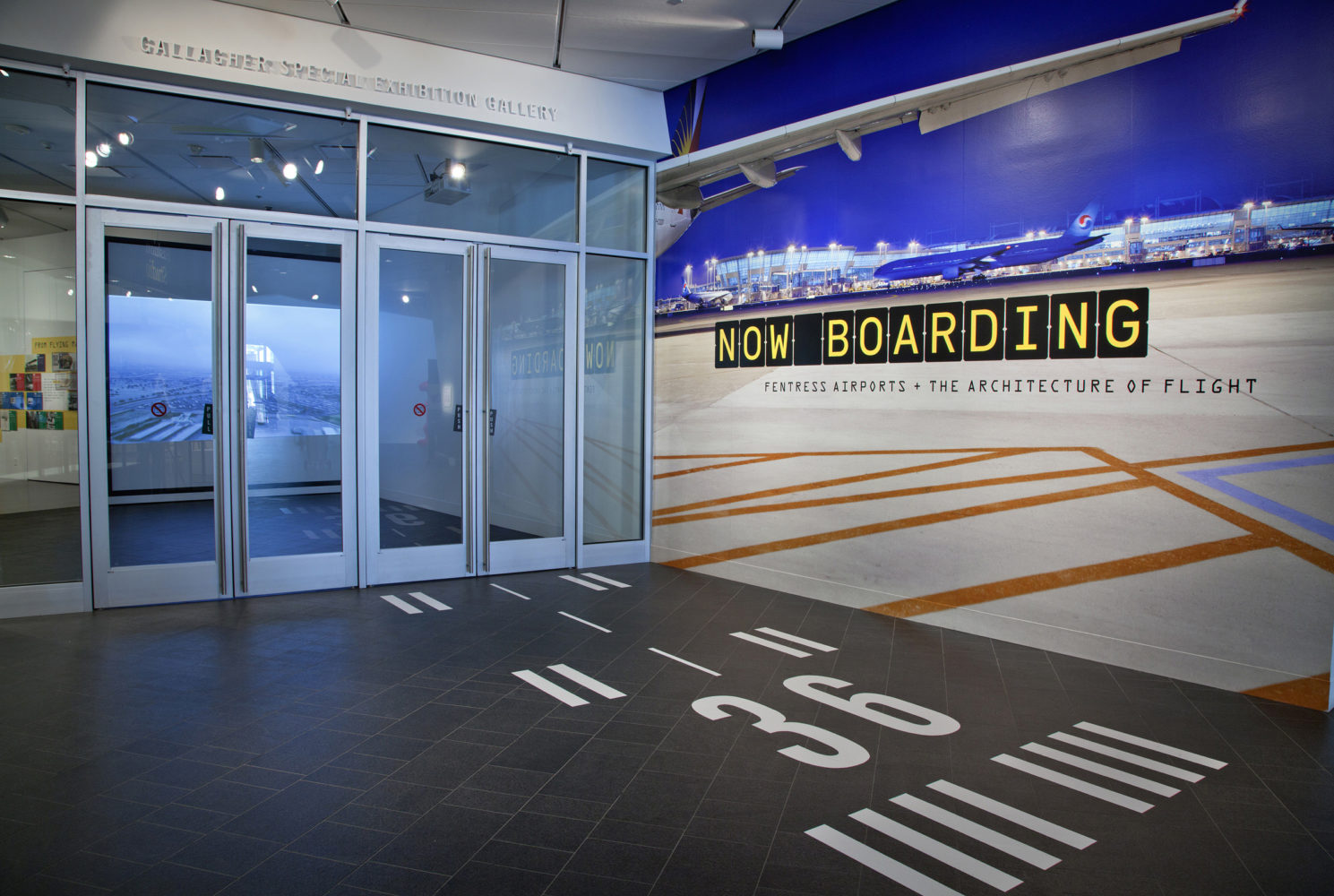
Now Boarding: exhibit about airports at Denver Art Museum

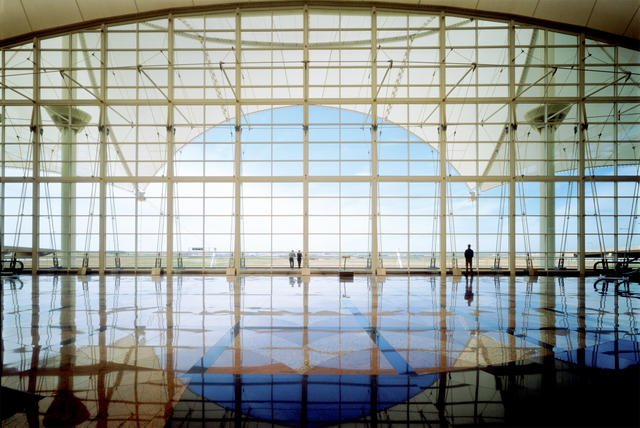
If you find yourself with some time to spend in Denver, then head over to the Denver Art Museum to see Now Boarding: Fentress Architects + the Architecture of Flight, a multi-media exhibition about the past, present and future of airport design on view through through October 7, 2012.

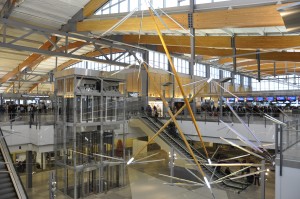
Denver International Airport Passenger Terminal, Denver, Colorado, 1991–95. Photograph of curtainwall (interior). Photograph by Timothy Hursley ©.

Six airports designed by Denver-based Fentress Architects are featured: Denver International Airport, Incheon International Airport in Seoul, South Korea; Seattle-Tacoma International Airport; Norman Mineta San José International Airport, Raleigh-Durham International Airport in North Carolina and Los Angeles International Airport.

“Throughout Now Boarding, visitors will see how airport design has been shaped by world events, from the “heroic” era of the early 20th century to the “democratic” era of the ‘70s and ’80s. The final leg of the journey acquaints visitors with the airport of the future.”

Tidbits for travelers: new airport, new avatar on duty

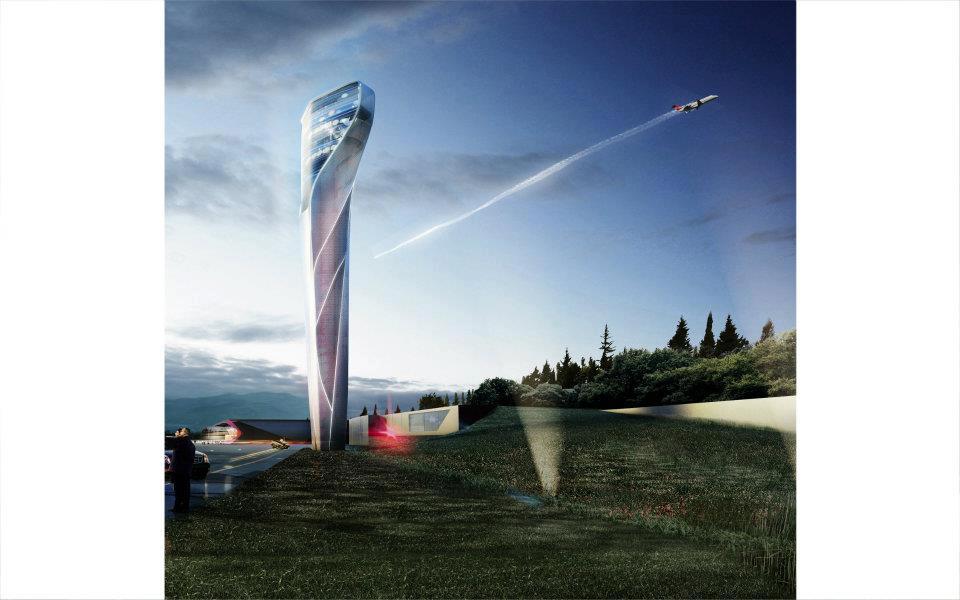
Mari, a Stuck at The Airport reader who works in air navigation in Georgia – the country, not the state – wrote to draw our attention to the King David the Builder International Airport being built in Kutaisi, Georgia by the Dutch architectural firm, UNStudio.

The airport is scheduled to be completed by September, 2012. Here’s what the tower is going to look like:

(Photo courtesy UNStudio)

Very futuristic-looking, right?

At Washington Dulles International Airport, the future is already here.

A 3D-looking Tensator Virtual Assistant – Dulles has named her “Paige” – is on duty welcoming passengers, offering Customs and Border Protection information and sharing connecting flight information in the International Arrivals Building.

Here’s a video (taken by an airport representative) of Paige in action:

Seattle’s Space Needle turns 50

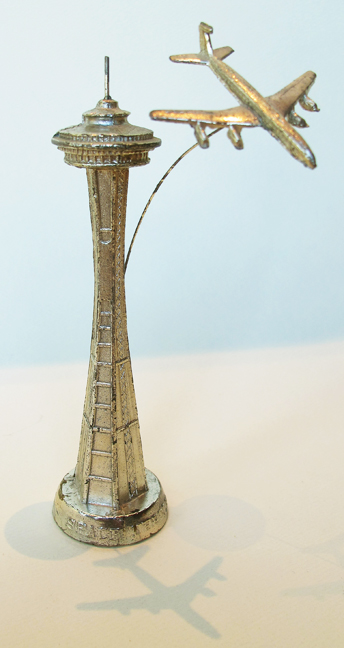
A popular way for visitors to get an overview of a city is from the observation deck of an iconic structure such as New York’s Empire State Building, Chicago’s Willis Tower (formerly the Sears Tower) or Seattle’s Space Needle, which joined the Seattle World’s Fair in kicking off its anniversary celebration on April 21.

Created as the centerpiece of the 1962 space-themed exposition, the 605-foot-tall Space Needle has been described as looking like “a UFO on stilts” and was for many years the tallest building west of the Mississippi River.

Today, the still futuristic-looking Needle is an iconic landmark in the Emerald City, its most visited attraction and home to one of the few remaining rotating restaurants in the world.

To learn more about the Space Needle – and some of its secrets – I spoke with Seattle writer Knute Berger, who attended the World’s Fair when he was 8 years old and is the author of a new book titled “Space Needle: The Spirit of Seattle.”

Q: Landmark buildings in many cities are straight-ahead tall towers. How did Seattle’s most famous structure end up looking as if a UFO just landed?

A: Architect John Graham Jr. wanted a top that looked like a flying saucer and exhorted his staff designers to make the top “more disc-y.” It made sense because it was a Space Age form; the flying saucer phenomenon got its start with a sighting at [Washington State’s] Mt. Rainier in 1947, and that mountain is the biggest landmark you can see from the Needle. Plus, a saucer-shaped restaurant made sense for one that rotates.

Q: You wrote your book about the Space Needle during a six-month stint working at the Needle. Why did you do that?

A: The Space Needle commissioned me to write their history for the 50th anniversary. They named me writer-in-residence at the Space Needle and gave me a desk on the Observation Deck. I would conduct interviews over lunch in SkyCity [the Needle’s rotating restaurant], then go upstairs and write, blog and talk with visitors.

I met people from all over the world and sometimes ran into people with great stories, like police officer Roy Skagen who was on Elvis’ security detail during the filming of “It Happened at the World’s Fair” [filmed on-site during the Seattle World’s Fair]. He used to toss a football with Elvis during breaks in the filming.

Q: What are some secrets and cool facts you learned about the Space Needle?

A: The Needle was essentially built in a year. U.S. Steel called it the “400-day wonder.”

The motor that turns the restaurant is only one horsepower. It runs clockwise, but it can also run in reverse.

A group of UFO buffs, called The Skywatchers, used to meet on the Needle every night looking for flying saucers.

Q: We’ve learned that 1.3 million people visit the Space Needle’s observation deck each year. Do you have some insider tips on getting the most out of a trip up there?

A: If you want to join the crowds, go in the summer when the cruise ships are in town. It feels like a fair up there. If you want the place to yourself, maybe go first thing on a weekday morning when the weather is a bit gray.

The motor that turns the SkyCity restaurant atop the Space Needle is only one horsepower. It runs clockwise, but it can also run in reverse.

Make sure to get out on the deck and walk all the way around; it’s a spectacular view in all directions. You can see three national parks from up there [Olympic, Rainier and North Cascades].

On a few super, super clear days a year, you can see the cone of Mt. St. Helens. But contrary to some reports, you cannot see Canada.

Q: That glass elevator – and the elevator ride up the legs of the Space Needle – seems a bit scary. Any insider tips on that ride?

A: If you’re scared of heights, move to the back of the elevator. There are no windows and the crowd will block the view.

If you love a fun ride, turn immediately right or left when you enter and stand by the windows. You’ll get a great view of the rapid rise and parts of the structure zooming by.

[During the fair] N.Y. Gov. Nelson Rockefeller described the trip down as like going over Niagara Falls in a barrel. But it’s tamer than that.

Q: In addition to the Observation Deck, there’s that rotating restaurant on top of the Space Needle. Any menu tips you can share?

A: I ate up there once or twice a week during my residency, and my favorite was the huge Shrimp and Crab Louie. And I always recommend the local soup of the day. I had a nettle soup that was out of this world.

The special dessert is the Lunar Obiter: basically a sundae served with dry ice that is a huge crowd-pleaser with kids.

Q: Anything else visitors should know about the Space Needle as it celebrates its 50th anniversary?

A: The Needle has lived most of its life since the fair and is a local totem, a place of great meaning to people, a site of weddings, anniversaries, deaths, births, world firsts and celebrity visits.

It has symbolized everything from yuppie Seattle [on TV’s “Frasier”] to a super-villain’s headquarters [Dr. Evil’s pad in “Austin Powers”].

It’s been a magnet for magic moments and you feel some of that energy and buzz when you visit. I was surprised that, as someone who was Seattle born and raised, I always saw something new up there every time. The scenery, the weather and light, the dynamic city — it’s never the same view.

Museum Monday: art inspired by Lambert –St. Louis International Airport

On StuckatTheAirport.com, I often make note of an inspiring museum-quality exhibition that has made its way to an airport.

Today, I’m pleased to point you to a museum exhibition that has been inspired by an airport.

St. Louis Art museum

Ian Monroe's Arc


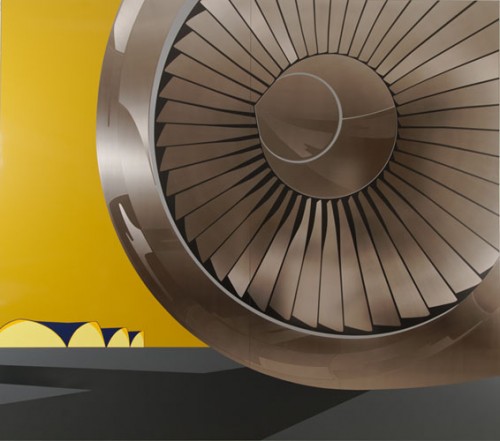
The Saint Louis Art Museum is showing an exhibition of work by Ian Monroe that takes its cue from the architecture and history of Lambert-St. Louis International Airport terminal.  The building was designed by architect Minoru Yamasaki, who designed the World Trade Center and the Twin Towers.

Ian Monroe


Currents 105: Ian Monroe will be on view in Gallery 338 at the Saint Louis Art Museum through July 31, 2011. Even better: admission to the Saint Louis Art Museum is free.

(Images courtesy Haunch of Venison and Ian Monroe © Ian Monroe)

Terminal 2 at RDU

Terminal 2 Raleigh Durham Airport

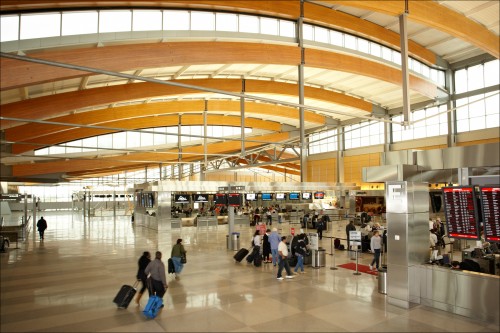
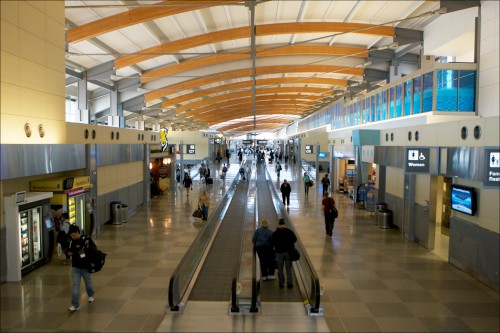
When Continental Airlines and US Airways begin operating from Concourse D on Sunday, January 23rd, Raleigh-Durham International Airport will have completed the construction of Terminal 2.

Concourse C opened in October, 2008 and now everyone gets to move freely through a lovely new one million square foot building that has 40 shops and restaurants, 36 gates and eight works of art and architecture.

New venues include Carolina Vintages, a wine bar offering North Carolina wines and produce,  Jason’s Deli, Five Guys Burgers & Fries and Flavours, a gourmet market.

New shops include Brighton Collectibles, PGA Tour Shop, Hudson News and 2nd Ed. Booksellers, a locally-based used bookstore.

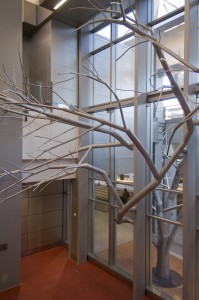
The eight works of art include Robert Kushner’s Welcome, installed along the arrivals corridor;

Lydia Rubio’s Gate of Air, the companion pieces to Gate of Earth, which was installed in 2008;

RDU_Lydia Rubio's Gate of Earth

Gate of Earth, by Lydia Rubio

Mei-ling Hom’s Cloudscape and Ed Carpenter’s Triplet.

Carpenters Triplet is the large sculpture with wood masts and dichroic glass and LED lighting suspended from stainless steel cables in the atrium.

Free classical concert at Orlando Airport; free terminal tour at San Jose Airport


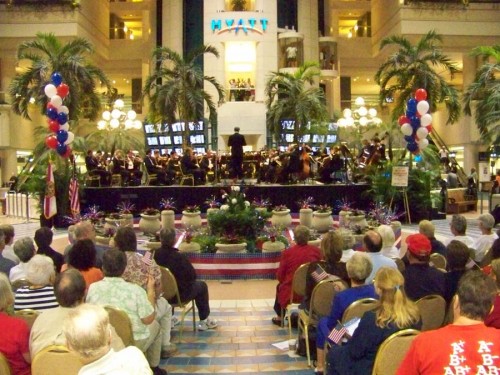
As part of its Liberty Weekend festivities, the Orlando International Airport (MCO) will present a free concert by the Orlando Philharmonic Orchestra. The concert will take place at 8 pm, on Saturday June 26, 2010 in the atrium of the Hyatt Regency Hotel, which doubles as the public lobby area for gates 60 to 129.  All attendees will get three hours of complimentary airport parking.

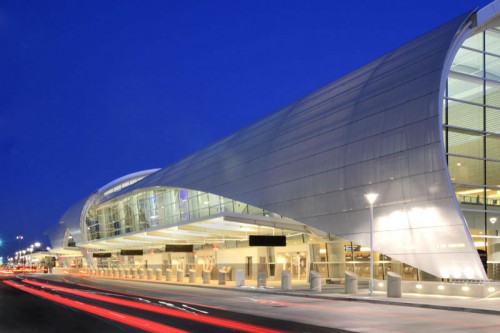
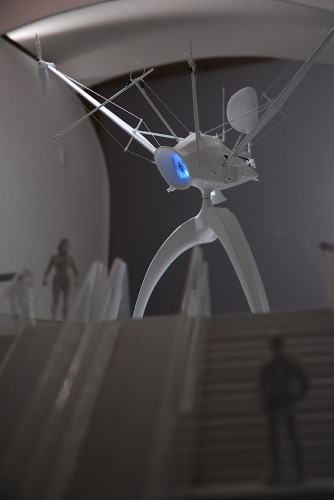
Saturday June 26th and Sunday June 27th, from 10 a.m. to 5 p.m. each day, unticketed visitors are invited into Silicon Valley’s Mineta San Jose International Airport (SJC) for a sneak peek at the new high-tech Terminal B.  The new building includes seating areas with built-in power ports and public art that includes German multi-media artist’s Bjoern Schuelke’s Space Observer, an interactive, two-story tall robot-like structure with three legs and propeller-equipped arms.

San Jose Airport public art "Space Observer"

(Watch a Space Observer movie.)

Registered visitors will be able to walk through the terminal, see the art, buy a souvenir and enter drawings for prizes that will include airline tickets and travel packages.

If you plan on visiting the terminal, you’ll need to register in advance on the SJC website by Wednesday, June 23rd and pick the day and time you want to stop by.

In the meantime, here’s a link to a great photo slide show of the San Jose Airport through the years from The Mercury News.