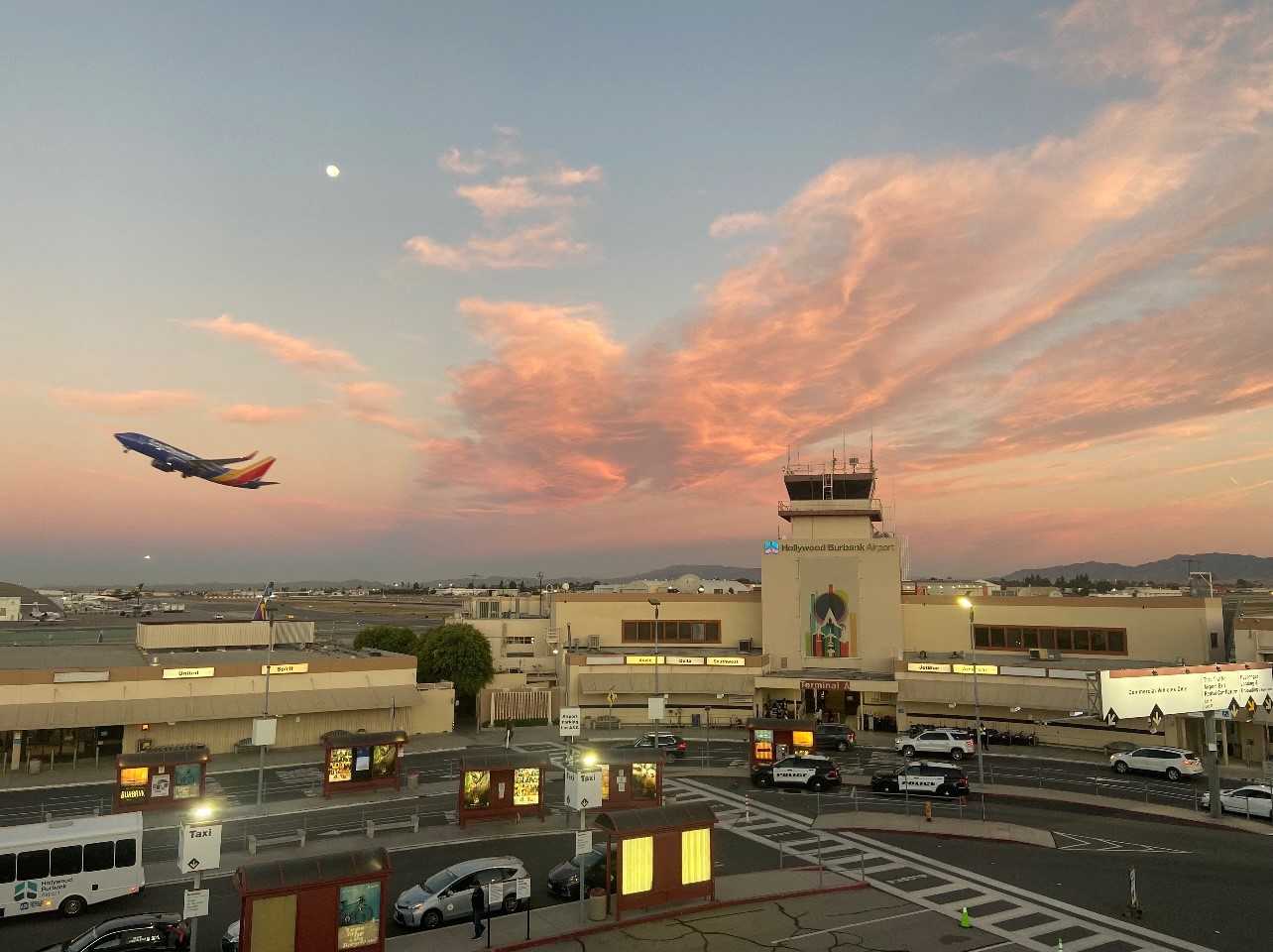
Officially, it’s still Bob Hope Airport.
But in 2016 this mid-sized airport was rebranded as Hollywood Burbank Airport (BUR) to raise awareness about the airport’s convenient location just north of downtown Los Angeles.
Awareness about BUR will get another boost in October, when the airport’s $1.3 billion replacement terminal opens just north of the current 96-year-old terminal.
We wrote about the terminal project for The Points Guy site, but sharing some of the highlights here as well.
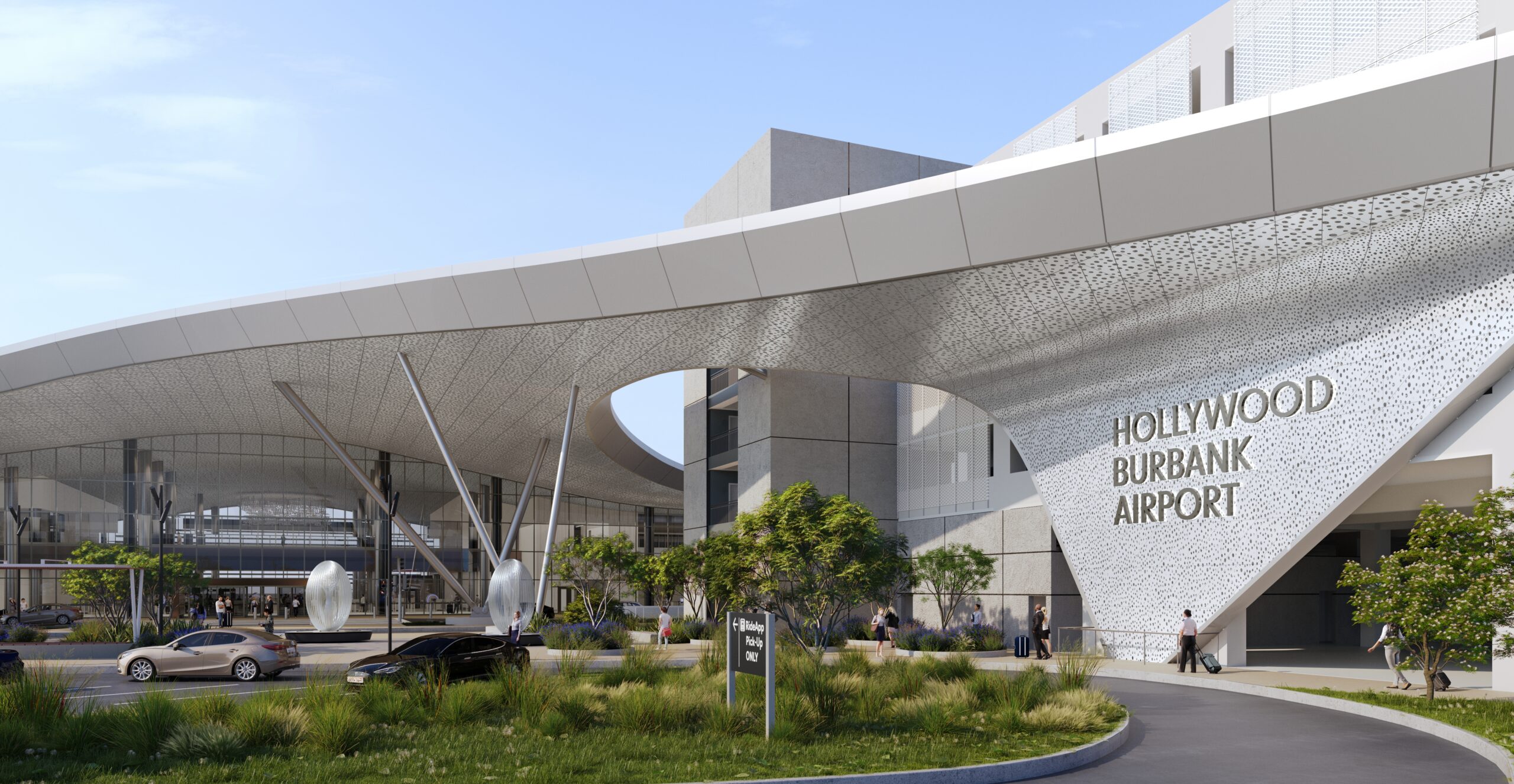
(New terminal entrance design. Courtesy Corgan)
The new terminal will sport a ‘silver screen’ entrance and multiple Hollywood-inspired touches, as well as updated restrooms, expanded shopping and dining options, improved baggage and security facilties, pet relief areas and more.
But one well-loved feature from the old terminal will remain: in the Burbank Terminal passengers will continue to board their planes outdoors.
Art at the new Hollywood Burbank Airport
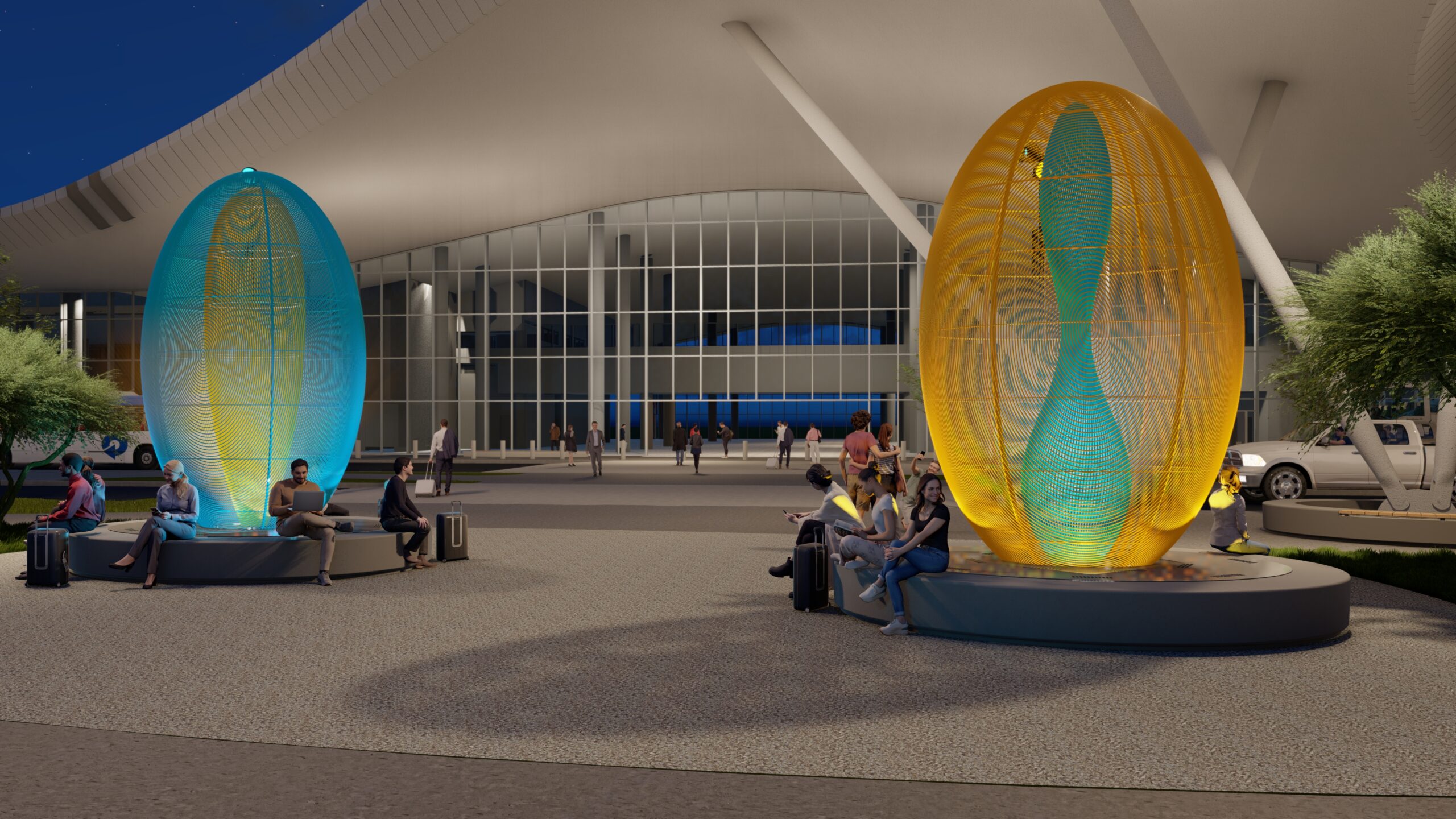
(Rendering of ‘The Two Electras. Credit_Artist Cliff Garten. Copyright Cliff Garten Studios 2025)
Much of the artwork in the new terminal has an aviation theme and is a nod to Hollywood Burbank Airport’s role in aviation history.
The artwork above by Cliff Garten, titled “The Two Electras,” will sit outside the new terminal.
This work takes inspiration from the Electra 10E Special, which was the aircraft engineered by Lockheed’s Clarence “Kelly” Johnson, built at this site in 1936 and flown by Amelia Earhart in her around-the-world flight attempt in 1937.
Hanging from the ceiling inside the terminal is artist Glenn Kaino’s massive, 30-foot by 40- steel mesh and mirrored ribbon piece, titled “When We Reflect.”
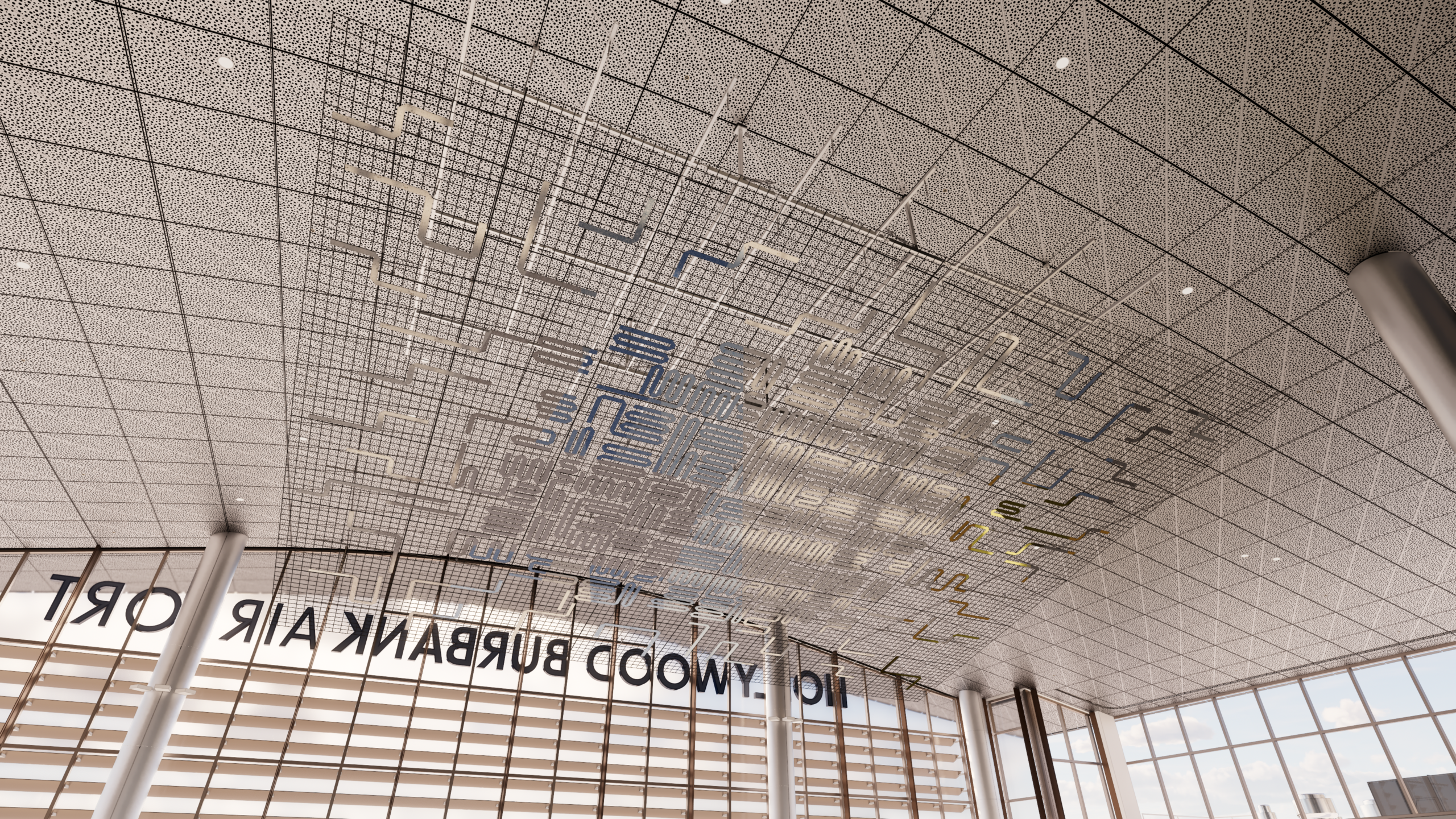
(When We Reflect. Artist Glenn Kaino. Copyright Glenn Kaino 2025)
Lockheed Aircraft Corporation’s ‘Skunk Works’ were based at BUR and bombers, fighter jets and classified aircraft were built here.
During World War II the plant was camouflauged, with the help of crews from nearby movie studios, to protect it from Japanese bombers.
Part of the camouflauge included netting woven by Japanese Americans incarcerated at a nearby racetrack-turned-detention center during the war.
“When We Reflect,” artwork by Glenn Kaino, who’s family was incarerated at that center, hangs from the terminal ceiling and pays homage to that history.
