Visitor numbers to Las Vegas have been declining. And the Las Vegas Convention and Visitors Authority is rolling out a national “Welcome to Fabulous Las Vegas” campaign to lure visitors back.
In addition to the 60-second TV ad (below) that was launched during Thursday’s NFL season opener between the Dallas Cowboys and Philadelphia Eagles, the campaign includes a 3D anamorphic billboard in Times Square that will debut on Monday, September 15 and will feature images that seem to pop out of the 2D panel.
The campaign will also greet visitors at Harry Reid International Airport (LAS) at the rideshare pickup zone in Terminal 1.
Starting Friday, Sept. 12, the “Fabulous Pickups” will feature colorful lighting, plush seating, music, and a neon selfie wall.
During special occasions, the zone will also host live performances, DJs and more.
Here’s a mock-up. But note the ‘note’ in the lower right-hand corner: “Purple benches will be finished in laminate, not tufted upholstered as shown.”
Tufted upholstery or not, this will be a welcome upgrade from the garage space that’s currently covered in cigarette butts.
Seattle’s Museum of Flight celebrates turning 60
Seattle’s Museum of Flight is marking its 60th anniversary with two days of events and special exhibitions on Saturday and Sunday, September 13 and 14.
During the weekend, the museum will also debut the newest addition to its aircraft collection: a classic Learjet 24A, which is about 60 years old.
Registered as N1965L, this plane was the twelfth in a production line of iconic personal jets that helped define the Sixties jet set, the museum explains.
Fresh Art at Denver International Airport
Denver International Airport (DEN) is showcasing Calaveras en Mi Ciudad, a mobile art exhibition that celebrates and pays tribute to Día de Muertos (Day of the Dead), a holiday and day of remembrance in Mexico.
Look for this artwork from November 3, 2025, to November 3, 2026, on DEN’s A-Bridge and on Concourse A west, near Gate A19.
(Our travel trends story first appeared on NBC News in a slightly different form)
Consumers who got a taste of higher-end amenities during the last couple of years’ travel boom aren’t too keen to go back to basic economy.
And the travel industry doesn’t want them to.
“If revenge travel was then, emboldened travel is now,” said Erika Richter, a spokesperson for the American Society of Travel Advisors. The group sees customers taking advantage of the upgraded offerings operators are dangling.
With travel volumes still trending well ahead of pre-pandemic highs, “premium leisure travel is definitely on the rise,” said Henry Harteveldt, president of Atmosphere Research Group, which analyzes the travel industry.
At the top end of the market, the most deep-pocketed consumers are still spending heavily on high-dollar getaways and exclusive experiences. Now, airlines, hotels, and cruises are prodding passengers of less lavish means to go premium, too — in some cases revising down what counts as “luxury.”
Upgrading from basic
Caleb Cash-Tobey and his husband have been springing for larger rooms and suites than they used to. Each year, the Fort Smith, Arkansas-based couple takes one major trip as well as smaller monthly ones that they’re increasingly comfortable enhancing with extra amenities, such as evening turndown service and in-room breakfast.
“We’ve learned that we should take the experience when it is offered because some experiences are no longer available in the post-Covid world that we may have really enjoyed,” Cash-Tobey. One example: a Champagne-augmented tour of the British crown jewels that a favorite London hotel discontinued.
Kristin Winkaffe, a travel adviser with Avenue Two Travel in Columbus, Ohio, said customers are becoming “more inclined to treat themselves to experiences that they may not have considered a few years ago. They’re now prioritizing the quality of their vacations over budget constraints.”
The travel industry is happy to oblige
Both international and domestic airlines are increasing their premium cabin capacities, a pre-pandemic trend that shows no sign of letting up. Major carriers have been adding extra legroom in premium economy and expanding some business and first-class cabins, looking to nudge more flyers out of their cheapest seats and into pricier ones.
Delta Air Lines President Glen Hauenstein told investors in October that revenue from premium offerings jumped 17% from the prior year, “outperforming the main cabin by five points.” Its premium select tier for long-haul flights, situated between economy options and the upscale Delta One, was revamped in late 2022 and has performed “above expectations,” he said.
“The airlines have realized that if they price these products in the right way, they can coax enough people to trade up,” Harteveldt said. His firm found last year that 1 in 3 travelers either booked a premium option or considered one, down just slightly from 38% in 2022, “when we were still in the throes of revenge travel and when people still had more savings.”
Some consumers are shelling out on upgrades that are more about practicality than self-pampering.
“Since the pandemic, I now only book changeable airplane tickets and hotels,” said Cathy Raines of Washington, D.C. That typically adds about 15% to her bills, Raines said, but she thinks it’s worth it for the added flexibility.
Kristin Chambers, founder of the Boston-based luxury travel agency Travellustre, said many of her clients now ship their luggage ahead of arrival and book VIP services like airside pickups, expedited service at customs and immigration, or cars to hotels. “Travelers are increasingly willing to invest in aspects of their journey that will guarantee an elevated level of service,” she said.
Seattle resident Rebecca Ross and her husband have ruled out Airbnb-style accommodations without 24-hour staff. “Life is too short to be standing around with a roller bag and a double-parked car wondering how to get in. We’ve vowed that our lodging must have a front desk with a human,” she said. That sometimes means spending more but often just requires a little extra time to hunt down, she added.
A Morning Consult report in September put it bluntly: “Forget first-class seats and penthouse suits — luxury travel is about customer service.” If that means redefining what counts as premium to include things like the ability to speak to a real support agent, the researchers found consumers may welcome it all the same.
First-class flights, fancy hotel stays, and fine dining hold less appeal now than simply “feeling relaxed,” “experiencing comfort” and great service, the report said, adding that brands can find opportunity by treating the latter as high end: “The experiences that comprise ‘new luxury’ don’t require the traveler to be affluent.”
The high end gets higher
Some amenities certainly do, though, and wealthy customers are scooping them up.
Many “ultra-high-net-worth individuals” ditched first-class seats on commercial flights for private jets during the pandemic, and the habit stuck, said Doug Gollan, founder of Private Jet Card Comparisons, a buyer’s guide to these services.
“New flyers racked up record-high private flight hours in 2021 and 2022, and 95% of these newcomers have continued to fly privately,” he said — at an average cost of about $40,000 for a two-hour trip.
Lodging operators have also seen strong demand from offerings aimed at higher-dollar guests. “Booking patterns continue to overwhelmingly favor premium suites, and some categories are booked months to years in advance,” said Gebhard Rainer, the CEO of Sandals Resorts International.
The company’s newest resort, Sandals St. Vincent and the Grenadines, won’t open until March, but its beachfront butler villas that start at $1,111 per person per night, and two-story overwater units starting at $1,570 per person per night, have already sold out dates well into 2025, Rainer said.
The Westin Poinsett Hotel in Greenville, South Carolina, put together a “Home Alone” themed holiday package with prices ranging from $599 to more than $1,000 a night — over-the-top rates for the local market during what’s usually a slow holiday season there. It sold out with 93 bookings and many guests asking about reservations for next year.
“I have been in the industry for 25 years between Washington, D.C., and Greenville, and by far this was the most successful package I have ever seen,” said John Geddes, the hotel’s sales and marketing director. “Guests were spending a minimum of four to five times the amount they would generally spend.”
Tour organizations and cruise lines report much the same.
“Travelers are willing to pay more for exclusive experiences,” said Terry Dale, CEO of the United States Tour Operators Association. As a result, organizers “are curating itineraries to include personalized services and experiences with more exclusivity, going beyond the standard offerings.”
Holland America, a subsidiary of Carnival Cruise Line, is seeing more guest bookings for premium spa services like its thermal suites and hydropool, said spokesperson Bill Zucker. “Our private cabanas are selling out regularly. And our new direct luggage service, where guests can have their luggage shipped directly to and from their home, is proving to be very popular,” he said.
Lindblad Expeditions, which operates National Geographic-branded cruises, replaced its Islander I luxury yacht with the more luxurious Islander II for Galapagos voyages in 2022, raising the average fare by 45%.
“Some nail-biting ensued,” said Lindblad Chief Commercial Officer Noah Brodsky, but the Islander II is already 78% booked for this year. That’s well ahead of historical trends, he said, “and an indication of the uptick in premiumization.”
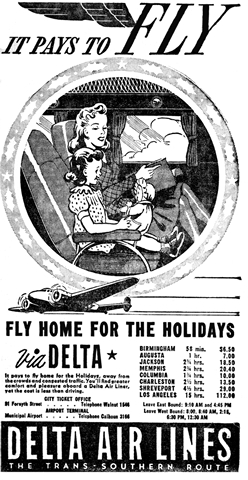
Ski season is just about here and a variety of ski resorts will give you a free day of skiing if you show your airline boarding pass.
Fly in to Vail/Eagle County Regional Airport (EGE) in Colorado and bring your boarding pass and Vail Valley lodging confirmation to any Vail or Beaver Creek ticket window and get a complimentary same-day lift ticket as part of the Fly in ski free program.
Squaw Valley|Alpine Meadows -about 42 miles from Reno-Tahoe International Airport – is offering a “Fly & Ski Free” deal for skiers and snowboarders. Guests arriving by airplane can ski or ride for free on the arrival afternoon between 12:30 and 4 pm (and evenings during night operations) by presenting a same-day commercial airline boarding pass with a matching photo ID at the Guest Services & Sales Center at Squaw Valley or Alpine Meadows.
Steamboat Ski Resort, Steamboat Springs, Colorado, offers free night skiing and riding on the day of arrival when you fly into a Colorado Airport. Just show your boarding pass at the ticket window to receive this offer. If you have a boarding pass for Tuesday or Wednesday arrival, you can ski free on Thursday.
In addition, several ski resorts participating in the Alaska Airlines Ski the West promotion are also offering a free day of skiing for those who book packages and show their paper Alaska Airlines boarding pass.
From State Library of New South Wales, via Flickr Commons
Recent decisions in Britain and New Zealand to legalize same-sex marriages have given gay American couples seeking a destination wedding some high-profile options.
Same-sex weddings will be legal in New Zealand starting August 19. Among the first to be married under the amended marriage law will be a gay couple from Australia who won a contest hosted by Tourism New Zealand. Air New Zealand, meanwhile, is looking for a Kiwi couple to wed onboard one of its jets while in flight.
Same-sex weddings in Britain won’t take place until next summer, but Visit Britain is already in the planning mode.
“We’ve always rolled out a warm welcome for LGBT travelers,” said Sandi Dawe, CEO of Visit Britain, “We hope this new law will result in an increase in tourism to Britain for gay and lesbian travelers who want to marry and honeymoon here.”
To help those couples “conceptualize their own dream weddings,” the national tourism agency has issued a list of gay-friendly wedding venues and locations, including castles in Wales, the Brighton Pier in England and the restaurant atop the phallic-shaped building at 30 St Mary Axe in London that’s been dubbed “The Gherkin”.
“I already have gay clients inquiring about planning a destination wedding for them in Britain,” said David Rubin, CEO of DavidTravel, a luxury travel agency in Corona del Mar, Calif.
In the past, Rubin has organized wedding celebrations and honeymoons for American couples in South Africa, Spain and in other countries where same-sex marriages are already legal.
“Sweden – with the Ice Hotel – has been a great destination, and in Iceland we’ve had couples get married on top of a glacier,” said Rubin. “Canada is easy: it is close by and same-sex weddings have been legal there since 2005.” Rubin’s agency is also helping plan same-sex weddings in France, where marriage equality became legal this May.
Benn Storey and Brandon Perlberg; courtesy B. Perlberg
Brandon Perlberg, a 35 year-old lawyer, consultant and “very proud New Yorker,” is currently engaged to marry Benn Storey, a 31 year-old senior newspaper designer from England, his partner of more than eight years.
They’ve set their wedding date for autumn 2014 and are hoping marriage equality reaches Scotland by then, because “my partner and I have completely fallen in love with Edinburgh,” said Perlberg. For now, though, they’re planning to be married in England, in either London or Durham.
“Either way, 40 to 50 friends and family will be flying to the UK from the US to share in the event with us,” said Perlberg.
The Visit Britain team now actively courting the same-sex marriage market will be happy to hear that, and not just because weddings are happy occasions.
While there are no official statistics on how many destination weddings take place or how much money is spent on them, “the potential spending associated with gay marriage is quite simply immense,” said Ian Johnson, founder and CEO of Out Now, a global lesbian and gay marketing and consulting firm.
Competition for the destination gay wedding and honeymoon market is really heating up, said Johnson.
“Places that get this right now can expect a far bigger payoff than just the gay and lesbian people they will attract. It will also affect the attitudes of wedding guests, friends, family and work colleagues of the happy couple, many of whom will choose to spend their travel dollars where all citizens are treated equally,” he said.
That was the scenario two years ago when Ernesto Rocco and his partner had an elaborate marriage celebration in France – even before same-sex marriage was legal there.
Ernesto Rocco and Richard Davies at their public wedding ceremony in France.
The couple first got officially married in Vermont (which legalized same-sex marriage in 2009) and then, with their priest from California presiding, they had a public ceremony at a French chateau with more than 100 friends and family.
“For that couple, the right chateau decided the destination,” said Rubin.
And while Rocco and his partner, Richard Davies, would have rather skipped the stop in Vermont if that was possible in 2011, they also chose France because they felt it important to celebrate and spend their money in a country that supports gay people. “We spent six figures and our friends and family also bought hotel rooms, plane tickets, meals, etc. to be with us. Why should that money go someplace that doesn’t accept us?” he said.
Early auto dash map reading device. Courtesy Nationaal Archief, via Flickr Commons
GPS (global positioning system) devices now make it easy for travelers to navigate the nation’s highways and city streets.
But on this summer’s road trip remember that while the technology can get you where you’re going, it can also lead you astray.
It’s not uncommon to get sent off course by a GPS device: a Harris Interactive study found that while 30% of adults now use some sort of GPS unit, 63% of GPS users have been misdirected at least once by their device.
Misdirection could be as simple as a route more roundabout than necessary. But bad directions can have serious consequences.
As NBC’s Tom Costello reported on TODAY Thursday, one GPS unit directed a woman with two kids in her car onto railroad tracks near Boston. They scrambled out just before a train rammed the car. In California’s Death Valley, a GPS device sent Donna Cooper, her daughter and a friend in search of roads that no longer existed. They were stranded for three days, in 128-degree weather, before being rescued.
“We just kept getting further and further and further into Death Valley,” Cooper told Costello.
The reasons for this happening are as simple as the consequences are dire. GPS units are fed by map software. Some software is kept fresh by driving teams mapping roads with sophisticated equipment; but others rely on maps that may be old and out of date. And even if software gets updated, some companies and users are lackadaisical, or too cheap, to download the latest updates to their devices.
So on the road this summer, don’t rely solely on your GPS for directions.
Pack a paper map (yes, they still exist) and “don’t turn off your internal navigation system when you turn on your gadget,” said NBC News.com technology reporter Bob Sullivan. If a GPS sends you the wrong way, “your sense of direction could be the difference between driving 5 or 50 miles out of your way.”
If you shun big cities but still crave a vacation near museums, historic sites, performance halls and other cultural attractions, consider some of the small places on Smithsonian Magazine’s list of the 20 Best Small Towns to Visit in 2013.
Gettysburg, Pa., Cleveland, Miss. and St. Augustine, Fla. nabbed the top three spots on the list, followed by Baraboo, Wisc. and Astoria, Ore.
They got there by being charming destinations, of course, but also because they have good numbers.
“We wanted a statistical foundation to help formulate our list,” said Susan Spano, who visited and wrote about the winners. So rather than just use subjective input from experts and readers, the magazine asked the geographic information company Esri to create a list of 250 towns with populations less than 15,000 that were chock full of cultural and historic amenities.
The 20 small towns chosen for the magazine’s ‘best’ list “is not foolproof,” said Spano, but it also takes into consideration a geographical spread and gives a nod to major events and anniversaries, such as the December Light Festival known as Holly Folly held in Provincetown, MA (#10) and the fact that this year Gettysburg, PA is marking the 150th anniversary of the Civil War.
“A lot of people will be here in July for the anniversary of the Gettysburg Address,” said town spokesman Carl Whitehall, “but we do the Civil War year-round and we do it very well, so consider visiting in the late fall or the spring as well.”
Here’s what helped the other small towns make it into the top five.
Just five miles east of this authentic Mississippi Delta town is Dockery Farms, “a plantation where the blues were born,” said Spano. So in addition to a town with a restored historic business district, galleries and a university with a bustling performing arts center, “you have a huge, indigenous musical richness.”
Located on Florida’s northeast coast, stately St. Augustine was founded in 1565 and made the list in part because the city is having an extended 450th anniversary party to celebrate its role as the country’s oldest continuously occupied European settlement.
The city “stands as the most lovingly cared-for vestige of the Spanish New World in the United States,” writes Spano, and offers visitors everything from the brand new Colonial Quarter living history museum to the St. Augustine Alligator Farm and Zoological Park, which was founded in 1894.
Baraboo is not far from the Wisconsin Dells, but it is also home to the Circus World Museum and a town square that hosts summertime concerts and movies. The city is also just three miles from Devil’s Lake and is near the International Crane Foundation, where visitors can walk trails on a campus that serves as a refuge for whooping cranes and 14 other crane species.
After years of hard times, this fishing and logging community at the mouth of the Columbia River is experiencing a renaissance and welcoming visitors with restored historic sites, classic movie theaters and performance halls, boutique hotels and brew pubs.
“For an overview, take a ride on the Astoria Riverfront Trolley,” said Regina Willkie, spokeswoman for the Astoria-Warrenton Area Chamber of Commerce. “The volunteer conductors on board chat about the sites seen along the tracks and the ride only costs one dollar.”
The Queen of the Mississippi, a new paddlewheel riverboat operated by American Cruise Lines and built specifically for the river, launched Saturday in New Orleans.
The five-deck, 150-passenger sternwheeler has modern amenities such as elevators, Wi-Fi and satellite TV, along with other features reminiscent of Victorian-era river cruising, such as a calliope. “There’s no pool or casino, but there are large staterooms, a library, a putting green, lectures and musical entertainment,” said Charles Robertson, president and CEO of American Cruise Lines.
The launch of the new sternwheeler is part of a comeback this year for cruising on the Mississippi. The traditional form of river travel was absent for at least four years due to the economic downturn and to heightened shipboard fire safety regulations that cruise lines avoided by retiring rather than retrofitting historic vessels such as the Delta Queen, the Mississippi Queen and the American Queen.
The launch of the Queen of the Mississippi “is a massive big deal,” said Carolyn Spencer Brown, editor-in-chief of cruise review site Cruise Critic.com. “With this new riverboat and the refurbished 436-passenger American Queen, which the Great American Steamboat Company returned to the river in April, the Mississippi is back on track as a river cruising destination.”
The Queen of the Mississippi will make its first seven-night, round-trip cruise between New Orleans and Vicksburg, Miss. After that, the schedule includes itineraries on the Mississippi River as far north as Minneapolis-St. Paul and on the Ohio River as far east as Pittsburgh.
“We just booked two people on the Queen of Mississippi,” said Roy Ramsey of Naples Fla.–based Betty Maclean Travel, Inc. “There’s a lot of pent-up demand for cruising on the Mississippi. Especially for people who put a great deal of value on Civil War history, plantation history and travel the way it used to be.”
While the style and pace of modern-day riverboat travel harkens back to the days of Mark Twain, the price of a week on the Queen of the Mississippi is definitely 21st century. Rates begin at $3,995 per person for a stateroom with no balcony and rise to $6,685 for an owner’s suite with a private balcony.
“The price is on par with a luxury cruise experience,” said Spencer Brown. “It’s not about lying at the pool, getting a suntan or going to a belly flop contest.”
Kim Priez, vice president of the New Orleans Convention and Visitors Bureau, said the city expects many riverboat cruisers to spend a few nights in town. “A lot of the revenue we’ll experience is from cruisers who stay in New Orleans one or two days before the cruise begins and make it two vacations in one.”