Terrorism

More robots at an airport near you

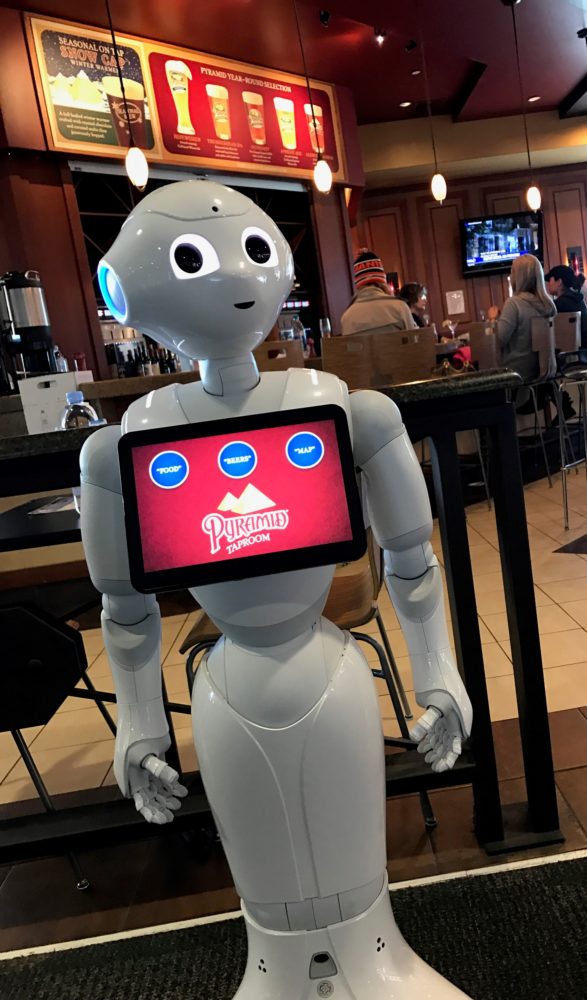
Travelers will be running into robots at more airports as HMSHost adds Pepper, the humanoid robot, to the staff of more of its restaurants.

Her job: to give menu informaton and recommendations and generally entertain – or alarm – guests.

You may have encountered Pepper at her first assignment: the Pyramid Ale Taproom in Oakland International Airport. Now Pepper clones are also working hard at Avenue des Canadiens in Montréal–Pierre Elliott Trudeau International Airport (where Pepper understands French or English),   the Washington Redskins Burgundy & Gold Club in Washington Dulles International Airport and at Point the Way Café in Los Angeles International Airport.

According to HMSHost, Pepper customizes her features for each airport so her interactions with travelers vary from location to location. In some airports she not only offers restaurant help, she helps travelers with directions to things at the airport, such as gates and the nearest restrooms.

If yu run into Pepper, let us know what the expereience is like. Cool or creepy?

Airports after Brussels

Brussels image

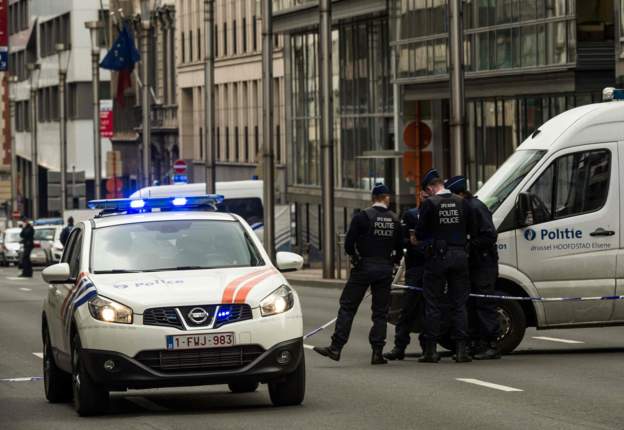
Brussels Airport remains closed today – and tomorrow – in the aftermath of Tuesday’s terrorists attacks at the international airport and at a metro station in town which killed at least 30 people and injured dozens more.

Security remains heightened at airports around the world, so be prepared for possible delays at the security checkpoints.

Airport/metro attack in Brussels

Check for live updates on the BBC and elsewhere, but the sad news of today is that
there have been coordinated deadly terrorist attacks at Brussels Airport and at the city’s Maelbeek metro station, with more than two dozen people killed between the two sites.

Airports, airlines and transit systems around the world are on high alert, so you can expect delays, cancellations and increased security presence.

A sad, sad day.

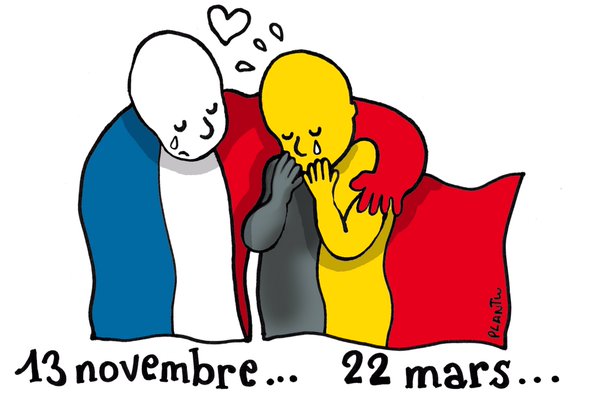
Airlines & airports stay alert after Paris attacks

Airport and airlines continue to react and respond to the attacks in Paris on Friday night.

Airlines below – and others – are waiving change fees through today or Monday and it’s possible these policies will be updated later in the day.

Air France

American Airlines

Delta Air Lines

Lufthansa

United Airlines

Air France buys 20,000 Charlie Hebdo papers for passengers

Charlie Hebdo

French flag carrier Air France purchased 20,000 copies of the first edition of the satirical magazine Charlie Hebdo to be published since the January 7 terrorist attack on its offices.

The cover features a representation of Mohammed holding a placard that reads ‘Je Suis Charlie.’

The initial press run of five million copies sold out quickly, but Air France passengers at both Charles De Gaulle and Orly airports could pick up a copy of the issue in departure lounges.

Airlines waiving changes fees after Boston Marathon bombing

Here’s a link to airlines I have learned of – so far – that are waiving change fees and making other accommodations for travelers going to and from Boston.

If you hear of others, please send information along and I will update through the evening.

Air Canada

Air Tran

American Airlines

Delta Air Lines

Jet Blue

Southwest Airlines

US Airways

Virgin America

United Airlines

Airport pat-downs, body-scanners, x-rays and you

TSA BACKSCATTER

There’s been a flurry of news – some real, some fussed-up – about concerns and confrontations about body-scanners and enhanced pat-downs at airports.

Need to catch up?

This Reuters article explains the concerns pilots have about stepped up screening at U.S. airports.

On his NPR blog, Shots, Richard Knox does a great job of laying out the difference between, and the debate about, the safety of the new scanners.

The TSA blog posted video – and the original radio interview – concerning a young woman who claims she was cuffed to a chair at the Fort Lauderdale International Airport.

This fellow caused a hubbub at San Diego International Airport by refusing the pat-down after deciding to opt-out of the scanning machine.

And there’s a group trying to organize Opt Out Day at airports nationwide on November 24, 2010.

Study up. Things are just going to get curiouser from here…

Airport body scanners: invading your personal space & the terminal space

I spent much of the day yesterday writing a column for MSNBC.com about the pros and cons of airport body scanners.

That column, which posts Thursday, January 14th, 2010, focuses on some of the privacy issues surrounding the “virtual strip search” aspect of these machines.

I didn’t have room for in the story for the comments of airport terminal planner and designer, Pat Askew, from Perkins+Will.

We don’t think of it right away, but Askew points out that these big, expensive body scanner machines will not only change the TSA procedures, but also have an impact on the look and layout of present – and future – airport terminals.

Askew says:

  • Body scanning machines take more space, especially width-wise, than do the current magnetometers (or walk-through metal detectors).  It’s already hard to find space in existing terminals for all the necessary equipment they needs to be there;
  • Processing rates are greater with body scanners than with metal detectors. This means longer lines, more machines – and more required space;
  • Explosive detection devices for carry-ons will soon be required. This equipment will be smaller, but similar to the technology currently used for checked luggage. It will replace the current x-ray machines used to examine carry-ons and operate in much the same way, but may be larger and slower….and need more space.

So next time you’re Stuck at the Airport, take a good look around. That great piece of public art in the terminal may soon need to make way for a hulking piece of security equipment.

Using math to catch a terrorist

A few weeks back my Well-Mannered Traveler column on MSNBC.com was about ethnic profiling at airports.

A great many people (328 last time I checked)  posted comments in response to that column and most of those folks seem to believe that ethnic profiling is a good and useful way to thwart terrorism.

But according to this article in today’s (Feb 2nd)  New York Times, it’s not.

What would work better?  Math.

Specifically, says William H. Press, a computational biologist and computer scientist at the University of Texas, Austin, something called “square root sampling.”

“We have been told that strong profiling will somehow find and siphon off the worst offenders and we’ll be safe,” Dr. Press said. “It’s not true. The math does not support that.”

See what the math does support in Sandra Blakeslee’s New York Times article:  Math Backs Limited Profiling in Airport Screening and tell me what you think.

math