Here’s another celebrity airplane safety video: soccer players from Manchester United pop up for Turkish Airlines.
Safety
Zombies happen. Pack a travel emergency ‘go kit.’
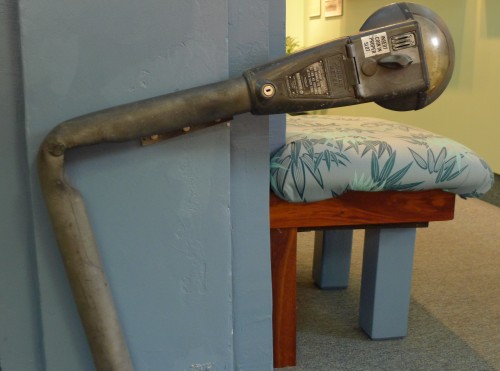
From the Pacific Tsunami Museum in Hilo, Hawaii
If you happened to be on the road – in a hotel, a convention center or, of course, in an airport – when some sort of disaster strikes, would you know what to do? And would you have the right tools and supplies with you so that you could do what you needed to do?
I wasn’t confident I would.
But after talking with experts and savvy travelers about the ideal contents of an emergency ‘go kit’ for this story on msnbc.com – Disasters prompt world travelers to be prepared – I’m feeling more confident about dealing with everything from tsunamis to zombies when I’m on the road.
Here’s the story:
When an 8.8-magnitude earthquake struck Chile at around 3:30 a.m. in February 2010, Seattle-based wine importer Ryan Sytsma was asleep in a Sheraton hotel somewhere between the airport and downtown Santiago.
Once he realized it wasn’t a train shaking the room, Sytsma jumped out of bed and stood in the bathroom doorway.
“It kept getting worse,” he said. “Soon the electrical outlets started throwing sparks, anything unsecured was falling over and smoke filled the room. I could only see flashes of light, hear explosions like bombs and smell smoke that was a mix of drywall dust, burning plastic and melting rubber.”
Sytsma survived the three-minute temblor unscathed and raced out of his hotel room with his passport, cash, shoes and his small suitcase, which was already packed and near the door.
Those items, and the extra shirts and dozen Power Bars packed in the suitcase, helped ease the post-earthquake experience a bit for Sytsma and the people he ended up with. And now Sytsma makes sure to pack for every trip with disaster preparedness in mind.
Good idea, say the experts. A well-stocked emergency “go kit” can arm a traveler with tools that may help keep a bad travel situation from turning into a full-blown disaster.
“Given the recent events in Japan, Egypt and other places that appeared as low to insignificant on the risk map last year, a lot of people are rethinking their preparedness,” said Alex Puig, regional security director for International SOS, a global medical and security assistance company. “We’re not asking people to go above and beyond what common sense dictates. But anything can happen, and preparation is the most important thing you can do.”
Be prepared
Snow, rain or even a computer glitch, as Alaska/Horizon passengers learned this past weekend, may delay your plane for hours or days. You may get stung by a jellyfish, mugged by thug or knocked unconscious by a falling coconut. Then there are earthquakes, floods, tornadoes, hurricanes, pandemics or political upheaval to deal with.
Of course, many travelers will never experience an emergency while on the road. And danger can also find you close to home.
But for those who want to be prepared, what should go in an emergency kit?
“A good police whistle, two glow sticks, a small roll of wide adhesive tape to prevent hotel doors from closing, and $100 in local currency in small denominations,” said Noel Koch, senior director of travel intelligence for the travel risk management company NC4.
Koch considers a smartphone, with a reliable service provider, essential as well. “In the case of Japan, a smartphone would have given the traveler the ability to get information on how to book a flight out of Tokyo,” he said. “In the case of Egypt, travelers could have gotten information via Twitter to find out what was happening with the protests.”
Medications, both prescribed and over-the-counter, belong in your kit as well. “Take enough for your trip and an extra supply in case you get delayed or stuck someplace for a certain length of time,” said Myles Druckman, vice-president of medical services for International SOS. “You can’t assume you’ll be able to find the same medications you have at home. And some over-the-counter medicines may be prepared or branded differently than you’re used to at home.”
Puig adds that you go should always have items that allow you to travel and communicate. That includes a copy of your passport (with another copy saved in e-mail or another electronically accessible way), a cell phone you know will work in any country you’re visiting and a calling card to use if your cell phone dies or is stolen. “None of that really requires a lot of extra effort,” he said.
Make room for these items
Beyond the basics, you may want to add some of these items to your “go kit.”
Beth Whitman, founder of Wanderlust and Lipstick, used to carry a water purifier only on her international trips. “Now I won’t leave home without it even to a destination with drinkable tap water because I realize it would be perfect if water supplies were compromised,” said Whitman.
When she travels to West Africa, nature writer Susan McGrath takes a folding mosquito tent and beeswax earplugs in case she finds herself in a village with a community loudspeaker that plays bad pop music 24/7. She also always takes along a headlamp. “I did get stranded in Nigeria during a countrywide shut down and lived briefly in the Lagos Hilton on my emergency kit,” said McGrath. “And when the power went off in the very crowded airport at 11 p.m., I was pretty well equipped not to panic.”
When WanderingEducators.com publisher Jessica Voights travels with her wheelchair, her “go kit” includes the phone number and address of a mobility organization or store that can help in case of an emergency and/or equipment failure, extra batteries, adapters and converters for medical devices, extra copies of prescriptions “and letters from doctors explaining my medical conditions and equipment needs.”
And Suzanne Rowan Kelleher, editor of WeJustGotBack.com, keeps a few quart- and gallon-size Ziploc bags in her “go kit” as well as “phone numbers and policy numbers for my car and health insurance, customer service numbers for credit cards and contact numbers for my family’s doctors and pediatrician.”
Pre-packed kits and emergency quarters
At minimus.biz, which sells a wide variety of travel and trial-size items, miniature rolls of duct tape, individual packets of water purifier and glow sticks are listed under the “Survival” tab. Pre-packaged “personal care” kits filled with three days’ worth of water, food and other basics supplies are there, too. Company co-founder Paul Shrater said that since the Japanese disaster, he’s gotten a lot of inquiries from companies and agencies seeking to stock up on those emergency kits but few calls from vacationers seeking to create their own travel-versions of the kits.
“If you really stock it correctly and think of all the things you really need, you start getting up there in terms of weight and size,” said Shrater.
That’s why Puig of International SOS urges worried travelers to sit down and make a plan. “Do an analysis of who you are, how you travel and what the risks are in the country you’ll be traveling to,” Puig said. “Ask yourself how well prepared you’d be if you were in Cairo when the demonstrations broke out or in Japan after the earthquake. What are the things you’d need to have to be prepared?”
Mitch Ahern of technology consulting firm Cantina is prepared. He carries a roll of quarters in his travel emergency kit for late nights at airports or trade show set-ups when dinner may come from a vending machine. Ahern said the quarters have a dual purpose. “I have it on excellent authority that a roll of quarters in a sock makes an excellent zombie-stopper when applied with force to the head!”
At TSA: airports can’t opt-out; workers can opt-in
Lots of news from the TSA recently.
On Friday, TSA administrator John Pistole gave the OK to limited collective bargaining for Transportation Security Officers (TSOs) at the nation’s airports.
Right now, about 13,000 TSOs are being represented by one of two unions: the American Federation of Government Employees (AFGE) and the National Treasury Employees Union (NTEU).
But those unions can only offer personal, not collective, representation and are not allowed to bargain on behalf of the officers.
That’s about to change.
This spring, TSOs are scheduled to vote on whether they want exclusive union representation from one of those two unions – or no union representation at all. If they do choose a union – and they probably will – Pistole’s new determination will allow that union to conduct bargaining on “limited, non-security issues relating to employment including shift bids, transfers and awards” but not on any issues related to security.
According to a TSA fact sheet, that means…
“…bargaining would not be allowed on security policies, procedures or the deployment of security personnel or equipment, pay, pensions and any form of compensation, proficiency testing, job qualifications or discipline standards. Officers would also be strictly prohibited from striking or engaging in work slowdowns of any kind.”
We’ll surely be hearing more about this in the next few weeks, but it’s interesting, – and, some say, very meaningful – that this announcement comes so soon after John Pistole’s announcement that he’s effectively capping the program that for almost ten year years no has allowed airports to ask the TSA to hire private contractors to replace federal workers at the security checkpoints.
Here’s the story I wrote for msnbc.com about that: Ditch TSA? Airports no longer allowed to opt-out.
The Transportation Security Administration has said it won’t allow any more airports to “opt out” and bring in private security contractors in place of the agency’s federal workers. Rep. John Mica, R-Fla., who in the fall wrote a letter to 100 airports urging them to ditch TSA agents, said it is “unimaginable” that TSA would end “the most successfully performing passenger screening program we’ve had over the last decade.”
Despite staunch opt-out support from Mica — the new chairman of the House Transportation and Infrastructure Committee — TSA Administrator John Pistole said Friday that he had reviewed the private contractor screening program as part of a more general review of TSA policies and decided not to expand the program beyond the current 16 airports because he did not see “any clear or substantial advantage to do so at this time.”
Since the TSA was created after the Sept. 11, 2001, terrorist attacks, federal law has allowed airports the option of using private screeners. But few of the nation’s roughly 460 commercial airports have done so.
Currently, San Francisco International, Kansas City International and 14 other airports use private contractors to screen airline passengers. Under the program, the private company conducts an airport’s passenger screening according to TSA’s rules and policies and under TSA supervision.
“TSA will continue to sustain the program at the current level to compare the effectiveness of federal vs. private screeners,” said TSA spokesperson Greg Soule. “The information we have to date shows the performance of TSA officers and private screeners is comparable.”
‘Flabbergasted’
Several airports had been pursuing the use of private screeners. Gary Cyr, director of Missouri’s Springfield-Branson National Airport, said he was “flabbergasted” by the two-sentence TSA memo he received Friday letting him know that the airport’s application to “opt out” of the federal passenger screening program had been denied.
“We got no response as to why, what for or otherwise,” said Cyr. “It’s the shortest important letter I ever got.”
Five other airports — all in Montana — also were looking to use private security screeners and received the same response Friday from the TSA. “Basically it was a form letter saying that our application had been denied because there would be no benefit to TSA,” said Cindi Martin, director of Montana’s Glacier Park International Airport.
Some government officials and unions representing TSA workers applauded Pistole’s decision. Rep. Bennie Thompson, D-Miss., a ranking member of the Committee on Homeland Security, said in a statement that ending the acceptance of new applications for the program “makes sense from a budgetary and counterterrorism perspective.”
“The nation is secure in the sense that the safety of our skies will not be left in the hands of the lowest-bidder contractor, as it was before 9/11,” said John Gage, president of the American Federation of Government Employee, in a statement. The union represents TSA screeners.
Mixed reaction
Colleen Kelley, president of the National Treasury Employees Union, which is actively organizing TSA officers at some airports, also thinks Pistole did the right thing. “It keeps this important work in the hands of federal employees, where it belongs,” Kelly said in a statement.
But in Washington, D.C., where more than 200 airport staff members were attending a legislative conference, Greg Principato, president of Airports Council International–North America, said his organization opposes the TSA’s stance. “Nobody here is happy about Pistole’s decision. Even airports that had no interest in opting out aren’t happy. They thought those airports that want the option should be able to pursue that.”
Principato said he is keeping an eye on the 16 airports already in the program. “We didn’t think TSA would make the move to not let anyone else in. We hope they won’t expand on the mistake by shrinking the current program.”
Decisions, decisions
In the meantime, several airports that were considering the screening partnership program are contemplating their next moves.
“We still plan to opt out,” said Larry Dale, airport director at Orlando Sanford International in Florida, who planned to file his airport’s application this week. “My guess is they’ll send it back saying they’re not taking applications. But we’re taking advantage of something we’re allowed to do. We’re put too much time and investment into researching this not to go forward.”
“We’re just not sure what to think at this point,” said Chris Jensen, airport director at Missoula International. “So we’re going to wait and watch.”
Martin of Montana’s Glacier Park International Airport said her airport may re-apply. “The program is not dead. The reason our airport authority applied to the screening partnership program was because of TSA staffing cuts at our airport and customer service issue. Those issues still haven’t been resolved.”
Opt out or opt in? Airport scanners & pat-downs in the news
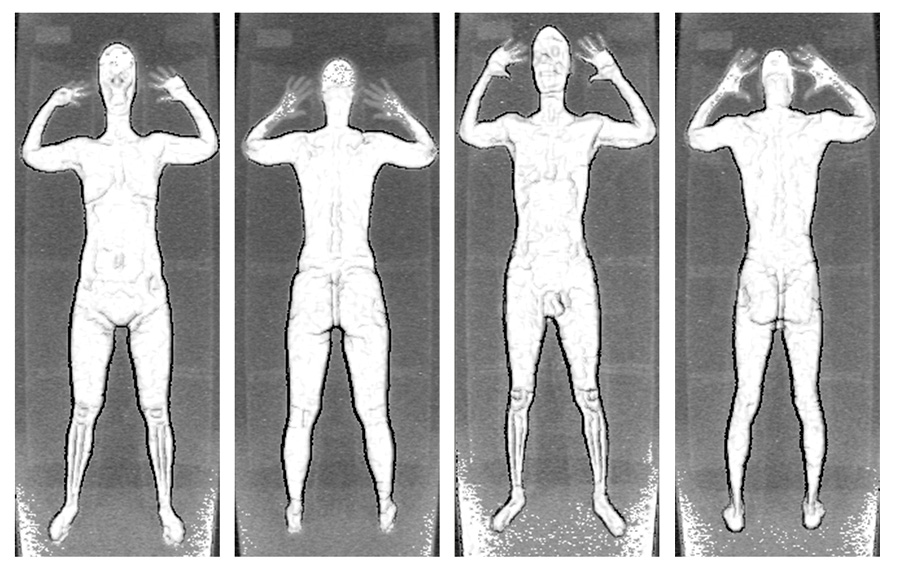
The news has been filled with stories about the TSA’s new enhanced body pat-downs, the new airport body scanners and campaigns encouraging people to opt out of the scanning process. Travelers left and right are posting their accounts of the pat-down process.
Need to catch up? Here are some of the stories:
USA TODAY has posted two opinion pieces on the airport scanning issue:
Our view on security vs. privacy: Critics bash airport scans, but what’s their alternative?
and
Opposing view on security vs. privacy: Honor basic dignity by James Babb and George Donnelly, the co-founders of the We Won’t Fly group.
Capt. Chesley “Sully” Sullenberger, of Miracle on the Hudson fame, shared his opinion about whether or not airline personnel should be subjected to full body pat-downs and advanced imaging scanners.
and
Gizmodo got its hands on – and posted – photographs of 100 of the 35,000 images U.S. Marshals in a Florida Federal Courthouse saved on a scanner. These images don’t come from an airport scanner – Department of Homeland Security and TSA have promised that airport scanners do not have the capability to save images – but Gizmodo and others clearly aren’t confident that’s the real story.
There’s more. LOTS more. Check back later….
Peanuts on planes: got a problem with that?
Peanuts on a plane.
For a lot of people, that’s a more frightening scenario than snakes on a plane.
And a lot more likely.
And as I wrote in my msnbc.com column this week – Passengers peeved about peanuts on airplanes – a lot of travelers think the best way to enhance airline passenger protections is to ban peanuts on planes.

Through September 23rd, the Department of Transportation (DOT) is taking public comment on a wide range of issues affecting airline passengers. Everything from peanuts on planes to involuntary bumping policies to surprise baggage fees.
Of the nearly 1,300 public comments submitted so far, the majority are focused on peanut allergies.
One problem though.
Technically, DOT doesn’t have the authority to change in-flight peanut policies. That’s because an appropriations law from 2000 prohibits the agency from passing peanut rules until a scientific study proves a rule change will actually benefit airline passengers with allergies. And no such study has been completed or commissioned.
Still, the agency is trying to gauge public opinion on ways to handle in-flight peanuts.
“We haven’t said we won’t do anything,” said DOT spokesperson Bill Mosely. “We haven’t ruled anything in or out. So we still do want to hear public comments about peanuts. We plan to read and review them all.”
The problem with flying peanuts
Peanut allergies among children have tripled between 1997 and 2008, and peanut allergies, tree-nut allergies, or both, are reported by 1 percent of the U.S. population, or about 3 million people, according to the Food Allergy and Anaphylaxis Network (FAAN), a group that supports discontinuing serving peanuts on planes.
The fear of having a severe reaction from exposure to peanuts while locked inside an airplane keeps some allergy sufferers grounded. Under DOT’s rules, passengers with severe peanut allergies have a qualifying disability covered by the Air Carrier Access Act, which prohibits discrimination by U.S. and foreign carriers against individuals with disabilities.
As far back as 1988, DOT advised airlines to make reasonable accommodations for passengers disabled by their peanut allergies. Most airlines voluntarily comply, but no formal rules have been put in place.
Now, DOT is asking the public to comment on three alternatives to accommodate peanut-allergy sufferers on airplanes:
- Ban the serving of peanuts and all peanut products on all flights;
- Ban the serving of peanuts and all peanut products on all flights where a passenger with a peanut allergy requests it in advance, or;
- Require airlines to establish a peanut-free buffer zone for passengers with severe peanut allergies.
DOT is also asking the public to comment on how peanuts and peanut products carried on board by passengers should be handled.
Peanut protections for airline passengers
If you’ve got a problem with peanuts, here’s what you need to know:
AirTran, Alaska/Horizon, American, Continental, JetBlue and United are among the major domestic airlines that do not serve peanuts. However, most airlines also post notices saying they can’t promise that some items served on board won’t contain nut products or that other passengers won’t bring their own nut products on board.
Two domestic airlines continue to ladle out legumes.
In 2009, both Southwest Airlines and Delta Air Lines served about 92 million bags of peanuts. “That does sound like a lot of nuts,” said Patrick Archer, president of the American Peanut Council, “But the airline portion of the overall U.S. peanut business is really very small.”
If alerted, Delta Airlines will accommodate a passenger with a peanut allergy by creating a peanut-free buffer zone for three rows in front of and three rows behind their seat. The airline’s website also notes that when advised that a passenger with peanut allergies is flying, “Gate agents will be notified in case you’d like to pre-board and cleanse the immediate seating area.”
And while Southwest Airlines can’t guarantee a nut-free airplane, it will suspend peanut service on an entire flight if a passenger with an allergy requests it. See Southwest’s peanut dust allergy page for more information.
Want to share your thoughts about peanuts-on-planes? You can leave a comment below.
You can also file comments for the DOT to read (through September 23, 2010) here.

Paperless boarding passes: benefit or bother?
We’ve all become accustomed to checking in for our flights on-line and printing out our boarding passes at home or at an airport kiosk on our way to the security checkpoint.
Now the TSA is working with five airlines and 70 airports to test paperless boarding passes.
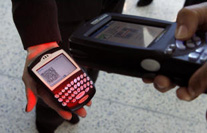
Here’s how it works: When a traveler checks in on-line the airline emails a boarding pass in the form of a 2-D barcode that can be downloaded to a smartphone. The barcode on the phone can be scanned at the security checkpoint and by the airline gate agent; just like a paper pass.
It’s sound great, doesn’t it?
. But as I wrote in my most recent msnbc.com column – Going paperless: Tech-savvy air travelers on board – it’s probably not a good idea to disconnect your printer just yet. Electronic passes aren’t accepted everywhere. And they’re not fool-proof. “One of the first times I used one, my phone browser refreshed and I lost the boarding pass 30 seconds before boarding,” recalls Walter Hopgood, a frequent business traveler from Damascus, Oregon.
Path to paperless
Some airlines in Europe, Canada and Asia have been using paperless boarding passes since early 2007, but the United States has been behind the curve on adopting the new technology.
Why?
“We were slower to get Internet access on cell phones, slower to get affordable data plans on cell phones and slower than Europeans to start using cell phones for accessing data,” said Henry Harteveldt, a travel industry analyst for Forrester Research. But it’s also because the TSA has been very cautious, says Catherine Mayer, vice president of airport services at SITA, an information technology company serving the aviation industry. “The agency had additional security requirements it wanted airlines to meet before it would allow paperless boarding to be introduced here.”
Continental, the first airline to work up software to meet TSA’s authentication standards, kicked off the TSA’s pilot program for paperless boarding in December, 2007. Now the test program includes five U.S. airlines (Alaska, American, Continental, Delta and United), 71 domestic airports and Frankfurt Airport in Germany.
“Airlines are able to streamline the airport experience for passengers,” said Justin Taubman, the program manager for TSA’s mobile boarding pass program. “And the TSA is able to enhance the security of the boarding passes.”
Good to go?
While electronic boarding passes do save paper and time while heightening the TSA’s ability to detect fraudulent boarding passes, the pilot program is not glitch-free.
Some passengers encounter scanners with spent batteries or security-checkpoint staffers untrained or uninterested in the mobile pass pilot program. When Justin Meyer of Kansas City showed up at 5 a.m. at a Fort Lauderdale, Fla., security checkpoint armed with his electronic boarding pass, a TSA employee pressed him for paper. “I didn’t have it,” Meyer recalled, “so I had to wait about 10 minutes while they found the scanner and plugged it in.”
Other travelers have stored a paperless pass on a smartphone that has lost its charge. Or they’ve sailed through the TSA checkpoint paper-free, only to discover that an airline is using a gate without a scanner. Or they’ve discovered some airlines only deliver one paperless pass per smartphone — and that won’t work if you’re traveling with a family of four.
“Like any new technology or service, there needs to be a transition period when everyone is learning the way to proceed,” said Steve Lott of International Air Transport Association, an industry trade group. And so for now, notes Shashank Nigam of the airline consulting firm, Simpliflying, “Paperless boarding may very well remain an early adopter thing until all airlines and airports fall in line.”
That may not be too far off. TSA’s Justin Taubman says the agency is currently working with vendors to develop equipment for a new boarding pass scanning system. “Once the new Credential Authenticating Boarding Pass Scanning System, or CAT/BPSS, is in place,” he said, “the pilot project will become an official TSA program.”
And we’ll have to learn a new acronym.
You can read my original column – Going paperless: Tech-savvy air travelers on board – and see some reader comments – on msnbc.com.
Flying today? Be ready for long lines and confusion
Last week’s fizzled Christmas Day terrorist attack on Delta/NW Flight #253 from Amsterdam to Detroit ignited a wave of new security measures at airports and on airplanes.
Airport and airline spokespeople and TSA officials say domestic passengers will likely notice some heightened security procedures, such as explosive-sniffing dogs and added law enforcement presence at many domestic airports.
Travelers on US-bound flights, though, will be notice significant changes.
Under rules rushed out over the weekend, passengers boarding flights heading to the United States will be subject to pat-downs and bag searches at the gate. During their flight, passengers will be required to put away personal items and stay in their seats for the final hour of flight.
The TSA posted a very general description of the new rules. More specifics were posted on various airport and airline Web sites and detailed in a memo that some airlines shared with bloggers over the weekend.
Bottom line:
While everyone gets used to the new regulations, get to the airport early. Really early.
If you’re flying internationally to the United States, be prepared for an extra pat down and bag check at the gate. And pack carefully: you’ll only be allowed one small – very small – carry-on bag.
It’s a good bet that airlines, airports and the TSA will make some changes to rules and procedures starting today, so keep an eye on the news, airline and airport Web sites, and the TSA.gov site.
Rules are already changing:
Last night Canada’s WestJet announced that it would no longer accept roller bags or larger backpacks as carry-on luggage. And this morning American Airlines announced that, due to the long lines and confusion over the new rules, for the next few days the airline will waive change fees for passengers traveling from Canada to the United States. Other airlines will probably do the same.
Here’s a link to the story on the new rules I wrote for MSNBC.com.
Please share your stories about your travel experiences this past weekend and let us know what you see happening if you end up stuck at the airport.
Airport security: what’s with people?

According this New York Post article, last Friday, on the eighth anniversary of the 9/11 attacks, Port Authority officials at New York’s La Guardia airport arrested a 40-year old man who was catching a Delta flight to Atlanta while packing a fully loaded 9mm Smith & Wesson handgun in his carry-on bag.
Security officials reported that the man said he “simply forgot” the weapon was in his bag.
Scary? Yes. Surprising? Probably not for the folks who work security at those airports. The article includes a description of some of the other stuff snagged at the security checkpoints at New York’s LaGuardia and JFK airports, and at the Newark Liberty International Airport.
“The tonnage at Newark this year has included 12,302 flammable objects; and 43 travelers were stopped for trying to carry explosives.
At JFK, 1,328 tools were intercepted, and at La Guardia, 9,365 knives and blades were discovered in clothing and in carry-on bags.
Since January, 122 passengers at all three airports were stopped for carrying ammunition and gunpowder as they tried to board planes; 338 passengers were armed with bats, clubs and bludgeons; and travelers carried 1,602 knives and blades longer than three inches.”
Practicing for peril at Pittsburgh Int’l Airport
If you’re traveling to or through Pittsburgh International Airport on Wednesday, August 26, don’t be too alarmed if you see what looks like an emergency out on the tarmac.
It won’t be a real emergency, but a test of the airport’s emergency plan.
Every three years, the FAA requires the airport to do a full scale training exercise and to make it as real as can be they use real aircraft, volunteer casualties, and simulated smoke.
Scary, but good to know.
Sassy, nearly naked, safety video from Air New Zealand
The folks at Air New Zealand are just having way too much fun getting naked and made up for the camera. A while back they offered up this cheeky ‘Nothing to hide” commercial:
Then, of course, “The making of” video.
Now, here’s the airline’s sassy safety video. Wouldn’t this get you to pay attention?