Obesity

Tidbits for travelers: Free Wi-Fi, Olympic travel tips, and in-flight body-mass tax

We want Wi-Fi

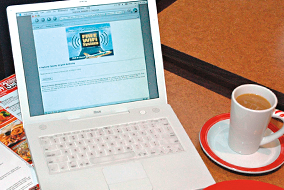
Slowly but surely airports large and small are getting with the program and making free wireless Internet access available in the terminals.

The latest major airport to join the party: Boston Logan International Airport (BOS).

Hooray!

Packing tips from Olympic athletes

Curious about what some Olympic athletes do when they’re traveling – or getting ready to travel? Them you may in interested in the video clips the folks at VISA (a 2010 Olympics sponsor) have posted of athletes talking about what they pack, how they prep for a trip, how skier Ryan St. Onge just had to have an airport burrito, and what Olympic Hockey player Angela Ruggiero packs in her carry-on.


Just as interesting, is the fact that the credit card company is giving away a trip to the Olympics – for life. To enter, you just need to charge something on a VISA card.

Seat tax on Air France for Seatmates of Size

And, just a day after announcing that it was introducing “the lightest and most comfortable short-haul seat in the world,” on some of its planes, Air France announced that passengers who cannot fit into a single seat (on any Air France flight) will have to pay for a second seat – at 75% of the cost of the first seat.

The new policy applies to tickets purchased beginning February 1st for flights April 1st and beyond.

Think the new rules may apply to you? Here’s the policy for Passengers with High Body Mass.

What do you think? Should seatmates of size be asked to pay for more than one seat?
Clip ‘n save guide to airline policies on seatmates of size

air-canada-tush

No matter your weight or your width, the next time you fly make sure you know your airline’s policy on “seatmates of size.”  Better yet, if you can find your airline’s customer of size policy, print it out and carry it with you.

It may help you avoid a pain in the butt and it may save you some bucks.

Last week, United Airlines laid out its new policy for “Passengers requiring extra space.”  It says that passengers who can’t fit into a single seat in their ticketed cabin; need more than one extender in order to buckle their seatbelt and; are unable to put the seat’s armrest down when they are seated may have to purchase a second seat if there are no extra empty seats on their scheduled flight.

What’s the policy on other airlines?  Find out in my Well-Mannered Traveler column posted today on MSNBC.com:  What a deal: one person, two fares.

You may surprised.  Some airlines don’t post their policies and just say they’ll “work something out” if a passenger can’t fit in one seat. Other airlines are very specific about their rules and make it easy to find them – but you may not like what you read.

Portly passengers may pay twice on United

This week United Airlines joined Southwest and several other airlines in formalizing and posting a  “seatmates of size” policy on its website.

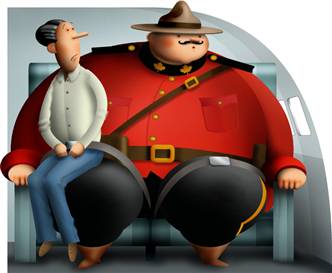
seatmates-of-size

(From a 2007  Well-Mannered Traveler column on this topic, courtesy MSNBC.com)

Although the policy was quietly posted on the airline’s Web site some time ago, it went into effect just this past Wednesday, April 15th.

The policy will please passengers who find themselves squeezed in next to someone who doesn’t really fit in their own seat and will disappoint travelers who feel that, rather than charging large passengers for more space, airlines should just be putting larger seats on all airplanes.

You can read the current policy here but, in a nutshell, the policy states that if you don’t fit into your seat with the armrests down, if you need more than one seat belt extender to buckle your seat belt, or if you simply do not fit into a single seat in your ticketed cabin, then you may end up having to purchase a second seat and fly on a later flight.

The key word here is may.  Which is not what the policy first stated.

Last Wednesday, the policy United posted on its Website stated that passengers falling into certain categories MUST by an extra seat.  By the end of the day, however, the wording had been changed to better reflect the policy an airline spokesperson  said was the “real” policy: that before charging anyone for a second seat, United flight crews would try to find two adjacent seats for the large passenger at no extra charge

I think that’s a big  difference.  And I’m glad they changed the wording. Read about how the wording got changed in my Well-Mannered Traveler column, The Skinny on United’s seatmates of size”, on MSNBC.com.

And tell me what you think….

Ryanair asks: would you pay for toilet paper?

After alarming travelers with the ‘joke’ about on-board pay-toilets (don’t be surprised…), Ryanair officials asked travelers to send in their own ideas for other discretionary fees that could be charged.

They did.

As of today (April 14th) close to 45,000 votes have been cast.  And sadly, so far more than 20,000 people have voted in favor of charging excess fees for overweight passengers.

Other survey choices include charges for bringing your own food onboard, for using airplane toilet paper, and for smoking in a converted lavatory.  Click here to take the Ryanair survey.  The winning idea gets a cash prize. Voting closes Friday, April 17th.

vote

One person – two seats – in two rows?

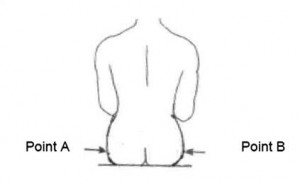
One of my recent Well Mannered Traveler columns on MSNBC.com discussed the “tush test” Canadian airlines are asking travelers to undergo in order to take advantage of that country’s One Person/One Fare  laws.

So Gregg at FlightsfromHell sent along a  link to a story about a woman forced to purchase two airplane seats “for other people’s comfort.”

Unfortunately, the two seats the airline assigned her were not next to each other.

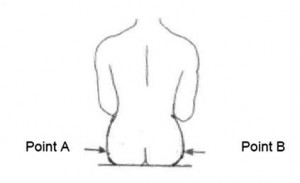
air-canada-tush

Air India says flight attendants too fat to fly

A few months back, Air India grounded a group of flight attendants and told them they could return to the skies only if they lost weight.

Instead of going on a diet, the flight attendants went to court.  The scales of justice tipped in the airline’s favor, though, and now the airline has fired nine (some reports say ten) female flight attendants who failed to slim down.

According to this article the airlines says fitness and efficiency were the reasons for its weight standards, which were based on “scientific” combinations of height, age and gender. Lawyers for the fired flight attendants call the move “illegal and against the natural justice.”

There’s more information in an article (Air India fires air hostesses for being too fat to fly) from The Times, which points out that:

“[t]he airline’s stance is likely to surprise many in India, a country with a rich history of voluptuous Bollywood sirens and labour laws that make dismissing public sector staff all but impossible.”

What do you think?   Should an airline be allowed to impose weight restrictions on flight attendants? Or are weight standards OK for the sake of  fitness, efficiency and safety?

scale

Canadian airlines cram to obey obesity ruling

(Illustration for my column by MSNBC’s Duane Hoffman)

“You’ve dawdled this whole year. Now stop all that bellyaching and get on with it.”

That’s pretty much the message Canada’s Supreme Court gave to the country’s major airlines at the end of November. Now, after spending a year trying to weasel out of it with repeated court appeals, Canadian airlines are scrambling to figure out how to meet the January 10th, 2009 deadline for complying with “One-Person-One-Fare” policy mandated by the Canadian Transportation Agency, or CTA.

Its groundbreaking legislation that some hope – and others fear – may spread to the United States and elsewhere. So pay attention.

Under the new rules, which will apply only to domestic flights, Air Canada, Air Canada Jazz and WestJet cannot charge more than one fare to persons with disabilities who cannot fly without the help of an attendant.

Few people will take issue with that.

What some folks are taking issue with, however, is the part of the ruling that also promises a complimentary second seat to passengers who are “determined to be functionally disabled by obesity.”

Find out what that means – and what several experts think it should mean – in my Well Mannered Traveler column posted today on MSNBC.com.

Pillows for purchase on WestJet

Joining JetBlue in the “pillows for purchase” movement, Canada’s WestJet just announced that starting Monday, Dec 1, it too would be begin selling pillow and blanket kits to passengers on all flights.

The kits will cost CN $7 (about US $5.65) and include a travel pillow, fleece blanket, carry bag, and a $5 coupon that can be used on-line towards the purchase of a CleanBrands product.

Not interested in buying a kit with “brand new, allergen-free, breathable and washable” items that “can be used over and over again?” The airline promises that, for now, its current stock of blankets, which are certainly used over and over – and over – again – will still be available on all WestJet flights for use at no charge.

WestJet, by the way, is one of the Canadian airlines that got news last week that it has until January to figure out how to comply with the Canadian Transportation Agency’s ruling that people who are “functionally disabled by obesity” deserve to have two seats for one fare.
WestJet, Air Canada and Air Canada Jazz argued that complying with the “One person -one fare” rule would cost too much.

Canada’s Supreme Court didn’t buy the argument.

Weighty issues for Canadian and US fliers

As you put on your loose-waisted pants and head off to airport to join your friends and family for that big Thanksgiving feast, keep this in mind:

On many US airlines, if you can’t fit in your seat with the armrests lowered, you may be asked to pay for a second seat.

In Canada, however, you will soon get more room to spread out. Legally – and for free.

According to an AP report posted on MSNBC.com today, beginning on January 9th, 2009: Canadian airlines flying domestically “cannot charge extra for an obese person who needs an additional seat or a disabled person who needs space for a wheelchair or stretcher or who must be accompanied by an attendant.”

US airlines aren’t likely to adopt that same plan anytime soon, but for folks who fit into individual airplane seats – and those who don’t – it’s probably a good time to read my Well-Mannered Traveler column that addresses the topic. It’s called, appropriately enough, Squeezed to Meet You and deals with the issue of “seatmates of size.”