Animals

Miami Int’l Airport and the Miami Hound Machine

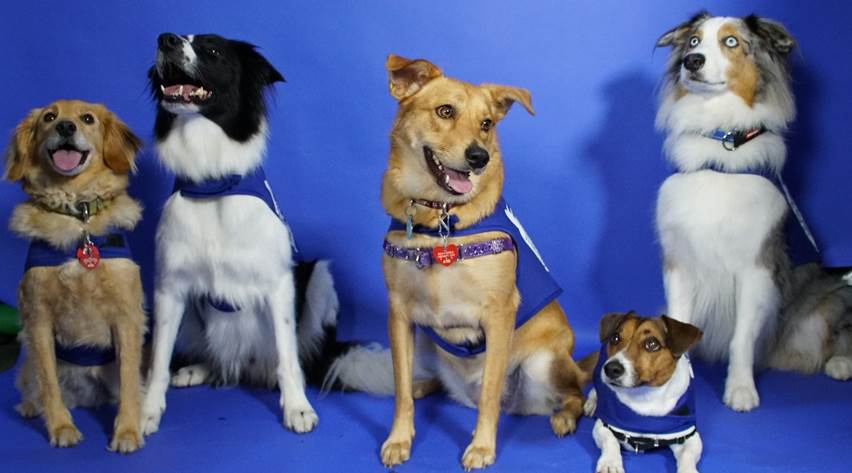
The ‘Miami Hound Machine’ – a team of therapy dogs – is coming to Miami International Airport.

Miami International Airport’s new therapy dog program, charmingly called the Miami Hound Machine, is making its debut today.

The team’s five volunteer K-9 Ambassadors – Abbey, Belle, Dash, Donovan and Pico – and their owners will be on site today with airport officials for a press conference. The pups will then go to work inside Concourse D, visting with passengers and being cute.

Members of the Miami Hound Machine are all certified therapy dogs from the Alliance of Therapy Dogs and will be on duty in the MIA terminals during peak travel periods.

Therapy dogs at airports are a growing trend. So are the types of animals on the therapy dog teams – San Francisco International Airport’s Wag Brigade has a pig (Lulu); Denver International Airport’s CATS program (Canine Airport Therapy Sqaud) has a cat named Xeli, and Cincinnati/Northern Kentucky International Airport (CVG) often has a small herd of miniature horses stop by.

Have you encountered a member of an animal therapy team at an airport? Thumbs up or down?

Southwest Airlines tighens rules on emotional support animals

Southwest Airlines is the latest airline to tighten its policies on passengers traveling with trained service and emotional support animals.

The new rules go in to effect Monday, September 17, 2018.

Under Southwest Airlines’ new rules, each customer will only be able to travel with one emotional support animal (or ESA) and ESAs will be limited to only cats and dogs.

During travel, the airline will always require each ESA to be kept in its carrier or be kept on a leash.

Customers traveling with ESAs will continue to be required to present a complete, current letter from a medical doctor or licensed mental health professional on the day of departure.

As part of these new policies, Southwest is also recognizing fully-trained psychiatric support animals (PSAs) as trained service animals.

The airline said it informally accepted PSAs as trained service animals in the past. Now the airline will formally accept this type of service animal. PSAs are animals that are specially trained to perform a task or work for a person with a mental health-related disability. To travel with these animals, the airline will require only a credible verbal assurance.

When it comes to traditional trained service animals, Southwest says it is going to adopt the DOT guidelines and accept only dogs, cats, and miniature horses.

“For the health and safety of our Customers and Employees, unusual or exotic animals will not be accepted,” the airline said in a statement and, “As is the case today, the Customer with the disability must be able to provide credible verbal assurance that the animal is a trained service animal.”

“We welcome emotional support and trained service animals that provide needed assistance to our Customers,” said Steve Goldberg, Southwest’s Senior Vice President of Operations and Hospitality said in statement, “However, we want to make sure our guidelines are clear and easy to understand while providing Customers and Employees a comfortable and safe experience.”

Southwest’s new rule announcement comes affter Alaska, American, Delta, JetBlue, and United have also updated their policies.

What do you think of the new rules? Fair?

Kitten Cuddle coming to Charlotte Douglas Int’l Airport

August 8 is International Cat Day.

To mark the day, Charlotte Douglas International Airport has scheduled a Kitten Cuddle on Wednesday, August 8 from 9 a.m. to 11 a.m. in the Atrium in front the 1897 Market.

The plan is to have at least 10 kittens on site and available for cuddling, so there should be plenty of cats to go around.

The kittens are coming to CLT courtesy of the Charlotte-Mecklenburg Animal Care & Control, which currently has more then 250 cats and dogs available for adoption.

Animals in the airport are nothing new at CLT.

While the Kitten Cuddle is a first for the airport, the CLT Canine Crew is mde up of 31 four-legged volunteers who are often on duty to greet passengers. Look for the pups wearing “Pet Me” vests.

‘Lil Rocky Balboa the Griffon, courtesy CLT

More stories of wildlife at airports

More stories of wildlife at airports

Courtesy Port of Portland

I’ve been getting more stories about wildlife ‘incidents’ at airports since my “At the Airport” column – “From worms to whales, the wildlife that worries airports,” appeared online and in print at USA TODAY and will share some of them in future posts.

In the meantime – in case you missed it, here’s a slightly edited version of that column that was inspired by the report of a large alligator caught on tape sauntering across a taxiway between two ponds at Orlando International Airport.

Whle the gator’s journey alarmed passengers and slightly delayed a Spirit Airlines flight on its way to the gate, at MCO airport wildlife visitors are not rare.

“For that reason,” said MCO’s Carolyn Fennell, “We have a biologist and wildlife unit on staff to help with planning new facilities, monitoring and relocating, when needed, various ‘critters’ on our property.”

All airports must manage resident and visiting wildlife because  birds (mostly), as well as deer, alligators, coyote, moose and even an excess of worms on the runway after a rain (a feast for birds) can create safety hazards that lead to costly and, in some same cases, deadly collisions between aircraft and animals.

A report from the Federal Aviation Administration and the U.S. Department of Agriculture estimated that in 2015 alone wildlife strikes would ding the US civil aviation industry about $229 million in direct costs and require more than 69,000 hours of aircraft downtime. But despite lingering memories of the 2009 bird strike near New York’s LaGuardia Airport that led to the “Miracle on the Hudson,” Cody Baciuska of Loomacres Wildlife Management says “Passengers should not be concerned about experiencing a strike the next time they fly.”

His confidence comes from the fact that airports are aggressive about managing and monitoring wildlife and constantly network with each other about best practices for deploying a wide variety of tools that include everything from visual and auditory deterrents, fencing, netting and spikes to lasers and all manner of pyrotechnics

In 1999, Southwest Florida International Airport (RSW) in Fort Myers was the first airport to add a Border collie to it wildlife management team to help shoo away birds that might otherwise nest and roost on airport property. (The current dog is named Echo; previous ones were Jet, Radar, Sky and Aero.)

In 2007, Seattle-Tacoma International was the world’s first airport to install an avian radar system to monitor potentially hazardous bird activity near the airport.

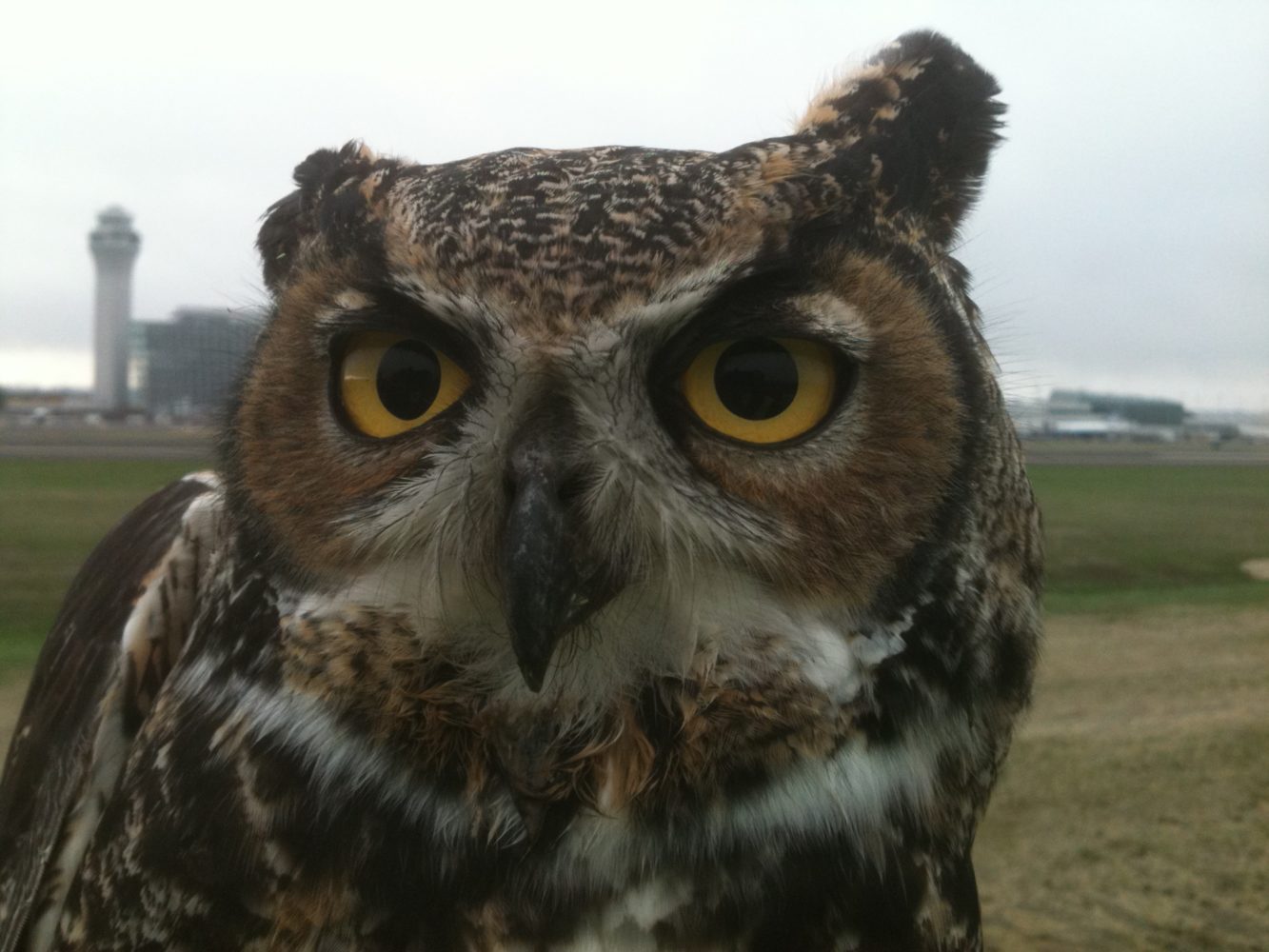
Elsewhere, airports team up with airlines, environmental groups, community volunteers and others to humanely trap, relocate and resettle raptors such as hawks, ospreys and owls.

On the east coast United Airlines, Audubon International and the Port Authority of New York & New Jersey work together to trap American kestrels (a climate-threatened small falcon) at Newark Liberty International Airport and send them to new homes on area golf courses with more welcoming habitats.

Each year Seattle-Tacoma International Airport carefully collects and relocates fuzzy baby chicks from the nests of resident red-tailed hawks.

“We actually climb the trees and take the chicks out of the nest and take them up north where we raise them to imprint on a different location,” said Mikki Viehoever, the wildlife biologist for the Port of Seattle.

Portland International Airport, located on the confluence of the Columbia and Willamette Rivers and along a Pacific migratory flight path for birds, has a very active raptor translocation program.

“Trapped raptors are taken to suitable release sites in Oregon & Washington by car or plane,” said Nick Atwell, wildlife manager for the Port of Portland. “We’ve partnered with Alaska Airlines for transport to northern Washington with the intent of increasing the distance from PDX.”

Atwell and his team tag and band each bird they relocate and keep an online database of sightings. “We want to track the success or failure of the program,” said Atwell. “And find out if a bird comes back to the airport and inform other airports what might be the best distance for translocating animals.”

Still, wildlife happens.

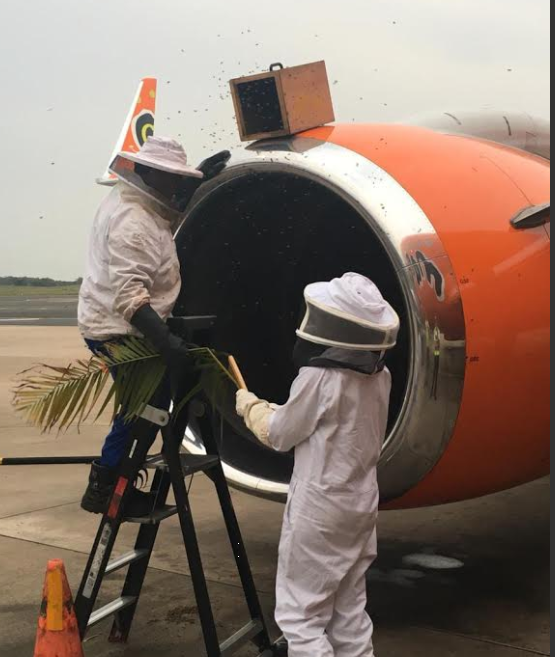
Some airports keep special vacuums in their tool sheds or a beekeeper on speed-dial to remove bees that sometimes swarm on airplane wings.

In January 2017, a 15-foot dead whale washed up near the end of a runway at New York’s LaGuardia Airport. “We worked with the Army Corps of Engineers to remove it,” said Laura Francoeur, chief wildlife biologist for the Port authority of New York and New Jersey, “Because you don’t want to leave a dead whale there to attract scavengers.”

Each year during nesting season for Diamondback terrapins, Fancoeur and her team also monitor the turtles migrating between a nearby wildlife refuge and the shores of Jamaica Bay. In past years, hundreds of turtles marched – slowly – across a runway, causing planes to be delayed. Now plastic barriers keep most of the turtles out of harm’s way, while staff swoop in to gather up and relocate any terrapins that insist on taking the shortcut.

Photo_Port Authority of New York and New Jersey

In addition to capturing and relocating alligators – some more than 9 feet long – at some southern airports, wildlife biologists and wildlife technicians from the USDA’s Wildlife Services unit help keep a zoo’s worth of wildlife away from taxiways and runways. Their ‘highlight’ list includes Nile Monitor Lizards, pythons, porcupines (whose quills can damage airplane tires) and loons.

Courtesy USDA Wildlife Services

“What most people may not know about loons is that they are unable to walk on land,” said USDA spokeswoman Tanya Espinosa. Loons may land on a wet runway believing they’re landing on water and are then unable to get back up. “Our employees have had to physically pick loons up in order to release them,” said Espinosa.

At some coastal airports oysters, clams and other shellfish have become an issue, requiring teams to go out with sweepers.

“During low tides, gulls and other birds go hunting for shellfish and then drop them on open areas, such as runways, to crack them open,” said Espinosa, “While this is a great example of bird ingenuity, it is very dangerous for airports as sharp shell parts can puncture tires, get sucked into engines, damage aircraft and cause accidents.”

In Alaska, USDA Wildlife Biologists and Wildlife Technicians also help wrangle musk ox and caribou.

Musk Ox sometimes form defensive circles on the runways, said Espinosa and “And it can be very time consuming to get them out of the way.” Several hundred to several thousand caribou sometimes cross runways during migration. “It can be a beautiful sight, but also dangerous for human safety and air travel,” said Espinosa.

Last year salmon were spotted swimming across a flood-prone runway at Alaska’s Seward Airport and, after several days of storms, crew clearing snow at the Wiley Post-Will Rogers Memorial Airport in Utqiaġvik (the city formerly known as Barrow) came upon a 450-pound Bearded Seal lounging on the runway.

Courtesy Scott Babcock, Alaska Dept of Transportation Public-Facilities

The runway is about a quarter mile from the ocean, but airport staff believe the seal made a mile-long trek around the runway to get to its chosen spot.

“Animal control was called, and they loaded the seal onto a sled and pulled it off the runway with a snow machine,” said Meadow Bailey, spokesperson for the Alaska Department of Transportation & Public Facilities, “We refer to this as the day we warned of ‘low sealings’ at the airport.”

Have you spotted wildlife at your airport? Please share the story in the comments section below.

Worms to whales: the wildlife that shows up at airports

Bearded Seal on runway at Wiley Post-Will Rogers Memorial Airport in Utqiaġvik (fomerly Barrow) Courtesy Scott Babcock, Alaska Dept of Transportation & Public Facilities.

My “At the Airport” column on USA Today this month is all about the wildlife that shows up – uninvited – at airports.

The story details some of the visitors, such as the seal (above) that showed up on the runway during a snowstorm at Alaska’s Wiley Post-Will Rogers Memorial Airport in Utqiaġvik (fomerly Barrow) last year, the wily coyotes that can climb over barbed wire fences and the loons, carbiou, alligators and, mostly, birds that airport wildlife management teams must deal with.

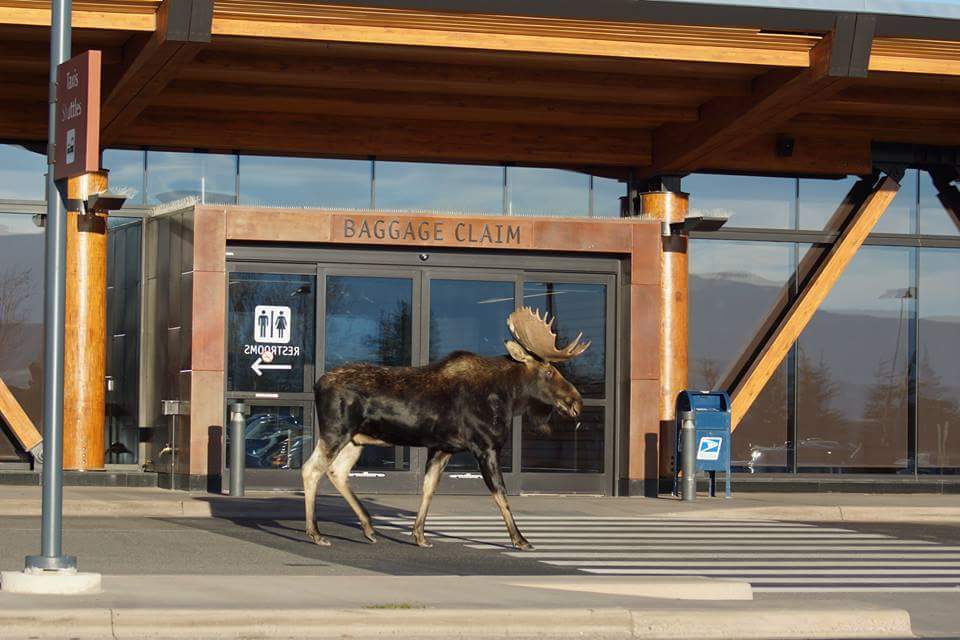
This moose stopped by Jackson Hole Airport in October 2015. Photo courtesy Philip Bollman

To report the story I did a ride along with Nick Atwell, wildlife manager at the Portland International Airport, and talked with wildlife biologists who work with airports around the country. You can read the full column – From worms to whales, the wildlife that worries airports – at the USA Today site, but here are few more fun photos.

Coyotes chased this bear cub across a Colorado airport. USDA Wildlife Services tranquilized, tagged and relocated the cub. Photo_USDA Wildlife Services


The USDA’s Wildlife Services staff helps capturs and relocate alligators – some up to 9 feet long – at many southern airports. Courtesy USDA

Buffalo standing outside terminal doors at Yellowstone Airport. Courtesy Jeff Kadlec.

Wild animals at airports

I’m having a great time learning about the wide variety of wild animals that airports around the country have encountered and the creative ways they have come up with to keep them away from airplanes.

My research and all the photos airports have been sending along will end up in my At the Airport column on USA Today  later this month but sharing a few snaps with you today.

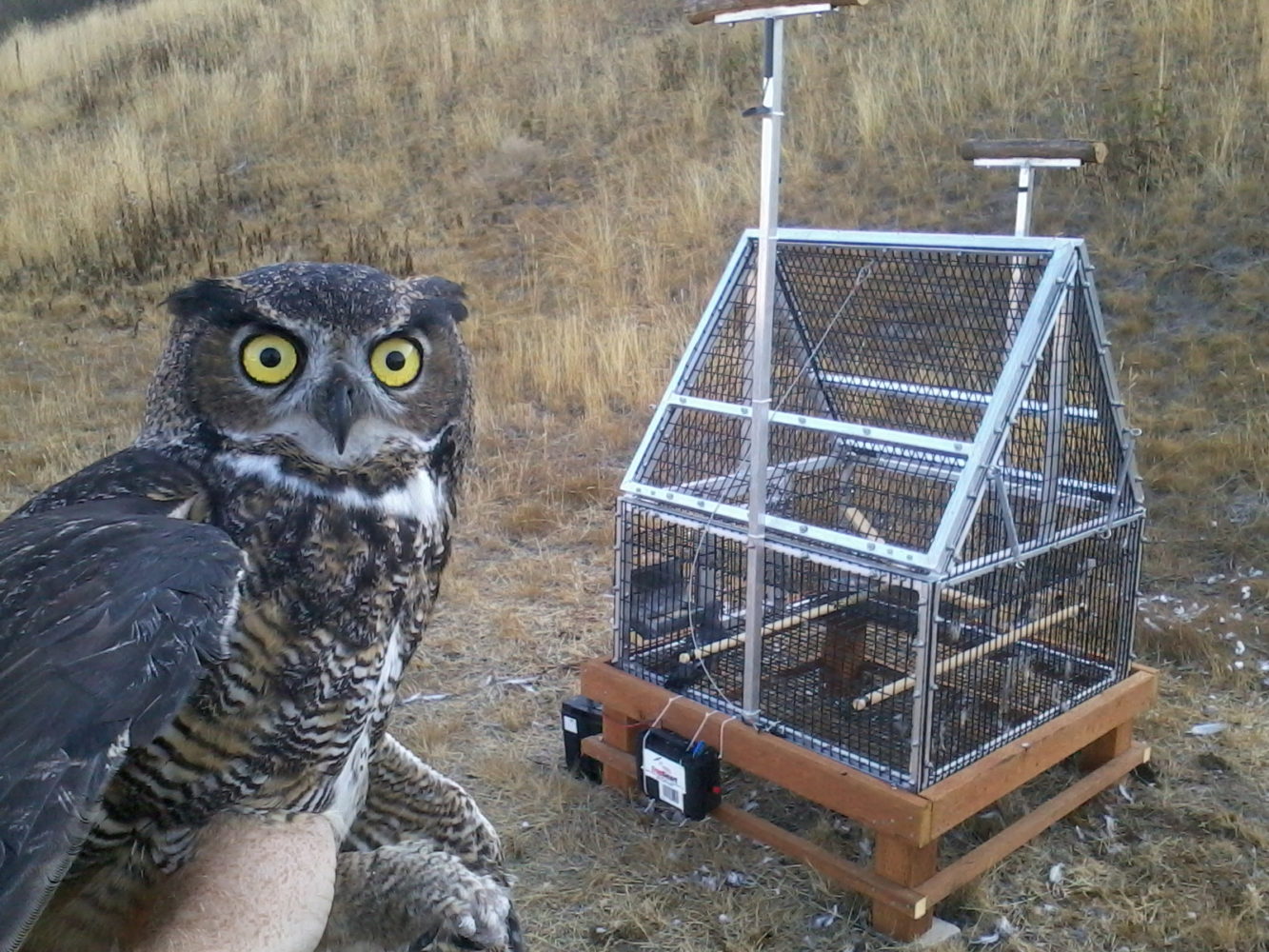
Above – a Great Horned Owl that was caught in a trap meant for smaller birds at Seattle-Tacoma International Airport and below, a nine-foot alligator wrangled by the USDA at a military base in Georgia.

Airports tightening the leash on animals in terminals

Thinking of taking dog your pet or emotional support animal with you on your next flight? Be sure to check the airline -and the airport – rule books on that. As I describe in my ‘At the Airport’ column this month for USA TODAY, airports are following the lead of airlines and making new and more restricted rules for animals in the terminals.  Below is a slightly edited version of that column.

Reno-Tahoe International Airport pet relief area

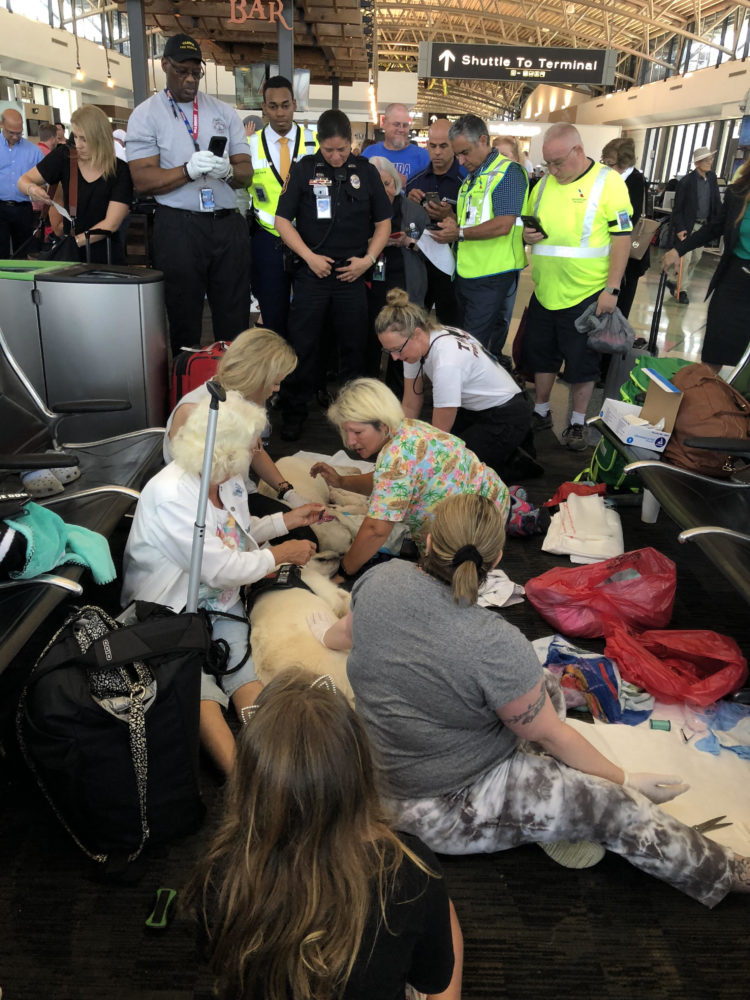
There were plenty of “Aw, that’s so cute” social media posts last month when Eleanor Rigby, one of two service dog vest-wearing golden retrievers accompanying a passenger to Philadelphia on American Airlines, went into labor and gave birth to eight puppies in a gate area at Tampa International Airport.

(Courtesy TPA Airport)

No one was charmed, however, by the report a passenger at Los Angeles International Airport posted last February about a woman who replied “They have people for that” when asked if she planned to clean up after her dog did its ‘business’ on the airport floor.

Yet both stories are examples of a wide range of animal-related incidents that are forcing airports to expend extra resources and causing them to rethink policies governing animals in the terminals.

In the Tampa airport puppy case, cute became controversy when animal rights advocates and people with certified service animals began questioning if the vested dogs were legitimate service animals and asking why a very pregnant dog – be it a certified service animal, emotional support animal or pet – had been allowed to fly so close to its due date.

TPA officials point out that airports have no say over the animals that airlines allow on board.

“We were just there to help with the situation and are happy the puppies were delivered safely,” said TPA spokeswoman Emily Nipps.

Tampa International Airport hasn’t yet tallied up its exact costs for having paramedics, operations, communications and maintenance staff spend several hours attending to Eleanor Rigby and her new puppies during the airport delivery, “But having paramedics assisting a dog in labor could have potentially impacted a medical emergency on another side of the airport,” said Nipps.

Cleaning up: the rules and the messes 

As had been widely reported, airlines have seen a sharp rise in the number of animals traveling on planes. Some are ticketed pets, but many are pets that have been flying for free thanks to loopholes in rules governing the transport of emotional or psychiatric support animals.

American Airlines reported a 40% increase in the number of service and emotional support animals on flights between 2016 and 2017. United Airlines cited a 75% increase year over year.

Like airlines, airports have had to make accommodations for all the extra animals and, like airlines, airports have been logging increased instances of pets and emotional support animals that are untrained, unruly and dangerous to others in the terminals.

“We find them making messes on the airport carpet, interfering with the airport’s working dogs and, on occasion, biting other dogs or passengers,” said Kama Simonds, spokeswoman for Portland International Airport.

Last December, a 5-year old girl ended up in the hospital after being bit in the face by an uncrated dog waiting for a flight with its owner at Portland International Airport. And a local TV station filming for a report on dog issues at PDX caught a schnauzer in the act of peeing on the airport’s brand new $13 million carpet.

Many airports hope revised policies for flying with emotional support animals recently rolled out by American Airlines, Alaska Airlines, Delta, JetBlue, United and others will cut down on the number of animals in airport terminals.

“The way we see it, if the airlines put more specific and stricter guidelines in place to manage the issue, it will take care of the problem in the airport too,” said TPA’s Emily Nipps, “So we support the airlines in tightening up the policies.”

For its part, Airports Council International-North America, the membership organization which represents and advises most U.S. airports, is urging the Department of Transportation to clarify its rules.

Currently, there’s confusion for both passengers and airports because airlines are covered by the Air Carrier Access Act, which recognizes emotional support animals, while airports are covered by a different act, the Americans with Disabilities Act, which does not recognize emotional support animals.

“We want DOT to clearly articulate that airports are within their rights under the Americans with Disabilities Act to require anyone bringing an emotional support animal through an airport terminal to house those animals in carriers, so they don’t interfere with other passengers, employees, staff or other animals including service animals and TSA and police canine units,” said Thomas Devine, ACI-NA’s general counsel.

DOT is currently taking comments through July 9 on proposed rulemaking related to traveling by air with service animals and ACI-NA will join the public and other industry groups in filing comments.

But at least one airport is not waiting for DOT to get around to making its final ruling.

After consulting with other airports, including San Francisco International, Detroit Metropolitan and Fairbanks International Airport, Portland International Airport plans to issue new rules aimed at clearly defining the different categories of traveling animals—pets, emotional support animals and service animals—and clarifying how the airport expects travelers to care for these animals while in the terminal.

“We see many people bring their pets when meeting and greeting people in the terminal. That’s a no-no,” said PDX spokesperson Kama Simonds, “Pets should not be at the airport unless they are traveling or being shipped.”

The new PDX rules will remind travelers that, like pets, the airport requires emotional support animals heading for airplanes to be in carriers while in the terminal. If too large for a carrier, those emotional support animals must be kept on short leashes.

And if a traveler’s animal urinates or defecates on the floor at PDX, the new rules will require an owner to remain at the site until someone from the janitorial staff arrives.

During July, airport operations staff at PDX will start spreading the word about the new rules. Come August, though, warnings and citations for bad dogs could be issued, with possible fines of up to $250.

A tighter leash on emotional support animals flying on American Airlines

American Airlines becomes the latest U.S. carrier to issue renewed and tighter rules for taking emotional support and service animals on board it airplanes.

The full rules, which go into effect July 1, 2018,  are listed here, but some of the  highlights include:

To fly with an emotional/psychiatric service animal, customers must contact American’s Special Assistance Desk at least 48 hours before a flight and provide documentation.

American says validation of that documentation will include having the airline contact your mental health professional.

Certain types of animals from are now forbidden from flying as emotional/psychiatric support or service animals, including insects, amphibians, reptiles, hedgehogs, goats, ferrets, snakes, spiders, waterfowl, birds of prey, animals with tusks, horns or hooves (except specially trained horses) and animals that have an odor.

To fly for free, emotional/psychiatric support and fully-trained service animals must meet the tightened requirements, must be able to fit at your feet, under your seat or in your lap (and if flying in your lap, be smaller than a 2-year old child).

And service or emotional/psychiatric support animals will not be allowed to stick out into or block aisles; occupy a seat or eat from tray tables.


Travel Tidbits from Denver and Los Angeles airports

Ending the week with some travel tidbits from airports for you.

Were you hoping that Norbert the Turtle really was joining the pet therapy program at Denver International Airport? That turned out to be an April Fool’s Day joke, but DEN did add their 101st member to their team.

Not a joke was the announcement that Los Angeles International Airport had installed Tooshlights in one set of bathrooms in the American Airlines Terminal 4 to guide lav users – via overhead red and green lights – to stalls that are open.

LAX also announced that $4.9 billion contract had been approved by the Los World Airports (LAWA) Board of Airport Commissioners (BOAC) to design, build, finance, operate and maintain the Automated People Mover (APM) system at the airport.

The system promises driverless trains that will arrive at every station every two minutes, and light-filled stations with escalators, elevators, and moving walkways. Bonus amenities include a viewing platform of the iconic Theme Building.

When will we be able to take the train to LAX? Sometime in 2023.

Blame the peacock: United Airlines’ new rules for emotional support animals.

Just days after refusing to let a woman fly with what she claimed is her emotional support peacock, United Airlines has issued notice that, starting March 1, there will be new rules for bringing emotional support animals onboard.

United’s policy for those traveling with service animals (guide dogs and other animals trained to perform assistive tasks) currently does not require advance notice or documentation and is not changing.

The new rules will apply to emotional support animals.

Right now, customers with emotional support animals are required to give United’s Accessibility Desk 48-hours’ notice AND a letter from a mental health professional.

Starting March 1, in addition to 48-hour notice and an enhanced letter from a mental health professional, the airline will require anyone traveling with an emotional support animal to also provide additional documentation including:

  • The customer must provide confirmation that the animal has been trained to behave properly in a public setting and acknowledge responsibility for the animal’s behavior.
  • The customer must also provide a health and vaccination form signed by the animal’s veterinarian. The veterinarian must also affirm that there is no reason to believe that the animal will pose a direct threat to the health and safety of others on the aircraft or cause a significant disruption in service.

Today United also reminded travelers that  hedgehogs, ferrets, insects, rodents, snakes, spiders, reptiles, sugar gliders, non-household birds, exotic animals and animals not properly cleaned or those that are really smelly are not allowed in airplane cabins.

“Year-over-year, we have seen a 75 percent increase in customers bringing emotional support animals onboard and as a result have experienced a significant increase in onboard incidents involving these animals,” United said in a statement. “We understand that other carriers are seeing similar trends. The Department of Transportation’s rules regarding emotional support animals are not working as they were intended to, prompting us to change our approach in order to ensure a safe and pleasant travel experience for all of our customers.”

The Association of Flight Attendants-CWA (AFA) said in a statement that is it thrilled with United Airlines’ announcement:

“United has taken a very thoughtful, responsible approach to this issue. The airline’s increased requirements for emotional support animals will reduce fraud and protect the legitimate need of animal assistance for passengers with disabilities and veterans,” said Sara Nelson, international president of AFA. “This is about maintaining safety, health and security for passengers and crew, while ensuring accessibility for those who need it.”

Delta Air Lines recently announced that, starting March 1,  it will be changing its rules for passengers flying with service dogs or emotional support animals.

Expect other airlines, including American Airlines, to update their rules on flying with service animals and emotional support or ‘comfort’ animals soon.