The chances are getting slimmer that your airline with misplace or lose your checked bag the next time you fly.
But it’s still a good idea to pack your essentials in a carry-on bag.
Passenger numbers rose to 5 billion in 2025 globally versus 4.8 billion in 2025.
And during that time the mishandled bag rate fell by 23% to 4.9 bags per 1,000 passengers, according to a new report from aviation technology company, SITA, the best numbers since before the pandemic.
Bag handling rates by U.S. airlines improved during 2025 as well.
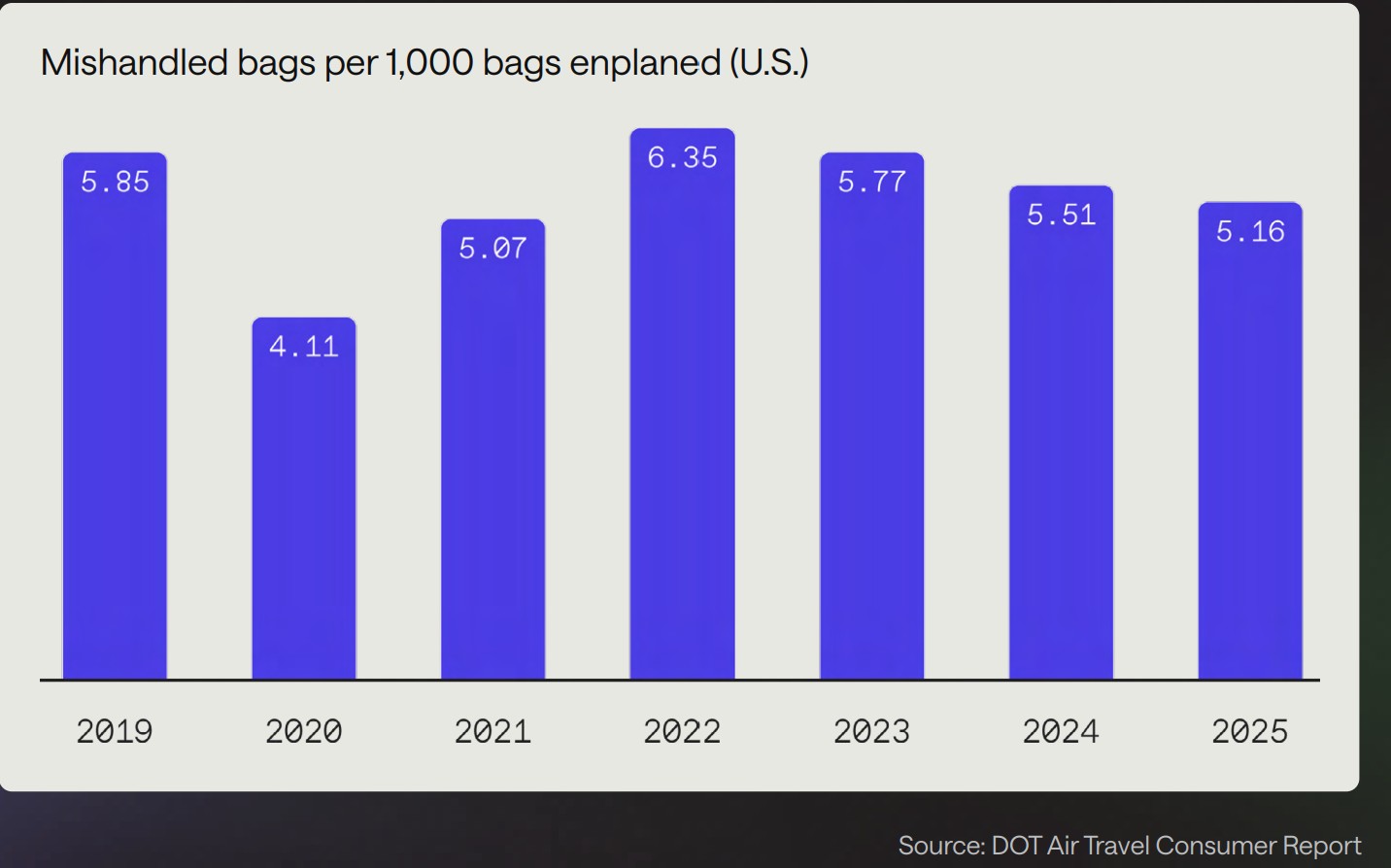
US DOT numbers show that U.S. airlines lost or misplaced 5.16 bags for every 1000 checked in 2025.
That’s a 6.3% drop from 2024, when U.S. airlines mishandled 5.51 bags for every 1000 bags handed over at the counter.
Improvements are being fueled by the adoption of technology and the ways tools such a real-time data sharing, AI rourting, biometric bag drop and connected passenger devices, such as Air Tags, are being used.
“Baggage is shifting from a logistical problem to a digital service,” said Nicole Hogg, Portfolio Director Baggage, SITA. “Passengers expect to know where their bag is at every moment, and they’re increasingly willing to help us track it.”
Still, during 2025, 24 million bags were mishandled
Depsite technology improvements, airlines mishandled 24 million bags in 2025.
That number represents a big hassle for any passenger whose bag is delayed or, ulimately declared lost of course.
And it’s a big money suck for airlines.
SITA’s report says mishandled bags cost the airline industry $6.3 billion in 2025, a figure equal to about 15% of toal airline industry profits.
The cost of lost passenger trust is also a factor.
“Passengers expect their bags to arrive on time, especially in a world where their parcels are delivered within hours, with instant updates on their phones. They want the same speedy service, with the same digital tools, when they fly,”said SITA CEO David Lavorel in the report.
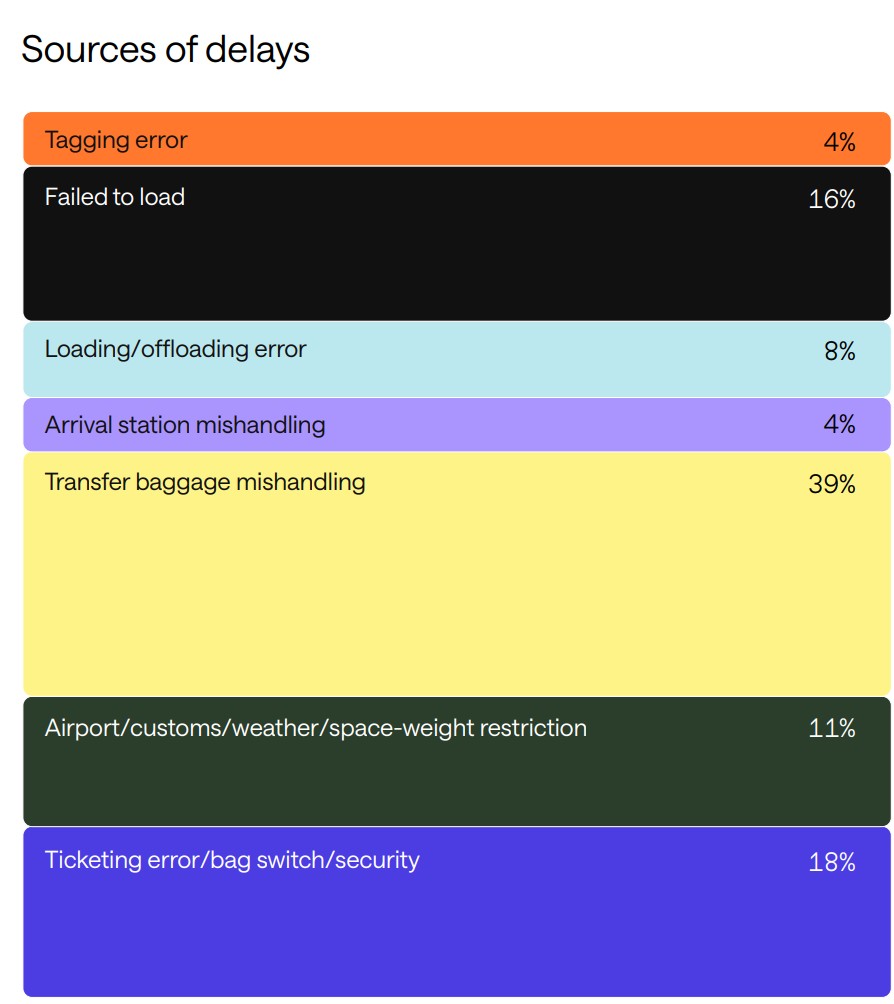
What causes bags to be delayed?
Here’s a breakdown from the SITA report on some of the key reasons bags get delayed.
SITA notes that AI routing, real-time data sharing and integration with Apple and Google’s device tracking have delivered measurable results where airlines have deployed them.
However, industry-wide tracking compliance is barely past the 50% mark.
The gap is not technology, but adoption, according to SITA.
“The next phase is about bringing the technology we already have to every transfer, every handler and every airport offering greater visibility and connecting every step of the journey. That’s how the industry earns the trust passengers now expect,” said SITA’s Nicole Hogg.