As part of its $6 billion modernization program, ATL is testing technology to improve the restroom ‘experience’.
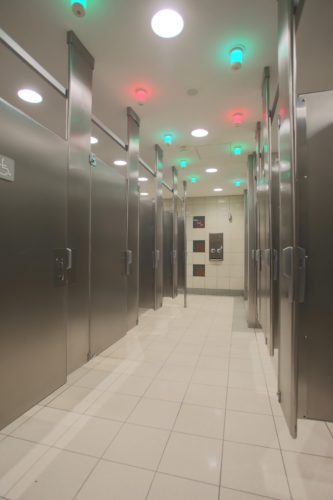
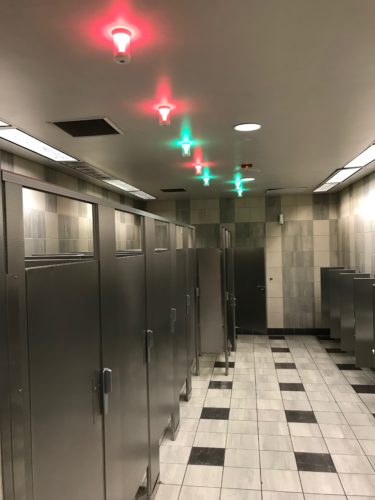
Two pairs of restrooms (at Delta’s Gates B18 & B23), now feature Tooshlights – a system that works like modern parking lots to light red or green lights (in use/empty) over stalls – and Infax, a system that tracks restroom usage so janitorial staff knows when the space needs to be cleaned.
Anyone who has ever waited on line in an airport restroom waiting for an empty stall – and anyone who has been in a stall and had someone rattle the door to see if it’s open – will appreaciate the red light/green light system, especially when rushing between flights.
Ending the week with some travel tidbits from airports for you.
Were you hoping that Norbert the Turtle really was joining the pet therapy program at Denver International Airport? That turned out to be an April Fool’s Day joke, but DEN did add their 101st member to their team.
Our Canine Airport Therapy Squad (CATS) has become so popular we have decided to expand the program. Please welcome Norbert, our therapy Tortoise. Norbert and his handler will bring smiles to passengers starting tomorrow. Hope you have a chance to say hi! pic.twitter.com/IyyelZBfjT
Not a joke was the announcement that Los Angeles International Airport had installed Tooshlights in one set of bathrooms in the American Airlines Terminal 4 to guide lav users – via overhead red and green lights – to stalls that are open.
LAX also announced that $4.9 billion contract had been approved by the Los World Airports (LAWA) Board of Airport Commissioners (BOAC) to design, build, finance, operate and maintain the Automated People Mover (APM) system at the airport.
The system promises driverless trains that will arrive at every station every two minutes, and light-filled stations with escalators, elevators, and moving walkways. Bonus amenities include a viewing platform of the iconic Theme Building.
When will we be able to take the train to LAX? Sometime in 2023.
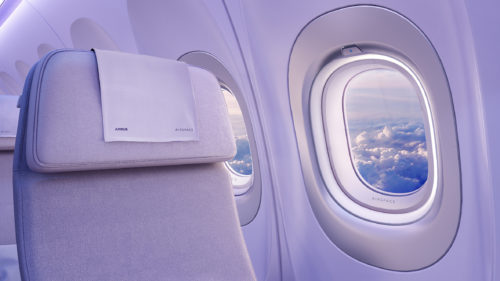
(Airbus_A320 Family Airspace interior. Courtesy Airbus)
For CNBC this week, I put together some of the most passenger-friendly, or unusual, finalists vying for this year’s Crystal Cabin Awards, which are set to be announced April 10 and often described as “the Oscars of the aviation industry.”
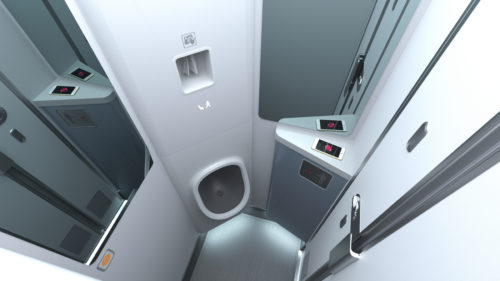
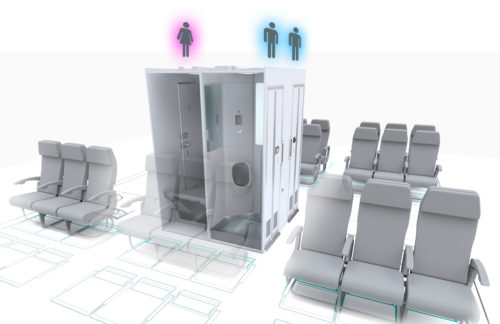
One of the more unusual and intriuging ideas on the list is something called a ‘Durinal,’ by Zodia Aerospace.
You know how it is: after meals and just before landing, bathroom lines get long and the lav-to-passenger ratio in the economy cabin on airplanes just seems wrong. Worse, when lavs get busy, there’s that wet floor issue that comes courtesy of the male ‘splash zone.’
The Durinal is designed to solve both problems by replacing one regular lavatory with two urinals. Durinal creator Zodiac Aerospace says installing the toilets on planes can improve lavatory “cycle time” and cut down on male use of the conventional toilets, “Thus leaving them more hygienic for the ladies.”
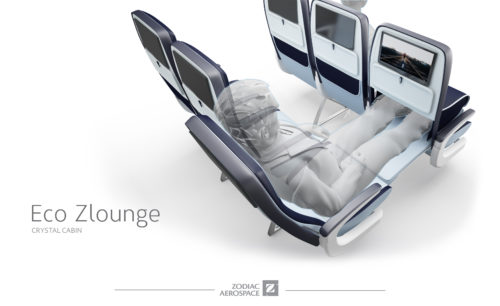
On flights that aren’t full, Zodiac Aerospace’s new Eco Zlounge concept makes it possible for passengers to stretch out with a mechanism that allows the cushion part of the seat in front of a passenger to fold down, creating more leg room.
No doubt the extra space will come with an extra cost, but on long flights passengers may be willing to pay that cost.
Modern-day airports no longer concentrate solely on being gateways to help passengers get from here to there.
That’s still their key role, of course. But today the focus is also on making the airport experience efficient and enjoyable for travelers – and profitable for the airports – through an ever-improving mix of dining and shopping options and an evolving mix of amenities.
“Whether engaging with passengers through an animal therapy program to instill a sense of calm in a busy terminal or providing ample electrical charging stations for mobile devices, airports are committed to not only meeting passengers’ expectations but exceeding them.” said Kevin Burke, president and CEO of Airports Council International – North America.
A recent survey by the airport membership organization identified the top 10 airport amenities in North America, the top amenities airports are adding and several amenities many airports say they will likely be eliminating in the next few years.
According to ACI-NA’s Passenger Amenities Survey, the top 10 most commonly offered airport amenities and services are:
ATM Services
Gift Shops / News Stands
Airport Websites
Electrical Charging Stations
Restaurants and Bars
Lost and Found
Parking / Taxi and Limousine Services
Free Wi-Fi
Pre-Security Pet Relief Facilities
Food and Beverage Vending Machines
No surprises there, but among the amenities on the rise are some designed to make traveling with kids – and pets – a bit easier:
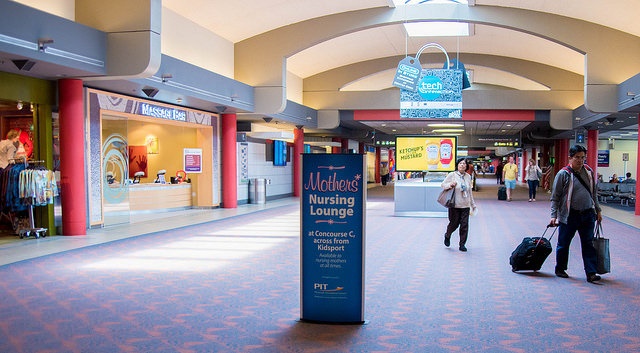
Nursing mothers’ rooms and pods
Post-security pet relief facilities
Children’s play areas
Airfield observation areas
Adult changing and washroom facilities.
In part to make way for these new amenities, airports say that over the next three to five years they’ll be phasing out and, in some cases, eliminating a few other amenities.
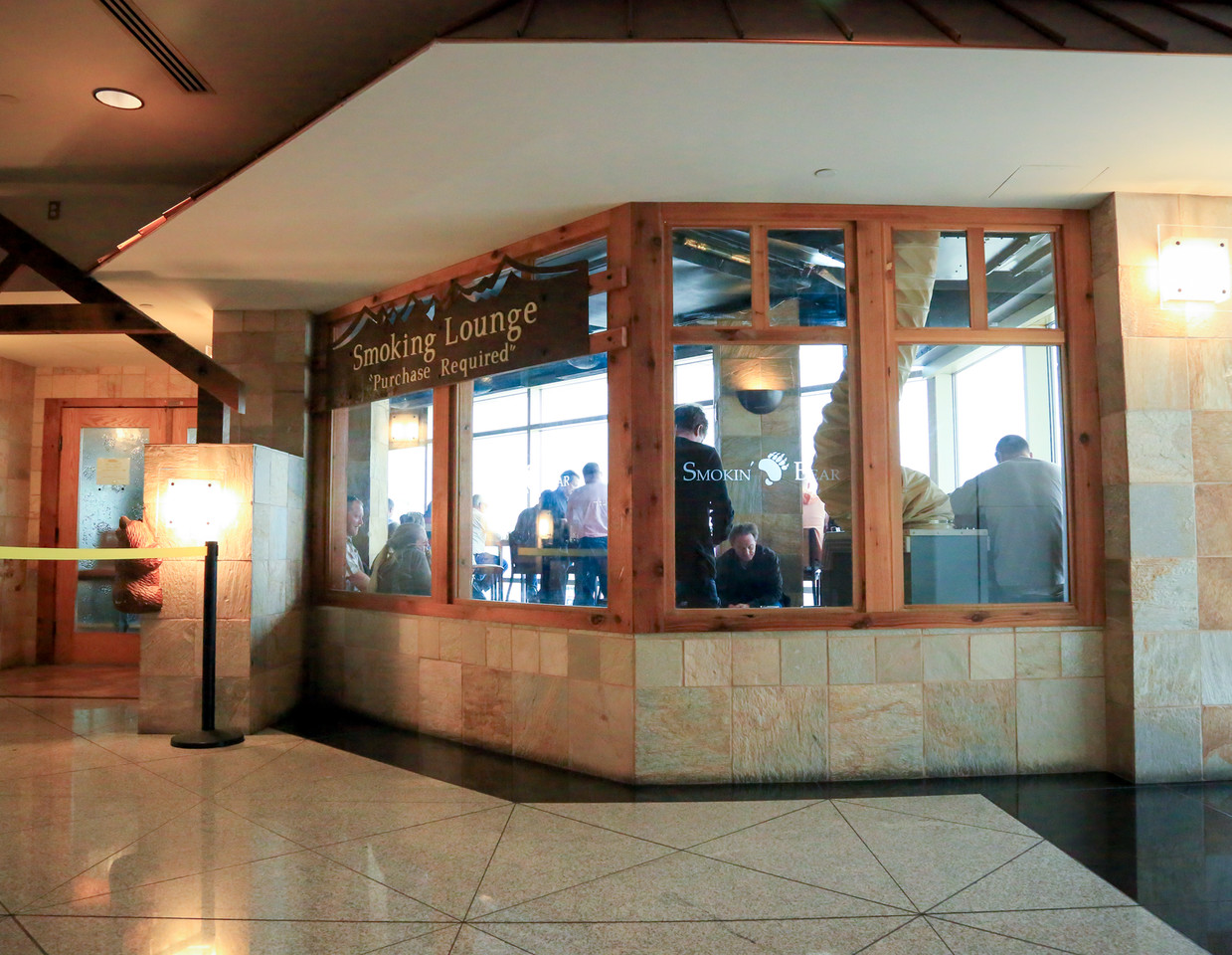
So get ready to say goodbye to smoking rooms, payphones and bank branches at airports.
ATMs are plentiful at many airports, but staffed bank branches are already quite rare.
One holdout is Minneapolis-St. Paul International Airport, where there is a branch of Wings Financial.
“The local bank has a built-in customer base, as they began as a credit union for airline and airport employees,” said airport spokeswoman Melissa Scovronski, “So we don’t expect to eliminate that service.”
Smoking lounges still exist at just a handful of major U.S. airports, including Washington Dulles International Airport and Hartsfield-Jackson Atlanta International Airport, but in 2016, Salt Lake City International Airport closed all its smoking rooms and by the end 2018 the last remaining smoking lounge at Denver International Airport will end its contract.
And those once ubiquitous banks of pay phones at airports are being replaced with charging stations or making way for other services.
Seattle-Tacoma International Airport removed the last of its payphones in 2016.
With the rise of cell phones, “Folks simply don’t use pay phones,” said SEA spokesman Brian DeRoy, “And there are hardly any companies now that want to have the financial burden of taking on a pay phone contract for a very limited number of users.”
Austin-Bergstrom International Airport has also ditched all its payphones, but provides a courtesy phone for free local calls next to the information desk on the baggage claim level.
“Our information desk staff can also make calls for passengers when needed, such as when cell phones batteries are dead,” said AUS spokesman Derick Hackett.
The number of payphones is being steadily reduced, but not yet eliminated, at airports in Dallas/Fort Worth, Minneapolis and Chicago, where there are now 503 payphones at O’Hare International (down from 650 five years ago) and 174 payphones at Midway International (down from 180).
“The payphones taken off line were removed because of low usage, requests from the airlines due to construction in their gate areas and repurposing of space for revenue producing ventures,” said Gregg Cunningham of the Chicago Department of Aviation, but some will remain “because they are still a necessary means of communication for some customers.”
At Reno-Tahoe International Airport, free local or toll free calls can be made from any courtesy phone in the airport.
“In 2008, AT&T ended their payphone contract at the airport, at same time they pulled out of shopping malls and other public buildings due to decreases in revenue,” said RNO airport spokeswoman Heidi Jared, “But the airport authority knew an option was needed to fill that void since not all travelers have a cell phone.”
And, totally bucking the no-payphone trend, thanks to a deal dating back to 2012, Denver International Airport still has about 200 payphones in the terminal and on the concourses that provide unlimited free national domestic calls and international calls that are free for the first 10 minutes.
(A slightly different of this story about airport amenities appeared on CNBC)
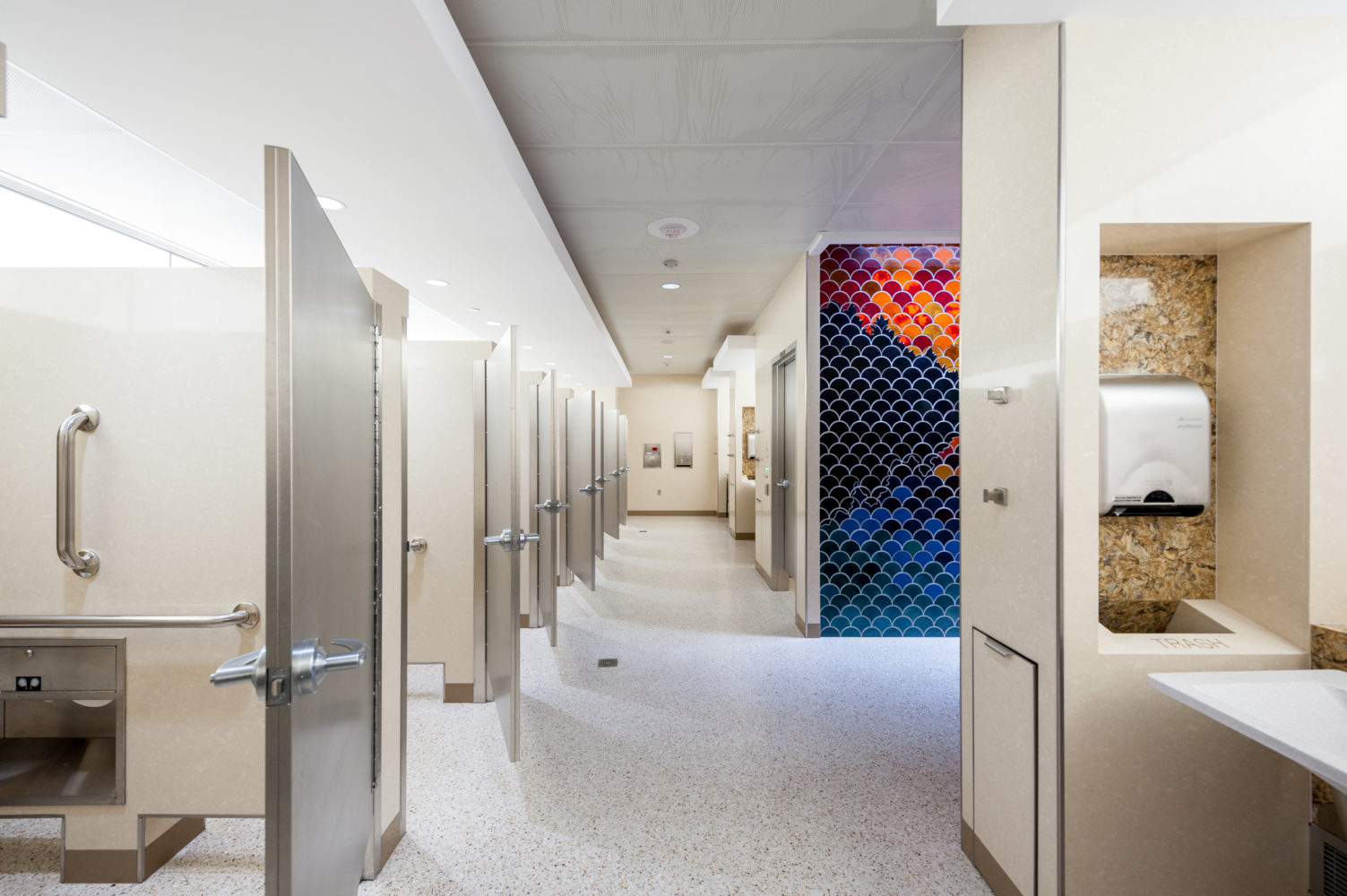
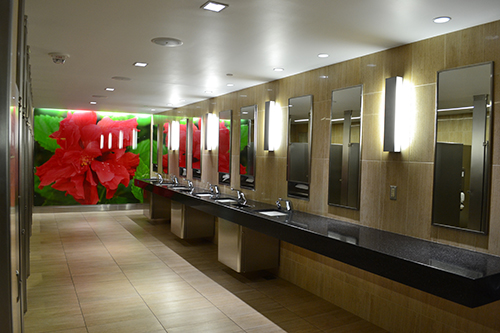
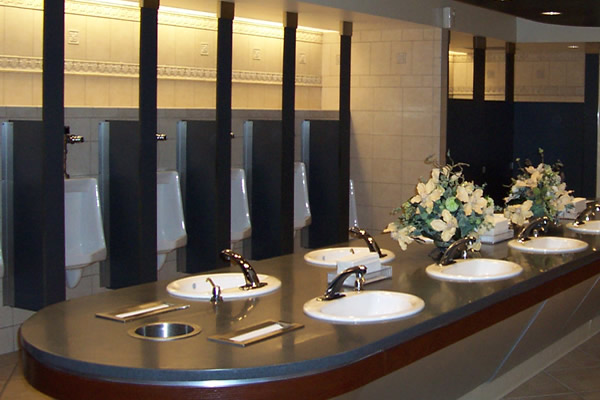
My “At the Airport” column in USA TODAY this month is all about airport bathrooms and celebrates the fact that Minneapolis-St. Paul International Airport took first place this year in the annual contest to choose America’s best public restroom.
The last time there was news about the stalls at Minneapolis-St. Paul International Airport was in 2007 and the story centered about a senator and a sex sting.
But now MSP and its loos will get more respect.
The first batch of airport’s updated restrooms was named the 2016 winners in the 15th annual America’s Best Restroom Contest.
Hosted by Cintas, a Cincinnati-based company that cleans and provides supplies for public restrooms, the contest lets the public pick the winner from a set of 10 finalists and this MSP’s lavs were pitted against the likes of a Dr. Who-themed Tardis bathroom at a bar in Brooklyn, N.Y., a bookstore in St. Louis where the bathrooms are papered in classic books, and the restrooms at a Coca-Cola Park in Allentown, PA, (home of the AAA Lehigh Valley IronPigs) which feature a hands-free, motion-control urinal gaming system. (Scores get posted!)
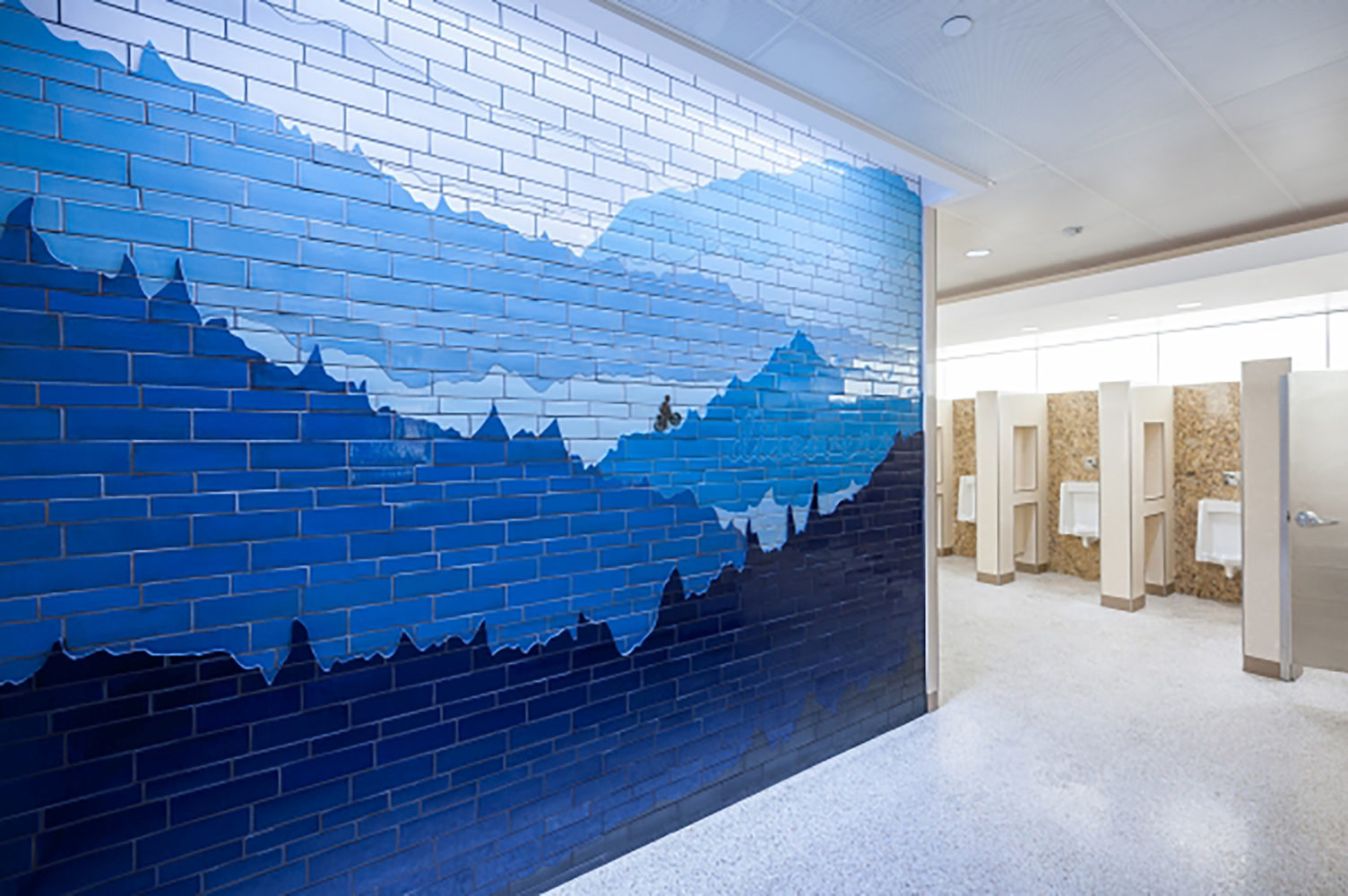
The restrooms MSP entered in the contest are part of a terminal-wide restroom renovation plan that started in 2009 and will continue through 2025 and encompass more than 100 sets of public restrooms throughout the airport.
In addition to overhauling each restroom to stalls with out-swinging doors and niches for rolling luggage, baby changing stations and shallow trough sinks that minimize splashing, MSP created “restroom zones” throughout the airport.
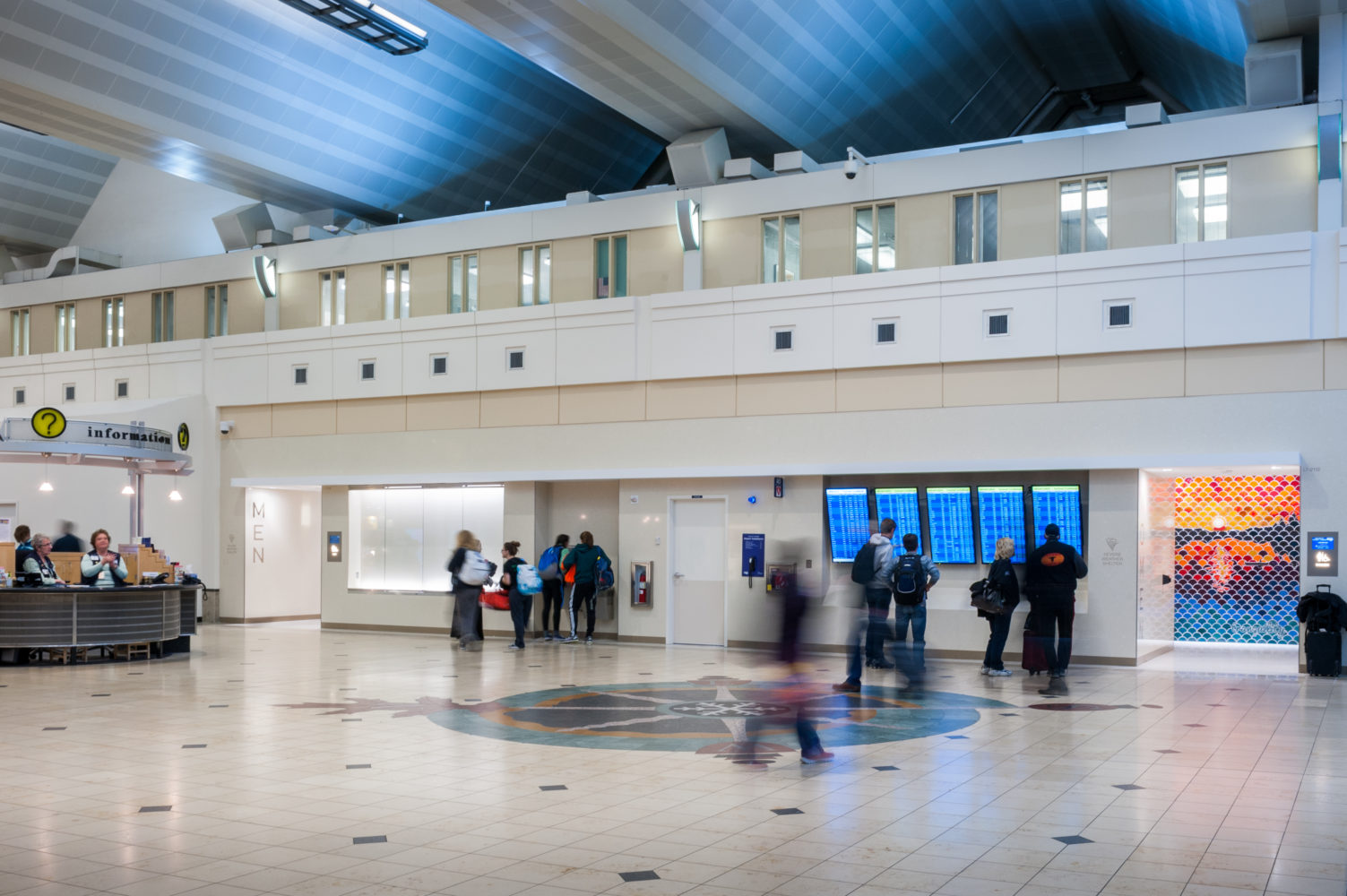
Each zone has out-the-way where travel companions can wait and amenities such as flight information boards, AEDs and others emergency devices, water-bottle refill stations and curated art display cases.
Mosaic art with a Minnesota theme marks the entrance to each restroom, with each set created by a different regional artist.
This isn’t the first time airport thrones have been in the running for the Best Restroom Contest crown.
Tampa International Airport’s renovated restrooms were among the finalists in 2013, losing out to the Varsity Theater in Minneapolis.
And back in 2005, the loos at Fort Smith Regional Airport in Arkansas took first prize.
(Read the full column – and see more photos here.)