Here’s a great airport exibit for avgeeks, model builders or anyone who loves marvelous, hand-crafted items and get to the pre-security area of the International Terminal at San Francisco International Airport (SFO).
(Douglas World Cruiser Chicago model aircraft)
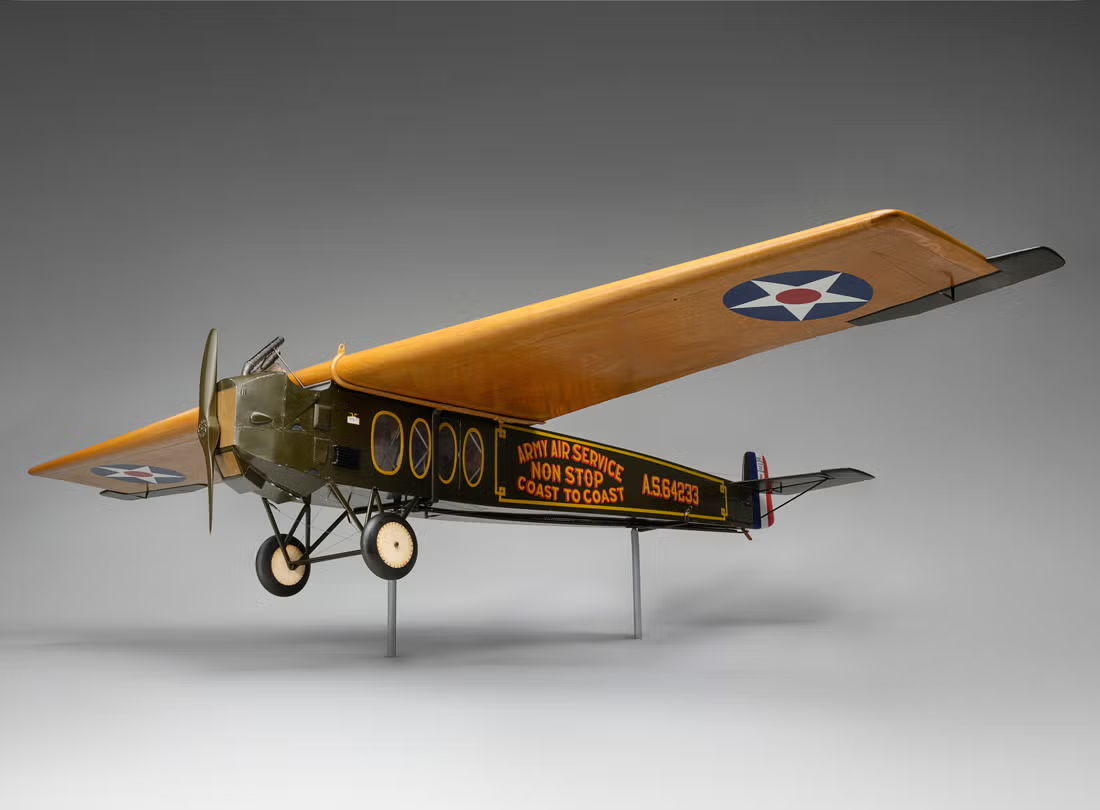
From now through March 2027 (so you have some time to make your plans…) the Aviation Museum & Library at SFO is exhibiting 8 model aicraft from its collection, all created by Edward Chavez, who was a recognized master of scratch building within the model-making community.
In 1961, the owners of the Nut Tree Restaurant, a sprawling roadside dining, shopping and amusement attraction in Vacaville, CA that operated from 1921 to 1996, commissioned Chavez to build display models of renowned aircraft.
The commissions continued for 27 years.
(Northrop Gamma 2A Texaco Sky Chief model aircraft)
Edwin I. Power, Jr., a pilot and one of the restaurant’s owners who helped develop the adjacent Nut Tree Airport (still there and sporting an Observation Deck), had seen Chavez’s work at the Smithsonian Institution’s National Air and Space Museum in Washington, D.C. And in 1997 the SFO Museum acquired the majority of the models that Chavez and his occasional collaborator, Robert Fogg, had created for the restuarant over the years.
Magnificence in Miniature: The Nut Tree Airport Models of Edward Chavez is a free SFO Museum exhibit at SFO’ Aviation Museumn & Library, located pre-security, Departures Level 3 in the International Terminal
(Lockheed Model 5B Vega Winnie Mae model aircraft)
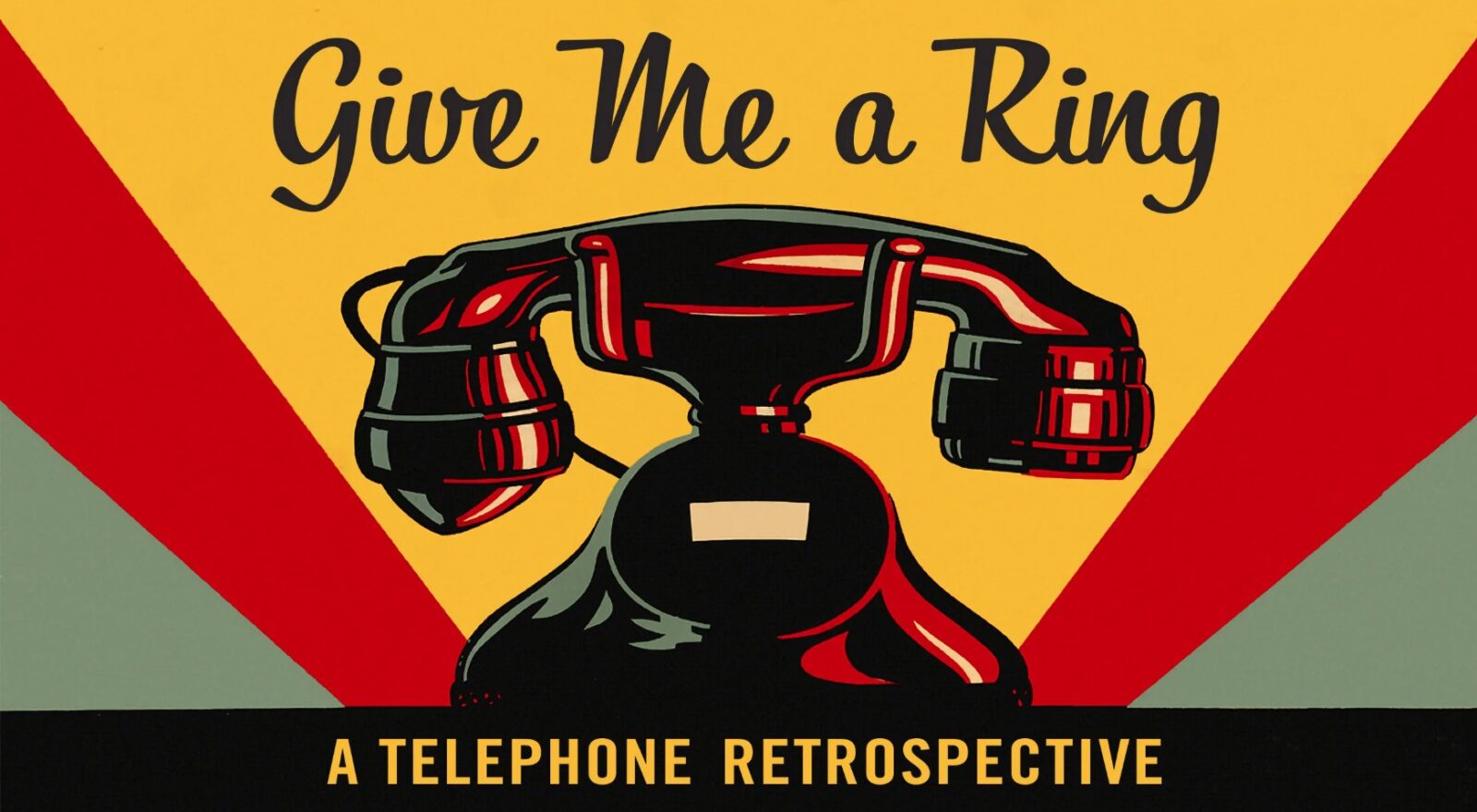
The SFO Museum is presenting a new year-long show about the history and development of telephones.
The exhibition, made possible thanks to a loan from the JKL Museum of Telephony in Northern California, features an array of classic telephones from the late 19thcentury to the 1990s.
On display are streamlined Art Deco telephones, payphones, and novel Picturephones of the 1960s, a 1958 Touch-Tone telephone prototype and much more.
Here’s a preview of some of the information and objects you’ll see in the exhibit.
Candlestick telephones
Introduced in the late 1890s, the candlestick telephone required the caller to speak into the candlestick while holding the receiver to their ear to hear the other party.
To place a call, a person had to speak with a switchboard operator who made the connection to the requested number.
Rotary dials and handsets
The first rotary dial telephones allowed people to dial a telephone number without the assistance of an operator.
In rotary dialing, each number on the dial is associated with a series of electrical pulses.
When a caller turns the dial, it sends the pulses down the line. For instance, if one dials ‘7,’ the telephone delivers seven pulses. These pulses are then translated at an automatic telephone exchange to connect the call to the desired number.
Payphones
Payphones, hard to find today, remained an important part of telephone communication until the advent of cell phones.
William Gray patented the first coin-controlled apparatus that used a bell system to signify when a user inserted a coin. Operators listened carefully as coins of different denominations traveled down separate chutes where they struck bells and gongs to verify that the correct payment was received.
The first pay telephone was installed in a bank in Hartford, Connecticut, in 1889, and in 1911, Western Electric worked with Gray’s company to design a standard payphone with a coin return.
The Western Electric Model 50-A had three slots: one for nickels, one for dimes, and one for quarters. Within a year, thousands of payphones appeared, housed indoors in wooden booths.
Outdoor phone booths made from glass and aluminum became commonplace in the 1950s. In 1965, Western Electric introduced the single-slot, flat-fronted public telephone still familiar to some today.
Picturephones
By the late 1920s, AT&T had created an electromechanical television-videophone, which they successfully tested in 1927.
By 1930, AT&T’s “two-way television-telephone system” was used experimentally. Work on concept models continued into the 1950s.
AT&T’s Bell Laboratories first demonstrated the Model I Picturephone at the 1964/1965 New York World’s Fair and at Disneyland in California.
Other models were introduced later on, but failed commercially, and the company concluded that the videophone was a “concept looking for a market.”
In the early 2000s, though, broadband internet and video compression made video telphony easy. And today, with the widespread use of mobile phones and other mobile devices equipped with video capabilities, most people cannot imagine living without video telephone communications.
Give Me a Ring – A Telephone Restrospective is on view at SFO Airport, post-security in Terminal 2, through mid-August 2026. All images courtesy of the SFO Museum.
The summer sale at Scandinavian Airlines (SAS) runs through Tuesday, August 26 with some very inviting discounted routes from John F. Kennedy (JFK), Boston Logan International Airport (BOS), Miami International Airport (MIA), Seattle-Tacoma International Airport (SEA) and Toronto Pearson International Airport (YYZ) to destinations in Scandinavia and Europe.
Discounted travel can be made now for SAS flights from October 1, 2025, through May 26, 2026.
We’re looking at flights from Seattle to Copenhagen.
Listen up at SFO Airport for seals, parrots, cable cars and more
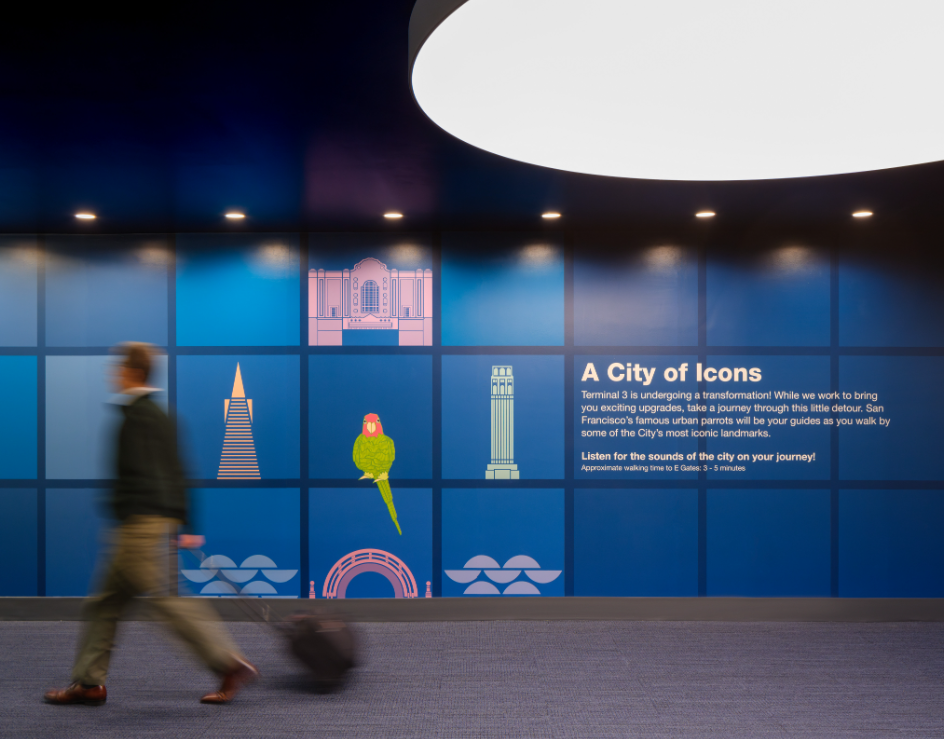
Travelers at San Francisco International Airport (SFO) must travel through temporary walkways connecting Terminal 3 (T3) to the F gates while renovations under way.
Not happy with leaving the corridor walls blank and bland, the design team at architectural firm Gensler has turned the walk into a sensory journey through San Francisco.
On this ‘City of Icons’ walk, travelers will hear audio recordings of seals barking at Pier 39, the chatter of the Mission, the music of the Fillmore, and the wild parrots of Telegraph Hill.
Listen closely and you’ll also hear the sounds of buses, trolleys, and the rumble of the city’s cable cars.
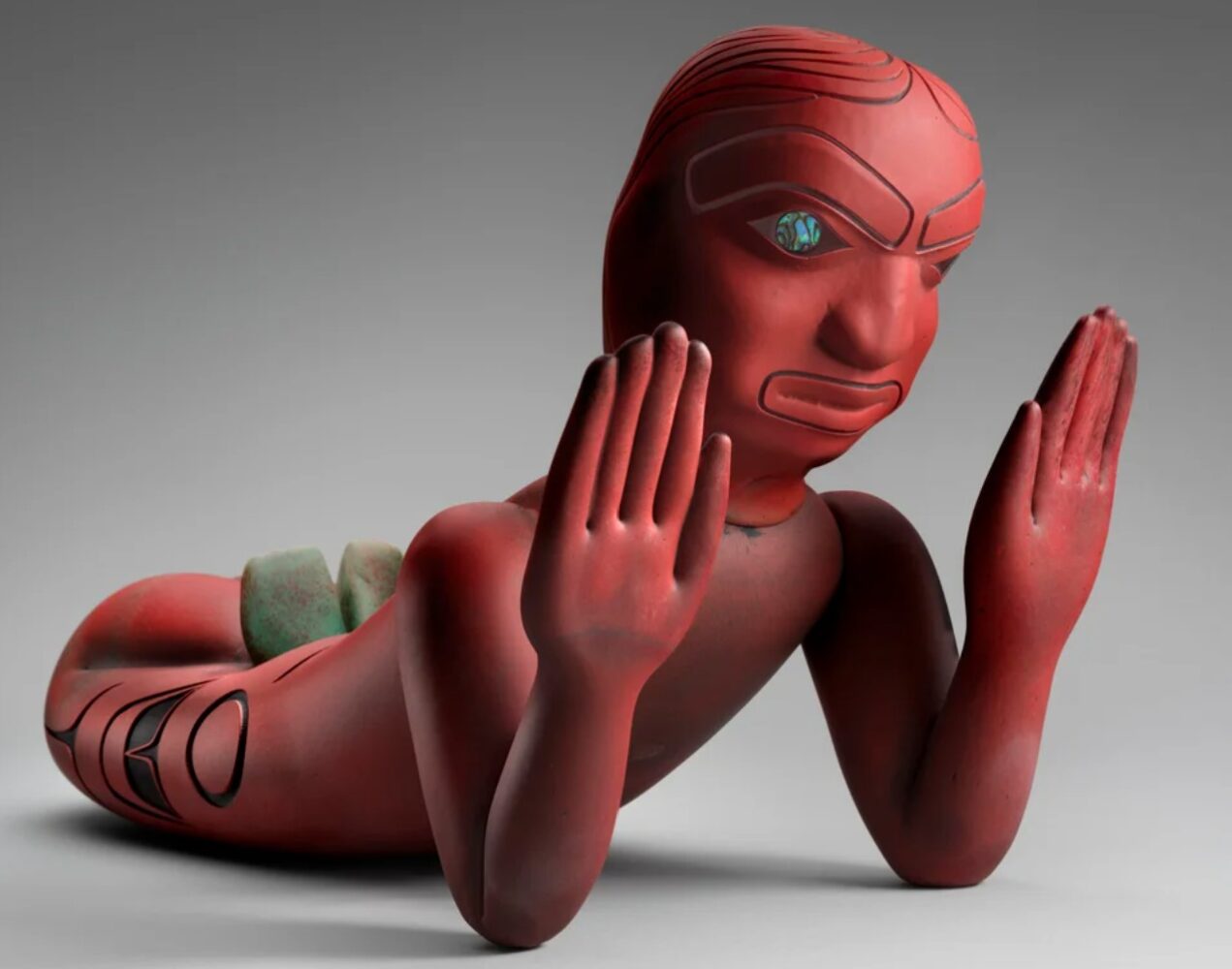
So we’re delighted that the newest SFO Museum exhibition at SFO is Preston Singletary: Raven Visits SFO.
The Tlingit and other native Northwest peoples, revere the Raven character as not only a creator of the world but also a trickster and a transformer.
Singletary’s Tlingit heritage and culture is reflected in his modern studio glass sculptures. For this exhibit, he’s collaborated with Garth Stein, a New York Times bestselling author who is also of Tlingit ancestry, and both the sculptures and the narrative text explore what Raven might be up to these days.
Preston Singletary: Raven Visits SFO is on view pre-security International Departures Hall of the San Francisco International Airport from June 21, 2025 – October 18, 2026.
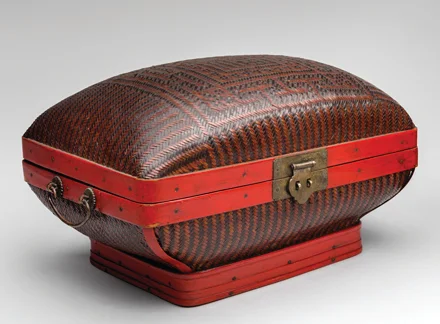
A new exhibition from the SFO Museum at San Francisco International Airport (SFO) celebrates the artistry of Chinese basketry and containers, many of which feature hand-painted motifs and auspicious symbols.
Here are some notes about the craft of Chinese basketry from the exhibit curators.
Baskets range in size, form, and usage—from sewing baskets and hat containers to food-carrying baskets and storage containers for grain, clothing, and other domestic items.
Betrothal or gift baskets, some of the most ornate Chinese baskets, are filled with food and gifts and given to the bride-to-be by the groom and his family.
Still made today in several southeasteHrn provinces, many of these specimens are now intended for the tourist or international market.
However, the SFO Museum exhibition features baskets from the 19th to early 20th century. Included are some baskets that not woven at all but are crafted from wood and laquered to mimic the form of a basket.
Here’s a sampling. All images courtesy SFO Museum.
SFO’s Cherry Blossom Festival features live music events through April 22, post-security in Terminal 2 across from Compass Books.
Here’s the rundown:
Thursday, April 10: Aki Oshiro and Shinobue (10 AM – 1:30 PM)
Aki Oshiro is a queer, trans, and non-binary, fourth-generation Japanese Okinawan-American professional taiko artist based in Sacramento and the San Francisco Bay Area.
Friday, April 11: Kiyonomoto Ryu (10 AM – 2 PM)
The USA branch of the Kiyonomoto School of traditional Japanese dancing was founded in 1994.
Thursday, April 17: Kaori Suzuki (10 AM – 2 PM)
Sakura Ren is a non-profit performing art group showcasing Japanese traditional dance called Awa-odori and its music.
Friday, April 18: Ito Yosakoi (12 PM – 3 PM)
Ito Yosakoi is a community yosakoi dance program of the Japanese Cultural and Community Center of Northern California (JCCCNC) located in San Francisco Japantown.
The SFO Museum‘s newest exhibition, San Francisco: City of the World, offers travelers a thoughtful, fun and educational look at the iconic city’s colorful history.
Find it post-security in Terminal 2 through July 6, 2025.
A preview of images and information from the exhibit is below.
Content and images courtesy of SFO Museum.
In 1848, gold was discovered in the Sierra Nevada foothills. The following year, more than seven hundred ships arrived in San Francisco.
The Gold Rush transformed the region into a bustling city of approximately twenty-five thousand inhabitants, including thousands of Chinese immigrants who established California’s oldest and largest Chinatown.
Andrew Smith Hallidie (1836–1900) tested the first cable car in 1873 on Clay Street and public service began in September that same year.
By the turn of the twentieth century, San Francisco was known as the “Paris of the West,” until the 1906 earthquake and resulting fires leveled the city.
The resilient metropolis was quickly rebuilt, and during the early 1900s numerous San Francisco landmarks, such as Coit Tower (1933) and the Golden Gate Bridge (1937)—the most photographed bridge in the world—were built. In addition to its natural beauty and historical sites, San Francisco has long served as a meeting ground for diverse groups of people and countercultures, which are also explored throughout the exhibition.
One of the newest SFO Museum exhibitions at San Francisco International Airport (SFO) tells the story of Rosie the Riveter and the accomplishments of more than 16 million women who joined the workforce during the Second World War.
More than sixteen million women were employed at the peak of wartime production in 1944—with over three million in skilled factory positions to support the massive increase in war-related industries. Many of those jobs were in aviation.
Here’s the story of “Rosie the Riveter” from the exhition notes:
The Second World War had a profound impact on working women in American society. After the United States entered the war on December 7, 1941, millions of men left manufacturing jobs for military service and recruiters scoured the country in search of replacements. Women joined the workforce in record numbers and filled industrial positions previously denied to them. Migrating from diverse regions and cultures, women converged on the nation’s industrial centers and quickly learned skills that traditionally took years to master. Popular culture and propaganda launched the legend of “Rosie the Riveter,” the anonymous, bandanna-clad woman in coveralls who produced all manner of wartime equipment on the home front.
Look for Rosie the Riveter: Womanpower in Wartime post-security in Harvey Milk Terminal 1 at San Francisco International Airport through May 11, 2025.
The final section of Harvey Milk Terminal 1 at San Francisco International Airport (SFO) is now open.
This phase of the Terminal 1 re-do offers travelers a new north check-in lobby for Alaska Airlines and Delta Airlines and a new mezzanine-level security checkpoint.
Travelers will find new museum galleries, additional aircraft gates, a third airport yoga room, new concessions, and the final piece of the connecting walkway that now links all SFO terminals post-security.
What to look for in the new Harvey Milk T1 section
This week Alaska Airlines moves its check-in area, flights and baggage services from Terminal 2 to Terminal 1 and begins using a new automated bag drog technology in the Terminal 1 lobby.
Passengers may now use the new security checkpoint on the T1 mezzanine level. This new checkpoint is accessible from the Terminal 1 Air Train station and will surely become the ‘secret’ way into the airport, now that all terminals are linked post-security.
A common-use lounge, the Club at SFO, opens on June 25. Alaska Airlines will open a new flagship lounge in Terminal 1 in late July. Till then, Alaska Airlines is keeping its T2 lounge open.
The SFO Museum has opened a lovely “Photo Alley” gallery and there are several new concessions, including Green Apple Books.
Green Apple Books is now open in Harvey Milk Terminal 1! 📚🍏
Shop books, newspapers, magazines, vinyl, CDs, audiobooks, gifts, and more before you fly. ✈️ pic.twitter.com/wGKjH26ATM
— San Francisco International Airport (SFO) ✈️ (@flySFO) June 13, 2024
Today we celebrate the opening of another real bookstore at an airport. Green Apple Books is now open at Harvey Milk Terminal 1 at San Francisco International Airport (SFO).
Green Apple Books is now open in Harvey Milk Terminal 1! 📚🍏
Shop books, newspapers, magazines, vinyl, CDs, audiobooks, gifts, and more before you fly. ✈️ pic.twitter.com/wGKjH26ATM
— San Francisco International Airport (SFO) ✈️ (@flySFO) June 13, 2024
How dirty is your luggage?
When was the last time you sanitized your luggage?
If the answer is ‘never,’ then you might be a candidate for the Clean luggage sanitation machine, which will debut this week at JFK Terminal 7 as part of a pilot project.
The promise: the machine uses UV-C light to eliminate 99.9% of viruses, bacteria and other harmful pathogens from your luggage in seconds.