Security

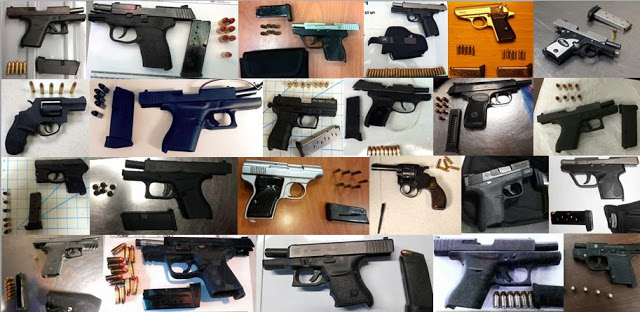
165 guns found at airport checkpoints in 2 weeks. What??

On the TSA blog each week there’s a report on the number of firearms – and loaded firearms – officers find at airport checkpoints.

The weekly numbers – and images – always alarm me. But this week’s report on the number of firearms found in the past TWO weeks is super alarming: over the past two weeks TSA officers found 165 firearms at airport checkpoints.

79 one week. 86 the week after.

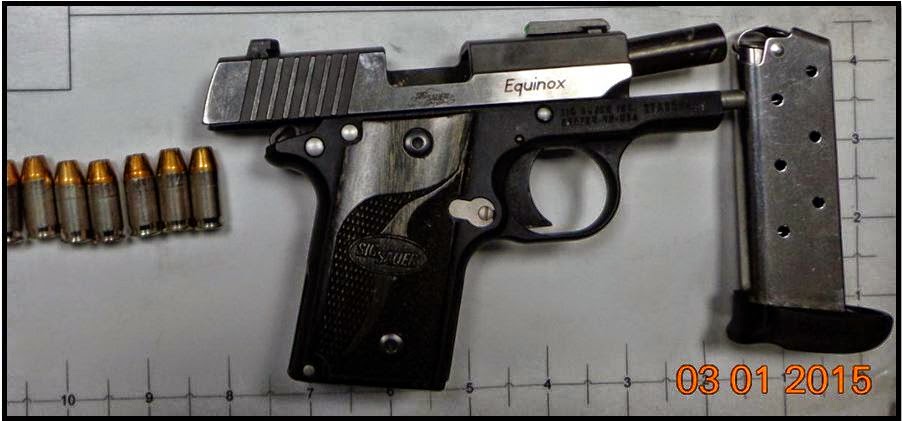
Of those 165 firearms, TSA tells us 144 were loaded (!) and 56 had a round chambered.

Whenever I write about this I get emails telling me not to worry.  “Those aren’t terrorists,” people tell me, “Just innocent ‘regular’ people who forgot they had their guns with them.”

What happens to these people? Often, nothing.

Depending on the state and the situation, travelers are somtimes just told to come back without their gun. Sometimes there’s a fine. Occasionally, an arrest.

You’d think that since by law no passengers are allowed to bring guns into the secure side of an airport – or onto an airpane – the number of people bringing guns to the airport would be decreasing.

But the yearly tallies just go up.

Any solutions??


NY Jets football fans can sign up for TSA Precheck at home games

Football fans take note:  If you keep meaning to sign up for TSA Precheck but can’t make the time to go to the airport for the in-person interview part of the application, you now have the option of taking care of that task at NY Jets home games at MetLife Stadium.

An IdentoGO processing station will be set up between lots E and F outside of the MetLife gate during home games throughout the 2017 season.

More details here.

Thanks for visiting StuckatTheAirport.com .  Subscribe and get a travel tidbit most every day.

Fliers love Orlando Int’l Airport – and other new rankings

This year Orlando International Airport (MCO) gets top ranking for satisfaction among the “mega” airports in J.D. Power’s 2017 North America Airport Satisfaction Study.

Detroit Metropolitan Wayne County Airport (DTW) came in second and McCarran International Airport in Las Vegas ranked third, with scores of 778, 767 and 765,  respectively, out of a possible score of 1000.

Among large airports, John Wayne Airport in Orange County topped the list with a score of 796, followed by Tampa International Airport (795) and Dallas Love Field (790).

Sacramento International Airport got the highest marks among the medium airports (810), followed by Indianapolis International Airport (807), and Ted Stevens Anchorage International Airport (806).

The study, one of several ‘biggies’ that come out each year, ranks traveler satisfaction with mega, large, and medium North American airports by weighin six factors (in order of importance): terminal facilities; airport accessibility; security check; baggage claim; check-in/baggage check; food, beverage and retail.

J.D. Power notes that ratings are up 18 points overall compared to last year’s all-time high, due to a 25-point increase in satisfaction with security checks (thanks to a drop in TSA staffing issues) and more satisfaction with check-in/baggage check (+19 points) and food, beverage, and retail (+15 points).  Self-service bag-check kiosks and other bag-tagging technologies got credit for raising satisfaction with the baggage check process.

Here are the Top 10 airports in each category:

“Mega” airports:

  1. Orlando International Airport
  2. Detroit Metroplitan International Airport
  3. McCarran International Airport
  4. Phoenix Sky Harbor International Airport
  5. Denver International Airport
  6. Charlotte Douglas International Airport
  7. Minneapolis-St. Paul International Airport
  8. Dallas-Fort Worth International Airport
  9. San Francisco Internaitonal Airport
  10. Seattle-Tacoma International Airport

Large Airports

  1. John Wayne Airport
  2. Tampa International Airport
  3. Dallas Love Field
  4. Nashville International Airport
  5. Portland International Airport
  6. Willliam P. Hobby Airport (Houston)
  7. San Diego International Airport
  8. Reagan National Airport
  9. Salt Lake City International Airport
  10. Baltimore-Washington Thurgood Marshall Airport

Medium Airports

  1. Sacramento International Airport
  2. Indianpolis International Airport
  3. Ted Stevens Anchorage International Airport
  4. Jacksonville International Airport
  5. Palm Beach International Airport
  6. Southwest Florida International Airport
  7. Pittsburgh International Airport
  8. Raleigh-Durham International Airport
  9. Buffalo Niagara International Airport
  10. Ontario International Airport

You can see the full lists and the scoring here.

Pittsburgh Int’l Airport invites non-flyers past security


You may remember the ‘old day’s’ of flying, when friends and family could go with you to the airport – and to the gate – to send you off, and when they were there at the gate with hugs and kisses when you got home.

9/11 changed all that, but now Pittsburgh International Airport is bringing that airport amenity back.

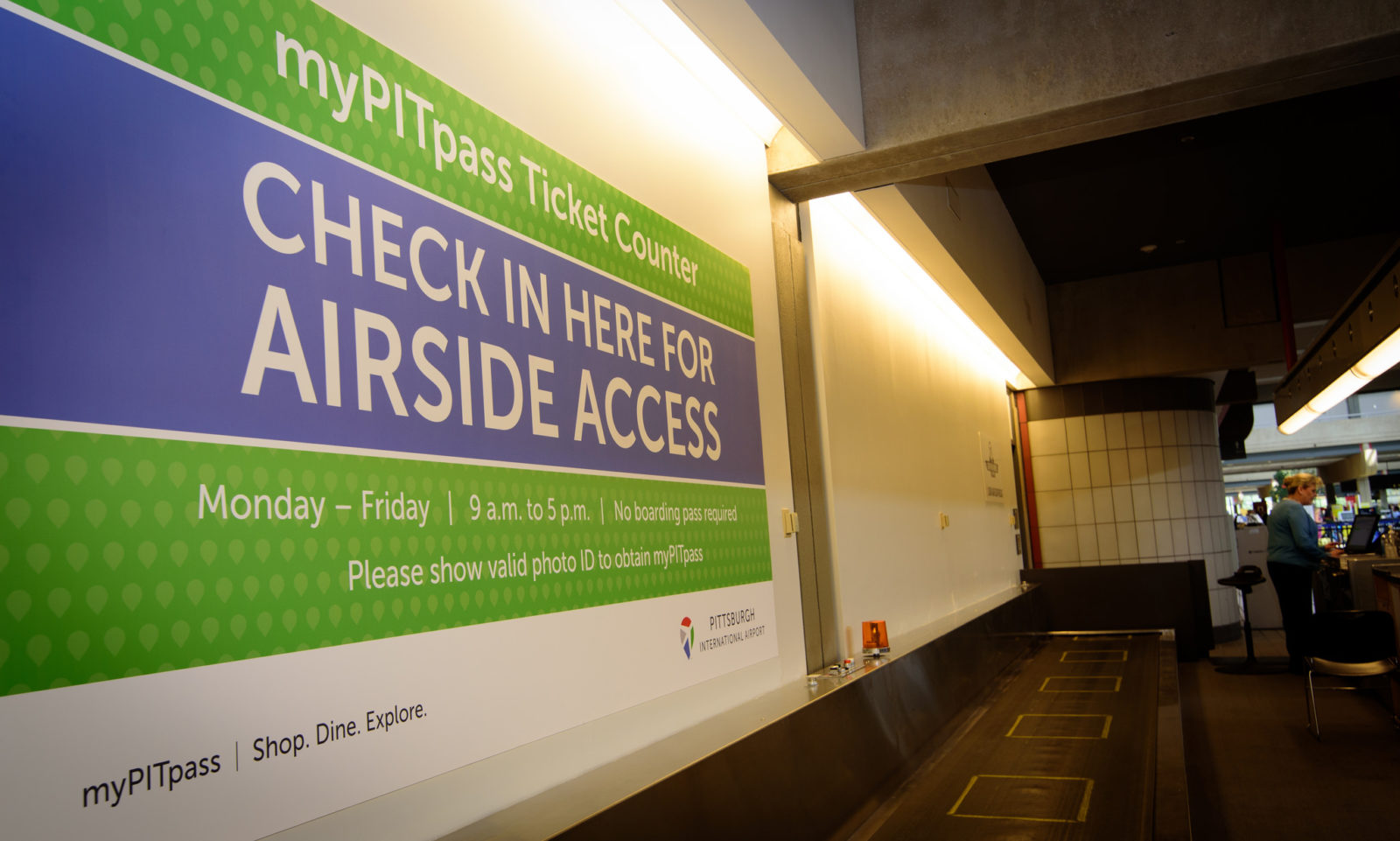
The airport has worked with the Transportation Security Administration to get approval for a program that gives the non-flying public to access gates, shops and restaurants beyond the security checkpoint.  No plane ticket and, they emphasize, no reduction in security, will be necessary.

The ‘myPITpass” program starts at 9 a.m. on September 5  and will issue same-day passes from 9 a.m. to 5 p.m. Monday through Friday. Here’s how it works:

  1. Check in on 3rd Floor Ticketing Level (across from Allegiant)
  2. Show a valid photo ID (Driver’s License or Passport)
  3. Have your name vetted and get a stamped myPITpass
  4. Go through security checkpoint observing the same rules as passengers boarding flights.

The program builds on PIT’s successful Holiday Open House program and the Airside access for guests program offered by the airport Hyatt hotel.

In addition to giving non-flyers access to the gates for sending off loved ones and welcoming them home, the program gives the public access to the great artwork at PIT Airport.

Andy Warhol Wallpaper at PIT

Hate extra airport pat-downs? TSA offering 1.5 million to fix the system

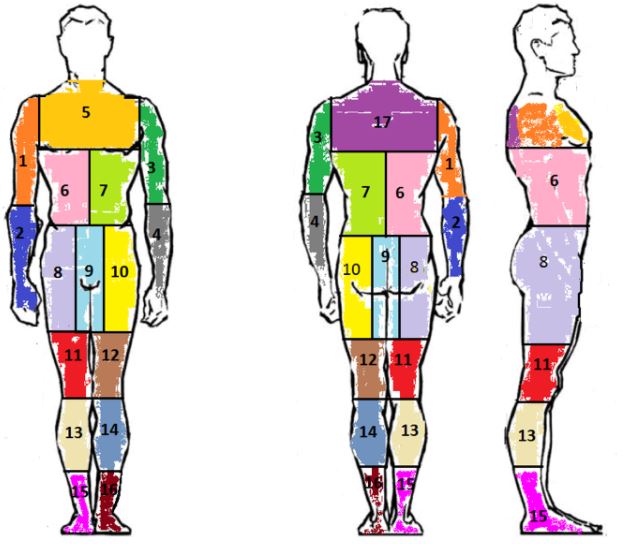
The extra pat-downs passengers often have to undergo at airport security checkpoints are not only irritating to those of us not interested in having our body parts touched by strangers in public, they make the lines go slower for everyone.

What triggers those secondary pat-downs? False alarms.

A high rate of those false alarms are triggered by expensive and, evidently, not too reliable, potential-threat algorithms the Transportation Security Administration purchases from the manufacturers of airport scanners.

In an effort to fix the problem TSA has put up $1.5 in prize money to see if someone else – maybe you? – can improve the accuracy of the threat prediction algorithms.

The contest, being run in partnership with Kaggle  will award eight prizes (1st prize: $500,000; 4th to 8th prize: $100,000) and to enter you’ll need to evaluate a set of body scans.

These are real body scans, from TSA volunteers, and the “images may contain sensitive content,” the rules explain. So contest participants are asked to “conduct yourself with professionalism, respect, and maturity when working with this data.”

Here are links to deadlines and more information. Good luck!


Expanded laptop ban? Airlines, airports getting ready

Among the many aviation-related issues being discussed this week by airline CEOs and others at the International Air Transport Association meeting in Cancun, Mexico is the current ban on laptops and other large personal electronic devices in the cabins of airplanes flying to the UK and the United State from some airports in the Middle East and Africa.

“There was no consultation with industry and little time to implement. The action caught everybody by surprise,”  Alexandre de Juniac, the IATA CEO told meeting attendees, “And it was a big challenge for airlines to comply, and a huge inconvenience to our customers. It should not be that way.”

“Airlines will never compromise on security,” said de Juniac, “It is also a fact that taking electronic devices from passengers has real cost to them. In the ban’s current scope we estimate $180 million in lost productivity. And that could surge to $1.2 billion if the ban is expanded to flights from Europe to the US .”

“We need to get security right,” he added, “There is a clear duty to make sure that the measures are logical, effective and efficient. That is not the case with the current ban. And it must change.”

How?

“First, we must find alternatives to the ban,” said de Juniac. “In the short-term, these include more intense screening at the gate and skills training. In the medium-term more advanced and faster explosive detection technology is the solution to evolving bomb threats. But painfully slow certification processes must be accelerated so that we can actually use it.”

For now, airlines – and airports – all over the world are preparing for the possibility that the laptop ban will be expanded.

Airports are making plans for how re-arrange check-in areas to accommodate all the ‘carry-on only’ passengers who may now need to check a bag with electronics devices.

“Some of our (airline) clients are investing in having a sizable number of tablets on hand to be available to customers should the ban come into effect, ” Bryan Terry, Managing Director, Aviation, for PricewaterhouseCoopers (PwC).

They’re doing it not because they really know the ban is coming.  “But just as a natural course of risk management activities, ” said Terry, “They don’t want to be at a disadvantage if any of their peers are doing the same.”


Travelers leave TSA hefty tips


How much do you love the Transportation Security Administration?

Enough to leave a tip every time you go through security at the airport?

I didn’t think so.

But in their rush to get through airport checkpoints, passengers leave a hefty amount of ‘tips’ for the TSA every year.

For its fiscal year 2016, the Transportation Security Administration reports that passengers left behind more than $867, 812.39 in coins and currency in the plastic bowls and bins at airport checkpoints.

That’s about $102,000 more than was left behind in 2015 and more than $484,000 than was left behind in 2008.

Over the years, the amount of change left behind by travelers at airports has been climbing, jumping from about $489,000 in 2011 to almost $675,000 in 2014 and to almost $766,000 in 2015.

Last year, passengers at New York’s John F. Kennedy International Airport were the most forgetful (or generous…) travelers, leaving behind $70,615 in unintentional ‘tips’ for TSA.

Also on the top ten list for fiscal year 2016: Los Angeles International Airport, where travelers left behind almost $45,000, and Dallas/Fort Worth International Airport, where more than $42,000 in cash and currency was left in checkpoint bins.

What happens to all that money?

Back in 2005, Congress passed a law saying TSA gets to keep that unclaimed cash and spend it on any sort of civil aviation security efforts it deems fit.

In at least two previous years’ reports, TSA stated that the unclaimed money collected from airports would be used to support the expansion of the TSA Precheck program, which gives travelers expedited screening privileges, allowing them to keep shoes and lights jacks on and their laptops and quart-sized bag of liquids and gels inside their carry-ons.

When it filed its report on the almost $868,000 in unclaimed money collected from airports in fiscal year 2016, however, TSA said it had not yet determined how it would spend those funds.

Don’t want to leave a tip?

At some airport checkpoints, passengers can also empty loose change from their pockets directly into donation bins for local charities before moving through the line.

During 2016, travelers passing through Denver International Airport donated $87,106.91 to Denver’s Road Home, a non-profit that works with service providers for the region’s homeless community. And last year passengers at Phoenix Sky Harbor International contributed more than $11,000 to help support the USO operations at the airport.


Tips on dealing with the electronics ban on planes


Travelers are trying to figure out how to deal with new government rules placing an indefinite ban on electronic devices larger than smartphones from the cabins of commercial aircraft flying to both the United States and the United Kingdom from certain countries.

Canada is also considering joining the electronics ban for flights.

Here are some tips and things to consider if you’re booked on one of these flights, taken from my story on this topic for NBC News Travel.


In the United States, the ban covers nine airlines (Royal Jordanian, EgyptAir, Turkish Airlines, Saudi Arabia Airlines, Kuwait Airways, Royal Air Maroc, Qatar Airways, Emirates Air and Etihad Airways) and direct flights to the U.S. from 10 specific airports listed here.

In the United Kingdom, the ban covers inbound flights from six countries: Turkey, Lebanon, Jordan, Egypt, Tunisia and Saudi Arabia.

“The ban means there is probably intelligence indicating a terrorist group or individual has been planning to detonate a device on board a commercial airplane, using an electronic to either hide an explosive, or as a triggering device for an explosive,” said aviation safety and security expert Jeff Price.

The ban also means that, for the foreseeable future, travelers booked on more than 125 affected flights a day to the US and UK will have to put devices such as tablets, e-readers, cameras, laptops, portable DVD players, portable printers and scanners and video games in checked baggage.

Travelers are concerned not only about how they will spend their time during flights, but the fate of the devices checked in airplane holds.

“Am I seriously going to check a $3-5K dollar camera? Not a chance,” said Washington, D.C. –based writer and photographer Emily Troutman, via Twitter.

As the bans begin to go into effect, experts are sharing advice and tips for those currently booked – or about to be booked – on the affected flights.

“Back up all your data and save it to the cloud, arrive at the airport early, bring your phone charger or buy one at the airport, and bring some good material,” suggests travel pro Johnny Jet in a web post and try switching to connecting instead of a direct flight from one of the affected airports. “If you’re booked on the Emirate non-stop from Dubai to the U.S., you can also see if they’ll move you to one of their one-stops through Milan or Athens,” he said.

Other travel experts suggest loading work files, books, games and other entertainment onto phones and purchasing or bringing along an external keyboard to make typing and accessing the information easier.

“Upgrading to a larger memory phone might be in order,” said Farecompare CEO Rick Seaney, whose research shows the ban will initially affect approximately 126 flights a day to the US and UK, with over 40,000 potentially inconvenienced fliers.

Families traveling with children, who have come to rely on movie and game-filled tablets for entertainment, should make sure to pack “some good old-fashioned unplugged entertainment, such as books, puzzle books, and coloring pads,” said Suzanne Rowan Kelleher, family travel expert at About.com.

And this may be a good time to explore the offerings on the affected airlines’ in-flight entertainment, some of which is quite extensive.

Not long after the ban was announced, Middle East carrier Emirates posted a “Who Needs Tablet and Laptops Anyway?” Tweet with a reminder that the airline offers “Over 2500 channels of the latest, movies, box sets, live sport and kids TV.”

While in-flight entertainment on a long flight is helpful, it won’t replace laptops for many travelers.

The ban “is simply unworkable for most business travelers. They need to be productive during their trips,” said the Business Travel Coalition in a statement, “Many business travelers do not check luggage, even on long flights as it slows them down upon arrival at baggage claim. Now they will have to check their electronics with many paying for the privilege.”

For those concerned about gear getting lost or stolen, insurance coverage from the airlines, travel insurance providers and certain credit cards may be helpful, “But the primary concern for most business travelers regarding the theft of electronic devices isn’t the value of the device itself, it’s the value/sensitivity of the data stored on the device,” said Max Leitschuh, iJET International Airline Safety Analyst.

Another option? Not checking electronic devices at all. “My recommendation is to ship your electronics to your destination,” said aviation security and safety expert Jeff Price, “There’s no way I’d put my laptop in checked baggage. And those little locks they sell can be defeated in about 15 seconds with a good paperclip.”

­­­­

TSA Year in Review – another record for firearms

Sea-Tac security line

You’d think air travelers would have gotten the message by now. But evidently not.

The TSA has done its 2016 tally and found that another record has been broken for the number of  firearms found in carry-on bags and on passengers at airport checkpoints.

According to TSA’s Year in Review report 3,391 firearms were found during 2016.

That’s 28 percent more than the 2,653 firearms found in 2015.

According to TSA’s report, of the 3,391 firearms found during 2016, 83 percent were loaded and the most firearms – 198 – were found at Hartsfield-Jackson Atlanta International Airport.

Top 10 airports for firearms discoveries:

Hartsfield-Jackson Atlanta International Airport (ATL):198
Dallas/Fort Worth International (DFW): 192
George Bush Intercontinental Airport – Houston (IAH):128
Phoenix Sky Harbor International (PHX):101
Denver International (DEN): 98
Orlando International Airport (MCO):86
Nashville International (BNA):80
Tampa International (TPA):79
Austin-Bergstrom International Airport (AUS):78
Salt Lake City International (SLC):75

Beyond firearms, TSA finds lots of other odd things in travelers’ bags.


Soon that bag of liquids may stay in your bag

amsterdam-liquids

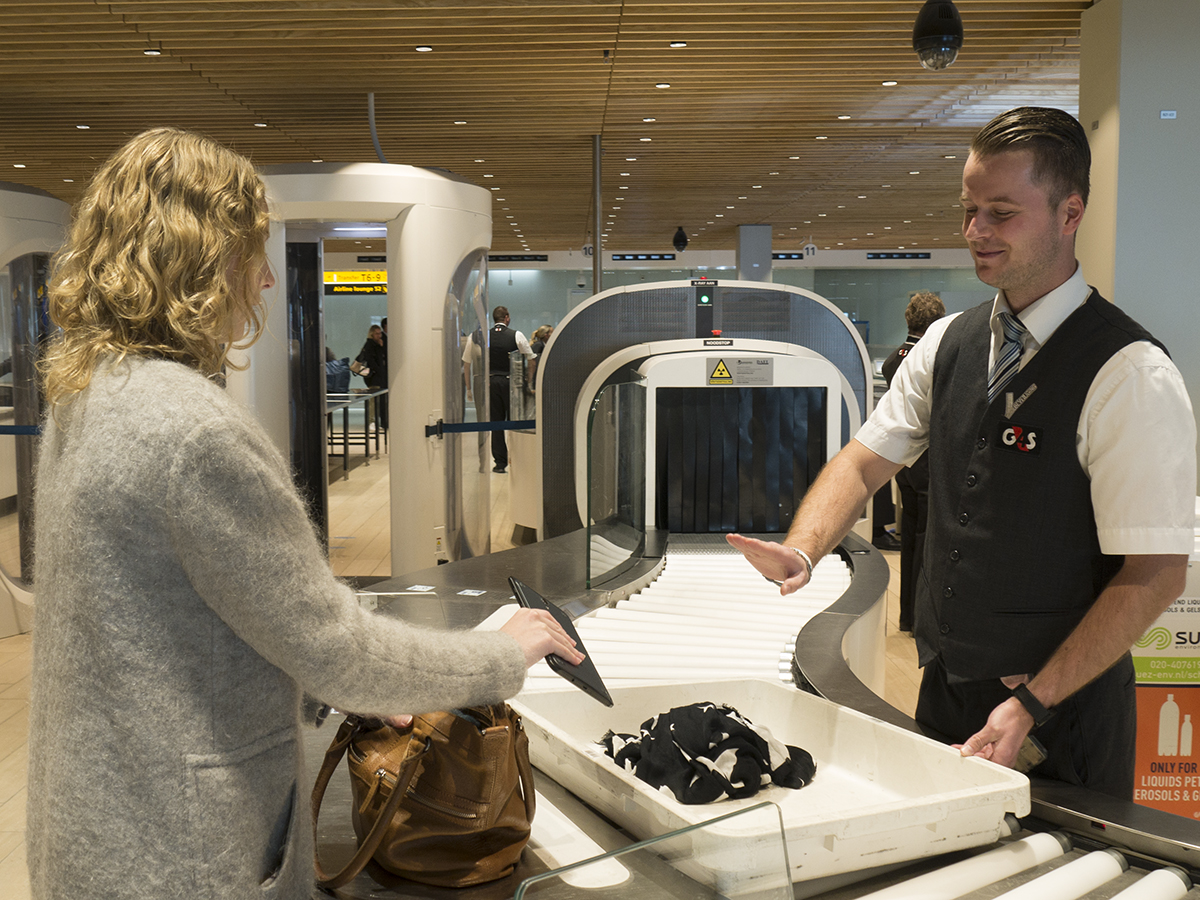
We can send a rocket ship into space – and get it back – but we still have to limit the amount of liquids we take through airport security checkpoints and pack our no-more-than 3.4 ounce containers in one 1 quart-sized baggie.

And unless you’ve got TSA PreCheck, you need to fish that baggie of liquids and gels out of your carry-on every time you go through the security checkpoint.

But, thanks to a test going on at Amsterdam’s Schiphol Airport, that may change.

At two security lanes at Schiphol, security officers are using scanning devices and software that allows them to not only see inside a bag, but to turn it 360 degrees and view it from all sides.

At the test lanes, all travelers are being allowed to leave their baggies filled with liquids and gels inside their carry-ons.

If the test works out, Schiphol plans to install the new baggage scanning devices at all 67 of its security lanes by the end of 2017 to speed up everyone’s checkpoint journey.

And if it works there, it’s a good bet other airports will get the modern scanning devices too.

amsterdam-liquids2