Safety

Tidbits for travelers: danger at Mexico City airport; blue mustang at Denver airport

robber

According to an Associated Press story, Mexico City is beefing up security at Mexico City International Airport ((International Airport Benito Juárez/MEX) after a series of armed robberies against travelers who exchanged money at the airport. 350 police officers have been added since December; now an additional 460 police officers will be assigned to patrol the airport and surrounding areas.

The story says that at least 18 people have been robbed recently outside the airport. They were apparently followed after doing business at the currency exchanges inside.

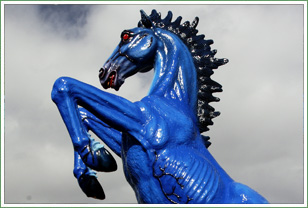
And Denver International Airport’s Blue Mustang sculpture is in the news.

dia-mustang


(Photo courtesy Denver International Airport)

According to this story from Monday’s New York Times:

A statue of a giant male horse – electric-eyed, cobalt blue and anatomically correct – was installed in February 2008 on the roadway approach to the terminal, and it is freaking more than a few people out.”

What do you think? Should they keep it, or send it out to pasture?

Jay Leno on US Airways flight 1549 again..

Jay Leno is getting a lot of mileage out of US Airways Flight 1549.

The latest: last night- Friday, Jan. 23. Once again, Terry Maxon at the Airline Biz Blog stayed up late enough to watch and take notes:

My favorite:

“I tell you, Kevin, the economy is bad, the economy is bad. People are hoping geese will hit their plane so US Airways will give them $5,000, that’s how bad it is.”

jay_leno_120x120

Ok, I’m in. Stuck at the Airport tweets arriving soon

As one of my social media (and life) idols, Benet Wilson, explains in this blog entry, “If you weren’t using some form of social media … when US Airways Flight 1549 crashed into the Hudson River, you were late getting news of the event.”

ausair

(JKrums’ already iconic image)

Wilson heard about the crash just moments after it happened via her Twitter account – and was able to stay ahead of the traditional media outlets by monitoring the incredible unfolding of events via “tweets” from folks looking out their windows.

So I’m in. Putting aside everything (lunch, articles due, the laundry) to get my Twitter account ship-shape so that next time anyone here is stuck at the airport – or if I am – we’ll know what’s up.

Ethnic profiling at airports

Here is the text of my Well-Mannered Traveler column that posted on MSNBC.com on January 15, 2009.  It’s  gotten an incredible amount of feedback.    Much of it shocking – and signed.

Recent incidents raise questions about TSA and airline policies

One thing is for sure: You will be detained and arrested if you pull a stunt like the one Lawrence Johnson pulled on a flight heading in to LAX last week. Witnesses say Johnson tried opening a rear emergency exit door and yelled, “I have a bomb” when other passengers tried to stop him.

But what if you go to the airport wearing a T-shirt with non-English words printed on it? Or board an airplane while discussing the safety merits of particular seats? As we’ve learned from two recent news stories, what happens next might depend on people’s stereotypes about your complexion. And that raises questions about whether airlines, government agencies and other passengers need a refresher course on constitutional rights and plain old common sense.

T-shirt trouble

Last December, JetBlue Airways and two TSA officers agreed to pay Iraqi-born, U.S. resident Raed Jarrar $240,000 to settle charges that they discriminated against him in 2006 based on his ethnicity and the Arabic writing on his T-shirt.

Jarrar had been told that he couldn’t board his JetBlue flight at New York’s JFK airport unless he changed his T-shirt or covered it up. The shirt read “We Will Not Be Silent” in English and Arabic and one TSA agent told Jarrar that wearing that shirt in an airport was tantamount to entering a bank wearing a shirt that said “I am a robber.”

JetBlue agents bought Jarrar a T-shirt with a slogan they thought would be less alarming to other customers. But before allowing him on the plane, JetBlue agents moved Jarrar’s seat assignment from the front of the plane to the back.

The American Civil Liberties Union (ACLU) filed a federal civil rights lawsuit on Jarrar’s behalf and calls the recent settlement a “victory for constitutional rights.” JetBlue Airways, however, “continues to deny, outright, every critical aspect of Mr. Jarrar’s version of the events.”

And a TSA statement states the agency “does not condone profiling nor tolerate discrimination in any way shape or form,” but avoids direct comment on the Jarrar case by pointing out that the suit names two TSA employees, not the TSA itself.

Still, Aden Fine, the senior staff attorney with the ACLU’s First Amendment Working Group says “the size of the settlement [$240,000] should make it clear that what the TSA and JetBlue did to Mr. Jarrar was wrong. Airlines should know better, and federal government officials should really know better. We’re hopeful that TSA officials and all airlines will think long and hard before they do something like this again.”

Lesson learned? Nope.

Unfortunately, an incident on New Year’s Day makes it clear that what happened to Raed Jarrar was not an isolated event.

Family removed from plane

On Jan. 1, AirTran Airways pulled nine Muslim passengers – all but one American-born – off a flight heading from Reagan National Airport in Washington, D.C., to Orlando International Airport in Florida. The problem? Some passengers panicked when they heard Atif Irfan and another passenger discussing the location of the safest seats on the plane. Before they knew it, the pilot was informed, the plane was emptied and everyone was re-screened. Although the FBI determined that Irfan and the eight others in his group posed no threat, AirTran representatives refused to rebook the Muslim travelers on another flight later that day. Instead, an FBI agent helped the group book flights on another carrier.

AirTran later apologized for incident, refunded all the fares, and sent out a press release calling the whole thing just a big misunderstanding.

“AirTran was not being racist, just a realist,” says attorney Larry Klayman, founder and former chairman of the conservative watchdog group, Judicial Watch, and author of “Fatal Neglect: The U.S. Government’s Failure to Protect American Citizens from Terrorism.” He believes that ethnic profiling is necessary and that “we cannot be so sensitive that security comes second to reality. The hard fact is that a Muslim family that starts talking about where to sit on an airplane is a potential risk, more than a Caucasian grandmother.”

Jen’nan Read strongly disagrees. Read, an associate professor at Duke University and an expert on Arab and Muslim American integration, says she wasn’t totally surprised that the New Year’s Day incident at Reagan National occurred but “was a bit shocked” that it went as far as it did with the passengers not being allowed to re-board after being cleared by the FBI.

Given that just before Christmas a Continental Airlines jet had skidded off the runway in Denver, a lot of travelers were no doubt worried and wondering out loud about the safest seats on an airplane. “But the fact that these people were Muslim made them the targets of stereotyping, regardless of them being American.”

‘Here we go again’
Jarrar, the U.S. citizen who got that $240,000 settlement for being discriminated against at an airport for his T-shirt, was also shocked when he heard about the New Year’s Day AirTran incident. “I said, ‘Oh my god. Here we go again.'” Jarrar currently works for the American Friends Service committee, a Quaker group devoted to peace and social justice, and says he’s been trying to get in touch with the nine Muslim passengers at the center of the AirTran story. Although he received some death threats after speaking out about what happened to him, Jarrar says he also received a lot of support and even some apologies from strangers. “So I want this family to know that what happened to them is not a coincidence and that they are not alone.”

Now what?

Beyond urging the rest of us not to jump to conclusions about fellow passengers based on their skin color, clothing or presumed religious affiliation, Duke University’s Read has this straightforward advice: “As a society we know better than to discriminate against people based on gender, race or age. It’s time for more tolerance for other American citizens who have the misfortune of sharing a religious affiliation with a small group of crazed individuals.”

I wonder what would happen if someone squeezed that advice onto a T-shirt and wore that to the airport.

This column by Harriet Baskas, “Ethnic profiling persist at airports.” originally appeared on MSNBC.com on January 16, 2009 as a Well Mannered Traveler column.

Birds – and other animals – at the airport

The US Airways jet that made an emergency landing on the Hudson River yesterday may be have been taken down by birds.  So today you’ll see a lot of news stories about what airports do to try to keep birds out of flight paths.

Seattle-Tacoma International Airport, the final destination of yesterday’s diverted flight, is holding a press conference today to describe its bird strike avoidance program and introduce us to the airport’s wildlife biologist/wildlife coordinator, a position created back in the 1970’s.

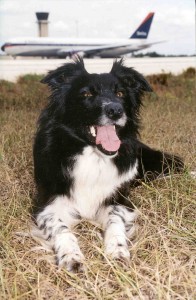
Lots of airports now have people on staff whose job it is to make the land around the airport less attractive to wildlife.  At Florida’s Southwest Florida International Airport in Fort Myers they have dogs: in 1991 the airport was the first in the nation to employ a dog as part of its Wildlife Management Program.

radar

(Radar, Southwest Florida International Airport’s firstwildlife management dog)

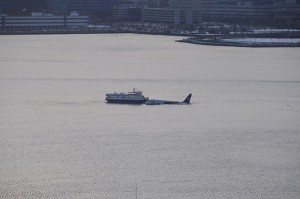
Wow! Miracle on the Hudson

hudson-plane

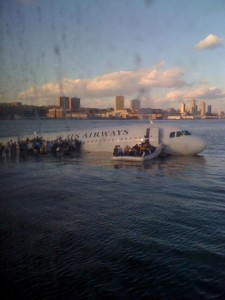
Stories about the incredible emergency landing of U.S. Airways Flight 1549 in New York’s Hudson River today are all over the place and it’s an amazing true-life story.

More information will no doubt come out in the next few days, but for now, here are a few links to Web sites with a good round-up of stories about what happened. Newsday.com has articles, videos, and a photo gallery of more than 70 images. The New York Times has even more extensive coverage, including regular updates about the status of the plane, including information about where the plane is tied up (“along the promenade south of Chamber Street and north of Battery Park City, near Warren Street…”) and a phone number for people to call if they find anything that might belong to any of the passengers.

And what have we all learned from this?  Pay attention to the pre-flight safety instructions.

(Photo above courtesy grego! from Flickr)

Quiet please, the pilot is sleeping

Here’s a thoughtful, educational, and alarming article about the issue of napping pilots by James Wallace at the Seattle Post-Intelligencer.

In addition to recounting the details of the Go! airline pilots that fell asleep on their way from Honolulu to Hilo, Hawaii last February, Wallace describes a NASA study conducted to determine if intentional napping could help pilots stay alert.

Bottom line: napping helps.

But – here’s the scary part – Wallace also describes a recent suit filed against the FAA by seven U.S. carriers (including Continental, United, American, JetBlue and US Airways) over new requirements that require extra rest for crews on ulta-long-range flights.

Bottom line: it may be time to put espresso bars on airplanes.

man-sleeping

Airport pickpockets

It’s easy to get distracted at the airport.  But here’s a reminder from the Vancouver Sun about why it’s especially important to make sure your wallet is safely tucked away:

Visitors to [Toronto’s] Pearson International Airport are being targeted by an organization of South American pickpockets, who stole as much as $500,000 last year, authorities said Tuesday. Peel Regional Police believe the group is responsible for as many as 175 thefts in the past year. Over the past year, more than 17 suspected members have been arrested, most recently three Colombians on Dec. 20.

wallet-with-money

New tool helps travelers reach new runways at three airports

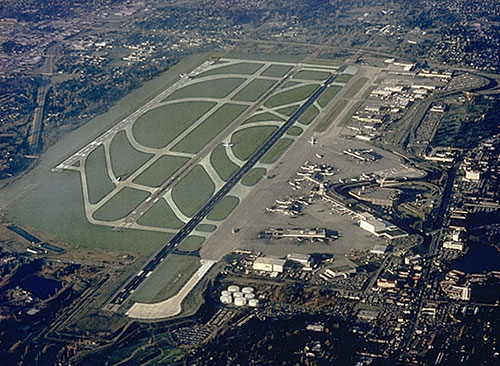
Yesterday was “New Runway Day” at three major U.S. airports. Washington Dulles International Airport, Chicago’s O’Hare International Airport and my hometown Seattle-Tacoma International Airport all cut the ribbon on new runways.

What do these high-ticket investments in airport infrastructure mean for air travelers? Ideally, improved safety, reduced delays, and space for an extra 330,000 take-offs and landings each year.

We’ll see….

(Courtesy: Port of Seattle)

Of course, who cares if more planes can take-off and land unless you can actually get a seat on one of those planes?

So I was pleased to have a chance to stop by the world headquarters of Yapta this week to check out their poker table and learn about their new service that sends travelers e-mail alerts when frequent-flier award seats become available. As someone who recently spent way too many hours trying to figure out how to “spend” a chunk of expiring miles, I totally get the usefulness of this feature.

You can read about Yapta’s free frequent-flier award search service and a few related tools in a recent New York Times article. Or just sign up, snag a seat, and go try out one of those new runways.

(Photo: Daniel Schwen)