Museums

Museum Monday at LAX and SFO airports

Say “Hi, Barbie!” at Flight Path Museum at LAX

A visit to the Flight Path Museum and Learning Center at Los Angeles International Airport (LAX) is an avgeek delight anytime.

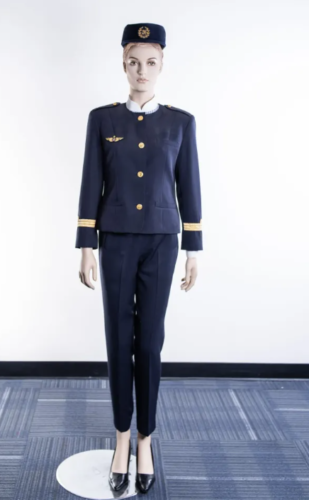
Located on LAX property, a short drive or taxi ride from the terminals, the museum includes one of the largest airline uniform collections, as well as space exploration memorabilia, a great research library, and a wide range of commercial aviation artifacts.

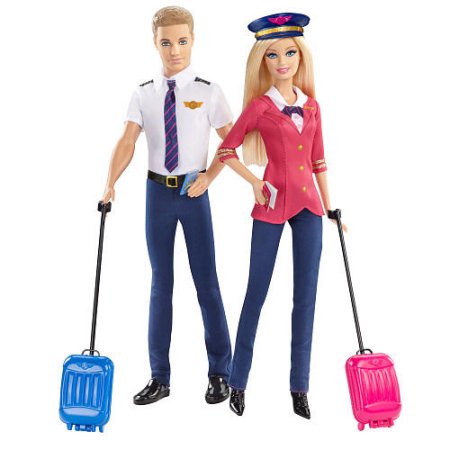
Right now is an especially good time to visit because the museum has Barbiemania. In honor of the new Barbie movie, the museum is showing an exhibit of aviation-themed Barbies and Barbie accessories, including Barbie dolls inspired by famous aviators, including Bessie Coleman and Amelia Earhart.

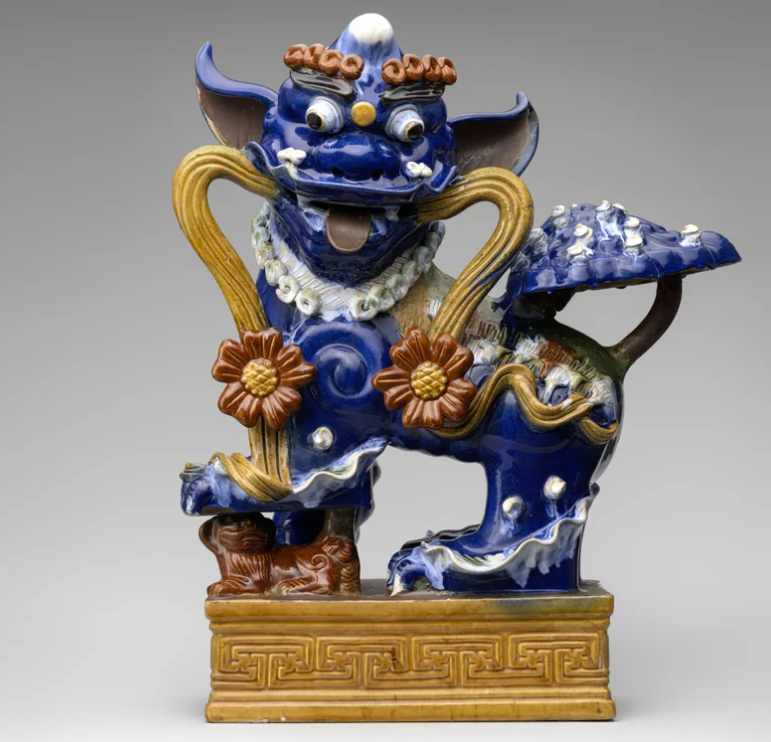
Unconventional enamels at SFO Airport

The SFO Museum at San Francisco International Airport (SFO) oversees twenty-five sites throughout the airport terminals. So if you’ve got a long walk to your gate or a long layover at SFO, it’s a good bet something will catch your eye.

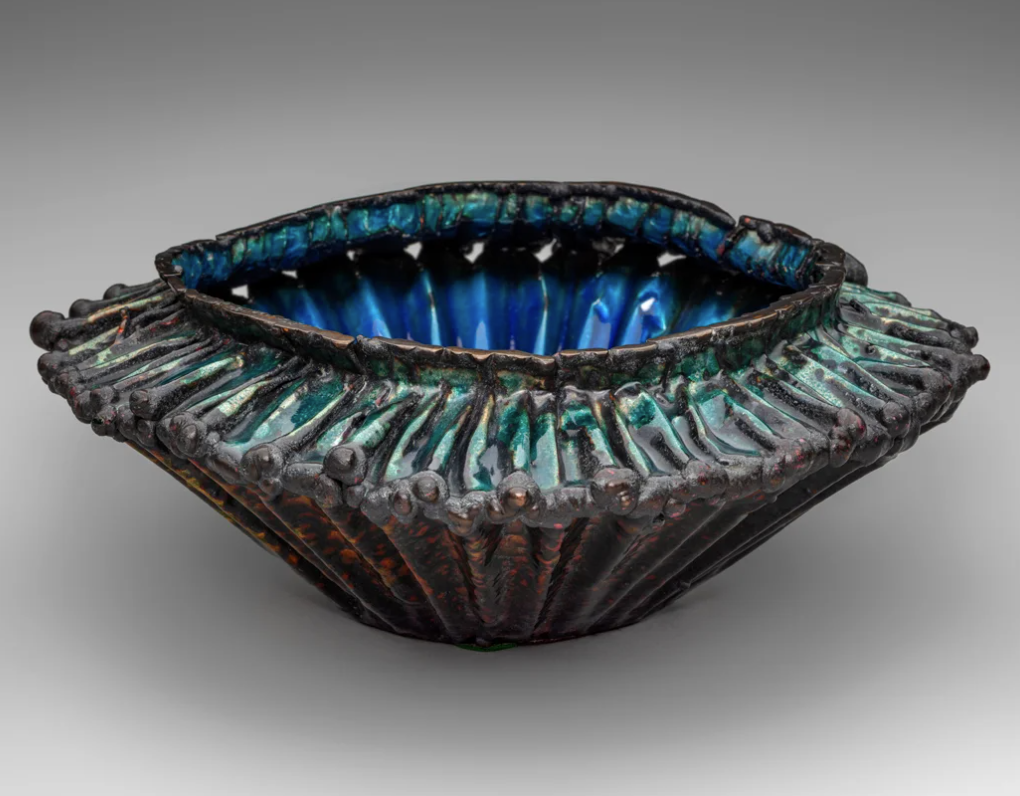
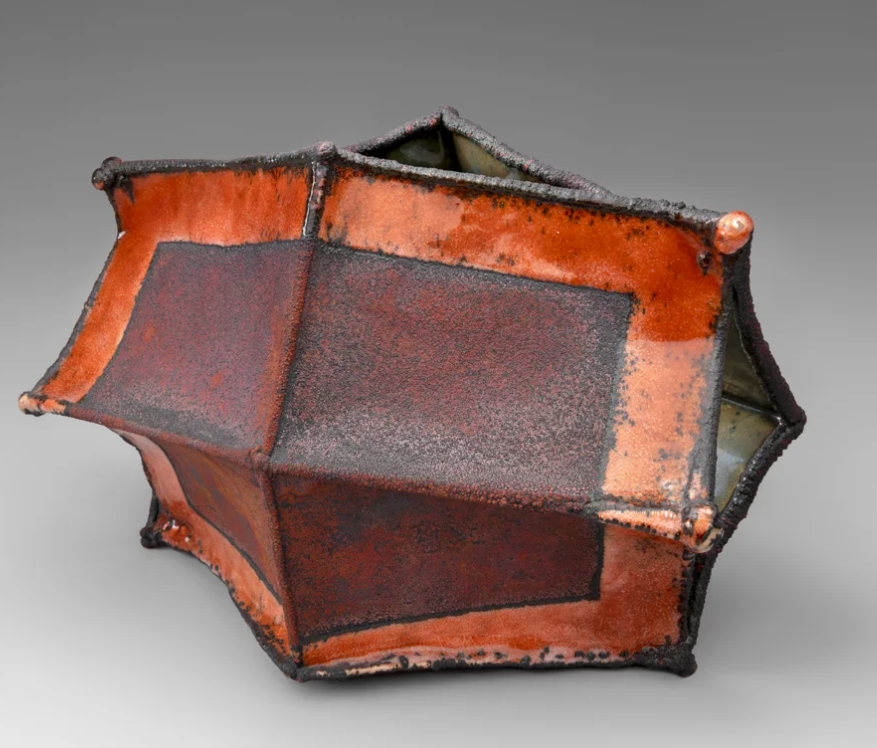
One of the newest exhibitions at SFO features the unconventional enameled art of June Schwarcz (1918–2015) on view in the Harvey Milk Terminal 1, Departures Level 2, Galley 1 E now through early May 2024.

Here’s an intro to Schwarcz’s work from the SFO Museum;

Inspired by nature and fashion, as well as abstract, African, and Asian art, Schwarcz developed unique metalworking techniques, always experimenting and embracing complex technical challenges. She initially worked with copper panels and spun-copper bowls, infusing them with her own interpretation of traditional enameling. During the 1960s, Schwarcz pioneered electroforming, an innovative method that involved electroplating pieces made from thin copper foil. Schwarcz focused on sculptural vessels and when asked about her abstract forms, she explained, “They simply don’t hold water.” 

(Images of June Schwarcz’s artwork courtesy of SFO Museum and the collection of Forrest L. Merrill)
Museum Monday: Posters for Boeing’s canceled supersonic transport (SST) aircraft

They are easy to miss as you cross the pedestrian bridge connecting the main campus of Seattle’s sprawling Museum of Flight to the museum’s Space Gallery and Aviation Pavilion across the street.

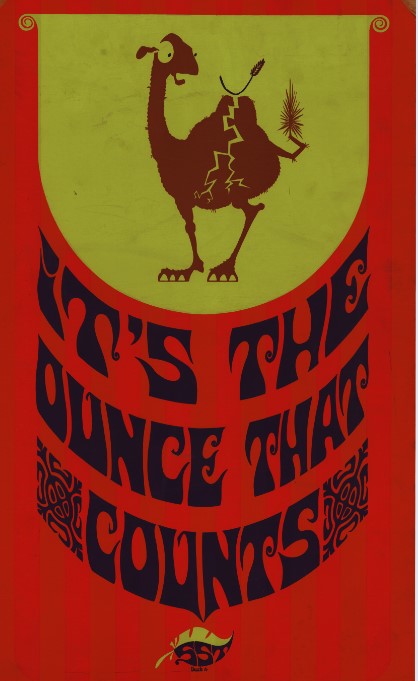
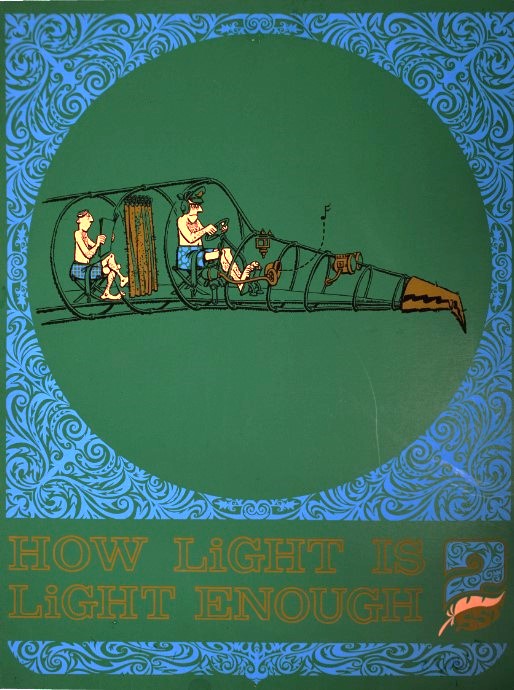
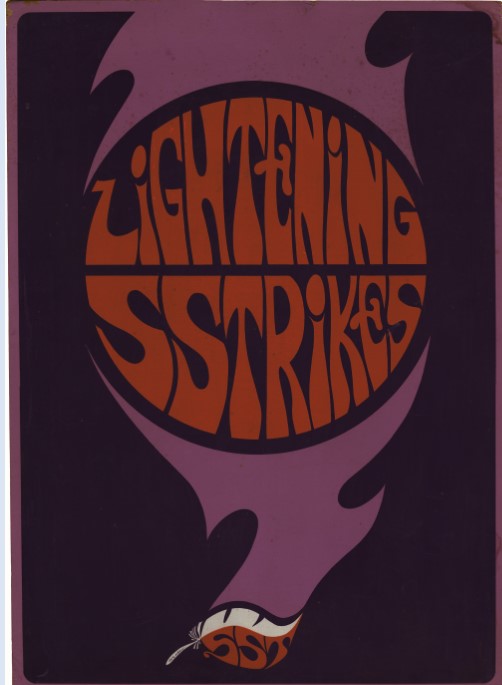
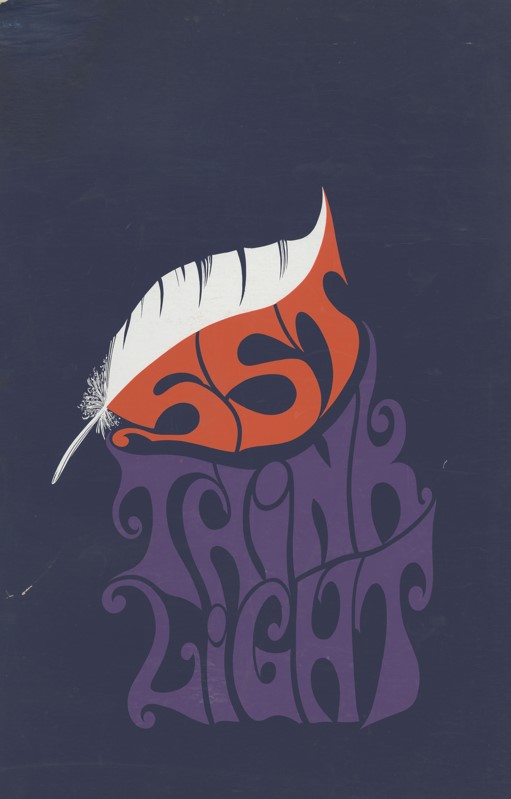
But as part of the delightful Art+Flight exhibit currently underway at Seattle’s Museum of Flight, there is a display of charming motivational posters created for the Boeing Model 2707, a supersonic transport (SST) aircraft developed in the 1960s to compete with the British and French Concorde.

Boeing had a government contract to develop and build the supersonic airliner, but the contract was canceled in 1971 before the prototypes were even completed.

These posters are from the archives of the Museum of Flight, which says all it really knows about them is that they were made as motivational posters for employees working on the 2707 SST program during the 1960s. The colors and imagery clearly take influences from the pop art of the time. And the messages and slogans are all about making the plane as light as can be.


Images are courtesy of Seattle Museum of Flight’s Holden Withington Boeing SST Poster Collection and the Clarence S Howell Collection of Boeing SST Posters

The Days of Drag Racing at John Wayne Airport

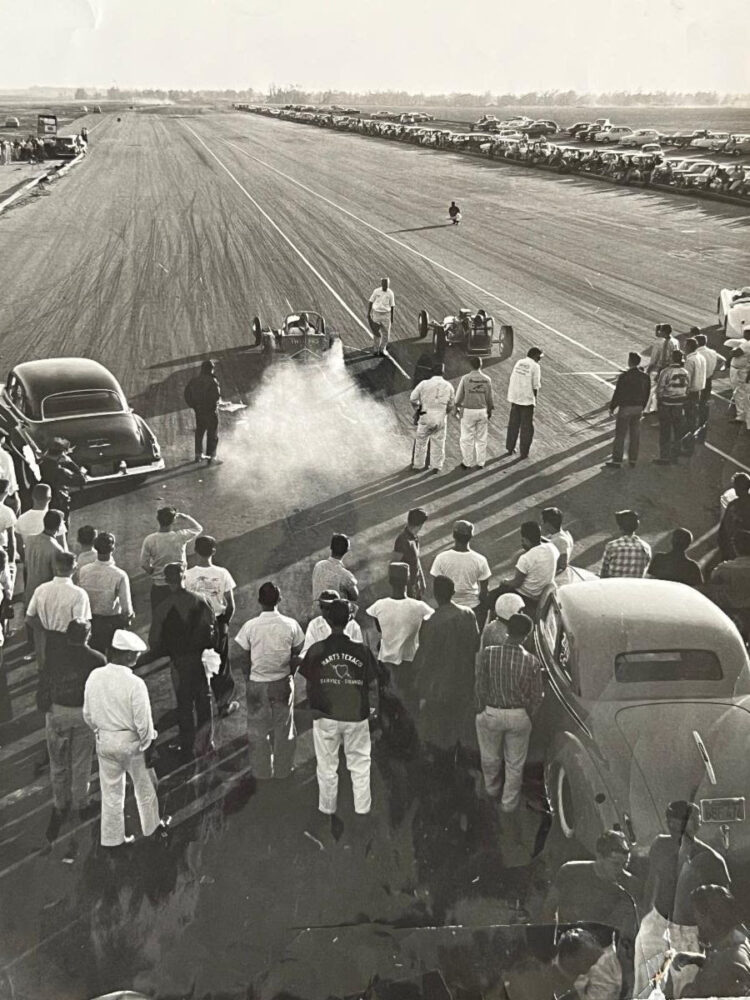
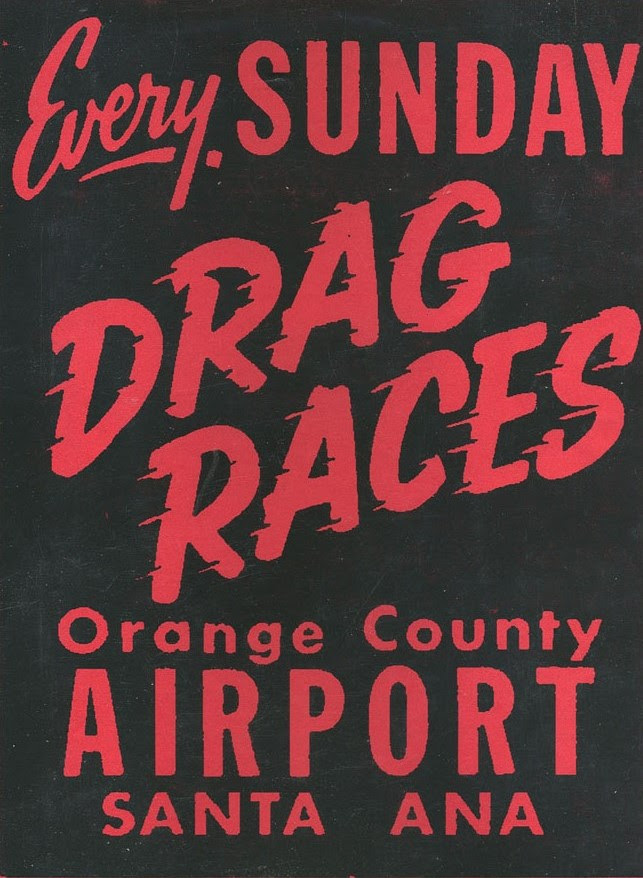
In the 1950s, when ‘hot rods’ were all the rage in Southern California, and John Wayne Airport (SNA) was officially called the Orange County Airport, sanctioned drag racing took place on one of the airport runways.

According to the Lyon Air Museum, an aviation and automobile museum on the west side of the airport, in June 1950 Santa Ana local C.J. “Pappy” Hart struck a deal with Orange County to use a portion of an unused runway for drag racing.

He promised to give 10% of the proceeds to the county. And the country’s first official commercial drag strip was born.

Racing was held every Sunday, from dawn to dusk, on what became known as the Santa Ana Drag Strip and continued until Sunday, June 21, 1959. 

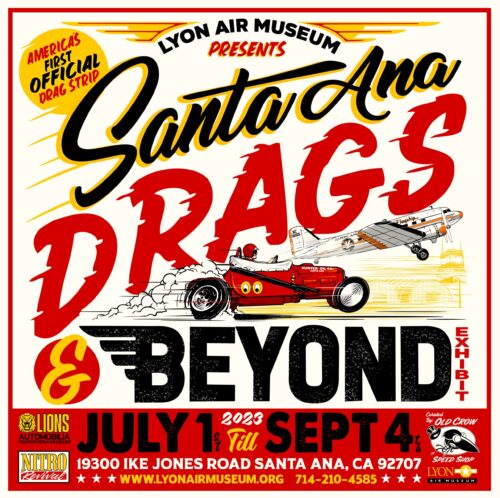
The Lyon Air Museum is paying tribute to those drag races with a new exhibit, Santa Ana Drags and Beyond: America’s First Official Drag Strip, running July 1 through September 4, 2023.

Bean Bandit Dragster

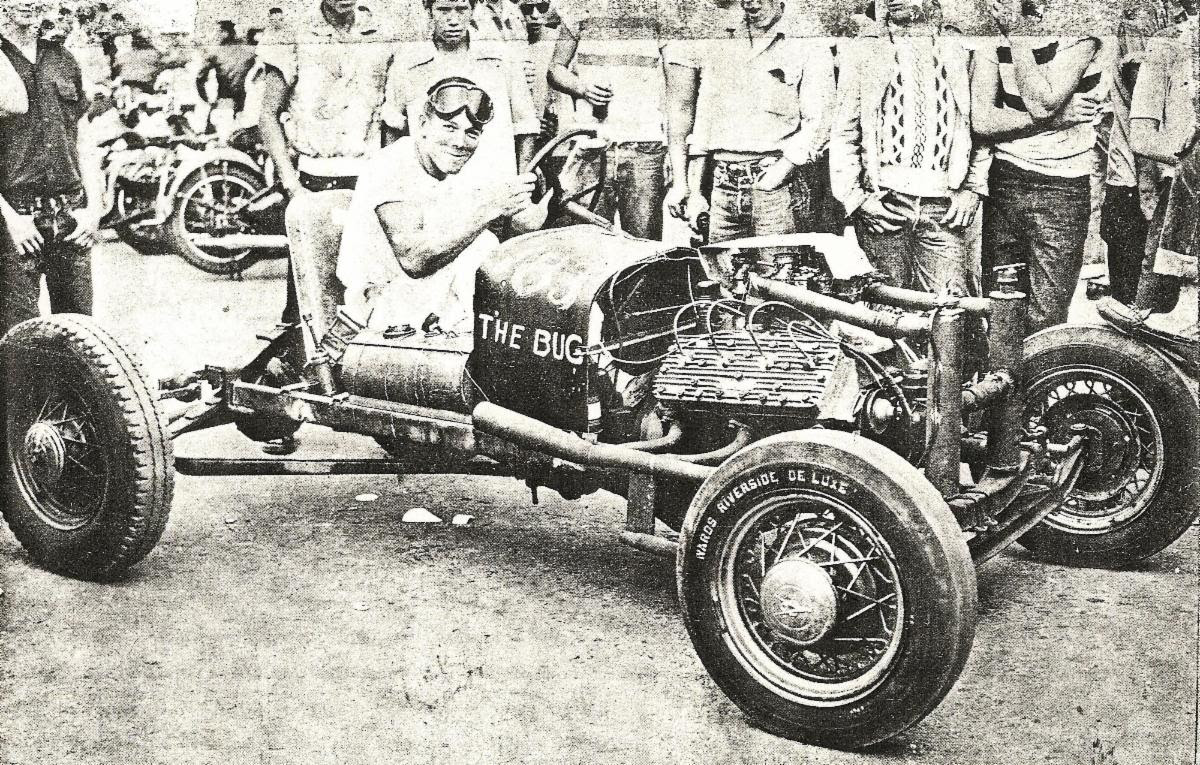
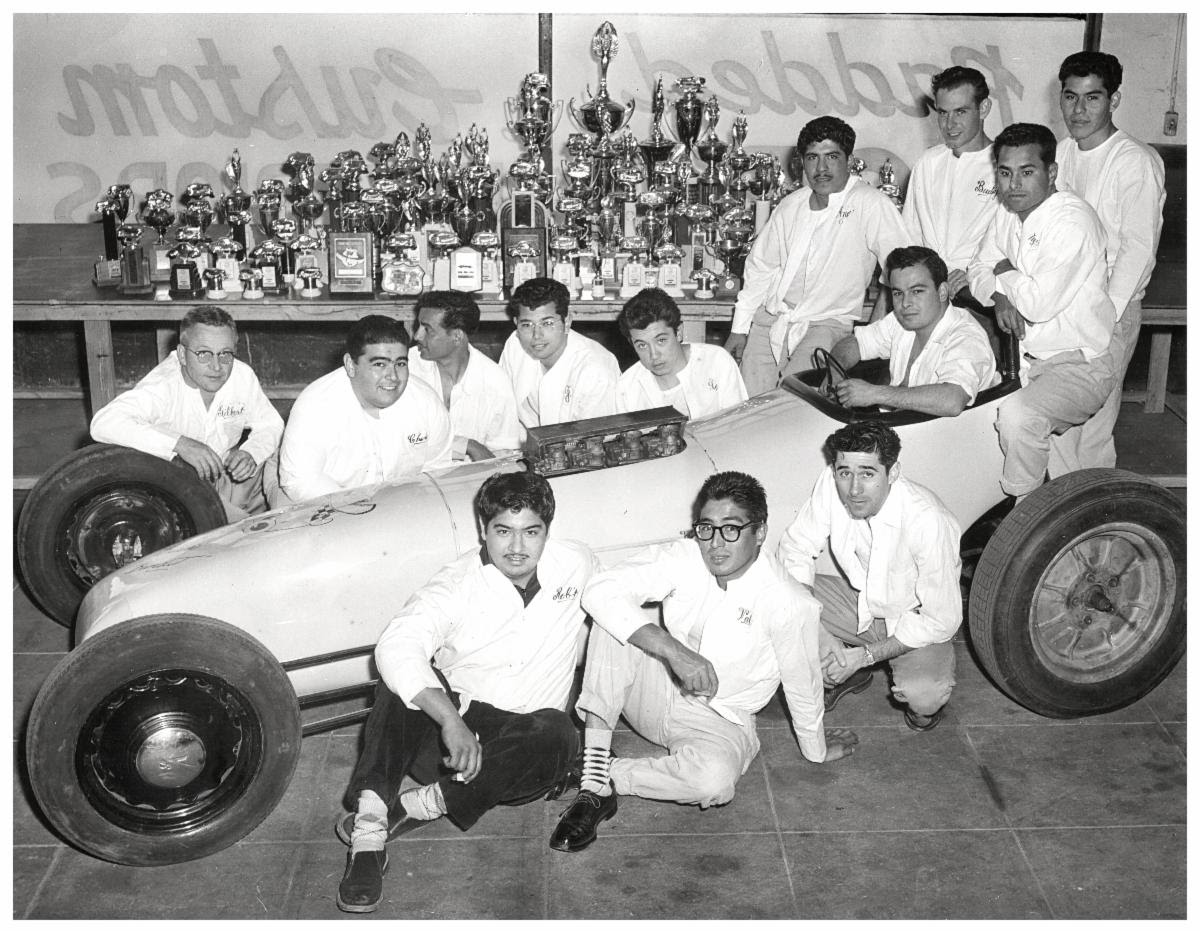
Joining the history-making drag racing cars on display during the Santa Ana Drags and Beyond exhibit is the famed Bean Bandit Dragster

The Bean Bandits was one of the earliest drag racing teams and was organized in San Diego in 1949 to pool its member resources so they could afford to go drag racing.

Known for its Mexican membership, the Lyon Air Museum says the club in reality consisted of multiple ethnic groups, including Anglo, African-American, Asian, and Lebanese members.

A few months after Santa Ana Drag Strip opened, the Bean Bandit Dragster was built. Within a short period, the dragster was winning races at Santa Ana Drag Strip, as well as all over California. The Bean Bandits went on to win hundreds of races and are still racing on the dry lakes, salt flats, and select drag strips where they continue their tradition of breaking records.”

(All photos courtesy Lyon Air Museum)

The latest from the SFO Museum
If you miss your flight at San Francisco International Airport (SFO) blame it on the curators of the SFO Museum.

At any one time, there are perhaps 20 top-notch exhibitions on view throughout the terminals, spanning everything from vintage radios and Victorian wallpaper to all manner of aviation history.

And each exhibit will make you want to stop and stay a while.

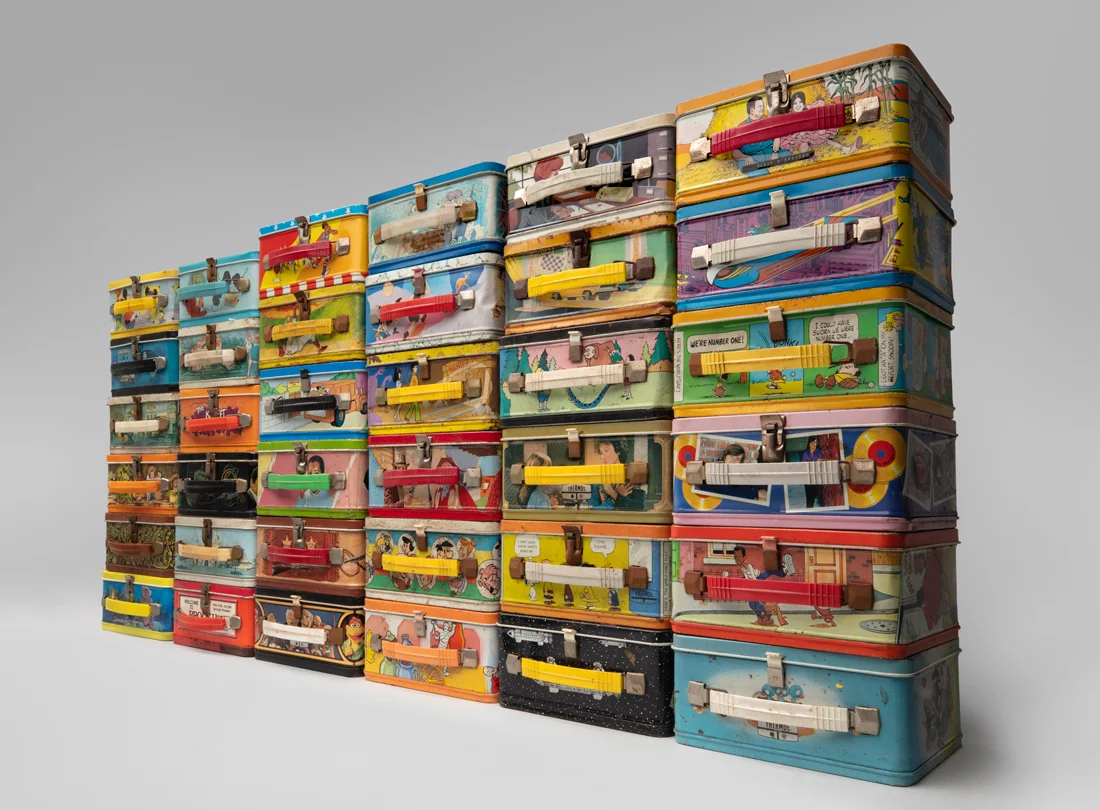
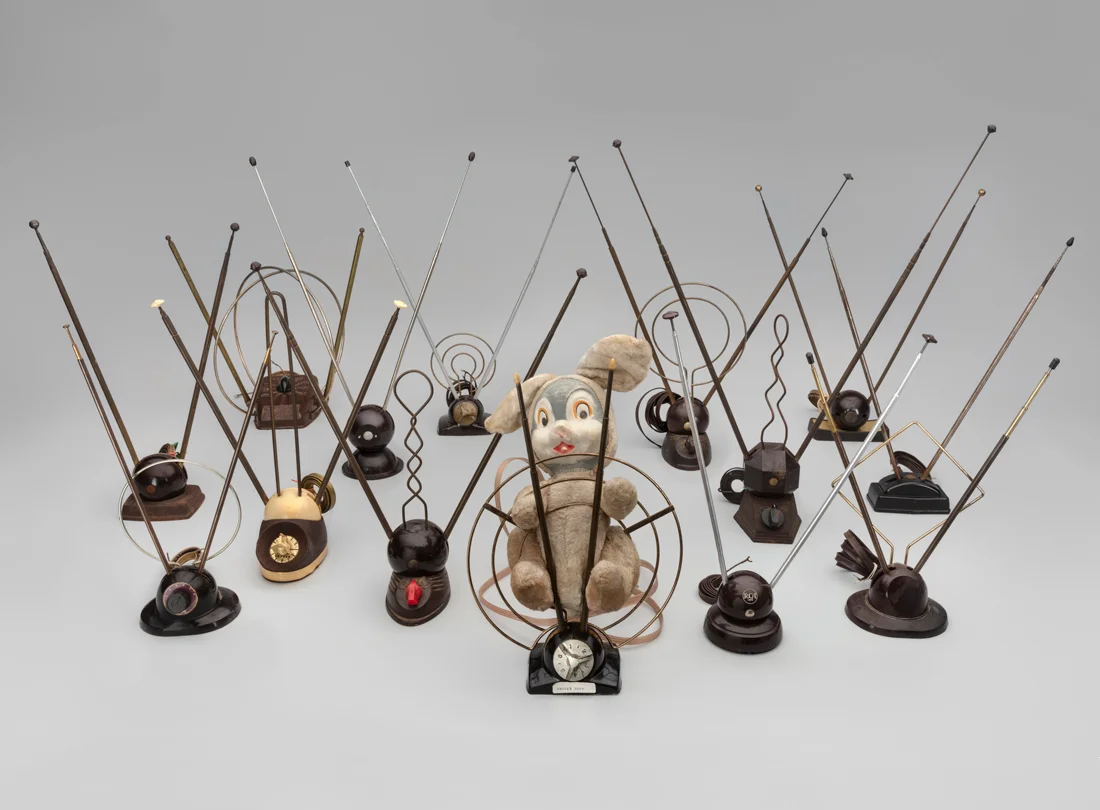
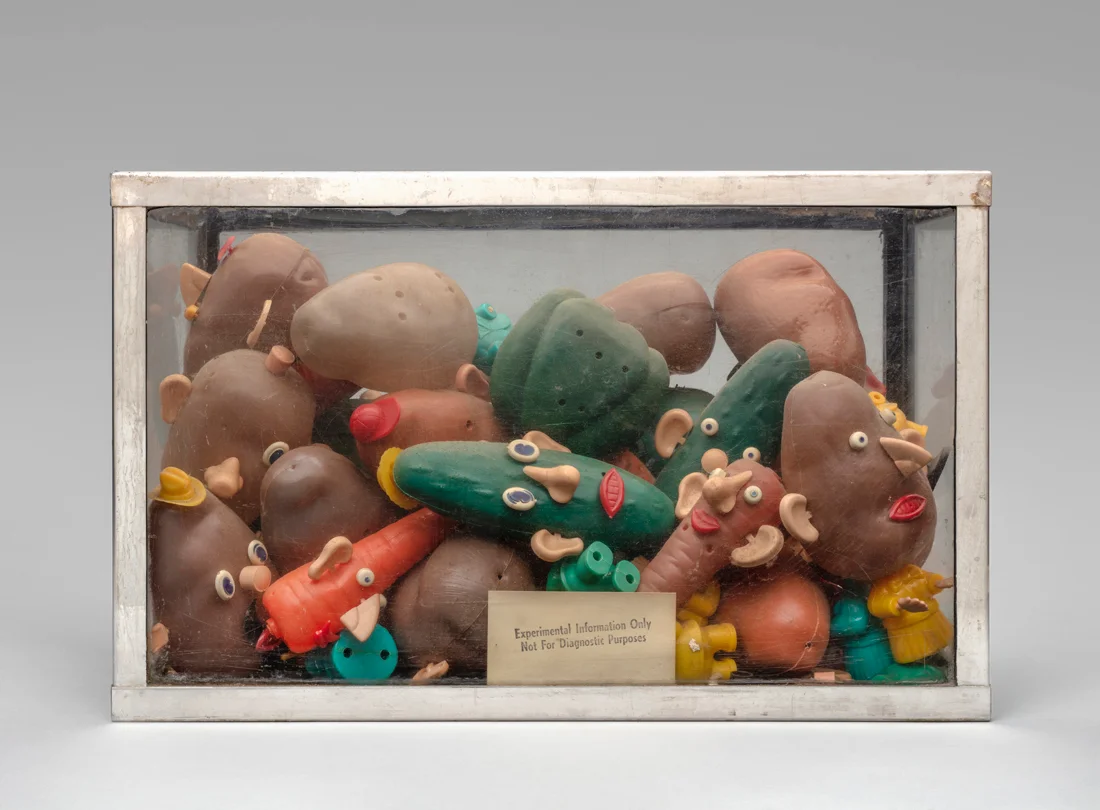
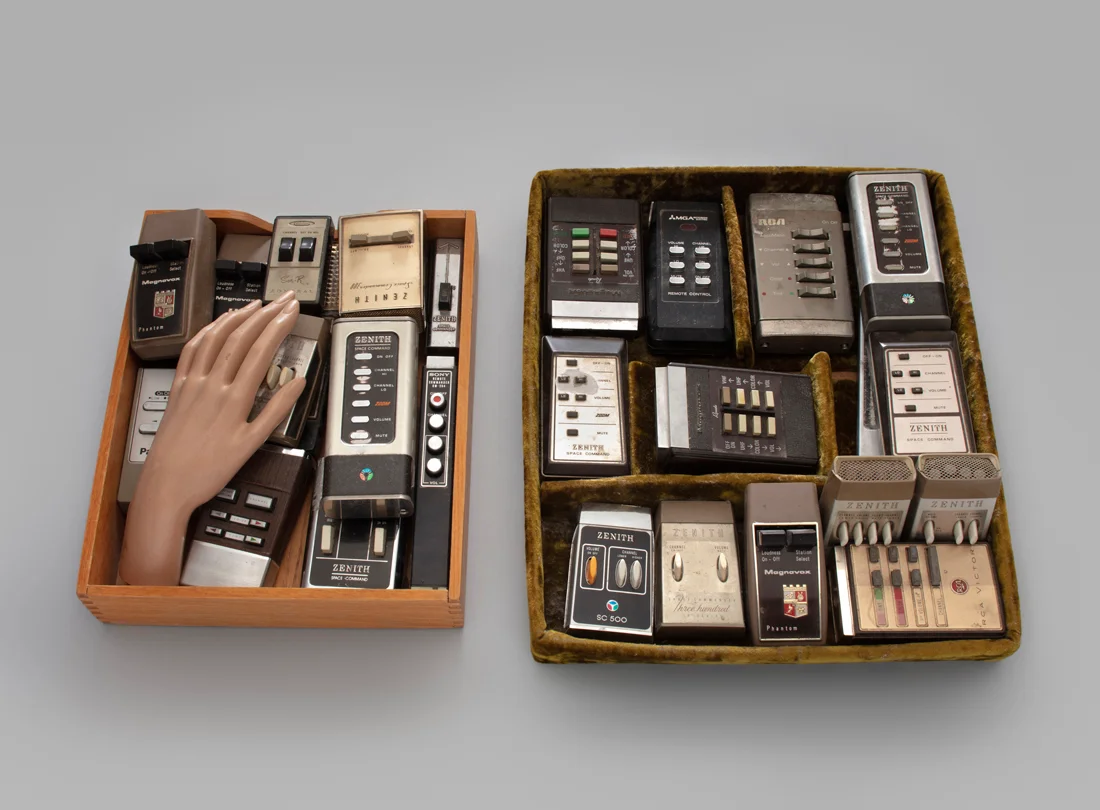
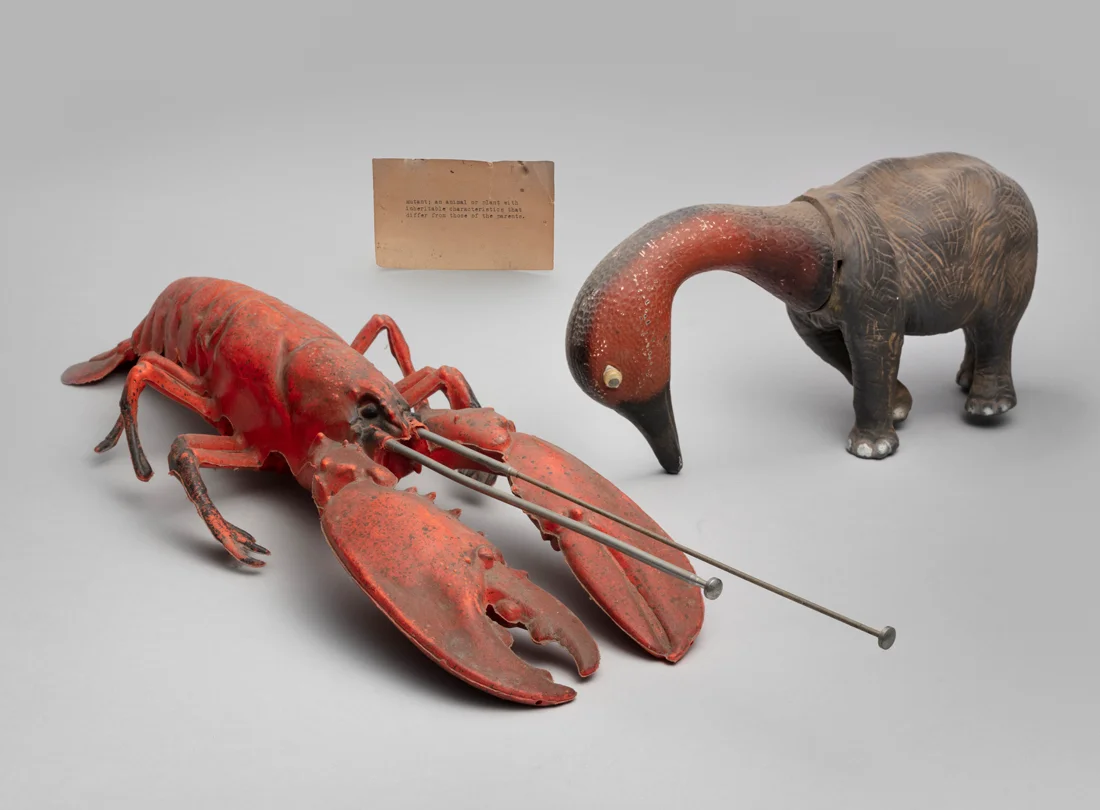
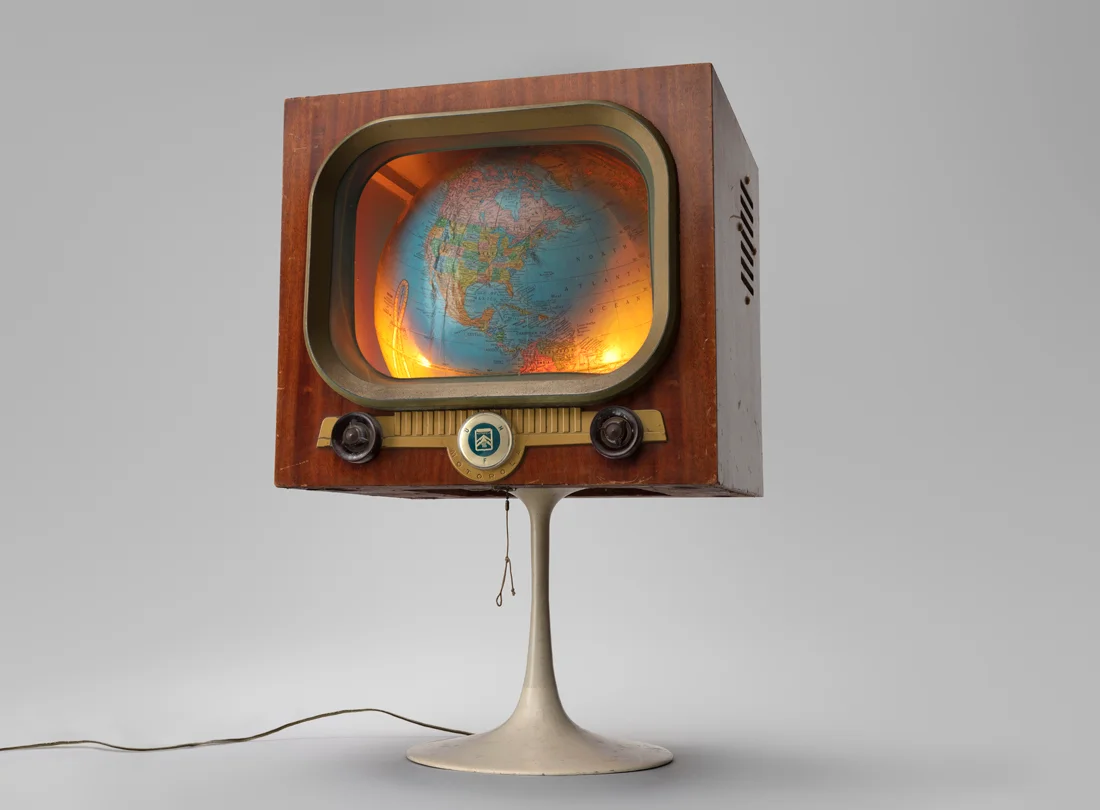
One of the newest exhibitions, Recollections… From the Unkown Museum, on display through March 2024 in Terminal 2, offers selections and creations culled from a quirky collection of vintage pop culture artifacts.

A well-known ‘secret’ museum in Mill Valley, CA since the mid-1970s and now artist Mickey McGowan’s private collection, the Unknown Museum is filled with a mass amount of objects dating from the 1940s to the 1980s. The museum is an “exploration into America’s brain” and a “complete immersion in conceptual art and American consumerism.”
Among other things.

 Recollections… from the Unknown Museum at SFO Airport is a sampling of the many fantastic art and object installations on display at various locations of the museum from the mid-1970s through the present.
“My original intent was to rescue these items, to provide them with a rest home for the remainder of their days,” museum curator and archivist Mickey McGowan said back in 1988.
Thank goodness he did.

Here are some snaps from the exhibit, courtesy of SFO Museum, and Mickey McGowan.

Visiting: Indiana Medical History Museum
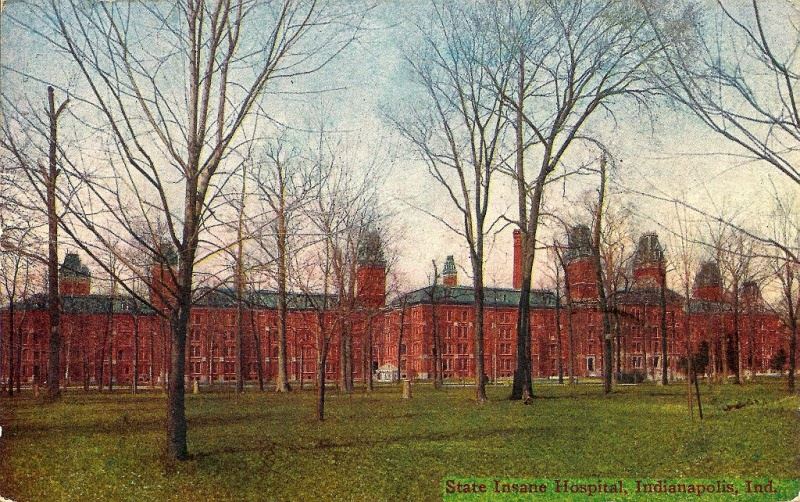
“Are you SURE you want me to drop you off here?” the Uber driver said as she turned left onto the road to the abandoned-looking grounds of the former Central State Hospital near the west side of Indianapolis.

“This doesn’t look right.”

But that is exactly where were wanted to be.

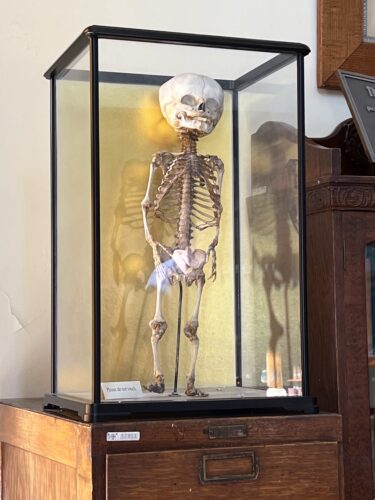
Central State Hospital, which opened in 1848, was originally known as the “Indiana Hospital for the Insane,” and the grounds sprawled across 160 acres. During the 150 years the hospital was open, people diagnosed with everything from schizophrenia, depression (melancholia), and hysteria to alcoholism, and epilepsy were patients here.

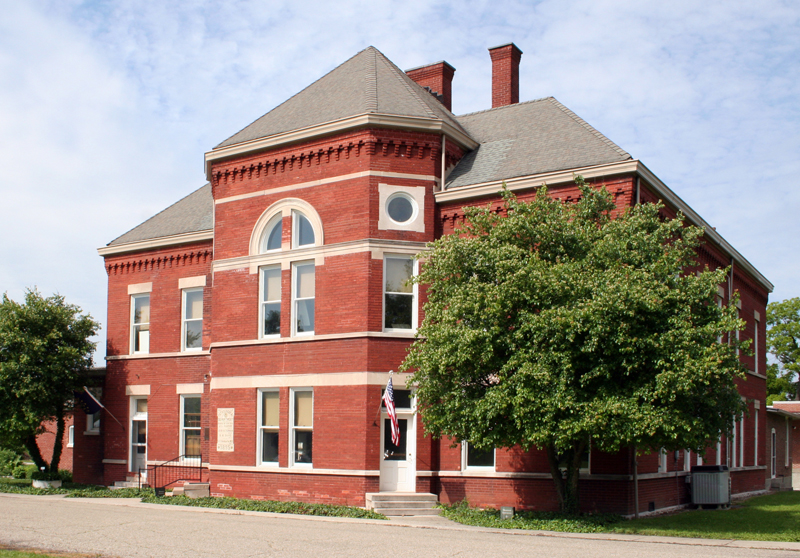
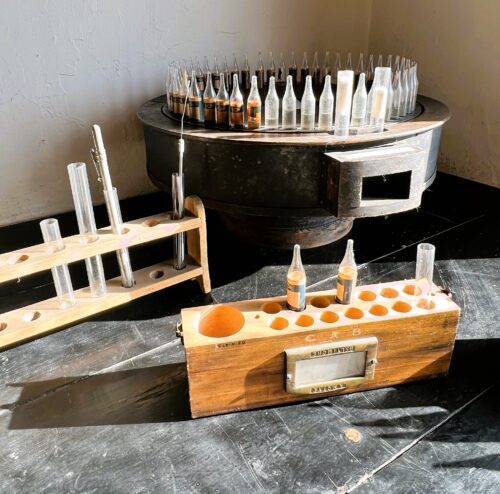
The hospital’s Pathology Department building, which first opened in 1896 for the purpose of studying the conditions of the hospital patients, is now the Indiana Medical History Museum.

Courtesy IMHM

It’s also the oldest surviving pathology facility in the nation. It is on the National Register of Historic Places. And it still has much of its scientifically equipped interior intact.

Courtesy IMHM

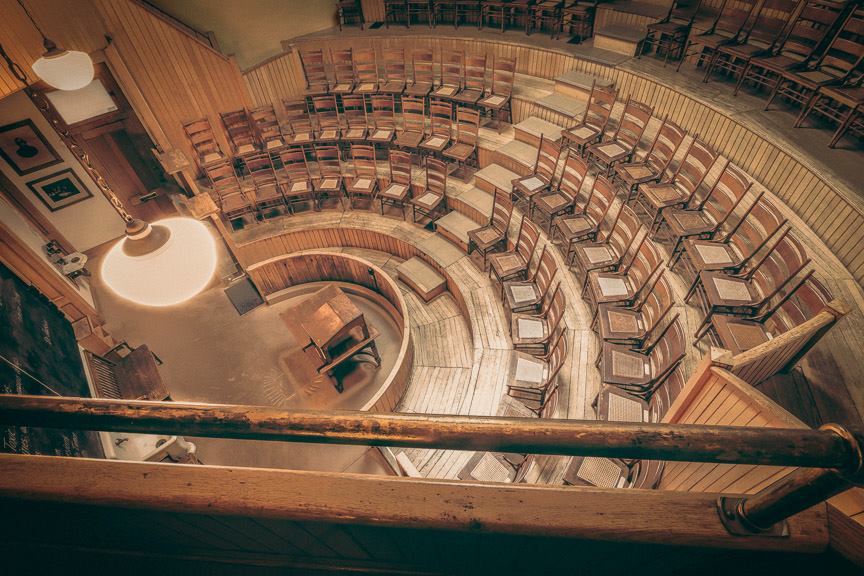
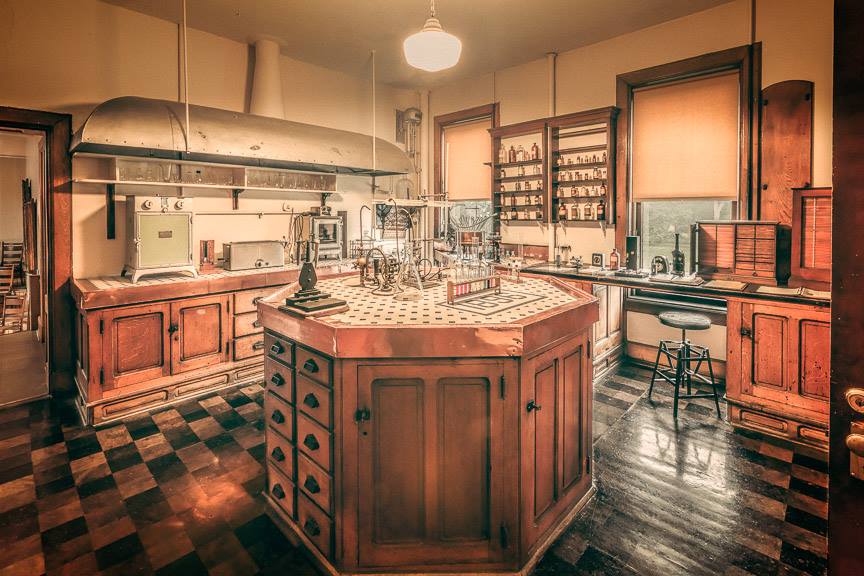
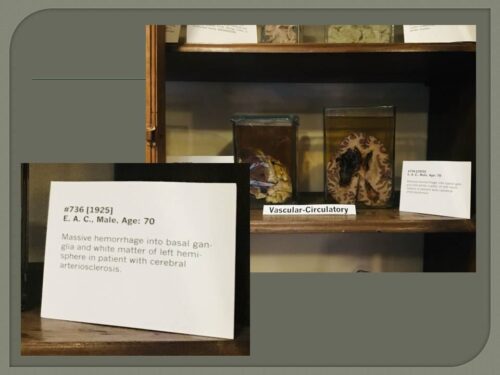
We joined a tour that made stops in the teaching amphitheater, various laboratories, the library, the autopsy room, and the early-day anatomical museum which houses preserved specimens–mostly brains, organized by pathology.
Laboratory – courtesy IMHM

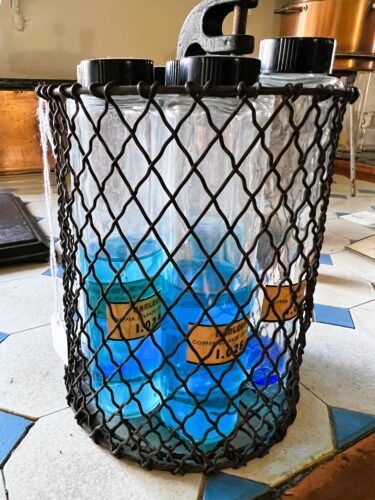
Here are some more images from the museum.
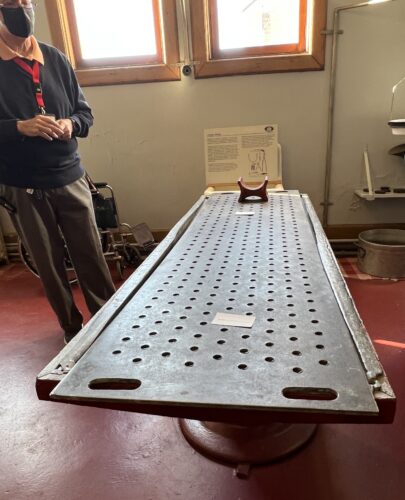
Autopsy table

.

Visiting: Indy’s Teeny Statue of Liberty Museum

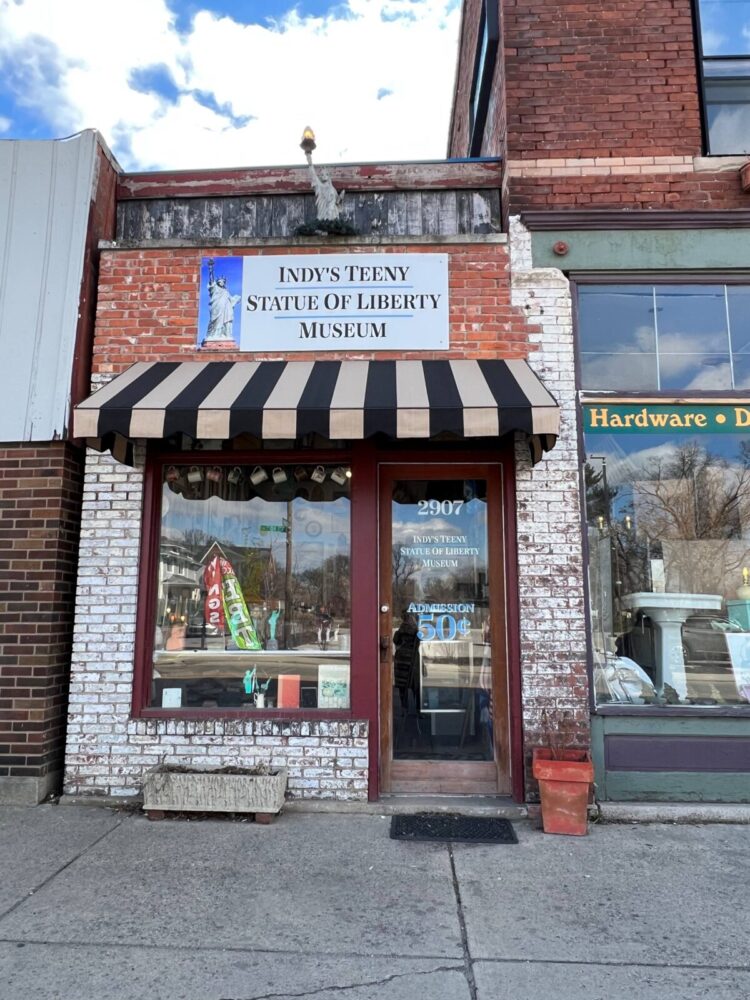
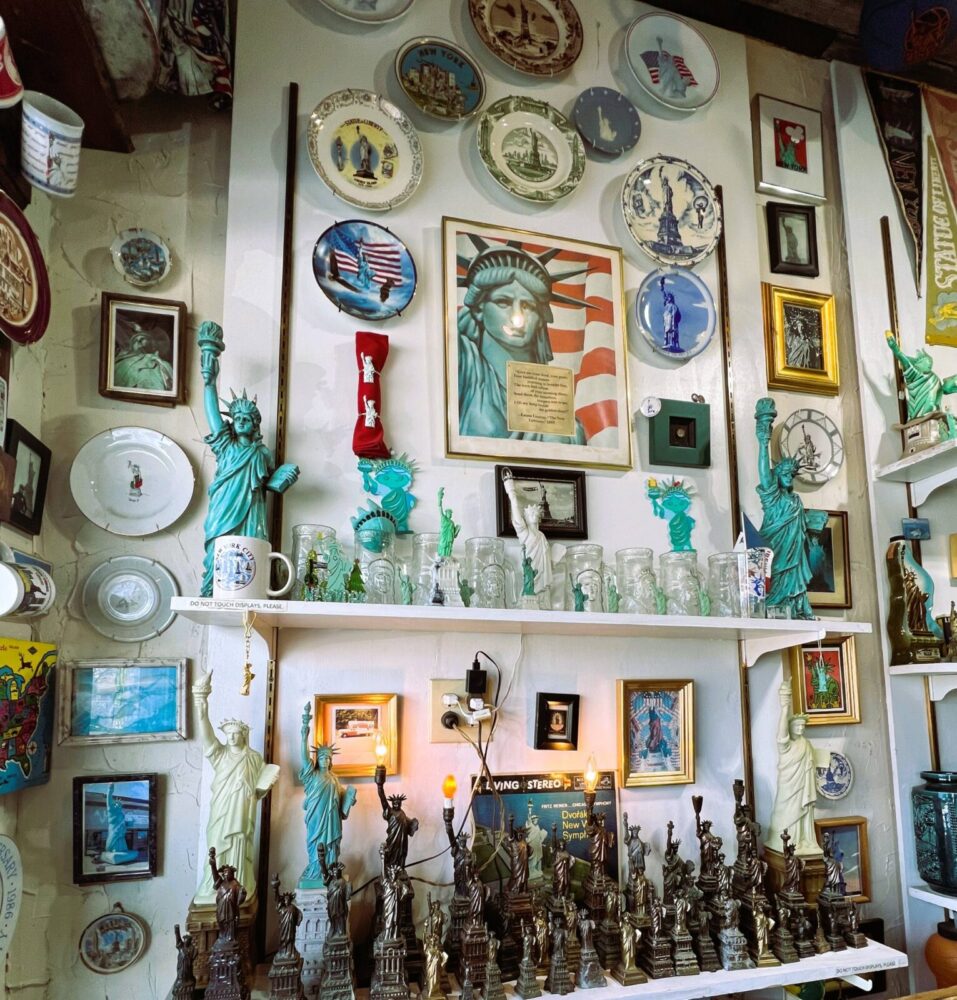
Indy’s Teeny Statue of Liberty Museum, on East Tenth Street in Indianapolis, IND, is home to Tim Harmon’s collection of about 1000 items portraying or bearing the image of the Statue of Liberty.

The museum is about 10 feet by 16 feet (hence, “teeny”, says Harmon) and resides in the front room of a building created by enclosing an alley.

Harmon says his collection started innocently with a handful of Statues of Liberties arranged on the back of his toilet tank. “Then there was no reason to stop,” he said. “And when you collect you get a shelf, then you get a couple of shelves, then people start giving you things. And in my case, it was Statues of Liberties.”

And then it was Indy’s Teeny Statue of Liberty Museum.

“The museum’s not patriotic,” says Harmon. “The museum just is what it is. It’s a museum filled with Statues of Liberty.”

Here are some snaps from our tour of Indy’s Teeny Statue of Liberty Museum.

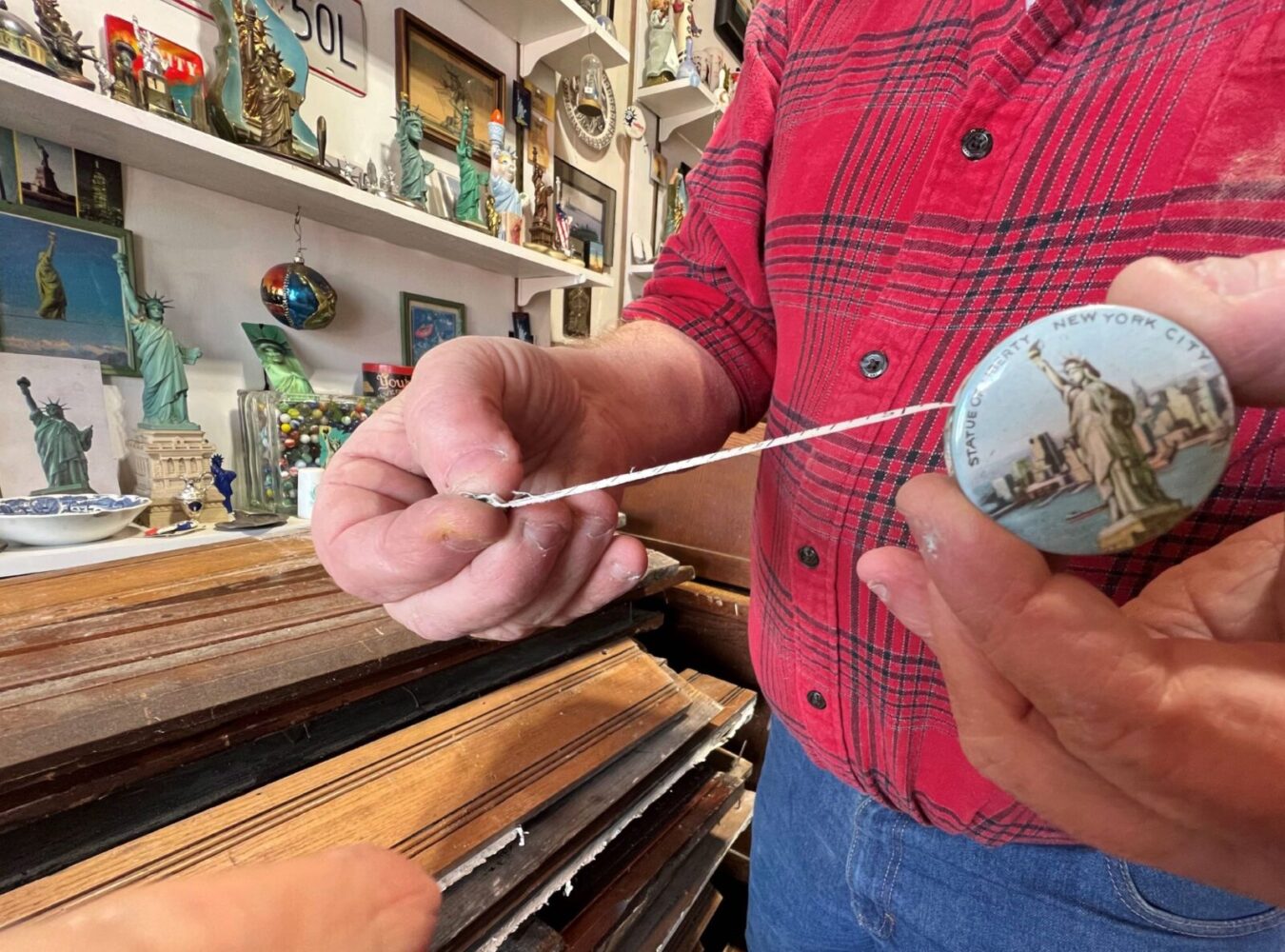
Statue of Liberty tape measure
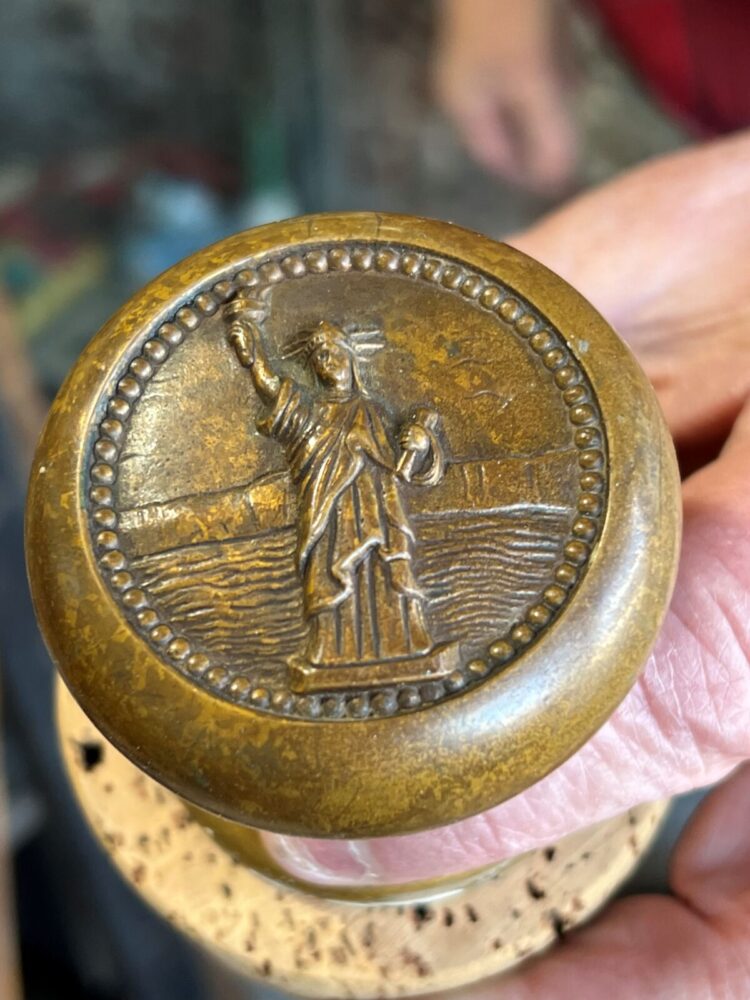
Statue of Liberty door knob
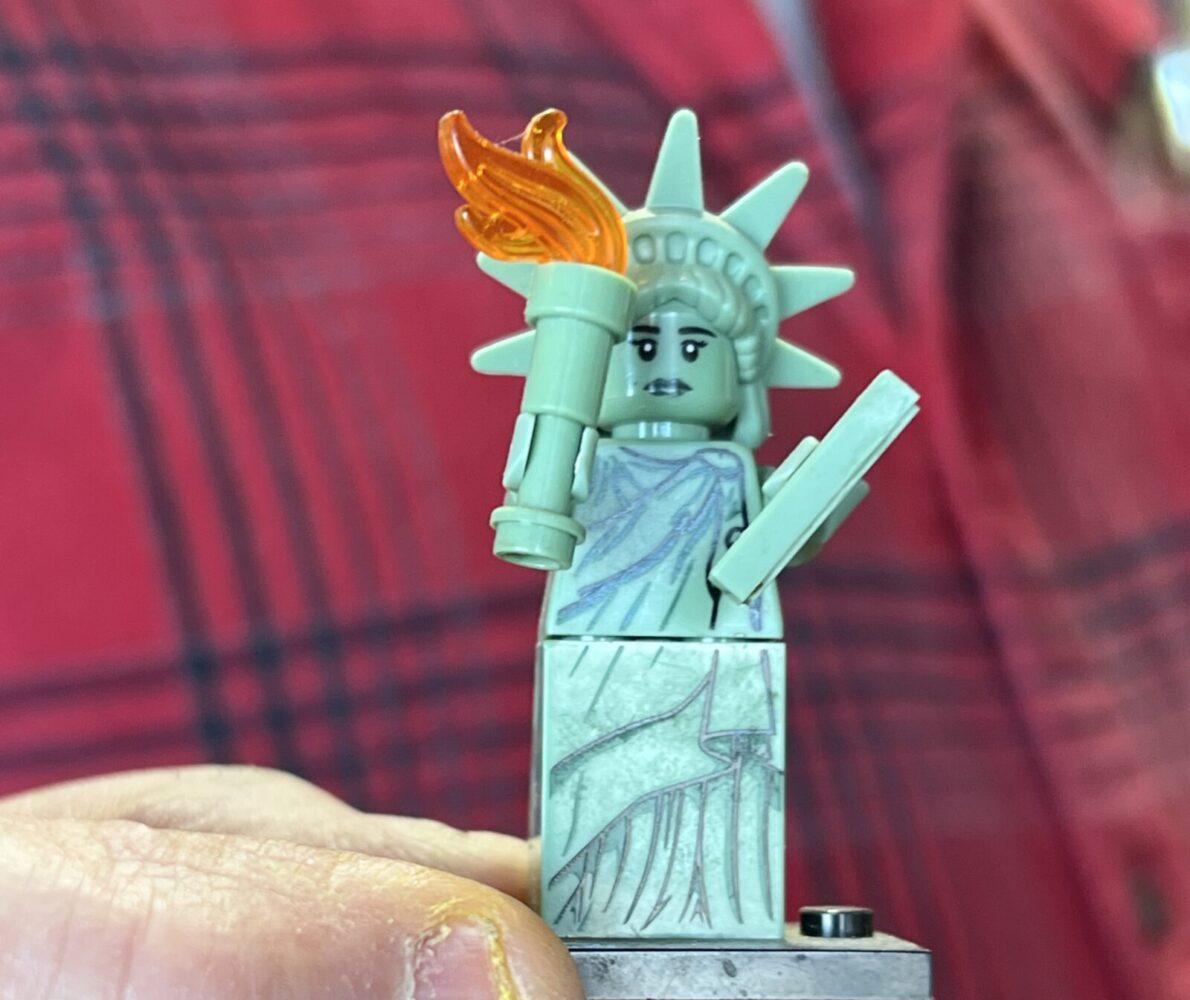
Teeny Lego Statue of Liberty

Visiting: the World’s Biggest Children’s Museum

Courtesy The Children’s Museum

The Children’s Museum of Indianapolis dates back to 1925 and now, with more than 130,00 artifacts and more than 4,00 programs, is the world’s largest children’s museum.

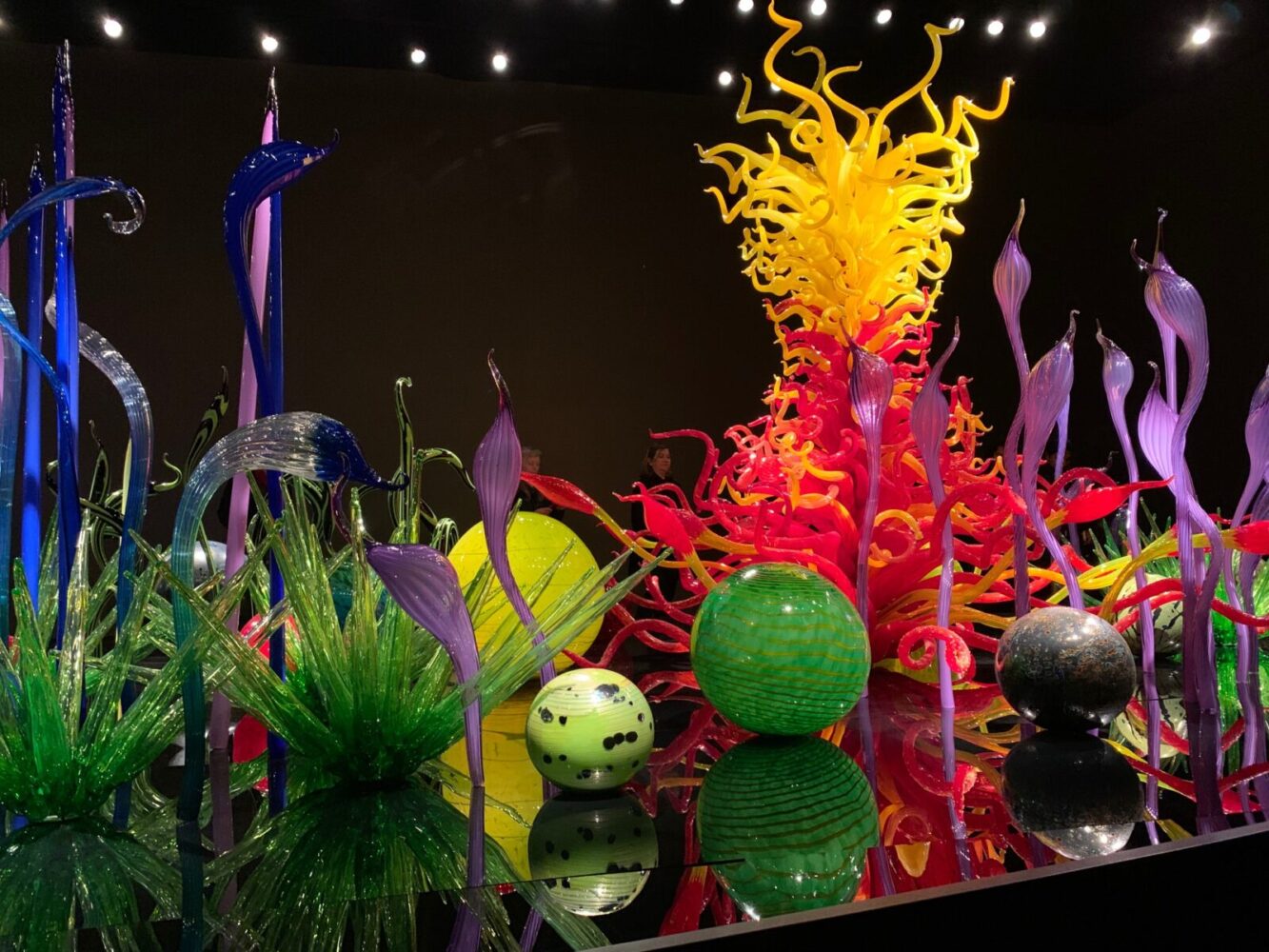
Highlights include the Dinsophere, the historic carousel, a 55-ton steam engine, cultural exhibits, a 43-foot tall tower of Chihuly glass, an international space station exhibit, and a plethora of sports-themed, interactive outdoor exhibits.

If you visit, be sure to set a good part of your day, because it’s the kind of attraction that offers something surprising and engaging at every turn for both kids and adults.

Behind The Scenes At The Children’s Museum

Like most museums, The Children’s Museum of Indianapolis can only display a very small part of its collection. And with such a large collection, that means that a lot of really great stuff is kept in storage.

Lucky for us, Chris Carron, the museum’s Director of Collections, offers occasional behind-the-scenes tours of the treasures.

Here are just a few of our favorites.

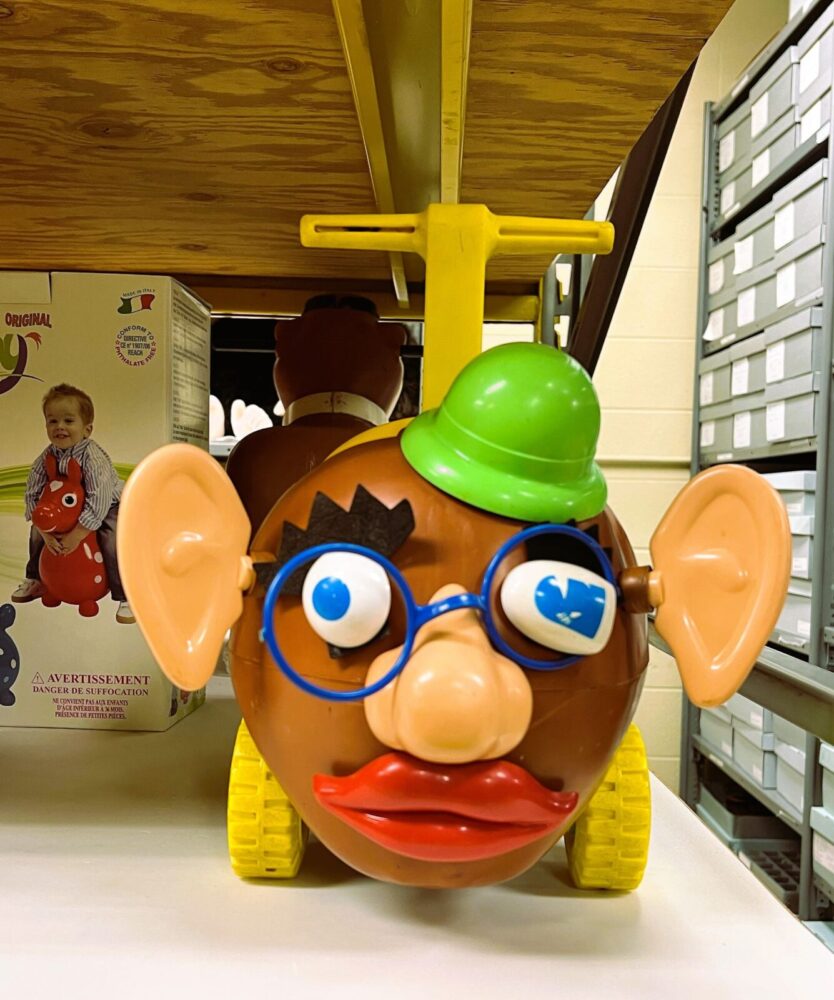
The Children’s Museum has the world’s largest collection of Mr. Potato Head memorabilia

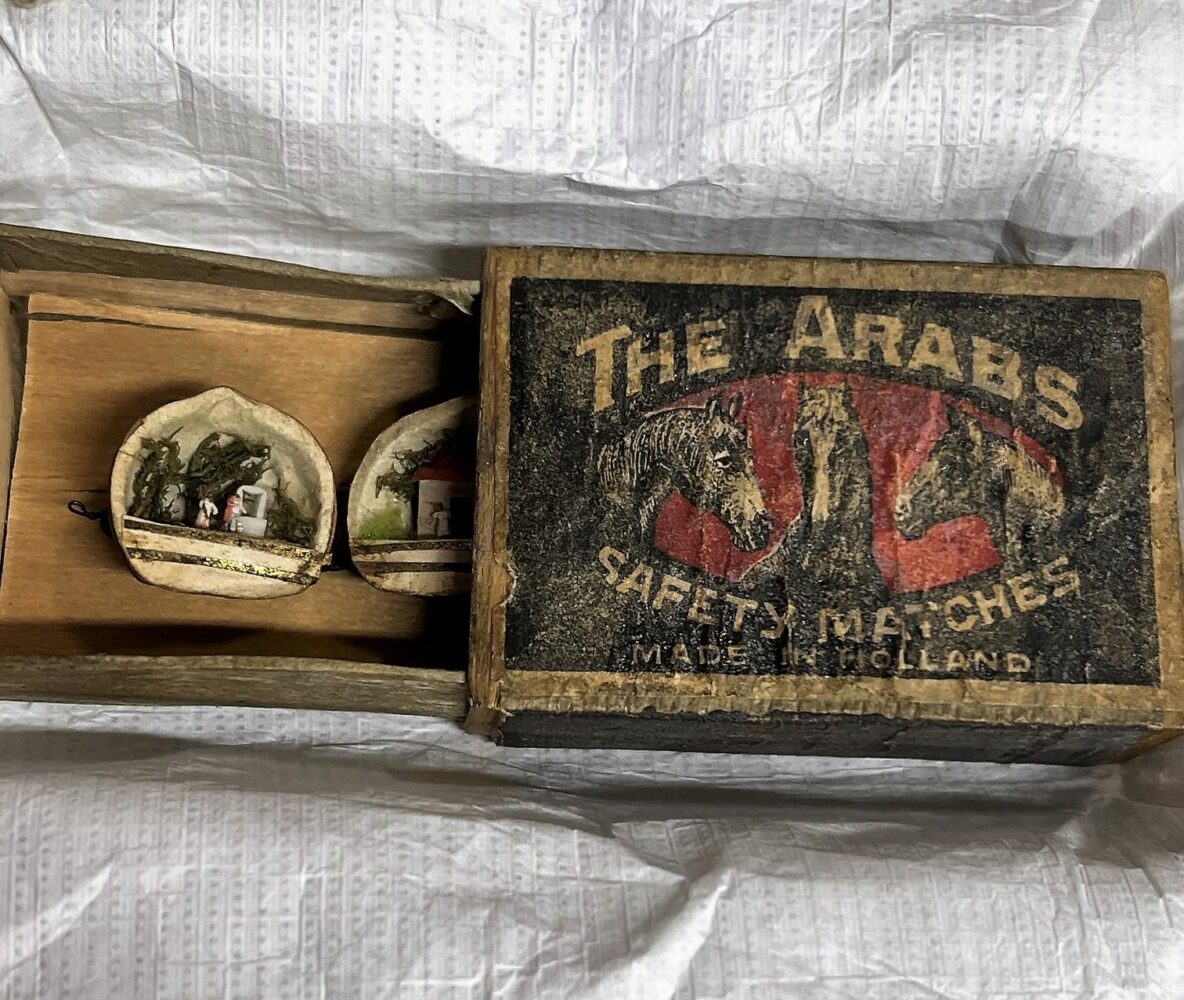
Inside this matchbox is a diorama of a village populated with dress fleas. It is one of the smallest objects in the collection.

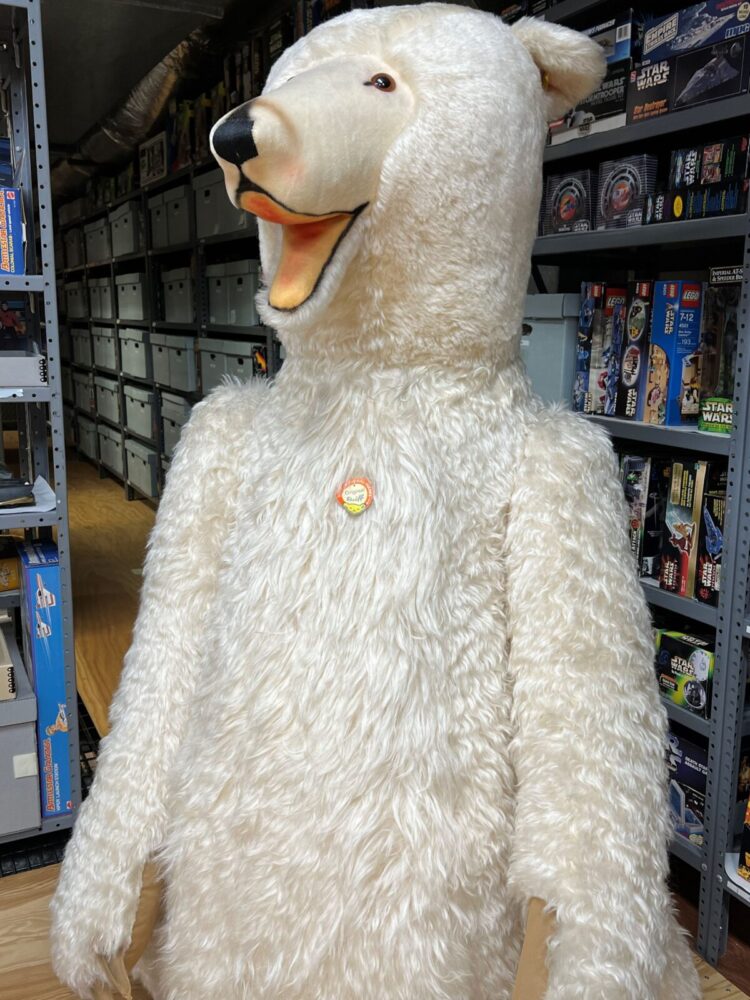
This Steiff bear was once used as a store display. It’s big, but the museum’s dinosaurs are far bigger.

February is Museum Month in Seattle & San Diego

If you love visiting museums, you probably love visiting museums for free.

(Who wouldn’t?)

And during February visitors to both Seattle and San Diego can take advantage of special Museum Month programs that offer great savings on museum visits.

Seattle Museum Month

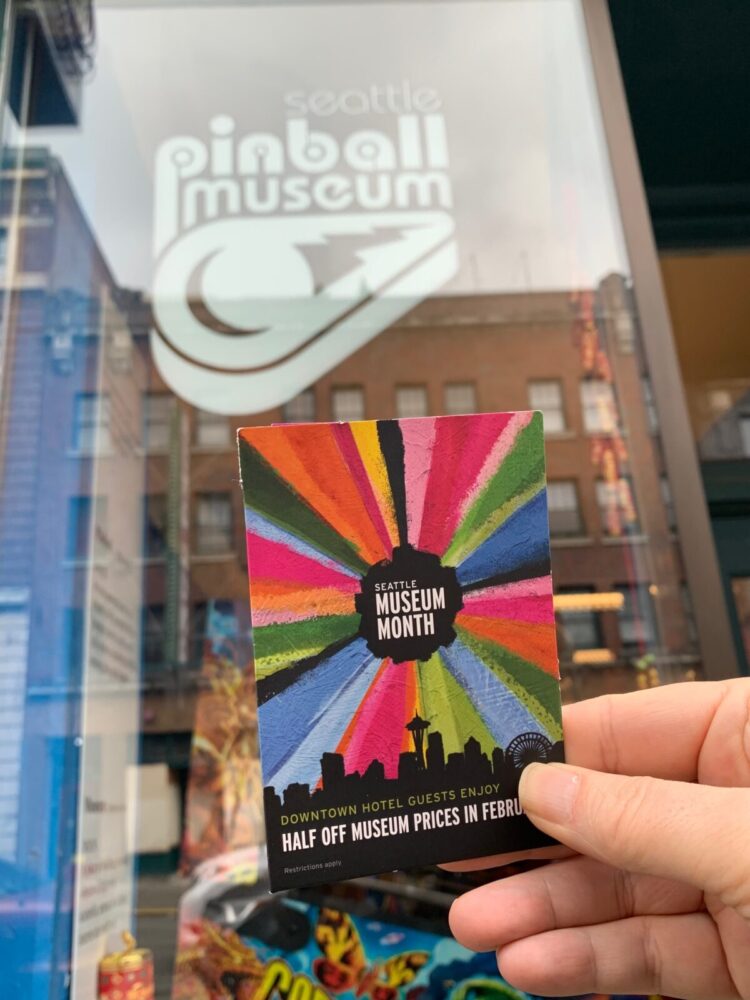
February is Seattle Museum Month. And during this promotion, any guest who stays just one night at one of the participating downtown hotels receives a pass that offers half-price admission at more than 30 museums and attractions around the region.

The pass is good for up to 4 guests for the entire month.

In Seattle, the list of participating museums includes the Burke Museum, Chihuly Garden and Glass, the Museum of Pop Culture, the Seattle Aquarium, the Seattle Art Museum, the Museum of Flight, the Woodland Park Zoo, and many more. The participating hotels range from budget to swanky.

February is off-season in the Emerald City and there are already great hotel deals pretty much everywhere. Add in a pass that gets you half-off many of the museums and attractions in Seattle and other cities in the region and it’s just a super great deal.

That goes for locals seeking a ‘staycation’ or anyone considering a visit.

San Diego Museum Month

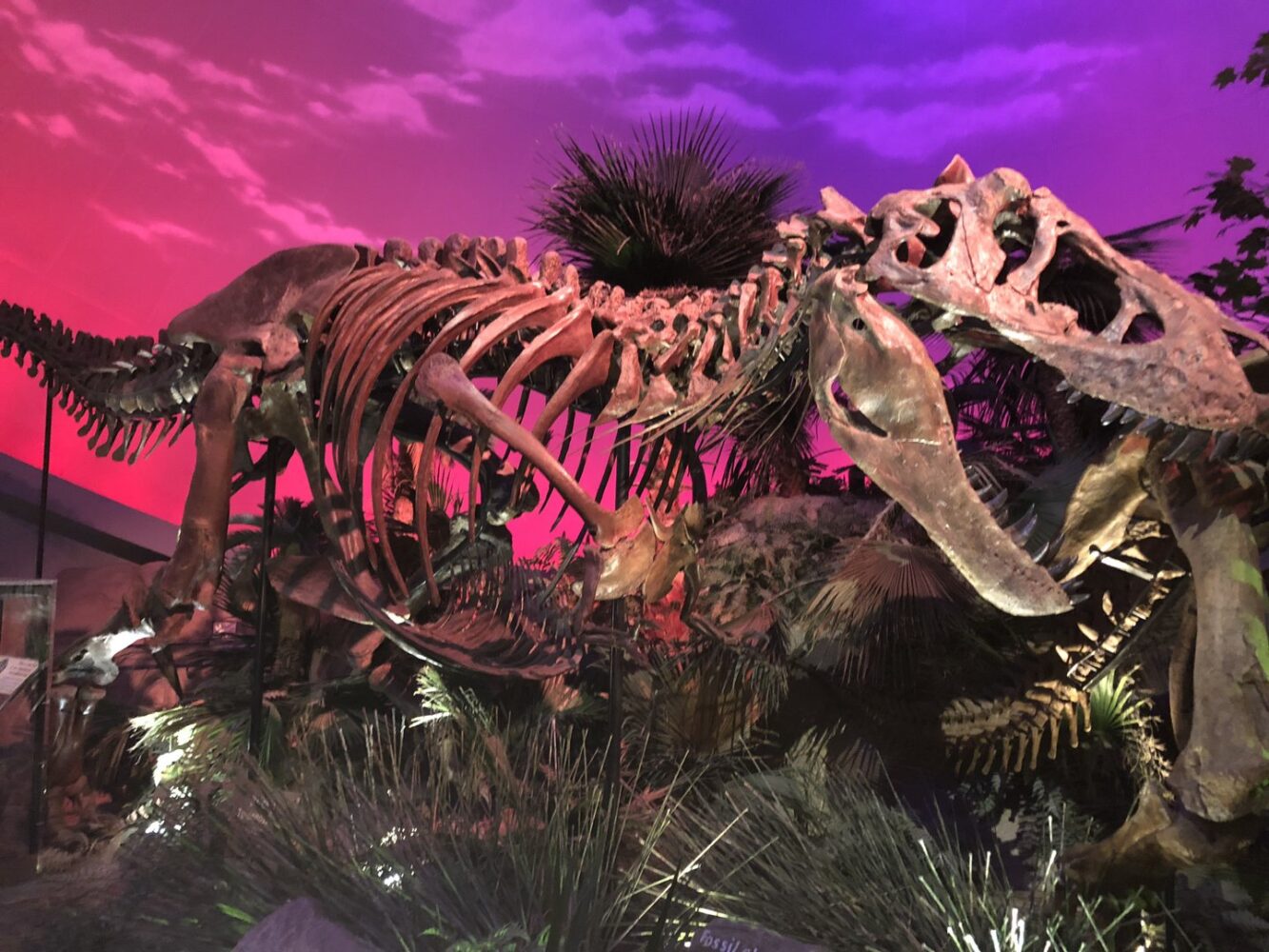
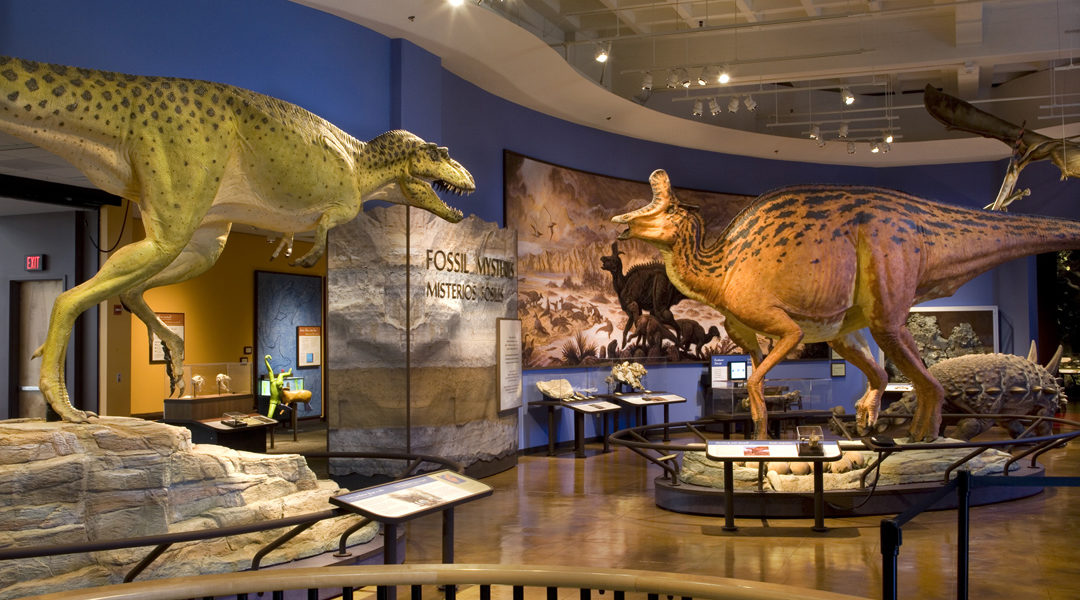
San Diego Natural History Museum – Fossil Mysteries

 San Diego Museum Month is back this February for its 34th year.

This year the popular program has more than 60 museums historic sites, gardens, aquariums, and other cultural destinations and attractions throughout San Diego County offering half-priced admissions all month.

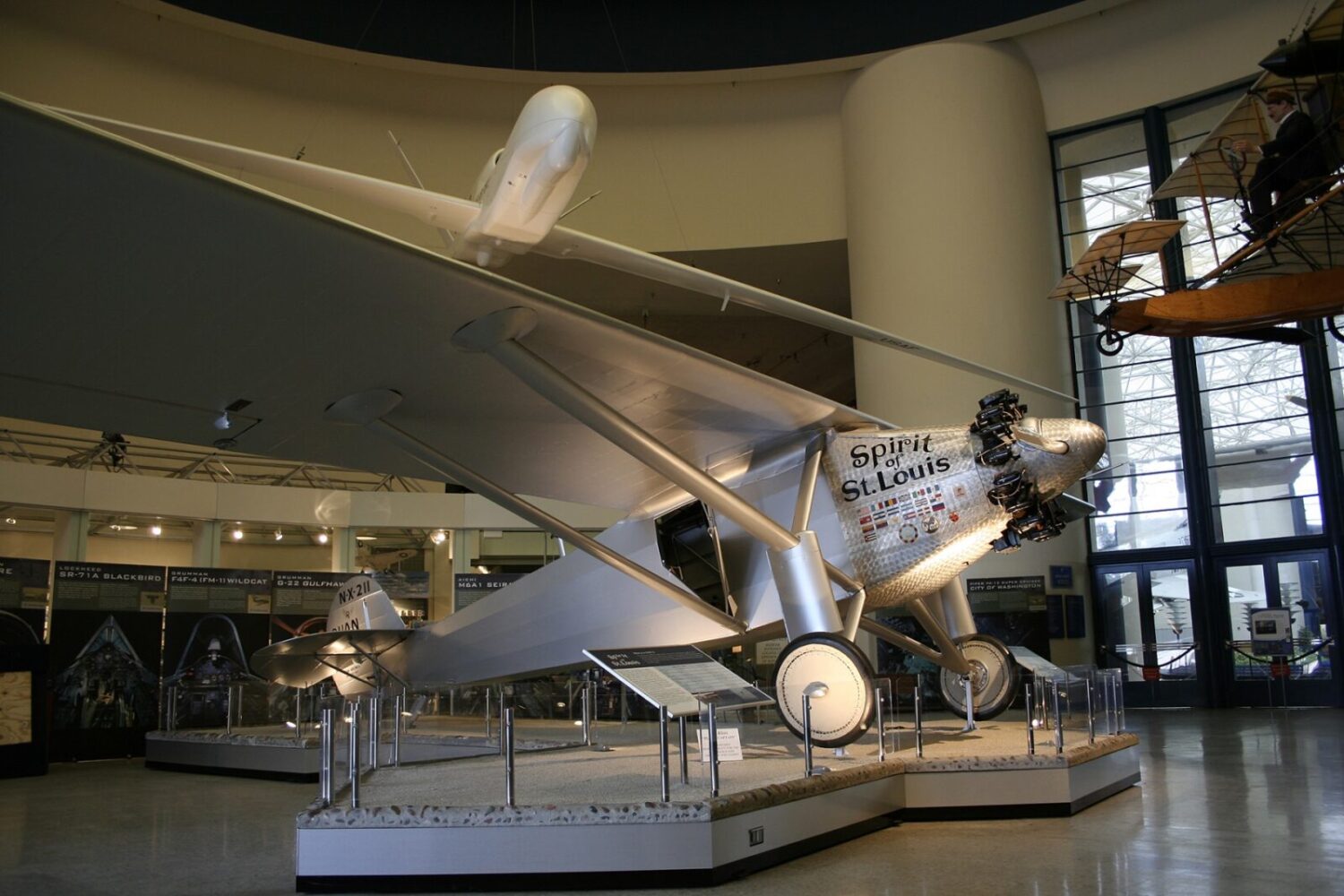
In San Diego, the list of participating museums includes the Comic-Con Museum, the San Diego Natural History Museum, the San Diego Air & Space Museum, the Maritime Museum of San Diego, and dozens more.

The free San Diego Museum Month pass can be downloaded here.

Public libraries in San Diego County also have passes to distribute.

Each Museum Month pass can be used for up to four half-priced admissions at any of the participating museums until February 28, 2023.

Have fun!


Museum Monday: Lightner Museum Turns 75

If we’re not in an airport, you’ll find the Stuck at the Airport team in a museum.

And if it’s a museum with some unusual collections, all the better.

The Lightner Museum in St. Augustine, Florida fits the bill.

And how.

First built as the Hotel Alcazar in 1888, the building opened as the Lightner Museum of Hobbies in January 1948.

The museum was created by Otto Lightner, a great advocate of collecting and the publisher of Hobbies magazine.

Lightner promoted every kind of hobby, from collecting matchbooks and cigar labels to whittling wood. But he was also a great collector himself and had the means to amass a substantial personal collection of fine and decorative art, natural history specimens, Americana, and just plain stuff. 

Cigar Lables

Lightner first opened a museum of hobbies in Chicago in 1934. And in addition to his eclectic and eccentric collections, he encour­aged the readers of Hobbies magazine to send him their collec­tions. 

They did.

Following a stay in St. Augustine’s in 1946, Lightner purchased the Hotel Alcazar to serve as the permanent home for his collections.

The collections include lamps by Louis Comfort Tiffany, shells, geological specimens, a vast number of salt & pepper shakers, Victurian mechanical insturments, and hundreds of thousands of buttons.

We know there also some shrunken heads in the collection.

And in celebration of the museum’s 75th diamond anniversary in 2023, the museum is hosting a special exhibition titled, 75 for 75.

On display is a selection of artwork and objects from the museum’s permanent collection. The exhibit opens on February 2nd and we’re making plans to visit soon.

From the Lightner Museum Collection

Ride On!

We love anything transportation. So the Lightner Museum’s new exhibit “Ride On!: Historic Bicycles from the Keith Pariani Collection,” is also of great interest.

Here are some of the exhibit notes on the early popularity of the bicycles and the Hotel Alacazar’s ‘bicycle academy:’

In the 1890s the bicycle took over the hearts and minds of Americans. By the early twentieth century, almost 300 bicycle manufacturing firms were established in the US. Swept up in the craze for cycling, the Lightner Museum’s historic building, the Hotel Alcazar, offered its own bicycle academy, allowing its guests to tour Gilded Age St. Augustine on two wheels. 

First developed in Europe in the early nineteenth century, the bicycle took decades of design and engineering to make it safe and convenient for the average rider.  The first popular models of the bicycle were high-wheeled and dangerous for unskilled riders because of the frequency of falls. However, with the invention of the “Safety” bicycle, the vehicle became a safer and more popular mode of transportation. The women’s safety bicycle, allowing for women’s dress, helped boost the bicycle’s popularity even more. By the 1890s, the safety bicycle was widely used in the U.S. by everyone, regardless of age or gender, for both transportation and recreation.

The “Ride On!” exhibit runs February 2 through September 30, 2023.

Bicycle Academy

Free admission on Museum Day and other days

Courtesy MoPOP

[This is a story we wrote for NBC News]

As inflation leads households to tighten their entertainment and travel budgets, many are forgoing trips to museums and cultural institutions, where tickets can often top $25 per person.

This coming Saturday, Sept. 17, might bring some temporary relief.

For the 18th annual Museum Day, a nationwide program spearheaded by Smithsonian magazine, nearly 1,000 museums, science centers, zoos, cultural attractions and historic sites will waive admission fees; visitors just have to download a free ticket.

The event comes at a precarious time for an industry that is trying to regain its financial footing from the pandemic’s disruptions. Attendance was down by nearly 40% last year at many of the nation’s museums, according to the American Alliance of Museums, and curators are trying to entice visitors who may opt to spend their limited leisure dollars elsewhere.

Like many other museums around the country, Seattle’s Museum of Pop Culture hasn’t seen attendance recover to pre-Covid levels. The museum, where current exhibitions run from Afrofuturist costume design to hometown rock band Pearl Jam, offers entry starting around $25 but will waive admission fees on Saturday for Museum Day ticket holders.

“After a strong spring where we exceeded attendance expectations, the summer has slowed down a bit,” said MoPOP spokesman Michael Cole-Schwartz. “We largely attribute that to high gas prices dissuading regional visitors we might have otherwise expected.”

Drew Ramsey, a security engineer from Phoenix, seeks museum discounts “sometimes obsessively” while traveling with his family. “I will comb a place’s website, search social media and message boards, and check deal sites like Groupon to ensure I’m getting the best admission prices available,” he said.

He’s discovered that some marquee venues rarely offer discounts, but that hasn’t always deterred him: “Why make the effort and pay to visit somewhere and then skip the prime attractions?”

If Covid restrictions and mandated closures weighed on Museum Day last year, this year’s event coincides with inflation that is just starting to cool off from 40-year highs — which could raise the appeal of waived entry fees. Admission prices for museums, movies, concerts, theme parks and other cultural activities were 6.2% higher last month than they were in August last year, federal data show.

Museum Day offers entry fee relief

Courtesy San Fransico Museum of Craft and Design

To offer a break from those cost pressures, sites participating in Museum Day are rolling out bonus programming, new exhibitions and other ways to both lure in visitors and delight them enough to return after the admission holiday ends.

Honolulu’s Pearl Harbor Aviation Museum (adult admission: $25.99) will offer family-friendly activities including open cockpits, scavenger hunts and a Rosie the Riveter costume contest. The American Kennel Club Museum of the Dog in New York City (adult admission: $15) debuts its 40th-anniversary exhibition on Wednesday, just in time for Museum Day. And at San Francisco’s Museum of Craft and Design (adult admission: $10), visitors will be able to join craft activities or leave with a free kit of art supplies.

This is the fifth year MCD is participating in Museum Day. It expects hundreds of visitors with free passes to show up and “try something new or take a chance on something they might not have otherwise,” said museum spokeswoman Sarah Beth Rosales.

Museums earn around 40% of their revenue from admissions, facility rentals and gift shop sales, according to the American Alliance of Museums. “They are certainly grappling with the impacts of rising inflation and the massive financial impact the pandemic had on their operations over the last few years,” said AAM president and CEO Laura Lott.

Sixty-one percent of museums AAM surveyed last winter reported an average 38% decrease in net operating performance, and 27% said their performance sank even further in 2021, by an average of 33%. Lott said she expects ongoing financial difficulties to persist into next year.

How are museums coping?

Many museums have shaved staff and programming. Nearly three-quarters of museums in AAM’s survey said they’d managed to retain or restore all their workers, with often vital support from government relief funds.

But more than half the museums with job openings reported difficulty filling roles. Employment in the nation’s museum sector stood at around 92,400 in July, according to preliminary data from the Bureau of Labor Statistics, up from 79,000 a year earlier but well below the 103,600 in July 2019.

Some museums have raised admission fees to help shore up their finances. In July, New York City’s Metropolitan Museum of Art hiked general admission to $30, a $5 increase, for visitors who aren’t state residents or regional students, groups that can still pay what they wish.

study last year by a discount-tracking website, deal A, found more than a dozen major U.S. museums have raised ticket prices by between 20% and more than 60% in the past few years.

Many other museums have kept prices steady while testing out fresh ways to serve the public. Confronted with Covid-19, institutions across the country launched initiatives — many of them free — to meet community needs, and AAM found that many of those have continued, including online learning programs, food banks and wellness offerings.

During the pandemic, the Mütter Museum at the College of Physicians of Philadelphia opened the previously off-limits second floor of its landmarked building, including the historical medical library, to daily visitors and hosted public and private events in its medicinal plant garden.

In Hutchinson, Kansas, the Cosmosphere, which boasts the world’s largest combined collection of U.S. and Soviet-era space artifacts, remodeled four gallery areas during the pandemic and added a new interactive STEM space that’s free with admission.

The museum hasn’t raised ticket prices and attendance has bounced back quickly, spokeswoman Mimi Meredith said, thanks in part to the “Sunflower Summer” program that began last year and allowed Kansans to visit museums, zoos, historic landmarks and other venues for free this summer as well.

The Cosmosphere has also broadened its regular offerings to include programs tied to special days, such as mathematics celebrations to mark Pi Day on March 14. A few weeks ago, the site set up chairs and big-screen TVs in its lobby for free viewings of the Artemis 1 launch, although NASA wound up postponing two attempts over mechanical issues.

“As families make choices about how to spend dollars that have been stretched farther and farther over the years, we’re trying to be more of a resource for families to experience things together,” Meredith said.

More ways to get free or discounted museum admissions

If you miss Museum Day this weekend, don’t worry. Many museums have regular days or hours when admission is free, discounted or “pay what you wish.” And a membership card from a museum in the North American Reciprocal Museum Association will get you free admission to more than 1,000 member museums in the U.S., Canada, Bermuda, El Salvador and Mexico.

In some American cities, a group of museums may offer free admission on the first Thursday or Friday of a given month or, like Seattle and San Diego, offer two-for-one deals during the winter when few tourists are in town. Some sites, like Chicago’s Field Museum, offer state residents free entry on select days. And in Washington, D.C., admission is always free at Smithsonian Institution venues, including the National Air and Space Museum, the National Museum of African American History and Culture and the National Zoo.

The Blue Star Museums program provides free admission to active, retired and veteran military personnel and their families during the summer. The Museums for All program offers free or reduced admission year-round to visitors with public assistance (EBT) ID cards. And many public libraries have museum passes that can be checked out free to anyone with a current library card.

“We hope that free admission days will entice community members, new residents and travelers to visit museums they never have experienced before and expand their appreciation for the incredible gems that may have always been in their backyards,” said AAM’s Laura Lott — and, of course, maybe come back again as paying guests