Museum Monday

Where to see: one of D.B. Cooper’s parachutes

(D.B. Cooper pink parachute courtesy Washington State History Museum)

The only unsolved commercial airline hijacking in the U.S. remains the November 24, 1971 hijacking of Northwest Orient flight 305 to Seattle by someone who has come to be known as “D.B.” Cooper.

(Sketch courtesy FBI)

In 1971, Cooper boarded a Boeing 727 on Thanksgiving eve, November 24, that was heading from Portland, Oregon to Seattle.

During the flight, he passed a flight attendant a note saying that he had a bomb and would blow up the plane unless he was given $200,000 in $20 bills and some parachutes.

His demands were met and he parachuted out of the plane, with the money, somewhere over southwest Washington State.

In 1980 some of the money was found along the banks of a river. But Cooper remains at large.

And the mystery lingers on.

Cooper’s hijacking demands included four parachutes. He got them but didn’t choose the pink nylon reserve parachute that the Washington State History Museum in Tacoma, WA is displaying this fall.

The parachute was part of the evidence the FBI recovered for its hijacking investigation and has since been given to the museum for safekeeping and occasional display.

You can see this parachute and contemplate what you think happened to Cooper and the money from September 22 through November 16, 2014.

If you can, come by the museum on November 14 for the History After Hours program.

I’ll be there for a presentation about some of the weird and wonderful objects, like the D.B. Cooper parachute, that museums rarely or never display.

Here’s a short video about D.B. Cooper from Seattle’s public TV station.

We’re on a boat: London’s HMS Belfast

Museum Monday: London’s HMS Belfast

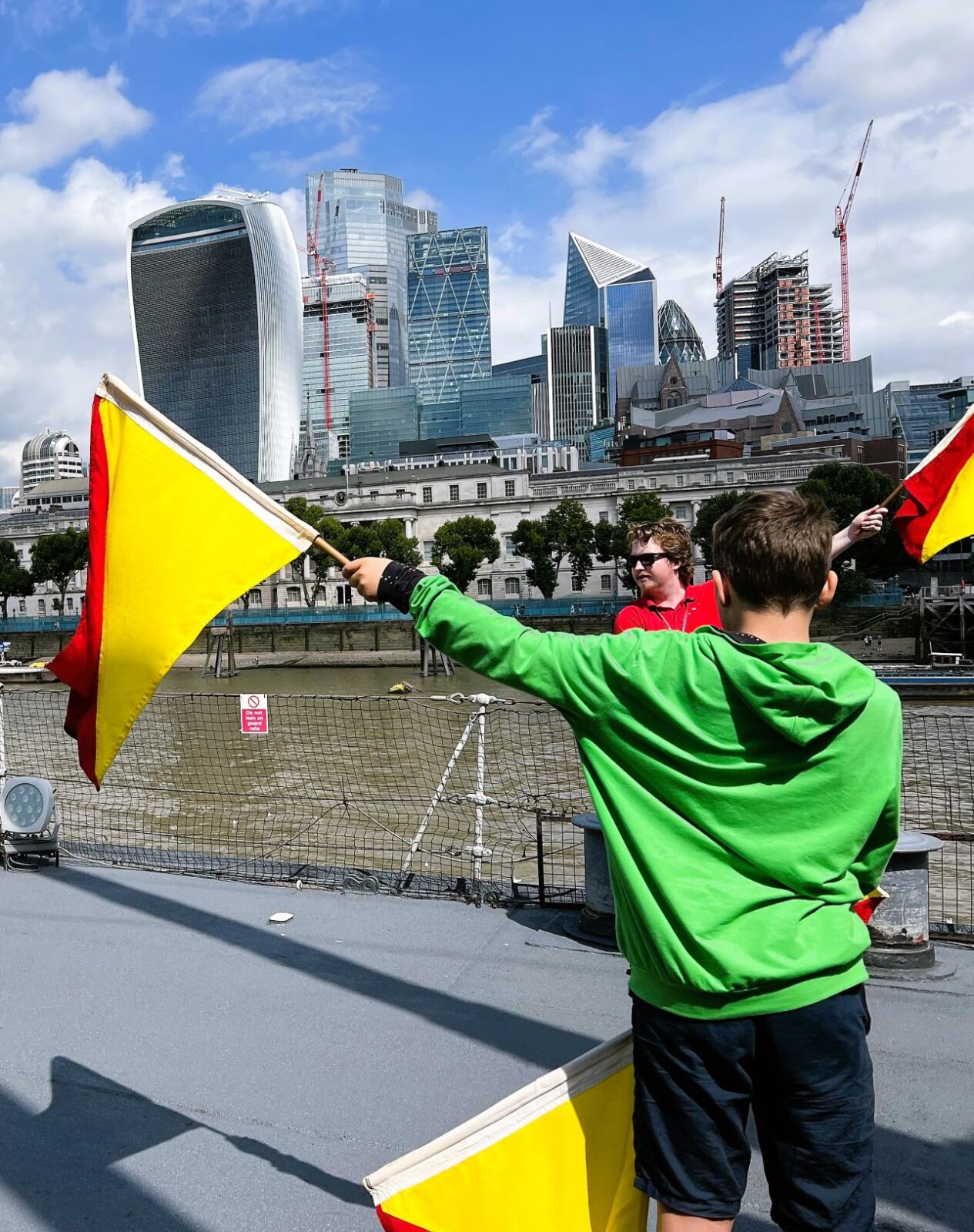
For Museum Monday, we’re highlighting the HMS Belfast. This is a historic warship and a 9-deck floating museum permanently moored in London on the River Thames.

The Royal Navy ship is named after the Northern Ireland city of Belfast and is operated as one of the Imperial War Museums’ 5 sites.

The ship was launched on St. Patrick’s Day in March 1938 and saw action during World War II and the Korean War

Visitors should wear sturdy shoes and arrive ready for a workout. You’ll walk the ship’s nine decks and climb up and down steep ladders while learning about the ship’s role in naval history and the daily life of sailors that served on board.

What You’ll See on the HMS Belfast

Visitors to the HMS Belfast will get to see, and in some cases, experience areas of the ship that include giant machine rooms, the gun turret, and the Operations Room (with simulated radars, equipment lights, and touchscreen plotting table). Below the Water line is where the shell room, boiler room, and engine room are located.

950 people at a time lived and worked on the ship, so you’ll also see the ship’s mess deck, chapel, radio station, medical bay, dentist’s office, and bakery.

Ngaire Bushell, from the Imperial War Museum Public Engagement and Learning Team

Most visitors to the HMS Belfast take self-guided tours with the aid of the audio tour included in admission.

But because we were tagging along with Gatwick Airport mascot, Gary Gatwick, our ship guide was the nimble and knowledgeable Ngaire Bushell, a producer from the Imperial War Museum’s Public Engagement and Learning Team.

She not only knows everything about the history of the HMS Belfast and all its nooks and crannies but has met many sailors who served on the ship over time.

Planning an HMS Belfast visit? Here’s a short video about exhibits and experiences added and updated while the attraction was closed during the pandemic.

Museum Monday: All things Edgar Allan Poe

The Edgar Allan Poe Museum in Richmond, Virginia will be celebrating its 100th-anniversary April 28 through October 31, 2022, with an exhibit highlighting dozens of recently acquired Poe artifacts.

The list of artifacts includes Edgar Allen Poe’s pocket watch, which he owned while writing The Tell-Tale Heart, a horror story that, repeatedly mentions a watch.

“That means this might just be the very watch Poe was envisioning when he described the old man’s heartbeat as ‘a low, dull, quick sound, such as a watch makes when enveloped in cotton.’,” says Poe Museum curator Chris Semtner.

“The Tell-Tale Heart’ is a classic story we have read in school, heard at Halloween, and even seen recreated on The Simpsons, and having the watch is like holding a real-life piece of that story.”

The gold watch is engraved with “Edgar A. Poe.” And in 1842, Poe gave the watch to one of his creditors to pay off a debt.

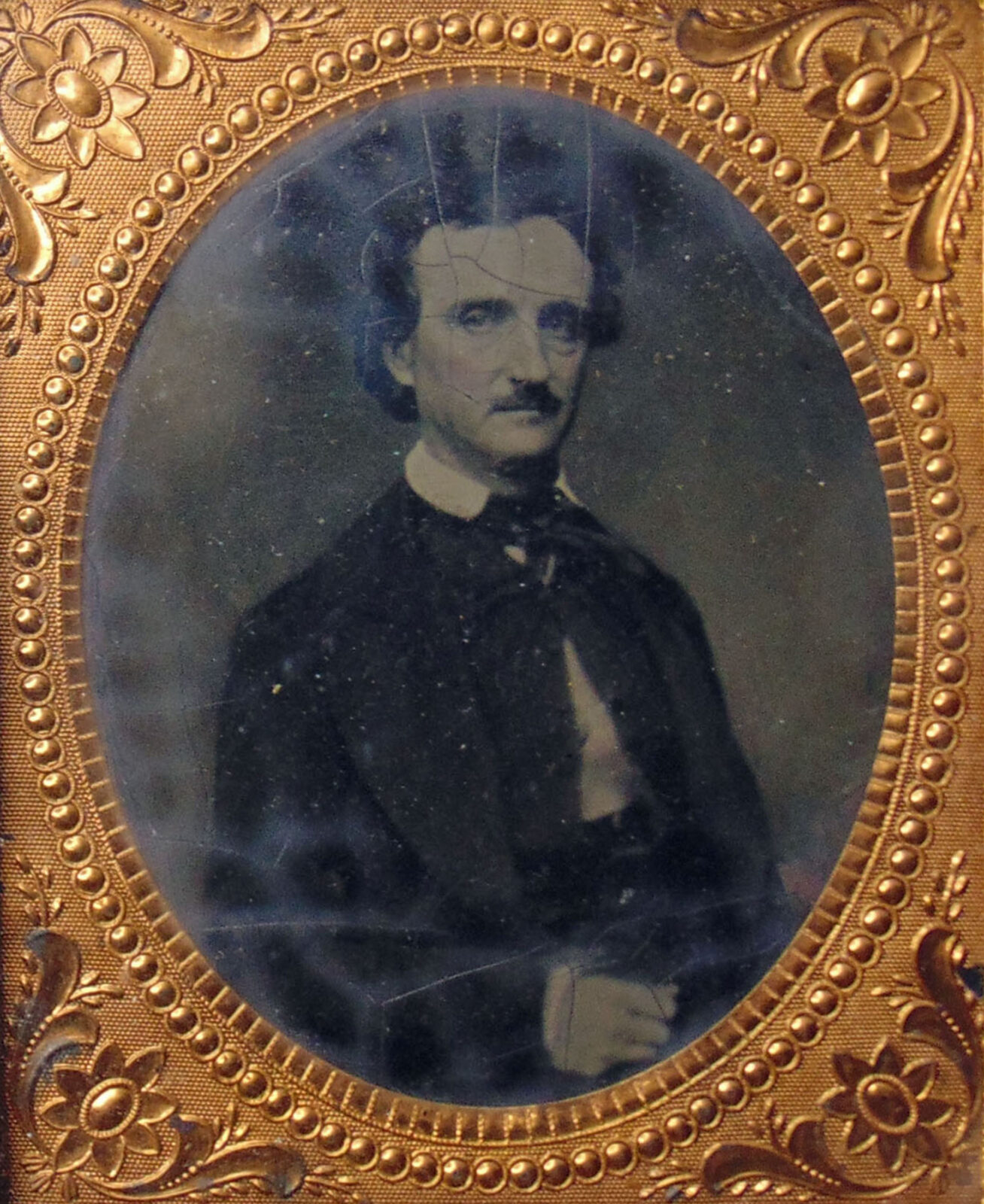
Other new-to-the-museum Poe artifacts include his engagement ring, the earliest surviving copy of the last photo ever taken of Poe, and a piece of the coffin in which he was buried for the first 26 years after his death.

Exhibit notes declare the ring “sad evidence of the tragic love story of Poe and his first and last fiancée, Elmira Royster Shelton.”

The couple was engaged as teenagers, but Shelton’s dad broke it off. Poe and Shelton got engaged again, in the last months of Poe’s life. He gave her this ring with the name “Edgar” engraved on it. But Poe died just ten days before their wedding day.

The coffin fragment comes from the original coffin in which Poe was buried on October 8, 1849. In 1875, Poe’s body was moved across the cemetery from his unmarked grave to a better location where a large monument could be placed over his grave.

When the coffin was lifted from the ground, this piece fell off and was later owned by a
president of the Maryland Historical Society,

“Poe wrote so many stories about being buried alive that it seems only fitting that
we have a piece of the very coffin in which he was buried,” says museum curator Semtner.

Fragment of Poe coffin

The Edgar Allan Poe Museum in Richmond features permanent exhibits of Poe’s manuscripts, personal items, clothing, and even a lock of the author’s hair. The exhibit of newly-acquired artifacts opens with an Unhappy Hour on April 28.

Opened in 1922, the Poe Museum is comprised of four buildings surrounding an Enchanted Garden constructed from the building materials salvaged from Poe’s homes and offices.

Museum Monday: Scientific Instruments at SFO

SFO Museum : Equinoctial inclining sundial  c. 1865

SFO Museum exhibits rare 19th to early 20th-century scientific instruments

SFO Museum: Double-scope theodolite  c. 1890–1910

The newest exhibition from the SFO Museum at San Francisco International Airport (SFO) is filled with rare mid-nineteenth century to early twentieth-century scientific instruments.

At a glance, they are clearly works of mechanical know-how and art. But these objects also tell a story about the emergence of modern science and the specialized instruments scientists built and used to explore the world.

From the exhibition release:

When modern science emerged in the seventeenth century, scientists invented specialized instruments to explore the world and universe in a closer, more logical manner. These intriguing devices facilitated the careful study of almost all facets of life through the research and demonstration of ideas and theories. During the nineteenth century, new technologies allowed for the precision manufacturing of scientific instruments. An array of instruments assisted some of the most brilliant minds on Earth as scientists made early discoveries in the fields of electrodynamics and atomic theory.

This exhibition in the Harvey Milk Terminal 1 of the San Francisco International Airport displays a selection of antique scientific instruments and explores their uses. Dates: September 11, 2021, to April 3, 2022.  The exhibit is accessible to ticketed passengers but non-ticketed guests may get access by emailing curator@flysfo.com.

SFO Museum: Geissler tube rotator [with modern tube]  late 19th century
SFO Museum: Helmholtz resonators  c. 1890

“Museum Airlines” and the pretend airport at a Tel Aviv museum

In Tel Aviv, the Museum of the Jewish People is encouraging visitors to tour the world – virtually of course.

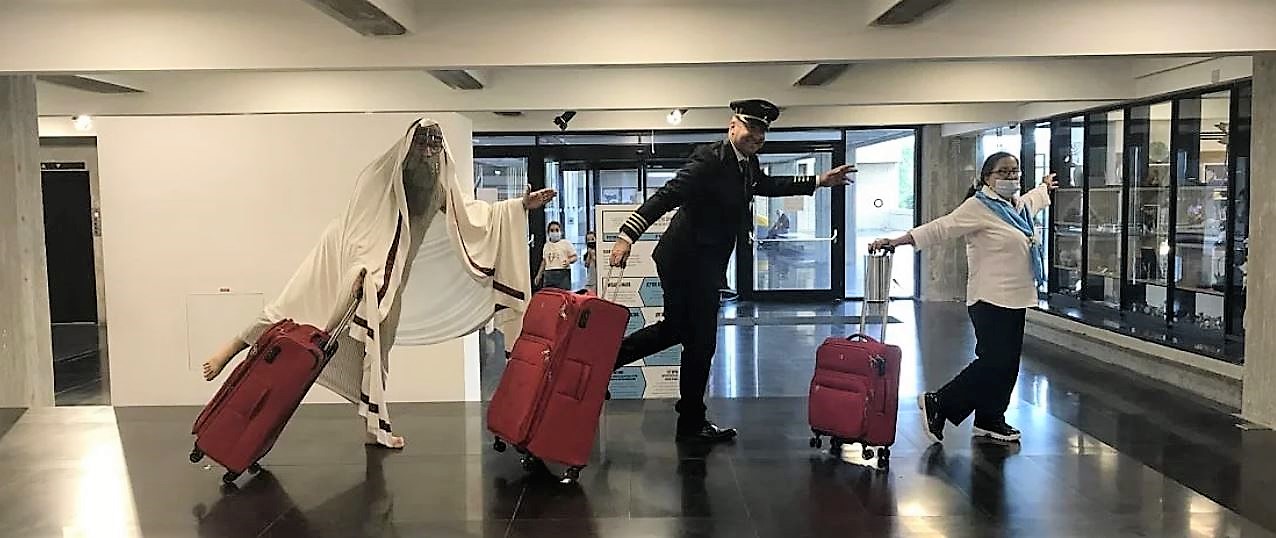
To get the ball rolling, the museum has created “Museum Airlines” and turned the museum into a temporary pretend airport terminal.

The faux terminal has a check-in counter, flight board, baggage claim with luggage, a passport center, currency exchange desk, and a duty-free shop (aka the museum gift shop).

For those who can’t make it the museum in person, the airport has created a 360-degree video of the pretend airport visit that includes a digital quiz.

Access the virtual tour here and look around the airport for 18 country flags.

But first take your seats and listen to the captain.

Museum exhibits worth planning a trip around in 2020

What Me Worry? by Patty Kuzbida Courtesy AVAM

Planning your 2020 travel? Some museum-centric ideas

If history, art and eclectic adventures are what you seek out when you travel, you’ll have plenty of excuses to pull off the road in 2020.

For CNBC we put together a list of great options, from a retrospective celebrating 25 years of outsider art to fresh shrines and exhibitions devoted to everything from eyesight, motion pictures, shoes, music and rodeo culture.

Celebrate Southern Rock in Georgia

Courtesy the Mercer Museum at Capricorn

In early December, Macon, GA celebrated the reopening of the Capricorn Sound Studios, which captured the music of the Allman Brothers and other emerging bands playing a new musical genre dubbed ‘Southern rock’ during the 1970s.

The new Mercer Music at Capricorn now operates as a music incubator, with the Museum at Capricorn opening on January 2 to tell the history of the iconic studio with artifacts, photos, recordings, album art and music-filled interactive digital kiosks. (Museum admission: $7; Studio tour: $5)

Radical rodeo in Fort Worth

Red Grooms – Rodeo Ruckus – Modern Art Museum of Fort Worth

If you’re headed to Fort Worth, Texas to attend the parades, shows, contest and other events that take place during the Fort Worth Stock Show and Rodeo in Fort Worth, Texas (January 17- February 8, 2020) be sure to stop by the Modern Art Museum of Fort Worth.

The museum will display artist Red Grooms’ rollicking Ruckus Rodeo installation, a giant walk-through work that celebrates the Fort Worth rodeo with 3-D caricatures of rodeo regulars ranging from the rodeo clowns and cowboys to broncos to and bulls. (January 17-March 29, 2020; Admission: $16; half-price Sundays; free admission Fridays.)

Fancy Footwear in Florida

– Peep Toe Ankle-Strap shoes. Stuart Weitzman Collection. Photo Glen Castellano, New -York Historical Society.

The grandiose Gilded Age estate that is now the Flagler Museum in Palm Beach, Florida is an appropriate exhibition space for Walk This Way: Historic Footwear from the Stuart Weitzman Collection. Organized by the New-York Historical Society, the 100 shoes in this exhibition are not just pretty to look at, they tell stories of culture, consumerism, power and history. (Jan 28-May 10, 2020; Admission: $18).

Garden of delight

©YAYOI KUSAMA. Courtesy of Ota Fine Arts, Tokyo Singapore Shanghai; Victoria Miro, London; David Zwirner, New York

In the Bronx, NY, the 250-acre New York Botanical Garden (NYBG) will present KUSAMA: Cosmic Nature, by celebrated Japanese artist Yayoi Kusama from May 9 through November 1, 2020. The garden-wide exhibit will include the artist’s signature mirrored environments, paintings, giant polka-dotted sculptures flowers and pumpkins, site-specific sculpture and a new greenhouse installation. Tickets go on sale on sale on January 20.

When women got the right to vote

Library of Congress

The 2020 Women’s Vote Centennial Initiative has an extensive list of museum exhibits around the country marking the 100th anniversary of the passage of the 19th amendment, which guarantees women the right to vote.

Wyoming, which gave women the right to vote 50 years before the rest of the nation, kicked off its suffrage celebrations in 2019 and continues with many special exhibits statewide in 2020.

In Washington, D.C. the National Museum of American History will present “Creating Icons: How We Remember Women’s Suffrage,” with artifacts from 1919 and 1920 donated by the National American Women Suffrage Association, the precursor to the League of Women Voters (Opens March 6; free).

A visionary retrospective

Matchstick sculpture by Gerald Hawkes. Courtesy American Visionary Art Museum

Baltimore’s American Visionary Art Museum (AVAM) collects curates and celebrates self-taught artists and “outsider” art and presents workshops, parades and themed exhibitions filled with odd and exquisite creations. In November 2020, AVAM will mark its 25th anniversary with a retrospective show featuring work from its past 40 exhibitions, bring back some work which has been in storage for years. (Admission: $15.95)

Courtesy Museum of Science, Boston

The U.S. Olympic & Paralympic Museum opens in Colorado Springs, CO in April 2020, ahead of the 2020 Summer Olympics.

In Spring 2020, keep an eye out for the opening of the Truhlsen-Marmor Museum of the Eye at San Francisco’s Fisherman’s Wharf. The free museum at the headquarters of the American Academy of Ophthalmology will feature a collection of more than 38,000 artifacts, books, and instruments and virtual reality activities.

The Academy Museum of Motion Pictures, featuring a collection of photographs, films, videos, costumes, props and more, is scheduled to open in Los Angeles, CA (of course) in Spring 2020.

And in late 2020, the Museum of Science, Boston will open “Arctic Adventure,” a major permanent exhibition that will immerse visitors in a polar environment using state-of-the-art light projections and a real ice wall. (Admission included with Exhibit Halls ticket: $29 for adults, $24 for kids.)

Museum Monday: Insects at San Francisco Int’l Airport

San Francisco International Airport (SFO) has bugs!

But don’t worry. The bugs are all under glass and are part of a new exhibit hosted by the SFO Museum.

The exhibit, titled The Intriguing World of Insects includes more than 1000 specimens, fine art photography and rare books. There’s also an atomical model of Musca domestica, the inscect we know better as the house fly.

Display drawer of camouflage insect specimens – courtesy SFO Museum

Why an exhibit of insects?

Besides that fact that they look really pretty and non-threatening inside the cases, insects, the exhibit notes tell us, are the most diverse macroscopic organisms on the planet.

Researchers have identified over one million species of insects – so far – and estimate that five to thirty million more insects are waiting to be discovered.

In fact, there are more species of ants than species of birds, and more species of beetles than all species of plants combined.

Display drawer of ladybug (Coccinellidae) specimens – courtesy SFO Museum

Here’s a quick insect class, to get you ready for the exhibit:

*Insects, spiders, lobsters, and their cousins are arthropods. That means they have jointed legs and an external skeleton.

*The first insects appeared around 400 million years ago and evolved wings over 300 million years ago.

*Fossils of dragonfly ancestors, called griffinflies, had wingspans of over sixty centimeters. In contrast, the tiniest insects today have wingspans of less than one millimeter.

*But not all insects have wings. Some species, like silverfish, never evolved wings, while others, like camel crickets, lost them millions of years ago.

*Insects play integral roles in ecosystems. They pollinate the flowers of many fruits and vegetables, produce wax and honey and keep pest plants and insects at bay. Insects also recycle nutrients through decomposition, and are important food sources for other species.

Class over, for now.

Display drawer of scarab beetle (Scarabaeidae) specimens- Courtesy SFO Museum

The SFO Museum’s exhibition, The Intriguing World of Insects, comes to San Fransicsco International Airport from the Essig Museum of Entomology which is has a collection of more then 5 million arthropods stored at the University of California, Berkeley.

Look for the exhibit pre-security in SFO’s International Terminal, on the Depatures Level through August 18, 2019.

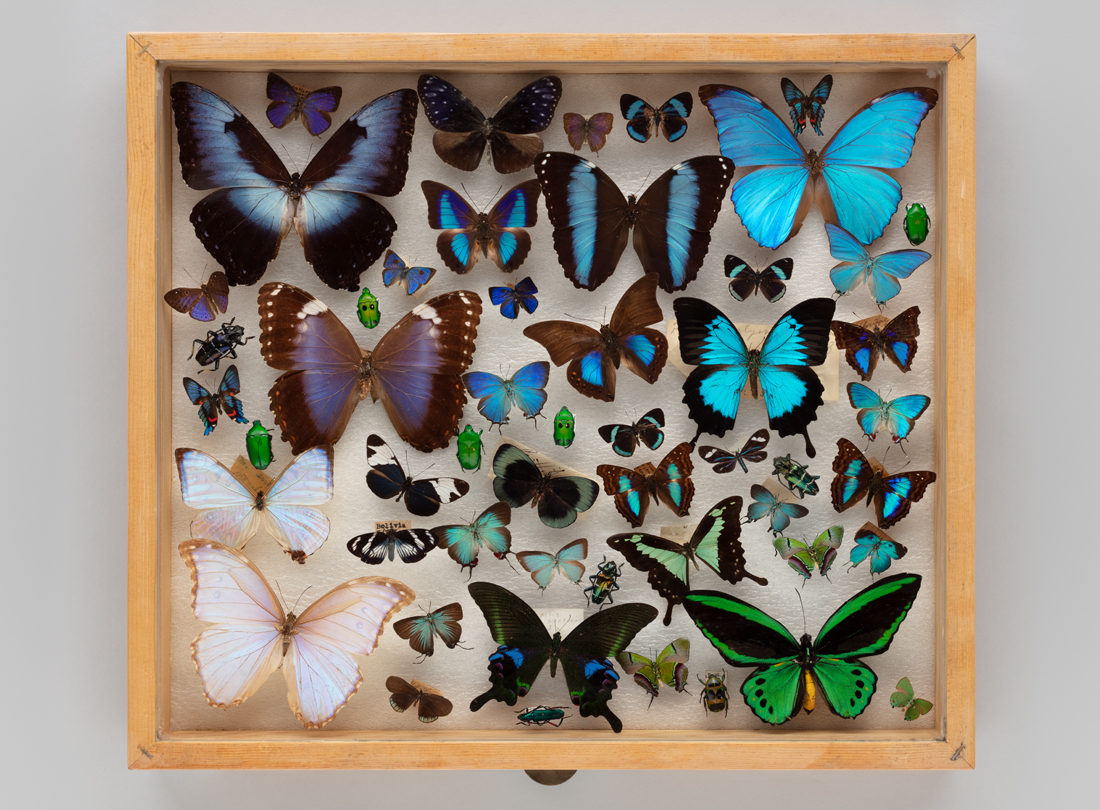
Display drawer of blue and green butterflies (Rhopalocera) and colorful beetles (Coleoptera) – courtesy SFO Museum
Wasp (Vespula vulgaris) sculpture –
by Gar Waterman  courtesy SFO


Museum Monday: St. Louis Gateway Arch museum

Courtesy Gateway Arch Park Foundation

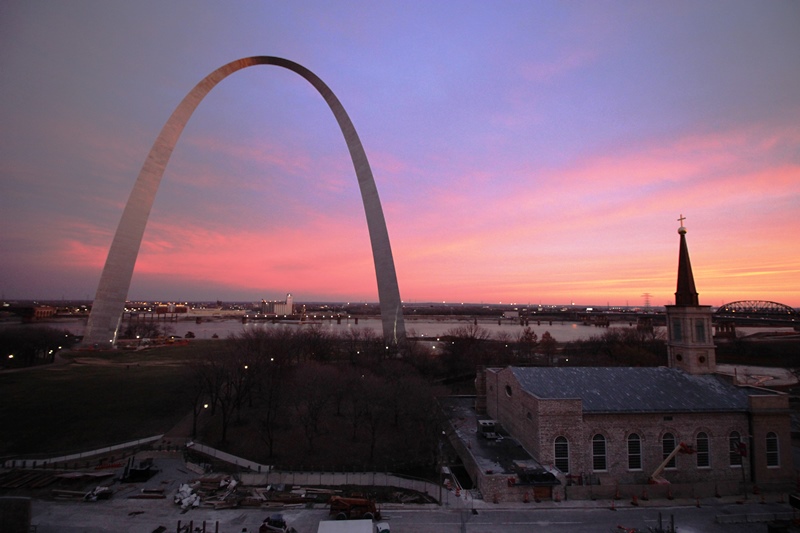
July 3 is opening day for the new museum at the iconic Gateway Arch, the iconic 630-foot-tall concrete and stainless-steel structure on the St. Louis riverfront that commemorates Thomas Jefferson and the role St. Louis played in the westward expansion of the United States.

Completed in 1965, the arch began offering tram rides to a viewing platform at its top in 1967. Now $380 million of upgrades to the parkland around the country’s tallest man-made monument and to the underground museum below it are being readied for visitors.

Here’s a preview of the upgraded ground-level Gateway Arch experience that I originally prepared for CNBC.


The arch itself and the tram ride that brings visitors to the small observation room at the top of the arch remains unchanged, but the way visitors get to the arch and experience the Gateway Arch Park has been transformed.

“You don’t change a masterpiece,” said Eric Moraczewski, Executive Director of the Gateway Arch Park Foundation, “What we’ve done is renovate about 100 acres of park space, added 46,000 square feet of museum space, a café and raised the riverfront about 30 inches to prevent flooding and give us more useable days on the riverfront. We also built a land bridge over Interstate 44 to make the park more accessible to visitors.”

When the free museum inside the Gateway Arch reopens on July 3, visitors will see some old favorites, such as the statue of Thomas Jefferson, and many new artifacts, including a resin version of the much-loved taxidermy buffalo that park officials say was showing too much wear and tear.

The new museum has six galleries: Colonial St. Louis explores the founding of St. Louis and the indigenous and Creole culture before the Louisiana Purchase; Jefferson’s Vision documents how St. Louis shaped the west; and Manifest Destiny follows the trails, the settlers and the conflicts for those heading west. The Riverfront Era gallery shows how steamboats created an American metropolis at St. Louis and New Frontiers presents the history of railroads, industry, and the myth of the West. Finally, Building the Gateway Arch presents the history of the Eero Saarinen-designed monument itself.

The Riverfront Era gallery in the new museum at the Gateway Arch features a façade made with stones from the Old Rock House, a structure built as a warehouse in 1818 that was demolished to make may for the construction of the arch.

“The history preservation team for National Park Service kept the stones, carefully stored them and was able to reuse them. Now you walk into the museum through the stones of the Old Rock House,” said Eric Moraczewski, Executive Director of the Gateway Arch Park Foundation.

A new feature in the tram lobby will offer visitors on the ground a live webcam stream of the view from the observation space at the top of the Gateway Arch. The webcam will give those waiting for the ticketed tram ride a preview of what they’ll see and also make the view accessible to people who use wheelchairs, visitors afraid of heights and others who choose not to purchase a ticket to the top.


The new museum and visitor center on the renovated grounds of the Gateway Arch National Park in St. Louis, MO will be celebrated with a ribbon cutting ceremony on July 3 as part of Fair St. Louis, a July 4th celebration dubbed “America’s Biggest Birthday Party.”

All phoots courtesy Gateway Arch Park Foundation

History, art or culture – for free – during Museum Day Live!

From “Cruisin’ the Fossil Coastline”: ‘Minivan to the Polar Forest,’ by Ray Troll. Courtesy Anchorage Museum at Rasmuson Center


Spending time at a museum, garden, science center or a special cultural attraction is a great way to learn about a new subject or a city you’re visiting. But with some admission prices tipping the scales at $20, the costs of being curious can add up. Especially if you’ve got a family in tow.

That’s why the always-free-entry policy at Smithsonian museums in Washington, D.C. is such a great draw and why, once a year, Smithsonian magazine hosts Museum Day Live!, an event in which more than 1000 museums across the country waive admission for anyone who takes the time to download a free ticket.

2017 Museum Day Live! takes place this Saturday, September 23 and includes large and small museums in all 50 states.

Seattle’s Museum of Flight is on the list, as is the Carolina’s Aviation Museum, the Pacific Aviation Museum Pearl Harbor  and Evergreen Aviation & Space Museum in McMinville, Oregon.

Visitors are permitted to download one ticket – granting access to the ticketholder and a guest – per email address. A full list of participating venues, including many with special events planned for the day, can be found here.

Here are some of the more than 1,300 participating museums to consider visiting

North to Alaska

Courtesy Anchorage Museum

The Anchorage Museum at Rasmuson Center Alaska’s largest museum, is celebrating the opening of a brand new wing, refreshed galleries and several new exhibitions. A variety of media in ‘Art of the North’ offer varied takes on the Northern landscape and wilderness; the renovated ‘Alaska’ exhibition looks at the Land of the Midnight Sun through more than 400 objects; and ‘Cruisin’ the Ephemeral Coastline’ presents a quirky tour of Alaska fossils through the eyes of Alaska resident Ray Troll and paleontologist Kirk Johnson (director of the Smithsonian Museum of Natural History), who are described, respectively, as “an artist with a fondness for cheeseburgers, ratfish and trilobites” and a “a walrus-and ammonite-obsessed scientist.”

Savings with Museum Day Live! ticket: $15 per adult

Meteorites and microbes

From World in a Drop exhibition at the Harvard Museum of Natural History. Courtesy Scott Chimileski and Roberto Kolter, Harvard Medical School.


A ten-year participant in Museum Day Live!, Boston’s Harvard Museum of Natural History has just launched ‘World in a Drop: Photographic Explorations of Microbial Life,’ offering a rare and often beautiful view of tiny ecosystems. Equally intriguing exhibits elsewhere in the museum include a huge Triceratops skull, three huge whale skeletons, a 15-foot giraffe, thousands of rare minerals, meteorites and gemstones and the hard-to-believe-they’re-not-real collection of over 4000 glass flowers and plants made from 1887 through 1936 by Leopold and Rudolf Blaschka, father and son glass artisans from Germany.

Savings with Museum Day Live! ticket: $12 per adult.

Industrial History 

Photo courtesy of NMIH


Housed in a former Bethlehem Steel facility that is more than 100 years old, the National Museum of Industrial History is a shrine to America’s industrial history, displaying industrial artifacts from a variety of industries.

Among the items on display are a restored 115-ton Corliss steam engine that was once used to pump 8 million gallons of water a day, a 13-ton, 20-foot-tall Nasmyth steam hammer, and the Scalamandre “White House” loom that made fabric for every White House presidency from Hoover to Clinton. A temporary exhibition about baseball, “Making America’s Pastime,” shows how balls, bats, gloves and uniforms are made, and how they’ve changed over time.

“The museum opened in August 2016 and many in the community have yet to experience all that we have to offer,” said NMIH spokesman Glenn Koehler, “Museum Day Live! gives us a chance to bring those patrons into the museum and engage them in ways we might have not been able to otherwise.”

Savings with Museum Day Live! ticket: $12 per adult.

Popular culture 

Credit: Suzi Pratt


Ten interactive exhibits and galleries at MoPOP, Seattle’s Museum of Popular Culture (formerly the EMP) offer visitors a far-ranging tour of music history, contemporary pop culture, science fiction and fantasy and a variety of offbeat trends.

Beyond galleries devoted to the history and development of the electric guitar, Seattle-native Jimi Hendrix and the Science Fiction and Fantasy Hall of Fame, current exhibitions include a photo retrospective about the of the late rock icon, David Bowie, and more than 100 artifacts  and props from the ‘Star Trek’ television series and films franchise.

Savings with Museum Day Live! ticket: $28 per adult

 The Lone Star State in World War I, plus a visit from a national treasure

Drafted men reporting for service. Camp Travis, San Antonio, Texas. Ca. 1917-18. San Antonio Chamber of Commerce. (War Dept.) National Archives

 At the University of Texas at San Antonio, the Institute of Texan Cultures is currently hosting exhibits exploring the history of beer, brewers and breweries in Texas (“Brewing up Texas”); the stories and customs of more than 20 of the earliest cultural groups to settle in Texas (“Texans One and All”); and the role played by citizens from the Lone Star State (198,000 men and 450 women) in the World War I.

Museum Day Live! visitors will get a special treat: from 1 p.m. to 3 p.m. Eva Ybarra, the Queen of the Accordion and a newly minted recipient of a National Heritage Fellowship from the National Endowment for the Arts, will perform in the museum and a documentary about Ybarra’s life will be premiered.

Savings with Museum Day Live! ticket: $10 per adult.

Credit: Adam Rodriguez

 Gardens galore

Not all participants in the Museum Day Live! are museums. In Phoenix, Arizona, the 140-acre Desert Botanical Garden will welcome free ticket holders to explore the wildflowers, herbs, cacti, succulents and other plants on the garden’s five looped trails exploring the Sonoran Desert.

“Our Garden believes in celebrating the impact that all public gardens and museums have on their communities, and we’re so proud to have become one of the unofficial flagships for this annual event,” said, Ken Schutz, Executive Director of the Desert Botanical Garden, “In the short term, we may forego revenue on the actual day, but all the benefits that accrue over time more than make up for that.”

Savings with Museum Day Live! ticket: $24.95 per adult.

(My story about Smithsonian magazine’s 2017 Museum Day Live! first appeared on CNBC in a shorter version.)


Museum Monday: At SFO, All Roads Lead to Rome

Capriccio view of anicent Roman monuments c 1755. From 17th–19th Century Architectural Souvenirs from the Collection of Piraneseum

The newest exhibition from the SFO Museum at San Francisco International Airport includes more than 70 artworks and objects depicting Roman architecture and monuments.

Why Rome?

“Rome was the world’s largest city from circa 100 BCE to 400 CE, and the cultural and political center of an empire lasting for more than a millennium,” the exhibit notes point out. “Its territory encompassed nearly fifty 21st century nations that owe much of their culture, religion, political systems, and infrastructure to Roman models. Arguably, Rome resonates most potently in its enduring architectural forms and public monuments, which were first widely disseminated in a very familiar method —through tourism.”

Arch of Titus c. 1830


In this exhibit, some items show how Rome’s structures and city places looked way back when. Others depict them as they appeared when the artwork now on display was first created. And many are souvenirs brought home by visitors to Rome.

Temple of Castor and Pollux – c. 1860


All the objects on view – and included here – are from the Collection of Piraneseum and curators David Weingarten and Lucia Howard, souvenir collectors of the best sort.

Arch of Constantine – c 1820

All Roads Lead to Rome: 17th–19th Century Architectural Souvenirs from the Collection of Piraneseum is located pre-security in the International Terminal Main Hall Departures Lobby, San Francisco International Airport through August 13, 2017.