Hotels

Endless summer: families decamp to resorts for remote work and school

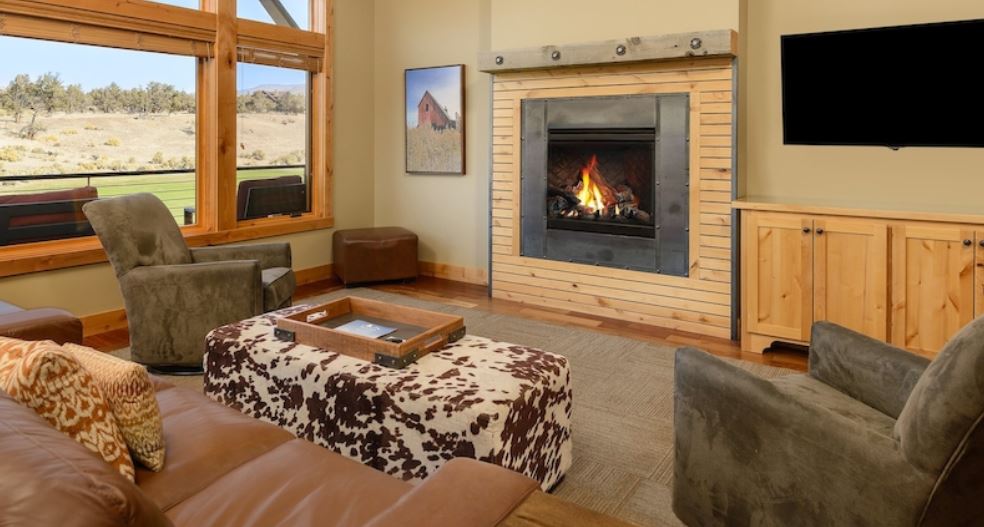
Courtesy Brasada Ranch, Bend OR

Sharing this slightly different version of a story we put together for NBC News about resorts seeing summer seasons extended thanks to families realizing they can do remote work and school anywhere.

Work/school/play away from home

In “normal” times, hotels in summer hot spots go into hibernation once Labor Day rolls around. But thanks to the stresses of remote work and online learning, many summer retreats are having strong fall seasons.

Dana Bates and her husband, both biotech workers, and their 7-year-old daughter were already working and learning remotely from their home in Cloverdale, California. Then, smoke conditions from the California wildfires sent them in search of another venue.

They landed in a two-bedroom cabin at the Brasada Ranch resort near Bend, Oregon. The self-contained units and attention to health and safety were reassuring during an especially stressful time.

“It was one level, with rooms on separate sides of the cabin and a desk in each room. Cleaning staff did not come every day, but you could leave bedding and towels out for pick-up and request fresh linens,” says Bates. “It was comfortable. We made friends. And I felt very safe from COVID-19.”

Remote workers everywhere, with or without children, are facing stress right now, and the uncertainty is trying, says Denise Rousseau, professor of organizational behavior and public policy at Heinz College of Carnegie Mellon University. “Even for families not facing true economic hardship, there’s the challenge of how do I keep my job, keep my kids in school, and stay safe.”

Miami-area hotels are hoping to draw families seeking safe and supportive places to work and deal with remote schooling. More than 30 properties are promoting packages with features such as hair, makeup and lighting help for virtual meetings to tutors, lunches and “after school” programs for kids.

In the Myrtle Beach area of South Carolina, hotels are working out collaborations with educational attractions, meal delivery options, and more.

A new trend?

It is too soon to tell whether remote work and work/school setups at hotels and resorts become a true trend, said Jan Freitag, senior vice president of lodging insights for the analytics provider STR. “We’ll know that for sure in October,” once school is in full swing, Freitag said.

For now, fall bookings are way up at Gurney’s Resorts, which includes properties in Montauk, New York, and Newport, Rhode Island. Gurney’s Star Island Resort and Marina in Montauk said it had three times as many bookings for September compared to 2019.

White Elephant Resorts, which operates four hotels on the island of Nantucket off Massachusetts, said leisure fall bookings are 36 percent higher this year than they were last year.

“With many children starting the year with online learning and the ability for parents to work from wherever, it’s allowing guests to be more flexible with their travel plans,” said Khaled Hashem, White Elephant Resorts’ managing director.

Resorts offer perks for work/school stays

For those who want to double down, some resorts are going the extra mile, offering in-person or virtual tutoring services for children — and their parents. Auberge Resorts Collection, which has 19 properties around the world, just launched a program that includes tutoring for kids, educational seminars for adults and, in some locations, poolside “office cabanas.”

Casa Marina resort in Key West, Florida, is offering a “school-cation” package with tours of the Key West Shipwreck Museum, the Key West Butterfly and Nature Conservatory and the Ernest Hemingway Home and Museum, as well as an escape room experience — and a bottle of wine so parents can wind down after a long day.

“These work-cation/school-cation concepts are not for everyone,” said Gabe Saglie of Travelzoo. However, for those with flexibility and means, “a clever promotion can be enough to inspire travel that would otherwise not have been planned.”

While some properties are developing new guest experiences, lodging operators will need to get creative if restaurants and activities are still shut down because of the coronavirus, said Robert Cole, senior analyst for the travel market research firm Phocuswright.

“Guests wishing to escape being confined to their homes are unlikely to enjoy being confined to a hotel room,” Cole said.

It wasn’t a clever promotion but “seemingly endless remote work challenges” due to the pandemic and a desire to escape “to a place where everything was thoughtful, safe and inclusive” that got Sarah Goldman and her husband to escape New York City recently for a cottage at the 500-acre Cedar Lakes Estate in the Hudson Valley. The retreat has pivoted from weddings and corporate events to offer all-inclusive stays.

Going back in the off-season is appealing, Goldman said. “I can’t imagine there will be a lot open in Brooklyn — and we’ll be going stir crazy.”

Home office stressing you out? Try working in a hotel.

Sharing a story we put together for NBC News this week about hotels courting stressed out remote workers package for day-use rooms. This version is slightly different from what was published.

Check out of your home office and into a hotel

In an effort to reverse pandemic-induced revenue losses reaching back to April, hotels in the U.S. and beyond are rolling out perk-laden packages for guests who would rather work remotely from a quiet hotel room than from the guest room or den at home.

“I have essentially been unable to escape my family for 5 straight months,” said Sommer Cronck, a real estate managing broker in Bellingham, WA. Since the pandemic started, she’s been working at home with a husband, two dogs, and four kids. “I love them dearly, but I’d love to book a hotel room to get away for a day.”

Cronck is far from alone with that craving. And it is fueling the new trend.

Work from hotel

The fast-growing list of properties offering “work from hotel” options includes the Thompson Nashville, Sacramento’s Kimpton Sawyer HotelThe James New York – NoMad and dozens of others.

Heavily discounted rates and extra perks are appealing, of course. “But having a quiet workspace for the day can be the main draw for workers used to months of sharing space with a spouse, partner, or family,” said Catherine Keywan, an interior designer with the Bergmeyer architectural firm. “The privacy of an enclosed room, as well as private restroom, is ideal for workers with pandemic anxiety regarding sharing space,” she added.

On the hotel side, day-use guests can generate much-needed revenue. But they also represent a desirable market for hoteliers because “these guests place limited demands on hotel staff and maintenance. And many hotel executives believe this is a good approach to long term account loyalty,” said hotel lodging consultant Bjorn Hanson.

The Ritz-Carlton Denver now has a “Your Space” package that includes upgraded Wi-Fi, valet parking, business services, and $20 in-room dining credit. Guests have access to a room for an eight-hour workday, from 9 a.m. to 5 p.m.

The program “provides the perfect solution for the reality of today,” said Janie Dim, the Los Angeles-based Vice-President of Growth for private aviation company, Wheels Up. Dim has family to stay with in Denver but booked a “Your Space” room to meet with local clients in town.

“With many offices closed due to the virus, it was helpful to have a fully functioning, clean and safe space to work so we could have a socially distant in-person meeting while on the road,” said Dim.

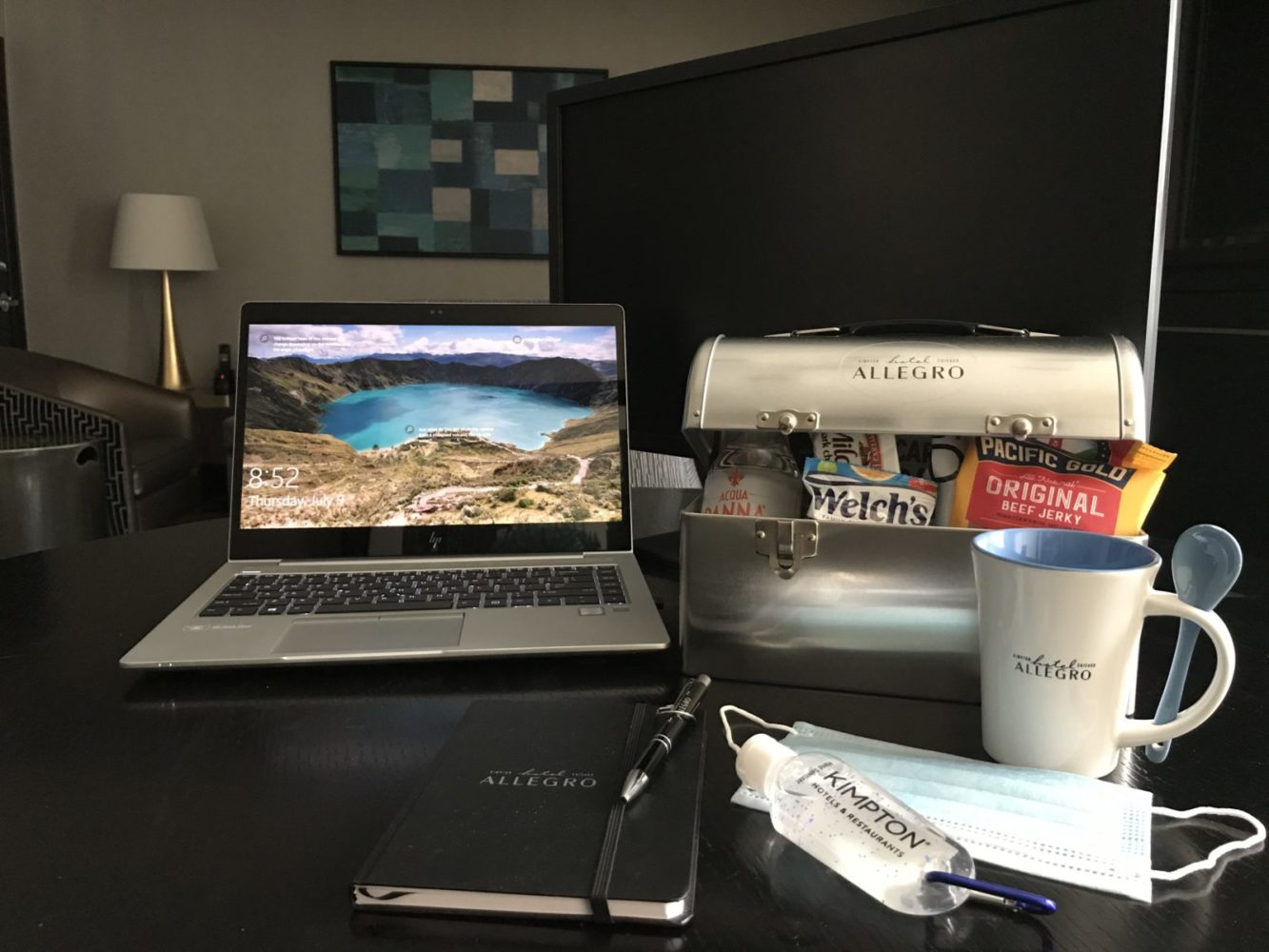
In Chicago, the Radisson Blu Aqua Hotel has a “Blu Workspace” package available Mondays through Thursdays and bookable through December 29, 2020. Guests have access to their room from 8 a.m. to 5 p.m. at rates that start at $99. The Kimpton Hotel Allegro has a “Business without Baggage” day rate for a room that includes a computer monitor with laptop connectors. Bonus perks include a lunchbox filled with snacks and water, a hotel notebook, coffee mug keepsake, face covering and hand sanitizer.

More “work from hotel” options

The Ben, a boutique waterfront property in West Palm Beach, FL that opened in February 2020, just as the pandemic was arriving, offers “Professional Distancing” day use rooms from 8 a.m. to 6 p.m. for $125. That is up to 40 percent off the regular rate and includes a balcony room, parking, Wi-Fi, discount on food beverage in the hotel restaurant and a complimentary evening cocktail at the bar

Mandarin Oriental has “Working from M.O.” day-use packages with Wi-Fi, dining credits and fitness center access. The “Work with Us, Stay with Us” day use-package at Nobu Hotel Palo Alto comes with a Bento Box lunch, a caddy stocked with office supplies, printing services, a sanitizing kit and a bottled cocktail to take home at the end of the day.

Since June, Hotel Figueroa in downtown Los Angeles has been checking in guests for the Fig Works Perks program. In addition to day use of a room, guest extras include boxed water, parking, unlimited B&W copy machine privileges and access to the pool deck and fitness room. (Rates start at $129/day. For an extra $20 guests can stay overnight).

“Most Work Perk guests live near the hotel and are looking for a quiet, safe place with very fast Wi-Fi and comfortable air-conditioning, ” said Connie Wang, the hotel’s managing director, “They want a calming and relaxing atmosphere, away from the distractions of working at home.”

Will “Work from Hotel” replace “Work from Home” as new normal?

Molly Fergus, general manager of the TripSavvy travel site, considers “Work from Hotel” programs “a genius move” for both struggling hotels and remote workers seeking a change of scenery, but doubts many employers will get reimbursed for these costs by their employers.

And while offering a nice getaway, “I’m skeptical that work from hotels packages will be something remote workers will or can afford to use on a regular basis,” said Sunkee Lee, Assistant Professor of Organizational Theory and Strategy at Carnegie Mellon University’s Tepper School of Business.

“It would be smarter for people to invest in a better home, with a better home office space, or faster internet,” he said.

Hotels having COVID-19 troubles

Fallout from COVID-19 is happening so fast that moments before our story about hotel occupancy rates posted on CNBC we had to cut a tidbit about a hotel bar offering a creative “squirt and sip” – a squirt of hand sanitizer and a drink – because the bar had been ordered to close.

And since the story posted – on Wednesday – many more hotels around the country have closed because they had few – if any -guests.

Major hotel chains are temporarily closing properties and seeing occupancy rates tumble as travelers stay at home during the coronavirus outbreak.

Global hospitality research company STR said Wednesday that for the week of March 8-14, hotel occupancy was down 24.4% to 53% year-over-year. Meanwhile, revenue per available room, a key industry metric, fell 32.5% to $63.74.   

The numbers echo plunging demand for air travel and cruise ships as travel slows to a trickle. There have been more than 200,000 cases of the coronavirus so far, and governments are imposing restrictions to combat the spread. The United States border with Canada will temporarily close to “non-essential traffic” due to the coronavirus pandemic, the leaders of both countries said Wednesday morning.

“To no surprise, the hurt continued and intensified for hotels around the country,” said Jan Freitag, STR’s senior VP of lodging insights in a statement. “The performance declines were especially pronounced in hotels that cater to meetings and group business, which is a reflection of the latest batch of event cancellations and government guidance to restrict the size of gatherings.”

Even before Nevada ordered the closure of casinos and other businessesMGM Resorts International and Wynn Resorts announced the temporary closure of their properties in Las Vegas. That includes well-known hotels like the Bellagio, MGM Grand Mandalay Bay, The Mirage and others.

Following the closure of its U.S. theme parks, Disney closed all its owned and operated hotel locations at Downtown Disney in Anaheim and Disney Springs in Orlando, beginning Tuesday. The Disney owned and operated hotels at Walt Disney World Resort and Disney’s Vero Beach Resort will close at 5 p.m. on Friday, March 20, the company said in a statement.            

Home share bookings in major cities are also feeling the pinch.

For example, Airbnb bookings for the week of March 1-7 in Rome and Beijing were down 41% and 96%, respectively, compared to bookings made January 5-11, according to AirDNA, which analyzes vacation rental data.

“2020 got off to a fast start with our booking rate quite high in the months of January and February,” said Jon Ingalls, an Airbnb host in Seattle, “We’ve now had cancellations for March and have had virtually no bookings for the spring.”

Checking in? Making sure your room is clean

If you do happen to be checking into a hotel in the near future, global and independent hotel brands such as Red Roof, Marriott International and Hilton are being proactive about sharing specifics about their cleaning efforts.

In addition to the cleaning and disinfecting protocols used in guest rooms, Marriott is reassuring guests that its hotels have increased the frequency of cleaning and disinfecting in public spaces, “with a focus on the counter at the front desk, elevators (and elevator buttons), door handles, public bathrooms and even room keys,” the company said in a statement. 

As clean as hotels say their facilities are, when you check in you may want to do some spot cleaning of your own, especially on the “high touch” spots housekeeping staff may have missed and previous guests are sure to have touched. That includes door handles, TV remote controls, lamp switches, bathroom faucets, shower soap dispensers and the toilet flush handle.

“Hotel housekeeping may be doing a good job,” said Sheryl Kline, a professor of Hospitality Business Management at the University of Delaware who has studied hotel cleanliness, “but if you bring your own wipes you’ll know that those spots have been disinfected.”

Kline also suggests taking bed scarves and bedspreads off hotel room beds, “because those may not be cleaned every day.”

Spot cleaning your hotel room is fine, but Paul Pottinger, an infectious disease specialist at UW Medicine, the health-care system at the University of Washington in Seattle, says the first thing to clean when you enter a hotel room is your hands, “which may have picked up germs on your journey to the hotel, from surfaces in the lobby and in the elevator ride up to the room.”

Need to cancel?

In general, hotels and home share companies are being flexible with cancellations.

On Sunday, Airbnb updated its extenuating circumstances policy regarding cancellation in response to COVID-19 to include a full refund for guests with reservations for stays (and Airbnb Experiences) made on or before March 14, 2020, with check-in dates between March 14 and April 14, 2020.

IHG, which includes brands like Holiday Inn, Intercontinental, and Kimpton, is waiving cancellation fees for existing and new bookings at all its properties globally for stays through April 30, 2020.

Marriott updated its policy on March 13 to allow guests with existing reservations to cancel or make changes without charges up to 24 hours before arrival, until April 30, 2020. And on March 16, Hilton updated its policy and is now waiving fees for changes or cancellations made up to 24 hours before a scheduled arrival until April 30, 2020 as well. That includes “Advance Purchase” rates described as non-cancellable when first booked.  

Given the fast-changing nature of COVID-19 and community responses, many hotels are following the lead of airlines and regularly updating their cancelation and refund policies, in many cases extending the applicable dates.

Hotels get creative with concierge services

Marriott Park Lane Hotel

The hotel concierge has been getting a makeover. Here’s our latest column for CNBC about hotels with staff on duty who will do everything from peeling your crawfish to delivering an adoptable teddy bear.

Your next hotel stay may come with a creative concierge service

Pantelis Evangelou is a guest services manager at the London Marriott Park Lane, but to young guests, he may be better known as the hotel’s teddy bear butler.

The hotel offers a teddy-bear themed concierge service to children that is included with suite bookings or available as an add-on for a fee of roughly $50. After a child chooses an option from the hotel’s menu of 11 themed bears, Evangelou arrives at the door with a stuffed animal ready for adoption.

“It’s up to me to make the introductions, which means that I need to know the names and stories behind each and every bear, as well as their unique characteristics,” he said, noting that the available bears range from airline pilots to traditional London Beefeaters, the ceremonial guardians at the Tower of London.

A concierge for every need

The hotel concierge has traditionally been the all-knowing go-to for guests seeking insider knowledge of a city and access to coveted theater tickets or dinner reservations. But now, travelers get can tips and recommendations for restaurants and attractions in a new city from their smartphones.

So rather than ditch the concierge desk completely, “hotels are now training their concierges to offer novel, customized, high value and proprietary services to delight their guests and keep them coming back,” said Chekitan Dev, a professor at Cornell University’s School of Hotel Administration.

The trend comes at a time when hotels are faced with growing competition from the home-sharing industry with the likes of Airbnb and Expedia Group’s Vrbo. Offering niche services is a low-cost way to stand out to the customer and also drive additional revenue. The services can be free or cost guests up to a few hundred dollars.

Travelers booking hotel stays will now find concierge and butler services available for everything from caring for pets and choosing a cannabis experience to making a fire in the in-room fireplace.

As an example, Dev cites his stay at The Benjamin in New York City, where the sleep concierge helped him get a good night’s sleep by providing special pillows to help with back pain, a humidifier to counter dry air and a white sound machine to offset street noise.

Many other hotels are offering curated services that are equally hyper-focused and offbeat. The surf concierge at the Westin Los Angeles Airport gives surfing lessons, while a crawfish concierge offers peeling assistance during events at the Ritz-Carlton, New Orleans.

In Canada, the skate concierge at the Westin Ottawa leads free guided scenic skate tours along sections of the Rideau Canal Skateway, while the Fairmont Vancouver Airport’s fish valet makes sure prized catches are properly stored in a special on-site freezer during layovers.

“Specialty concierge services aren’t new,” says hotel industry analyst Bjorn Hanson, “But in the last three or four years the trend has been an increased number of categories, an increased number of hotels and resorts offering these services and an increased sophistication in how the services are delivered.”

Who is called a concierge?

The trend is also for these services to be labeled as “concierge” even though they may not be delivered by a certified concierge.

“I have no idea what a cannabis concierge or a fish concierge might be doing because we don’t see that in our organization, said Sara-ann Kasner, CEO and founder of the National Concierge Association, an industry trade group. “But I can tell you that using the title of concierge is a smart business move because people really do believe concierges have the inside scoop on everything.”

Hotels in the Raffles Hotels & Resorts chain, including locations in Paris, Istanbul, Warsaw and Jakarta, have art concierges on staff who conduct free tours of the hotels’ museum-quality art collections.

And as the curator of curiosity at Gateway Canyons Resort & Spa in Colorado, Zebulon Miracle gives history and geology tours, including dinosaur track excursions, for $35 to $250 per person.

“There are so many great stories and fascinating science found in the canyon country,” said Miracle. “If my team does their job right, guests will leave not only knowing more about the area but will also be inspired to become curious about their own homes.”

Partnerships for personalization

In some cases, hotels are partnering with other businesses to offer personalized servicesIn Portland, Ore., the Provenance Hotels partners with a florist to curate a menu of in-room loaner plants at its Woodlark hotel. At its Dossier property, a partnership with a local retailer allows an adventure valet to outfit guests with free loaner backpacks containing trekking poles, headlamps, waterproof phone cases and other useful hiking items.

“Naturally, with all the new hotels out there, we want to offer something new to capture guests’ attention,” said Kate Buska, Provenance Hotels vice president of brand development and communications, “But we’re not chasing the shock and awe of things like the ‘walk of shame’ kit in the honor bar. This is about service, experiences, and giving guests things they can actually use.”

Whether they hire or partner with a specialty concierge, a butler or on-site curator, “more hoteliers are finally understanding that they’re able to create exceptional unique experiences tailored to their guests’ specific interests,” said Robert Cole of global travel research company Phocuswright. “And those experiences are what drive guest satisfaction, return stays, referrals to friends and long-term loyalty.”

Bonus dividends from the concierge

At the five-star Tribe hotel in Nairobi, Kenya, the running concierge is a former world record holder in the marathon and the boxing butler is an independent coach who occasionally still competes internationally.

While the services give the hotel’s guests access to people and experiences that are representative of Kenya, “There aren’t many opportunities for retired elite athletes in Kenya,” said Shamim Ehsani, Tribe hotel co-founder, “Our concierge program respects the dignity and dedication of the athletes while giving them an opportunity to continue doing what they love well into retirement.”

“One of my favorite memories is of a young guest that was so over the moon with her new princess bear that she ran back to give me a big hug before I left,” said Evangelou, the teddy bear butler at the London Marriott. “We can only imagine what great adventures young guests will go on to experience together” with their bears.

Hate hotel resort fees?

Hotel guests are increasingly finding extra charges on their bills labeled as “resort fees,” “convenience fees,” “urban amenity fees,” or, worse, simply “fees.”

But in my story this week for CNBC, we learn that help is on the way to make sure hotels are better about disclosing before you book. Or not charging them at all.

The fees are said to cover everything from internet and fitness room access to bottles of water and can average from a few dollars to more than $30 a day, according to ResortFeeChecker.com, with some properties in Las Vegas charging daily resort fees of $45. KillResortFees.com cites one Miami resort that tacks on a hefty $160.50 nightly fee to its rates.

“It’s called drip pricing,” says Robert Cole, a senior research analyst at travel research company Phocuswright. Cole calls the practice “consumer-hostile” because consumers often click on an appealing advertised nightly room price only to find that a few clicks later the real nightly room rate is much higher.

Adding resort fees separately also allows hotels to cut commissions to travel advisors and online sites, “since the hotels only pay commissions on the lower room rate, not the additional fees,” said Albert Herrera, senior vice president of global product partnerships at the Virtuoso travel network.

States are pushing to make the room rates and fees more transparent. Attorneys general in Nebraska and the District of Columbia last year filed suit against Hilton and Marriott, respectively, charging the hotels with advertising and pricing rooms in a deceptive and misleading manner in violation of state laws. The lawsuits followed an investigation by 50 attorneys general into hotel resort fees.

Hilton, named in the Nebraska suit, said in a statement that “resort fees are charged at less than two percent of our properties globally, enable additional value for our guests, and are always fully disclosed when booking through Hilton channels.”

In December, a judge denied Marriott’s motion to dismiss the D.C. case, which has now moved on to the discovery phase. Marriott said in a statement that it plans to continue a “vigorous fight” against the case, adding that “Marriott’s policy is to disclose resort fees during the booking process so that it is reflected in the total price shown before the guest completes the reservation process.”

In October 2019, Wyndham Hotels & Resorts did not admit liability but agreed to pay a $6 million settlement to resolve claims in a class-action lawsuit regarding deceptive resort fees. The company said in a statement that it believes it has always complied with laws and called the settlement “amicable in principle.”

There’s also an effort to ban the fees at the federal level. In September 2019, a bipartisan bill seeking to end hidden resort fees was introduced in Congress. Consumer advocacy groups such as Travelers United and the website Kill Resort Fees are among the organizations pushing to move the bill forward.

Meanwhile, booking companies are trying to get hotels to be more upfront about their fees as well.

At the beginning of 2020, Booking.com began charging properties commissions on both the advertised room rate and any extra resort and mandatory fees charged to customers.

The fee was added “to provide our customers transparent information about the total price they will need to pay at a property,” said company spokeswoman Angela Cavis, “and to create a level playing field for all of our accommodation partners.”

In a statement, the Expedia Group says it has some concerns about whether amenity fees are in the best interest of travelers. Company spokeswoman Alexis Tiacoh said Expedia is now evaluating how high hotels with mandatory fees appear in the online rankings.

“Our goal is to ensure that among otherwise equal hotels, those not charging mandatory fees have higher visibility to travelers on our sites, thereby empowering travelers to compare their travel options easily and intuitively,” said Tiacoh.

Advice for travelers

In its 2017 “How America Travels” consumer research study, the American Society of Travel Advisors (ASTA) found that 61 percent of travelers support prohibiting the practice of hotels adding mandatory resort fees on top of advertised room rates. (ASTA itself doesn’t advocate banning the fees but is in favor of greater disclosure of the fees.)

Despite consumer disapproval, many hotels continue charging amenity fees. In many cases, they don’t clearly disclose the fees to consumers.

“Some hotel websites include mandatory fees and taxes in faint grey type after the listing by room rates,” said Charlie Leocha of Travelers United.

For those intent on avoiding amenity fees, travel experts note that some brands skip these fees for loyalty club members, while others waive them for those redeeming points.

For example, on a recent stay in Seattle, executive coach Cathy Raines joined the Warwick Hotel’s loyalty program to get a preferred nightly rate. She noticed the nightly urban retreat fee but didn’t think there was anything she could do about it. “It sounded like a city regulation,” said Raines, “So I was pleasantly surprised that members did not have to pay that fee.”

For those hit with unwanted hotel amenity fees on their bills, Lauren Wolfe, creator of the Kill Resort Fees website suggests filing a consumer complaint.

“Take 60 seconds after your stay; Google “consumer complaint” + (your state) Attorney General; and fill out the form to have your AG work with the hotel to refund your hotel resort fees,” says KillResortFees.com founder Lauren Wolfe.

If this sounds like a futile effort, Wolfe says, think again. Often, the state attorney general’s office will direct the hotel to refund the customer.

“Runway Chalet” now at JFK’s TWA Hotel

The 512-room TWA Hotel across the street from the JetBlue terminal at JFK Airport tempts travelers with a retro lobby complete with clacking flight board and the Sunken Lounge lobby bar.

Through February, the hotel has an ice-skating rink set up out back, right next to the 1958 Lockheed Constellation Connie airport-turned-cocktail lounge. (Skating fee: $15/adults; $10 kids under 12; skate rental: $10 adults/$8/kids; two free ice-skating shows each evening).

Now there’s another reason to stop by the hotel before or after a flight:

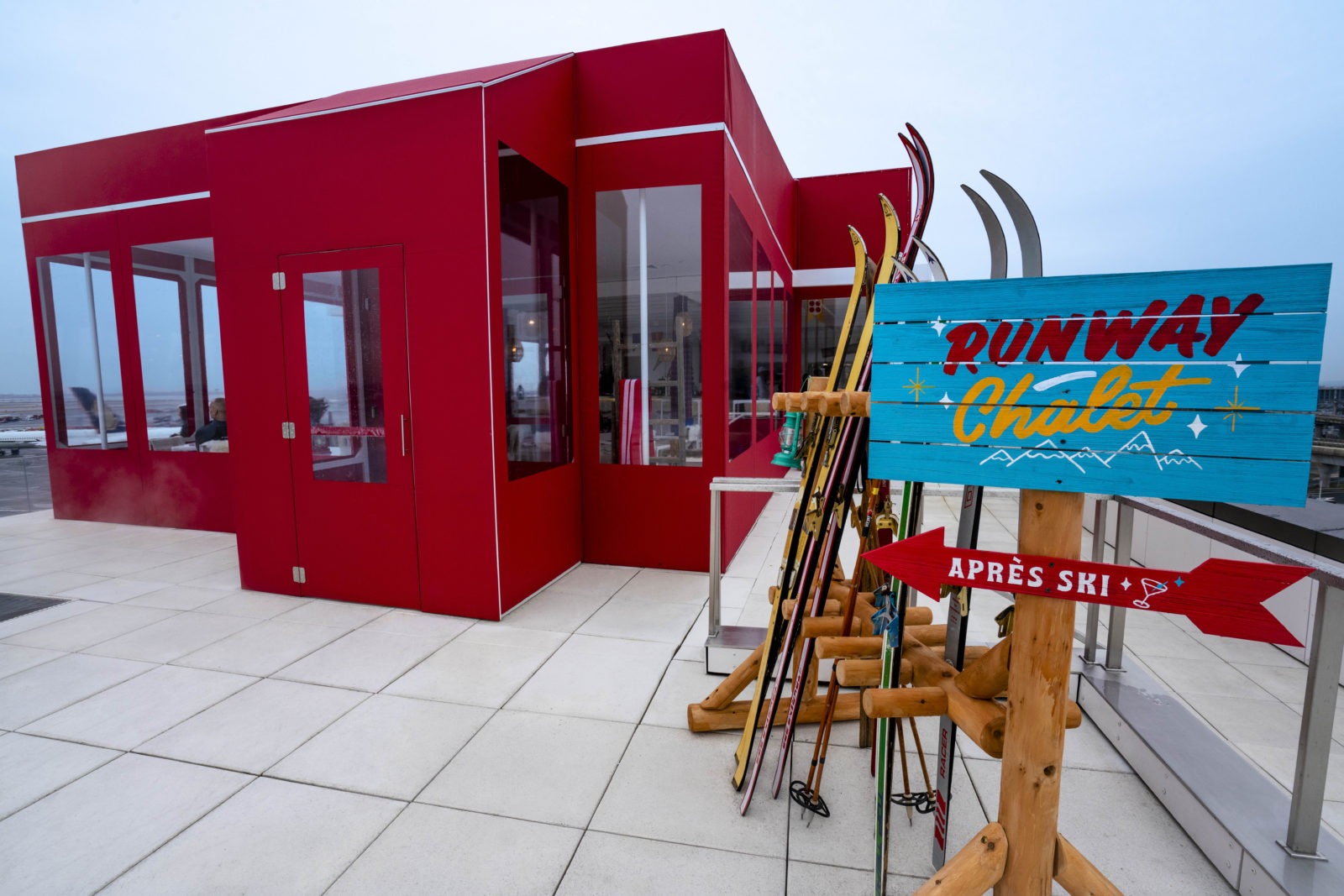
The Runway Chalet, a 1960s style ski lodged-themed bar, has landed at the hotel’s rooftop pool.

The tented and heated ‘chalet’ is decorated with vintage skiing gear and a retro ski lodge style fireplace.

The menu includes chocolate or cheese fondue, burgers and other items while the cocktail list includes concoctions such as the Idlewild Hot Toddy (Sailor Jerry rum and hot cider, with a cinnamon stick) and The Weather Delay (Belvedere vodka, hot chocolate and marshmallows).

Both the chalet and the rooftop infinity pool (heated to 95 degrees and referred to as a ‘pool-cuzzi’) offer views of JFK’s Runway 4 Left/22 right.

No need to be a checked-in guest to visit the Runway Chalet at the TWA Hotel’s Pool Bar, which is open from 11 am to 11 pm daily.

Doesn’t this sound more fun than waiting for an extra hour or two at the gate?

Holiday hotel packages to book now

Courtesy Peninsula Paris

Now that Thanksgiving is over, the marathon of gift shopping and holiday parties kicks in.

But the weeks leading up to New Year’s Eve are also a great time to travel.

Here’s a round-up of holiday-themed hotel packages I put together for CNBC.

Courtesy Gaylord National Resort

A chef is whipping up Christmas yule logs and other holiday treats inside a life-size gingerbread house at the Peninsula Paris. More than 2 million holiday lights dazzle in the lobby decorations at the Gaylord National Resort near Washington, D.C. And the Hyatt Regency in Seattle has a package that includes two tickets to Enchant Christmas, boasting the world’s largest Christmas light maze.

Holiday-movie inspired stays

Courtesy Ivy Hotel

If you’re a fan of holiday-themed movies, you’ll enjoy these holiday movie-themed hotel packages.

In honor of “National Lampoon’s Christmas Vacation,” first released 30 years ago, Chicago’s Ivy Hotel is offering the National Lampoon Christmas Vacation package, complete with ugly sweaters, a move -inspired suite and a holiday dinner. According to the hotel, “The only thing missing are the surprise RV guests.” Rates start at $399; no resort fees. 

The Whitehall Hotel, also in Chicago, has a “Home Alone”-themed family package. The guest room comes with two Turtle Dove ornaments by the same studio that designed them for the film; fresh-baked cookies, a jar of M&Ms and a framed photo of Buzz’s girlfriend. Room service will also send up a “Little Nero’s Pizza” served in the same box as the movie, Mac n Cheese, Pepsi, and an ice cream sundae. Available through January 5. Rates start at $184.

In Cleveland, Ohio, guests can book overnight stays at A Christmas Story House,  the location of the cult you’ll-shoot-your-eye-out holiday movie starring little Ralphie and his little brother Randy. The Bumpus House (the infamous next-door neighbor’s home) is available for rent as well. Holiday rates at A Christmas Story House start at $845/night; rates for the Hound Dog Haven Suite and the Stolen Turkey Suite in the Bumpus House start at $245 and $295, respectively.

Room with a tree

Courtesy Refinery hotel

In New York City, the Refinery Hotel’s Winter Spectacular Stay package includes a fresh Christmas tree and an assortment of decorations; hot chocolate, holiday cookies and other edible holiday treats; and a Gingerbread house decorating kit. Rates start at $579. During December, kids checking in with their families will be able to pick a treat from Santa’s gift-filled sleigh and all hotel guests can partake of the complimentary hot chocolate and cider chart. 

Hanukah, and igloo and a history lesson

Courtesy Watergate Hotel

The Watergate Hotel (famous for its role in the Watergate break-in incident of 1972 and the political unraveling it initiated) is offering a 3 or 8-night Hanukkah package; from $1,450 and $3,029 respectively, not include taxes and urban resort fees. Available December 22 through December 30.

Each package includes two connecting rooms, a bottle of Kosher Olive Oil and, for kids, dreidels, a book about Hanukkah, and Kosher, nut-free chocolate coins (Hanukkah gelt). Private car service to and from the National Zoo or National Mall is also included.

For those who want to mix history, whiskey and dinner in an igloo, the Tzell Travel Group has put together a $3,000/night package that includes a stay in the room used for the Watergate break-in (Room 204), drinks with the Washington police department arresting officers who discovered the break-in and dinner in a decked-out Christmas igloo. (More details at 212-624-2997 or RKunikoff@Tzell.com)

Stay in the city or go skiing? 

Courtesy Kimpton Nine Zero

Can’t decide if you want to stay in the city or go skiing? Two Kimpton Hotels in New England have buddied up with a package that offers both, with a bonus helicopter ride

The Skyscrapers to Slopes Package is for two guests and includes a two-night city stay at Nine Zero’s penthouse suite in Boston, a two-night winter wonderland experience in a Cottage Suite at the Kimpton Taconic Hotel in Manchester, Vermont and a private helicopter ride between the two locations.

Ski passes to Stratton Mountain, a private in-room yoga session and two 60-minute in-room massages are included as are a personalized cocktail experience, Vermont cheeses, a fire pit experience with s’mores and hot cocoa, breakfasts and dinners. Available through March 31, 2020. Rates start at $14,500; resort fees included.

Grand Hyatt at SFO – a keeper!

San Francisco Int’l Airport has a swank on-site hotel

Grand Hyatt at SFO

Fresh fly-in convenience at SFO Airport

With the recent opening of the 12-story, $237 million Grand Hyatt at SFO, San Francisco International Airport joins the ranks of major airports with a luxury hotel on property.

It’s at least a half-hour journey from the airport to downtown San Francisco, so the new at-the-airport hotel is ideal for fly-in meetings and conferences and those times when you’ve got an early flight.

Sarah Cain, We Will Walk Right Up To The Sun, courtesy City and County of San Francisco; photo by Randi Malkin Steinberger.

The 351-room hotel has its own stained glass-adorned stop on the SFO AirTrain and tech-loaded meeting rooms with aviation-inspired names such as Supersonic, Stratocruiser, and Astrojet.

For on-site dining, Twin Crafts Market & Bar offers casual dining and a 24-hour market, while the Quail & Crane restaurant has a menu blending Northern California and Asian cuisine.  

 Art at Grand Hyatt SFO

All rooms at the Grand Hyatt at SFO have soundproof, floor-to-ceiling windows.

Rooms on one side of the hotel face the airfield of the International Terminal and each of those rooms is equipped with a handy airplane spotting guide and a loaner pair of binoculars.

Many rooms also have large bathrooms with soaking tubs that offer views of the airfield as well.

Rates at the Grand Hyatt SFO start at $329/night. Day-use rooms: start at $125 for 6 hours between 8 a.m. and 8 p.m.  

Do you sleep well at hotels on the road?

Can you get a good night’s sleep in a hotel?

If you travel for business or pleasure, you likely spend a few – or many – nights at hotels. And, like many travelers, no doubt you are more loyal to one brand over others.

Free Wi-Fi, free breakfast and a generous points program towards free night stays may be important to you. But, according to the just-released J.D. Power 2019 North American Hotel Guest Satisfaction Index, what hotels really need to focus on are the quality of the beds.

The study found that while sleep quality is one of the most important components of a hotel guest experience, most hotels don’t deliver better-than-expected sleeping conditions.

“Delivering a superior sleep experience—from the quality of the bed, linens and pillows to the ambient sound and temperature of the room—is a huge opportunity for hotels to differentiate themselves from the pack and earn significant goodwill with guests,” said Jennifer Corwin, Senior Manager of Consumer Insights for Travel & Hospitality Intelligence at J.D. Power.

Here are some key findings of the 2019 study:

  • More zzzs, please: Overall satisfaction scores increase 114 points (on a 1,000-point scale) when hotel guests experience a better-than-expected quality of sleep.
  • The anatomy of a good night’s sleep: The top contributors to quality of sleep and, therefore, higher satisfaction scores, are comfort of bed; quietness of room; comfort/quality of pillows; room temperature; and comfort/quality of linens.
  • Satisfaction is higher when hotels offer extras such as such as white noise/sound machines, earplugs and robe/slippers.
  • Quality of sleep vs. the price of room: No surprise, really: the highest rate of better-than-expected sleep quality is in the luxury hotel segment.

The hotels guests love

These hotel brands rank highest in guest satisfaction in their respective segments:

Luxury: The Ritz-Carlton (for a fifth consecutive year)
Upper Upscale: Hard Rock Hotel
Upscale: Best Western Premier
Upper Midscale: Drury Hotels (for a 14th consecutive year)
Midscale: Wingate by Wyndham (for a fifth consecutive year)
Economy: Microtel by Wyndham (for a second consecutive year)

Is there a hotel or hotel brand where you sleep like a baby?

Let us know by leaving a comment below. And let us know if you travel with a sleep aid such as ear plugs, a favorite pillow or, perhaps, a stuffed animal.

4 important questions to ask before you rent that Airbnb

My story this week for CNBC offers advice for issues to consider, and questions to ask, before you hit “rent” on a Airbnb or other type of homeshare property.

Here’s the story:

The note taped to the TV in the Airbnb rental in what turned out to be a questionable apartment building in a sketchy neighborhood in New York City was the first clue.

“It said, ‘Anyone ask, you say you friend of Jay,’ remembers Washington, D.C.-based documentary producer Richard Paul, “We never met Jay.”

The note wasn’t the weirdest thing about the apartment.

“You couldn’t open the front door because it hit the ‘fridge,” said Paul, “The A/C didn’t work. The girl from the live sex show up the block smoked on the front steps. And we think a guy got pushed off the roof as we were leaving.”

Not the kind of vacation rental you want to end up in?

There’s always a chance the swank-looking, well-reviewed home, cabin, apartment or castle you book through a home-sharing site such as Airbnb or Vrbo (which includes HomeAway.com and a handful of other companies) will have some problems or not end up being as advertised.

Worse, you could end up booking an illegal short-term rental and, like some recent vacationers in Miami, having to vacate the property in the middle of the night.

Home-sharing companies post advice, rules and tips on their websites to help minimize problems for both renters and hosts. And they all encourage potential renters to be sure to read the reviews, rules and rental offerings carefully.

Millions of people have no problems with their home-share stays. But as the summer travel season comes around, CNBC asked a real estate lawyer to share some extra, ‘bonus’ questions to ask yourself and your host during the booking process and during your stay.

“Friend of Jay?”

If you worried about or unwilling to having to pose as a “friend of Jay,” ask the host directly if their landlord or the rule and regulations of their condo allow short-term rentals.

“If they lie and say in an email or a text that everything is good and it turns out not to be the case, that’s your legal basis for voiding that rental contract and possibly getting damages if you have to move out in the middle of the might and rental another property,” said Scott Reidenbach, the founding principal of Reidenbach & Associates, a Philadelphia law firm that concentrates on wide-variety of real estate-related issues.

If they say “Tell them you’re a friend of Jay,” and you go along with that, “Then you’re complicit,” said Reidenbach.

And while that happens all the time, the danger is you take the risk of being kicked out in the middle or your trip.  

Who you gonna’ call?

Be sure to get contact information for someone you can contact if you show up and something doesn’t work, the place is dirty or is otherwise not as advertised.

And – bonus question – ask if that contact person lives nearby.

“A lot of these Airbnb or Vrbo-type owners aren’t professional landlords and many don’t live close by,” said Reidenbach, “I’ve heard stories about people not being able to get anything fixed because the owner is a 1000 miles away,”

Read the fine print

A good vacation rental listing will not only include great photos and a list of property amenities, it will have some “house rules” that might include a curfew time for noise and/or parties, the number of overnight guests allowed and an age limit for children.

“You may have very young children, but the very fine print says a guest is not permitted to have children under 12 or 16. Or that the property is not safe for children under a certain age because of safety reasons such as being on a cliff, having an open fire pit or a pool that’s not safe for small kids,” said Reidenbach.

Ask yourself if you’re willing to flout the fine print. 

When in doubt, turn off the Wi-Fi

There have been recent reports of Airbnb guests discovering hidden cameras in bedrooms and bathrooms of the properties they’ve rented. 

Airbnb now requires hosts to disclose the presence of security – or other – cameras – in their listings, but in the spirit of “Say you’re a friend of Jay,” dishonest property listers may not always comply.

“Ask the question,” advises Reidenbach, “And to really protect yourself disable or unplug the Wi-Fi,” as many home security system and cameras are wireless and Wi-Fi-powered, “We’ve heard of people doing that and immediately getting a call from the owner asking if the Wi-Fi is down because the cameras stopped working.” 

Have you dealt with any of these issue in your homeshare rental? Tell us about it in the comments below.