Airports

Pick giant blueberries at Stockholm Arlanda Airport

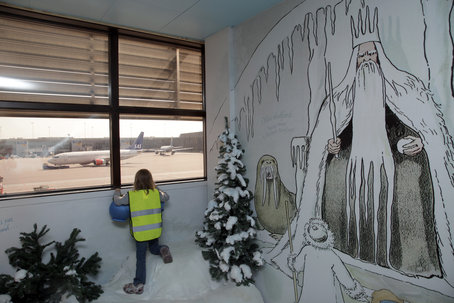
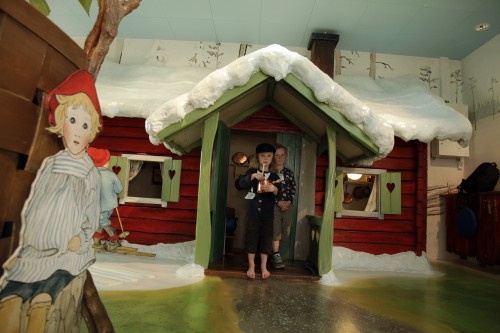
A play area based on the stories and illustrations of noted Swedish children’s books author Elsa Beskow has opened at Stockholm Arlanda Airport.

A collaboration between a local children’s museum (Junibacken) and the airport, the play area invites kids to ride on a field mouse, pick giant blueberries, slide down a giant mushroom and interact with a wide variety of characters and scenes from the books. There’s also a corner for watching movies, reading and playing games.

Don’t worry if you’re not familiar with Beskow’s stories. You can get an idea of her magic by just skimming the titles, which include Hat Cottage (1930), Children of the Forest (1910), Peter in Blueberry Land (1901), Olle’s Ski Trip (1907) and The Sun Egg (1932), or sitting down and reading one of her books, which will be stocked at the play area in a variety of languages.

Here’s more on Elsa:

Elsa Beskow was a master at depicting Swedish nature, which comprises a key element in all her work. Her books are widely published in other languages, and she is considered the author who introduced Swedish children’s books to the rest of the world. Peter in Blueberry Land was the first book to be translated, into German in 1903, into Danish in 1912, and into English in 1931. Today Elsa Beskow’s books have been translated into 19 languages.

How I became a hockey fan at YVR airport

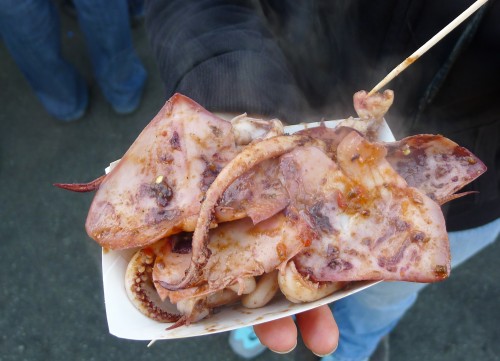
This past weekend I headed north from Seattle to the Vancouver suburb of Richmond, B.C. to eat grilled squid at the Summer Night Market and learn slimy details about fish gutting at the Gulf of Georgia Cannery National Historic Site.

I intended to spend my evening watching airfield activity at Vancouver International Airport from my room at the Fairmont Vancouver Airport but instead ending up watching hockey.

I had no choice.

The 2011 NHL Stanley Cup playoffs are underway and the Vancouver Canucks are up against the Boston Bruins.

Saturday night was the second game of the series and the entire city was getting ready to watch what they they hoped – no, assumed – would be the Canucks second win.

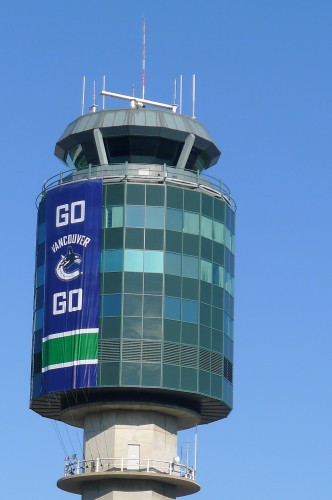
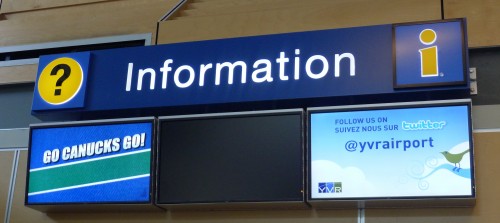
YVR airport was no exception. In addition to that giant banner on the tower, there were Canucks souvenirs for sale everywhere, travelers wearing Canucks t-shirts and jerseys, Go Canucks! messages on all available display panels and, come game time, a broadcast of the game on a giant screen in an airport food court.

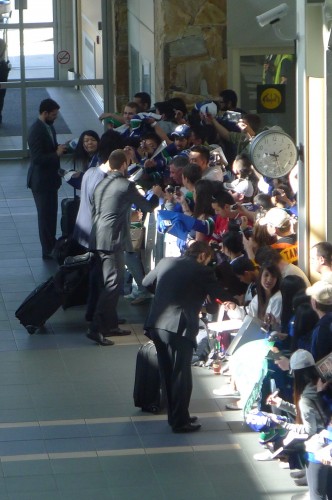
I’ve never paid much attention to hockey, but it was easy to get swept up in the excitement. And it helped, of course, that the Canucks won Game 2 in the first 11 seconds of overtime. And now that I’m a Canucks fan, it was a treat being at the airport Sunday morning, when fans lined up to cheer the players (and get some autographs) as the nattily-dressed team members arrived for their flight to Boston for Game 3.

My stay at the Fairmont Vancouver Airport was hosted. A very excited young boy in the elevator tipped me off to the arrival of the Canucks team members in the airport lobby.

Souvenir Sunday at Vancouver Int’l Airport

Each Sunday here at StuckatTheAirport.com is Souvenir Sunday – the day we look at fun, inexpensive and somewhat offbeat items you can pick up at the airport.

This week’s treats come from Vancouver International Airport.

I found this cute pink octopus at the airport’s Vancouver Aquarium shop:

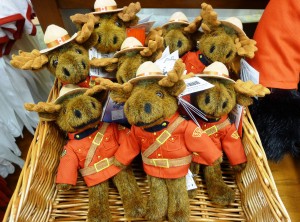
A souvenir shop offered up these cute moose Mounties –

But my pick for Souvenir Sunday this week are these corny Bear Breath Mints:

Do you poke around the shops when you’re stuck at the airport? If you find something fun, inexpensive (around $10), and “of” the city or region, please snap a photo and send it along.
If your souvenir is featured on Souvenir Sunday, I’ll send you a fun air travel-related gift.

Souvenir Sunday: travelwear from SUX, SEX, GIG, SIN and PEK

Each Sunday the focus here is on fun and offbeat stuff you can buy when you’re stuck at the airport.

This week, we take a look at some fun and offbeat stuff you can buy and take to the airport.

Air Wear, whose products are found on-line and in a shop at Los Angeles International Airport, has a fun line of travel bags, notebooks, coffee mugs and assorted travel accessories bearing logos for airport city codes around the world.

Right now the catalog includes logo-emblazoned items for airports in more than 130 cities. Included on the list are classics such as JFK, SFO and LAX, but GIG (Rio de Janeiro), MAD (Madrid), PEK (Peking) and SEX (Sembach, Germany) are also on the list.

Surprisingly, there’s nothing on the list from Sioux Gateway Airport in Sioux City Iowa, where the airport code is SUX. But that airport has its own line of SUX-memorabilia.

Don’t see your favorite airport on the Air Wear list? Don’t worry. For an extra design fee that’s a smidge less than $10 they’ll put the airport code of your choice on any of their stock items.

Curious about how airports get their codes?

Here’s a fun 300-second explanation from our buddy Kevin Maxwell:

Airports employ nibble fish and honeybees

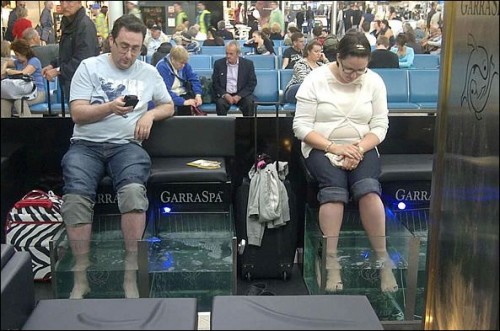
Forget the backrub. There’s now a fish pedicure spa at London’s busy Stansted Airport.


In a new airport offering, travelers can put their bare feet into aquariums filled with Garra Rufa or ‘doctor fish’ and let the fish nibble away at the dead skin.


This is in the news because it’s the first fish spa at a London airport, but it’s not the first airport fish spa.

A branch of Refresh Bodyworks at Singapore’s Changi Airport also offers passengers the opportunity to have their feet “polished” by fish.


The nibbling fish aren’t the only animals being put to work at airports.

In Germany, bees will help monitor the air quality around the new Berlin Brandenburg International Airport (BBI), which is being built on the grounds of Schoenefeld Airport.

According to a statement from the airport, honey, honeycombs and bees belonging to beekeepers in the region will be monitored for signs of pollution caused by air traffic.

This isn’t the first airport to enlist bees. According to a June, 2010 article in the NYT, there are also bees on duty at Dusseldorf International and seven other German airports.

And while we’re buzzing about bees:

More than a dozen Fairmont Hotels in Canada, the US and other countries also have bees on duty.

Most have rooftop hives, but the Fairmont Vancouver Airport has 24 colonies at McDonald Beach Park, five minutes from the airport. The hotels use the harvested honey in everything from cocktails and special restaurant dishes to soap and honey sticks.

In my neck of the woods, the Fairmont Olympic Hotel in Seattle is just now getting five rooftop hives and the Fairmont Empress Hotel in Victoria, B.C. is getting 10.

Sweet!

Singers at airports

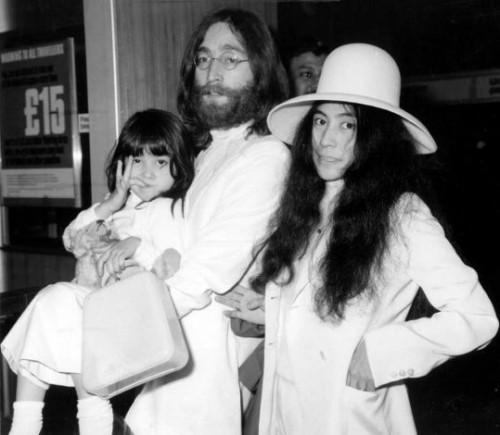
John and Yoko at the airport

(Beatle John Lennon and Yoko Ono at Heathrow Airport May 23, 1969)

Here’s a great slide show: Singers at airports.

66 (!) photos of singers – and a few actors – arriving and departing at airports. It popped up in a variety of on-line places this week and I can’t quite tell which one of these images are my favorite.

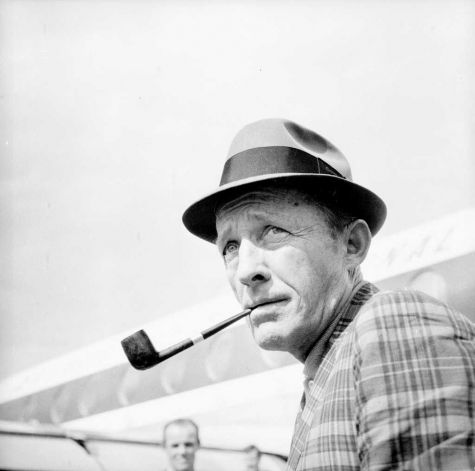
Bing Crosby in London in 1965…

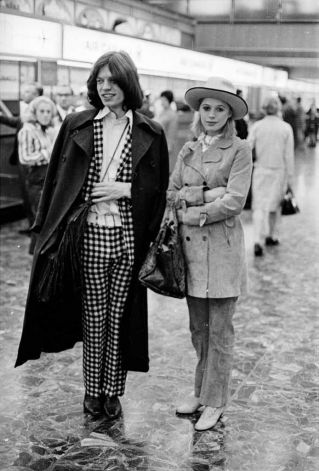
Mick Jagger – in a lovely checked outfit – and Marianne Faithfull in 1969

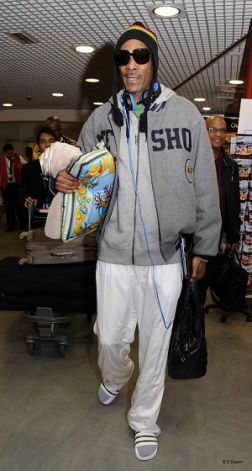
Or Snoop Dogg arriving earlier this month at Heathrow Airport.

Looking forward to: The Textual Life of Airports

As someone intrigued by all things airport, I’m always delighted to find kindred souls. Today I came across one of them – via his blog.

Christopher Schaberg, an assistant professor of English at Loyola University in New Orleans, has been sharing his thoughts about airports and flight at What is Literature .

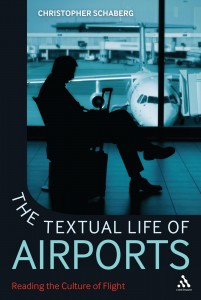
That’s where he posted the artwork for the cover of his first book: The Textual Life of Airports, which will be published in November, 2011 by Continuum.

Textual Life of Airports

According to Schaberg, the book “explores how airports appear in literature and culture, with an eye toward the interpretive demands made on passengers, laborers, and other subjects.”

Here and there in his blog postings, Schaberg gives us a sneak preview of the topics and chapters in his book and in March included a link to The Airport Screening Complex, a section of the book that was published in Media Fields Journal.

Back in July, he shared news about the chapter he wrote for Boy Detectives: Essays on the Hardy Boys and Others. , edited by Michael Cornelius.

Schaberg’s chapter is titled “Terminal Immaterial: The Uncertain Subject of the Hardy Boys Airport Mysteries.”

Hardy Boys Airport Mystery

He writes:

In this essay I consider the roles of airports in three Hardy Boys detective stories, one from 1930s and two from the late 1980s and early 1990s. I find that these three garishly boyish representations of airports are in fact entirely consistent with (and no less philosophically complex than) the broader trends that I locate throughout my larger book project, tentatively called The Textual Life of Airports. In one chapter of my book project, I discuss the idea of “airport reading” as light, undemanding entertainment. In this sense, the Hardy Boys stories serve as excellent case studies for how the heaviness of airports infiltrates the lightness of everyday life in 20th-century U.S. culture.

I can’t tell if this Hardy Boys chapter will also part of The Textual Life of Airports,, but I’m looking forward to reading the entire book next time I’m flying somewhere or am lucky enough to be stuck at the airport.

Tidbits for travelers: airports roll out fresh amenities

Here’s a quick round-up of some fresh amenities airports are offering.

On Wednesday, May 18th, 2011, Oakland International Airport will put into service eight ChargePoint networked charging stations for “new generation” electric vehicle (EV) such as the Chevrolet Volt, the Nissan LEAF, Tesla Roadsters and others.


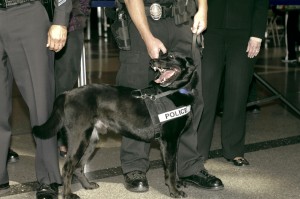
Los Angeles International Airport now has a cadre of bomb-sniffing canines on duty who are trained not just to sniff out explosives, but to pick up the scent of explosives in the air and track down the person who may be carrying the explosive material -even if that person is on the move.


And some time next year there will be a new food hall on Delta’s Concourse G at Minneapolis-St. Paul International Airport filled with new food and beverage outlets that are branches of, or partnerships with, local favorites.


The $2 billion concourse upgrade will include a Media Bar that OTG Management is billing as the first virtual newsstand. Passengers will be able to rent an iPad and download publications, movies, music, apps and other items before boarding a plane. (Those with their own iPads will be able to download material as well.) If you do rent an iPad, you’ll be provided with a postpaid envelope so you can mail the iPad back when you’re done.

The OTG Media Bar is going launch at MSP airport, but plans are already in place expand the program to other locations.

Stuck at the airport – for a year!


Would you willingly spend your days stuck at the airport?

Dr. Damian O’Doherty did. For a year. I tracked him down for my “At the Airport” column on USATODAY.com. Here’s the story.


Dr. Damian O’Doherty has promised his wife that by June 30th, he’ll stop hanging around Manchester Airport.

The facility, which bills itself as “The big friendly airport in the North of England,” has undergone $135 million in improvements since 2007 and offers free Wi-Fi, a children’s play area, a tour-able Concorde in an aviation park overlooking the runways, and a day lounge with a giant track for playing the popular Scalextric car racing game.

Those amenities are appealing, but it’s the more mundane aspects of the airport that attract O’Doherty.

The 43-year old professor teaches organization analysis at the University of Manchester and, armed with a research grant, he’s spent this past year embedded at Manchester airport. His goal: to study the everyday habits of airport workers and passengers and the impact of the airport environment on staff and travelers.

“I wanted to take the idea of an ethnographic study from the traditions of anthropology and deploy this as an experiment to study airport ‘natives’ and their culture,” says O’Doherty, who lives 30 minutes from the airport rides his bike there and back.

For inspiration O’Doherty says he looked to the Chicago School of sociological ethnography, pioneered in the 1920s and 1930s, “in which scholars would inhabit street corners, taxi-dance halls, gangs and ghettos in ways that would challenge our assumptions about the society we take for granted.”

O’Doherty says his wife, an anthropologist, was both supportive of his project “and relieved that I was not going off to Siberia or the New York underground system – both popular sites for contemporary ethnographic study.”

Still, O’Doherty’s year-long study did pose some dangers. Although he insists he hasn’t “gone native” – a common concern with those embarking on anthropological studies – his daughter’s first word was “airport” and he has extended his project year by a few months. And while he has returned to his post and his students at the university, O’Doherty is still spending two or three days a week at the airport.

Borders and boundaries

Via email and a long Skype conversation that took him away from reading a bedtime story to his young daughter, O’Doherty shared some of the details of his year at the airport.

“It is the questions of borders and border-crossing that really interests me,” said O’Doherty. “Airports occupy and define a whole series of borders. Not simply the borders of a nation state but also borders between the terrestrial and extra-terrestrial. They are where land turns into sky, and man’s dream of flight finds realization.”
At ground level, O’Doherty said he wanted to see how an airport was constructed and managed, “who was pulling the strings behind the scenes, installing the security cameras,” and making the decisions. “I wanted the back stories,” said O’Doherty, “So I ended up working in an office with a team of construction project managers for whom the airport is a building site.”

Arriving with an academic background, O’Doherty knew little about construction or project management before starting his study of the airport. But because he was strictly observing the protocols of ethnographic research, he decided he had to acquire professional qualification as a project manager. So in addition to spending many evenings in the terminal building, “sometimes becoming confused whether it was day or night,” O’Doherty also spent time studying for the exams in project management, which he did pass.

O’Doherty found that the airport experience not only warped time but, at times, space. “As you get to travel behind the scenes, stepping out of the public concourse and into a ‘staff only’ area can be a little like that experience that Alice had when she stepped into her rabbit hole!” said O’Doherty. And while he agrees with that saying about an airport being the front door to a city, his observations have led him to consider an airport a city’s back door as well.

Life at the airport

During his year at the airport, O’Doherty made note of daily timetables, seasonal rhythms and patterns, and the wide variety of operational and maintenance procedures. He also observed the push and pull of passenger movements through the terminals, an experience he discovered is a closely studied and often highly managed sequence of routines.

O’Doherty spent time with the airport chaplains, who described themselves as “the conscience of the airport,” as they tried to aid distressed and emotional passengers. And he got to know Olly, a stray cat adopted, and now extremely pampered, by the airport administration. “It always struck me as slightly odd that when I would walk to the office of the senior management sitting outside would be a rather rotund, elderly, ginger cat,” said O’Doherty.

Now, as June 30th approaches, O’Doherty is getting ready to leave the airport routine and begin the task of turning thousands of pages of notes into a book. So far, he says can’t really generalize about air travelers and their behavior, but that “passengers do share a strange paradoxical condition of imprisonment and liberation.”

For its part, the staff at the Manchester Airport is anxiously awaiting O’Doherty’s findings.

“He managed to be here through all sorts of experiences, such as the inaugural Emirates A380 flight last year and our battles with ash clouds and snow,” notes John Greenway of the Manchester Airports Group. “So he’s really seen all sides of the airport and the nature of working in the aviation industry.”