Airport Terminals

Old airports get fresh new uses

My “At the Airport” column for USATODAY this month is all about some cool, new uses for old, unused airports.

A while back I visited Quito, Ecuador with JetBlue and learned that when the modern Mariscal Sucre International Airport in Quito, Ecuador opened for business in 2013, on land 11 miles east of city, the old in-city airport (which once held a spot on the list of “World’s Most Dangerous Airports”) was transformed into Bicentennial Park.

Terminal buildings now host office space, a convention center is being built onsite, former runways are used for bicycle riding and racing, and large concerts and events, including a July 2015 mass led by Pope Francis, are held in the fields.

Denver’s Stapleton International Airport, less than 10 miles from downtown Denver, was replaced in February, 1995 by the much larger Denver International Airport, which was built 25 miles from the city center. The 7.5 square miles that once housed Stapleton’s runways and terminals is now a mixed-use community that John Karsada, author of “Aerotropolis: The Way We’ll Live Next,” considers “The most successful repurposing of a former major commercial airport I have observed anywhere in the world.”

Most all the original structures from the former Stapleton airfield were demolished, but the control tower and its building remained. And this month, after sitting vacant for more than 20 years, the tower building reopened as a 32,000 square-foot “eatertainment” concept with six bowling lanes, shuffle board, bocce courts, karaoke rooms, a sports bar and a wide variety of other indoor and outdoor dining, drinking and social gaming opportunities.

“Dozens of ideas for re-use of the tower were presented over the years, including demolition, but there was a desire in the community to preserve the tower in order to visually convey the history of the land as the former Denver airport,” said Robert Thompson, found and CEO of Punch Bowl Social, the company that turned the control tower building into a fun zone.

It would have been easier for Punch Bowl Social to demolish the old building and create something from scratch. Instead they were able to preserve the historic structure, re-using some of the original pre-cast panels that adorned the building exterior. Inside, there are plenty of nods to the golden age of flight.

“The hostess stand is made from a vintage steamer trunk. Reclaimed airplane dials are mounted on the walls, vintage luggage is stacked in shelving around the bowling cage and we have signage from the original Stapleton International Airport throughout,” said Thompson.

And while the interior walls are covered with what appears to be polka dot paper, the pattern is actually made from an aerial view of Stapleton from 30,000 feet up.

“The air traffic control tower is the most visible and iconic representation of the history of this area,” said Denver City Councilman Christopher Herndon, whose district includes Stapleton, “The Punch Bowl Social project embodies the spirit of re-imagination and reactivation Denver embraced when we envisioned a vibrant neighborhood filling the footprint of the former Stapleton airport.”

Creative airport re-use in Austin, Berlin, New York and Hong Kong


The 700-acre Robert Mueller Municipal Airport, which sat just three miles from downtown Austin, Texas was replaced in 1999 by Austin-Bergstrom International Airport, about 10 miles from the city center.

Today, the former Mueller airport site, like Stapleton, is a mixed used community with homes, retail and office space, parks and public art. A farmer’s market is held in the historic 1943 Browning Hangar, the former aviation administration building houses a visitor/welcome center for the community, and Mueller’s historic airport blue-hued control tower remains as well.

In New York, Floyd Bennett Field (Named for Floyd Bennett, the first person to fly over the North Pole, and the site of the city’s first municipal airport) is now part of the Gateway National Recreation Area on Jamaica Bay in Brooklyn. And historic Hangar B, on the east side of the field, now serves as a restoration and exhibition space for vintage aircraft.

After Berlin-Tempelhof Airport closed in 2008, much of the land was slated for housing and commercial development, but today the giant terminal and hangars remain in use as grand event and concert venues and homes for small businesses. And the vast open spaces are being used by the community for cycling, jogging, running, dog-walking, kite flying, gardening and more.

Flying to cruising

One of the most creative airport re-use projects has been the upcycling of Hong Kong’s in-city airport, Kai Tak, into a cruise terminal.

Hong Kong’s Kai Tak Airport, known for the quick-turn flight approach into the city that inspired both nail-biting and awe, closed in 1998 and was replaced by a far larger Hong Kong International Airport on Chek Lap Kok Island.

Hong Kong’s cruise ship market was growing, so the government decided to turn the former airport into a cruise terminal.

British architectural design and engineering firm Foster + Partners won the international competition to design the project and the first cruise ship berthed at what has now become a landmark site in the city in June 2013.

And because cruise terminals have plenty of downtime, the building was designed as a column free space to accommodate other uses such as car shows, exhibition, concerts and other events.

There’s even a public garden on the roof.

And what will become of other airports that become unused or superfluous in the future?

Already, “Airports often figure in zombie movies as places of last stands or lethal transmission,” notes Christopher Schaberg, author of “Airportness” and an associate professor of English and Environmental Studies at Loyola University New Orleans.

And while there have been some successful attempts to rethink the airport as a different sort of space, Schaberg says “Airports are sites to watch closely as humans continue to run into new limits and challenges in the coming years.”


The charming chairs of Changi Airport’s new Terminal 4

From the self-service check-in and bag drop stations to the centralized security zone, plethora of shopping and dining options, art and other amenities, there’s plenty to love about Singapore Changi Airport’s new Terminal 4, which opened to the public on October 31, 2017.

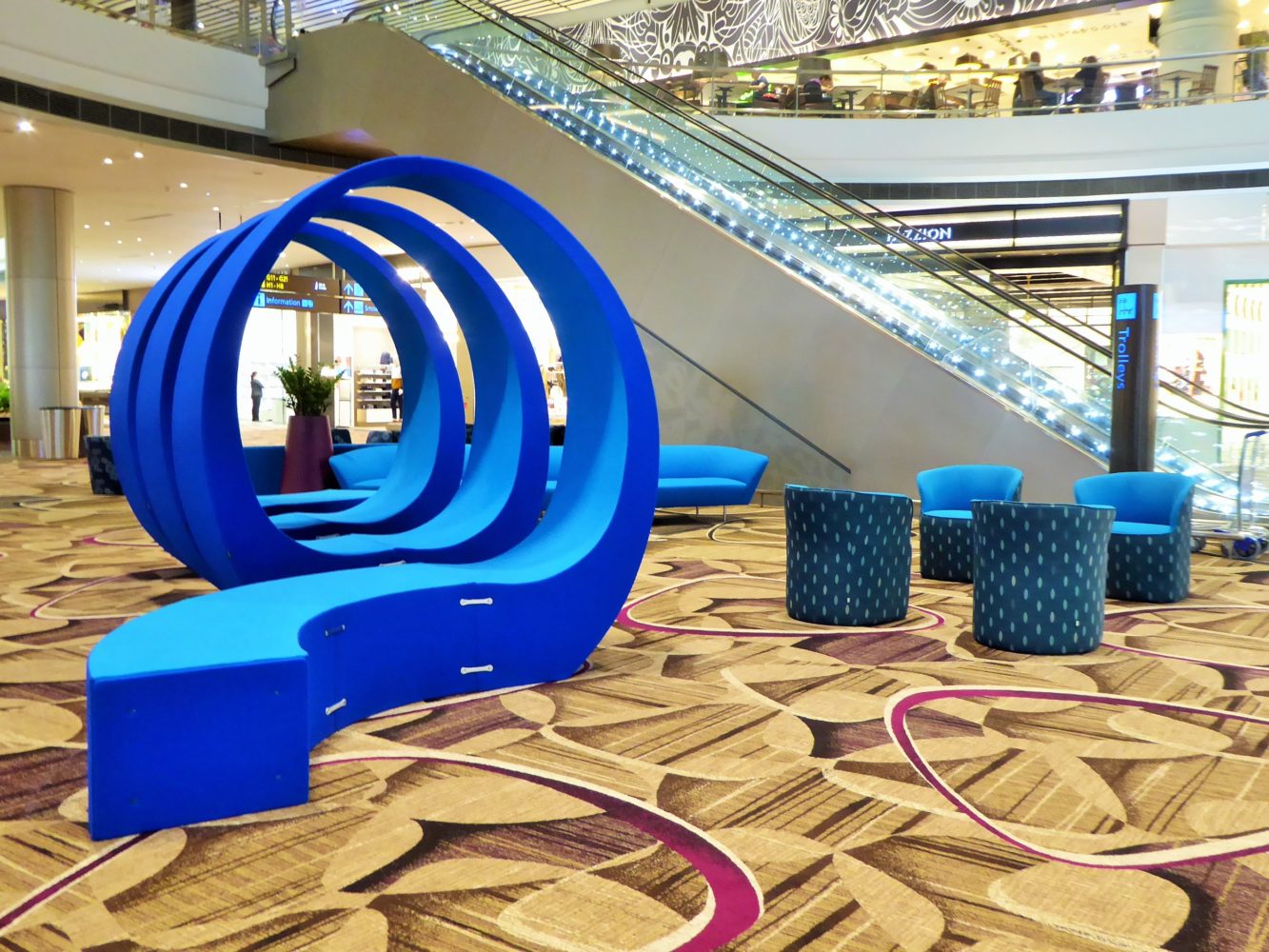
I’m putting together a full report on what is certain to be yet another award-winning feature of Changi Airport, but right now let’s just take a photo tour of the chairs.

Comfortable and eye-catching, these are certain to be the backdrop of countless passenger selfies.

Here a few more seating snaps from my tour of the terminal on opening day.

These seats are on the landside area of the terminal.

And these post-security chicks and pups are seating strong enough to hold adults.


Greetings from Missouri’s Springfield-Branson National Airport

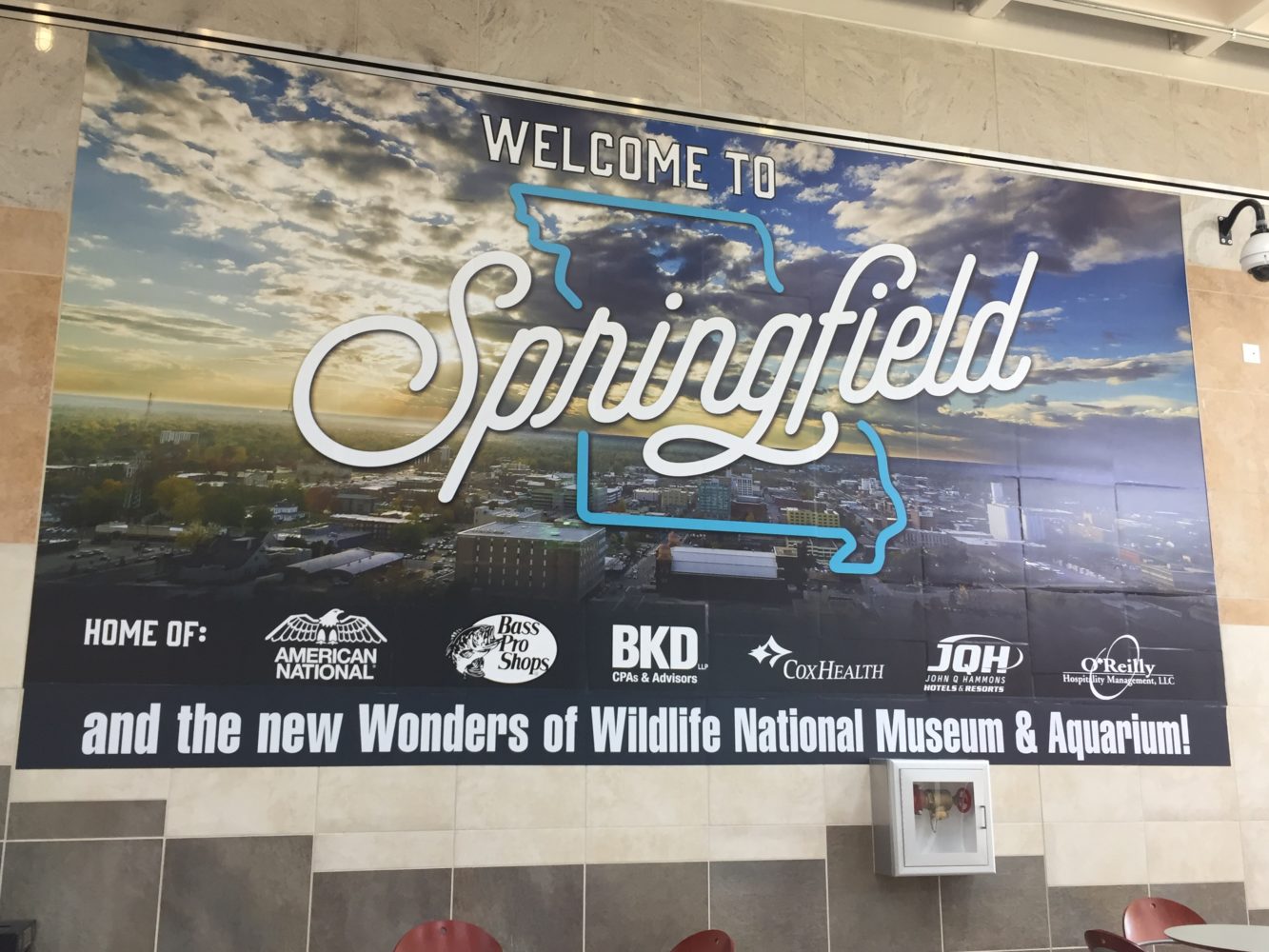
I’m visiting Springfield, Missouri this week to join the festivities for the opening of the Johnny Morris’ Wonders of Wildlife National Museum & Aquarium and had a while to explore the public areas of the Springfield-Branson National Airport on arrival while waiting for a ride into town.

In the soaring lobby/baggage claim area, there’s a replica of the Wright Brothers 1903 Flyer and  a 3/4 scale  Curtis Jenny, the first mass produced American aircraft. After World War I, stunt pilots used this type of plane in airshows and signage at the airport tells us  that in May 1918 the US Postal Service began using Jennys for the first scheduled U.S. Air Mail Service.

EZ-1, the first fire rescue vehicle used by the Springfield Municipal Airport, is also on display.

SGF airport has an art gallery with mulitple display areas in the pre and post-security areas.  The current exhibit  – Come Fly with Me – is up through mid-November.

artwork by Christine Riutzel

And in the newstand I found a great cow-tipping t-shirt.  Is that really a thing?


Pittsburgh Int’l Airport invites non-flyers past security


You may remember the ‘old day’s’ of flying, when friends and family could go with you to the airport – and to the gate – to send you off, and when they were there at the gate with hugs and kisses when you got home.

9/11 changed all that, but now Pittsburgh International Airport is bringing that airport amenity back.

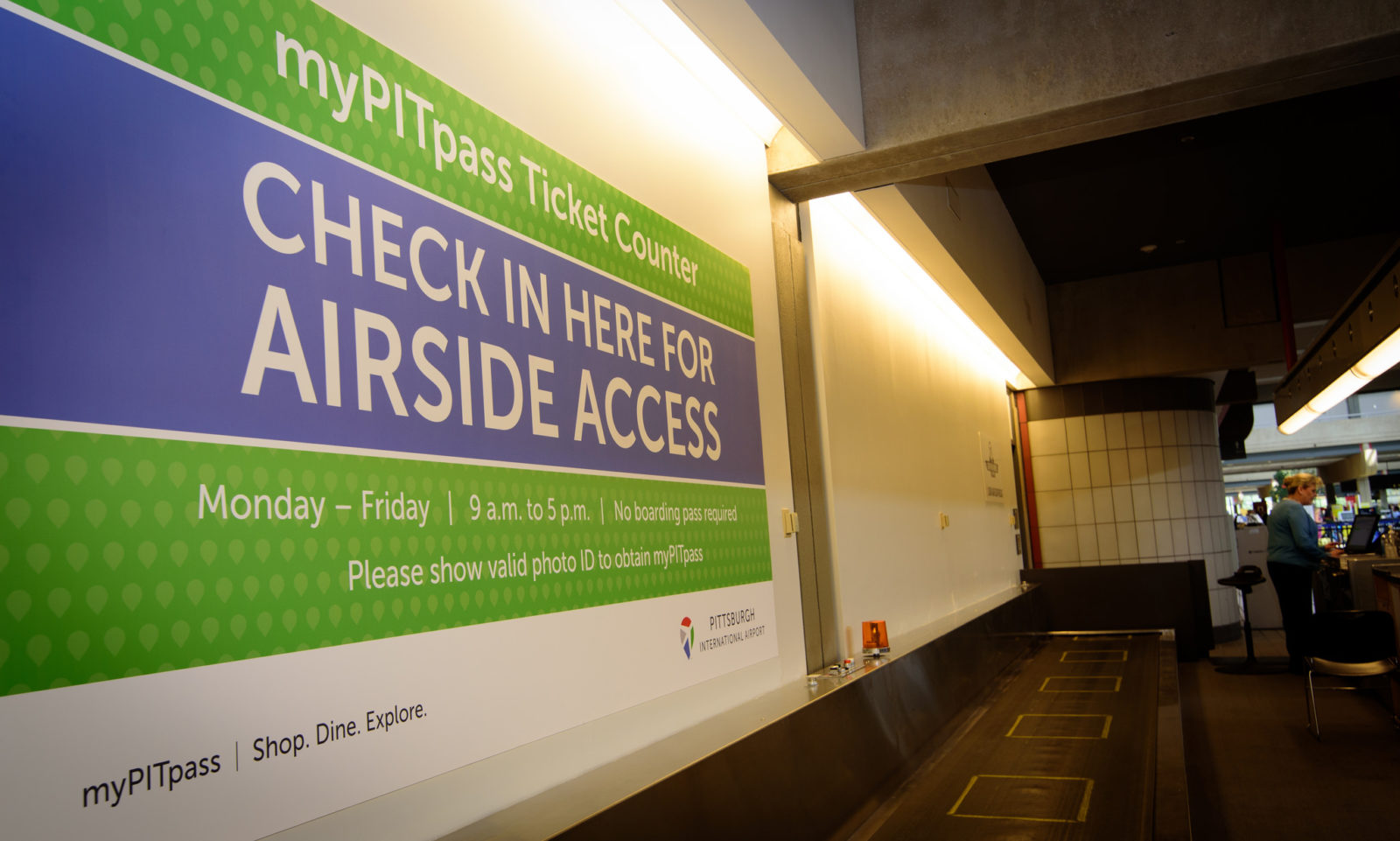
The airport has worked with the Transportation Security Administration to get approval for a program that gives the non-flying public to access gates, shops and restaurants beyond the security checkpoint.  No plane ticket and, they emphasize, no reduction in security, will be necessary.

The ‘myPITpass” program starts at 9 a.m. on September 5  and will issue same-day passes from 9 a.m. to 5 p.m. Monday through Friday. Here’s how it works:

  1. Check in on 3rd Floor Ticketing Level (across from Allegiant)
  2. Show a valid photo ID (Driver’s License or Passport)
  3. Have your name vetted and get a stamped myPITpass
  4. Go through security checkpoint observing the same rules as passengers boarding flights.

The program builds on PIT’s successful Holiday Open House program and the Airside access for guests program offered by the airport Hyatt hotel.

In addition to giving non-flyers access to the gates for sending off loved ones and welcoming them home, the program gives the public access to the great artwork at PIT Airport.

Andy Warhol Wallpaper at PIT

An overnight ‘ride-along’ with United Airlines

My overnight ‘ride-along’ last week with United Airlines at Denver International Airport was exhausting – but exhilarating and extremely educational.

I’m working on a full-length slide show (so far, I’ve got 60 photo keepers) and report for my next At the Airport column on USA TODAY,  but sharing a few snaps today here on StuckatTheAirport.com to get the ball rolling.

At around 10 pm, my tour started at United’s Station Operations Center – a darkened room where about 50 people were seated in clusters at desks with multiple computer screens doing everything from making sure passengers made their connections to monitoring weather and  gate assignments.

Then it was off to the maintenance hangar, where 8 airplanes were undergoing service checks and repairs, included an engine swap for an Airbus 319.


While in the hangar, another airplane was visited by a fast-moving cleaning crew, who were doing everything from cleaning the lavs and galley (with different rags and cleaning solutions) to making sure seat back literature was refreshed and the tray tables were washed.


At 3 am it was back to the Station Operations Center, which was pretty much empty, except for Zone Controller Mike Lowrey, who I’d met earlier in the evening. He was checking with maintenance to see if all the planes they’d been working on overnight were ready for morning flights and doing what he could to make sure the first flights of the day would leave on time.


3:47 a.m. : A quick look in the concourse to see if anything was happening. Nothing. Yet.

The Flight Operations Center opens at 6 a.m.  That where captains and first officers such as Michael Daigneault can pick up supplies and plan for their flights.

My flight back to Seattle left, on time, at 8:08 a.m. I even got a set of plastic wings from the crew.

My full report on my overnight ride-along with United Airlines at Denver International Airport will show up during the week on USA TODAY.


World’s Best Airport: getting better


Proclaimed “World’s Best Airport” for five years in a row, Singapore’s Changi Airport is where you want to be if you’re ever going to be stuck at an airport.

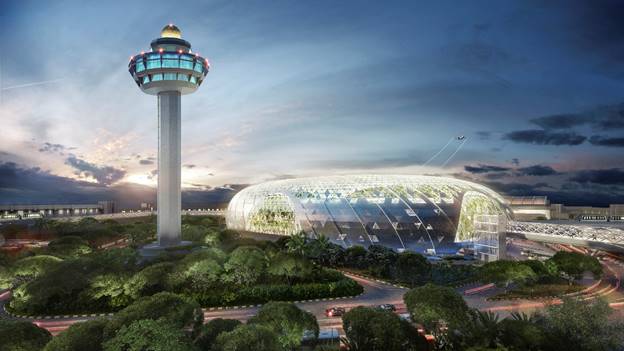
There are shops, restaurants and attractions galore, but once the Jewel mixed-use complex gets built in the center of the airport, Changi will become even more of a destination all its own.

Scheduled to be completed in early 2019, Jewel will boast the world’s tallest indoor waterfall, a five-story garden filled with thousands of trees, plants, ferns and shrubs, a branch of the YOTEL hotel chain, shops, restaurants and a 164-foot-long Canopy Bridge with some glass flooring to offer great views of the waterfall and other attractions.

This week, we’ve learned that the attractions planned for Canopy Park (on level five) will include Sky Nets, Canopy Mazes, and Discovery Slides as well as well as an open play area called Foggy Bowls, where kids will get to wander through mists “as though walking among clouds.”


Photo Credits: Jewel Changi Airport Devt.

Robotic check-in kiosks & other new tech for airports

My May “At the Airport” column for USA TODAY is all about some of the cool new technology – and creative uses of emerging technologies – that may soon make your trip through the airport less painful and, possibly, more rewarding.

The ideas were featured at the Air Transport IT Summit I attended in Brussels recently, which was convened by SITA, a global air transport IT provider owned by airlines and other air transport companies.

Here are some of the ideas that caught my eye:

No more check-in lines? KATE may help

Last year, SITA Lab, SITA’s technology research arm, introduced a self-propelling baggage robot, named Leo, who may someday greet you at the airport curb, check you in for your flight, issue your bag tags and then take your bags away for processing.

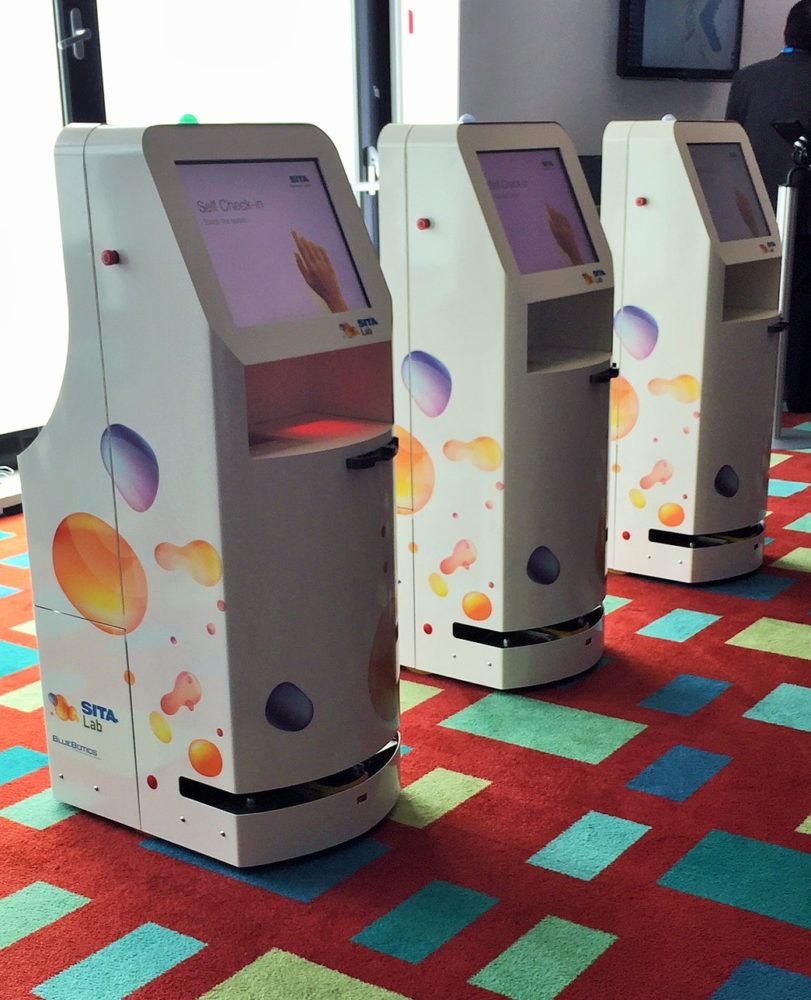
This year, SITA Lab unveiled Leo’s cousin KATE, an intelligent check-in kiosk that can move autonomously, and in teams to busy or congested areas in airports.

KATE the kiosk can monitor a variety of data sources, including flight and passenger flow information, sense where and where additional check-in kiosks are needed and, using geo-location and obstacle avoidance technology, move through the airport without bumping into things or people.

The robotic kiosks are also designed to automatically return to their docking stations when they are low on power or if they need to be a fresh supply of boarding passes or bag tags.

Kate is cute (although she did run over my toes) and these roving kiosks could not only help airports and airlines better serve passengers when rebooking is necessary due to flight cancellations or weather delays, but they might also be useful on duty in offsite locations, such as train stations and convention halls and, possibly, cruise ports.

New ways to pay airlines – and get paid by airlines          

Airlines that use the common-use SITA check-in kiosks and bag-drop stations now standard at many airports currently don’t currently have a secure way to accept passenger payments at those terminals for extras such as baggage fees upgrades and other ancillary items.

At the Air Transport IT Summit, SITA announced that is has solved the ‘multi-merchant’ problem with a new payment system that uses point-to-point encryption (P2PE) technology that can accept various forms of payment, including MasterCard, Visa and Payment Card Industry (PCI)-compliant chip cards.

Look for a roll-out of this in SITA’s common-use kiosks and bag drops stations at airports in the next few months.

On the flipside, for those occasions when airlines must (or want to) compensate passengers for flight delays, cancellation or overbookings, a company called TravaCoin has partnered with SITA to test a voucher system that airlines can use to quickly issue credit to passengers that can (or can only) be spent on new flights, upgrades, hotel stays, services inside the airport or perhaps donated to local charities and non-profits.

TravaCoin CEO and founder, Brian Whelan told USA TODAY he envisions the digital currency being of special interest to airlines based in or flying through European Union countries that are currently required by EU Regulation 261 to pay passengers up to 600 euros (currently about $668) per inconvenience.

“At the moment airlines are holding out and making it awkward,” said Whelan. “They’re losing the money eventually, but also losing customer loyalty. This is a way for airlines, even airlines not covered by the regulations, to be proactive by issuing currency that can be spent in the TravaCoin community. The goodwill and the money go hand in hand.”

So do the benefits that airlines, especially, might gain from adopting TravaCoin currency for compensating passengers.

“There is a ‘breakages’ notion,” said Whelan, “If you give people vouchers, one way the merchant benefits is if the customer never spends the voucher.”

TravaCoin’s surveys have found that while many passengers who say they’d accept the vouchers would ‘top up’ and spend some of their own cash on top of the voucher value, about 20 percent would likely not spend their vouchers at all.

The goodwill aspect of TravaCoin appeals to Brian Cobb, vice-president, Customer Experience at Cincinnati/Northern Kentucky International Airport, which has successfully used new technology to improve customer service with reduced checkpoint wait times and cleaner restrooms in public areas of the airport.

“Love the idea. Especially with the consumer choice in how to spend, including donating back to the community,” said Cobb. “While it is likely sometime in coming, airports may need to leverage customer service recovery tools much in the way airlines do today. It’s a solid method to support recovering the brand perception and exceeding customer expectations.”


New terminal at Austin-Bergstrom Int’l Airport

Austin-Bergstrom International Airport celebrated the opening of its new $3 million, 30,000-square-foot South Terminal last week with a party on the terminal’s patio, live music, a ribbon cutting ceremony and a water cannon salute for the first flight: Allegiant’s Air’s Austin – Albuquerque nonstop.


The 3-gate South Terminal is in a building that dates back to the original Bergstrom Air Force Base that once occupied the area and is totally separate from the airport’s main Barbara Jordan Terminal.

The look of new facility invokes “the nostalgia of mid-century travel, with stylish retro 70s architecture and décor,” according to the airport, and features colors and textures native to Texas Hill Country and white canopies (outside) onto which changing colors will be projected.

Passengers will go outside to board their planes on ‘old-fashioned’ stairs. Indoor amenities include charging stations, water bottle refill stations, grab-n-go sandwiches and drinks, with an outdoor patio area with seating, a pet relief area, and a food truck. There’s also a stage for live music and plans for a food-truck style indoor eatery as well.

Allegiant Airlines is now operating its 10 non-stop Austin flights out of the new terminal and Sun Country Airlines and ViaAir will move operations over to the new terminal later this year.

(All photos courtesy: Sandy L. Stevens, Austin Aviation Dept.)

World’s Best Airports – and the cleanest

The 2017 Skytrax World Awards have been announced and – no surprise – Singapore Changi Airport has been named as the World’s Best Airport for the fifth consecutive year.  The Crown Plaza Changi Airport was also named Best Airport Hotel – again.

Awards were announced in a wide variety of other categories – including cleanest airports and most improved.

A few of those lists are below. You can see the all the awards here.

The World’s Top 10 Airports

  1. Singapore Changi Airport
  2. Tokyo International Airport (Haneda)
  3. Incheon International Airport
  4. Munich Airport
  5. Hong Kong International Airport
  6. Hamad International Airport
  7. Chubu Centrair Nagoya
  8. Zurich Airport
  9. London Heathrow Airport
  10. Frankfurt Airport

The World’s Cleanest Airports

  1. Tokyo Haneda
  2. Seoul Incheon
  3. Centrair Nagoya
  4. Taiwan Taoyuan
  5. Tokyo Narita
  6. Singapore Changi
  7. Hong Kong
  8. Zurich
  9. Kansai Osaka
  10. Doha Hamad

The World’s Most Improved Airports

  1. Soekarno–Hatta
  2. Hamad Doha
  3. Houston IAH
  4. Delhi
  5. Haikou Meilan
  6. Guangzhou
  7. Phoenix
  8. Tokyo Narita
  9. Paris CDG
  10. Los Angeles

The World’s Best Airport Hotels

  1. Crowne Plaza Changi Airport
  2. Pullman Guangzhou Airport
  3. Hong Kong Sky City Marriott
  4. Hilton Munich Airport
  5. Regal Airport Hong Kong
  6. Langham Place Beijing
  7. Fairmont Vancouver Airport
  8. Mövenpick Hotel Bahrain
  9. Hilton Frankfurt Airport
  10. Sofitel Heathrow

The World’s Best Regional Airports

  1. Centrair Nagoya
  2. Cincinnati / Northern Kentucky
  3. Hamburg
  4. Denver
  5. Cologne / Bonn
  6. Durban King Shaka
  7. London City
  8. Dusseldorf
  9. Xi’an
  10. Gimpo

Airport amenities coming – and going – soon


Airports – good ones –  do their best to offer service and amenities that will make your time in the terminal bearable and, increasingly, enjoyable.

What amenities are offered most?

What amenities are airports poised to add?

And what amenities are disappearing from airports?


The folks at Airports Council International – North America (ACI-NA) did a survey of their members to find out and are sharing the results today of the 2017 ACI-NA Guest Experience Management and Passenger Amenities Survey.

The top 10 most commonly offered airport amenities and services in 2017 are:

  1. ATM Services
  2. Gift Shops / News Stands
  3. Airport Websites
  4. Electrical Charging Stations
  5. Restaurants and Bars
  6. Lost and Found
  7. Parking / Taxi and Limousine Services
  8. Free Wi-Fi
  9. Pre-Security Pet Relief Facilities
  10. Food and Beverage Vending Machines

No big surprises there, but ACI-NA found out that over the next three to five years, passengers can expect new and expanded airport amenities and services such as:

  1. Nursing mothers’ rooms and pods
  2. Post-security pet relief facilities
  3. Children’s play areas
  4. Airfield observation areas
  5. Adult changing and washroom facilities.

And, as passenger needs change, ACI-NA notes, airports are beginning to phase out unnecessary or redundant amenities and services.

So, get ready to say bye-bye over the next three to five years to: payphones, banking services, and smoking rooms at airports.

Why no more pay phones?

“Pay phones take up a lot of valuable real estate considering their low usage now in the smart phone age,” said ACI-NA spokesman Scott Elmore, “They are being replaced with electrical charging stations and free Wi-Fi to keep people connected.”

But what about kids or people who don’t have cell phones. Or have cell phones that are out of power?

“Airports are very cognizant of the need to remain accessible,” said Elmore, “So we expect to see the deployment of more courtesy phones with free local and international calling or calling cards for passengers in need.”