Indianapolis

Where the scruffy little suitcase wants to go

The scruffy little suitcase wants what it wants. And we’re happy to tag along.

So we’re kicking off the week with a round-up of some of the places on our ‘go’ list:

Vancouver, BC here we come

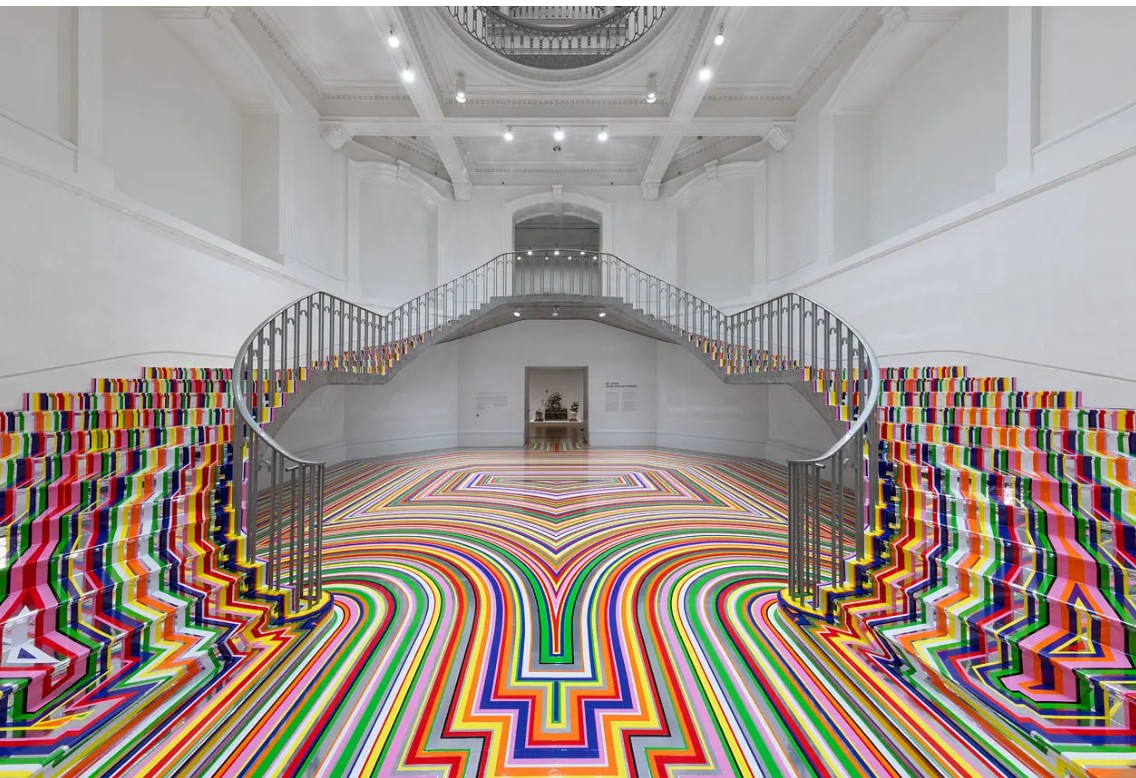
(Courtesy Vancouver Art Gallery)

This week we’re taking the train from Seattle to Vancouver, B.C. for a quick pre-Valentine’s Day visit.

On our to-do list so far is a visit to the Vancouver Art Gallery to see several special exhibitions, including the site-specific vinyl tape installation pictured above by Glasgow-based artist, DJ and musician Jim Lambie.

The weather report promises rain. So we’ll also visit the Bloedel Conservatory, which is housed in a temperature-controlled dome that’s home to tropical birds, koi fish, and over 500 exotic plants and flowers.

We’ve got the Destination Vancouver site bookmarked on our phones, so we’ll work on the list of places to visit on the way up.

We’re also open to suggestions.

Maui, Hawaii

Hawaii always beckons.

We recently visited the Big Island and now have our hearts set on timing a visit to Maui around a food festival.

The Lahaina Food & Wine Festival is coming right up, February 18–22, 2026, with a five-day line up of dinners, tastings, and community-focused events. Down the road, June 25-28, is the Kapalua Wine & Food Festival, which is celebrating its 45th Anniversary this year.

Cowboy couture in Indianapolis

(Bigfoot and Armadillo Suit created by Jerry Lee Atwood)_

There’s a lot we love about Indianapolis, including the art-filled IND Airport, the not-just-for-kids Children’s Museum of Indianapolis, the Bottleworks Hotel located in part of what was the largest Coca-Cola bottling plant in the world and many other attractions.

We’d love to plan a return visit sometime after March 28, which is when the Eiteljorg Museum of American Indians and Western Art opens a new exhbit about “Cowboy Couture” and the work of Indianapolis-based Jerry Lee Atwood, the designer who made embroidered suits for Lil Nas X, Post Malone and others.

The exhibition runs through August 2, 2026 and connects Atwood’s work to 20th century Western-wear designers, such as Nudie Cohn and Nathan Turk, who created elaborate rhinestone outfits for country music performers, and to earlier examples of 19th century Native and vaquero attire.

Visiting: Indy’s Teeny Statue of Liberty Museum

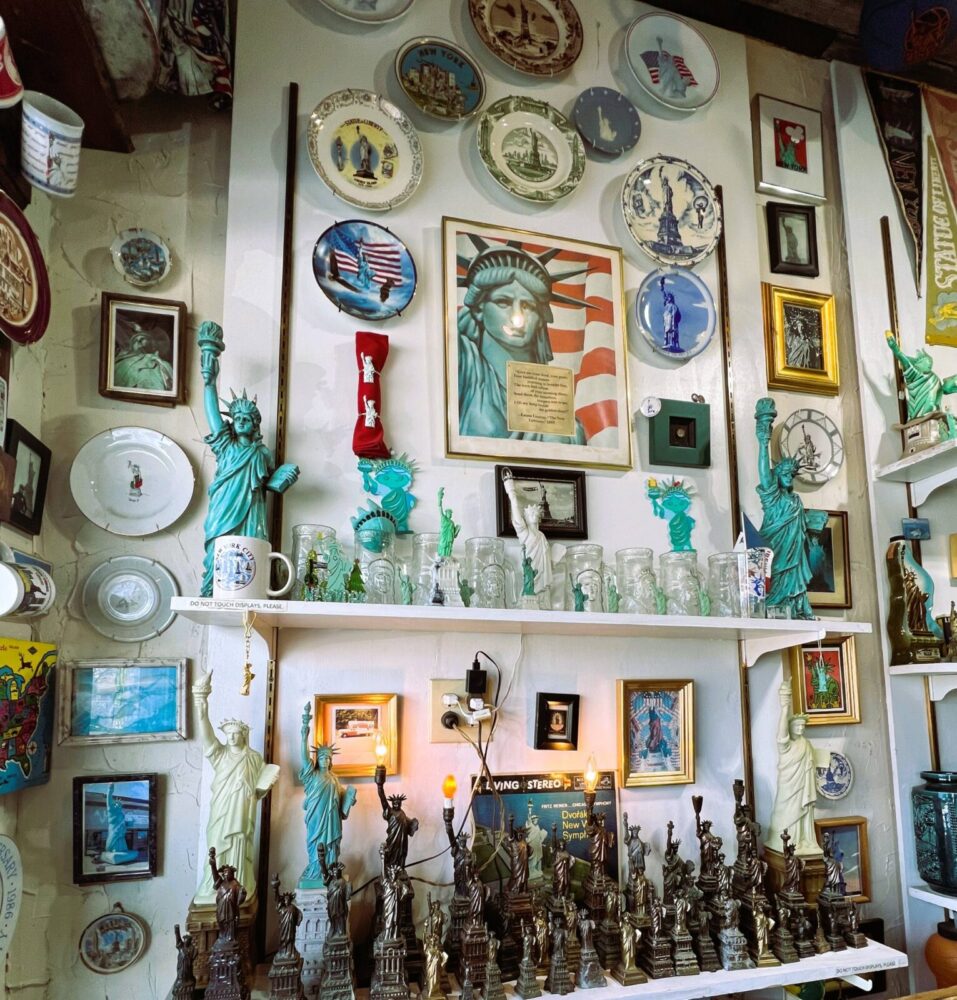
Indy’s Teeny Statue of Liberty Museum, on East Tenth Street in Indianapolis, IND, is home to Tim Harmon’s collection of about 1000 items portraying or bearing the image of the Statue of Liberty.

The museum is about 10 feet by 16 feet (hence, “teeny”, says Harmon) and resides in the front room of a building created by enclosing an alley.

Harmon says his collection started innocently with a handful of Statues of Liberties arranged on the back of his toilet tank. “Then there was no reason to stop,” he said. “And when you collect you get a shelf, then you get a couple of shelves, then people start giving you things. And in my case, it was Statues of Liberties.”

And then it was Indy’s Teeny Statue of Liberty Museum.

“The museum’s not patriotic,” says Harmon. “The museum just is what it is. It’s a museum filled with Statues of Liberty.”

Here are some snaps from our tour of Indy’s Teeny Statue of Liberty Museum.

Statue of Liberty tape measure
Statue of Liberty door knob
Teeny Lego Statue of Liberty

John Dillinger’s Getaway Car parked at IND Airport

Dillinger Getaway car at IND s

Thinking of getting away?

This 1933 Essex Terraplane (T8) was owned for short time in 1934 by the notorious criminal John Dillinger (Public Enemy Number One) and used as a getaway car until Dillinger and his brother, Hubert, crashed the car in a farm field.

Between September 1933 and July 1934, Dillinger and his gang went on a Midwest crime spree that included bank robberies, murders and jail breaks that turned the charismatic Dillinger into a folk hero.

Much of the ‘action’ took place in and around Indiana, so it’s somewhat appropriate that for the next few years the flashy car will be on display at the Indianapolis International Airport.

Look for it in the ticketing hall of the airport.

Museum Monday: Hidden Treasures you might wish you could see

We visit museums to see rare, wonderful and unusual objects on display. But most museums have room to exhibit just 10 percent of their holdings. The rest rarely — or never — sees the light of day. Unless, that is, you have a key to the back rooms where they keep hidden treasures like the ones I found for a slide show on Bing Travel.

Here are some of the highlights from that story.

In the United States, flea circuses were once regular features in carnivals and sideshows. This diorama in the collection of the Children’s Museum of Indianapolis in Indiana features four fleas (heads only) in a village scene and is mounted in a hazelnut that is encased in a matchbox. According to a museum staff member, the tiny diorama is kept in storage because “people would have to line up to see it and it would be difficult for a family to view together.”

This pretty but rarely displayed quilt in the collection of Washington’s Yakima Valley Museum was made in 1928 by the wife of a berry farmer and has a story far more complicated than meets the eye. According to the note that came with the donation, the white fabric in the background came from masks once worn by members of the Ku Klux Klan.

The Harvard Museum of Natural History in Cambridge, Mass., displays 3,200 hand-crafted glass models of flowering plants created between 1886 and 1936 by German glass artists Leopold and Rudolph Blaschka. Not on display are the university’s 430 Blaschka glass models of marine invertebrates, such as this glass model of a Portuguese man of war, which Harvard acquired in the late 19th century.

For more hidden treasures, check back tomorrow.