flight reductions

Flight restrictions lifted at all airports + more travel tidbits

Flights back to ‘normal,’ but flight concerns hover

On Sunday, November 16, the Federal Aviation Administration announced that starting at 6 a.m. on Monday it will end all the restrictions it had put in place on commercial flights at 40 major U.S. airports.

Restrictions the FAA has on space launches and on general aviation flights at 12 airports will also be lifted.

Flights restrictions that were set to ultimately reach 10% were put in place during the longest government shutdown in history amid concerns about staffing levels of the nation’s air traffic controllers and air traffic safety nationwide.

But once the government shutdown ended, the FAA mandated a 3% reduction over the weekend, down from the 6% reduction that was previously in place.

“Staffing levels have continued to snap back into place since the end of the government shutdown,” the FAA said in a release, noting that “the current data aligns with staffing conditions before the shutdown.”

Record Thanksgiving travelers. Will they fly or drive?

AAA predicts that 81.8 million people will travel at least 50 miles from home over the Thanksgiving holiday period, which this year stretches from Tuesday, November 25 to Monday, December 1. 

The estimate is up 1.6 million travelers over last Thanksgiving, setting a new overall record. 

But recent flight reductions and delays may cause some Thanksgiving travelers to reconsider how they travel this year.

According to AAA, 6 million U.S. travelers are expected to take domestic flights over the Thanksgiving holiday period, a 2% increase compared to 2024 And AAA projects at least 73 million people will travel but car.

But those numbers may shift a bit because some people who had planned to fly have already decided to drive or take a bus or train in response to all the recent flight cancellations.  


Pittsburgh International Airport’s new terminal opens Tuesday

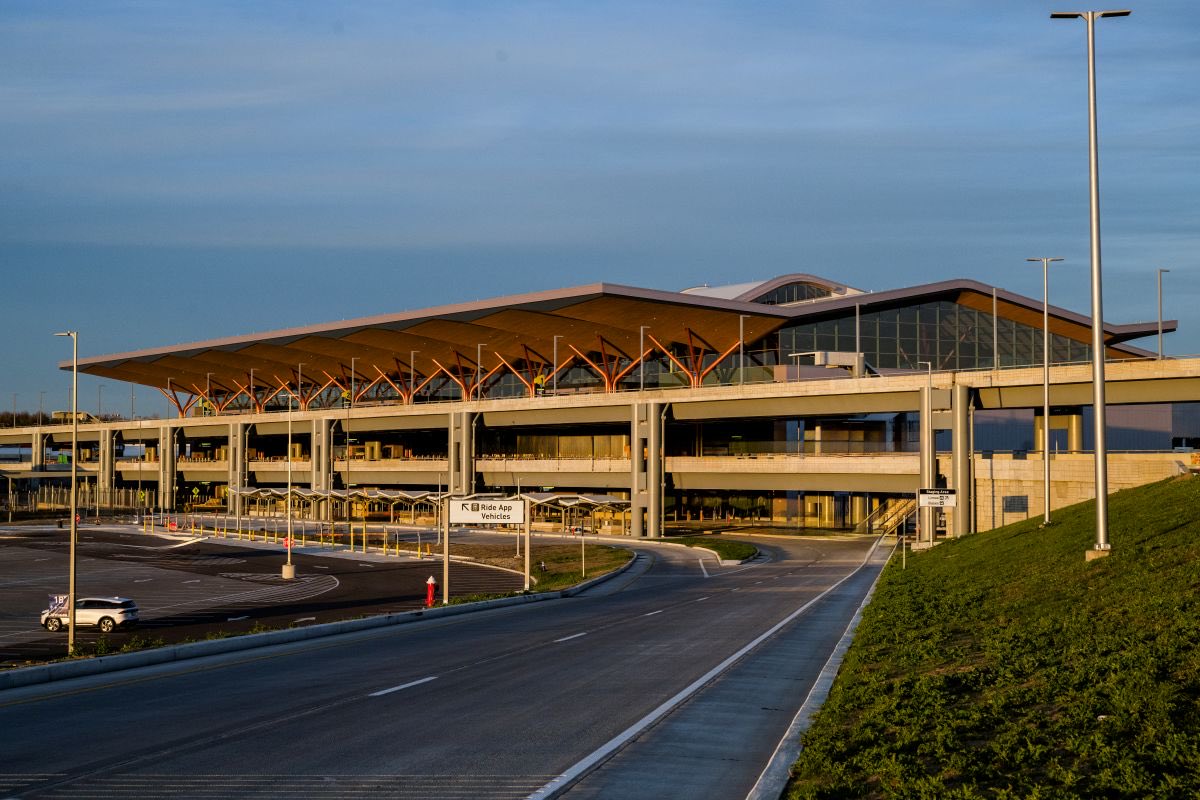
Although they held a ribbon cutting a few weeks ago, the new $1.7 billion main terminal buidling at Pittsburgh International Airport (PIT) will officially open to the public on Tuesday, November 18.

The Stuck at The Airport team will fly in on that day to be part of the festivities.

We’ll get a first look at all the fresh amenities that are part of the new building, including 12 upgraded security lanes, a new state-of-the-art baggage handling system, outdoor decks, new concessions and lots of locally-made artwork.

A fresh new airport terminal building is always exciting.

But we’re glad to see that some of the ‘old time’ favorite features are making the move to the new terminal.

That includes the PIT’s popular statue of Pittsburgh Steeler Franco Harris completing the Immaculate Reception.

U.S. government opens, but flights not yet 100%

Will air traffic be ‘normal’ now that the government shutdown is over? Not quite yet…

The longest government shutdown is officially over. But the hassle it created for air travelers is not.

The U.S. Department of Transportation and the Federal Aviation Administration (FAA) didn’t end the current flight reductions, which were set to go to 8% on Thursday and to 10% on Friday.

Instead, there’s a new emergency order freezing the mandated flight reductions at the current 6% level while the FAA figures out what’s next.

“If the FAA safety team determines the trend lines are moving in the right direction, we’ll put forward a path to resume normal operations,” said U.S. Transportation Secretary Sean P. Duffy.

The 40 affected airports where flight reductions have been mandated remains the same (see below). But cancellations and delays continue to ripple through the entire system.

Early Thursday morning (1 am EST) Flightaware.com was reporting close to 1000 canceled flights within, into or out of the U.S. and about 400 delays for the day.

And getting back to normal won’t be all that easy. Or smooth. Even when the flights reductions are completely lifted.

“Airlines cannot flip a switch and resume normal operations immediately after a vote,” aviation industry group, Airlines for America, noted in a statement shortly before the government shutdown votes were completed, “There will be residual effects for days.”

“High impact” airports with mandated flight reductions

ANC – Ted Stevens Anchorage International Airport  
ATL – Hartsfield-Jackson Atlanta International Airport 
BOS – Boston Logan International Airport  
BWI – Baltimore/Washington International Airport  
CLT – Charlotte Douglas International Airport  
CVG – Cincinnati/Northern Kentucky International Airport  
DAL – Dallas Love Field  
DCA – Ronald Reagan Washington National Airport  
DEN – Denver International Airport  
DFW – Dallas/Fort Worth International Airport  
DTW – Detroit Metropolitan Wayne County Airport  
EWR – Newark Liberty International Airport  
FLL – Fort Lauderdale/Hollywood International Airport  
HNL – Honolulu International Airport  
HOU – William P. Hobby Airport  
IAD – Washington Dulles International Airport  
IAH – George Bush Houston Intercontinental Airport  
IND – Indianapolis International Airport  
JFK – New York John F. Kennedy International Airport  
LAS – Las Vegas McCarran International Airport  
LAX – Los Angeles International Airport  
LGA – New York LaGuardia Airport  
MCO – Orlando International Airport  
MDW – Chicago Midway International Airport  
MEM – Memphis International Airport  
MIA – Miami International Airport  
MSP – Minneapolis–St. Paul International Airport  
OAK – Oakland International Airport  
ONT – Ontario International Airport  
ORD – Chicago O’Hare International Airport  
PDX – Portland International Airport  
PHL – Philadelphia International Airport  
PHX – Phoenix Sky Harbor International Airport  
SAN – San Diego International Airport  
SDF – Louisville International Airport  
SEA – Seattle–Tacoma International Airport  
SFO – San Francisco International Airport  
SLC – Salt Lake City International Airport  
TEB – Teterboro Airport  
TPA – Tampa International Airport  
 

Flight reductions underway. Now what?

On Thursday evening the Federal Aviation Administration shared more details about flight reductions around the country in response to stresses the government shutdown has placed on the national airspace system.

According to the FAA, a 4 percent reduction in flight operations will begin Friday, November 7, ramping up to 6 percent by November 11, 8 percent by November 13, and 10 percent by November 14. 

The 40 affected high impact airports include, but will likely not be limited to:

ANC – Ted Stevens Anchorage International Airport 
ATL – Hartsfield-Jackson Atlanta International Airport
BOS – Boston Logan International Airport 
BWI – Baltimore/Washington International Airport 
CLT – Charlotte Douglas International Airport 
CVG – Cincinnati/Northern Kentucky International Airport 
DAL – Dallas Love Field 
DCA – Ronald Reagan Washington National Airport 
DEN – Denver International Airport 
DFW – Dallas/Fort Worth International Airport 
DTW – Detroit Metropolitan Wayne County Airport 
EWR – Newark Liberty International Airport 
FLL – Fort Lauderdale/Hollywood International Airport 
HNL – Honolulu International Airport 
HOU – William P. Hobby Airport 
IAD – Washington Dulles International Airport 
IAH – George Bush Houston Intercontinental Airport 
IND – Indianapolis International Airport 
JFK – New York John F. Kennedy International Airport 
LAS – Las Vegas McCarran International Airport 
LAX – Los Angeles International Airport 
LGA – New York LaGuardia Airport 
MCO – Orlando International Airport 
MDW – Chicago Midway International Airport 
MEM – Memphis International Airport 
MIA – Miami International Airport 
MSP – Minneapolis–St. Paul International Airport 
OAK – Oakland International Airport 
ONT – Ontario International Airport 
ORD – Chicago O’Hare International Airport 
PDX – Portland International Airport 
PHL – Philadelphia International Airport 
PHX – Phoenix Sky Harbor International Airport 
SAN – San Diego International Airport 
SDF – Louisville International Airport 
SEA – Seattle–Tacoma International Airport 
SFO – San Francisco International Airport 
SLC – Salt Lake City International Airport 
TEB – Teterboro Airport 
TPA – Tampa International Airport 

Late Thursday evening, flight tracking website, Flightaware, showed more than 800 flights already canceled across the country for Friday.

Check your inbox & airline app for updates.

Airlines are posting information about their cuts, as well as any policies on refunds and flexible travel options, on their websites and on social media.

On its site, Alaska Airlines said “Guests whose flights are canceled will be reaccommodated on other flights as available or offered a full refund. Those whose flights are impacted will receive communication directly from Alaska and Hawaiian. We have also issued a flexible travel policy that allows guests to adjust their travel during this uncertain time.”

American Airlines is offering refunds and waiving changes fees for travel to/through or from more than 20 airports.

Delta Air Lines says it is “providing additional flexibility to our customers traveling to, from or through the impacted markets to change, cancel or refund their flights, including Delta Main Basic fares, without penalty during this travel period.”

Frontier Airlines posted an alert saying “customers whose flights are canceled or delayed for more than 3 hours (domestic flights) or 6 hours (international flights) can rebook or request a refund.” The carrier has also has issued a flexible travel policy for customers who would like to change or cancel their travel plans.

The JetBlue travel alert says the airline will waive change fees and fare differences for customers traveling now through Monday, November 10, 2025, to/from 20 cities.

Southwest Airlines shared a travel alert that includes options for travelers whose flights are canceled and for those who flights are not canceled, but choose not to travel. “If you would like to cancel your trip and cancel on or after November 6, 2025, you may request a method-of-payment refund (even for non-refundable fares),” the airline said.

Spirit Airlines’ travel alert states that the airline expects to operate “the vast majority” of its flights and will reach out to customers whose flights are affected.

“If your flight is canceled and you decide not to travel, you will have the option to receive a full refund, or we can rebook you on the next available Spirit flight,” the carrier said.

And United Airlines said it is avoiding cancellations for long-haul international flights and hub-to-hub flights operating between these seven airports: Chicago O’Hare (ORD), Denver (DEN), Houston (IAH), Los Angeles (LAX), Newark (EWR), San Francisco (SFO) and Washington Dulles (IAD).

The airline posted a list of all its cancelled flights for November 7, 8 and 9.

The carrier also said that “any customer traveling during this mandate is eligible for a refund if they choose not to fly—even if their flight isn’t impacted. That includes non-refundable and Basic Economy tickets.”

What can you do?

If, like us, you have travel plans over the next few days, here are some tips and strategies that may help you cope.

*Reconsider your plans. If you don’t have to travel right now, consider getting refund on your ticket and booking for another time. Even if your flight is not canceled (yet…) airports are likely to be super stressful places right now.

*Consider driving or taking the train to your destination, if it’s not too far. But check train fares and car rental availability before you cancel your trip. Hertz said today that in the past 2 days, reservations for one-way rentals through the weekend spiked 20% year-over-year.

*Be flexible. If you must travel and your flight is not canceled (yet…) you might consider buying a fully refundable ticket on another airline. Just in case.

*Most airlines have put in place generous offers for refunds and waived change fees. In many cases basic economy and non-refundable tickets are eligible for the offers. Be sure to read the policies carefully, though, before you change your flight.

*Stay alert. Make sure you’ve signed up for and opted in for flight alerts with your airline and refresh you email and airline apps often.

At the airport

*While airlines are trying to be proactive with cancelations, delays and unexpected cancellations are likely to be common over the next few days. Pack your patience.

*But pack light. This would be a good time to work on your packing savvy. Pack as light as you can so you don’t have to check a bag. This can be a life-saver if you need to get re-routed and will, of course, save you time.

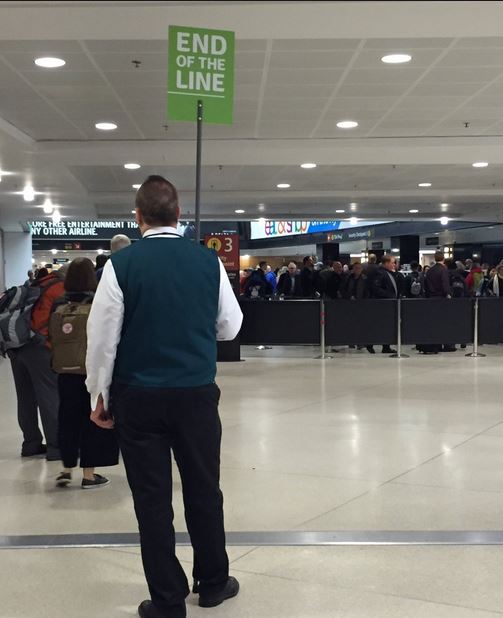
*While security checkpoint lines at many airlines are running smoothly, in many places the lines are already long and getting longer. If you’re flying, be sure to get the airport very early and try to be kind to TSA officers working without paychecks and to the stressed people around you.

*As always, arrive at the airport armed with snacks, an empty water bottles, fully charged electronics and power chargers and reading material.

*Tuck away some ‘mad money,’ preferably cash, so if you get very frustrated (or very bored) at the airport you can buy yourself a treat that won’t show up on the credit card bill a month later.