Flight attendants

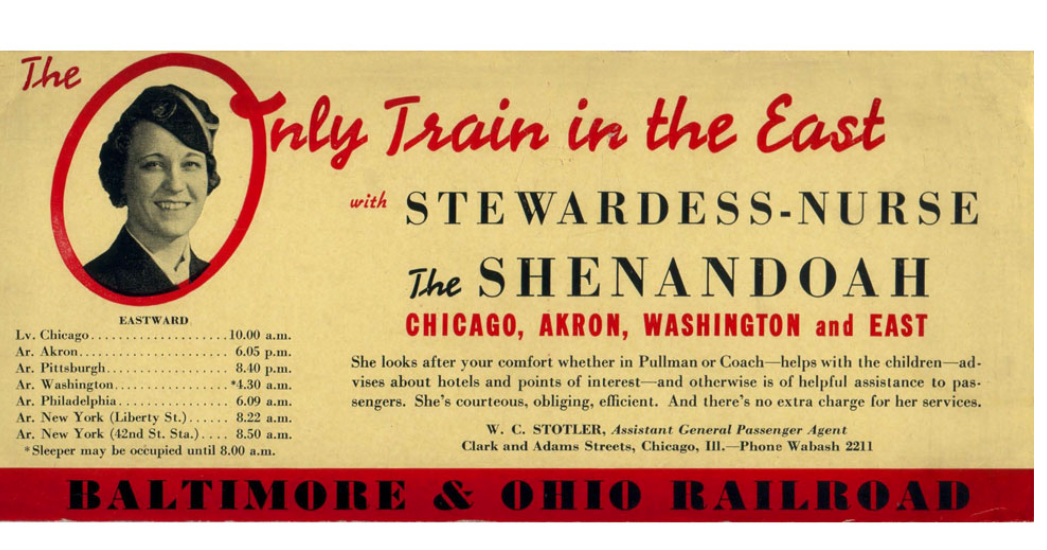
Airlines once had “stewardess-nurses.” So did trains.

The first ‘stewardesses’ on airplanes also had to be registered nurses.

In 1930, Boeing Air Transport Office – which later became United Airlines – was only hiring male pilots. But Ellen Church, a registered nurse with a pilot’s license, wanted to fly.

So she convinced the airline to test out having nurses on board to help passengers feel more confident about flying.

The job description had plenty of requirements. And lots of restrictions.

In addition to being a registered nurse, those early ‘stewardesses’ could weigh no more than 115 pounds, and they could not be taller than 5 feet, 4 inches. They had to be single and they had to be under 25 years of age.

As for the job description, these early stewardess nurses had to care for and reassure sick and frightened passengers.

The stewardess-nurses had to take tickets, load and unload luggage and help fuel the plane. They also had to pass out lunches, clean the aircraft, and tighten the bolts that held the seats to the floor.

Trains had ‘stewardess nurses’ too

Stewardess nurses weren’t limited to planes.

According to a story from the School of Nursing at the University of Virginia, not long after airlines began hiring nurses, train lines did too.

Union Pacific hired seven nurses in 1935 to staff the Challenger, a deluxe coach train, and by 1938 at least 94 nurses working on four railroads.

New film documents flight attendants fight for rights

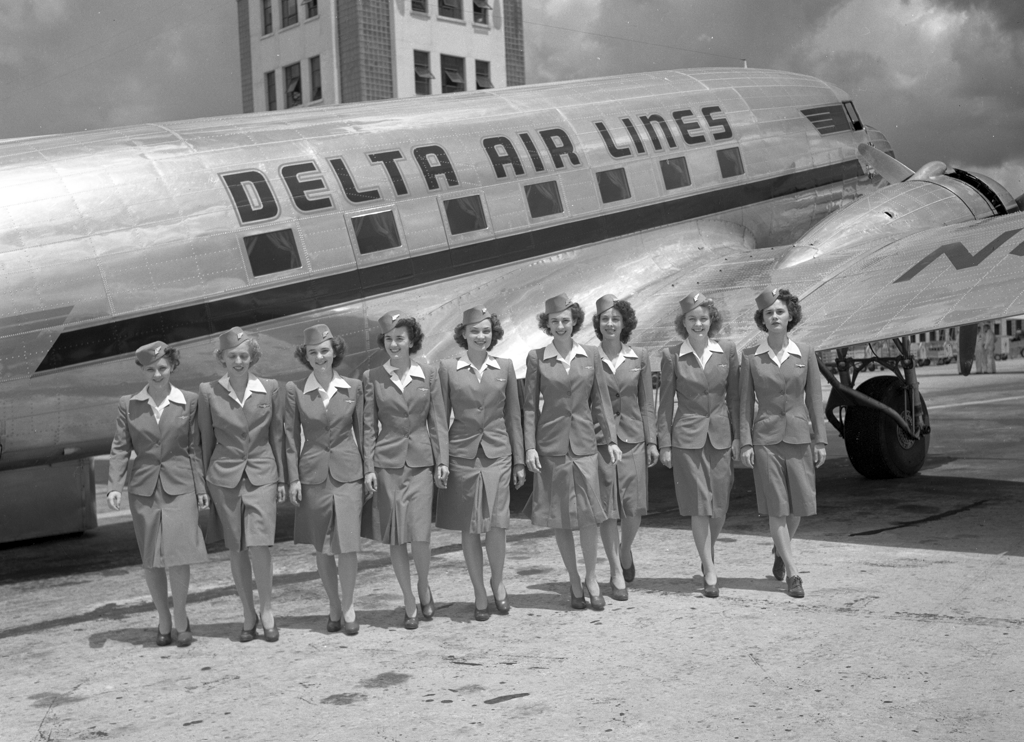
(Courtesy Delta Air Lines)

The new “Fly With Me” film tells the story of women hired as ‘stewardesses’ in the days when airline policies dictated everything from their weight to their marital status.

(Courtesy United Airlines)

More importantly, the film documents those women who went on to fight – and win – battles for equal pay, gender and race equality, and workplace reform.

(Courtesy Alamy)

“So many of the women who became flight attendants were young, ambitious, and adventurous,” said Sarah Colt, who directed the film with Helen Dobrowski. “Some thought they’d do the job for 2 or 3 years and then follow societal norms of the 50s and 60s and get married and move on. But the job became much more of a career for them,” said Colt.

On the job, pilots – who were all male – could be married.

Stewardesses could not.

On the road during layovers, each pilot had a single hotel room. Stewardesses had to share.

Stewardesses could not wear eyeglasses and had to ‘retire’ once they reached age 32 – long before they had enough years on the job to secure a pension.

“No other job offered as much freedom with such a high cost of conformity,” said Julia Cooke, the author of “Come Fly the World: The Jet Age Story of the Women of Pan Am,” in the film.

It didn’t take long for stewardesses to get savvy. And their fight for rights in all aspects of the job mirrored, matched, and helped push forward what was taking place in the broader women’s and equality rights movement.

The film includes almost two hours of first-hand accounts, archival footage including everything from vintage airline commercials to TV news reports, as well as comments and insights from historians and legal experts.

And step by step “Fly With Me,” takes us through important milestones in the history of the flight attendant rights movement, expertly making connections to world events underway at each stage.

(Courtesy San Diego Air and Space Museum)

Where to see “Fly With Me”

“Fly With Me” premieres as part of the American Experience series on Public Broadcasting TV, PBS, Tuesday, February 20, 2024, 9:00-11:00 p.m. ET (check local listings). The film will also stream on PBS.org and the PBS App.

Travel Tidbits

Better rest times for flight attendants

On Tuesday, the U.S. Federal Aviation Administration finalized rules requiring airlines to give airline flight attendants at least 10 hours of rest time between shifts.

Under existing rules, flight attendants get at least nine hours of rest time. However, due to a variety of circumstances, that time off often ends up being much shorter.

Fresh Art at John Wayne Airport

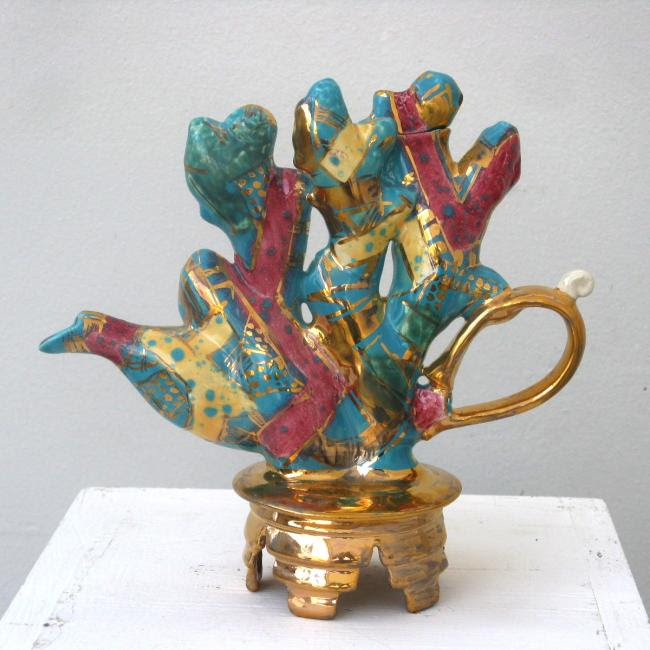
A new exhibit at John Wayne Airport (JWA) in Santa Ana, California features ceramic art by Hawaiian artist Randy Au.

“Vegetable Series” is inspired by Au’s love for nature. The ceramic shapes are inspired by squash gourds that are glossed and gilded in gold. The intricate designs are inspired by Oriental, Egyptian, and American culture and history. 

Look for the exhibit post-security in the Thomas C. Riley Terminal at John Wayne Airport, between Terminals B and C, across from Gate 14, until March 2023. 

Stop harassing the flight attendants


We didn’t need the #MeToo movement to know that flight attendants are often subjected to verbal and physical sexual harassment on the job.

But let’s hope the #MeToo movement – and the recent survey of more than 3,500 flight attendants at 29 different airline by the Association of Flight Attendants-CWA – puts a stop to it.

According to the study, more than two-thirds of flight attendants in the U.S. have experienced sexual harassment during their flying careers.

More than one-in-three flight attendants say they have experienced verbal sexual harassment from passengers, and nearly one-in-five have experienced physical sexual harassment from passengers in the last year alone.

What’s being done about it? Not enough.

While Alaska, United, and even Spirit have taken some step to address the issue, 68 percent of flight attendants say they saw no efforts by airlines to address workplace sexual harassment over the last year.

“While much of the coverage of the #MeToo movement has focused on high-profile cases in the entertainment industry and politics, this survey underscores why AFA has long been pushing to eradicate sexism and harassment within our own industry,” said Sara Nelson, AFA President. “The time when flight attendants were objectified in airline marketing and people joked about ‘coffee, tea, or me’ needs to be permanently grounded. #TimesUp for the industry to put an end to its sexist past.”

Here’s more detail from the survey results:

*35 percent of flight attendants experienced verbal sexual harassment from passengers in the last year. Of those, 68 percent faced it three or more times, and a third five or more times in the past year.

Flight attendants described the verbal sexual harassment as comments that are “nasty, unwanted, lewd, crude, inappropriate, uncomfortable, sexual, suggestive, and dirty.”

*18 percent of flight attendants experienced physical sexual harassment from passengers in the last year. More than 40% of those suffered physical abuse three or more times. This type of harassment included having their breasts, buttocks and crotch area “touched, felt, pulled, grabbed, groped, slapped, rubbed, and fondled” both on top of and under their uniforms. Other abuse included passengers cornering or lunging at them followed by unwanted hugs, kisses and humping.

*Only 7 percent of the flight attendants who experienced abuse have reported sexual harassment to their employer. More often, flight attendants said they respond to verbal and sexual harassment by avoiding the passenger, directly addressing the passenger about their behavior or using another method to try to diffuse or deflect the situation.


How a 747 design change proposal spurred the ’60-foot rule’

United Airlines’ final charter flight to say goodbye to the airline’s fleet of 747 airccraft, was quite a party and you can see my story and photos on the event on the Runway Girl Network.

But during all the hoopla, a representative of the flight attendant’s union mentioned to me that debate over a change in the 747 design back in the mid-1980s spurred an important safety rule – the FAA’s 60-foot rule – that applies to just about all airplanes today.

The short version of the story is that in 1984 Boeing proposed taking out a set of exit doors on the 747 jumbo jet to make more room for seats. Flight attendants and pilots – and their unions – raised concerns over the ability to get everyone off the plane in an emergency without those doors and pushed back.

The Federal Aviation Administration ruled on the side of safety.

Read my full story on how this came about in my Runway Girl Network story here.

Photo courtesy Boeing Company

At SFO Museum: Fashion in Flight

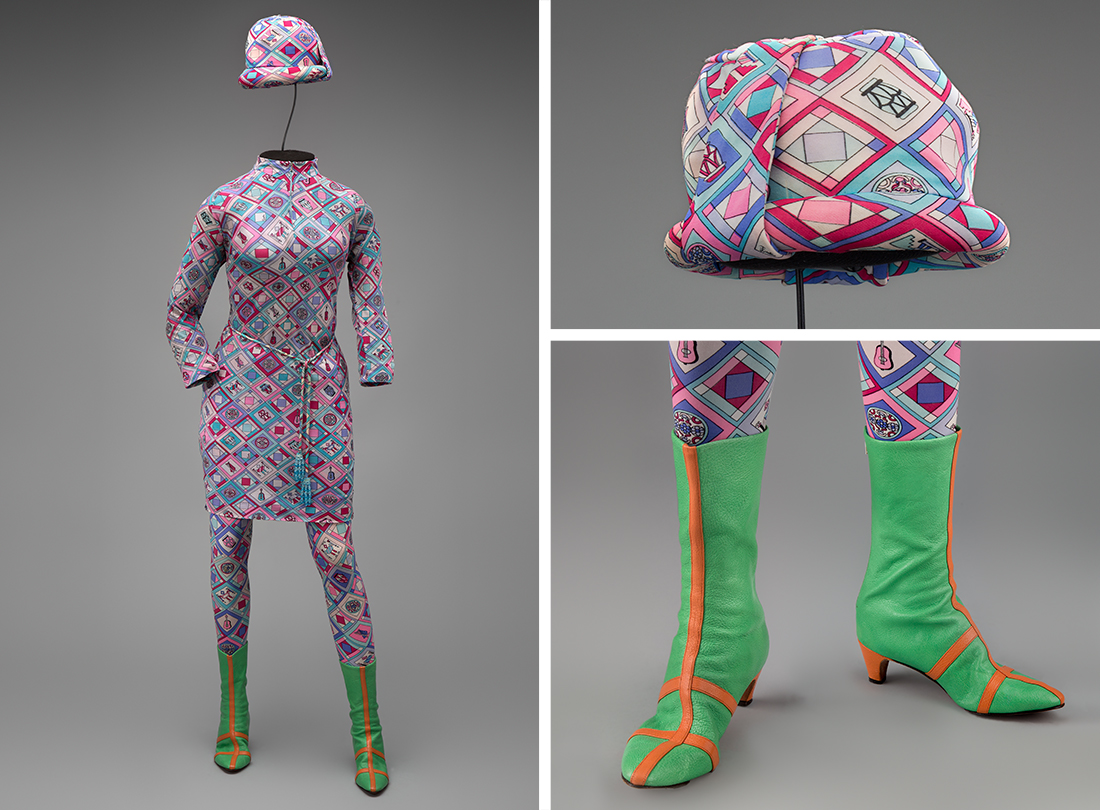
Braniff International Airways hostess uniform by Emilio Pucci  1966 Boots by Beth Levine SFO Museum -

Braniff International Airways hostess uniform by Emilio Pucci 1966
Boots by Beth Levine
SFO Museum –

Eighty-five years of airline fashion are now on view at San Francisco International Airport, courtesy of the SFO Museum.

Fashion In Flight: A History of Airline Uniform Design includes over 70 complete ensembles and accessories from the likes of Dior, Balenciaga, Yves Saint Laurent, Oleg Cassini, Vivienne Westwood and others and offers insight into the design history and evolution of the airline uniform, its iconic status in popular culture, and its dynamic relationship to the world of fashion.

Here are more samples from the exhibition, which is on view through January 2017 in the International Terminal Main Hall & in the Aviation Museum and Library.

Trans World Airlines hostess uniform by Oleg Cassini  1955 Briny Marlin Coat & Suit Company Hat by Mae Hanauer SFO Museum

Trans World Airlines hostess uniform by Oleg Cassini 1955
Briny Marlin Coat & Suit Company
Hat by Mae Hanauer
SFO Museum

Virgin Atlantic Airways flight attendant uniform by Vivienne Westwood  2014 Courtesy of Virgin Atlantic Airways /SFO Museum

Virgin Atlantic Airways flight attendant uniform by Vivienne Westwood 2014
Courtesy of Virgin Atlantic Airways /SFO Museum

Want to be a flight attendant?

United flight attendant trainee practicing serving a premium class meal

Although flying itself may not be as glamorous and carefree and unusual an experience as the vintage advertisements tell us, being a flight attendant still offers some cool travel perks and a paycheck.

So, during a visit to Houston to observe a day of flight attendant training for United Airlines, I was not totally surprised to learn that it is still not uncommon for someone to apply for the job and get accepted into the training program having never flown in a plane.

Vonn Crosby, now an experienced United flight attendant and a Service Training Team Leader for Inflight Training, was one of those people – and it turned out just fine for her.

Vonn Crosby_a Service Training Team Leader- for United Airlines

And whether they’ve flown before or not, it will probably turn out just fine for the students I joined for a day of international service training that included learning how to prep and serve a premium class meal.

P1010711

See my full story about some of the skills you’ll need to become a flight attendant in my piece over at the Runway Girl network.

Fashionable & frivolous flight attendant attire

Here’s part of a fun slide show I put together for CNBC Road Warrior and NBC News Travel on some fashionable and, at times, frivolous uniforms worn by airline flight attendants over the years.

1_Intro_Air Hostess

Courtesy International Women’s Air & Space Museum

Since 1930, when efficient, caped nurses became the first stewardesses, it’s been a tradition for flight attendants to look great while making sure airline customers are comfortable and safe.

The role of the flight attendant hasn’t really changed, but cabin crew outfits certainly have. Here’s a look at some of the chic, fashionable and intriguing uniforms that have been spotted in the skies.

Boeing Nurses

Courtesy: The Boeing Company

In 1930, Ellen Church became the first airline stewardess after convincing Boeing Air Transport (now United Airlines) that the presence of onboard nurses would go a long way in helping early passengers overcome their fear of flying.

Seven other registered nurses soon joined Church’s team, gathering to pose for this photo wearing uniforms made of dark green wool, with matching green and gray wool capes.

3_ Braniff1966

A Braniff 1966 Pucci uniform. From the collection of Cliff Muskiet www.uniformfreak.com

“Back in the 1940s, 1950s and early 1960s all stewardess uniforms looked alike,” said Cliff Muskiet, curator of Uniform Freak, an online museum of flight attendant uniforms. The only colors used were navy blue, dark green and brown for winter uniforms and light blue, light green and beige for summer uniforms, said Muskiet.

It gave stewardesses “a very conservative look,” he said. During the mid-to-late 1960s, however, airlines began turning to fashion designers and ad agencies to cultivate a hipper, sexier image for flight attendants. In 1966, Braniff International Airways crew members would be hard to miss wearing this eye-catching, geometric print dress with matching tights by Italian designer Emilio Pucci.

Braniff Air Strip

Courtesy: The Braniff Collection

A titillating print and TV advertising campaign for Braniff in 1965 was called the “Air Strip” and featured a Pucci-designed uniform with several layers that could be removed during a flight.

“The TV commercial depicted a stewardess performing an airborne striptease,” said Victoria Vantoch, author of “The Jet Sex—Airlines Stewardesses and the Making of an American Icon.”

“Braniff turned the stewardess into a patently sexual icon and other airlines soon followed,” she said.

Bubble Helmet

Image: Braniff Bubble Helmet Braniff Collection, The History of Aviation Collection, Eugene McDermott Library, University of Texas at Dallas.

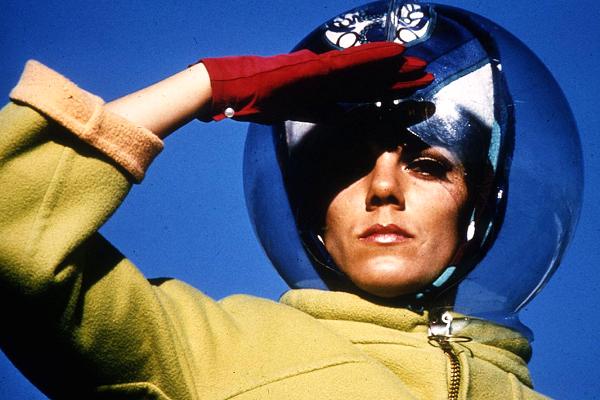
In the mid-1960s Pucci also created an unusual clear plastic bubble helmet as part of the uniform line designed for Dallas-based Braniff. The helmets weren’t intended to be worn into space, but rather to protect a flight attendant’s hairdo if she needed to walk across a windy tarmac.

I’ll be back with part two of this slide show in a future post, but in the meantime, here’s a link to the full slide show on CNBC Road Warrior.

At SFO: Flight Attendant Celebration Day

Flight Attendant Uniforms

If you’re passing through San Francisco International Airport on Tuesday, August 20, 2013, be sure to stop by the Louis A Turpen Aviation Museum in the International Terminal for Flight Attendant Celebration Day, beginning at 10 a.m.

The SFO Museum exhibition United We Stand: Female Flight Attendant Uniforms of United Airlines is there and the schedule of events includes talks, short subject films and commemorative speeches.

United We StandFemale Flight Attendant Uniforms of United Airlines

The Flight Attendant Celebration Day events are free and there will be complimentary refreshments. They’ll even validate your parking.