Environment

Honey, I’m home! Airports help bees make a comeback

Don’t worry, ‘bee’ happy: the number of honeybee colonies in the United States is on the rise and airports are doing their part to help.

The county of honeybee colonies is up from 2.8 million in April, 2016 to 2.89 million in April, 2017, according to a report from the U.S. Department of Agriculture.

That’s a plus for bees, of course, but because bees are credited with pollinating more than $15 billion of U.S. crops each year, it’s also a bonus for the economy.

It’s also news because since 2006 honey bees have been disappearing from their hives and dying at unprecedented rates due to a condition known as Colony Collapse Disorder.

The culprits may be global warming, pesticide use, habitat loss and parasites, say researchers, but (more good news) the USDA survey reports that in the first quarter of from January to March 2017 there was a 27 decrease in the number of colonies lost to the disorder compared to the first quarter of 2016.

Honey helpers

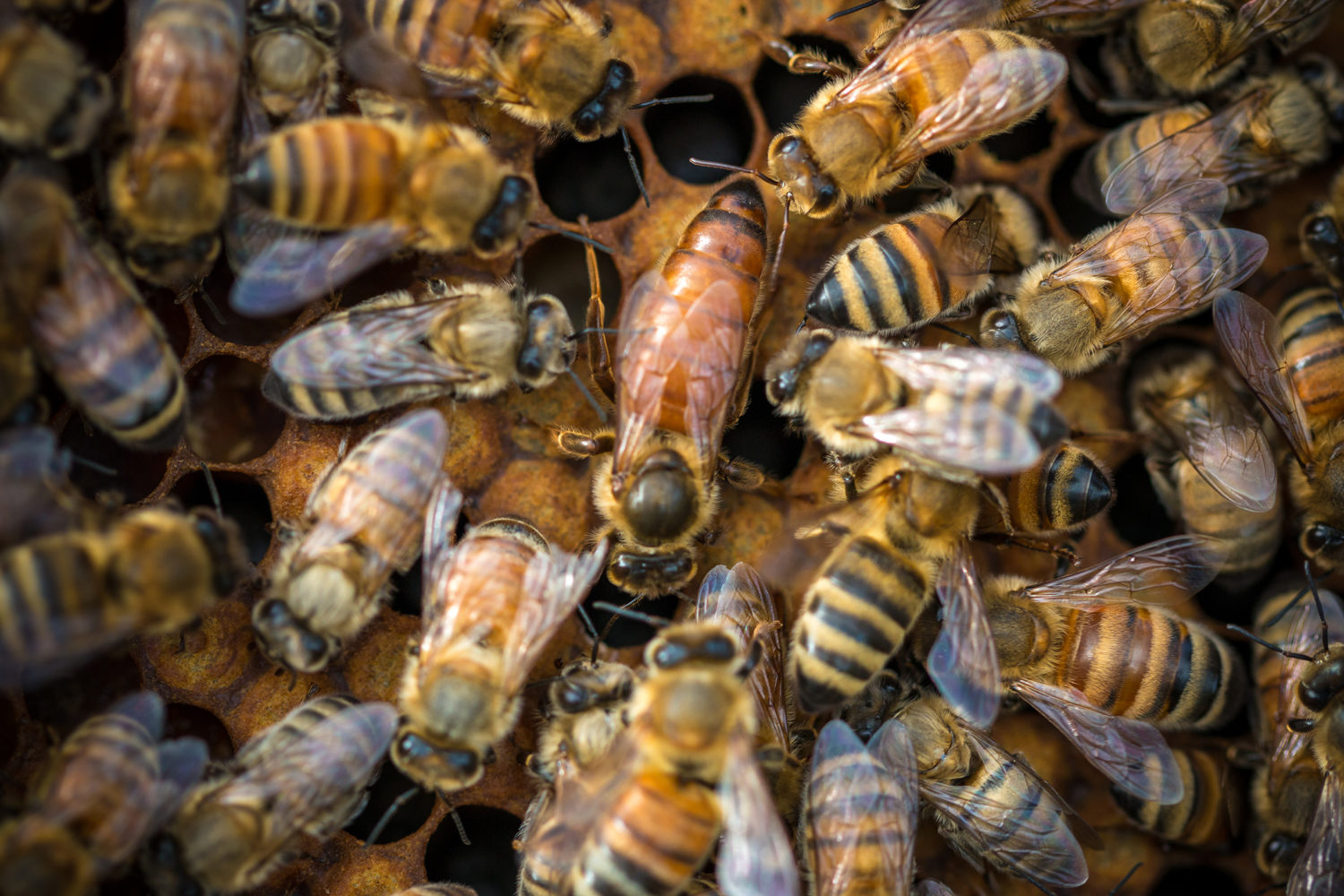
Honeybee colonies are getting some comeback help from a growing number of airports hosting beehives and sharing their sweet stories of success.

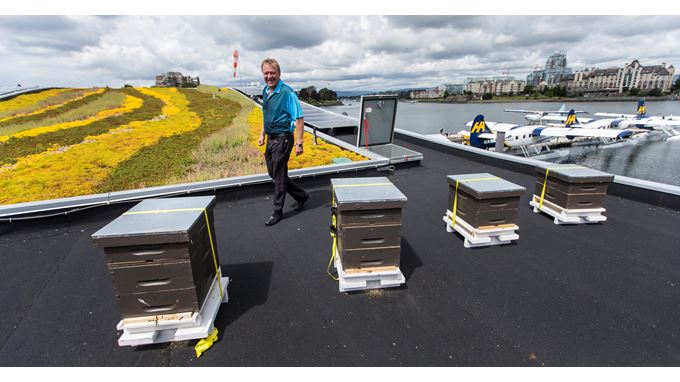
In Victoria, British Columbia, Harbour Air just put four hives with 10,000 bees on the one-acre grass roof of its floating airport terminal for seaplanes. A “bee cam” lets passengers waiting in the airport lounge below watch the bees at work and, come fall, the airline plans to offer its own “Harbour Honey” to passengers to use as sweetener in the complimentary in-terminal coffee and tea.

Besides making a contribution to the local ecosystem, “This will be an important way to educate people of all ages on the importance of honeybees to our local environment,” said Bill Fosdick the president of the Capital Region Beekeepers Association, which is overseeing the introduction of the bee colony.

In late 2015, Minneapolis-St. Paul International Airport partnered with the “Bee Squad” program at the University of Minnesota to set up an apiary on airport property. Now 31 colonies are being tended to by U.S. military veterans.

Some of the honey extracted last year was sold to Chef Andrew Zimmern (of “Bizarre Foods” fame) and to General Mills to benefit the program. “We also gave some to the Veteran participants,” said Bee Squad Program director Becky Masterman, “This year’s extraction will be larger and we hope to sell some of the honey in the airport and have some used in MSP restaurants.”

Beehives were also installed at Montréal-Trudeau airport in 2015 (following a similar project at Montréal-Mirabel in 2014) and now each airport is home to about 300,000 honey bees. Some of the honey produced is sold to employees to raise funds for a local non-profit that helps low-income families and individuals; the balance is donated to local food banks.

Back in the United States, there are apiaries on property at Chicago’s O’Hare International Airport, St. Louis Lambert International Airport, Seattle-Tacoma International Airport and Austin-Bergstrom International Airport.

At O’Hare, where the bee program is in its seventh season, there are currently 30 to 40 hives (down from a high of 75) and about one million bees on duty.

Operated by Sweet Beginnings, which gives training and jobs to formerly incarcerated individuals and others who may have significant barriers to finding jobs, the apiary produces about 35 pounds of honey per hive.

Under the ‘beelove’ brand, products made with the O’Hare honey, including lip balm, skincare creams, soaps and, of course, jars of raw national honey, are sold in Hudson News stores at O’Hare and in the Farmers Market kiosk in Terminal 3. Some O’Hare restaurants, including Tortas Frontera by Rick Bayless, also use the O’Hare honey in meals.

In 2013, the Port of Seattle teamed up with The Common Acre, a local non-profit, to place clusters of honey bee hives on unused, open land at three Seattle-Tacoma International Airport locations.

Like the symbiotic relationship between bees and flowers, both the airport and the non-profit get something valuable from the deal.

The Common Acre is collecting scientific data from the hives “crucial to understanding and supporting pollinators,” said group founder Bob Redmond, and is selling the honey to help offset costs. Among other benefits, the bees help the airport keep large birds away from airplanes by supporting the growth of dense vegetation on a former golf course area.

(A slightly different version of my story about bees at airports first appeared on CNBC)


The buzz about Victoria Harbour Airport

You can take a ferry between Seattle, Washington and Victoria, British Columbia, but it’s much faster – and far more thrilling  –  to take a seaplane and land at Victoria Harbour Airport (YWH), a floating seaplane airport that is home to Harbour Air and Kenmore Air.

To mark the first anniversary of the floating terminal, Harbour Air, which serves 9 destinations in British Columbia, put a colony of honey bees (four beehives containing about 10,00 bees) and 50 solar panels on the airport’s one-acre green roof.

A screen inside the terminal will let passengers see how much electricity the solar panels are generating and a ‘bee cam’ offers a live feed of what the bees are doing.

The airport beehives – which airline officials think may be the world’s first floating hives – are already generating honey and by fall Harbour Honey should be available for purchase in the terminal’s coffee area. Sweet!


Airports go dark for Earth Hour

Courtesy LAWA

Airports around the world will join thousands of iconic landmarks, buildings, attractions, hotels and homes in turning off (non-essential) lights on Saturday, March 25 in honor  of International Earth Hour.

The event began in 2007 with a single lights-off event in Australia and is now observed  in 178 countries and territories – including the International Space Station – with more than 12,700 monuments turning off their lights for one hour in 2016.

Los Angeles International Airport’s (LAX) signature 100-foot-tall Gateway pylons (above ) will glow green – and then go dark between 8:30 and 9:30 p.m.

Courtesy Denver Int’l Airport

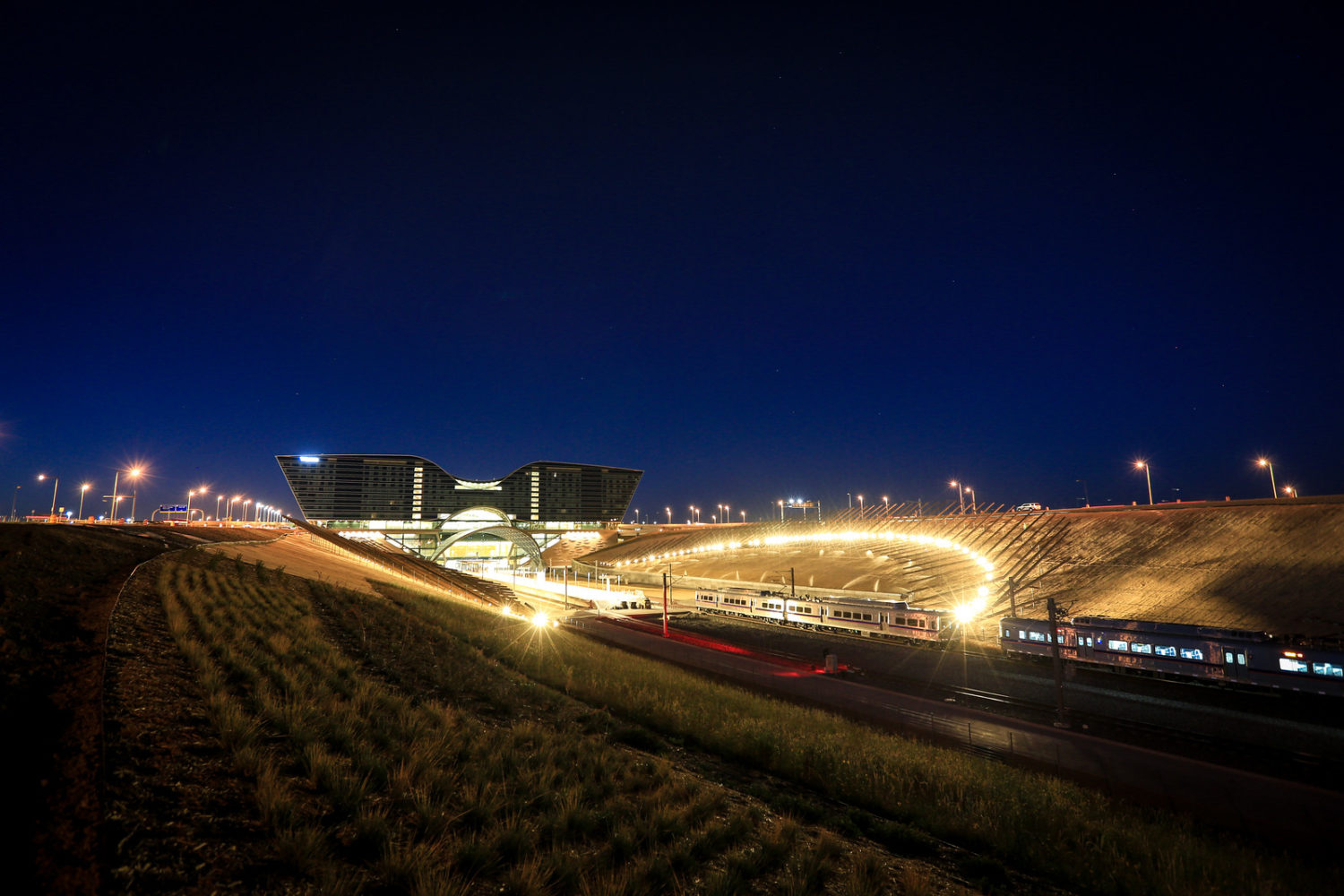
Denver International Airport (DEN) will be turning off the lights on the iconic “32-foot-tall Mustang” statue and the “Shadow Array” artwork at the Hotel and Transit Center. Shadow Array is made up of 236 beetle-kill spruce logs that are usually illuminated at night.

Here’s a link to an Earth Hour map of other places going dark around the world for an hour on March 25. Check to see if the lights will be going out where you are at 8:30 local time.


Just Plane Fun at PHL Airport – again


The Philadelphia Mummers entertain airport visitors during the holiday season at Philadelphia International Airport.

Courtesy PHL

It’s back!

Philadelphia International Airport has kicked off another summer of its customer appreciation program, called Just Plane Fun, which will present live entertainment, magicians, caricature artists, beauty makeovers and demonstrations and fun activities to passengers right through to Labor Day.

There’s plenty to do at PHL even when the Mummers, the magicians and the makeover artists aren’t on duty: PHL has a robust arts and culture program that currently lists almost two dozen permanent and temporary exhibitions around the airport.

Courtesy City of Philadelphia

Courtesy City of Philadelphia


Right now, for example, in anticipation of the Democratic National Convention is being held in Philadelphia July 25-28, the airport is presenting an exhibition about the city’s long history of hosting presidential conventions.

The exhibit, Philadelphia’s Presidential Convention History 1848-2016, is in Terminal A-East and will be on display through June 2017.


Horizon Air seats get upcycled

ALASKA LOOPTWORKS

Need a gift for an aviation geek or just some really nice environmentally responsible gear?

Bags made from old airline seats may do the trick.

When Alaska Airlines decided to replace the seat covers on planes flown by its sister carrier, Horizon Air, sending the old leather to the landfill seemed too wasteful.

Instead, the airline turned to Portland, Ore.-based Looptworks, a company that upcycles unwanted materials into limited edition, hand-made products, for a solution.

Looptworks already makes a Southwest Luv Seat line of bags and accessories that use that the carrier’s old seat leather, as well as a line made from motorcycle jacket leather, so turning 4,000 Horizon Air leather seat covers into useful items wasn’t a big challenge.

Now there’s the Alaska Airlines Carry-On Collection, which includes a wallet ($65), laptop sleeve ($120), tote ($160), crossbody bag ($140) and a messenger bag ($230)

The leather is cleaned and prepped in partnership with an Oregon non-profit that employs and trains adults with disabilities and then is passed on to Northwest craftspeople who do their magic.

Alaska and Southwest aren’t alone in exploring upcycling.

Clothing made from the surplus leather and fabric from Hawaiian Airlines seats was on exhibit recently during Honolulu Fashion Week, there’s a line of bags made from recycled JetBlue crewmember uniforms, and Skyebags makes a wallet and a tote bag from reclaimed Delta Air Line seat leather.

(My story about upcycling old airline seats first appeared on USA TODAY in a slightly different version.)

California airports dealing with drought

01_Mineta San Jose  Int'l Airport - The topiary bear that greets motorists at SJC is in no danger

Airports in California must obey strict local and state water conservation rules, but the topiary bear that greets arriving motorists at Mineta San Jose International (SJC) needn’t sweat.

The 12-year-old bear is well-established and, along with nearby native and drought-tolerant plantings, gets by with a sip of recycled water delivered every two weeks by the airport’s high-tech irrigation system.

Recycled water is also used in SJC’s low-flow toilets and to clean the sidewalks and the exteriors of the airport buildings.

Mineta San Jose Int'l Airport sign

San Jose Mineta Int'l Airport_ Windows no longer pressure washed, but washed by hand, and with recycled water.

“The windows in our two terminals are washed twice a year: before the peak year-end travel season and in the spring,” said Rosemary Barnes, SJC’s public information officer. “We no longer pressure-wash the windows, but wash them by hand using recycled water.”

Recycled water is also part of the conservation plan at many other California airports, including Los Angeles International, John Wayne and Fresno Yosemite, where established conservation efforts include low-flow washroom fixtures, synthetic turf and curbed watering programs.

On their own and in response to new water saving mandates, airports in the state are taking steps to save even more water.

A few years back, Palm Springs International Airport installed waterless urinals that have been saving the airport an average of 44,000 gallons per unit per year.

Now, in response to the drought the airport has shut down three water features, reduced landscape watering to three evenings a week and will soon begin eliminating all landside grass, according to airport executive Thomas Nolan.

Palm Springs International Airport pond without water - now

Oakland International has also cut back its watering schedule and increased inspections of the airport’s irrigation system to make sure it is has not sprung any leaks.

In addition to measures that include serving water only by request in the food courts, Sacramento International Airport has removed some areas of turf and now waters “at the lowest level possible to keep landscaping viable while minimizing the risk of fire hazards,” said airport spokeswoman Laurie Slothower.

“We are in the process of hiring a landscape engineer to help us determine our long-term plans for landscaping. There will be less of it, for sure,” she said.

SAC_When Sacramento Int'l Airport Terminal B was built, 9 acres of asphalt parking was converted back to landscape &  natural habitat with drought-tolerant plants.

Even car rental companies do their part. The Hertz Corporation, which also operates the Thrifty, Dollar and Firefly car rental brands, recycles 80% to 90% of the water used to wash cars at airports, said company spokeswoman Anna Bootenhoff, “and we are continually evaluating ways to reduce in this area.”

No more water canon salutes

San Francisco International Airport has implemented many similar conservation measures, including reducing sidewalk hose-downs and working with airport tenants to reduce water usage.

The airport has also discontinued the customary water cannon salutes that celebrate new carriers and major new routes. Each water salute used about 3,000 to 4,000 gallons of water, said airport spokesman Doug Yakel, and the airport had been averaging about one salute per month before the practice was discontinued.

Due to the drought, Los Angeles International and Burbank Bob Hope Airport also stopped the ceremonial use of water to welcome new carriers. And this year the Burbank airport nixed a popular demonstration performed by an airport fire department vehicle in a local parade.

“The vehicle would shoot a canon of water while driving down the parade route, showing the fire rescue truck’s ability to pump and roll,” said airport spokeswoman Lucy Burghdorf.

Every drop counts

In its response to the drought, San Diego International Airport (SAN) found a previously untapped source of water: the air conditioning units under passenger boarding bridges.

SAN - collecting drippings, with the boxlike AC unit hanging underneath the passenger boarding bridge. It is connected to the blue collection barrel in the foreground

Water created by condensation – condensate – from those units had traditionally just dripped onto the tarmac and evaporated, but in 2014 the airport began capturing that water and reusing it.

During 2014, SAN collected more than 5,225 gallons of condensate. And this year, the first full year of the program, the airport hopes to collect up to 840,000 gallons of condensate, an amount equal to the water used by five typical households in a year, according to the U.S. Environmental Protection Agency.

“While conservation is important, sometimes you have to get a little creative if you truly want to make a difference,” said Jonathan Heller, SAN spokesman.

SAN DRIPPINGis actual condensate dripping from a bridge before the recovery apparatus was put in place.

(My story about California airports dealing with drought first appeared in USA TODAY, in my At the Airport column. Photos courtesy of the airports.)

Airports turn lights out for Earth Hour

LAX earth hour

Pylongs at LAX Airport will go green – and then go out – for Earth Hour 2015


During Earth Hour 2015 , which takes place this Saturday, March 28 around the world at 8:30 PM local time, individuals, businesses, cities, buildings, and more than 1,200 landmarks around the world – including the Eiffel Tower and the Golden Gate Bride – plan to switch off their lights for one hour to focus attention on climate change.

Close to 40 UNESCO World Heritage Sites, including the Acropolis in Athens and Edinburgh Castle in Scotland, are scheduled to go dark in support of Earth Hour and some airports around the world plan to participate as well.

At Los Angeles International Airport, the 100-foot-tall LAX Gateway pylons at the Century Boulevard entrance will be lit in various shades of green before Earth Hour. During Earth Hour – from 8:30 to 9:30 p.m. – the pylons will turn off.

Mustang by Luis Jimenez

During Earth Hour Denver International Airport will turn off the illuminated DIA sign along Peña Boulevard, the illuminated sign marking the Jeppesen Terminal and the lights on the airport’s iconic “Mustang” statue.

Elsewhere, Athens International Airport will switch off the lighting on one runway and turn off lighting in the airport buildings and staff parking lots.

Dubai Airports has been switching off non-essential lights for an hour each day since March 5 at both Dubai International and Al Maktoum International Airports in preparation for Earth Hour.

And at Vancouver International Airport, they’ll be switching off the base lights on the control tower and the lights around the Spirit of Haida Gwaii: The Jade Canoe (a key piece of airport art), in the Public Observation Area, on the exterior sidewalks and in the International Food Court.

Frying with Finnair to the UN Climate Summit

FinnairAirbus 330 HR_edited

Smell that?

The Airbus A330 making Tuesday’s Finnair flight from Helsinki to New York will be running on biofuel partly made from recycled cooking oil from restaurants.

It’s perfectly safe – and Finnair and several other airlines have done it before – but this flight is designed to coincide with the UN Climate Summit taking place in New York and draw attention to the fact that progress is being made on developing environmentally sustainable biofuel.

As Finnair reminds us, “most of an airline’s environmental impact arises from aircraft emissions during flight and switching to a more sustainable fuel source can reduce net CO2 emissions by between 50 and 80 per cent.”

But while everything from used cooking oil to plants, algae, municipal waste, recycled vegetable cooking oil, animal fat and sugarcane have been considered or tested in aircraft in search of safe, alternative, sustainable biofuels, the cost to make that alternative fuel is still at least twice as much – or more – than conventional jet fuel.

But along with Finnair, other airlines, including KLM and Alaska Airlines, airport operators, manufacturers and a variety of governments around the world are working on ways to lower the costs of creating these alternative jet fuels.

So it’s possible that soon you’ll be flying on a jet burning fuel made with old frying oil too.

Hungry herd on duty at Chicago O’Hare

Llama on duty at ORD - 2013


They’re back. They’re hungry. And they’re not picky eaters.

A herd of 37 goats, sheep, llamas and burros have been hired by Chicago’s O’Hare International Airport to munch on poison ivy, noxious weeds and other unwanted vegetation along creeks, streams and roadway right-of-ways on airport property.

Part of the Chicago Department of Aviation’s (CDA) Sustainable Vegetation Management initiative for O’Hare, the critters are on loan from Settlers Pond, an animal rescue facility in Beecher, Ill.

A herd of about 25 animals was on duty last year from July through November eating unwanted vegetation. That helped the airport cut back on the use of emission-producing equipment and limited the use of toxic herbicides on some of the airport’s 8,000 acres of land.

This year, up to 120 acres of O’Hare land difficult to maintain with traditional landscaping equipment has been set aside for all-they-can-eat grazing. The herd, which spends evenings in transport vans nearby the grazing land, will stay at O’Hare until the weather gets too cold for the animals to access vegetation.

As before, all the sites where the animals graze are in areas far away from or separated from the airfield by security fencing.

Which means we shouldn’t be hearing any stories about take-offs or landings being delayed at O’Hare by a jackass running around on the runway.

At least two other U.S. airports have had animals help out with landscape management.

San Francisco International Airport has a herd of goats come by each year to assist with weed control and in 2012 a herd of 91 sheep and 10 goats participated help control vegetation at Hartsfield-Jackson Atlanta International Airport.

(My story about weed-eating at O’Hare International Airport first appeared on USA TODAY)

The buzz on bees at Seattle-Tacoma Int’l Airport

SEA BEES

Busy bees are hard at work in hives out on the property of Seattle-Tacoma International Airport. Inside the airport, there’s also now an exhibit with bee-themed art and educational information about the importance of pollinators.

Titled Flight Path, the exhibit explores bees and flight through a variety of mediums including paintings, blown glass and a mosaic and includes the work of 24 Northwest artists.

Last year, the airport hosted 18 hives. This year, the Port of Seattle is working with a local group called The Common Acre to host 1.5 million honeybees in 24 hives on unused vacant land near the runways.

Sea-Tac isn’t the only airport with hives. Chicago’s O’Hare International Airport has honeybee hives on property as well and products made from the honey is for sale inside the airport.

Bee outfit