Animals

Debate over Delta rules on service & emotional support animals

Many travelers are cheering Delta Air Lines’ new, stricter rules for those flying with service or emotional support animals.

But many long-time guide dog users and organizations that advocate for blind Americans and others with disabilities say the guidelines, which require added documentation and pre-planning, are over-reaching, discriminatory and illegal.

Noting that it has “long been concerned with the abuse and fraud of animals purporting to be service or support animals,” the American Council of the Blind said Delta’s revised policy discriminates against those passengers with legitimate service dogs and makes travel more difficult for individuals who rely on their service animals for travel.

The National Federation of the Blind believes elements of Delta’s policy, which goes into effect March 1, violate the Department of Transportation’s Air Carrier Access Act.

“We are particularly troubled by the requirement that guide dog users submit paperwork to Delta forty-eight hours before flying,” the NFB said in a statement, while “Travelers without guide dogs are not required to plan their travel forty-eight hours in advance.”

The 48-hour ‘intent-to-fly’ requirement means guide dog users will no longer be able to fly on Delta for family, medical or other emergencies,” said the NFB and adds an unnecessary layer of inconvenience for some passengers.

“We stand with NFB,” said Eric Lipp, Executive Director of the Open Doors Organization, “People with properly trained service animals are being punished by Delta.”

Citing a significant increase in the numbers and types of “comfort” animals passengers bring on planes and an 84 percent increase since 2016 in reported animal incidents such as urinating/defecating, biting and attacks, Delta announced last week that certification of a flyer’s need for an animal and proof of an animal’s training and vaccinations will be required for both service and emotional support animals.

“I sympathize with the airlines,” said Pat Pound a disability consultant who is blind and travels with a guide dog, “More people are cheating. Airlines are trying to maintain the system. But I don’t think Delta’s new policies will address the problem. And, as a person with a disability, I’ll end up being penalized.”

An on-line petition with more than 75,000 signatures is asking Delta not to make it harder for people to travel with emotional support animals, but other airlines are exploring following Delta’s lead.

“We agree with Delta’s efforts,” American Airlines said in a statement, “We are looking at additional requirements to help protect our team members and our customers who have a real need for a trained service or support animal.” The carrier said from 2016 to 2017 it saw an almost 15 percent increase the number of customers traveling with emotional support animals.

United Airlines is reviewing its existing policy on service and emotional support animals, said airline spokesman Charles Hobart. “This is something that is important to our employees and to our customers, including those with disabilities and those who do not have disabilities,” he said, “We understand this needs to be resolved soon.”

The Department of Transportation had planned to draft new rules on service animals by July 2017, but those guidelines have yet to be released.

Going forward, “I suspect there will be legal challenges to Delta’s policy on service dogs from individuals and from organizations,” said disability consultant Pound, “This is how an airline is deciding to interpret the law, but a court may have a different idea about what that the law intended.”

(My story about the debate of stricter rules for flying with service and emotional support animals first appeared on NBC News in a slightly different format.)

Pushback on Delta’s decision to regulate emotional support animals


Last week Delta Air Lines announced that, come March 1, it would be changing the rules on the documentation required for bringing emotional support animals on planes.

“Customers have attempted to fly with comfort turkeys, gliding possums known as sugar gliders, snakes, spiders and more,” Delta said in a statement, “Ignoring the true intent of existing rules governing the transport of service and support animals can be a disservice to customers who have real and documented needs.”

While recognizing that some passengers do abuse the rules, there are some groups that are not comfortable with Delta’s actions.

The National Federation of the Blind, for one,would have liked to be consulted.

“Blind people have safely and successfully used guide dogs for decades, but this policy fails to make a clear or practical distinction among guide dogs, other  ‘service and support animals’ (as Delta puts it), and pets,” the group said in a statement, “Onerous restrictions on guide dog handlers do not resolve anything and violate the principle of equal access for passengers with disabilities. Furthermore, we believe that elements of Delta’s policy, as currently articulated, violate the Air Carrier Access Act.”

The group says it is particularly troubled by the requirement that guide dog users submit paperwork to Delta forty-eight hours before flying.

“Travelers without guide dogs are not required to plan their travel forty-eight hours in advance. Furthermore, guide dog users will no longer be able to fly Delta in family, medical, or other emergencies. We believe that this forty-eight hour requirement is both unnecessary and unlawful.”

The group is asking for a meetingwith Delta to work out a better system.

Taking turkey: Delta changing rules on service animals

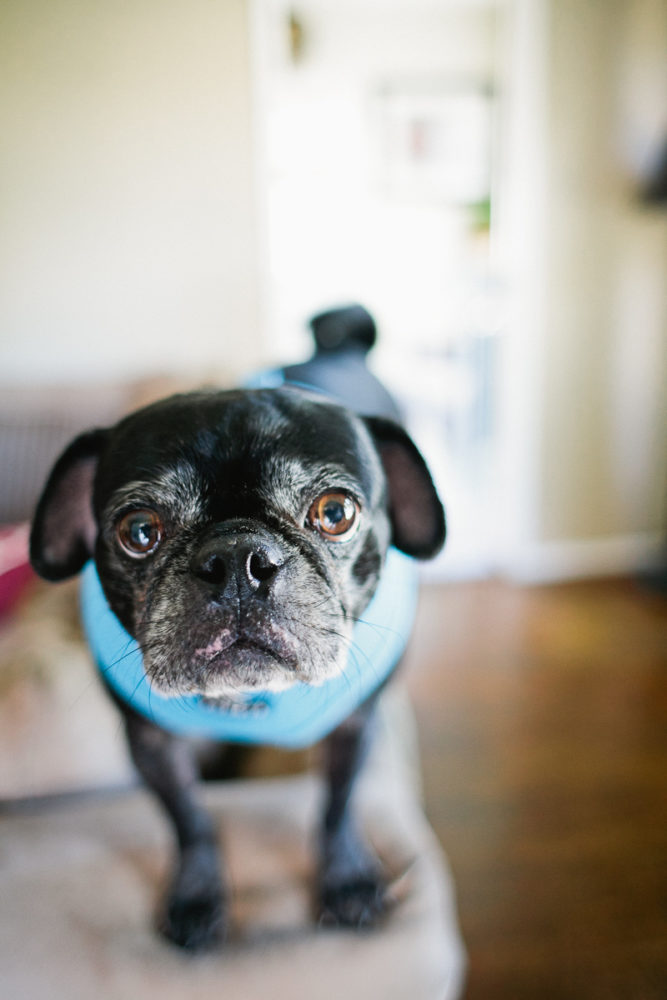
No doubt you know someone, or have set next to someone, or read an outrageous story about someone who has claimed their pet dog or, in some cases, pet turkey, monkey, snake, pig, parrot or miniature pony,  is an emotional support animal that qualifies for a free, uncaged flight inside the cabin.

Sometimes it is true. There are some people whose ability to function depends on an animal. But in more and more cases, people who say they are flying with emotional support animals are simply trying to get around the airline fees for taking a pet on a plane.

Now Delta Airlines – and no doubt other airlines in a second – is saying no more. They’re changing the rules, they say, because all those fake emotional support animals have led to serious safety risks involving untrained animals in flight.

“Customers have attempted to fly with comfort turkeys, gliding possums known as sugar gliders, snakes, spiders and more,” says Delta, “Ignoring the true intent of existing rules governing the transport of service and support animals can be a disservice to customers who have real and documented needs.”

Delta report an 84 percent increase in animal incidents since 2016, including urination/defecation, biting and even a widely reported attack by a 70-pound dog.

“In 2017, Delta employees reported increased acts of aggression (barking, growling, lunging and biting) from service and support animals, behavior not typically seen in these animals when properly trained and working,” said Delta.

Here’s what’s changing as of March 1 on Delta. Expect other airlines to follow the herd.

In compliance with the Air Carrier Access Act, Delta provides in-cabin travel for service and support animals without charge.

The new guidelines, effective March 1, require that all customers traveling with a service or support animal show proof of health or vaccinations 48 hours in advance.

In addition to the current requirement of a letter prepared and signed by a doctor or licensed mental health professional, those with psychiatric service animals and emotional support animals will also need to provide a signed document confirming that their animal can behave to prevent untrained, sometimes aggressive household pets from traveling without a kennel in the cabin.

“The rise in serious incidents involving animals in flight leads us to believe that the lack of regulation in both health and training screening for these animals is creating unsafe conditions across U.S. air travel,” said John Laughter, Delta’s Senior Vice President — Corporate Safety, Security and Compliance in a statement. “As a leader in safety, we worked with our Advisory Board on Disability to find a solution that supports those customers with a legitimate need for these animals, while prioritizing a safe and consistent travel experience.

Delta is setting up a Service Animal Support Desk for customers traveling with service and support animals. The desk will be where customers go to  verify that the new documentation is received and confirm the customer’s reservation to travel with the animal, prior to arrival at the airport.

The carrier also made it clear that is will no longer accept exotic or unusual service or support animals, including:

  • Hedgehogs
  • Ferrets
  • Insects
  • Rodents
  • Snakes
  • Spiders
  • Sugar gliders
  • Reptiles
  • Amphibians
  • Goats
  • Non-household birds (farm poultry, waterfowl, game bird, & birds of prey)
  • Animals improperly cleaned and/or with a foul odor
  • Animals with tusks, horns or hooves.

Look for the full details of the Delta’s new regulations on service and emotional support animals here.

About time, right??

Stress-busting pups at Vancouver Int’l Airport

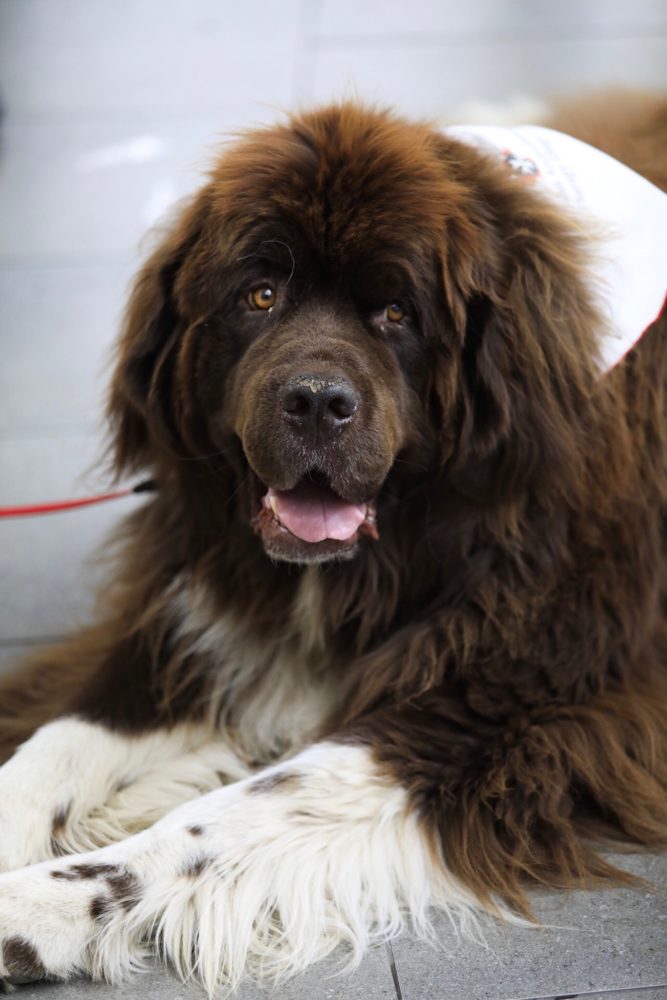
There’s been a blossoming of programs that bring dogs (and, in some cases pigs and miniature horses) into airport terminals to interact with passengers as an antidote to the the stress of travel.

The animals are cute, passengers’ reactions are heartwarming and even some of the program names – such as Denver International Airports’ CATS program (Canine Airport Therapy Program) are adorable.

Now comes LASI (an homage to the TV dog Lassie) – which in this case stand stands for Less Airport Stress Initiative – at Vancouver International Airport.

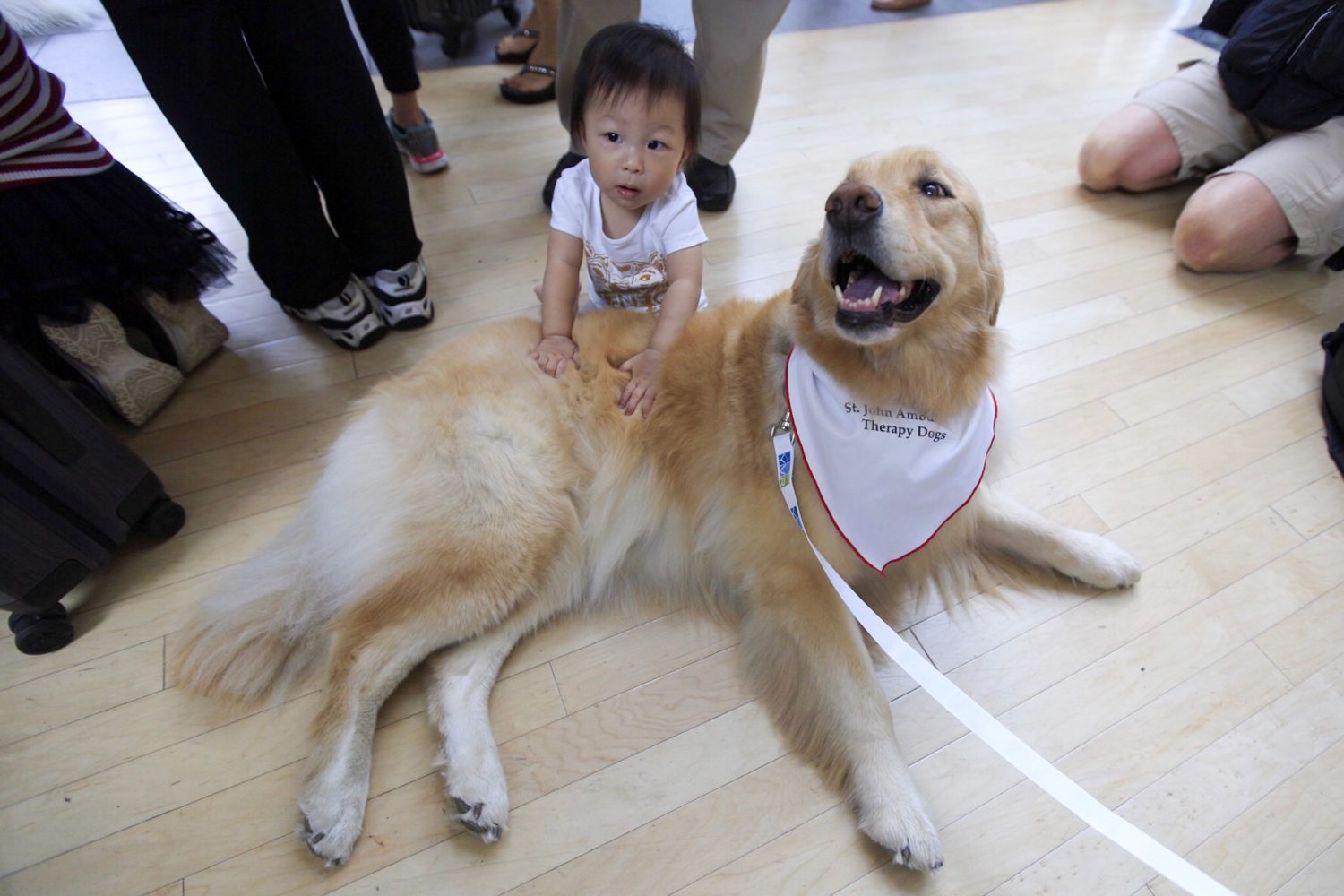
The program will brings Ambassador Dogs from the city’s St. John Ambulance’s Therapy Dog Program into the terminal to help passengers manage the anxiety associated with traveling, work and general stress.

Seven dogs are part of the LASI team (Molly, Bailey, Mira, Norman, Grover, Kermode and Soda) and they will be onsite Mondays through Fridays, from 11:00 a.m. to 1:00 p.m, wearing branded bandanas and accompanied by a dog handler and a YVR Green Coat Volunteer.


The buzz about Victoria Harbour Airport

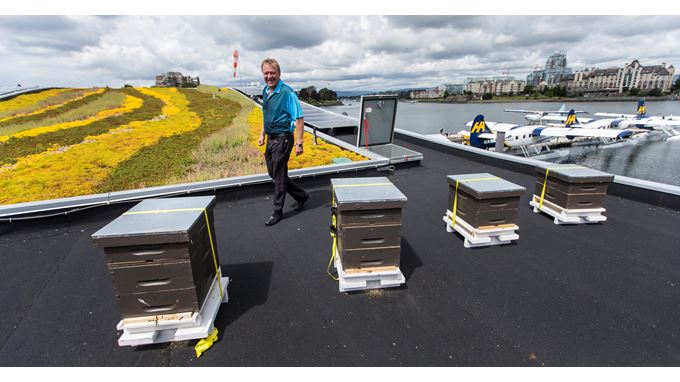
You can take a ferry between Seattle, Washington and Victoria, British Columbia, but it’s much faster – and far more thrilling  –  to take a seaplane and land at Victoria Harbour Airport (YWH), a floating seaplane airport that is home to Harbour Air and Kenmore Air.

To mark the first anniversary of the floating terminal, Harbour Air, which serves 9 destinations in British Columbia, put a colony of honey bees (four beehives containing about 10,00 bees) and 50 solar panels on the airport’s one-acre green roof.

A screen inside the terminal will let passengers see how much electricity the solar panels are generating and a ‘bee cam’ offers a live feed of what the bees are doing.

The airport beehives – which airline officials think may be the world’s first floating hives – are already generating honey and by fall Harbour Honey should be available for purchase in the terminal’s coffee area. Sweet!


Animals at the airport – why so many?

Airports are going to the dogs – and to the pigs.

More than 30 airports around the country now have regular programs that bring certified pet therapy dogs and their handlers into the terminals to mingle with passengers and help ease the stress of traveling.

And during 2016, some airport pet therapy teams broadened their membership beyond dogs.

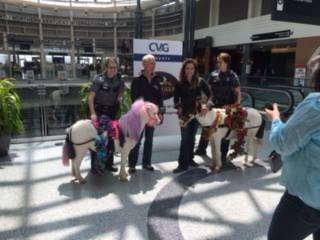
Last summer, when passengers were encountering excessively long lines at security checkpoints at many airports around the country, Cincinnati/Northern Kentucky International Airport began welcoming miniature therapy horses and their handlers to visit several times a month.

And as the winter holiday travel season went into high gear, two airports announced that pigs were joining their pet therapy teams.

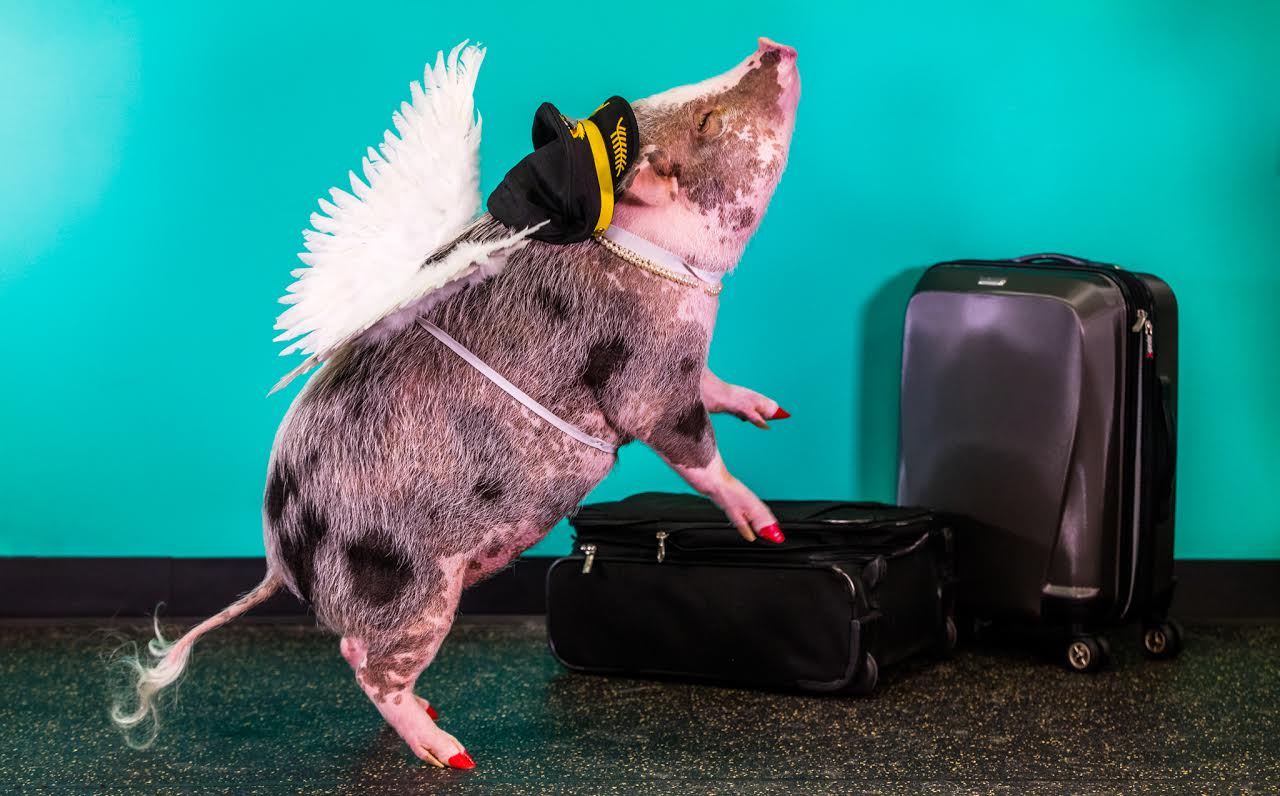
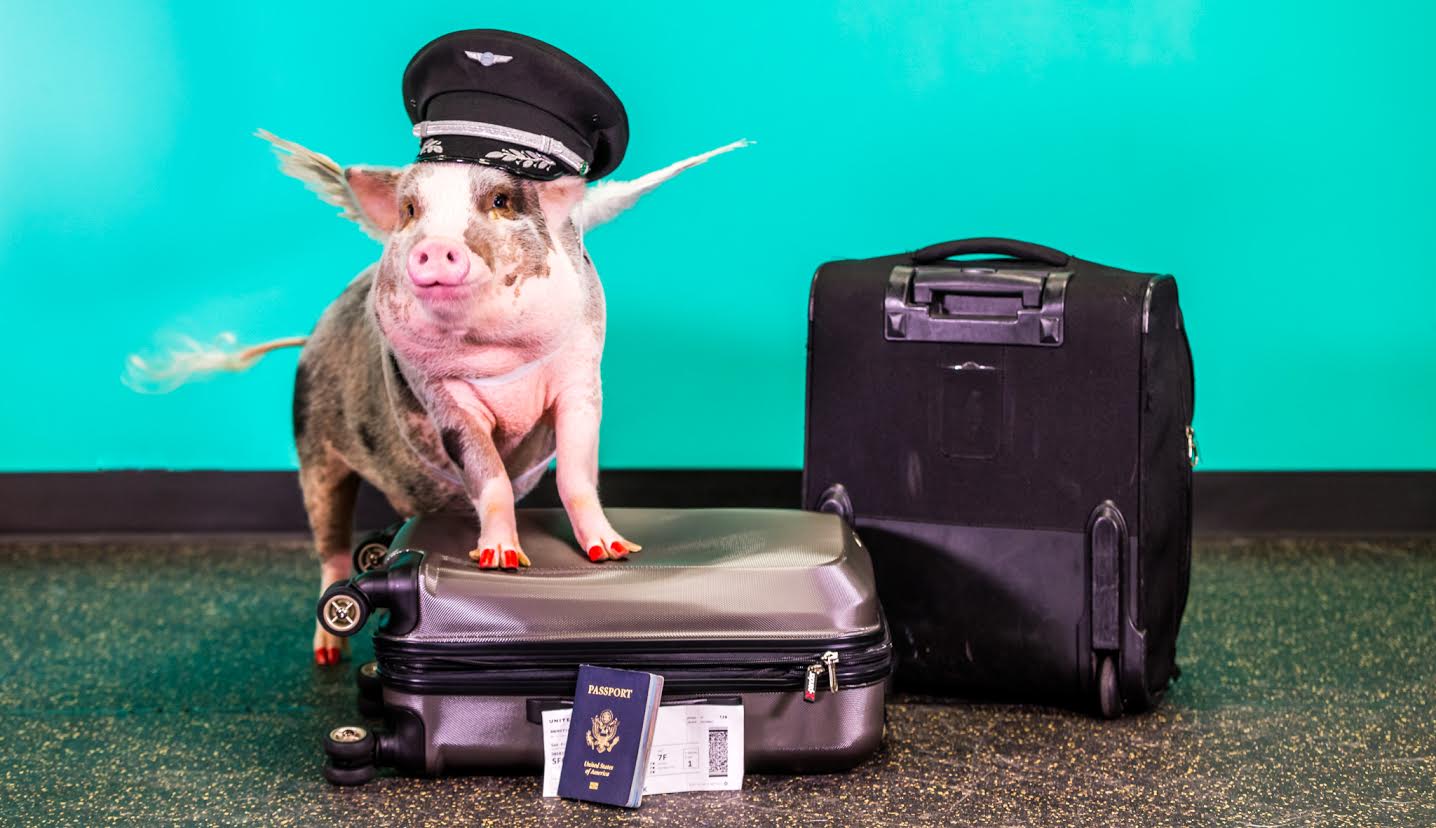
LiLou, a Juliana-breed pig, joined San Francisco International Airport’s Wag Brigade.

And a pot-bellied pig named Bacon Bits is now part of Albany International Airport’s Canine Ambassador program.

More animals in the air

Of course, not all the animals you see in airport terminals these days are just there to be petted.

According to the American Pet Products Association, there are around 77 million pet dogs and 85 million pet cats in the United States — and a growing number of their owners take them along when they travel by air.

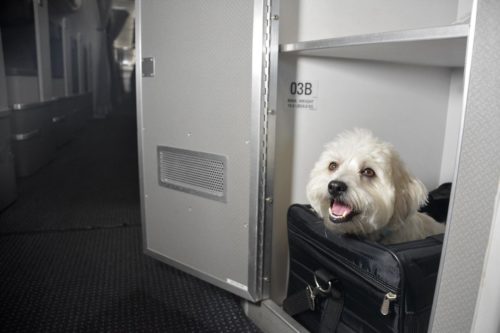
And when they fly as carry-on passengers in the cabin, those pets need to have tickets.

On Alaska Airlines and JetBlue, the domestic fee for a pet in the cabin is $100 each way. On American Airlines, Delta Air Lines and United Airlines, its $125 each way. Frontier Airlines charges $75 each way, and on Southwest the fee is $95 each way.

In some cases, more than one small pet can travel in a pet carrier (and avoid an extra fee), but some airlines will tack on an extra fee if there’s a stopover of more than four hours.

Emotional support animals

The costs to take a pet on a plane can add up, which may be part of the reason an increasing number of passengers are claiming that their animals aren’t just pets but official service or “emotional support” animals which, by law, get to fly for free.

Like Frontier Airlines, which had an issue earlier this year with a passenger’s emotional support marmoset, each airline website lists very specific conditions under which they will accept service animals or therapeutic/emotional support animals on their plane.

An official identification card and/or a written statement from a mental health professional is usually required, but many websites make it easy for pet owners to acquire ‘fake’ documentation — for a fee.

“It doesn’t matter if it’s a duck or a mini horse, as long as a passenger has the correct paperwork, they’re allowed to fly with an emotional support animal and nobody can say anything about it,” said veteran flight attendant Heather Poole, author of Cruising Attitude.

Poole says it’s not a flight attendant’s job to determine which passengers are flying with true support animals or which ones have simply secured paperwork to avoid paying a fee for their pet to fly, but “I can spot a fake emotional support animal a mile away,” said Poole. “It’s usually growling or barking at other support animals. That, or it’s dressed nicer than its owner.”

2017 may bring changes — or at least some clarification — in how airlines and passengers define service or emotional support animals.

While noting that its ACCESS Advisory Committee was unable to reach agreement on updated rules regarding service animals, the U.S. Department of Transportation recently said it intends to draft its own rules.

“The guide dog and animal training groups all agree this is a problem, so does the community,” said Eric Lipp of the Open Doors Organization. “One solution floated is to have a national registry and certification for service animals so they are given ID. The DOT could also fine a passenger and make big news. That would help, but who wants to do that?”

(A slightly different version of my story about animals in airports and on airplanes first appeared on NBC News Travel.)

Best new airport amenities from 2016

People love to complain about all the time they must spend in airports on their way to someplace else.

But, more and more, many airports have turned into darn fine places to hang out in thanks to the addition of art and history exhibits, appealing restaurants and shops and a wide array of welcome amenities.

During 2015, for example, many airports worked out their differences with ride-hailing services such as Lyft, Uber and Wingz and added lactation stations for nursing mothers.

This week and next, StuckatTheAirport.com will run down some of the best new amenities airports added during 2016.

Today: animals at the airport

During 2016, indoor pet potties popped up at hundreds of airports thanks to a Department of Transportation ruling that requires airports to create at least one relief area on the sterile side of each terminal to accommodate service animals.  Traveling pets and the many working dogs at airports get to use the pet lavs without going back out through security as well.

And while it’s no longer rare to have teams of certified pet-therapy dogs and their handlers roaming terminals to engage with passengers and ease the stress of travel, this year several airports welcomed their first non-canine team members.

Miniature therapy horses from Seven Oaks Farm now visit Cincinnati/Northern Kentucky International Airport two or three times a month and both San Francisco International Airport and New York’s Albany International Airport have certified therapy pigs on their teams.


Snake on a plane; moose in a rental car lot

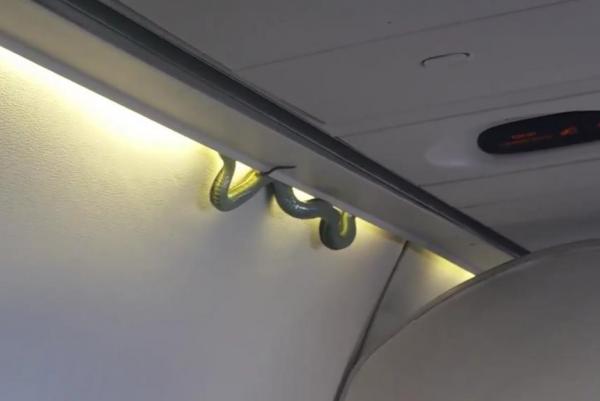
venomous-snake-stows-away-in-passenger-cabin-of-aeromexico-flight

I can barely stand to look at this photo or the video in the Tweet below, let alone imagine being on a plane where a giant snake – possibly a venomous green viper 5 feet long – drops down from the overhead bins into the seats below, but this actually happened on an Aeromexico flight from Torreon to Mexico City on Sunday.

According to UPI, the plane was given priority landing clearance in Mexico City and animal control officers came on board to remove the serpent.

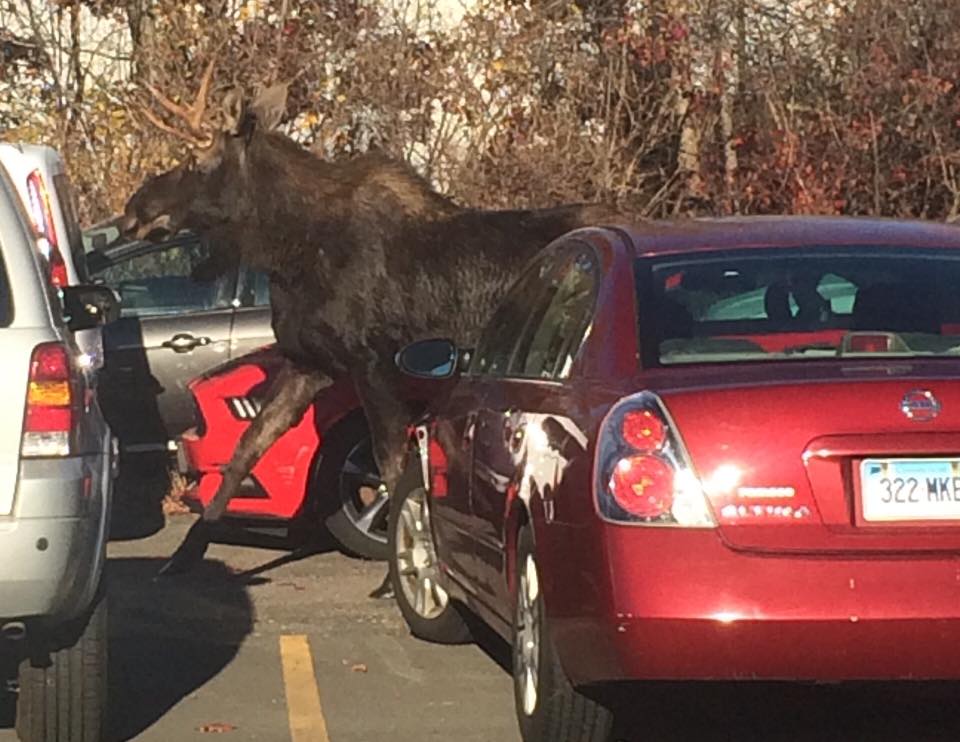
In other news… the Connecticut State Police reported that on Monday they were called in to help redirect a moose that somehow got stuck in the Enterprise Rent-A-Car parking lot at Bradley International Airport.

moose-at-bradley-airport

“File this under ‘things they don’t tell you about in the academy'” says the Connecticut State Police Facebook post about the incident.

How do horses, dolphins and stud bulls fly?

horses-flying-on-air-horse-one-in-october-2016-munched-on-hay-during-their-trip-photo_harriet-baskas

Horses on Air Horse One/Photo: Harriet Baskas

For my ‘At the Airport’ column on USA TODAY this month, I traveled to Lexington, Kentucky’s Blue Grass Airport and to Amsterdam’s Schiphol Airport to learn how horses and other animals fly.

In Lexington, it was all about horses and Air Horse One, the leased 727-200 aircraft the H.E. “Tex” Sutton Forwarding Company uses to fly valuable race horses and show horses around the country at ticket prices that top out at just shy of $5,000 for a one-way trip.

Fed Ex, UPS and large commercial airlines ship horses and other animals as cargo, but Tex Sutton – as the company is commonly known – began ferrying Kentucky Derby winners and other prized horses by air in 1969 and remains the one U.S based horse transportation company that uses a dedicated aircraft to do so.

Courtesy Blue Grass Airport

Courtesy Blue Grass Airport

At During my visit to Blue Grass Airport, Mike Payne, Tex Sutton’s operations manager explained that horses flying on the airline make their way between transport trailers and the airplane on custom-built ramps with high walls so that their feet never touch the ground and so there’s little chance of having a horse get loose at the airport.

Once on board, horses are loaded into specially built stalls that can be arranged two or three across inside the airplane. While the owners of some “celebrity” horses may charter the entire plane, Air Horse One can carry 18 to 20 horses per flight.

Thoroughbreds that have ‘pets,’ such as goats, that help calm them in stalls on the ground can bring their buddies along on the plane – like carry-on luggage – for no extra charge. The same goes for grooms, who travel as animal couriers and get regular seats in the back of the plane.

To accommodate their special cargo, the pilots of Air Horse One make wide turns and extra gentle ascents and descents to try to keep the horses from getting spooked or losing their balance.

“You don’t want to give them too many positive or negative G’s because their feet can slip out from under them and they can fall down,” said Payne, “Or they’ll get that floating sensation and start scrambling to find the floor.”

Like air ambulances and Air Force One, at airports around the country Air Horse One often gets preference when it comes time to take off.

And while Air Horse One predominantly hauls horses the airline recently transported someone’s 40-pound pet miniature cow and, separately, five dolphins.

“Everyone involved with those dolphins was very hush-hush,” said Payne, “They had a police escort and no one would say anything or answer questions, which made you think they were probably military dolphins.”

Courtesy KLM

Courtesy KLM

While Tex Sutton has been hauling horses by air since 1969, all manner of animals have been traveling as cargo on airplanes for much longer.

KLM Royal Dutch Airlines was already transporting bees and baby chicks in 1923, but in 1924 the carrier became the first commercial airline to transport a large live animal when it flew Nico, a valuable young stud bull, from Rotterdam to Paris.

Courtesy KLM

Courtesy KLM

In 1948, when The Hague was celebrating a major milestone, the Swiss capital of Bern sent two baby bears – via KLM – as a present.

And, a KLM blog post celebrating the carrier’s history describes, the post-World War II growth of KLM’s animal transport business came to include donkeys, tigers, elephants, horses, a giraffe, dolphins and “countless dogs and cats.”

Courtesy KLM

Courtesy KLM

Today, KLM has an “Animal Hotel” at Amsterdam’s Schiphol Airport that is billed as one of the world’s largest and most modern such facilities in the world.

And while I didn’t see any rhinos or lions during my tour of the animal hotel earlier I did see (and hear) towers of containers filled with one-day old chicks and trailers filled with thoroughbred horses patiently waiting to board their flights.