Road Trip

Are you driving instead of flying this summer?

Domestic airfares are down. But so are gas prices.

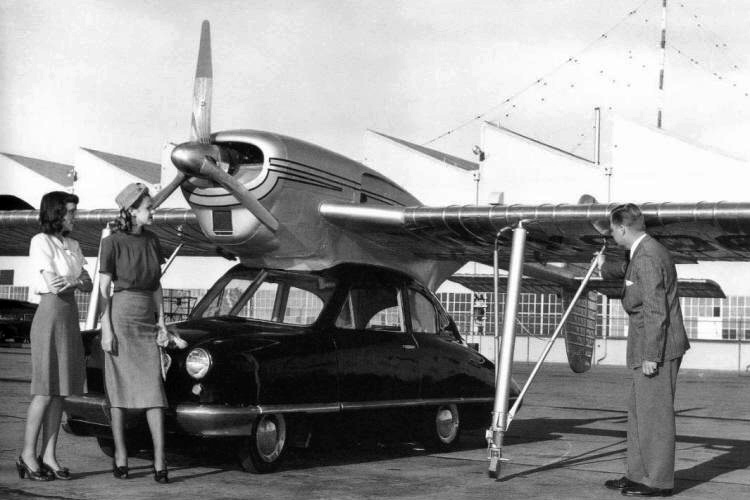
While we wait for the delivery of the flying car we were promised decades ago, we press ahead with summer travel plans by searching for great airfare deals and by tuning up the car.

We’re far from alone, as we reported for this NBC News online story: Road trips revving up as summer travelers hunt for cheaper vacations.

Here’s a slightly different version of the story.

Consumers aren’t ready to ditch their travel plans despite growing economic gloom. But they are hunting for bargains — and hoping to find them on the open road.

Deloitte researchers reported that 53% of U.S. consumers are planning vacations this season, up from 48% a year ago.

There’s especially strong interest in brief but more frequent trips closer to home, including by car, as travelers take a “more frugal approach” this year, the analysts said.

Chris Narvaez, 45, had planned to visit London and Rome this summer. Airfares to Europe are down 8%, according to travel booking platform Hopper, but the New York City-based human resources director said he’s “hitting the pause button” on overseas travel.

“Between new requirements for visas, the current administration, challenges with air traffic control and near misses at local airports, I don’t feel as comfortable as I would getting on a plane,” he said.

Alexisa Humphrey, owner of Sugar and Spice Travels in Lebanon, Tennessee, said her customers are still venturing out. But like Narvaez, “they are doing shorter, more budget-friendly trips,” she said, citing some of the same travel concerns. “I have had clients cancel flights and drive or book a train instead.”

Cost is also a factor. While round-trip domestic flights are hitting three-year lows, according to Hopper, driving typically remains much more affordable. Gas is about 40 cents cheaper heading into Memorial Day than a year ago, according to AAA, which expects a record 45.1 million people to travel at least 50 miles from home over the long holiday weekend. That would mark a more than 3% jump since 2024 to hit the highest level in 20 years.

U.S. consumers have been trimming their vacation budgets as price-hike headlines proliferate and economic sentiment tumbles to historic lows.

Travelers told Deloitte in March that they were planning to spend an average of $3,987 on their main summertime trips, about 13% more than a year earlier. Just two weeks later, though — as frenzied tariff news rattled stock markets — that estimate shrunk to $3,471, less than 1% more than in 2024.

Latisha Hunt, a real estate agent and Air Force veteran in Biloxi, Mississippi, is one of Humphrey’s clients who recently adjusted her summer plans. She shortened a trip to Panama in early July from seven days to three and will drive 5½ hours to Atlanta’s airport rather than fly out of a smaller one closer to home.

Hunt will have plenty of company on the roads. Among drivers surveyed at the pump by gas station video network GSTV this winter, 56% said they planned to drive more on their summer vacations than they did last year; 54% reported choosing driving over flying to save money.

The good news is that rental car costs were down about 2.1% in April from the year before, according to federal data, and Hopper expects them to stay roughly flat with 2024 levels throughout the summer.

But as major rental car operators have adjusted to slower demand, some are slashing their fleets, which could reduce vehicle selection.

Car travelers may also need to budget extra for parking at airports and hotels, many of which tack on fees that can range from just a few dollars to $80 a day. Driver-friendly hotels along major highways and outside of urban areas frequently offer free daily parking, but overnight rates can still top $100 per night at high-demand lots.

Inspiration for a road trip

(Teapot Dome gas station, Zillah, Washington)]

Road trip season is around the corner. And for inspiration we often turn to the John Margolies Roadside America Photograph Archive at the Library of Congress.

Between 1969 and 2008, Margolies traveled around the country taking photos of roadside attractions and classic – and often offbeat – commercial structures around the United States.

Like the Teapot Dome Gas Station structure above, some of these places still exist.

Others are long gone but not forgotten thanks to the photos.

Here are a few of our favorites:

Rabbit statue, Santa’s Village, Jefferson, New Hampshire

Headless statue, Marineland, Florida

Hat ‘n’ Boots Gas Station, Seattle, WA

United Auto Sales sign, Clarksville, Arkansas

Mystery Spot entrance, Saint Ignace, Michigan


Storybook Land Park, Aberdeen, South Dakota

Do you have a favorite roadside attraction you remember from a past road trip? Please share in the comments section below.

Greetings from: Massachusetts

The Stuck at the Airport crew is on a road trip in Massachusetts.

And we’re taking in some of the classics, including looking for lobster and eating at classic diners.

Museums are on the list, of course. And we made a stop in Salem, MA to visit the Peabody Essex Museum, which has a wonderful exhibition about the city that goes way beyond the witches.

We were delighted to learn that Alexander Graham Bell completed the first successful long-distance telephone call from Salem in 1877. And that the Parker Brothers game and toy company, now a Hasbro brand, was founded in Salem in the late 1880s.

Witch weathervane and Monopoly game courtesy of the Peabody Essex Museum

Welcome Back, Tourists. Here are the Rules.

[This is a story we wrote for NBC News]

Americans embarking on spring break trips and summer vacations this year face a bevy of new fees, rules, and restrictions in some popular destinations that are rethinking how many visitors to welcome and what types of behavior to accept.

As the post-pandemic travel rebound continues, the return of tourists — and their wallets — is good news for most destinations. At the start of this year, more than half of Americans had plans to travel in the next six months, according to the U.S. Travel Association, and a third of leisure travelers are planning to travel more this year than last.

But taking a page from Venice, Italy, which banned cruise ships in 2021, and Amsterdam, which is launching a campaign to discourage its rowdiest revelers, many U.S. cities are welcoming back visitors on new terms — in some cases with higher price tags.

Lake Tahoe, California

This year, the Lake Tahoe, California, region had the misfortune to land on Fodor’s Travel’s list of places to reconsider visiting in 2023, after suffering traffic congestion, crowded hiking paths, and trashed beaches. It was the downside of a pandemic-era boom in visitors that many outdoor destinations saw while other activities were suspended or came with greater health risks.

“Locals felt the city was too small for the influx of people coming into town,” said Sonia Wheeler, community service officer for the South Lake Tahoe Police Department. “People couldn’t get home from the grocery store sometimes because there was too much traffic from tourists heading to or from the ski resorts.”

Officials hope to strike a new balance. Policies rolled out during and since the pandemic have tightened restrictions on vacation rentals around Lake Tahoe, with a combination of caps and outright bans in towns along its shoreline.

Now, sixteen area groups are trying to hammer out a stewardship plan that recognizes that “our environment, our economy, and our communities are wholly interconnected,” said Tahoe Regional Planning Agency Executive Director Julie Regan. Ideas on the table include parking reservations and encouraging off-peak visits, an agency spokesperson said.

In the meantime, strict enforcement of new laws targeting vacationers — including $500 fines for noise complaints and for using outdoor hot tubs from 10 p.m. to 8 a.m. — have helped.

“Locals still have concerns about the influx of tourists,” Wheeler said, “but since most vacation rentals have been outlawed, except for certain areas of town, our officers aren’t responding to as many complaints.”

The pandemic was a mixed blessing for many destinations

Early on, it gave some communities “a chance to breathe and enjoy their towns, and parks, and beach without the crowds, traffic, noise, etc.,” said Alix Collins of the nonprofit Center for Responsible Travel. But it “also gave them a time to think about how to better manage tourism moving forward.”

As with Lake Tahoe, many areas’ recalibration efforts are “more of a result of the pot boiling over” from tourism pressures, particularly “on traffic, housing, and daily life,” said Seleni Matus, the executive director of the International Institute of Tourism Studies at George Washington University in Washington, D.C.

Elsewhere, the challenge is getting visitors to better coexist with locals.

“A good example is Port Aransas, Texas,” said Cathy Ritter, whose consulting firm, Better Destinations, helped the Gulf Coast town on a barrier island outside Corpus Christi develop a marketing campaign and a mascot aimed at guests.

One goal, she said, was “to educate visitors on the etiquette of using the golf carts locals use to get around.”

Fees At Popular Hawaii Parks

In Hawaii, where state officials expect tourist numbers to recover fully by 2025, a program of timed reservation tickets for out-of-state visitors that rolled out at popular state attractions just before the pandemic is being expanded.

As of last May, nonresident visitors at Oahu’s Diamond Head State Monument, one of Hawaii’s most heavily trafficked parks, must pay $5 per person for timed entry reservations and $10 for parking. Previously, all comers were welcome, anytime, for $1 per person and $5 for parking.

“Before we put the timed reservation system in place, Diamond Head could have more than 6,000 visitors on a busy day,” said Curt Cottrell, administrator of Hawaii’s Division of State Parks. “Everyone wanted to hike at sunrise or in the morning, and the parking lot could be a crushing mass of walk-ins, Ubers, rental cars, and trolleys.”

The timed system caps visitors at 3,000 daily and spreads them out throughout the day. “Now the summit isn’t crowded, there aren’t long lines at the bathrooms and we’re generating four times the revenue with half the people,” Cottrell said.

Separately, a proposed $50 “green fee” — modeled on arrival charges levied in Ecuador’s Galápagos National Park ($100 per person), Bhutan ($200 per day), Costa Rica ($15 per person), Palau ($100 per person) and elsewhere — is working its way through the Hawaii Legislature.

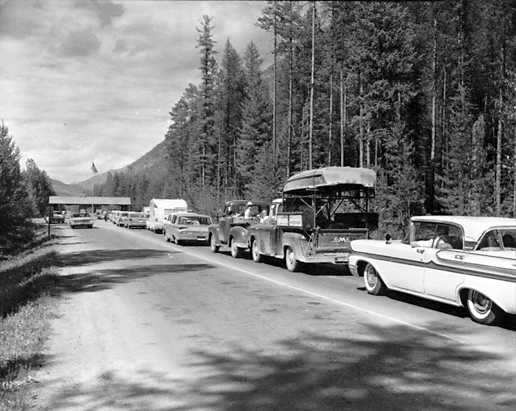
Glacier National Park visitors 1960

On the U.S. mainland, a timed vehicle reservation program — piloted over the last two summers to reduce crowding during popular times at Rocky MountainGlacier, and Arches national parks — will be back in force this summer.

The reservation fee is in addition to vehicle entry fees collected at most national parks.

“Visitation numbers continue to climb toward pre-pandemic levels,” said Jenny Anzelmo-Sarles, chief spokesperson for the National Park Service. “Parks piloting these systems are seeing less congestion at the entrance stations, on the roads and trails, and in parking areas, resulting in improved visitor experiences and visitor safety.”

The changes have drawn some concerns about potential inequities in accessing public parks.

“I love and support” efforts to protect destinations and improve the visitor experience, said Todd Montgomery, director of the Sustainable Tourism Lab at Oregon State University, “but how you do that can be a slippery slope.”

Extra fees and reservation systems can create barriers for visitors with limited travel budgets, those who can’t easily access the internet, and people whose jobs make it difficult to plan vacations months ahead, Montgomery said, “so it needs to be done in a thoughtful, equitable and fair way.”

Other outdoor destinations are focused on coaxing better conduct out of guests.

Starting in 2017, trail ambassadors stationed at many popular Oregon trailheads have been offering advice to visitors on safety, ethical use of public lands, and Leave No Trace practices.

“At the time, we were hearing from local sheriff’s offices needing support for search and rescue, from land managers about increasing issues around trash and dog poop on trails, and visitors creating social trails in unauthorized areas,” said Elizabeth Keenan of the Mt. Hood and Columbia River Gorge Regional Tourism Alliance.

“All those issues increased during the pandemic, with new recreators and ‘pandemic dogs’ out on the trails,” Keenan said. Ambassadors now spend more time guiding visitors to restrooms and water access, describing the terrain and elevation for better decision-making, and passing out poop bags, she said.

Some communities are simply steering visitors away.

Citing concerns that a potential oil or sewage spill from a visiting cruise ship could harm California’s Monterey Bay National Marine Sanctuary, the Monterey City Council voted in February to stop providing dockside support to cruise liners, effectively telling them to go somewhere else.

And they are. Before the pandemic, 15 to 20 cruise ships stopped at Monterey Bay each year, said City Manager Hans Uslar. “Now I see in their advertising that the port of Monterey is out, and instead they’re spending another day at sea,” he said.

Before the pandemic, tourism income in Monterey County averaged about $3.2 billion annually, of which about $1.5 million came from cruise passengers, Uslar said.

“I’m OK with the loss of the cruise income,” he said, “because in return, the product we are selling — which is the natural beauty of Monterey Bay — is now a tiny bit safer. And that is not something you can quantify in millions of dollars.

Road Trip Memories

Courtesy Library of Congress

Road trips can evoke nostalgia for childhood, family, and adventures. And for many people, there are objects and in-the-car experiences indelibly tied to those journeys. 

For some, it is a game, a song, a special snack, the seating arrangements, or a life lesson.

Here are some road trip memories we gathered for a story that ran on AAA Journey.

Please feel free to add your own road trip memories in the comments.

Windshield Duty

As a kid on family road trips, “I was too young to drive, had no radio rights and no money to contribute for gas or snacks,” says Michael Ashley Schulman, who grew up to be an investment officer in Southern California.

But Schulman could help wash the windows when the family stopped for fuel during road trips.

“To this day, swirling a sopping wet sponge on a stick across an insect-laden front windshield, cleanly squeegeeing the water in long methodical swipes with a rubber blade, and then wiping the run lines down with gas station brown paper reminds me of childhood summer road trips across America,” Schulman says.

Music and Singing

Peg Boettcher remembers driving with her family from Illinois to California in a blue-and-white finback station wagon when she and her brother were, respectively, 3 and 4 years old.

“We sang B-I-N-G-O all the way there,” says Boettcher, “And when we reached our destination, we were forbidden from ever singing that song again. When I hear that song now, I think of my poor dad white-knuckling it for days.”

When he was a kid, “no movie made a greater impression on me than ‘Rocky,’” says Baruch Labunksi, a digital marketing entrepreneur in Toronto. “Sylvester Stallone was every man, and I remember wanting to know what it would feel like to run up the steps of the Philadelphia Museum of Art like he did in the movie.”

When his family drove from Toronto to Philadelphia, Labunski’s parents played the Rocky soundtrack along the way, timing it so that the move theme song, ‘Gonna Fly Now,’ was playing as they approached the art museum. “Now, I always make a playlist for road trips, and I’ve even made ones afterward to commemorate a trip,” Labunski says.

Treats, Games, and Souvenirs

For Heather Clardy Dickie, a creative director based in Dallas, road trips were all about the hidden treats.

“Mom bought dime store toys and hid them around the car,” Dickie says. “We had many cross-country family trips, and these judiciously timed offerings distracted my little brother and me from the pent-up restlessness and the outbreak of sibling wars. The toys led to game-playing and, most importantly, preserved my dad’s sanity.”

David Shaw, now a facilities director in Pittsburgh, was the youngest of 12 kids. He says when he was growing up, the family vacations always involved car trips to see older siblings that had moved away.

“We always stopped at the first Stuckey’s [a highway truck-stop chain]. My mom would get butter pecan ice cream, and we would pick up Mad Libs,” Shaw says. “On the road, we would play games such as Punch Buggy, I Spy With My Little Eye, and spot the license plate from the farthest away state.”

Seattle cookbook author Cynthia Nims associates road trips with games, including “one that had things to look for (a cow, a water tower, etc.) and a little red window to cover items after you’d seen them. I haven’t thought about that in years.”

Snacks

Boston-based travel writer Keri Baugh says Chex Mix always reminds her of road trips in the 1980s. “That snack, coupled with canned/powdered Lipton iced tea in a cooler immediately takes me back to that long road trip from Pittsburgh to Orlando,” she says.

For Shelia Jaskot, a media consultant in Silver Spring, Maryland, it is Cheetos. “Growing up my parents never let us eat anything in the car. I thought it was normal. I never knew people ate food on road trips until I started driving myself,” Jaskot says.

Now when she takes road trips with her husband, they buy a bag of puffed Cheetos (she stays away from them at home because they are high calorie and messy). “They can be dangerous, but sometimes a yummy snack is worth the long drive,” she says.

Memories of Lost Items

On long road trips, treasures and essentials like food, books, stuffed animals, and sunglasses may get lost.

For Eric White, an account director who lives near Chicago, it was a tiny set of keys.

“In the mid-80s, when I was 6 or 7 years old, the family was on a road trip from Illinois to the ‘West,’ and, at Wall Drug [a tourist mall in South Dakota] I bought a pair of handcuffs,” White says. “Soon after, with the handcuffs on, I lost the keys through the back of the seat. The next stop was Mount Rushmore, where my parents made me wear the handcuffs. When we returned to the car, they cut me loose from them with a paperclip. Oh, the memories!”

Roadside Stops

Road trips often involve scheduled or — better yet — unscheduled detours to visit roadside attractions such as the Oregon Vortex in Gold Hill, Oregon, or the World’s Largest Frying Pan in Long Beach, Washington.

Negotiating for those stops can be a memorable road-trip tradition.

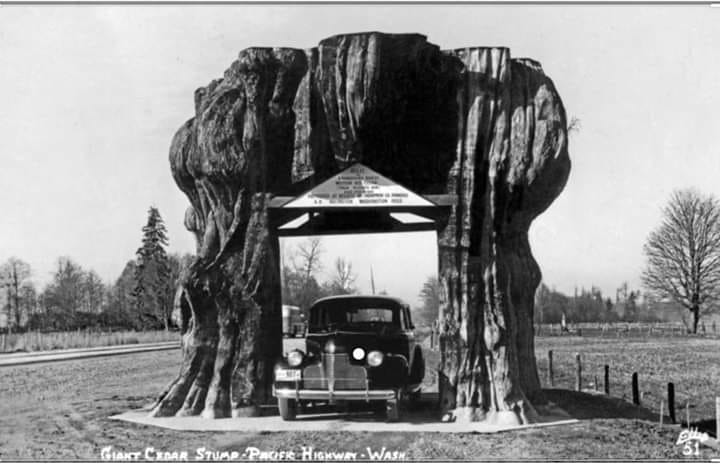
“We had property up near Darrington, Washington, on the Stillaguamish River that we would visit during the summer,” says David Lynx, director of the Larson Art Gallery at Yakima Valley College. His dad would often pull off the highway for a trip through the giant drive-through cedar stump on Highway 99, which is now a walk-through attraction at the Smokey Point rest stop near Arlington along I-5.

“It was always fun for us kids, but my dad got tired of this over the years,” Lynx says. “So, he would drive past it and tell us, kids, that we would go through it on the way back. The only thing was that you couldn’t reach it when you were traveling southbound because the stump was on the northbound side of the highway.

“It took us a couple of times, but we learned that trick.”

Road Trip: Ellensburg, Washington

Far off adventures don’t really need to be that far away from home.

Our road trip team spent the afternoon in Ellensburg, WA, just about two hours from Stuck at The Airport headquarters in Seattle. And while we didn’t get to do everything on our list, we revisited two favorite places with fresh, post-pandemic (we hope) eyes.

Dick and Jane’s Spot

We’ve pulled off the highway numerous times over the years just to see Dick and Jane’s Spot, across from the police station at 1st and Pearl St., and it always delights us.

The art-filled yard of artists Jane Orelman and Dick Elliott (now deceased) has changed a wee bit over the years, but it’s still ” dedicated to the philosophy of ‘one hearty laugh is worth ten trips to the doctor.’

Kittitas County Historical Museum

Some people skip the historical museums when they visit small towns. We start there. And the Kittitas County Historical Museum is one of our all-time favorites, with exhibits on everything from antique cars, and the famed Ellensburg Blue Agate, to medical and military history, and a hallway filled with neon signs rescued from long-gone local establishments.

Bonus: Double rainbow spotted from the hotel parking lot

Nice to end the day with a double rainbow,

Good – and bad – news for summer road trips

(This is a slightly different version of a story we wrote for NBC News)

American travelers are expected to hit the open road by the tens of millions this summer.

But this is some news they could probably do without: gas prices, when adjusted for inflation, are expected to average $3.84 a gallon for regular this summer, the highest level since 2014.

That’s according to estimates released Tuesday by the U.S. Energy Information Administration, an independent research organization. 

Prices like that, combined with the highest level of inflation in more than 40 years, will keep some travelers off the road and cause others to rethink their plans. But a survey done by AAA in early March, when average gas prices reached record highs, found that of the 52 percent of Americans planning to take a vacation this summer, 42 percent said they would not consider changing their travel plans regardless of the price of gas.

Juliette Coulter would have liked to be in that 42 percent. She hasn’t seen her parents, who are in their 80s, or her extended family for more than three years. There will be a big family reunion in July in Lake Tahoe, California. Coulter is not going to miss it, but some of her plans have changed. 

“We talked about driving to the reunion from here in Dallas and stopping along the way at the Grand Canyon. But then gas prices just started going higher,” she said. “With the gas, the hotels, and the meals there and back, we figured out it would be less expensive overall for our family of five to fly.” 

Airfares on her route have gone up, too. But she was able to use frequent flyer points for some of the tickets. And she bought the rest. 

“I guess the Grand Canyon will have to wait,” she said.

Some things can’t wait. Charles Jaferian will be a high school senior in the fall, and he has decisions to make about college. He and his father, Warren Jaferian, a dean at Endicott College in Beverly, Massachusetts, had plans to visit 19 schools over spring break and the summer. Now they will be making some of those visits online, and some without Charles Jaferian’s mother, due to the rising cost of travel. 

After driving 800 miles to see eight schools in Pennsylvania during spring break, “it became apparent that we needed to curtail our travels and rethink our travel plans accordingly, given high gas prices, distances between prospective universities, and higher prices for all associated hotel, dining, and other costs,” Warren Jaferian said. “A virtual visit is good, but it’s just not the same as seeing a campus in person and being able to ‘see’ yourself there.” 

Relief from high gas prices

Cities and states would like travelers to be able to “see themselves” in their towns, too. Many have instituted or are considering gas tax holidays to keep drivers coming.

Lawmakers in more than 20 states have introduced legislation that would put a pause on gas taxes or temporarily reduce tax rates, according to data from the National Conference of State Legislatures. 

Drivers could save an average of $4 every time they fill their gas tanks as a result of the pauses, an NBC News analysis showed.

That could pay off for someone like Gary Whitehead, who spends a lot of time at the gas station. Since 2020, Whitehead has been traveling the country in a Toyota Tundra with an 18-foot trailer hitched to the back. Without the trailer, the Tundra gets 15 miles to the gallon; with the trailer, it gets less than 9 mpg. 

Whitehead is about to head up the California coast to the Pacific Northwest. 

“I’m spending more time planning and using various applications to find gas, camping spots, and more direct routes,” he said in an email sent during a stop at a campsite with limited cell phone service. “I just checked gas prices in Santa Maria, and they are $5.70 a gallon there now. Blah!”

To encourage travelers to get in their cars, this summer some hotels are rolling out packages that include gas rebate cards and other road trip-friendly incentives.

For example, the Drake Oak Brook, near Chicago just launched an “Are We There Yet?” package that includes a $75 gas card, a car freshener, a road trip kit with card games, a travel pillow, and other goodies, plus a to-go meal for two and pre-departure coffee drink. (Prices start at $395). Guests who show their gas receipt when checking in at the Georgian Lakeside Resort in Lake George, NY get $20 off each night of a minimum 3-night stay. And Sentral, which offers short- or long-term apartment stays in Austin, Miami, Chicago, and Denver has a Summer Road Trip offer that includes a daily $15 gas credit on a minimum 4-night stay.

Of course, there are ways to eliminate the sting of high gas prices. Drive something that doesn’t take gas.

Some rental car companies have hybrids and electric vehicles in their fleets. But they’re tough to get ahold of, “and they’re renting at a premium of well over $100 or $120 a day when a normal vehicle is $40 or $60 a day,” said Tyson Jominy, vice president of data and analytics at J.D. Power. “The average American pays about $50 more a month every time gas goes up by $1 per gallon. As painful as that is, you’d have to drive a lot each day to make (renting) economically feasible.” 

Museum Monday: World’s Largest Cast Iron Skillet

Stuck at the Airport’s correspondent for Museums and Roadside Attractions is planning a summer trip to South Pittsburg, Tennessee for the planned opening of the Lodge Cast Iron Museum.

We’re already intrigued to learn that South Pittsburg, TN has been home to Lodge Cast Iron since 1896. And we’re looking forward to seeing rare cast-iron collections and exhibits about the history of the company, the “making of” cast iron items, and an exploration of ‘Cast Iron Culture.’

Mostly, though, we’re looking forward to seeing the World’s Largest Cast Iron Skillet.

The skillet measures over 18 feet from handle to handle and weighs in at a whopping 14,360 pounds.

World’s Largest Frying Pan

While Lodge Cast Iron may currently lay claim to the World’s Largest Cast Iron Skillet, there have been some contenders over time.

Our favorite is the giant frying pan in Long Beach, Washington.

Created in 1941 for the Long Beach Chamber of Commerce. A pan claiming to be the largest frying pan in America was used in the annual Clam Festival in Long Beach during the 1940s.


Courtesy University of Washington Libraries, Special Collections

According to Pacific County Tourism Bureau, the giant frying pan was created in Portland, Oregon in 1941 to help promote the first annual Clam Festival.

At that time, the pan weighed in at 1,300 pounds and was 10-feet wide and 20 feet tall.

Back then, this was a working pan. During the clam festival, the pan was used to make a clam fritter out of 200 pounds of clams. The creation required two garden hoes and 4 two-foot X two-foot spatulas. The following year, 20,000 people showed up to eat a giant 9-foot clam fritter.

Here’s the recipe if you want to try it at home:

Chef Wellington W. Marsh’s Giant Fritter Recipe

  • 200 pounds of clams
  • 20 dozen eggs
  • 20 pounds of flour
  • 20 pounds of cracker meal
  • 20 pounds of cornmeal
  • 10 gallons of milk
  • 13 gallons of salad oil

The giant frying pan became a tourist attraction. It went on tour throughout the Pacific Northwest and made an appearance in Los Angeles in 1952.

For a long time, the pan hung outside Marsh’s Free Museum in Long Beach (home of Jake, the Alligator Man), but it rusted over the years. Today only the pan’s original handle remains, and the pan’s replacement is made of fiberglass.

The (Not So) Impossible Road Trip

Icy snow is covering our town. So we spent the holiday weekend just dreaming of places we want to go and making a list of new and old favorite sights we want to see in the new year.

The Impossible Road Trip – An Unforgettable Journey to Past and Present Roadside Attractions in all 50 States” turns out to be a great aid to our adventure planning

When the book by Eric Dregni first showed up at our house, we thought the “impossible” in the title meant the book was all about historic roadside attractions and quirky destinations across the United States we’d never get to see.

But now that we look closer, we see that the long-gone spots mentioned here simply offer context for all the corny, quirky, and unique places that are still around.

Like the Big Duck in Flanders, NY. The World’s Largest Buffalo Monument in Jamestown, North Dakota. The Cardiff Giant in Cooperstown, NY, And many places across the country where you can spot statues of dinosaurs, muffler men, and Paul Bunyans

Here’s a look inside the book, which includes infographic maps, themed roundups, and some wonderful photographs taken by the late architectural critic and photographer John Margolies.

We checked to see if some of our favorite attractions in Washington were included and were pleased to the Zillah’s Teapot Dome Gas Station and Seattle’s Hat ‘n’ Boots included. (These photos are not from the book).

Courtesy VIsit Yakima

Not flying? Try Amtrak’s $299 Rail Pass

It’s like the Eurail Pass, but for the U.S.

If you’re not quite ready to get on a plane, perhaps you’re up for an adventure by train.

Amtrak’s USA Rail Pass, which allows 10 ride segments in 30 days, is on sale through June 22 for $299. That’s $200 off the regular price of $499 and just a smidge under $30 per ride.

Where does Amtrak go? Pretty much everywhere. The rail service says it serves more than 500 destinations.

Sound tempting? Here’s a bit of how it works.

Purchase a pass by June 22 and start your travel adventure within 120 days. The pass allows you to ride 10 Coach class segments within a 30 day period, starting with the first trip you take. Upgrades to Business Class and private rooms are not permitted.

Passholders book their own itineraries and receive an electronic ticket for each segment to show to the conductor. Modifications to your itinerary are permitted as long as they are made before the scheduled departure of a segment.

What’s a segment? If you board and disembark a scheduled train, Amtrak counts that as a segment. Need to make a connection? That’s another segment.

Some other USA Rail Pass rules to keep in mind

Southwest Chief near Fishers Peak, Colorado.

The USA Rail Pass isn’t good on those speedy northeast Acela trains, nor on the popular Auto Train that transports people and their cars 900 miles from Washington D.C. to just outside of Orlando, FL. You can use it on the Maple Leaf Route, but not for the Canadian stations.

The pass is good for Saver and Value Fares, not for Flexible Fare tickets. And you can only take two roundtrips (four one-way segments) between the same two stations.

If you’ve got time and the desire to see a lot of the country this summer, then $299 for 10 rides can get you pretty darn far.