The exhibition includes a print of Andy Warhol’s f Queen Elizabeth II (1985) and prints from his Campbell’s Soup series, alongside works by other Pop Art figures such as Jasper Johns, Robert Rauschenberg and Claes Oldenburg.
Pop Icons runs January 18 – April 13, 2025
(Stitches by Robert Rauschenberg. Courtesy of UCR ARTS)
The Stuck at the Airport Museum Team missed visiting the Musical Instrument Museum (MIM) in Phoenix, AZ our last time through and we plan to make the MIM our first stop the next time we head that way.
Which may be soon.
The museum displays more than 4,200 instruments representing all the world’s countries and many territories.
This week MIM unveiled Stradivarius and the Golden Age of Violins and Guitars, showcasing more than 70 exceptional string instruments and bows crafted by master luthiers such as Antonio Stradivari, Andrea Amati, and Giuseppe Guarneri “del Gesù.”
This exhibition includes violins, guitars, lutes, and bows from the 16th to 19th centuries—many of which have never been publicly displayed before.
Exhibition highlights include:
The “Tartini” violin by Antonio Stradivari (1726). This comes from late in his golden period when he made his most mature instruments.
A mandolino coristo by Antonio Stradivari. This is one of only two known surviving mandolins crafted by the iconic luthier.
A violin by Andrea Amati who created the violin and the violin family as we know them today. This violin is one of only twenty-three documented Amati instruments known to survive today.
A guitar from the school of Matteo Sellas, c. 1625. This Venetian guitar is embellished with ivory, ebony, tortoiseshell, and pearl, and it has a tiered “wedding cake” rose, a common feature of guitars until the mid-18th century.
If you’re a music fan flying into Phoenix Sky Harbor Airport (PHX), check the airport’s Traveling Tunes live music program schedule. Local artists take the stage and play live music on the Traveling Tunes music stage in Terminal 3, Level 4 on the main concourse, and in the Terminal 4 Food Court on Level 3.
There’s a different musical genre featured each month. And for November the theme is classical.
It’s been a while since we had a chance to visit the Museum of Anthropology at the University of British Columbia’s Vancouver campus.
The whole museum was closed for more than a year while seismic upgrades were made to the spectacular Great Hall, which has 50-foot-tall glass walls and displays of Northwest Coast poles, house posts, carved figures, canoes, feast dishes and other objects primarily from the mid-19th century.
Work by contemporary artists are mixed in here and there, and there are other temporary exhibitions as well as permanent galleries, including the Koerner European Ceramics Gallery, which displays one man’s collection of over 600 objects.
Beyond the Great Hall, our favorite part of the museum is the Multiversity Galleries displaying more than 16,000 objects from the museum’s permanent collection in open storage and in enticing pull-out drawers.
Impossible to see in one visit, many of the exhibit groupings were created in consultation with members of the communities whose relatives and ancestors made the pieces on display.
The SFO Museum‘s newest exhibition, San Francisco: City of the World, offers travelers a thoughtful, fun and educational look at the iconic city’s colorful history.
Find it post-security in Terminal 2 through July 6, 2025.
A preview of images and information from the exhibit is below.
Content and images courtesy of SFO Museum.
In 1848, gold was discovered in the Sierra Nevada foothills. The following year, more than seven hundred ships arrived in San Francisco.
The Gold Rush transformed the region into a bustling city of approximately twenty-five thousand inhabitants, including thousands of Chinese immigrants who established California’s oldest and largest Chinatown.
Andrew Smith Hallidie (1836–1900) tested the first cable car in 1873 on Clay Street and public service began in September that same year.
By the turn of the twentieth century, San Francisco was known as the “Paris of the West,” until the 1906 earthquake and resulting fires leveled the city.
The resilient metropolis was quickly rebuilt, and during the early 1900s numerous San Francisco landmarks, such as Coit Tower (1933) and the Golden Gate Bridge (1937)—the most photographed bridge in the world—were built. In addition to its natural beauty and historical sites, San Francisco has long served as a meeting ground for diverse groups of people and countercultures, which are also explored throughout the exhibition.
(D.B. Cooper pink parachute courtesy Washington State History Museum)
The only unsolved commercial airline hijacking in the U.S. remains the November 24, 1971 hijacking of Northwest Orient flight 305 to Seattle by someone who has come to be known as “D.B.” Cooper.
(Sketch courtesy FBI)
In 1971, Cooper boarded a Boeing 727 on Thanksgiving eve, November 24, that was heading from Portland, Oregon to Seattle.
During the flight, he passed a flight attendant a note saying that he had a bomb and would blow up the plane unless he was given $200,000 in $20 bills and some parachutes.
His demands were met and he parachuted out of the plane, with the money, somewhere over southwest Washington State.
In 1980 some of the money was found along the banks of a river. But Cooper remains at large.
And the mystery lingers on.
Cooper’s hijacking demands included four parachutes. He got them but didn’t choose the pink nylon reserve parachute that the Washington State History Museum in Tacoma, WA is displaying this fall.
The parachute was part of the evidence the FBI recovered for its hijacking investigation and has since been given to the museum for safekeeping and occasional display.
You can see this parachute and contemplate what you think happened to Cooper and the money from September 22 through November 16, 2014.
If you can, come by the museum on November 14 for the History After Hours program.
I’ll be there for a presentation about some of the weird and wonderful objects, like the D.B. Cooper parachute, that museums rarely or never display.
Here’s a short video about D.B. Cooper from Seattle’s public TV station.
Travel for the Independence Day holiday week is already underway, with AAA projecting that close to 71 million people will travel 50 miles or more from home between this past weekend and next.
Whether or not you plan to hit the road, we hope visiting a museum is part of the agenda. Here are some museums offering free admission on July 4, throughout the holiday weekend and all summer.
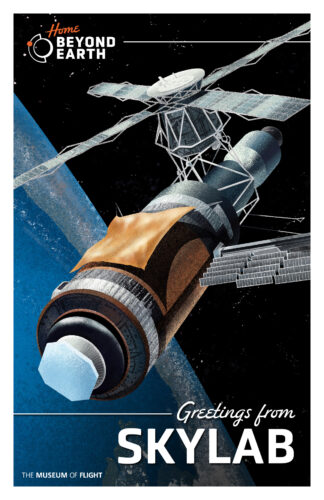
In Seattle, the Museum of Flight is offering free admission all day (from 10 am to 5 pm) Thursday, July 4. The museum recently opened a new exhibit, Home Beyond Earthexploring what it might be like to live and/or work in space.
Museums on Us: free entry for the holiday weekend: July 6 & 7
(courtesy Alder Planetarium)
Bank of America offers free entry to major museums around the country during the first full weekend of every month to anyone with a Bank of America credit or debit card. The next free weekend is July 6 and 7.
The list of participating museums around the country is quite long and includes museums such as The Henry Ford in Dearborn, MI and the Alder Planetarium in Chicago where the regular admission fee can be quite hefty. This is also a great option if you’re looking for an activity to escape bad weather or extreme heat.
The Blue Star Museums program offers free admission to active-duty military personnel and their families, including the National Guard and Reserve.
The 2024 Blue Star Museums program is underway now and runs through Labor Day, Monday, September 2, 2024.
Participating Blue Star Museums include a long list of children’s museums, art museums, history and science museums, zoos, nature centers, and more.
Check this list to see if there’s a participating museum near you.
More ways to get free museum admission
Many museums have regular days or hours when admission is free, discounted or “pay what you wish.” To find out when you may need to check the “tickets” page on a museum’s website and scroll (way) down.
A membership card from a museum in the North American Reciprocal Museum Association will get you free admission at more than 1,000 member museums in the U.S., Canada and beyond.
In some American cities, a group of museums may offer free admission on the first Thursday or Friday of a given month. Some sites, like Chicago’s Field Museum, offer state residents free entry on select days. And in Washington, D.C., admission is always free at Smithsonian Institution venues, including the National Air and Space Museum, the National Museum of African American History and Culture and the National Zoo.
The Museums for All program offers free or reduced admission year-round to visitors with public assistance (EBT) ID cards and many public libraries have museum passes that can be checked out free to anyone with a current library card.
The Stuck at the Airport team is in Paris this week. Lucky us, right?
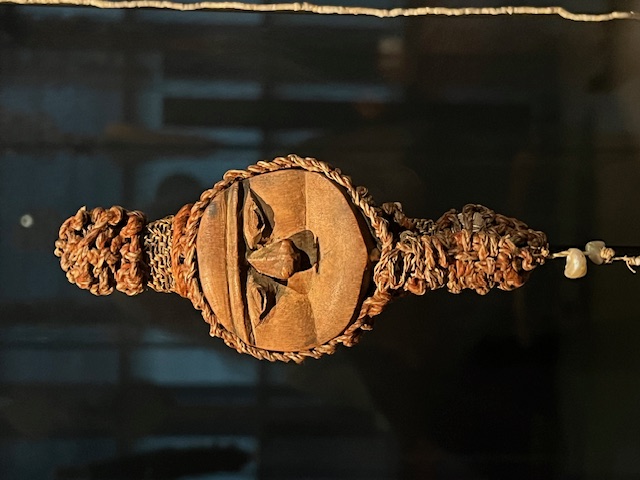
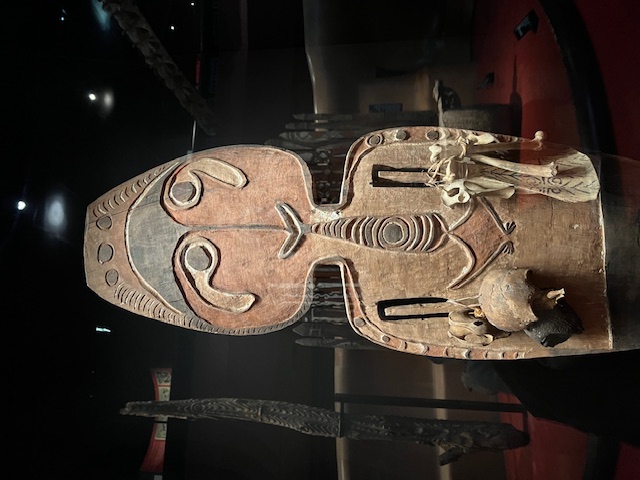
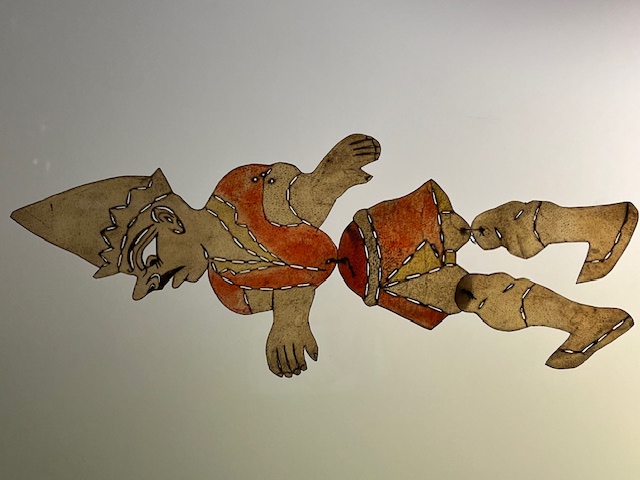
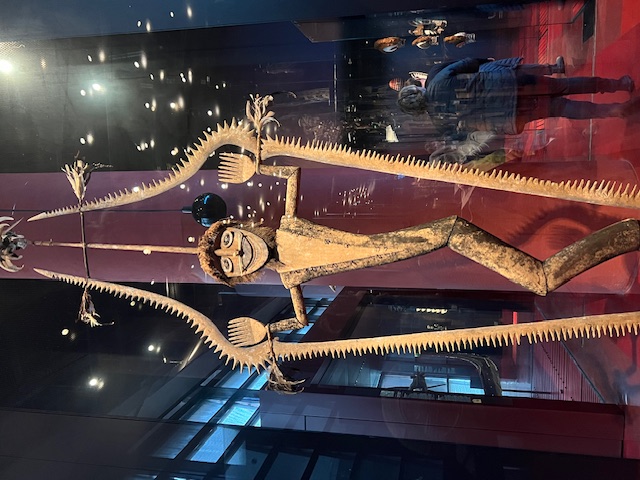
First stop: the Eiffel Tower, of course. But only because it was on the way to a great museum: The Musée du quai Branly-Jacques Chirac, which does a wonderful job of displaying, promoting, and explaining the indigenous arts and culture of Africa, Asia, Oceania and the Americas.
Jet lag set in before we could see everything the museum has to offer. But we were glad we took a long walk along the Seine and spent our first day on the ground not waiting in line at The Louvre or another over-visited spot.
Here are some snaps from what we highly recommend you add to any itinerary that includes Paris.
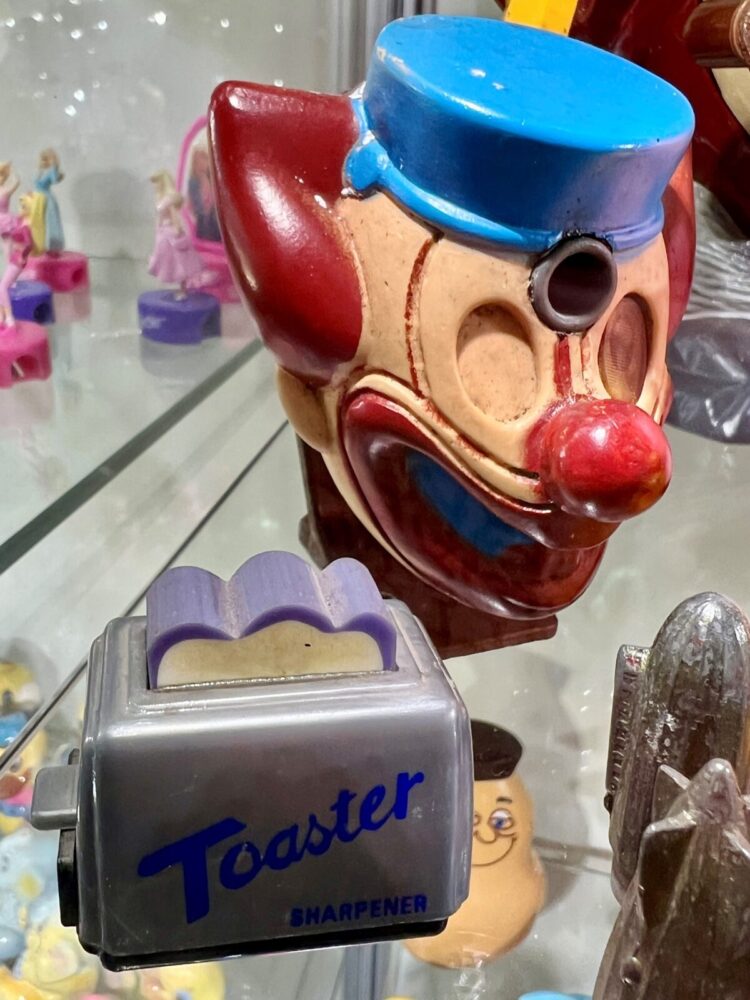
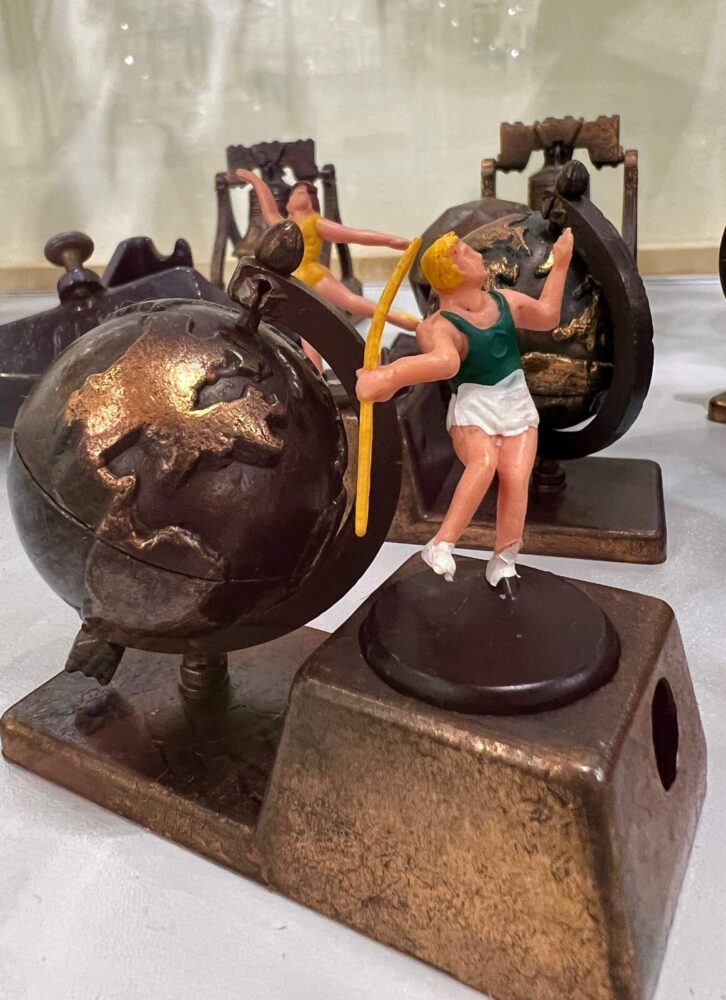
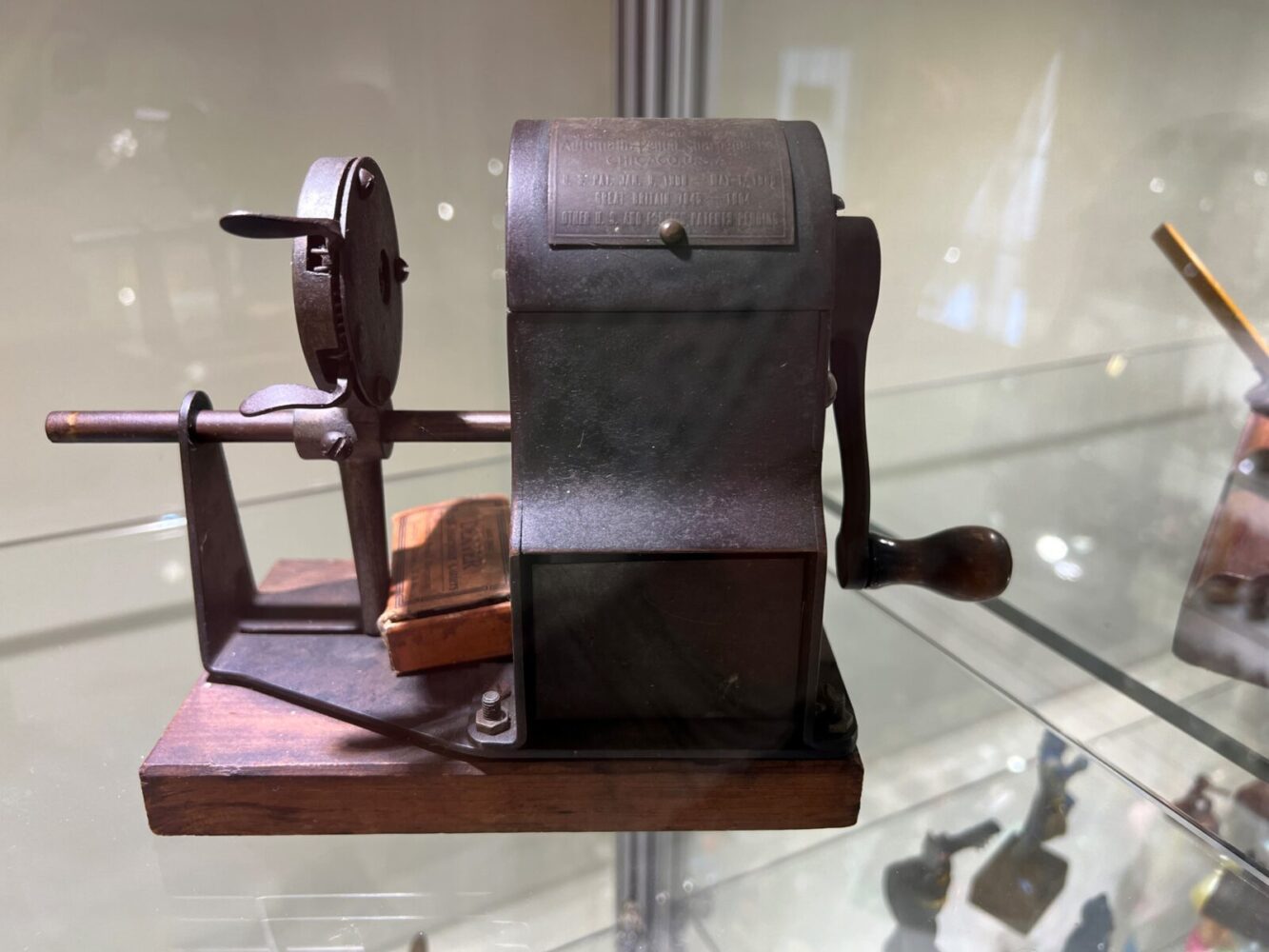
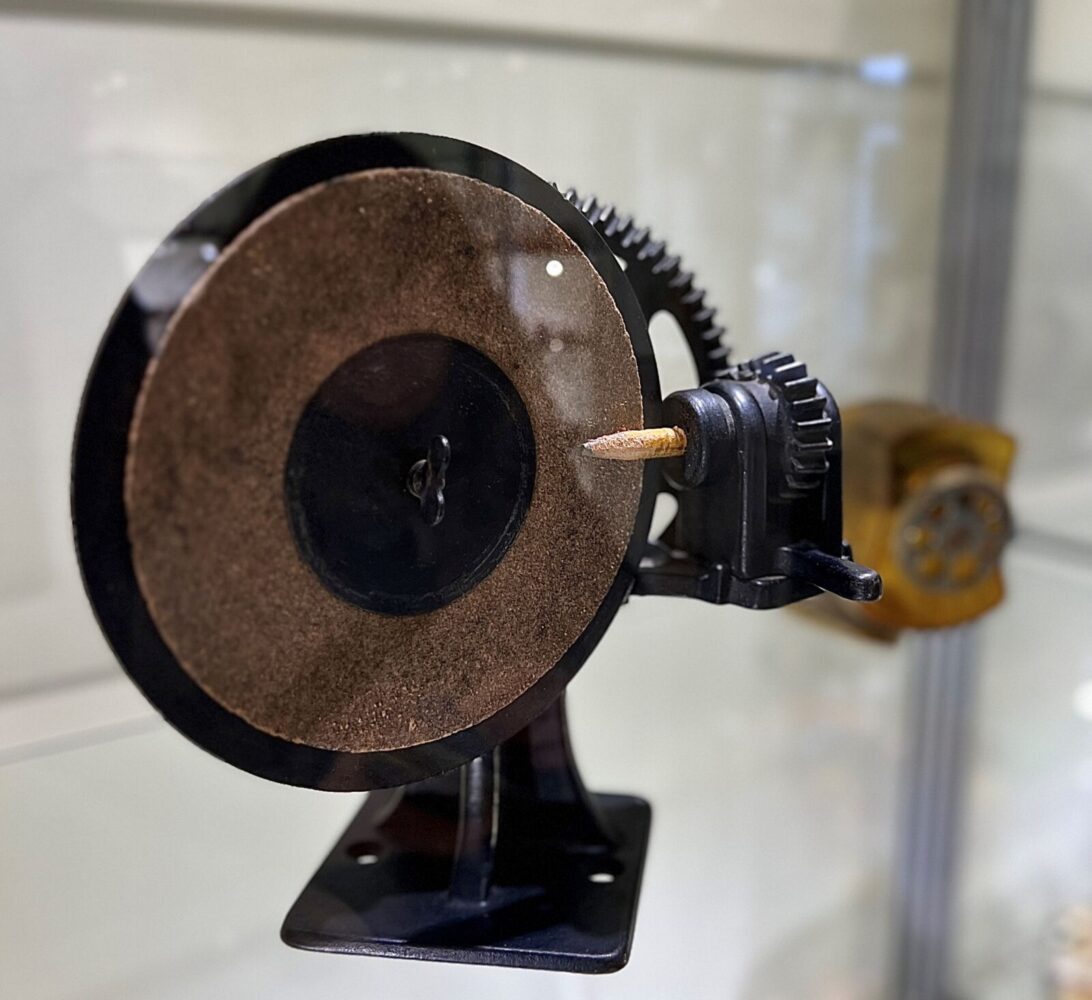
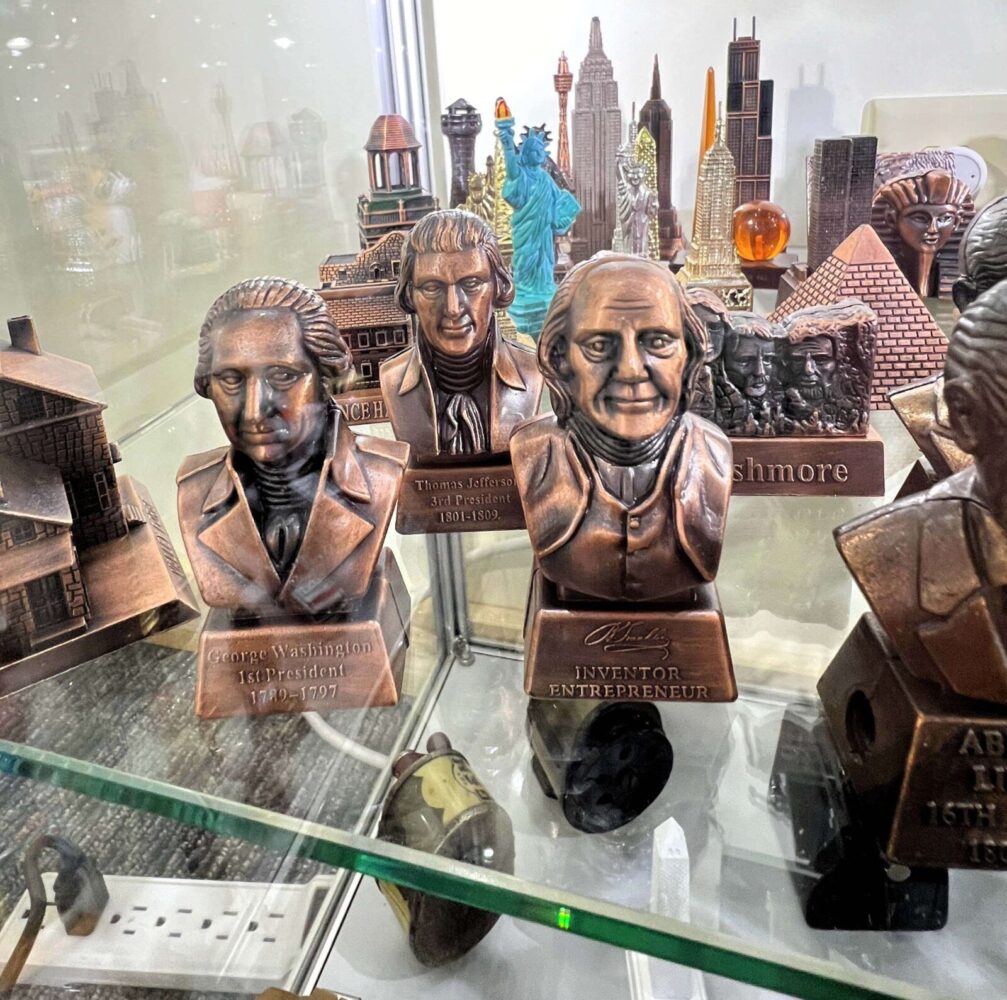
The Pencil Sharpener Museum in Logan, Ohio is open again, and the 5,000 sharpeners in the collection are now housed in a new building at the Hocking Hills Regional Welcome Center.
This is the world’s only Pencil Sharpener Museum and it includes 4000 pencil sharpeners collected by the late Rev. Paul Johnson, plus a new addition of 1000 pencil sharpeners donated by the family of antiques collector Frank Parades, who discovered pencil sharpeners dating back to the 1800s.
Here are some of our favorite images of pencil sharpers from the collection, but we’re sure sharp-eyed visitors will discover their own.
If you’re heading to or through San Francisco International Airport (SFO) anytime soon, be sure to look for some of the permanent and temporary exhibits offered throughout the terminals by the SFO Museum.
One of the newest, titled Everyday Elegance in Chinese Ceramics, features an assortment of functional wares from the nineteenth and twentieth centuries representing various regions in China.
The exhibit includes oil lamps in the shape of animals, colorful hat stands, lively guardian lions or “foo dogs,” blue-and-white porcelain, rustic food storage jars, and more.
According to the exhibition notes:
Everyday objects are frequently embellished with a host of auspicious symbols to increase the likelihood of wish fulfillment. Rebuses or pictorial puns found on ceramics convey a variety of desires, from a harmonious marriage to the securing of rank, wealth, and longevity. Decorative motifs often take the form of flowers, birds, animals, children, or geometric designs.
Looke for Everyday Elegance in Chinese Ceramics, in the pre-security area of the International Departures Hall (Gallery 4D) at San Francisco International Airport through mid-August.
On a recent road trip through Oregon’s Columbia River Gorge, the Stuck at the Airport museum reporter came upon the National Neon Sign Museum in the charming town of The Dalles, Oregon.
Unfortunately, the museum was closed the day were were in town. Fortunately, museum director David Benko answered the phone when we called and agreed to open the museum for a special tour.
Benko is a longtime neon sign collector, a neon expert, and a skilled neon sign designer who has amassed more than 300 neon signs as well as a vast collection of artifacts related to the invention of neon and its evolution as an advertising tool.
He’s turned the Elks Temple in The Dalles into a neon sign shrine, with a movie theater for showing films about neon; an exhibit devoted to Georges Claude, the French engineer who invented neon tubing; rooms filled with brightly lit neon advertising signs; and an event space designed to look like a small town Main Street in the era when every shop had a neon sign.
This one’s a winner and a great reason to plan a trip to The Dalles, Oregon.