We don’t know when the government shutdown will end, and furloughed workers will be able to get paid and get back to work.
But in the meantime, museums and attractions around the country are trying to help out a bit by offering free admission to federal employees during the shutdown. Here are some examples. Let us know if you find others.
In Oregon: Columbia River Maritime Museum
Columbia River Maritime Museum Offers Free Admission for Federal Employees During Shutdown – Astoria, Oregon Coast —- A moment of relief and connection for families facing financial uncertainty https://t.co/SBnmsEOlEypic.twitter.com/jVpohhCenT
Neil Armstrong’s spacesuit. Courtesy National Air & Space Museum
The Smithsonian Institution’s museums, research centers and the National Zoo will use prior-year funds to remain open to the public during the federal government shutdown at least through Monday, October 6, 2025. Updates will be posted as needed on the Smithsonian’s website.
The International Spy Museum is offering 50% off admission for government employees who show ID.
The Denver Art Museum is offering free general admission to all furloughed federal government employees plus one guest through Jan. 31, 2019. Please note, "Dior: From Paris to the World" is not included in general admission and requires a separate ticket. https://t.co/uQPHWynZIX
This list of Colorado museums offering free admission to furloughed government workers during the shutdown is courtesy of Denver’s ABC station.
1. Buffalo Bill Museum and Grave – Golden, Colorado 2. Center for Colorado Women’s History at Byers-Evans House – Denver 3. Colorado Railroad Museum – Golden, Colorado 4. Colorado Springs Fine Arts Center at Colorado College – Colorado Springs, Colo. 5. Denver Art Museum – Denver 6. Denver Firefighters Museum – Denver 7. Denver Museum of Nature and Science – Denver 8. Dinosaur Journey – Fruita, Colo. 9. Dinosaur Ridge (federal employee + 3 guests are allowed in; free admission until February 15) – Morrison, Colorado 10. El Pueblo History Museum – Pueblo, Colorado 11. Fort Garland Museum and Cultural Center – Fort Garland, Colorado 12. Fort Vasquez – Platteville, Colorado 13. Four Mile Historic Park – Denver 14. Golden History Museum + Park – Golden, Colorado 15. Hart Research Library – Denver 16. Healy House Museum & Dexter Cabin – Leadville, Colorado 17. History Colorado Center – Denver 18. Museum of Colorado Prisons – Cañon City, Colorado 19. Museum of the West/Museum of Western Colorado – Grand Junction, Colo. 20. Office of Archaeology & Historic Preservation and State Historical Fund – Denver 21. Trinidad History Museum – Trinidad, Colorado 22. Ute Indian Museum – Montrose, Colorado 23. Wings Over the Rockies Air & Space Museum – Denver
Many other museums and attractions are stepping up to offer a bit of relief to furloughed government workers during the shutdown. Check to see what’s available where you are.
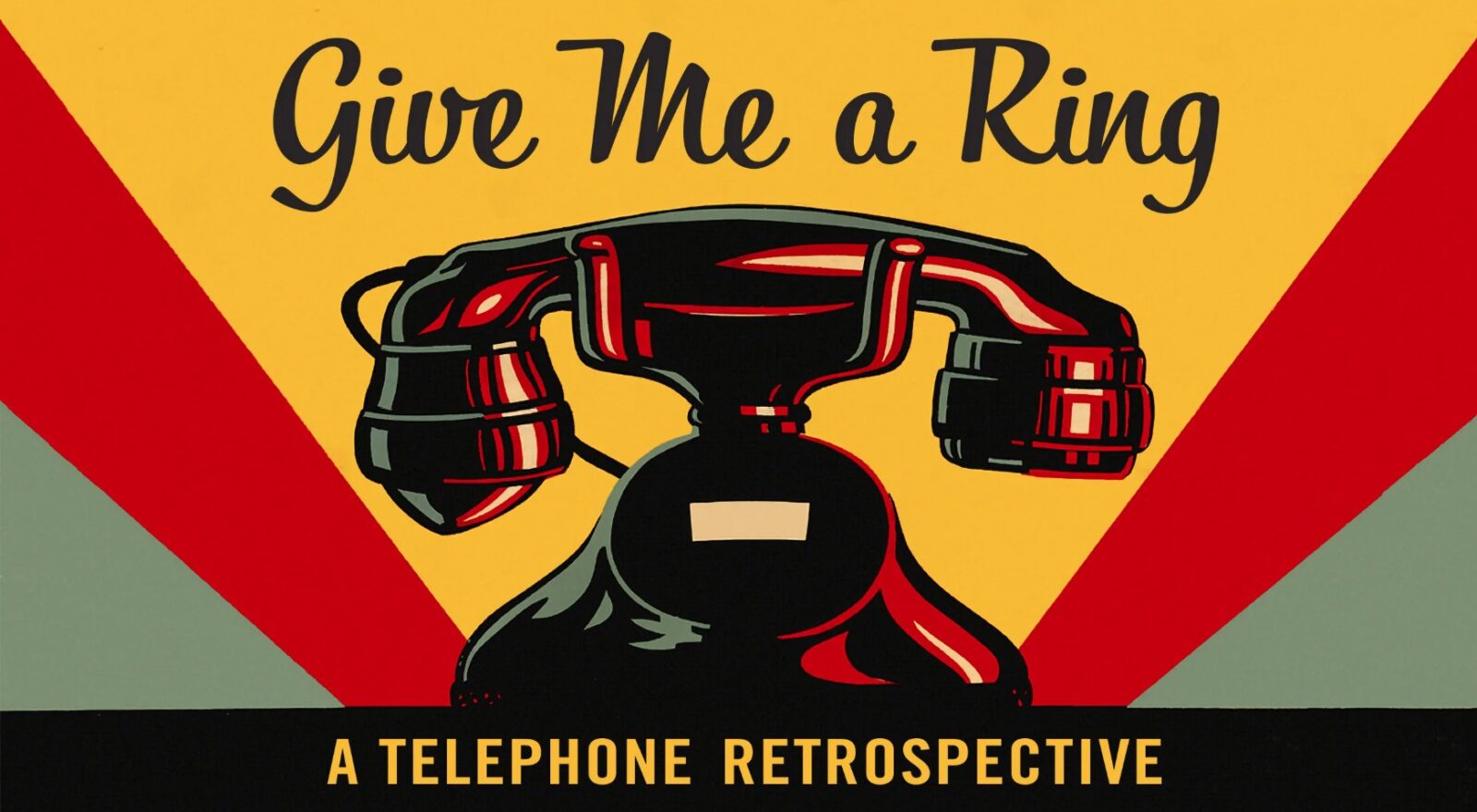
The SFO Museum is presenting a new year-long show about the history and development of telephones.
The exhibition, made possible thanks to a loan from the JKL Museum of Telephony in Northern California, features an array of classic telephones from the late 19thcentury to the 1990s.
On display are streamlined Art Deco telephones, payphones, and novel Picturephones of the 1960s, a 1958 Touch-Tone telephone prototype and much more.
Here’s a preview of some of the information and objects you’ll see in the exhibit.
Candlestick telephones
Introduced in the late 1890s, the candlestick telephone required the caller to speak into the candlestick while holding the receiver to their ear to hear the other party.
To place a call, a person had to speak with a switchboard operator who made the connection to the requested number.
Rotary dials and handsets
The first rotary dial telephones allowed people to dial a telephone number without the assistance of an operator.
In rotary dialing, each number on the dial is associated with a series of electrical pulses.
When a caller turns the dial, it sends the pulses down the line. For instance, if one dials ‘7,’ the telephone delivers seven pulses. These pulses are then translated at an automatic telephone exchange to connect the call to the desired number.
Payphones
Payphones, hard to find today, remained an important part of telephone communication until the advent of cell phones.
William Gray patented the first coin-controlled apparatus that used a bell system to signify when a user inserted a coin. Operators listened carefully as coins of different denominations traveled down separate chutes where they struck bells and gongs to verify that the correct payment was received.
The first pay telephone was installed in a bank in Hartford, Connecticut, in 1889, and in 1911, Western Electric worked with Gray’s company to design a standard payphone with a coin return.
The Western Electric Model 50-A had three slots: one for nickels, one for dimes, and one for quarters. Within a year, thousands of payphones appeared, housed indoors in wooden booths.
Outdoor phone booths made from glass and aluminum became commonplace in the 1950s. In 1965, Western Electric introduced the single-slot, flat-fronted public telephone still familiar to some today.
Picturephones
By the late 1920s, AT&T had created an electromechanical television-videophone, which they successfully tested in 1927.
By 1930, AT&T’s “two-way television-telephone system” was used experimentally. Work on concept models continued into the 1950s.
AT&T’s Bell Laboratories first demonstrated the Model I Picturephone at the 1964/1965 New York World’s Fair and at Disneyland in California.
Other models were introduced later on, but failed commercially, and the company concluded that the videophone was a “concept looking for a market.”
In the early 2000s, though, broadband internet and video compression made video telphony easy. And today, with the widespread use of mobile phones and other mobile devices equipped with video capabilities, most people cannot imagine living without video telephone communications.
Give Me a Ring – A Telephone Restrospective is on view at SFO Airport, post-security in Terminal 2, through mid-August 2026. All images courtesy of the SFO Museum.
For anyone who loves music, science fiction & fantasy and pop culture in any form, then a stop at Seattle’s Museum of Pop Culture – MOPOP – should be on the ‘go here’ list.
The museum is celebrating its 25th anniversary this year. It’s had a myriad of transformations since it first opened at Seattle Center as the Experience Music Project (EMP). And we still get a kick out of walking by the curvilinear building that architect Frank Gehry said was inspired by a broken guitar.
We love stepping inside, too, to see what’s new. And to make sure that our favorite objects and areas, such as the Guitar Gallery and the Jimi Hendrix exhibit, are still around.
There are plenty of new things happening at MOPOP as it turns 25, too.
MOPOP’s refreshed restaurant and lounge
It’s nice when a great museum has a restaurant and/or lounge that invites locals and visitors to stop by even if they aren’t touring any exhibitions.
And MOPOP’s reimagined Culture Kitchen and its new upstairs bar (The Lounge) look promising on that front.
The refreshed menu focuses on Pacific Northwest ingredients and regional partnerships, while the specialty cocktail list includes the MOPOP25 (vodka, Douglas fir jelly syrup and prosecco) and the Velvet Underground (Heritage Elk Rider Whiskey, dry vermouth and chocolate bitters).
Mini Jimi Hendrix LEGO set
LEGO fan? Jimi Hendrix fan? MOPOP has a treat for you.
Microsoft co-founder Paul Allen founded what is now MOPOP as the Experience Music Project (EMP), although he wanted to call it The Jimi Hendrix Museum, as an homage to the Seattle native who was his favorite musician.
While the focus and mission of the museum have morphed and expanded over 25 years (haven’t you?), the museum is still home to the world’s largest collection of Jimi Hendrix memorabilia. A small portion of that collection is on display at any one time.
But now there’s a limited edition Mini Jimi Hendrix LEGO set that visitors can take home.
Created by MOPOP, Authentic Hendrix, and Most Incredible, this 255-piece LEGO set is available for sale (while supplies last) for $150 in the MOPOP gift shop.
Smells like… MOPOP
MOPOP is also launching a bespoke fragrance.
Created in collaboration with Generation by Osmo, MOPO says Electric Harmony is the world’s first custom fragrance for a museum created using olfactory intelligence (OI), an AI-powered technology.
MOPOP’s fragrance “evokes tranquility, connection, and innovation” and seamlessly blends “the rhythmic and melodic elements of music with the electric energy of contemporary sounds,” said MOPOP CEO Michele Y. Smith.
But how did Generation by Osmo use AI-powered technology and traditional perfume creation methods to make the MOPOP fragrance?
According to Christophe Laudamiel, Generation’s Master Perfumer, an image of MOPOP’s iconic and gigantic classical and electric guitar sculpture, created by the artist Trimpin, was fed into the olfactory intelligent (OI) platform.
The platform then designed a scent structure that the museum chose as a starting point.
“I refined it to make it more like an electric guitar and gave it some very modern and unique diffusive vibrations for the nose and positive brightness and polished the back of the fragrance with elegant woods found in guitar making,” said Laudamiel, “I gave it a bit of mystery with natural oud as well,” he said.
The final product is sold in a bottle inspired by the coloring of the museum’s Frank Gehry-designed building and includes lemon oil and linden blossom, rum extract, oud oil and yes, some patchouli oil. It can be worn by “anyone who wants to bring the MOPOP experience home with them,” said MOPOP CEO Smith.
How much will it cost to visit a museum, zoo or aquarium this summer?
The answer, increasingly, is: It depends.
John Linehan can rattle off almost two dozen factors that Zoo New England’s dynamic pricing contractor, Digonex, uses to recommend what to charge guests.
“It’s complicated,” said Linehan, president and CEO of the operator of two zoos in eastern Massachusetts.
Before adopting dynamic pricing, the organization was changing prices seasonally and increasing entry rates little by little. “As we watched that pattern, we were afraid some families were going to get priced out,” he said of the earlier approach. “I’m a father of four and I know what it is like.”
Now, Zoo New England’s system provides cheaper rates for tickets purchased far in advance. That, coupled with the zoo’s participation in the Mass Cultural Council’s discounted admissions program for low-income and working families, “puts some control back in the consumer’s hands,” Linehan said.
The zoo is one of many attractions embracing pricing systems that were earlier pioneered by airlines, ride-hailing apps and theme parks. While these practices allow operators to lower prices when demand is soft, they also enable the reverse, threatening to squeeze consumers who are increasingly trimming their summer travel budgets.
Before the pandemic, less than 1% of attractions surveyed by Arival, a tourism market research and events firm, used variable or dynamic pricing. Today, 17% use variable pricing, in which entry fees are adjusted based on predictable factors such as the day of the week or the season, Arival said. And 6% use dynamic pricing, in which historical and real-time data on weather, staffing, demand patterns and more influence rates.
The changes come as barely half of U.S. museums, zoos, science centers and similar institutions have fully recovered to their pre-Covid attendance levels, according to the American Alliance of Museums. That has led many to pursue novel ways of filling budget gaps and offsetting cost increases.
“There’s a saying: ‘No margin, no mission,’” Linehan said, “and we charge what we need to make ends meet while delivering on our mission.”
How much are prices going up?
Entry costs are climbing even at attractions that aren’t using price-setting technology. The broad “admissions” category in the federal government’s Consumer Price Index, which includes museum fees alongside sports and concert tickets, climbed 3.9% in May from the year before, well above the annual 2.4% inflation rate.
In 2024, the nonprofit Monterey Bay Aquarium raised adult ticket prices from $59.95 to $65 and recently upped its membership rate, which includes year-round admission, from $95 to $125. “Gate admission from ticket sales funds the core operation of the aquarium,” a spokesperson said.
While the Denver Art Museum has no plans to test dynamic pricing, it raised admissions fees last fall, three years after a $175 million renovation and a survey of ticket prices elsewhere, a spokesperson said. Entry costs went from $18 to $22 for Colorado residents and from $22 to $27 for out-of-state visitors. Prices rise on weekends and during busy times, to $25 and $30 for in- and out-of-state visitors, respectively. Guests under age 19 always get in free thanks to a sponsored program.
Like many attractions, the art museum posts these prices on its website. But many attractions’ publicly listed ticket prices are liable to fluctuate. The Seattle Aquarium — which raised its price ranges last summer by about $10 ahead of the opening of a new ocean pavilion — also uses Digonex’s algorithmic recommendations.
During the week of June 8, for example, the aquarium’s online visit planner, which displays the relative ticket availability for each day, offered out-of-state adult admissions as low as $37.95 for dates later in the month and as much as $46.95 for walk-in tickets that week. In addition to booking in advance, there are more than half a dozen other discounts available to certain guests, including seniors and tribal and military members, a spokesperson noted.
How will you know what a ticket costs?
At many attractions, however, admission fees aren’t even provided until a guest enters the specific day and time they want to visit — making it difficult to know that lower prices may be available at another time.
“Some attractions are doing a daily analysis of their bookings over the next several days or weeks and making adjustments” to prices continuously, said Arival CEO Douglas Quinby. Prices might rise quietly on a day when slots are filling up and dip when tickets don’t seem to be moving, he said.
Digonex, which says it provides automated dynamic pricing services to more than 70 attractions worldwide, offers recommendations as frequently as daily. It’s up to clients to decide how and whether to implement them, a spokesperson said. Each algorithm is tailored to organizations’ goals and can account for everything from weather to capacity constraints and even Google Analytics search patterns.
Data-driven pricing can be “a financial win for both the public and the museum,” said Elizabeth Merritt, vice president of strategic foresight at the American Alliance of Museums. It can reduce overcrowding, she said, while steering budget-minded guests toward dates that are both cheaper and less busy.
But steeper prices during peak periods and for short-notice visits could rankle guests — who may see anything less than a top-notch experience as a rip-off, said Stephen Pratt, a professor at the University of Central Florida’s Rosen College of Hospitality Management who studies tourism.
“Because of the higher prices, you want an experience that’s really great,” he said, transforming a low-key day at the zoo into a big-ticket, high-stakes outing. “You’ve invested this money into family time, into creating memories, and you don’t want any service mishaps.”
That could raise the risk of blowback at many attractions, especially those grappling with Trump administration cuts this summer. Some historic sites and national parks have already warned that their operations are under pressure.
What’s next?
Consumers should expect more price complexity to come. Arival said 16% of attractions ranked implementing dynamic pricing as a top priority for 2025-26. Among large attractions serving at least half a million guests annually, 37% are prioritizing dynamic pricing, up from the 12% that use it currently.
For visitors, that could mean hunting harder for cheaper tickets. While many museums are free year-round, others provide lower rates for off-season visits and those booked in advance. It’s also common to reduce or waive fees on certain days or hours, and many kids and seniors can often get discounted entry.
“It may take a bit of research,” said Quinby, “but it’s still possible to find a good deal.”
Here are a few other ways to keep admissions costs low:
Ways to save on museum tickets:
Ask your local library. Many have museum passes that cardholders can check out.
Bundling programs such as CityPass, GetOutPass, Go City, and others allow visitors to save money on admissions to a range of attractions.
Bank of America’s Museums on Us program offers cardholders free entry to many institutions during the first full weekend of each month.
For the past decade, Museums for Allhas been providing free or reduced entry at more 1,400 U.S. museums and attractions to anyone receiving SNAP food assistance benefits.
And each summer, the Blue Star Museumsprogram offers museum discounts to actively serving military personnel and their families.
The Smithsonian’s National Air & Space Museum in Washington, D.C. has been undergoing a major renovation since 2018, with a completion date set for July 1, 2026, the museum’s 50th anniversary.
In the meantime, fresh new galleries and exhibitions are opening in phases.
Five new exhibitions, the Lockheed Martin IMAX Theater and the museum’s redesigned entrance on Jefferson Drive along the National Mall will open Monday, July 28.
The museum will bring back thousands of artifacts that have been in storage and debut many new ones.
Free timed-entry passes will still be required to visit the museum. And passes for the July 28 opening and beyond will be available on the museum’s website starting June 13.
Here are the galleries that will be opening this year on June 28, 2025 and next year on July 1, 2026, with links to descriptions of the upgrades and key artifacts to be featured.
We’re looking forward to seeing some favorites, including Amelia Earhart’s Lockheed 5B Vega (above) in which she set two records, and the Spirit of St. Louis, below.