Posts in the category "Airport guides":

New version of FlySmart airport app now available


A new version of the free “FlySmart” app is out and this time around Clear Channel has added flight push notifications and Bing Maps to the mix in hopes that you’ll use this mobile travel app over the very popular GateGuru airport app and others on the market.

The new FlySmart app is an enhanced/improved version of SapientNitro’s goHow airport application and covers 96 U.S. and international airports, including Boston, Denver and Minneapolis, which are partner airports.

The application says it allows passengers to add ratings and feedback about restaurants, shops and services at the airport and there’s a button to rate a place and send feedback.  Actual reviews don’t yet seem to be available.

The promoted features include “Suggestions for things to do in the area,” and I was hoping for some tips on nearby outlet malls, bowling alleys or multiplex movie theaters, but all I see are very general listings of restaurants and hotels that may be – or may sort of be – nearby the airports.

Someday these apps will offer everything you need to make your way to, from and through any airport, but in the meantime I think tracking your flight with your airline and going directly to an airport’s own website is going to provide you with the most up-to-date and complete information.

(Disclaimer: One of my projects is the 50 airport guides currently on the USATODAY.com website. I update about 25 of those guides each month with information I gather directly from the airports and from my own research. [It's geeky, but I read a lot of airport newsletters.] “My” guides aren’t really competing with the automated mobile apps out there that grab general info from airport websites and add searchable maps, but I just thought you should know.)


Atlanta Airport – and others – get bigger

The world’s busiest passenger airport is getting bigger.

Today, May 16, Hartsfield-Jackson Atlanta International Airport opens the new $1.4 billion Maynard H. Jackson Jr. International Terminal, named in honor of the city’s first black mayor.

“The opening of the international terminal is huge for Atlanta,” said the airport’s Aviation General Manager Louis Miller. “It gives international passengers their own terminal with its own entrance, it ends the baggage recheck process for Atlanta–bound passengers, and it enhances the airport’s overall capacity now and for the future.”

The opening of Atlanta airport’s new terminal comes on the heels of some other high-profile — and pricey — terminal openings in 2011, most notably San Francisco International Airport’s $388 million renovated Terminal 2 in April and Sacramento International Airport’s $1 billion new terminal in October.

The airport upgrades don’t stop there. Here are six more projects you may spy next time you fly:

Las Vegas

On June 27, McCarran International Airport in Las Vegas will open “T3,” a new high-tech, $2.4 billion terminal that will serve both international and domestic flights.

“Our plans for T3 include self-boarding podiums at all 14 gates, self-service kiosks equipped for customers to print and affix their own baggage tags, and a robust [free] wireless Internet system that will extend out to the ramp and allow customers to log on whether they’re inside the terminal or aboard an aircraft parked at the gate,” said Randall H. Walker, director for the Clark County Department of Aviation.

Miami

This summer, Miami International Airport will open a new federal inspection area at the North Terminal that is twice the size of the existing Concourse E facility. In early 2013, the airport hopes to have the entire multibillion dollar North Terminal project completed. “What remains to be opened are three passenger gates and five of the 10 baggage claim carousels in the international arrivals area,” said Greg Chin, communications director for the Miami-Dade County Aviation Department.

A new AirportLink Metrorail extension that will speed connections to downtown Miami is also being built.

San Diego

San Diego International Airport is halfway through a $1 billion sustainable “Green Build” expansion of its Terminal 2 that is scheduled to be completed in August 2013.

“When complete, Terminal 2 will have 10 new gates, a dual-level roadway to separate arriving and departing passengers, a large, bright concessions core and the largest airport USO in the world,” said Katie Jones, spokesperson for the San Diego County Regional Airport Authority.

Los Angeles

Los Angeles International Airport
is building a new $1.5 billion Tom Bradley International Terminal, which will include new concourse areas and gates that will be able to accommodate the superjumbo Airbus A380 airplanes.
Renovations and upgrades are also underway throughout the rest of the airport.

New York

And in New York, Delta Air Lines is spending more than $160 million to renovate Terminals C and D at LaGuardia Airport and more than $1.2 billion on John F. Kennedy International Airport’s Terminal 4. The LaGuardia project may be completed by the end of 2013; the JFK project, by spring 2013.

That’s a lot of airport-upgrade activity at a time when the economy remains skittish, fuel prices are still sky-high and airlines continue to scale back schedules.

“Airports are investing in modern infrastructure to ensure that their communities, and the companies in them, can successfully compete in an increasingly global economy,” said Greg Principato, president of Airports Council International -North America, an airport membership organization. “These facilities are an investment in our economic future.”

(My story about airport upgrades first appeared on msnbc.com)

Make the best of America’s busiest airports – part 2

Here’s part 2 of the recent slide show I put together for Bing Travel highlighting some of the best amenities at the country’s busiest airports. (Part 1, which includes the airports in Atlanta, Chicago, Los Angeles and Dallas/Fort Worth can be found here.)

No. 5: Denver International Airport
Some travelers are still smarting from Christmas 2006, when a blizzard closed Denver International Airport for 22 hours, stranding more than 3,000 passengers. The airport’s snow-removal skills have vastly improved, but weather-related delays can still happen. Wait those out with free Wi-Fi or a self-guided tour of the art collection (brochures are available at any information booth).

Defeat the delay:
If any planes are moving, watch them on the active taxiway that runs beneath the glass and steel pedestrian bridge linking the A gates to the main terminal. (That bridge also leads to security checkpoint lines reliably shorter than those in the main terminal.)

No. 6: John F. Kennedy International Airport

When winter weather hits, all of the always-busy New York-area airports — LaGuardia Airport, Newark Liberty International and John F. Kennedy International — quickly become zoos. At JFK, seven separate terminals mean delayed travelers must make do with services at hand. That’s not a problem in JetBlue’s amenity-rich T5, which offers free Wi-Fi throughout the terminal and more than 40 shops and restaurants, including Deep Blue Sushi — all after you go through security. Elsewhere, it’s a post-security challenge. Your best bet is Terminal 4, which has the most pre-security options, including public art by Alexander Calder and a retail hall with shops and restaurants, such as the Palm Bar and Grill.

Defeat the delay: When planes are grounded, the AirTrain from JFK to the New York City subways usually keeps running. The trip to the city might take an hour, but will cost less than $10 and can be its own adventure.

No. 7: George Bush Intercontinental Airport
At Houston’s Bush Intercontinental, delayed passengers can view space-related exhibits on loan from NASA and shop for their own space-themed souvenirs at a branch of NASA’s Space Trader store. There’s also a revolving steakhouse restaurant, CK’s, at the Houston Airport Marriott located in the center of the terminal complex, and an interterminal train below the terminals designed in 1981 by the Walt Disney Co.

Defeat the delay:
It may be an airport, but you can still get a taste of Texas. Three Stelzig Ranch shops offer boots, hats and other Texas-style accessories, while Texas Trail Boss Jerky sells beef, pork, turkey and bison jerky.

No. 8: Las Vegas McCarran International Airport
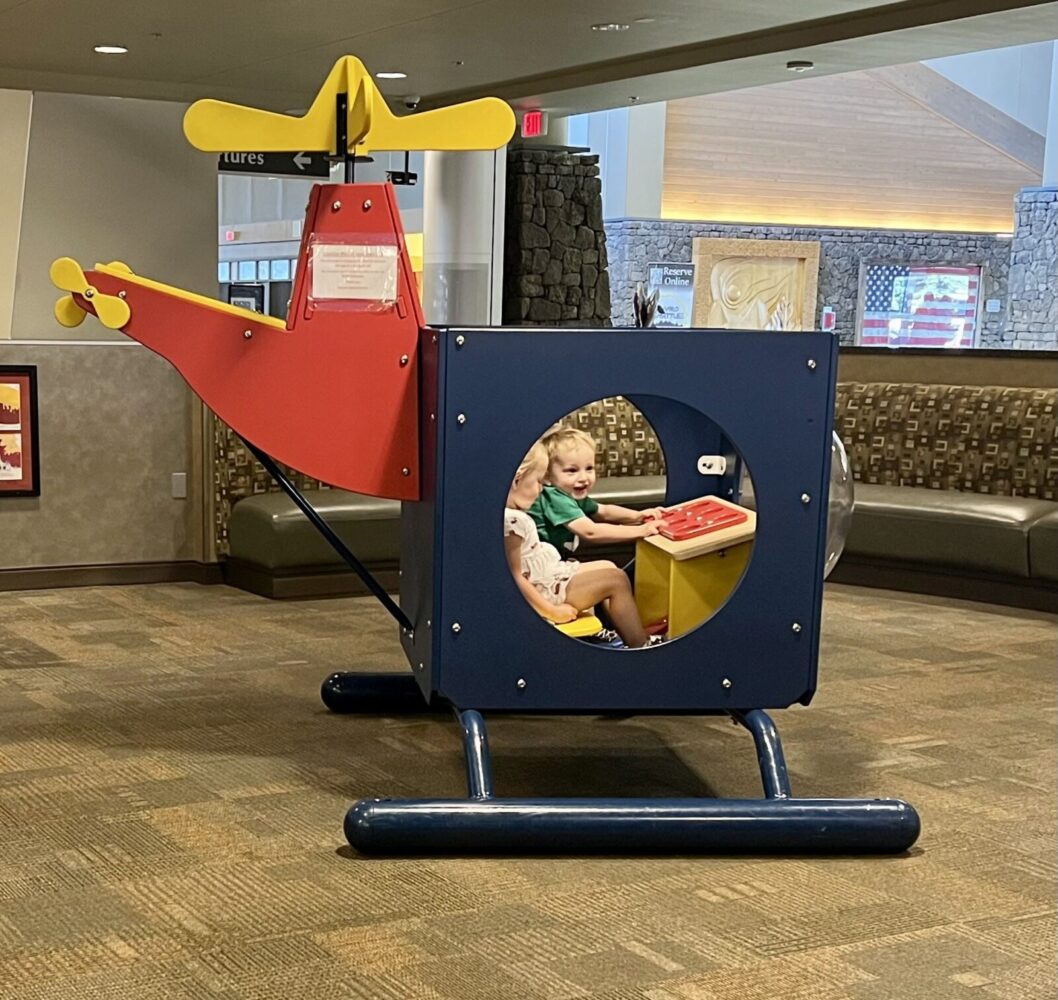
In addition to free Wi-Fi and complimentary recharge work stations, McCarran International Airport in Las Vegas offers delayed travelers entertainment in the form of the Howard Cannon Aviation Museum, art exhibits, an aviation-themed kid’s play area, an interactive Dance Heads video booth and bars serving oxygen cocktails.

Defeat the delay: McCarran also has approximately 1,200 slot machines. And, as the saying goes, you can’t win if you don’t play.

Part 3 tomorrow…

How 9/11 changed the airport experience


As the 10th anniversary of the 9/11 tragedy rolls around, many travelers are thinking back to where they were that day and what they were doing as the horrific details began to emerge. Some are recounting their blessings, remembering how close they came to being part of the carnage.

Count me among them.

In the summer of 2001, I was on the road promoting my guide book, Stuck at the Airport, which detailed services and amenities at the many of the nation’s airports. (Modern versions of those guides are now online at USATODAY.com) Airport shops offering massages or manicures were a rare find back then; an airport with a website was even rarer.

I got a call from a woman at the Port Authority of New York & New Jersey, the operator of LaGuardia, JFK and Newark airports. She invited me to visit her office at the World Trade Center and chat with her staff about how airports could be more welcoming. “We can’t pay you to come out here from Seattle,” she said, “But if you’re in town anyway and can come by, we’ll take you out for a nice meal.”

That seemed like a good excuse to visit family back east. So we picked a date: September 12. My thank-you meal would be at Windows on the World, the restaurant at the top of the North Tower.

Then and now

Since then, as you well know, pretty much everything about the airport experience has changed.

Before 9/11, my airport review ritual went like this: I’d fly into an airport, stash my belongings in a gate-side locker (remember those?), and spend several hours walking from concourse to concourse, terminal to terminal, asking questions, taking pictures and making detailed notes.

On a cheap weekend fare I’d often fly in and out of an airport (or two) on the same day, taking advantage of the long layovers other travelers despise.

I visited more than 100 airports this way, many of them multiple times, and only once – in July, 1999 in Memphis – was I ever stopped by someone from airport security and questioned about what I was doing.

More often than not, it was other travelers who noticed my note-taking and assumed I worked for the airport. They’d stop me to ask for directions and tips on where to shop or find something to eat.

I not only took notes about what was offered inside airports, I made note of what people did in the airports.

Read. Sleep. Chat. Try to get some work done. Eat. Drink. Talk on the telephone. The same as now, but without all the cell phones, laptops and searching around for an electrical outlet.

Back then there were a lot of small children squealing “There’s daddy!” as tired-looking businessmen streamed off planes. And plenty of grandmas and grandpas rushing to plant wet kisses on squirmy babies they may have been meeting for the first time. There were waves of teary goodbyes and joyous reunions at the gates. And thinking back now, I realize the last time I saw my father smile at me before his final illness was at an airport, while we chatted as I waited to board a delayed flight.

Now it’s all grumbling about the Wi-Fi signal and jostling for a good spot so you can board the plane first and find a place to stash your carry-on bag. No last minute kisses, hugs and good wishes as the door to the jet way is about to close. No waves and tears at the window as a plane backs away.

I miss that.

But, setting aside for a moment the long lines, x-ray machines, body scanners and icky, intrusive pat-downs we must now endure at the security checkpoints, the post 9/11 world of airports has some upsides.

Recognizing that passengers were spending lots more time inside airports – and needing to diversify income sources once cash-strapped airlines began balking at footing the bills – airports began bulking up on services and amenities in the terminals.

Now, kiosks offering manicures and massages are no longer rare sightings at airports. Many terminals have wine bars, sports bars and fine restaurants where you can settle in and really relax. The selection of shops at some airports now rivals those offered at neighborhood malls and, with medical clinics, hair salons, pharmacies, convenience stores, play areas, art galleries and – hooray – free Wi-Fi, popping up along many airport concourses, it’s getting easier and easier to get distracted and miss a flight.

I’ve done that; more than twice.

But, as pleasant as it may be to have fun while being stuck at the airport, the sobering reality is that some of these amenities were ushered along in response to tragedy. And while I’m all for safety and security in the skies, I’m still mourning the loss of that one airport amenity that allowed for a last hug from a loved one before stepping onto a plane.

What pre-9/11 airport experience are you missing?

(This article originally appeared on USATODAY.com as my September, 2011 At the Airport column.)


More – and cheaper – ways to gain airport lounge access

My At the Airport column for USAToday.com this month is a round-up of more – and cheaper – ways to access airport lounges.

Many travelers have lost or given up their airline club memberships along with their expense accounts, their frequent-flier status and, in many cases, their jobs. And some airline lounges have closed due to airline consolidation and belt-tightening. But airports are still crowded and many travelers still seek quiet spots to plug in and work, make phone calls, catch a nap or just think.

Most airline club rooms will sell day passes to non-members for a fee of between $30 and $50. Some credit cards offer access at a select set of airline club rooms as part of the annual fee. And the Priority Pass program levies both a membership and per-visit fee for access to a menu of about 600 airport club rooms around the world.

Increasingly, though, independent operators and, in some cases, airports themselves are expanding the pay-per-use spaces where passengers can gain access to snacks, business amenities and comfortable seating.

The newest among these is the Airspace Lounge located post-security in Concourse D at Baltimore/Washington International Airport. The lounge offers hip decor, comfortable seating, work areas and complimentary wireless Internet access, snacks, small meals and non-alcoholic beverages.

Airspace Lounge CEO Anthony Tangorra plans to open similar lounges in other airports before the end of the year and says the $17.50 per-day fee at the BWI lounge was set after studying the average airport “spend.”

“We found that most passengers expect to spend about $20 at the airport. So lounge access is a compelling alternative for someone who wanted to go to the food court,” said Tangorra. He’s also noticed that because American Express Platinum and Centurion members get complimentary access to the Airspace Lounge, many cardholders stop at the lounge on their way out of the airport. “They grab a free sandwich to go and a coffee and are on their way,” he said.


Amenities at the reLAX Lounge, located on the pre-security, departure level of the Tom Bradley International Terminal at Los Angeles International Airport, include upholstered chairs, workstations, business services and complimentary Wi-Fi, soft drinks, sandwiches and snacks. Admission is $15 for one hour and $30 for three hours. With the $50 day pass, a complimentary glass of wine or beer is included.

Plaza Premium, which has lounges in Vancouver, Toronto, Hong Kong, Singapore and more than a dozen other international airports, throws in buffet meals, drinks, business services and, in some locations, showers. Prices vary by location, but in Toronto the fee is about $35 for three hours.

Complimentary amenities at The Lounge in New York JFK’s Terminal 4 ($40 for four hours; $10 each additional hour) include showers, Internet access, drinks, snacks and light meals. At The Club in Terminal D at Dallas/Fort Worth International Airport, a 24-hour day pass is $35 and provides travelers with complimentary alcoholic drinks, business facilities, a separate kids’ room, shower facilities and a smoking lounge. Unlike many airline clubs, visitors are welcome to bring in food purchased outside the lounge.

The independent lounges at some of the nation’s smaller airports are some of the best deals.

Entrance to the Executive Club at Alabama’s Mobile Regional Airport is $10 per day and includes work areas and complimentary snacks, beverages and local phone calls. For $24.95, passengers can buy access to The Club at Raleigh-Durham International Airport, and at Altitude: A Traveler’s Club at Kentucky’s Louisville International Airport, a day pass is just $5 and includes complimentary soft drinks and snacks, high-speed Internet access, free long-distance and domestic phone calls, and a lovely view of the runway.


Airport lounges for smokers and hotel guests

If you smoke (or don’t mind hanging around people who do), look for the specially-ventilated cigar lounges linked to the boutiques opened by Bahamas-based Graycliff Cigars at the Nassau International and Nashville International airports (Gates B9 and C10). Lounge access is $4 in Nashville and $10 in Nassau, where the fee includes a complimentary glass of wine or other beverage.

And in some cities, a hotel reservation will get you airport lounge access.

In February 2011, three Hilton Maldives resorts (Beach House Maldives: A Waldorf Astoria Resort, Hilton Maldives/Iru Fushi Resort & Spa and Conrad Maldives Rangali Island) opened a shared luxury lounge for guests arriving at Male International Airport. While they wait for the seaplane ride to a resort, guests receive complimentary shoulder massages, hot and cold food, Wi-Fi and access to posh indoor and outdoor seating. Guests departing the resorts in the evening can also use the lounge, but on the way home, the fee is $80 per person.

Not to be outdone, the W Maldives also offers a seaplane lounge that includes Internet access, non-alcoholic drinks and snacks.

In March 2010, the W Retreat & Spa -Vieques Island opened a welcome lounge at the tiny, un-air-conditioned Vieques Airport, off the coast of Puerto Rico. Hotel guests are greeted with chilled towels, cocktails and light snacks. “While they’re relaxing, we check them into their rooms, tag and load their luggage into a Jeep, and then whisk them to the retreat, which is five minutes away,” says the hotel’s Nikolai Ursin. Use of the air-conditioned lounge includes free Wi-Fi and is complimentary for hotel guests at both arrival and departure.

And while waiting for their complimentary airport transfers, guests who have booked suites at the Four Seasons Resort Hualalai on Hawaii’s Big Island have access to a private airport lounge that includes complimentary wireless Internet access, beverages and snacks.


Recent Tweets

  • Subscribe to Posts Via Email or RSS

    Subscribe Via Email
    Subscribe Via RSS
  • My USAToday Airport Guides


    • See all airport guides »

  • Posts by Category

  • Browse posts on the site by category:

  • See all categories »